

- Industry Size (2026)
- USD 430.0 Mn
- Forecast (2036)
- USD 707.0 Mn
- CAGR (2026 to 2036)
- 5.1%
Aftermarket Packaging for IT Accessories Forecast and Outlook 2026 to 2036
Aftermarket packaging for IT accessories revenue is likely to total USD 430.0 million in 2026, rising further to USD 707.0 million by 2036, at a CAGR of 5.1%. Future Market Insights analysis indicates this market is characterized by high-frequency, low-volume shipments that prioritize logistical efficiency and part integrity over premium presentation. The growth through 2026 is propelled by the increasing longevity of electronic devices, legislative support for repair, and the professionalization of the global IT asset disposition and refurbishment sector.
A primary growth vector is the standardization of spare part logistics by major technology service networks. Lenovo’s 2024 announcement of its global "Parts Logistics 2.0" initiative mandated that all aftermarket parts for its commercial devices shipped to authorized service providers must utilize standardized, branded mailers with integrated tracking and compatibility labeling. This move, aimed at reducing mis-shipments and improving technician efficiency, creates a large-scale, consistent demand for compliant packaging from certified suppliers.
Innovation is ocused on right-sized, automated fulfillment. Sealed Air’s 2025 automation solution, the ShipStation AutoBagger, is designed for high-volume e-commerce parts distributors. It automatically selects the smallest possible poly mailer or box for a given item, prints the label, and applies it, dramatically reducing labor and material waste for businesses shipping thousands of individual cables, adapters, and batteries daily.
The strategic focus on this sector is evidenced by Berry Global’s 2024 acquisition of a specialized manufacturer of ESD-safe and moisture-barrier bags. The company stated the move was directly aimed at capturing a larger share of the growing aftermarket for sensitive internal components like memory modules and solid-state drives.
Policy discussions led by right-to-repair advocacy groups and electronics sustainability bodies increasingly frame the aftermarket ecosystem as a critical extension of product lifespan rather than a secondary distribution channel. Public statements and policy submissions from repair-focused organizations consistently emphasize that packaging for replacement IT accessories must balance protection, material efficiency, and downstream recyclability, particularly for high-turnover items such as chargers, cables, adapters, and peripheral components. This perspective is accelerating adoption of right-sized, mono-material, and traceability-enabled packaging formats, positioning aftermarket packaging as an operational enabler of circular electronics rather than a cost center.
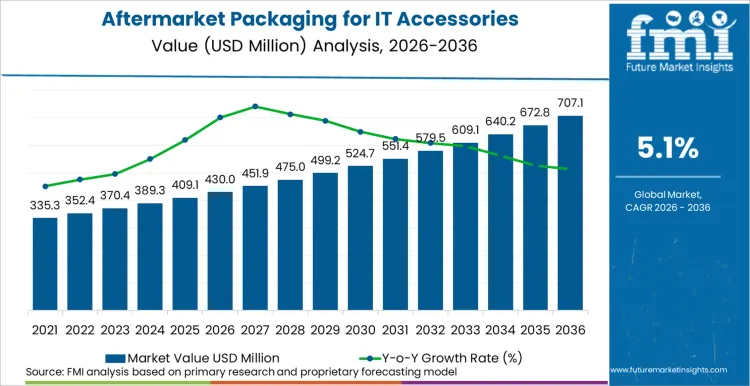
Summary of Aftermarket packaging for IT accessories
What is the Long-Term Growth Outlook for the Aftermarket packaging for IT accessories?
FMI projects the global aftermarket packaging for IT accessories to expand from USD 430.0 million in 2026 to USD 707.0 million by 2036, registering a 5.1% CAGR. This growth is sustained by the inherent need to maintain, repair, and upgrade the vast installed base of electronics worldwide. Packaging in this segment is defined by its role in enabling efficient, reliable, and traceable reverse logistics for individual components, from replacement keyboards to internal hardware upgrades.
FMI Research Approach: This projection is derived from FMI's model analyzing installed base electronics data, repair industry growth metrics, e-commerce platform sales data for replacement parts, and policy developments regarding right-to-repair legislation across key economies.
How do FMI Analysts Expect the Aftermarket packaging for IT accessories to Evolve Structurally?
FMI analysts anticipate a continued shift toward e-commerce-optimized, automated packaging formats. Demand will grow for mailers and small boxes that offer adequate protection with minimal material use and dimensional weight. Packaging will also increasingly incorporate clear compatibility information (e.g., device model numbers) and digital identifiers (QR codes) to link to installation guides or verify authenticity, reducing returns and customer support calls.
FMI Research Approach: Insights are informed by analysis of packaging SKUs from major parts distributors like Arrow Electronics and Avnet, trends in e-commerce warehouse automation, and surveys of independent repair technicians regarding packaging pain points.
Which Geographies Command the Largest Share of the Aftermarket packaging for IT accessories?
Asia-Pacific leads the global market with a 40.0% share in 2026, driven by its massive electronics manufacturing base which also serves as the source for a vast quantity of compatible spare parts and accessories. North America follows with a 28.0% share, supported by a strong culture of DIY repair and a large network of IT service companies. Europe holds a 24.0% share, where right-to-repair regulations are creating a more formalized and growing aftermarket sector.
FMI Research Approach: Regional market sizing is based on analysis of electronics repair industry revenue, volumes on B2B and B2C parts platforms, and the density of service centers for major OEMs.
What Will Be the Market Size of Aftermarket Packaging for IT Accessories by 2036?
By 2036, the aftermarket packaging for IT accessories is expected to reach USD 707.0 million. This expansion will be fueled by the maturation of right-to-repair laws, the continued growth of the refurbished electronics market, and the ever-increasing complexity of devices which drives demand for specialized replacement components.
FMI Research Approach: The long-term outlook incorporates forecasts for the global refurbished electronics market, analysis of product lifespan trends, and projected impacts of legislation mandating parts and tools availability.
What are some Globally Distinct Trends Shaping the Aftermarket packaging for IT accessories?
Globally, the market is shaped by the rise of e-commerce platforms dedicated to parts, the need for authenticity assurance, and sustainability pressures on single-item shipping. Platforms like Amazon Business and specialized sites create massive volumes of small parcel shipments. The prevalence of counterfeit parts drives demand for tamper-evident and branded packaging. Environmental concerns are pushing for the elimination of plastic blisters in favor of recyclable paper-based mailers and cartons for small parts.
FMI Research Approach: Trend identification involves monitoring the growth of online parts marketplaces, technological advancements in anti-counterfeit packaging, and material substitution trends driven by retailer sustainability scorecards such as Amazon’s Climate Pledge Friendly requirements.
Aftermarket Packaging for IT Accessories Key Takeaways
| Metrics | Values |
|---|---|
| Expected Value (2026E) | USD 430.0 million |
| Projected Value (2036F) | USD 707.0 million |
| CAGR (2026 to 2036) | 5.1% |
Source: Future Market Insights (FMI) analysis, based on proprietary forecasting model and primary research
Why is the Aftermarket Packaging for IT Accessories Growing?
The global right-to-repair legislative movement is a fundamental demand driver. Laws such as those enacted in New York (Digital Fair Repair Act, 2023) and moving through the European Parliament require manufacturers to make parts, tools, and diagnostics available to independent repairers and consumers. This legal framework legitimizes and expands the aftermarket, generating millions of new transactions for individual components, each requiring appropriate packaging for safe and compliant distribution.
The economic and environmental logic of the circular economy for electronics is gaining corporate and consumer traction. Refurbishing a laptop or smartphone for resale requires a supply of replacement batteries, screens, and casings. The International Data Corporation (IDC) 2025 forecast for the worldwide refurbished smartphone market predicted volumes exceeding 350 million units annually, each potentially requiring several replacement accessories or parts, all shipped in aftermarket-specific packaging.
The professionalization of the IT Asset Disposition (ITAD) sector is another key factor. Large enterprises outsourcing the secure decommissioning and resale of their retired IT equipment rely on ITAD firms that must often replace worn accessories like power cords before resale. These firms procure bulk quantities of generic, certified replacement accessories (e.g., UL-certified power adapters) and require cost-effective, protective packaging to include with the refurbished system, creating a steady B2B demand stream.
How is Aftermarket packaging for IT accessories Segmented?
The aftermarket packaging for IT accessories segment landscape is defined by the paramount need for cost-effective, single-unit shipping that ensures part functionality upon arrival. Mailers and small boxes dominate as the logistical workhorses, while the e-commerce channel for replacement parts drives volume and innovation. Drop and impact protection is the non-negotiable primary feature for most shipments.
How is E-commerce Logistics Sustaining the Dominance of Mailers and Small Boxes?
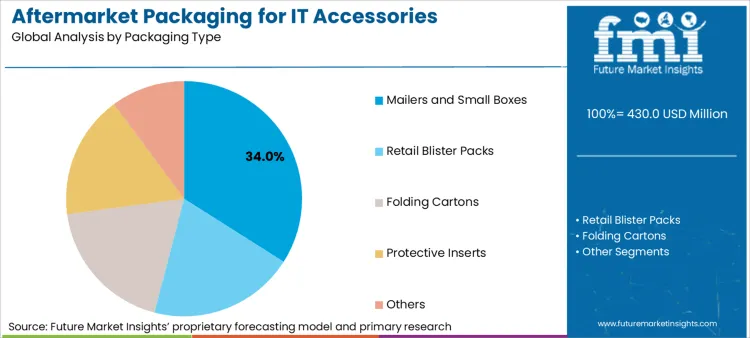
Mailers and small boxes account for a 34.0% share of the packaging type segment. This dominance is rooted in their optimal balance of low cost, lightweight, and suitability for the automated sortation systems of global parcel carriers. Their design is continually refined to reduce material use while maintaining integrity. A 2025 study by the Sustainable Packaging Coalition highlighted that leading e-commerce parts distributors achieved a 15-20% reduction in packaging weight by switching to newer, high-strength recycled paper mailers with integrated tear strips for easy opening.
The segment’s innovation is exemplified by Ranpak’s "GeoTech" mailer, launched in 2025. This mailer is constructed from crumpled paper cushioning sealed within a recyclable paper outer sleeve, providing all-in-one protection for irregularly shaped items like computer mice or keyboards without requiring separate void fill, perfectly aligning with the needs of aftermarket shippers seeking to minimize packing time and material complexity.
Which Sales Channel is the Primary Engine for Market Volume?
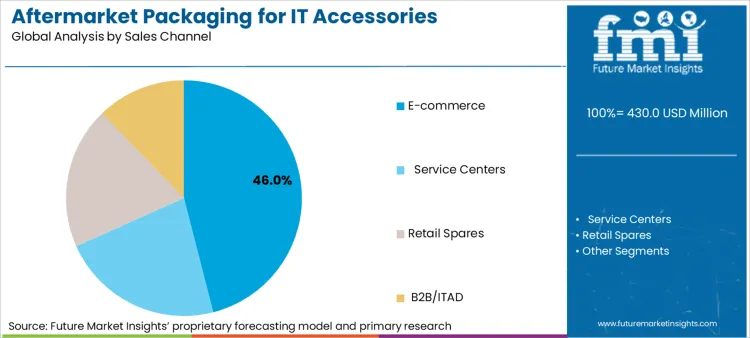
The e-commerce replacement parts channel commands a 46.0% share of the aftermarket channel segment. This channel encompasses everything from Amazon and eBay listings for generic cables to specialized B2B platforms like SPAREPC. The packaging requirement here is dual-purpose: it must survive the "last mile" to a consumer’s doorstep and often serve as the retail presentation if the part is sold through a marketplace fulfillment service. This drives demand for packaging that is durable enough for shipping yet presentable enough for a direct-to-consumer transaction.
The channel’s requirements are highlighted by the partnership between Avery Dennison and a major global logistics provider in 2025. They co-developed a standardized, branded poly mailer for electronics parts that includes a prominent area for compatibility information and integrates seamlessly with the logistics provider’s automated label application systems, creating efficiency for high-volume sellers.
What Protective Feature is Universally Prioritized Across All Part Types?
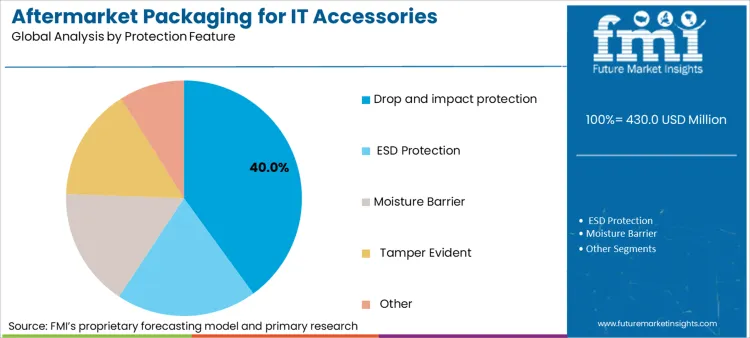
Drop and impact protection is the leading feature segment with a 40.0% share. Unlike retail packaging designed for shelf appeal, aftermarket packaging is almost solely judged on its ability to deliver a functional part. A cracked screen protector or a bent connector renders the part worthless. This universal priority validates the use of cushioning materials-whether air pillows, paper fill, or molded pulp inserts-within the mailer or box. The standard has evolved from simply including cushioning to engineering it to be minimal yet effective, reducing shipping costs.
The focus on this feature is institutionalized in the service manuals of large IT service contractors. Companies like CDW or Insight Enterprises have detailed packaging specifications for parts returned under warranty or for exchange, often requiring the use of specific cushioning materials to be eligible for reimbursement, creating a captive market for compliant protective solutions.
What Drivers, Restraints, Opportunities, and Trends Prevail in the Aftermarket packaging for IT accessories?
Market expansion is powerfully driven by the platformization of the parts economy. Online marketplaces have drastically reduced the friction of sourcing obscure or legacy components. Each transaction on platforms like AliExpress or Newegg generates a discrete packaging event. The sheer volume growth of these platforms, as reported in their annual financial filings, directly correlates with demand for mailers, bubble wrap, and small boxes.
A significant restraint is the intense pressure on margins in the aftermarket parts business itself. Competition is fierce, often on price alone. This cost sensitivity is transferred directly to packaging procurement, limiting the adoption of more sustainable but currently higher-priced alternatives (like compostable mailers) unless they also reduce weight and thus shipping cost. Packaging suppliers must innovate within very tight cost parameters.
A major opportunity lies in providing integrated packaging-and-logistics solutions for the growing refurbishment sector. Large-scale refurbishers processing thousands of devices monthly need efficient workflows. Suppliers that can provide a system of sized boxes, pre-printed compliance labels, and bundled cushioning that fits into an automated packing station can capture significant B2B market share by selling efficiency, not just materials.
A defining technical trend is the integration of smart labels for inventory and authenticity. For higher-value aftermarket parts like genuine OEM laptop batteries or graphics cards, packaging is increasingly being fitted with RFID or NFC tags. This allows the refurbisher or service center to manage inventory in bulk without opening boxes and allows the end customer to verify the part’s authenticity and source via smartphone, combating counterfeits.
Sustainability is driving a noticeable shift away from plastic blister packs for small parts like screws, brackets, and connectors. These are increasingly being packaged in small, sealed paper pouches or folded into recyclable cardboard cards. This trend is accelerated by retailer policies; for instance, Best Buy’s 2025 sustainability report committed to eliminating PVC blister packs from all products sold in its stores, including aftermarket accessory sections.
Analysis of Aftermarket packaging for IT accessories by Key Countries
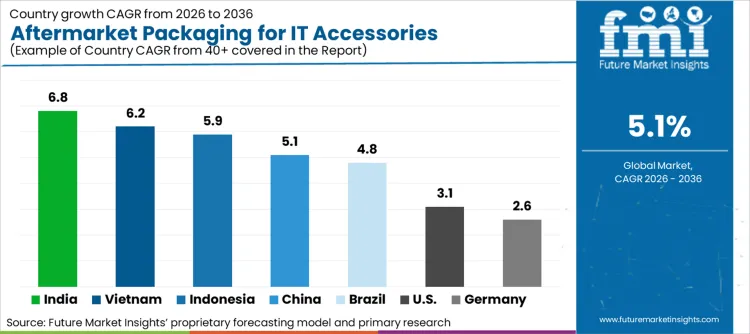
| Country | CAGR (2026 to 2036) |
|---|---|
| India | 6.8% |
| Vietnam | 6.2% |
| Indonesia | 5.9% |
| China | 5.1% |
| Brazil | 4.8% |
| USA | 3.1% |
| Germany | 2.6% |
| Japan | 2.2% |
Source: Future Market Insights (FMI) analysis, based on proprietary forecasting model and primary research
How is a Thriving Repair Culture and Price Sensitivity Shaping the Indian Market?
India is projected to expand at a 6.8% CAGR through 2036, driven by one of the world’s most vibrant and informal electronics repair ecosystems. Millions of small shops specialize in extending the life of devices, sourcing parts from wholesale markets and, increasingly, online. The packaging demand here is for ultra-low-cost, functional solutions-often simple polyethylene bags or unprinted corrugated scraps for local delivery. However, the formalization of this sector, encouraged by government “Skill India” initiatives for electronics repair, is creating demand for more organized packaging that includes basic part information.
The price sensitivity is extreme. The dominance of mailers and small boxes is amplified in India, as even a few extra grams of packaging weight can affect the viability of a low-margin part sale. This drives innovation in localized production of lightweight, recycled paper mailers that meet the minimal protective standard for domestic postal services.
Which Role as a Manufacturing Hub for Compatible Parts Defines Vietnam's Market?
Vietnam’s market, growing at a 6.2% CAGR, is closely tied to its role as a primary manufacturer not only for branded electronics but also for the vast global market in “compatible” or generic accessories (e.g., third-party laptop chargers, smartphone cables). These products are primarily exported in bulk but destined for aftermarket distribution worldwide. The initial packaging for these parts is often simple and designed for efficient palletization. However, the domestic aftermarket is also growing, supported by platforms like Shopee, creating a dual demand for both export bulk packaging and domestic e-commerce fulfillment solutions.
Export regulations are a factor. To meet EU and US customs and safety standards (like CE or FCC marks), compatible parts must be shipped with documentation. Packaging often includes a printed sleeve or label holder to contain this mandatory paperwork, adding a specific design requirement for Vietnamese packaging suppliers.
How does the Archipelago Geography Influence Aftermarket Packaging in Indonesia?
Indonesia’s market is forecasted at a 5.9% CAGR. The nation’s geography, consisting of thousands of islands, makes logistics challenging and increases the risk of moisture damage during maritime transport. For aftermarket parts, especially those susceptible to corrosion like connectors or circuit boards, this creates a specific demand for packaging with enhanced moisture barriers. This goes beyond basic polyethylene bags to include silica gel desiccant packs sealed within the packaging, a standard request from parts distributors serving outer islands.
Furthermore, the growth of social commerce and same-day delivery services in major cities like Jakarta is changing expectations. Parts ordered for urgent repair are expected to arrive quickly and in presentable condition, driving demand for more robust, branded mailers from sellers building a reputation on platforms like Tokopedia, even for low-cost items.
How is the Dual Nature of Parts Sourcing Defining the Chinese Market?
China’s market leads regional growth with a 5.1% CAGR, reflecting its dual role as the world’s factory for both OEM and aftermarket parts. The domestic aftermarket is massive, supported by platforms like Taobao and JD.com, where consumers and repair shops source everything from specific iPhone screws to replacement laptop keyboards. The packaging for these micro-transactions is highly optimized, with a strong trend toward automated packaging machines that slap a shipping label directly onto a product’s own retail box or a minimalist sleeve, eliminating an outer shipping box entirely.
Simultaneously, China is the source for global aftermarket parts. International e-commerce sellers on Amazon or eBay often source from Chinese wholesalers. These sellers increasingly demand packaging that meets the sustainability standards of their end markets (e.g., plastic-free, recyclable), pushing Chinese packaging exporters to offer “green” lines of paper-based mailers and pulp cushions alongside traditional plastic options.
How is a Large Domestic Market with Complex Logistics Shaping Brazil?
Brazil’s market, expanding at a 4.8% CAGR, is shaped by its large domestic consumer base and notoriously complex tax and logistics system (“Logística Brasil”). For aftermarket parts, high import taxes on finished goods make local repair economically attractive. However, domestic parts distribution faces high freight costs and long transit times. This makes packaging durability critical. There is a pronounced preference for sturdy, corrugated mailers over poly mailers for anything beyond a simple cable, as they are more likely to survive the domestic logistics chain intact.
Consumer protection law (Código de Defesa do Consumidor) also influences packaging. It mandates clear information on origin and compatibility. Aftermarket parts packaging in Brazil typically features prominent, Portuguese-language labels detailing compatible devices, which influences the size and print design of mailers and cartons.
Which Right-to-Repair Legislation is Formalizing the USA Market?
The United States market, with a 3.1% CAGR, is being progressively formalized by state-level right-to-repair laws. These laws compel OEMs to sell parts to independent repair shops. This creates a new, B2B transactional stream where parts are shipped directly from the OEM or an authorized distributor to a small business. The packaging for these parts is often professional, includes detailed work order information, and is designed for easy integration into a service center’s inventory system, differing from the more generic e-commerce packaging.
Furthermore, the scale of the USA leads to advanced returns logistics for incorrect parts. Packaging that is easy to reopen and reseal for a return shipment is valued, driving design features like tear strips and integrated return labels within the initial package.
How do WEEE and Circular Economy Directives Influence the German Market?
Germany’s market, growing at a 2.6% CAGR, is heavily influenced by the Waste Electrical and Electronic Equipment (WEEE) directive and the German Circular Economy Act. These regulations place financial responsibility for recycling on producers, creating a business model for high-quality refurbishment. Companies like “Asgoodasnew” or “Refurbed” source used devices and parts, requiring reliable packaging for their internal logistics and for shipping refurbished products with warranties. This professional refurbishment sector demands packaging that is protective, brand-consistent, and aligns with their green marketing, favoring recycled and recyclable materials.
The presence of a strong DIY culture supported by detailed online tutorials also drives a consumer aftermarket for parts. German consumers ordering parts for self-repair expect packaging that includes not just the part, but sometimes basic tools or printed instructions, leading to slightly larger, multi-compartment package designs.
How does Precision and High Service Standards Define the Japanese Market?
Japan’s market, with a 2.2% CAGR, is characterized by exceptionally high service standards and space constraints. Aftermarket parts, whether for professional IT service or consumer self-repair, are expected to arrive in pristine, meticulously packed condition. Packaging is often minimalist yet perfect-think precisely folded paper wraps or form-fitting plastic trays inside small boxes. The concept of “mottainai” (avoiding waste) discourages excessive packaging, but not at the expense of product safety.
The high density of convenience stores acting as parcel pickup and drop-off points (like Lawson or 7-Eleven) also influences packaging size. Aftermarket parts packaging is designed to fit within standardized lockers and bags used by these networks, with dimensions and barcode placement following strict chain-specific guidelines.
What is the Competition Outlook for Aftermarket Packaging for IT Accessories?
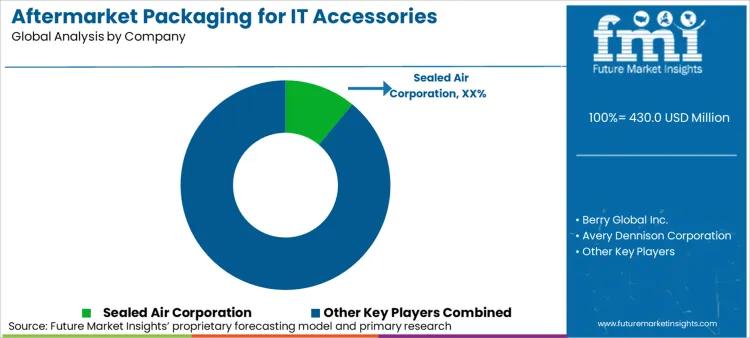
Competitive intensity in this market centers on providing cost-effective, scalable solutions for high-volume, low-margin transactions. Leaders are those who can offer a wide range of standard-sized mailers and boxes with reliable availability, integrate with e-commerce shipping software, and provide options that help sellers reduce their shipping costs (through lightweight materials or right-sizing). The market is segmented, with large players serving major distributors and a long tail of smaller suppliers serving niche or regional sellers.
The competitive landscape is increasingly influenced by sustainability metrics from large e-commerce platforms. Amazon’s "Frustration-Free Packaging" program and similar initiatives from other platforms give preferential treatment to sellers using certified, recyclable, right-sized packaging. This pushes packaging suppliers to develop and promote specific product lines that help their clients earn these badges, which can improve sales conversions.
Strategic Evolution and Observable Direction pre-2024
Prior to 2024, competition was largely based on price per unit for generic packaging like poly mailers and bubble wrap. The market was highly fragmented with numerous regional converters. The focus for aftermarket sellers was simply finding the cheapest way to get an item out the door, with little consideration for branding, sustainability, or packaging efficiency beyond basic protection.
Observable Strategic Direction for 2026 and Beyond
A clear strategic direction is the provision of “packaging as a service” for medium-to-large e-commerce parts sellers. This involves supplying not just materials, but leased automated packaging machines (auto-baggers, box formers) that are installed at the seller’s warehouse. The supplier provides the machine and the consumable mailers/boxes, often with integrated branding, creating a recurring revenue model and deep client integration. Pregis has been actively promoting such bundled solutions for its “Sharp” automated systems.
Another direction is specialization in protective solutions for high-value, fragile aftermarket parts. Companies like NEFAB, known for industrial packaging, are developing lines of returnable, ESD-safe small containers specifically for the secure shipping of sensitive components like motherboards or GPUs between ITAD facilities, refurbishers, and data centers, moving up the value chain from simple mailers.
Key Developments
- Sealed Air expanded use of its Korrvu® suspension and retention packaging, a solution that securely holds products between resilient film layers and/or a corrugated frame to reduce damage from shock and vibration while enhancing product presentation. This design also ships and stores flat, supports reuse, and is kerbside recyclable with the film attached, helping rightsized packages eliminate excess void-fill materials and improve sustainability.
- FedEx continues to advance its sustainable packaging options for shippers of electronics and other goods, offering recyclable boxes and envelopes, reusable paks, and complementary packaging supplies made with recycled content to support more responsible shipping practices. These sustainable packaging supplies are part of broader efforts to help businesses reduce waste and environmental impact while protecting products in transit.
- Avery Dennison provides a range of durable label materials designed for use on products and packaging that must withstand demanding environments, including exposure to moisture, abrasion, and temperature variation. Its durable goods and equipment labels are formulated to perform consistently on industrial and electronics applications, helping ensure critical information such as compatibility, serial numbers, and regulatory details remains legible throughout logistics handling.
Key Players Profiled
- Sealed Air Corporation
- Berry Global Inc.
- Avery Dennison Corporation
- Ranpak Holdings Corp.
- NEFAB Group
- Smurfit Kappa Group
- WestRock Company
- International Paper Company
- Mondi Group
- Amcor plc
Market Definition
The aftermarket packaging for IT accessories comprises revenue generated from the design, manufacture, and supply of protective shipping and presentation packaging used for the distribution of replacement, spare, repair, and refurbished information technology accessories and components. This includes items such as replacement keyboards, mice, cables, adapters, batteries, screens, internal hardware (memory, storage), and other peripherals sold outside of the original equipment manufacturer’s (OEM) initial retail packaging.
The market scope covers packaging solutions used by OEM service networks, independent parts distributors, e-commerce sellers, IT asset disposition firms, and refurbishers. It includes primary shipping containers (mailers, boxes), protective interior materials (cushioning, inserts), and any necessary labels or documentation holders. The market excludes the original retail packaging of new, first-sale accessories and bulk industrial packaging used for transporting large quantities of raw components.
Scope of Report
| Items | Values |
|---|---|
| Quantitative Units | USD 430 Million |
| Packaging Type | Mailers & Small Boxes, Retail Blister Packs, Folding Cartons, Protective Inserts, Other |
| Aftermarket Channel | E-commerce Replacement Parts, Service Centers, Retail Spares, B2B/ITAD, Other |
| Protection Feature | Drop/Impact Protection, ESD Protection, Moisture Barrier, Tamper Evident, Other |
| Regions Covered | Asia-Pacific, North America, Europe, Latin America, Middle East & Africa |
| Countries | U.S., Germany, China, India, Vietnam, Indonesia, Brazil, Japan and 40+ countries |
| Key Companies | Sealed Air, Berry Global, Avery Dennison, Ranpak, NEFAB, Smurfit Kappa, WestRock, International Paper, Mondi, Amcor |
Source: Future Market Insights (FMI) analysis, based on proprietary forecasting model and primary research
Aftermarket packaging for IT accessories Key Segments
Packaging Type
- Mailers & Small Boxes
- Retail Blister Packs
- Folding Cartons
- Protective Inserts
- Others
Aftermarket Channel
- E-commerce Replacement Parts
- Service Centers
- Retail Spares
- B2B/ITAD
- Other
Protection Feature
- Drop/Impact Protection
- ESD Protection
- Moisture Barrier
- Tamper Evident
- Other
Region
- Asia-Pacific
- North America
- Europe
- Latin America
- Middle East & Africa
Bibliography
- International Data Corporation (IDC). (2025). Worldwide refurbished mobile phone forecast, 2025-2029 (Document #US51237425). IDC.
- Lenovo Group Limited. (2024, July). Lenovo announces global Parts Logistics 2.0 initiative for service partners.
- Repair Association. (2025). Policy and market outlook: The state of the USA repair economy. Repair Association.
- Sustainable Packaging Coalition. (2025). Case study: Lightweighting and material efficiency in e-commerce parts distribution. GreenBlue.
Frequently Asked Questions
How big is the aftermarket packaging for it accessories in 2026?
The global aftermarket packaging for it accessories is estimated to be valued at USD 430.0 million in 2026.
What will be the size of aftermarket packaging for it accessories in 2036?
The market size for the aftermarket packaging for it accessories is projected to reach USD 707.1 million by 2036.
How much will be the aftermarket packaging for it accessories growth between 2026 and 2036?
The aftermarket packaging for it accessories is expected to grow at a 5.1% CAGR between 2026 and 2036.
What are the key product types in the aftermarket packaging for it accessories?
The key product types in aftermarket packaging for it accessories are mailers and small boxes, retail blister packs, folding cartons, protective inserts and others.
Which sales channel segment to contribute significant share in the aftermarket packaging for it accessories in 2026?
In terms of sales channel, e-commerce segment to command 46.0% share in the aftermarket packaging for it accessories in 2026.
Preview the report firsthand - request a free sample
Get SampleGet the brochure for pricing and purchase details.
Get PDFTable of Content
- Executive Summary
- Global Market Outlook
- Demand-side Trends
- Supply-side Trends
- Technology Roadmap Analysis
- Analysis and Recommendations
- Market Overview
- Market Coverage / Taxonomy
- Market Definition / Scope / Limitations
- Research Methodology
- Chapter Orientation
- Analytical Lens and Working Hypotheses
- Market Structure, Signals, and Trend Drivers
- Benchmarking and Cross-market Comparability
- Market Sizing, Forecasting, and Opportunity Mapping
- Research Design and Evidence Framework
- Desk Research Programme (Secondary Evidence)
- Company Annual and Sustainability Reports
- Peer-reviewed Journals and Academic Literature
- Corporate Websites, Product Literature, and Technical Notes
- Earnings Decks and Investor Briefings
- Statutory Filings and Regulatory Disclosures
- Technical White Papers and Standards Notes
- Trade Journals, Industry Magazines, and Analyst Briefs
- Conference Proceedings, Webinars, and Seminar Materials
- Government Statistics Portals and Public Data Releases
- Press Releases and Reputable Media Coverage
- Specialist Newsletters and Curated Briefings
- Additional Desk Sources
- Expert Input and Fieldwork (Primary Evidence)
- Primary Modes
- Qualitative Interviews and Expert Elicitation
- Quantitative Surveys and Structured Data Capture
- Blended Approach
- Why Primary Evidence is Used
- Field Techniques
- Interviews
- Surveys
- Focus Groups
- Observational and In-context Research
- Social and Community Interactions
- Stakeholder Universe Engaged
- C-suite Leaders
- Board Members
- Presidents and Vice Presidents
- R&D and Innovation Heads
- Technical Specialists
- Domain Subject-matter Experts
- Scientists
- Physicians and Other Healthcare Professionals
- Governance, Ethics, and Data Stewardship
- Research Ethics
- Data Integrity and Handling
- Primary Modes
- Tooling, Models, and Reference Databases
- Desk Research Programme (Secondary Evidence)
- Data Engineering and Model Build
- Data Acquisition and Ingestion
- Cleaning, Normalisation, and Verification
- Synthesis, Triangulation, and Analysis
- Quality Assurance and Audit Trail
- Market Background
- Market Dynamics
- Drivers
- Restraints
- Opportunity
- Trends
- Scenario Forecast
- Demand in Optimistic Scenario
- Demand in Likely Scenario
- Demand in Conservative Scenario
- Opportunity Map Analysis
- Product Life Cycle Analysis
- Supply Chain Analysis
- Investment Feasibility Matrix
- Value Chain Analysis
- PESTLE and Porter’s Analysis
- Regulatory Landscape
- Regional Parent Market Outlook
- Production and Consumption Statistics
- Import and Export Statistics
- Market Dynamics
- Global Market Analysis 2021 to 2025 and Forecast, 2026 to 2036
- Historical Market Size Value (USD Million) Analysis, 2021 to 2025
- Current and Future Market Size Value (USD Million) Projections, 2026 to 2036
- Y-o-Y Growth Trend Analysis
- Absolute $ Opportunity Analysis
- Global Market Pricing Analysis 2021 to 2025 and Forecast 2026 to 2036
- Global Market Analysis 2021 to 2025 and Forecast 2026 to 2036, By Packaging Type
- Introduction / Key Findings
- Historical Market Size Value (USD Million) Analysis By Packaging Type , 2021 to 2025
- Current and Future Market Size Value (USD Million) Analysis and Forecast By Packaging Type , 2026 to 2036
- Mailers and Small Boxes
- Retail Blister Packs
- Folding Cartons
- Protective Inserts
- Others
- Mailers and Small Boxes
- Y-o-Y Growth Trend Analysis By Packaging Type , 2021 to 2025
- Absolute $ Opportunity Analysis By Packaging Type , 2026 to 2036
- Global Market Analysis 2021 to 2025 and Forecast 2026 to 2036, By Sales Channel
- Introduction / Key Findings
- Historical Market Size Value (USD Million) Analysis By Sales Channel, 2021 to 2025
- Current and Future Market Size Value (USD Million) Analysis and Forecast By Sales Channel, 2026 to 2036
- E-commerce
- Service Centers
- Retail Spares
- B2B/ITAD
- E-commerce
- Y-o-Y Growth Trend Analysis By Sales Channel, 2021 to 2025
- Absolute $ Opportunity Analysis By Sales Channel, 2026 to 2036
- Global Market Analysis 2021 to 2025 and Forecast 2026 to 2036, By Protection Feature
- Introduction / Key Findings
- Historical Market Size Value (USD Million) Analysis By Protection Feature, 2021 to 2025
- Current and Future Market Size Value (USD Million) Analysis and Forecast By Protection Feature, 2026 to 2036
- Drop and impact protection
- ESD Protection
- Moisture Barrier
- Tamper Evident
- Other
- Drop and impact protection
- Y-o-Y Growth Trend Analysis By Protection Feature, 2021 to 2025
- Absolute $ Opportunity Analysis By Protection Feature, 2026 to 2036
- Global Market Analysis 2021 to 2025 and Forecast 2026 to 2036, By Region
- Introduction
- Historical Market Size Value (USD Million) Analysis By Region, 2021 to 2025
- Current Market Size Value (USD Million) Analysis and Forecast By Region, 2026 to 2036
- North America
- Latin America
- Western Europe
- Eastern Europe
- East Asia
- South Asia and Pacific
- Middle East & Africa
- Market Attractiveness Analysis By Region
- North America Market Analysis 2021 to 2025 and Forecast 2026 to 2036, By Country
- Historical Market Size Value (USD Million) Trend Analysis By Market Taxonomy, 2021 to 2025
- Market Size Value (USD Million) Forecast By Market Taxonomy, 2026 to 2036
- By Country
- USA
- Canada
- Mexico
- By Packaging Type
- By Sales Channel
- By Protection Feature
- By Country
- Market Attractiveness Analysis
- By Country
- By Packaging Type
- By Sales Channel
- By Protection Feature
- Key Takeaways
- Latin America Market Analysis 2021 to 2025 and Forecast 2026 to 2036, By Country
- Historical Market Size Value (USD Million) Trend Analysis By Market Taxonomy, 2021 to 2025
- Market Size Value (USD Million) Forecast By Market Taxonomy, 2026 to 2036
- By Country
- Brazil
- Chile
- Rest of Latin America
- By Packaging Type
- By Sales Channel
- By Protection Feature
- By Country
- Market Attractiveness Analysis
- By Country
- By Packaging Type
- By Sales Channel
- By Protection Feature
- Key Takeaways
- Western Europe Market Analysis 2021 to 2025 and Forecast 2026 to 2036, By Country
- Historical Market Size Value (USD Million) Trend Analysis By Market Taxonomy, 2021 to 2025
- Market Size Value (USD Million) Forecast By Market Taxonomy, 2026 to 2036
- By Country
- Germany
- UK
- Italy
- Spain
- France
- Nordic
- BENELUX
- Rest of Western Europe
- By Packaging Type
- By Sales Channel
- By Protection Feature
- By Country
- Market Attractiveness Analysis
- By Country
- By Packaging Type
- By Sales Channel
- By Protection Feature
- Key Takeaways
- Eastern Europe Market Analysis 2021 to 2025 and Forecast 2026 to 2036, By Country
- Historical Market Size Value (USD Million) Trend Analysis By Market Taxonomy, 2021 to 2025
- Market Size Value (USD Million) Forecast By Market Taxonomy, 2026 to 2036
- By Country
- Russia
- Poland
- Hungary
- Balkan & Baltic
- Rest of Eastern Europe
- By Packaging Type
- By Sales Channel
- By Protection Feature
- By Country
- Market Attractiveness Analysis
- By Country
- By Packaging Type
- By Sales Channel
- By Protection Feature
- Key Takeaways
- East Asia Market Analysis 2021 to 2025 and Forecast 2026 to 2036, By Country
- Historical Market Size Value (USD Million) Trend Analysis By Market Taxonomy, 2021 to 2025
- Market Size Value (USD Million) Forecast By Market Taxonomy, 2026 to 2036
- By Country
- China
- Japan
- South Korea
- By Packaging Type
- By Sales Channel
- By Protection Feature
- By Country
- Market Attractiveness Analysis
- By Country
- By Packaging Type
- By Sales Channel
- By Protection Feature
- Key Takeaways
- South Asia and Pacific Market Analysis 2021 to 2025 and Forecast 2026 to 2036, By Country
- Historical Market Size Value (USD Million) Trend Analysis By Market Taxonomy, 2021 to 2025
- Market Size Value (USD Million) Forecast By Market Taxonomy, 2026 to 2036
- By Country
- India
- ASEAN
- Australia & New Zealand
- Rest of South Asia and Pacific
- By Packaging Type
- By Sales Channel
- By Protection Feature
- By Country
- Market Attractiveness Analysis
- By Country
- By Packaging Type
- By Sales Channel
- By Protection Feature
- Key Takeaways
- Middle East & Africa Market Analysis 2021 to 2025 and Forecast 2026 to 2036, By Country
- Historical Market Size Value (USD Million) Trend Analysis By Market Taxonomy, 2021 to 2025
- Market Size Value (USD Million) Forecast By Market Taxonomy, 2026 to 2036
- By Country
- Kingdom of Saudi Arabia
- Other GCC Countries
- Turkiye
- South Africa
- Other African Union
- Rest of Middle East & Africa
- By Packaging Type
- By Sales Channel
- By Protection Feature
- By Country
- Market Attractiveness Analysis
- By Country
- By Packaging Type
- By Sales Channel
- By Protection Feature
- Key Takeaways
- Key Countries Market Analysis
- USA
- Pricing Analysis
- Market Share Analysis, 2025
- By Packaging Type
- By Sales Channel
- By Protection Feature
- Canada
- Pricing Analysis
- Market Share Analysis, 2025
- By Packaging Type
- By Sales Channel
- By Protection Feature
- Mexico
- Pricing Analysis
- Market Share Analysis, 2025
- By Packaging Type
- By Sales Channel
- By Protection Feature
- Brazil
- Pricing Analysis
- Market Share Analysis, 2025
- By Packaging Type
- By Sales Channel
- By Protection Feature
- Chile
- Pricing Analysis
- Market Share Analysis, 2025
- By Packaging Type
- By Sales Channel
- By Protection Feature
- Germany
- Pricing Analysis
- Market Share Analysis, 2025
- By Packaging Type
- By Sales Channel
- By Protection Feature
- UK
- Pricing Analysis
- Market Share Analysis, 2025
- By Packaging Type
- By Sales Channel
- By Protection Feature
- Italy
- Pricing Analysis
- Market Share Analysis, 2025
- By Packaging Type
- By Sales Channel
- By Protection Feature
- Spain
- Pricing Analysis
- Market Share Analysis, 2025
- By Packaging Type
- By Sales Channel
- By Protection Feature
- France
- Pricing Analysis
- Market Share Analysis, 2025
- By Packaging Type
- By Sales Channel
- By Protection Feature
- India
- Pricing Analysis
- Market Share Analysis, 2025
- By Packaging Type
- By Sales Channel
- By Protection Feature
- ASEAN
- Pricing Analysis
- Market Share Analysis, 2025
- By Packaging Type
- By Sales Channel
- By Protection Feature
- Australia & New Zealand
- Pricing Analysis
- Market Share Analysis, 2025
- By Packaging Type
- By Sales Channel
- By Protection Feature
- China
- Pricing Analysis
- Market Share Analysis, 2025
- By Packaging Type
- By Sales Channel
- By Protection Feature
- Japan
- Pricing Analysis
- Market Share Analysis, 2025
- By Packaging Type
- By Sales Channel
- By Protection Feature
- South Korea
- Pricing Analysis
- Market Share Analysis, 2025
- By Packaging Type
- By Sales Channel
- By Protection Feature
- Russia
- Pricing Analysis
- Market Share Analysis, 2025
- By Packaging Type
- By Sales Channel
- By Protection Feature
- Poland
- Pricing Analysis
- Market Share Analysis, 2025
- By Packaging Type
- By Sales Channel
- By Protection Feature
- Hungary
- Pricing Analysis
- Market Share Analysis, 2025
- By Packaging Type
- By Sales Channel
- By Protection Feature
- Kingdom of Saudi Arabia
- Pricing Analysis
- Market Share Analysis, 2025
- By Packaging Type
- By Sales Channel
- By Protection Feature
- Turkiye
- Pricing Analysis
- Market Share Analysis, 2025
- By Packaging Type
- By Sales Channel
- By Protection Feature
- South Africa
- Pricing Analysis
- Market Share Analysis, 2025
- By Packaging Type
- By Sales Channel
- By Protection Feature
- USA
- Market Structure Analysis
- Competition Dashboard
- Competition Benchmarking
- Market Share Analysis of Top Players
- By Regional
- By Packaging Type
- By Sales Channel
- By Protection Feature
- Competition Analysis
- Competition Deep Dive
- Sealed Air Corporation
- Overview
- Product Portfolio
- Profitability by Market Segments (Product/Age /Sales Channel/Region)
- Sales Footprint
- Strategy Overview
- Marketing Strategy
- Product Strategy
- Channel Strategy
- Berry Global Inc.
- Avery Dennison Corporation
- Ranpak Holdings Corp.
- NEFAB Group
- Smurfit Kappa Group
- WestRock Company
- Sealed Air Corporation
- Competition Deep Dive
- Assumptions & Acronyms Used


