

- Industry Size (2026)
- USD 1.0 Bn
- Forecast (2036)
- USD 1.8 Bn
- CAGR (2026 to 2036)
- 6.05%
Aroma Barrier Closure Liner Market Size, Market Forecast and Outlook By FMI
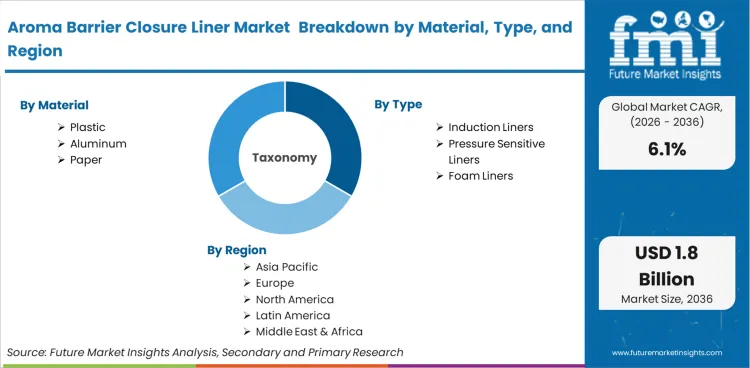
The aroma barrier closure liner market is projected to grow from USD 0.9 billion in 2025 to USD 1.0 billion in 2026, advancing at a CAGR of 6.05%. By 2036, the market is expected to reach USD 1.8 billion, driven by a shift from conventional sealing solutions to high‑performance barrier technologies that protect product aroma and quality in premium consumer categories.
Procurement directors are currently forced to transition from simple leakage prevention to rigorous molecular migration control to safeguard product integrity in high-volatility categories. Delaying this transition results in significant flavor scalping and fragrance degradation, which erodes brand equity long before physical spoilage occurs. FMI analysts observe that the rising concentration of volatile compounds in functional foods requires liners that do not just block oxygen but actively resist organic solvent absorption. Practitioners are increasingly moving toward multi-layer co-extruded structures that provide a chemical-specific seal rather than a universal physical plug.
Summary of Aroma Barrier Closure Liner Market
- Aroma Barrier Closure Liner Market Definition:
- The market defines a class of sealing technologies that prevent the molecular migration of aromatic compounds and oxygen. This structural boundary is set by the requirement for organoleptic stability in premium liquid and powder products.
- Demand Drivers in the Market:
- Stringent organoleptic standards in the export food sector force quality assurance managers to qualify high-barrier liners for long-haul transit.
- The rise of e-commerce fulfillment requires logistics operators to adopt liners that prevent cross-contamination of scents between diverse products in shared shipping containers.
- Increasing consumer sensitivity to "off-flavors" in bottled water and dairy products compels brand owners to move away from low-barrier legacy gaskets.
- Key Segments Analyzed in the FMI Report:
- Plastic Material: Plastic is likely to hold 42.4% share in 2026, as multi-layer co-extrusion allows for the integration of high-performance EVOH barriers into flexible and cost-effective liner formats.
- Food & Beverage: This segment is expected to dominate in 2026, driven by the structural requirement for ambient shelf-life extension in the premium juice and spice categories.
- Induction Liners: Induction technology is projected to lead by Type, accounting for 45.2% of the market in 2026 due to the superior hermetic seal and tamper evidence it provides.
- India: India is projected to record 8.4% compound growth, reflecting the rapid modernization of domestic pharmaceutical and food processing infrastructure.
- Analyst Opinion at FMI:
- Ismail Sutaria, Principal Analyst, Packaging, at FMI, opines, "Practitioners in this market face a unique paradox where the common belief is that material thickness dictates barrier performance, but our research shows that interface tension and induction dwell time often have a more significant impact on aroma retention. We are seeing a shift where the successful vendors are no longer selling just a material; they are selling a sealing process that accounts for the specific outgassing profiles of recycled container resins, which can otherwise compromise even the highest-grade aluminum barriers."
- Strategic Implications / Executive Takeaways:
- Packaging procurement managers must prioritize the qualification of mono-material barrier liners now to avoid future recycling surcharges as extended producer responsibility laws tighten globally.
- Quality control heads should implement high-speed leak detection that specifically monitors induction heat distribution to prevent micro-channel aroma loss.
- R&D teams in the cosmetics sector face a structural constraint regarding fragrance-plastic interactions that requires a shift toward high-barrier metalised foils or plasma-coated (SiOx) barrier liners to maintain scent profiles while avoiding PFAS-related fluorination liabilities.
- Methodology:
- Primary Research: Direct engagement with decision-makers in high-barrier procurement chains.
- Desk Research: Consolidation of material science publications and international food safety standards.
- Market-Sizing: Anchored to rigid container consumption metrics in volatile-sensitive categories.
- Validation: Triangulated through secondary data from the machinery manufacturing sector to ensure forecast accuracy.
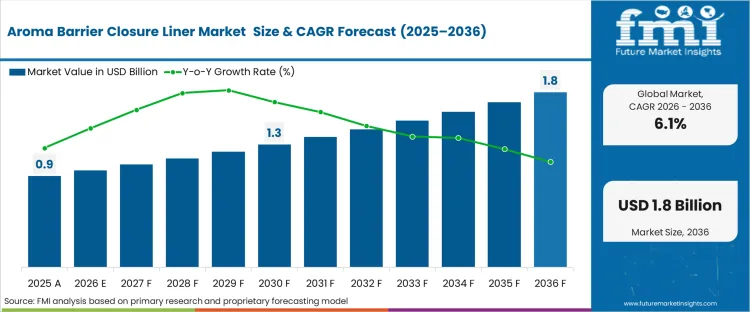
The structural gate to accelerated adoption lies in the standardization of universal liners capable of maintaining seal integrity across both glass and recycled plastic substrates without adjusting capping pressure. Once high-speed bottling lines can achieve a hermetic aroma seal on variable-tolerance PCR containers, the next unit of adoption becomes significantly more cost-effective. Brand owners who trigger this standardization first will clear the primary technical bottleneck preventing the full-scale deployment of sustainable high-barrier packaging.
Demand for aroma protection in India is set to grow at a CAGR of 8.4% as the dairy and condiment supply chains formalize. China is expected to see its aroma barrier sector grow at a compound annual rate of 7.2% driven by premiumization in the beverage sector. The Brazilian landscape is projected to witness growth at a CAGR of 6.8% through 2036. In the USA, the market for aroma liners is likely to post a CAGR of 4.5%. Germany's aroma protection industry is projected to demonstrate a CAGR of 4.2%. The UK aroma barrier space is forecast to observe a CAGR of 3.8%. Japan is expected to achieve a CAGR of 3.5% over the forecast period. This structural divergence reflects the varying stages of cold chain maturity and the specific shelf-life requirements of regional export markets.
Aroma Barrier Closure Liner Market Key Takeaways
| Metric | Details |
|---|---|
| Industry Size (2026) | USD 1.0 billion |
| Industry Value (2036) | USD 1.8 billion |
| CAGR (2026-2036) | 6.05% |
Source: Future Market Insights (FMI) analysis, based on proprietary forecasting model and primary research
Aroma Barrier Closure Liner Market Definition
The Aroma Barrier Closure Liner Market comprises specialized sealing components designed to prevent the ingress of oxygen and the egress of volatile aromatic compounds. These liners are functionally distinct from standard closure gaskets by their inclusion of high-barrier polymer layers or metallic foils specifically engineered to inhibit organoleptic migration. They ensure that the sensory profile of the contents, such as the complex scent of a perfume or the flavor profile of a spice, remains unchanged throughout the product's shelf life.
Aroma Barrier Closure Liner Market Inclusions
This market includes multi-layer induction seals, pressure-sensitive liners with barrier coatings, and foam-based liners integrated with EVOH or PVDC layers. These components are characterized by their barrier properties and their ability to withstand the chemical profiles of the substances they seal. The scope covers liners used in rigid plastic and glass containers across food, pharmaceutical, and cosmetic applications, including those that provide tamper evidence as a secondary function.
Aroma Barrier Closure Liner Market Exclusions
The market excludes standard polyethylene foam wadding that lacks a specific gas or aroma barrier layer, as these do not meet the functional threshold for organoleptic protection. Additionally, integrated closure valves, spray pumps, and primary container materials themselves are excluded, as the focus is strictly on the liner component. Single-use peelable film lids used for wide-mouth tubs are also excluded where they do not form part of a re-closeable screw-cap system.
Aroma Barrier Closure Liner Market Research Methodology
- Primary Research: FMI conducted interviews with Packaging Procurement Directors, Quality Assurance Managers in the Fragrance Industry, and Production Engineers at Tier-1 Bottling Facilities.
- Desk Research: Data was aggregated from global certification registries, regulatory filings regarding food contact materials, and procurement specification archives from leading consumer goods brands.
- Market-Sizing and Forecasting: The baseline anchors to the global production volumes of rigid containers in high-volatility categories, triangulated with the consumption rates of high-barrier polymer resins.
- Data Validation and Update Cycle: Forecasts were cross-validated using independent data streams from closure equipment manufacturing shipments and annual reports of publicly traded packaging converters.
Segmental Analysis
Aroma Barrier Closure Liner Market Analysis by Material
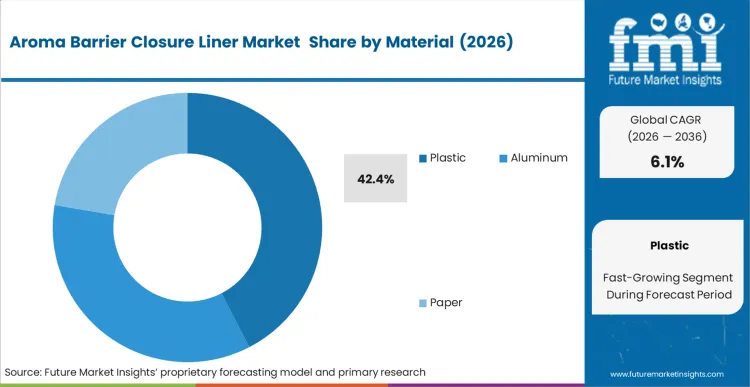
The reason plastic holds 42.4% of this market comes down to the structural versatility of multi-layer co-extrusion, which allows for the nesting of high-cost barrier resins like EVOH between functional structural layers. This material is not chosen purely for its cost; it is selected because it provides the only commercially scalable way to achieve high permeation rates while maintaining the flexibility required for a liquid-tight seal. FMI analysts note that while aluminum provides a superior absolute barrier, plastic-based laminates offer better recovery after repeated opening and closing cycles. Buyers are increasingly specifying co-extruded plastic liners to eliminate the risk of pinhole corrosion that can occur with foil-based systems in high-acidity environments. The operational consequence for buyers who stick with single-layer liners is a gradual loss of product potency that often bypasses standard visual inspections.
- Lifecycle ROI: Co-extruded plastic structures reduce the total cost of ownership by eliminating secondary seal failures during high-speed capping operations. Procurement managers capture these savings through lower scrap rates and reduced consumer returns for "flat" flavor profiles.
- Interface Compatibility: Synthetic polymer layers provide a more consistent chemical bond with plastic closures, ensuring that the aroma seal does not delaminate during transit. Logistics operators who qualify these materials avoid the hidden costs of cross-contamination in e-commerce fulfillment centers.
- Resource Circularity: Emerging mono-material plastic barriers allow brands to align with the 2030 recyclability mandates of the EU PPWR without sacrificing the organoleptic integrity of their premium lines. Early adopters of these materials gain a preferred status in retail networks that have strict sustainability scorecards.
Aroma Barrier Closure Liner Market Analysis by End Use
Packaging failure in the Food & Beverage sector leads to immediate brand disqualification, as consumers are highly sensitive to "scalped" flavor profiles. This consequence-driven adoption of aroma barriers is particularly evident in the premium coffee and spice sectors, where the loss of volatile oils directly equates to a loss of product value. According to FMI's estimates, the integration of active packaging features into liners is becoming a baseline requirement for ambient-stable dairy products. The decision pattern for food brands is shifting from "lowest-cost seal" to "highest-fidelity flavor retention," as the cost of a liner is negligible compared to the loss of a tier-1 retail contract due to product inconsistency.
- Early Adopter Advantage: Premium spirit and craft beverage brands were the first to move toward high-barrier liners to prevent the loss of delicate botanical notes during export. This early adoption validated the technology's performance under high-alcohol concentrations, paving the way for wider industrial use.
- Mainstream Integration: As the technology matured, large-scale condiment and sauce manufacturers followed, using aroma barriers to reduce their reliance on artificial preservatives. This shift allows manufacturers to market "clean label" products while maintaining a twelve-month shelf life.
- Late-Stage Conversion: Traditional dry-grocery manufacturers are only now reaching this sub-segment as they face pressure to move from multi-material jars to lighter, recyclable formats that require more robust internal seals. These buyers finally convert when the weight-reduction savings of the container outweigh the premium of the high-performance liner.
Aroma Barrier Closure Liner Market Analysis by Type
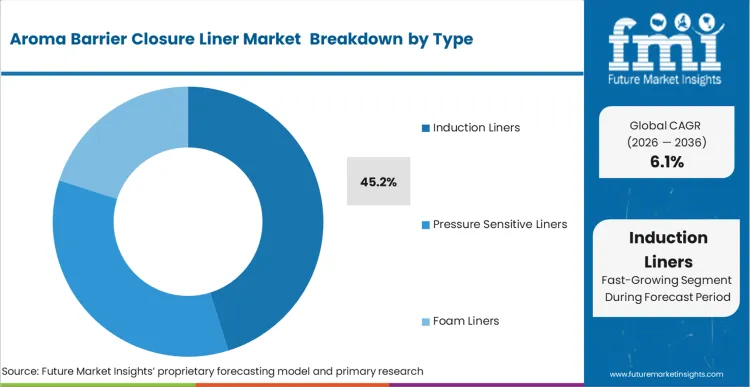
The displacement of traditional foam wads by induction liners is accelerating as brands seek a "one-and-done" solution for both aroma protection and tamper evidence. This shift is not merely a matter of security; it is a structural response to the higher pressures of modern global logistics, where a simple compression seal is no longer sufficient to prevent flavor loss. Induction technology provides a hermetic bond that is physically fused to the container rim, creating an absolute barrier that foam alone cannot replicate. FMI's view is that the primary driver for induction adoption is the elimination of micro-channel leaks that occur during the pressure changes of air-freight and high-altitude transport.
- Seal Breaches: Induction technology prevents the specific failure mode of "liner fall-out" which commonly occurs when cold temperatures cause container contraction during refrigerated transport. Pharmaceutical buyers who adopt this type ensure that the moisture and aroma integrity of the medication is never compromised.
- Partial Seal Risk: Even with high-grade induction equipment, residual risk remains if the container rim is contaminated with product residue during the filling process. Operators must implement clean-fill protocols to capture the full structural benefit of the hermetic aroma seal.
- Operational Precision: To achieve the full benefit of an induction aroma barrier, the buyer must optimize the dwell time and power settings of their sealing line for each specific container-liner combination. Failure to calibrate these settings results in scorched liners or "weak welds" that provide a false sense of security.
Aroma Barrier Closure Liner Market Drivers, Restraints, and Opportunities
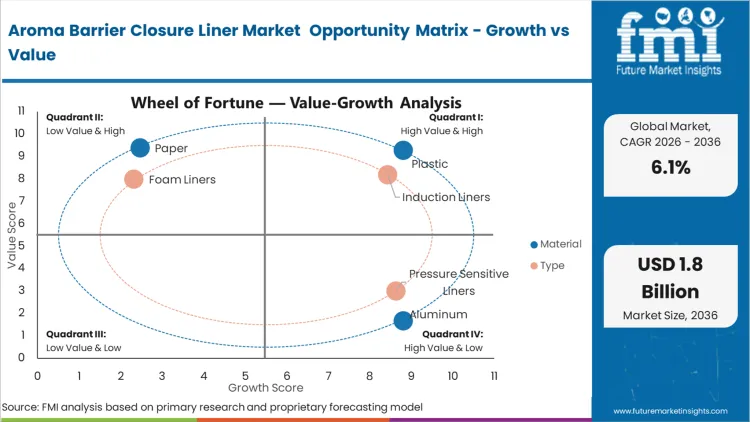
The primary structural forcing condition in this market is the mandate for "organoleptic transparency" being pushed down by global retail conglomerates. Procurement directors at major food and beverage brands are being forced to decide between maintaining legacy sealing systems that risk flavor degradation or investing in high-barrier qualification now. The commercial stakes are clear: a single batch of flavor-scalped product can lead to a delisting from major retail shelves, a consequence that far outweighs the unit-cost premium of an aroma-specific liner. This driver is not about "rising awareness," but about the hard commercial necessity of protecting brand equity in an increasingly competitive ambient-stable market.
The structural buyer friction in this market is the qualification bottleneck associated with recycled resin (PCR) containers. PCR often exhibits different outgassing behaviors and lower surface energy than virgin resins, which makes achieving a consistent hermetic aroma seal significantly more difficult. This is not a "lack of awareness" but a fundamental material science obstacle that requires extensive re-testing of induction dwell times and adhesive tie-layers. While new "universal" liners are emerging as a partial solution, the friction remains structural because each new batch of recycled resin can potentially alter the sealing window, forcing manufacturers to choose between slower production speeds or higher seal failure risks.
Opportunities in the Aroma Barrier Closure Liner Market
- E-commerce Optimization: The shift toward "frustration-free" packaging creates a structural opportunity for liners that can survive the rigors of individual parcel shipping without secondary leakage prevention measures. Third-party logistics providers can capture this opportunity by specifying high-barrier liners that significantly reduce fragrance cross-contamination and seal-failure risks, potentially lowering the stringency of secondary over-bagging requirements.
- Fragrance Longevity: Premium cosmetics brands are seeking liners that can prevent the migration of expensive essential oils into the plastic cap material. Brand owners who capture this niche can extend the retail shelf life of high-margin products while reducing the concentration of expensive raw fragrance materials.
- Pharmaceutical Stability: The increasing prevalence of moisture-sensitive and aroma-sensitive generic drugs creates an opportunity for liners that combine aroma protection with integrated desiccant properties. Manufacturers can capture this by providing a single-component solution that replaces the traditional "liner plus canister" approach in drug bottles.
Regional Analysis
Based on the regional analysis, the Aroma Barrier Closure Liner market is segmented into North America, Latin America, Western Europe, East Asia, South Asia & Pacific, and Middle East & Africa across 40 plus countries.
.webp "Top Country Growth Comparison Aroma Barrier Closure Liner Market Cagr (2026 2036)")
| Country | CAGR (2026 to 2036) |
|---|---|
| India | 8.4% |
| China | 7.2% |
| Brazil | 6.8% |
| USA | 4.5% |
| Germany | 4.2% |
| United Kingdom | 3.8% |
| Japan | 3.5% |
Source: Future Market Insights (FMI) analysis, based on proprietary forecasting model and primary research
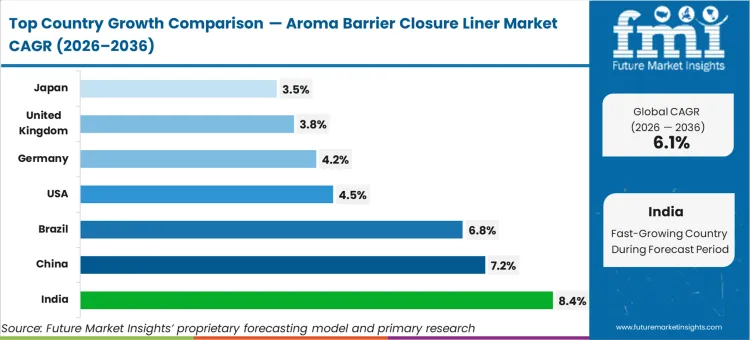
South Asia & East Asia Aroma Barrier Closure Liner Market Analysis
Expansion trajectory of the South Asia and East Asia market is defined by the rapid formalization of the agricultural and pharmaceutical supply chains. In this region, the shift toward aroma barriers is driven by the transition from open-market bulk commodities to branded, packaged goods that require extended shelf life in humid, high-temperature environments. FMI analysts opine that the adoption pattern here is "infrastructure-led," where the rollout of modern supermarket chains is forcing local manufacturers to upgrade their sealing technology to meet sterility maintenance standards.
- India: India's rapid expansion of its pharmaceutical export sector requires immediate alignment with global aroma and moisture protection standards to maintain the efficacy of sensitive drug formulations. The Indian aroma barrier sector is poised to expand at a CAGR of 8.4% through 2036. Mill operators and packaging converters who move first will capture the primary supply contracts for the burgeoning domestic health and wellness market.
- China: China is characterized by a "competitive positioning" dynamic where domestic beverage brands are using high-barrier liners to differentiate their premium offerings from mass-market competitors. The China aroma barrier sector is likely to post a CAGR of 7.2% as consumers increasingly demand products with no artificial preservatives, necessitating more robust physical seals. This trajectory positions Chinese manufacturers to compete more effectively in the high-end European and North American export markets.
- Japan: Industry in Japan operates under a "practitioner reality" where the CAGR of 3.5% reflects a mature landscape that is now focusing on the micro-optimization of sealing integrity for an aging population. Procurement directors here are prioritizing liners that offer both an absolute aroma barrier and "easy-open" functionality. This operational outcome ensures that high-barrier protection does not come at the cost of consumer accessibility, a key requirement for the Japanese domestic market.
North America & Latin America Aroma Barrier Closure Liner Market Analysis
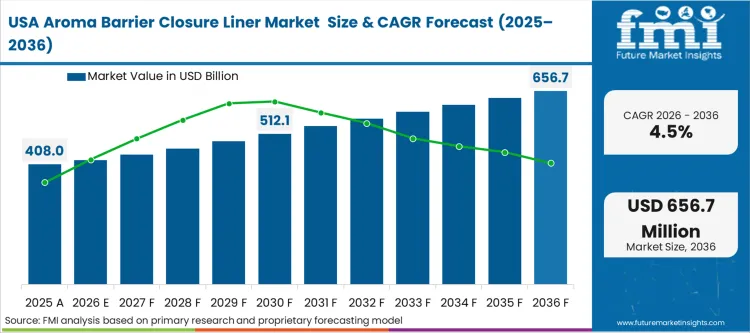
Market dynamics are primarily shaped by buyer behavior, particularly the rapid growth of e‑commerce grocery and direct‑to‑consumer fragrance segments. The physical stress of the "last-mile" delivery cycle in the USA and Brazil is forcing a rethink of traditional liner specifications to prevent the egress of scents in shared delivery vans. As per FMI's assessment, the adoption of high-barrier induction seals is no longer a luxury but a requirement for any brand operating in the omnichannel environment.
- USA: The USA market for aroma liners is projected to grow at a CAGR of 4.5%, driven by the decentralization of food production and the rise of boutique "farm-to-table" brands. These smaller producers require professional-grade shelf life protection to compete on national retail platforms. This shift ensures that the market remains robust even as overall rigid packaging volumes stabilize.
- Brazil: Brazil's "operational outcome" in the aroma barrier market is linked to the massive growth of its domestic cosmetics and personal care industry. Demand for aroma protection in Brazil is set to grow at a CAGR of 6.8% as manufacturers seek to preserve the complex scent profiles of indigenous Amazonian ingredients. This focus on scent integrity has cleared a bottleneck for Brazilian brands seeking to enter the global luxury fragrance space.
Western Europe Aroma Barrier Closure Liner Market Analysis
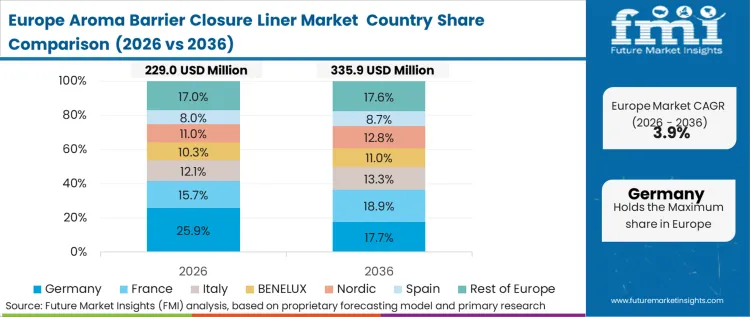
Western Europe's market is "policy-led," where the implementation of UK packaging EPR payments in 2025 and the adjusted Plastic Packaging Tax rate (£223.69/tonne as of April 2025) are shaping the types of liners being qualified. FMI analysts note that European buyers are uniquely focused on the "recyclability-barrier" trade-off, leading to a high demand for mono-material solutions.
- Germany: Germany's market follows a "practitioner reality" where the 4.2% CAGR is a result of rigorous technical standards for chemical migration in food contact materials. The liner compatibility with glass containers remains a high priority for the traditional German beverage and condiment industry. This nuance ensures that the market is driven by high-specification replacements rather than just volume growth.
- United Kingdom: The UK presents a "commercial opportunity" for vendors who can provide aroma barriers that are compatible with lightweighting initiatives in the dairy sector. The UK aroma barrier industry is projected to witness growth at a CAGR of 3.8% as supermarket chains push for thinner containers that require higher-performance seals to maintain stability. Success here allows vendors to capture long-term contracts with the UK's highly consolidated grocery retail sector.
Competitive Aligners for Market Players
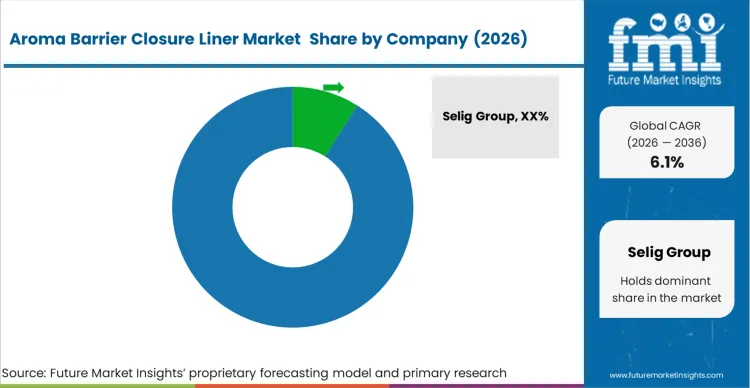
The structural reason for the moderate concentration in this market lies in the high IP-dependency of polymer tie-layers and the precision required for induction heating tolerances. Buyers do not select vendors based on "material price" alone; they select based on the vendor's ability to provide a "sealing window", the range of induction power and dwell time within which a perfect aroma seal is guaranteed. Companies like Selig Group and Tekni-Plex maintain their lead because they provide the technical support required to calibrate high-speed bottling lines, a variable that distinguishes qualified from unqualified vendors in the pharmaceutical and premium food sectors.
Incumbent players like Mondi Group and Amcor plc possess a structural advantage in their deep integration with primary closure manufacturers. This allows them to design liners that are perfectly matched to the thread and pitch of specific caps, a capability that challengers must build through extensive reverse-engineering or costly collaboration. The advantage persists because once a liner-closure combination is qualified by a brand owner, especially in the highly regulated pharmaceutical sector, the cost of switching to a challenger is prohibitive due to the requirement for 12-month stability testing. A challenger must build a category of capability that includes not just a barrier material, but a verifiable data file on drug stability and chemical inertness.
The competitive trajectory toward 2036 is defined by a structural tension between buyer demands for "zero-plastic" packaging and the functional reality that polymers currently provide the best aroma barriers. Large buyers are resisting vendor lock-in by pushing for universal liner standards that work across multiple machine types. According to FMI's view, the market will see a shift toward mono-material high-barrier coatings as incumbents and challengers alike race to close the performance gap between traditional laminates and recyclable alternatives. The market is becoming more concentrated at the high-performance end where the IP for recycled materials compatibility is held by a few global players.
Key Players in Aroma Barrier Closure Liner Market
- Selig Group
- Tekni-Plex
- Mondi Group
- Amcor plc
- Meyer Seals
- Guala Closures
- TekniPlex
- Pres-On
- Pillar Technologies
- Enercon Industries
Scope of the Report
| Metric | Value |
|---|---|
| Quantitative Units | USD 1.0 billion to USD 1.8 billion, at a CAGR of 6.05% |
| Market Definition | A class of sealing technologies designed to prevent the molecular migration of aromatic compounds and oxygen in rigid containers. It defines the functional boundary of organoleptic protection for volatile-sensitive products. |
| Material Segmentation | Plastic, Aluminum, Paper, Others |
| End Use Segmentation | Food & Beverage, Pharmaceuticals, Cosmetics & Personal Care, Homecare, Chemicals |
| Type Segmentation | Induction Liners, Pressure Sensitive Liners, Foam Liners, Others |
| Regions Covered | North America, Latin America, Western Europe, East Asia, South Asia & Pacific, Middle East & Africa |
| Countries Covered | India, China, Brazil, USA, Germany, UK, Japan, and 40 plus countries |
| Key Companies Profiled | Selig Group, Tekni-Plex, Mondi Group, Amcor plc, Meyer Seals, Guala Closures, TekniPlex, Pres-On, Pillar Technologies, Enercon Industries |
| Forecast Period | 2026 to 2036 |
| Approach | FMI's methodology anchors to rigid container production volumes and high-barrier resin consumption. Data was validated through interviews with procurement heads and cross-referenced with closure machinery shipment data. |
Source: Future Market Insights (FMI) analysis, based on proprietary forecasting model and primary research
Aroma Barrier Closure Liner Market Analysis by Segments
Material:
- Plastic
- Aluminum
- Paper
- Others
End Use:
- Food & Beverage
- Pharmaceuticals
- Cosmetics & Personal Care
- Homecare
- Chemicals
Type:
- Induction Liners
- Pressure Sensitive Liners
- Foam Liners
- Others
Region:
- South Asia & Pacific
- India
- East Asia
- China
- Japan
- North America
- USA
- Latin America
- Brazil
- Western Europe
- Germany
- United Kingdom
Bibliography
- PackUK. (2025, June 30). Extended producer responsibility for packaging: 2025 base fees. GOV.UK.
- HM Revenue & Customs. (2025, August 28). Plastic Packaging Tax (PPT) statistics background and references. GOV.UK.
- USA Food and Drug Administration. (2024, July 24). Container closure system and component changes: Glass vials and stoppers.
- International Council for Harmonisation of Technical Requirements for Pharmaceuticals for Human Use. (2025, April 11). ICH Q1 stability studies for drug substances and drug products (Step 2 draft guideline).
- European Chemicals Agency. (2024, November 20). ECHA and five European countries issue progress update on PFAS restriction.
This bibliography is provided for reader reference. The full FMI report contains the complete reference list with primary source documentation.
This Report Addresses
- Market intelligence to support strategic decision making across multi-layer plastic, aluminum foil, and high-barrier paper closure liners.
- Market size estimation and 10-year revenue forecasts from 2026 to 2036, supported by container-volume anchors and high-barrier resin consumption metrics.
- Growth opportunity mapping across food, pharma, and cosmetic sectors with emphasis on the standardization of universal liners for recycled containers.
- Segment and regional revenue forecasts covering induction, pressure-sensitive, and foam types across high-speed bottling and e-commerce procurement contexts.
- Competition strategy assessment including IP-dependent tie-layer technology, induction dwell-time optimization, and vendor support capabilities.
- Product development tracking including EVOH co-extrusion, mono-material barrier coatings, and tamper-evident induction seals.
- Market access analysis covering FDA food contact compliance, European plastic packaging taxes, and extended producer responsibility frameworks.
- Market report delivery in PDF, Excel, PPT, and interactive dashboard formats for executive strategy, packaging R&D planning, and operational benchmarking use.
Frequently Asked Questions
How large is the Aroma Barrier Closure Liner Market in 2026?
The market is projected to be valued at USD 1.0 billion in 2026. This figure signals a growing structural reliance on high-performance seals as brands move away from chemical preservatives in favor of physical barrier protection.
What will it be valued at by 2036?
The industry value is expected to reach USD 1.8 billion by 2036. This growth represents the cumulative adoption of aroma-specific liners across mid-tier consumer categories that previously relied on lower-cost, non-barrier gaskets.
What CAGR is projected for the Aroma Barrier Closure Liner Market?
The market is forecast to grow at a CAGR of 6.05% between 2026 and 2036. This rate reflects the steady replacement cycle of legacy capping equipment and the phased qualification of new barrier materials for ambient-stable food lines.
Which Material segment leads the Aroma Barrier Closure Liner Market?
The plastic segment is expected to lead with a 42.4% share in 2026. This leadership is driven by the structural mechanism of multi-layer co-extrusion, which allows for a high-performance EVOH aroma barrier to be integrated into a flexible, cost-effective format that adapts to container irregularities.
Which End Use segment leads the Aroma Barrier Closure Liner Market?
Food & Beverage leads the market because of the high commercial risk associated with flavor scalping in premium liquids and spices. Manufacturers in this sector prioritize aroma integrity to maintain brand consistency across long-haul export routes where temperature fluctuations can compromise standard seals.
Which Type segment leads the Aroma Barrier Closure Liner Market?
Induction liners are the dominant type due to their ability to provide a hermetic, fused bond that offers both an absolute aroma barrier and verifiable tamper evidence. This dual-functionality makes them the structural standard for high-speed automated bottling lines in the pharmaceutical and food sectors.
What drives rapid growth in the Aroma Barrier Closure Liner Market?
The non-obvious growth driver is the rising pressure from e-commerce logistics, where products from different categories are shipped in the same parcel. Liners that prevent the migration of scents are structurally necessary to prevent cross-contamination, such as a laundry detergent scent affecting a boxed food item.
What is the primary restraint in the Aroma Barrier Closure Liner Market?
The primary restraint is the technical difficulty of achieving a consistent aroma seal on recycled resin (PCR) containers. PCR has different surface energy and outgassing profiles than virgin plastic, which creates a structural bottleneck in the qualification process for high-speed induction sealing.
Which country grows fastest in the Aroma Barrier Closure Liner Market?
India is the fastest-growing market with a CAGR of 8.4%. Compared to China's 7.2% growth, India's rate is driven by a more rapid baseline shift from unbranded bulk goods to packaged, branded food and pharmaceuticals requiring extended shelf life in challenging climates.
How does induction sealing affect aroma retention differently than foam?
Induction sealing creates a fused molecular bond between the liner and the container rim, eliminating the micro-channels that compression-based foam liners often leave. This mechanism ensures that volatile aromatic compounds cannot escape through the mechanical gaps caused by bottle-cap thread tolerances.
What role does EVOH play in modern plastic closure liners?
EVOH is used as a functional barrier layer that provides exceptional resistance to gas permeation and organic solvent absorption. It is structurally necessary for products with high essential oil content, as it prevents the oils from being absorbed into the plastic cap, which would otherwise lead to scent loss and cap degradation.
Why is mono-material construction becoming a key competitive variable?
As European and North American regulations penalize multi-material packaging that is difficult to recycle, vendors are racing to develop mono-material liners that provide high-barrier performance. The winner of this transition will be the firm that can replicate the aroma barrier of a multi-layer laminate within a single, recyclable polymer class.
How do aroma liners support "clean label" food trends?
By providing a near-perfect barrier to oxygen and flavor loss, these liners allow manufacturers to reduce or eliminate chemical preservatives while maintaining the same shelf life. This structural change in the product formulation is only possible if the closure system can guarantee organoleptic stability for twelve months or more.
What is the "practitioner paradox" in aroma liner specification?
The paradox is that increasing the thickness of a liner does not necessarily improve its barrier performance if the induction settings are not precisely calibrated. Most aroma failures in the field are caused by "cold spots" in the induction weld rather than material permeation, a nuance that experienced packaging engineers prioritize over bare material specs.
Are these liners compatible with both glass and plastic containers?
While specialized liners exist for each, the current market trend is the development of universal liners that can achieve a high-barrier seal on both glass and various plastic grades. This standardization reduces inventory complexity for manufacturers running multi-material production lines.
How does the Brazilian market differ from the European market?
The Brazilian market is driven primarily by the domestic cosmetics sector's need to preserve the complex scent profiles of native botanicals. In contrast, the European market is shaped by policy mandates for recyclability and the reduction of chemical migration into food.
What impact does e-commerce have on liner design?
E-commerce requires liners to withstand the pressure changes and physical shocks of individual parcel shipping. This has led to an increase in the specification of induction liners over pressure-sensitive ones, as the former provide a more robust mechanical bond that prevents leakage during air-freight transit.
How do manufacturers validate the aroma barrier performance of a liner?
Validation typically involves "organoleptic testing" where sensory panels evaluate the flavor and scent of the product over a simulated shelf-life period. This is often supplemented by gas chromatography to measure the exact parts-per-million migration of volatile organic compounds through the seal.
What is the significance of "tie-layers" in liner construction?
Tie-layers are the specialized adhesive polymers used to bond incompatible barrier layers, like EVOH and Polyethylene, together. The IP behind these tie-layers is a major barrier to entry for new competitors, as the bond must remain stable even when exposed to aggressive chemicals or high induction heat.
Can aroma liners provide tamper evidence?
Yes, induction liners naturally provide tamper evidence because they must be destroyed or peeled away to access the product. This structural feature allows brand owners to combine two essential packaging functions, freshness preservation and security, into a single component.
What is the structural trajectory of the Japanese aroma barrier market?
The Japanese market is moving toward high-performance "easy-peel" liners that offer an absolute barrier but require very low force to remove. This trajectory reflects the demographic reality of an aging population that requires high-integrity pharmaceutical and food packaging that is also easy to use.
How do "active" liners differ from standard aroma barriers?
Active liners include scavengers or absorbers that actively remove oxygen or odors from the headspace of the container. While a standard barrier liner simply blocks migration, an active liner works to improve the internal environment, providing an extra layer of protection for highly sensitive ingredients.
Preview the report firsthand - request a free sample
Get SampleGet the brochure for pricing and purchase details.
Get PDFTable of Content
- Executive Summary
- Global Market Outlook
- Demand-side Trends
- Supply-side Trends
- Technology Roadmap Analysis
- Analysis and Recommendations
- Market Overview
- Market Coverage / Taxonomy
- Market Definition / Scope / Limitations
- Research Methodology
- Chapter Orientation
- Analytical Lens and Working Hypotheses
- Market Structure, Signals, and Trend Drivers
- Benchmarking and Cross-market Comparability
- Market Sizing, Forecasting, and Opportunity Mapping
- Research Design and Evidence Framework
- Desk Research Programme (Secondary Evidence)
- Company Annual and Sustainability Reports
- Peer-reviewed Journals and Academic Literature
- Corporate Websites, Product Literature, and Technical Notes
- Earnings Decks and Investor Briefings
- Government Statistics Portals and Public Data Releases
- Press Releases and Reputable Media Coverage
- Specialist Newsletters and Curated Briefings
- Sector Databases and Reference Repositories
- FMI Internal Proprietary Databases and Historical Market Datasets
- Subscription Datasets and Paid Sources
- Social Channels, Communities, and Digital Listening Inputs
- Additional Desk Sources
- Expert Input and Fieldwork (Primary Evidence)
- Primary Modes
- Qualitative Interviews and Expert Elicitation
- Quantitative Surveys and Structured Data Capture
- Blended Approach
- Why Primary Evidence is Used
- Field Techniques
- Interviews
- Surveys
- Focus Groups
- Observational and In-context Research
- Social and Community Interactions
- Stakeholder Universe Engaged
- C-suite Leaders
- Board Members
- Presidents and Vice Presidents
- R&D and Innovation Heads
- Technical Specialists
- Domain Subject-matter Experts
- Scientists
- Physicians and Other Healthcare Professionals
- Governance, Ethics, and Data Stewardship
- Research Ethics
- Data Integrity and Handling
- Primary Modes
- Tooling, Models, and Reference Databases
- Desk Research Programme (Secondary Evidence)
- Data Engineering and Model Build
- Data Acquisition and Ingestion
- Cleaning, Normalisation, and Verification
- Synthesis, Triangulation, and Analysis
- Quality Assurance and Audit Trail
- Market Background
- Market Dynamics
- Drivers
- Restraints
- Opportunity
- Trends
- Scenario Forecast
- Demand in Optimistic Scenario
- Demand in Likely Scenario
- Demand in Conservative Scenario
- Opportunity Map Analysis
- Product Life Cycle Analysis
- Supply Chain Analysis
- Investment Feasibility Matrix
- Value Chain Analysis
- PESTLE and Porter’s Analysis
- Regulatory Landscape
- Regional Parent Market Outlook
- Production and Consumption Statistics
- Import and Export Statistics
- Market Dynamics
- Global Market Analysis 2021 to 2025 and Forecast, 2026 to 2036
- Historical Market Size Value (USD Million) Analysis, 2021 to 2025
- Current and Future Market Size Value (USD Million) Projections, 2026 to 2036
- Y-o-Y Growth Trend Analysis
- Absolute $ Opportunity Analysis
- Global Market Pricing Analysis 2021 to 2025 and Forecast 2026 to 2036
- Global Market Analysis 2021 to 2025 and Forecast 2026 to 2036, By Material
- Introduction / Key Findings
- Historical Market Size Value (USD Million) Analysis By Material , 2021 to 2025
- Current and Future Market Size Value (USD Million) Analysis and Forecast By Material , 2026 to 2036
- Plastic
- Aluminum
- Paper
- Plastic
- Y-o-Y Growth Trend Analysis By Material , 2021 to 2025
- Absolute $ Opportunity Analysis By Material , 2026 to 2036
- Global Market Analysis 2021 to 2025 and Forecast 2026 to 2036, By Type
- Introduction / Key Findings
- Historical Market Size Value (USD Million) Analysis By Type, 2021 to 2025
- Current and Future Market Size Value (USD Million) Analysis and Forecast By Type, 2026 to 2036
- Induction Liners
- Pressure Sensitive Liners
- Foam Liners
- Induction Liners
- Y-o-Y Growth Trend Analysis By Type, 2021 to 2025
- Absolute $ Opportunity Analysis By Type, 2026 to 2036
- Global Market Analysis 2021 to 2025 and Forecast 2026 to 2036, By Region
- Introduction
- Historical Market Size Value (USD Million) Analysis By Region, 2021 to 2025
- Current Market Size Value (USD Million) Analysis and Forecast By Region, 2026 to 2036
- North America
- Latin America
- Western Europe
- Eastern Europe
- East Asia
- South Asia and Pacific
- Middle East & Africa
- Market Attractiveness Analysis By Region
- North America Market Analysis 2021 to 2025 and Forecast 2026 to 2036, By Country
- Historical Market Size Value (USD Million) Trend Analysis By Market Taxonomy, 2021 to 2025
- Market Size Value (USD Million) Forecast By Market Taxonomy, 2026 to 2036
- By Country
- USA
- Canada
- Mexico
- By Material
- By Type
- By Country
- Market Attractiveness Analysis
- By Country
- By Material
- By Type
- Key Takeaways
- Latin America Market Analysis 2021 to 2025 and Forecast 2026 to 2036, By Country
- Historical Market Size Value (USD Million) Trend Analysis By Market Taxonomy, 2021 to 2025
- Market Size Value (USD Million) Forecast By Market Taxonomy, 2026 to 2036
- By Country
- Brazil
- Chile
- Rest of Latin America
- By Material
- By Type
- By Country
- Market Attractiveness Analysis
- By Country
- By Material
- By Type
- Key Takeaways
- Western Europe Market Analysis 2021 to 2025 and Forecast 2026 to 2036, By Country
- Historical Market Size Value (USD Million) Trend Analysis By Market Taxonomy, 2021 to 2025
- Market Size Value (USD Million) Forecast By Market Taxonomy, 2026 to 2036
- By Country
- Germany
- UK
- Italy
- Spain
- France
- Nordic
- BENELUX
- Rest of Western Europe
- By Material
- By Type
- By Country
- Market Attractiveness Analysis
- By Country
- By Material
- By Type
- Key Takeaways
- Eastern Europe Market Analysis 2021 to 2025 and Forecast 2026 to 2036, By Country
- Historical Market Size Value (USD Million) Trend Analysis By Market Taxonomy, 2021 to 2025
- Market Size Value (USD Million) Forecast By Market Taxonomy, 2026 to 2036
- By Country
- Russia
- Poland
- Hungary
- Balkan & Baltic
- Rest of Eastern Europe
- By Material
- By Type
- By Country
- Market Attractiveness Analysis
- By Country
- By Material
- By Type
- Key Takeaways
- East Asia Market Analysis 2021 to 2025 and Forecast 2026 to 2036, By Country
- Historical Market Size Value (USD Million) Trend Analysis By Market Taxonomy, 2021 to 2025
- Market Size Value (USD Million) Forecast By Market Taxonomy, 2026 to 2036
- By Country
- China
- Japan
- South Korea
- By Material
- By Type
- By Country
- Market Attractiveness Analysis
- By Country
- By Material
- By Type
- Key Takeaways
- South Asia and Pacific Market Analysis 2021 to 2025 and Forecast 2026 to 2036, By Country
- Historical Market Size Value (USD Million) Trend Analysis By Market Taxonomy, 2021 to 2025
- Market Size Value (USD Million) Forecast By Market Taxonomy, 2026 to 2036
- By Country
- India
- ASEAN
- Australia & New Zealand
- Rest of South Asia and Pacific
- By Material
- By Type
- By Country
- Market Attractiveness Analysis
- By Country
- By Material
- By Type
- Key Takeaways
- Middle East & Africa Market Analysis 2021 to 2025 and Forecast 2026 to 2036, By Country
- Historical Market Size Value (USD Million) Trend Analysis By Market Taxonomy, 2021 to 2025
- Market Size Value (USD Million) Forecast By Market Taxonomy, 2026 to 2036
- By Country
- Kingdom of Saudi Arabia
- Other GCC Countries
- Turkiye
- South Africa
- Other African Union
- Rest of Middle East & Africa
- By Material
- By Type
- By Country
- Market Attractiveness Analysis
- By Country
- By Material
- By Type
- Key Takeaways
- Key Countries Market Analysis
- USA
- Pricing Analysis
- Market Share Analysis, 2025
- By Material
- By Type
- Canada
- Pricing Analysis
- Market Share Analysis, 2025
- By Material
- By Type
- Mexico
- Pricing Analysis
- Market Share Analysis, 2025
- By Material
- By Type
- Brazil
- Pricing Analysis
- Market Share Analysis, 2025
- By Material
- By Type
- Chile
- Pricing Analysis
- Market Share Analysis, 2025
- By Material
- By Type
- Germany
- Pricing Analysis
- Market Share Analysis, 2025
- By Material
- By Type
- UK
- Pricing Analysis
- Market Share Analysis, 2025
- By Material
- By Type
- Italy
- Pricing Analysis
- Market Share Analysis, 2025
- By Material
- By Type
- Spain
- Pricing Analysis
- Market Share Analysis, 2025
- By Material
- By Type
- France
- Pricing Analysis
- Market Share Analysis, 2025
- By Material
- By Type
- India
- Pricing Analysis
- Market Share Analysis, 2025
- By Material
- By Type
- ASEAN
- Pricing Analysis
- Market Share Analysis, 2025
- By Material
- By Type
- Australia & New Zealand
- Pricing Analysis
- Market Share Analysis, 2025
- By Material
- By Type
- China
- Pricing Analysis
- Market Share Analysis, 2025
- By Material
- By Type
- Japan
- Pricing Analysis
- Market Share Analysis, 2025
- By Material
- By Type
- South Korea
- Pricing Analysis
- Market Share Analysis, 2025
- By Material
- By Type
- Russia
- Pricing Analysis
- Market Share Analysis, 2025
- By Material
- By Type
- Poland
- Pricing Analysis
- Market Share Analysis, 2025
- By Material
- By Type
- Hungary
- Pricing Analysis
- Market Share Analysis, 2025
- By Material
- By Type
- Kingdom of Saudi Arabia
- Pricing Analysis
- Market Share Analysis, 2025
- By Material
- By Type
- Turkiye
- Pricing Analysis
- Market Share Analysis, 2025
- By Material
- By Type
- South Africa
- Pricing Analysis
- Market Share Analysis, 2025
- By Material
- By Type
- USA
- Market Structure Analysis
- Competition Dashboard
- Competition Benchmarking
- Market Share Analysis of Top Players
- By Regional
- By Material
- By Type
- Competition Analysis
- Competition Deep Dive
- Selig Group
- Overview
- Product Portfolio
- Profitability by Market Segments (Product/Age /Sales Channel/Region)
- Sales Footprint
- Strategy Overview
- Marketing Strategy
- Product Strategy
- Channel Strategy
- Tekni-Plex
- Mondi Group
- Amcor plc
- Meyer Seals
- Guala Closures
- TekniPlex
- Pres-On
- Pillar Technologies
- Selig Group
- Competition Deep Dive
- Assumptions & Acronyms Used


