

- Industry Size (2026)
- USD 1.0 Bn
- Forecast (2036)
- USD 3.9 Bn
- CAGR (2026 to 2036)
- 14.6%
Bio-based Fluorochemical Alternatives Market Forecast and Outlook 2026 to 2036
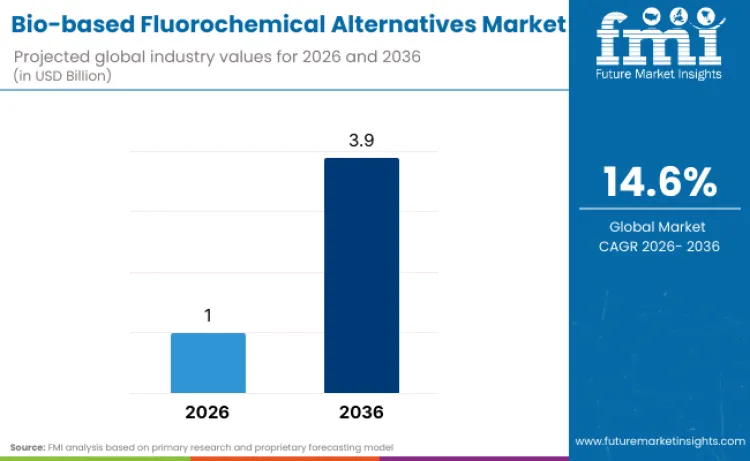
Demand for bio-based fluorochemical alternatives will likely total USD 1.0 billion in 2026, and increase at a 14.6% CAGR to reach USD 3.9 billion by 2036. The bio-based fluorochemical alternatives market is undergoing a structural transformation driven by an exit-and-replace strategy among global chemical giants.
As of early 2026, the industry is transitioning from a reliance on legacy per- and PFAS toward bio-derived polyamides, biosurfactants, and low-GWP HFOs. Regulatory pressure in the EU and North America has acted as the primary catalyst, exemplified by 3M's firm commitment to cease all PFAS manufacturing by the end of 2025, a move that effectively sunsets a USD 1.3 billion annual revenue stream.
Capacity expansion for renewable alternatives is accelerating to meet the 2026 to 2030 demand cycle. Arkema has emerged as a leader in this transition, securing the ramp-up of its major greenfield Polyamide 11 plant in Singapore, which utilizes 100% bio-sourced castor beans. Concurrently, the company is expanding its USA-based PVDF capacity, scheduled for mid-2026 completion, to support the lithium-ion battery and semiconductor sectors.
In Asia-Pacific, diversification is equally aggressive; Balrampur Chini Mills in India is pivoting into biodegradable plastics, while Daikin is scaling R-32 and HFO-based refrigerants to address the cooling requirements of the burgeoning AI data center market.
Strategic investments are now shifting toward SSbD frameworks. BASF is leveraging its APG Synergies to replace traditional fluorinated surfactants with 100% renewable alkyl polyglycosides. This shift is not merely defensive but a pursuit of green transformation as a primary growth engine.
Leaders in the sector are positioning these bio-based and low-impact portfolios as the only viable path for long-term shareholder value and compliance in a tightening global regulatory landscape. Reflecting this industry-wide pivot, 3M’s leadership has defined the transition as a necessity for market survival and innovation leadership.
"While PFAS can be safely made and used, we also see an opportunity to lead in a rapidly evolving external regulatory and business landscape to make the greatest impact for those we serve. This action is another example of how we are positioning 3M for continued sustainable growth by optimizing our portfolio, innovating for our customers, and delivering long-term value for our shareholders."
- Mike Roman, Chairman and CEO, 3M
Summary of Bio-based Fluorochemical Alternatives Market
What is Growth Outlook for Bio-based Fluorochemical Alternatives Market as per Future Market Insights Projection?
Future Market Insights projects the bio-based fluorochemical alternatives market to expand at a CAGR of 14.6% from 2026 to 2036, increasing from USD 1.0 billion in 2026 to USD 3.9 billion by 2036.
FMI Research Approach: FMI proprietary forecasting model integrating PFAS phase-out timelines, scale-up economics of bio-derived chemistries, and substitution rates across textiles, coatings, refrigerants, and specialty performance applications.
How do FMI Analysts Perceive Bio-based Fluorochemical Alternatives Market to Evolve?
FMI analysts perceive the market evolving through an exit-and-replace dynamic rather than gradual substitution. Growth is being driven by the ability of bio-based chemistries to achieve functional parity with legacy fluorochemicals while meeting cost, scale, and regulatory thresholds simultaneously. Global chemical producers rather than niche sustainability adoption increasingly anchor market momentum in portfolio realignment.
FMI Research Approach: Assessment of corporate PFAS exit strategies, capacity expansion announcements, and commercialization progress of bio-based and low-impact fluorochemical alternatives.
Which Country Holds Largest Share in Global Bio-based Fluorochemical Alternatives Market?
The United States holds the largest share of the global bio-based fluorochemical alternatives market, supported by production tax credits for renewable chemicals, defense and aerospace procurement standards, and early-scale deployment of bio-based surfactants and polymers.
FMI Research Approach: Country-level modeling based on renewable chemicals policy support, domestic manufacturing capacity, and adoption across regulated industrial end-use sectors.
What is the Definition of Bio-based Fluorochemical Alternatives Market?
The bio-based fluorochemical alternatives market comprises renewable and low-impact chemical systems developed to replace conventional fluorinated and PFAS-based chemistries in performance-critical applications, using plant-derived, microbial, or other bio-based feedstocks to deliver comparable functional properties without reliance on persistent fluorinated compounds.
FMI Research Approach: FMI market taxonomy and inclusion–exclusion framework covering bio-based surfactants, polymers, and functional additives positioned as substitutes for legacy fluorochemical systems.
What are some Globally Unique Trends Shaping Bio-based Fluorochemical Alternatives Market?
Globally unique trends include accelerated PFAS exit commitments by major chemical producers, rapid scaling of bio-based polyamides and fluorine-free surfactants, increasing reliance on synthetic biology and fermentation economics, and the integration of safe-and-sustainable-by-design frameworks into material qualification and procurement.
FMI Research Approach: Synthesis of regulatory developments, corporate investment activity, and technology commercialization trends across major bio-based chemicals markets.
Bio-based Fluorochemical Alternatives Market Key Takeaways
| Metric | Value |
|---|---|
| Expected Value (2026E) | USD 1.0 billion |
| Projected Valued (2036F) | USD 3.9 billion |
| CAGR (2026 to 2036) | 14.6% |
Source: FMI analysis based on primary research and proprietary forecasting model
Why is the Bio-based Fluorochemical Alternatives Market Growing?
Expansion of bio-based alternatives demand is driven by the industrialization of synthetic biology and the maturation of microbial fermentation, which are enabling the production of high-performance molecules that were previously cost-prohibitive. A central growth hypothesis for 2026 is the scaling of specialized biopolymers for high-tech applications, specifically in the 5G and electronics sectors.
In early 2026, Kingfa Sci. & Tech. Co. launched a bio-based LCP material that utilizes at least 70% renewable components. This development is positioned to reduce import dependence for 5G base station antenna materials by offering a bio-derived alternative with equivalent dielectric properties to petroleum-based LCPs.
Further advancement is linked to feedstock diversification, specifically the shift toward non-grain and waste-derived inputs to avoid competition with food supplies. In January 2026, the National Bureau of Statistics in China updated its industrial classification to encourage degradable fibers such as PHA and PLA, signaling a state-level shift toward microbially synthesized materials.
Argent Energy recently commissioned Europe’s largest technical-grade bio-based glycerin refinery in Amsterdam. This facility upgrades crude glycerine into a 99.7% pure technical-grade feedstock, providing a circular, bio-based drop-in for chemical producers previously reliant on fossil fuel-derived polyols and surfactants.
Demand in India is expanding through mandated integration and infrastructure subsidies. The Ministry of Petroleum and Natural Gas has implemented a 1% blending obligation for compressed biogas starting in FY 2025 to 2026, supported by excise duty exemptions in the Union Budget 2026.
These regulatory frameworks are designed to catalyze an estimated USD 30 billion investment opportunity in bio-based fuels and materials, leveraging the country's 500 million tons of annual agricultural residue. These coordinated policy and technical breakthroughs are effectively lowering the green premium, making bio-derived functional chemicals economically competitive for the first time.
How is the Bio-based Fluorochemical Alternatives Market Segmented?
The bio-based fluorochemical alternatives segmentation examines the high-growth segments of the bio-based alternatives market, focusing on textiles & leather treatments, fluorine-free bio-surfactants, and plant-derived carbon sources.
Are Bio-Based Coatings Redefining High-End Textile Performance?
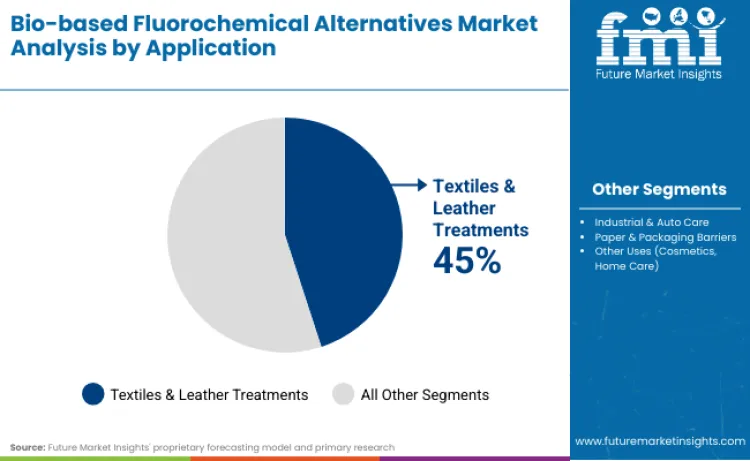
Textiles & leather treatments hold the largest application share at 45%, driven by aggressive phase-out timelines for traditional water and oil repellents. A significant trend for 2026 is the convergence of luxury and sustainability, as seen with Intrinsic Advanced Materials’ upcoming launch at Heimtextil 2026. This development integrates biodegradable polyester with certified wood-derived fibers to create high-performance hospitality textiles.
This segment is further accelerated by the French ban on PFAS in clothing, which took effect in early 2026, and the ECHA April 2026 restriction on Undecafluorohexanoic acid (PFHxA), a substance previously common in apparel finishes. These regulations have forced a shift toward bio-derived waxes and plant-based polymers that provide moisture barriers without toxic residues.
How is the Transition to Fluorine-Free Surfactants Reshaping Industrial Formulations?
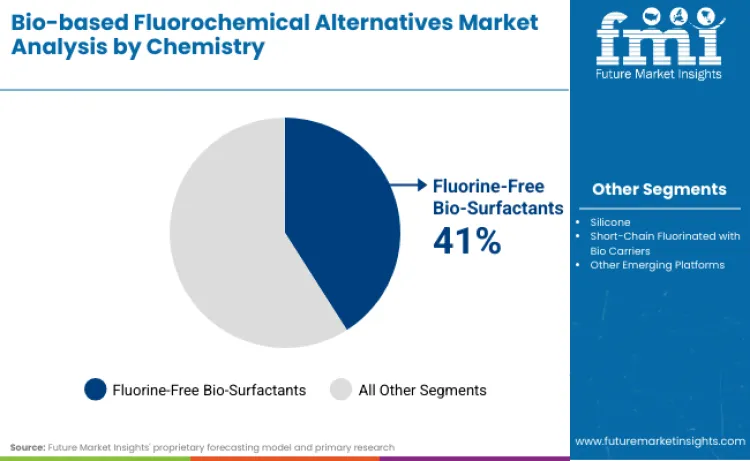
Fluorine-free bio-surfactants represent the dominant chemistry segment with a 41% market share. The expansion of this segment is currently fueled by technological breakthroughs in surfactant-free polymerization. In July 2025, AGC Inc. successfully launched a new grade of high-performance fluoroelastomers, AFLAS™ FFKM, manufactured entirely without surfactants or fluorinated solvents.
This proprietary technology addresses the critical demand in the semiconductor industry for materials that maintain high plasma resistance while adhering to new environmental standards. European Union’s October 2025 restriction on PFAS in firefighting foams is a major catalyst for the adoption of bio-based surfactants in the industrial safety and emergency response sectors.
Can Plant-derived Feedstocks Stabilize the Supply Chain for Renewable Chemicals?
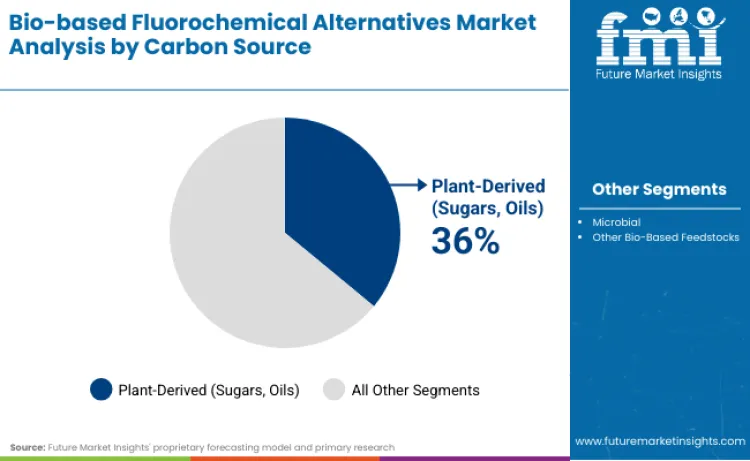
Plant-derived (sugars and oils) sources currently account for 36% of the carbon source segment, providing the foundational building blocks for bio-based acids and alcohols. In the second half of 2025, UPM Biochemicals initiated integrated commercial production at its Leuna biorefinery in Germany. This facility, representing a €1,275 million investment, converts sustainably sourced solid hardwood into Bio-MEG and Bio-MPG.
By utilizing forest-sourced biomass instead of food crops, this development provides a high-volume, renewable feedstock for the textiles, packaging, and de-icing fluid industries. This transition ensures that the surge in bio-chemical demand does not disrupt food security, aligning with the UK’s updated Biomass Strategy and India’s BioE3 Policy, which incentivize agricultural and forest residues as primary carbon inputs for 2026.
What Drives, Restraints, Opportunities, and Trends Shape the Bio-based Fluorochemical Alternatives Market?
An important driver is the implementation of the EU’s ReFuelEU Aviation rule and the broadened Renewable Energy Directive (RED III), which enforce strict traceability and sustainability thresholds for advanced feedstocks. This policy flywheel converts intent into mandatory volume, de-risking large-scale capital investments.
In January 2026, Braskem leveraged this regulatory momentum to showcase a new I'm green™ bio-based grade at Pharmapack, specifically targeting the healthcare sector where stringent medical-grade certifications now prioritize renewable carbon content to meet new institutional procurement standards.
A significant barrier remains the green premium, the higher cost of bio-derived molecules compared to fossil-based equivalents. OECD’s 2026 Environmental Performance Reviews projects that the bio-economy faces persistent investment gaps due to the high cost of raw materials and complex production processes. Production costs for bio-based chemicals often exceed conventional alternatives by 20% to 100%, depending on the complexity of the molecule.
This cost disparity is visible in the bio-ethylene sector, where the World Bank’s projections on agricultural raw material prices suggest that while feedstocks are abundant, the capital-intensive nature of pre-treatment and fermentation keeps bio-polymers at a price disadvantage compared to low-cost ethane-based competitors.
Opportunity lies in the Lab to Fab transition, where biotechnology creates unique functional properties that synthetic chemistry cannot easily replicate. The CBE JU has allocated €170.7 million for its 2026 call for proposals, specifically targeting Innovation Actions for bio-based thermosets and breakthrough textile fibers.
The EU-India Startup Partnership, unveiled in January 2026, represents a major strategic opportunity to combine European capital with India’s massive biomanufacturing scale. This partnership is expected to focus on "joint manufacturing" of bio-based materials, utilizing India’s surplus agricultural residue to create cost-competitive alternatives for the global supply chain.
Another barrier for 2026 is an expected downcycle in the traditional chemical industry characterized by significant global overcapacity in basic petrochemicals. As noted by the European Commission, the current levels of forever chemicals pollution could cost the EU €440 billion by 2050, yet the immediate financial pressure comes from the influx of cheap, fossil-derived plastics.
This hyper-competitiveness threatens to stall the adoption of renewable alternatives as traditional manufacturers slash prices to maintain volume. A clear signal of this pressure is the urgent call from the Chemical Industries Association for a clean industrial deal to protect bio-based investments from being undermined by the sudden market saturation of low-cost, high-carbon imports.
What is the Analysis Bio-based Fluorochemical Alternatives Market in Key Countries?
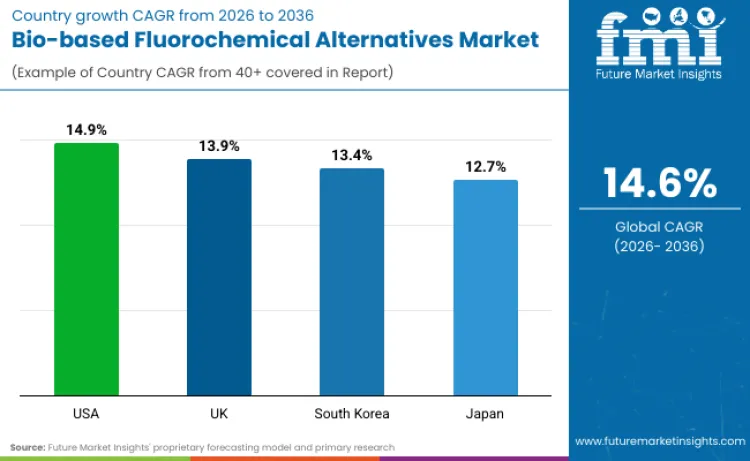
| Country | CAGR (2026 to 2036) |
|---|---|
| USA | 14.9% |
| UK | 13.9% |
| Japan | 12.7% |
| South Korea | 13.4% |
Source: FMI analysis based on primary research and proprietary forecasting model
How does the Renewable Chemicals Act Create a New Fiscal Frontier for Bio-based Fluorochemical Alternatives in USA?
USA is projected to lead the global market with a CAGR of 14.9% through 2036. This growth is underpinned by a transition from voluntary adoption to a subsidized industrial mandate. In January 2026, the introduction of the bipartisan Renewable Chemicals Act marked a pivotal shift, proposing a 15% production tax credit for chemicals containing at least 95% bio-based content. This legislation is designed to reduce the green premium for bio-based polymers and surfactants, effectively allowing domestic producers to compete directly with fossil-fuel incumbents on price.
The USDA has intensified its Certified Biobased Product labeling program to include industrial-grade functional fluids used in defense and aerospace. In early 2026, the U.S. Department of Defense announced a new partnership with the DARPA-backed biomanufacturing initiative to accelerate crop engineering for high-performance resins. These developments substantiate a hypothesis where national security and agricultural surplus converge to drive the adoption of bio-based alternatives in critical infrastructure sectors.
How is the UK’s Plan for Change Insulating Bio-Based Investment?
UK’s bio-based fluorochemical alternatives landscape is slated to expand at a 13.9% CAGR. The UK’s strategy is rooted in "de-risking" the capital cycle for specialty chemical clusters. Under the Modern Industrial Strategy (2025–2035), the government has allocated an additional £4 billion for high-growth sectors, specifically identifying bio-based feedstocks as a frontier industry. A unique development in January 2026 was the launch of the UK-US Critical Minerals and Materials Partnership, which explicitly includes the development of bio-based substitutes for rare-earth and fluorinated materials used in green energy transitions.
The Department for Business and Trade has established Industrial Strategy Zones that provide ten-year tax certainties for biorefineries. The recent integration of the National Formulation Centre’s digital twin technology allows UK-based startups to simulate the performance of bio-surfactants in consumer goods, cutting commercialization timelines by an estimated 30%. This institutional support ensures that the UK remains a hub for "high-value, low-volume" bio-specialties, even amidst global petrochemical oversupply.
Will Japan’s 2026 Packaging Standards usher in a Global Design Pivot?
Japan is set to grow at a CAGR of 12.7%, driven by a rigorous circular economy regulatory framework. Effective January 24, 2026, the Ministry of Economy, Trade and Industry (METI) implemented new certification standards for plastic products, mandating that beverage bottles must contain at least 15% recycled or bio-based content to be eligible for public procurement. This regulation is coupled with the Green Purchase Act, which grants preferential visibility to bio-certified products in the Japanese retail market, effectively creating a "pull" mechanism for bio-based resins.
Japan is also leading in the functionalization of biomaterials. In late 2025, Sumitomo Chemical and Lummus Technology announced the commercial availability of bio-based and recycled PMMA technologies, targeting the automotive and optics sectors. By focusing on high-clarity, bio-derived acrylics, Japanese firms are positioning themselves to dominate the high-precision electronics market, where bio-content is becoming a prerequisite for ESG-compliant supply chains.
Is the National Synthetic Biology Initiative stimulating Bio-based Fluorochemical Alternatives Demand in South Korea?
South Korea is projected to achieve a CAGR of 13.4%, fueled by its Bio-Manufacturing National Strategic Technology roadmap. The Ministry of Trade, Industry and Energy (MOTIE) has set a target to transition 30% of its chemical manufacturing industry to bio-based pathways within the next decade. Central to this is the 2026 expansion of the National Biofoundry, an AI-driven hub designed to automate the design of artificial cells for the production of bio-materials and specialty additives.
South Korea is strategically leveraging its semiconductor and automotive prowess to drive bio-based demand. In early 2026, the Ministry of Science and ICT launched a fast-track support package for startups utilizing biofoundries to produce "functional bio-monomers" for display technologies. This intersection of digital technology and biology is intended to create a Korean sovereign wealth fund for the bioeconomy, ensuring that the country’s export-led economy remains resilient against tightening global environmental standards.
How Competitive is the Fluorochemical Alternatives Market?
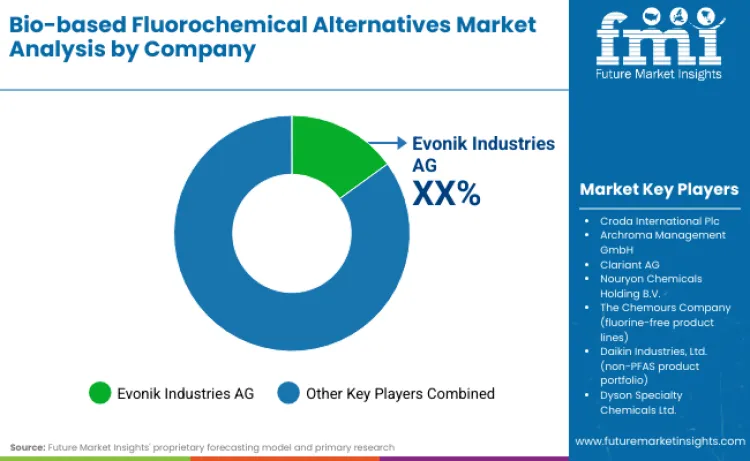
The competitive landscape for bio-based fluorochemical alternatives is characterized by an asymmetric rivalry between legacy chemical conglomerates transitioning their portfolios and agile biotechnology firms scaling proprietary molecular platforms.
Competition is no longer centered on volume-driven pricing alone but on patent-protected molecular specificity. For 2026, the intensity is amplified by a race for drop-in compatibility, where manufacturers compete to provide bio-based alternatives that require zero retooling for downstream industrial users. This is evidenced by the aggressive build-out of innovation clusters in Asia-Pacific, such as the newly inaugurated strategic hubs in Shanghai and Japan, designed to provide localized, high-speed co-development for the electronics and automotive sectors.
Key players are increasingly utilizing vertical integration as a competitive moat, locking in high-purity biological building blocks to insulate themselves from commodity price volatility. This strategic maneuvering has shifted the battlefield from basic R&D to full-scale infrastructure deployment.
Recent moves in the high-performance polymer space show a trend of cross-sectoral synergy, where chemical leaders are collaborating with pharmaceutical-grade manufacturers to guarantee the batch-to-batch reproducibility of their 2026 product lines. This rivalry is further sharpened by tightening non-PFAS performance benchmarks in the EU and US, forcing a direct head-to-head between bio-derived additives and microbial-sourced agents in the high-stakes coatings and crop protection markets.
Key Developments:
- In January 2026, Croda International Plc launched the BioXPro™ range, featuring high-purity bio-based amino acids specifically designed for pharmaceutical biomanufacturing. This follows a strategic partnership with Amino GmbH aimed at meeting the precision requirements of new therapies, marking a significant expansion of Croda's life sciences portfolio into high-reproducibility biological intermediates.
- Clariant AG announced in January 2026 its participation in the HPCI India 2026 expo to exhibit its expanded VITA range of 100% bio-based surfactants and PEGs. These products feature a renewable carbon index of at least 95%.
- The Chemours Company, in August 2025, entered a long-term strategic agreement with SRF Limited in India to expand the global supply of advanced fluoropolymers and fluoroelastomers by 2026. This partnership under the "Pathway to Thrive" strategy focuses on shifting the product mix toward higher-value industrial applications, ensuring reliable access to high-performance materials for the semiconductor and aerospace sectors through decentralized manufacturing.
Key Players Profiled
- Evonik Industries AG
- Croda International Plc
- Archroma Management GmbH
- Clariant AG
- Nouryon Chemicals Holding B.V.
- The Chemours Company (fluorine-free product lines)
- Daikin Industries, Ltd. (non-PFAS product portfolio)
- Dyson Specialty Chemicals Ltd.
- Elevance Renewable Sciences, Inc.
- P2 Science, Inc.
Market Definition
The bio-based fluorochemical alternatives market comprises renewable and low-impact chemical systems developed to replace conventional fluorinated and PFAS-based chemistries in performance-critical applications. These alternatives are derived from plant-based, microbial, or other bio-based feedstocks and are engineered to deliver comparable functional properties such as surface activity, thermal stability, chemical resistance, or barrier performance without reliance on persistent fluorinated compounds. The market reflects an industry-wide shift toward exit-and-replace strategies driven by regulatory pressure, liability exposure, and long-term portfolio realignment among global chemical producers.
The report includes bio-based and fluorine-free surfactants, bio-derived polyamides, silicone-based alternatives, short-chain fluorinated systems supported by bio carriers, and other emerging renewable chemistries used across textiles and leather treatments, industrial and automotive care, paper and packaging barriers, and selected home care and cosmetic applications. It covers materials produced from plant-derived sugars and oils, microbial fermentation routes, and other certified bio-based carbon sources, with assessment across major regions where PFAS restrictions, safe-and-sustainable-by-design frameworks, and renewable content mandates are reshaping material adoption.
The scope excludes legacy PFAS and long-chain fluorochemical products subject to regulatory phase-out, fossil-derived fluorochemicals without renewable or low-impact positioning, and finished consumer goods incorporating these materials. It also excludes bio-based fuels, bulk bioplastics without functional chemical substitution roles, upstream agricultural production, and laboratory-scale concepts not validated for industrial or commercial deployment. Recycling and remediation of existing fluorochemicals fall outside the defined market boundary.
Scope of Report
| Items | Values |
|---|---|
| Quantitative Units (2026) | USD 1.0 billion |
| Carbon Source |
Plant-Derived (Sugars, Oils), Microbial, Other Bio-Based Feedstocks |
| Chemistry |
Fluorine-Free Bio-Surfactants, Silicone, Short-Chain Fluorinated with Bio Carriers, Other Emerging Platforms |
| Application |
Textiles & Leather Treatments, Industrial & Auto Care, Paper & Packaging Barriers, Other Uses (Cosmetics, Home Care) |
| Regions Covered | North America, Western Europe, Eastern Europe, East Asia, South Asia & Pacific, Latin America, Middle East & Africa |
| Countries Covered | USA, UK, South Korea, Japan and 40+ Countries |
| Key Companies Profiled | Evonik Industries AG, Croda International Plc, Archroma Management GmbH, Clariant AG, Nouryon Chemicals Holding B.V., The Chemours Company (fluorine-free product lines), Daikin Industries, Ltd. (non-PFAS product portfolio), Dyson Specialty Chemicals Ltd., Elevance Renewable Sciences, Inc., P2 Science, Inc. |
Source: FMI analysis based on primary research and proprietary forecasting model
Bio-based Fluorochemical Alternatives Market by Key Segments
Carbon Source:
- Plant-Derived (Sugars, Oils)
- Microbial
- Other Bio-Based Feedstocks
Chemistry:
- Fluorine-Free Bio-Surfactants
- Silicone
- Short-Chain Fluorinated with Bio Carriers
- Other Emerging Platforms
Application:
- Textiles & Leather Treatments
- Industrial & Auto Care
- Paper & Packaging Barriers
- Other Uses (Cosmetics, Home Care)
Region:
- North America
- Western Europe
- Eastern Europe
- East Asia
- South Asia & Pacific
- Latin America
- Middle East & Africa
Bibliography
- European Chemicals Agency. (2025). Restriction proposal on per- and polyfluoroalkyl substances (PFAS): Background and impact assessment. ECHA Risk Assessment Committee Documentation.
- BASF SE. (2025). Safe and Sustainable by Design (SSbD) implementation in surfactants and performance chemicals. BASF Technical Sustainability Report.
- Arkema S.A. (2026). Bio-based polyamides and renewable fluorochemical alternatives for high-performance applications. Arkema Advanced Materials Technical Brief.
- George, N., Kurian, T., & Thomas, S. (2024). Bio-based alternatives to fluorinated surfactants and polymers: Materials, performance, and industrial scalability. Progress in Polymer Science, 146, 101463.
- Ragauskas, A. J., Beckham, G. T., Biddy, M. J., Chandra, R., Chen, F., Davis, M. F., … Wyman, C. E. (2023). Lignocellulosic biomass to bio-based chemicals and materials: Opportunities and challenges. Science, 380(6646), eabq7410.
Frequently Asked Questions
How large is the bio-based fluorochemical alternatives market?
The market is valued at around USD 1.0 billion in 2026, reflecting its transition from niche bio-based formulations into a structurally supported substitution market for regulated fluorochemicals.
What types of chemistries define bio-based fluorochemical alternatives?
The market is defined by fluorine-free bio-surfactants, bio-derived polyamides, silicone-based systems, and low-impact short-chain fluorinated chemistries supported by renewable carbon carriers.
Why are chemical producers accelerating the shift toward bio-based fluorochemical alternatives?
Producers are responding to PFAS phase-outs, rising liability exposure, and safe-and-sustainable-by-design requirements, making portfolio replacement a necessity rather than an optional sustainability strategy.
Which applications are driving materials-level demand for these alternatives?
Textiles and leather treatments anchor demand due to aggressive regulatory bans, followed by industrial and automotive care, paper and packaging barriers, and selected electronics and specialty coating applications.
What factors constrain faster scale-up of bio-based fluorochemical alternatives?
Key constraints include higher production costs compared to fossil-derived incumbents, feedstock availability and price volatility, and the need to achieve functional parity at industrial scale across diverse end-use requirements.
Preview the report firsthand - request a free sample
Get SampleGet the brochure for pricing and purchase details.
Get PDFTable of Content
- Executive Summary
- Bio-based Fluorochemical Alternatives Market Forecast and Outlook (2026–2036)
- Why is the Bio-based Fluorochemical Alternatives Market Growing?
- Exit-and-Replace Strategies for Legacy PFAS Portfolios
- Advances in Synthetic Biology and Fermentation Economics
- Acceleration of Regulatory Phase-outs and Compliance Mandates
- Scale-up of Bio-based and Low-impact Chemical Capacity
- How is the Bio-based Fluorochemical Alternatives Market Segmented?
- By Carbon Source
- By Chemistry
- By Application
- By Region
- What Drivers, Restraints, Opportunities, and Trends Shape the Market?
- Safe-and-Sustainable-by-Design (SSbD) Framework Adoption
- Green Premium and Cost Parity Challenges
- Lab-to-Fab Transition and Industrial Scalability
- Impact of Petrochemical Overcapacity on Bio-based Adoption
- What is the Bio-based Fluorochemical Alternatives Market Outlook by Key Countries?
- United States
- United Kingdom
- Japan
- South Korea
- How Competitive is the Bio-based Fluorochemical Alternatives Market?
- Competitive Landscape and Market Structure
- Asymmetric Competition between Chemical Majors and Biotech Firms
- Key Strategic Developments
- Key Players Profiled
- Evonik Industries AG
- Croda International Plc
- Archroma Management GmbH
- Clariant AG
- Nouryon Chemicals Holding B.V.
- The Chemours Company (Fluorine-free Product Lines)
- Daikin Industries, Ltd. (Non-PFAS Portfolio)
- Dyson Specialty Chemicals Ltd.
- Elevance Renewable Sciences, Inc.
- P2 Science, Inc.
- Market Definition
- Scope of Report
- Bio-based Fluorochemical Alternatives Market by Key Segments
- Bibliography
- Frequently Asked Questions (FAQs)


