

- Market Size (2026)
- USD 306.5 Mn
- Forecast (2036)
- USD 608.6 Mn
- CAGR (2026 to 2036)
- 7.1%
Flame-Retardant Synergist Systems with Low Smoke Toxicity Market Size, Market Forecast and Outlook By FMI
Summary of the Flame-Retardant Synergist Systems with Low Smoke Toxicity Market
- Demand and Growth Drivers
- Cable compounders use synergist blends to lower smoke density in public buildings and transport wiring.
- Polymer makers prefer systems able to reduce additive loading without weakening insulation or molded part strength.
- Buyers compare halogen-free claims with combustion test data before approving a new additive package.
- Product and Segment View
- Phosphorus-nitrogen systems are anticipated to represent 34.0% share of synergist type demand in 2026 due to char formation influencing low-smoke design.
- Wire and cable insulation is projected to hold 42.0% share of application demand in 2026, led by tighter fire safety requirements.
- Masterbatch concentrates are expected to secure 47.0% share of sales format demand in 2026 as dosing accuracy influences compounding lines.
- Geography and Competitive Outlook
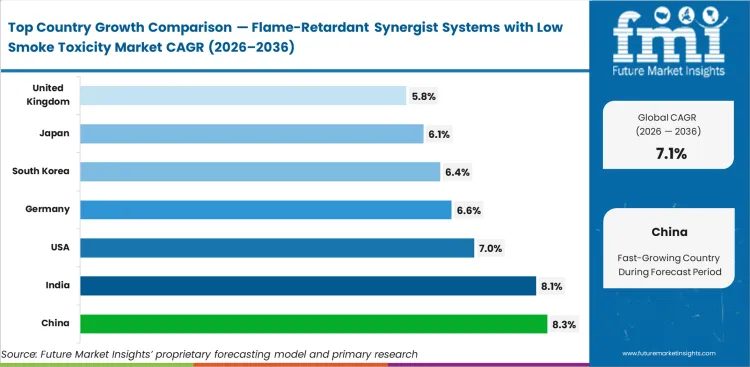
- China is projected to record 8.3% CAGR by 2036, as electric vehicle wiring and electronics output raise low-smoke additive trials.
- India is expected to expand at 8.1% CAGR by 2036, influenced by construction wiring and rail materials requiring safer polymer compounds.
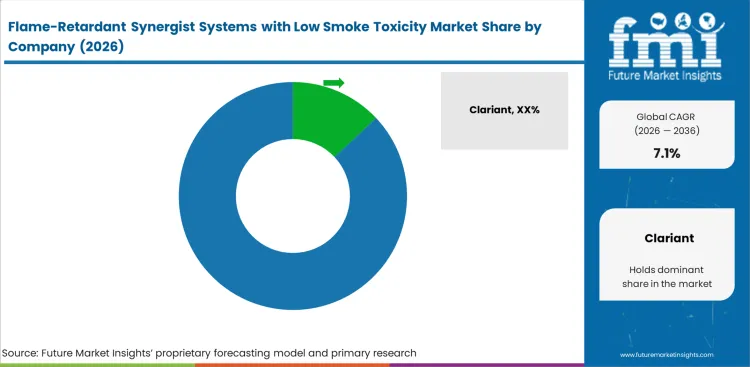
- Clariant and ICL compete on phosphorus chemistry. Huber and Rio Tinto strengthen mineral synergist supply for low-smoke compounds.
- Analyst Opinion
- Nikhil Kaitwade, Principal Analyst for Chemicals and Materials at FMI, opines, "Low-smoke synergist systems are moving from a compliance add-on into a formulation cost and safety decision. Buyers compare smoke output and flame rating together before accepting a package. Suppliers with mineral loading guidance can gain earlier trial access through polymer-specific test data. Demand is expected to follow cable compounds and electrical housings through 2036."
- Flame-Retardant Synergist Systems with Low Smoke Toxicity Market Value Analysis
- The flame-retardant synergist systems with low smoke toxicity market is shifting from basic fire-safety additives into a more performance-led formulation area.
- Polymer compounders are expected to raise use as electronics and transport parts need flame resistance with lower smoke release.
- Building material producers are likely to prefer additive packages influencing fire performance without heavy halogen loading.
- Long-term sector outlook is influenced by stricter smoke-toxicity expectations across enclosed spaces and higher-value plastic applications.
Key Takeaways, Market Size, and Forecast
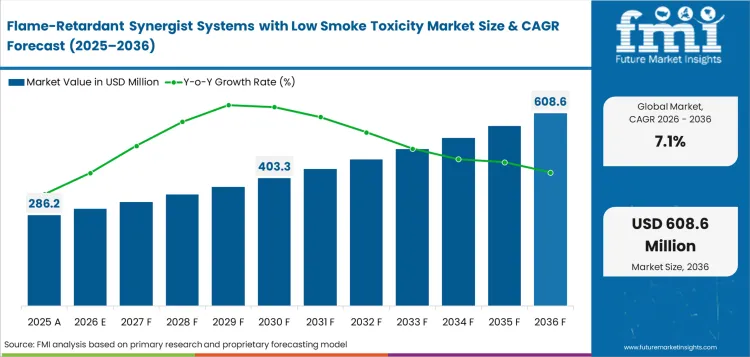
- The flame-retardant synergist systems with low smoke toxicity sector value stood at USD 286.2 million in 2025.
- Industry value is projected to reach USD 608.6 million by 2036 as cable and plastics users reduce smoke release.
- The sector is estimated to expand at 7.1% CAGR from 2026 to 2036 across electrical parts and transport materials.
- The market is projected to create an incremental opportunity of USD 302.1 million between 2026 and 2036.
- Masterbatch concentrates are expected to account for 47.0% share in 2026 as compounders need controlled dosing.
- China at 8.3% CAGR and India at 8.1% CAGR are anticipated to record the fastest pace through 2036.
Thin-wall electrical parts and transport interiors are forcing flame-retardant systems to meet fire ratings without raising smoke or toxicity risk. Clariant stated in March 2025 that Exolit™ OP synergistic blends serve polyamides and polyesters used in connectors and switches. The same source links glass-fiber reinforced PA6 and PA66 to UL 94 V-0 retention after repeated recycling. That pushes suppliers toward halogen-free packages that preserve both approval status and circular-material claims. Clariant stated in February 2026 that Exolit™ AP 422 A contains less than 0.1% melamine and supports fire, smoke and toxicity control in transport composites. Transport compounders are likely to treat APP systems as specification tools rather than commodity fillers. KRAIBURG TPE stated in October 2025 that its FR3 series achieves UL94 V0 at 1.5 mm thickness. Thin elastomer parts therefore become a clearer commercial target for low-smoke synergist systems used in rail cables and interior components.
Flame-Retardant Synergist Systems with Low Smoke Toxicity Market Definition
The sector covers additive systems used with flame retardants to improve fire performance and reduce smoke toxicity in polymer compounds. Included products cover phosphorus-nitrogen blends, zinc borate systems, antimony-free packages, mineral hydrates, molybdate smoke suppressants, and reactive synergist blends. The scope includes systems used in wire insulation, cable jackets, molded electrical housings, transport interiors, construction sheets, and coated textiles. Finished cables, finished plastic parts, and standalone flame-retardant chemicals without synergist claims remain outside this study.
Flame-Retardant Synergist Systems with Low Smoke Toxicity Market Inclusions
Market scope covers all commercially traded flame-retardant synergist systems with low smoke toxicity classified by chemistry type, including antimony-free synergists and mineral-based synergists. End users include electrical components; transport interiors; building materials; industrial equipment; and consumer products. Applications include wire compounds; cable insulation; molded plastics; coatings; foams; and composite parts. Product types include powder blends; masterbatches; liquid dispersions; treated minerals; and custom additive packages. Revenue scope covers 2026 to 2036. The stakeholders include synergist system manufacturers; flame-retardant additive suppliers; polymer compounders; resin producers; cable makers; electronics part producers; transport interior suppliers; construction material producers; testing labs; distributors; and regulatory bodies.
Flame-Retardant Synergist Systems with Low Smoke Toxicity Market Exclusions
The study excludes finished wires, finished cables, finished molded parts, fire alarms, fireproof coatings without polymer additive use, and general mineral fillers sold without flame-retardant synergy claims.
Flame-Retardant Synergist Systems with Low Smoke Toxicity Market Research Methodology
- Primary Research: FMI analysts reviewed compounders and cable material teams using low-smoke additive packages. Interviews focused on smoke density and flame rating before dosing cost review.
- Desk Research: The desk review used UK Government flame retardant scoping work and OICA vehicle output data. NFPA fire-loss data and official company launches after January 2024 supported cross-checks.
- Market Sizing and Forecasting: Forecast work combined polymer compound use and cable material exposure. Dose bands and country-level transport output trends supported the forecast.
- Data Validation: Segment shares were checked against polymer base use and application needs before sales format review.
Why is the Flame-Retardant Synergist Systems with Low Smoke Toxicity Market Growing?
- Low-smoke fire safety is integrating into halogen-free flame-retardant systems used in cable jackets and plastic housings.
- UK Government review data confirms alumina trihydrate and magnesium hydroxide release water during flame exposure and act as smoke suppressants.
- NFPA reported 1.39 million fires in the United States during 2024 with USD 19.1 billion in direct property damage.
Low-smoke performance is emerging as a practical approval point for polymer users in cable and transport applications. A compound can pass flame rating tests and still face rejection if smoke output raises safety concerns. Synergist systems help reduce additive loading and support cleaner char formation during fire exposure. Suppliers with test data across low-smoke flame-retardant systems can secure earlier approval in technical accounts.
Material producers are using formulation control to protect electrical safety without making compounds too brittle. Mineral hydrates lower smoke release by cooling the polymer surface during fire exposure. Phosphorus systems lead to char formation and help reduce heat release in selected polymers. Compounders able to prove flame rating and smoke performance together are anticipated to hold larger buyer access by 2036.
Market Segmentation Analysis
- Antimony-free synergist packages are anticipated to account for 38.0% share in 2026, driven by tighter smoke toxicity expectations in halogen-free polymer systems.
- Wire and cable applications are projected to record 32.0% share in 2026, led by stricter fire performance needs across building wiring and electrical infrastructure.
- Electrical and electronics end use is expected to lead with 34.0% share in 2026, as housings and connectors need flame resistance with lower smoke release.
- Powder-based synergist systems are estimated to hold51.0% share in 2026, reflecting easier blending in polymer compounding and masterbatch production.
The flame-retardant synergist systems with low smoke toxicity industry is segmented by synergist chemistry into zinc borate systems, zinc stannate systems, molybdate synergists, phosphorus-nitrogen synergists, nanoclay systems, and hybrid mineral systems. By polymer type, industry demand is divided into PVC compounds, polyolefins, engineering plastics, thermoplastic elastomers, epoxy resins, and rubber compounds. Based on smoke control function, demand is segmented into smoke suppression, char promotion, halogen-free flame control, drip reduction, heat release reduction, and toxic gas reduction. By application, demand is segmented into wire and cable compounds, construction materials, transportation interiors, electrical enclosures, insulation foams, and industrial molded parts. Based on end user, demand is categorized into cable manufacturers, compounders, construction product makers, automotive suppliers, electronics manufacturers, and industrial material producers. By supply form, demand is segmented into powder additives, pellet masterbatch, pre-compounded blends, liquid dispersions, treated mineral grades, and custom synergist packages.
Flame-Retardant Synergist Systems with Low Smoke Toxicity Market Analysis by Synergist Type
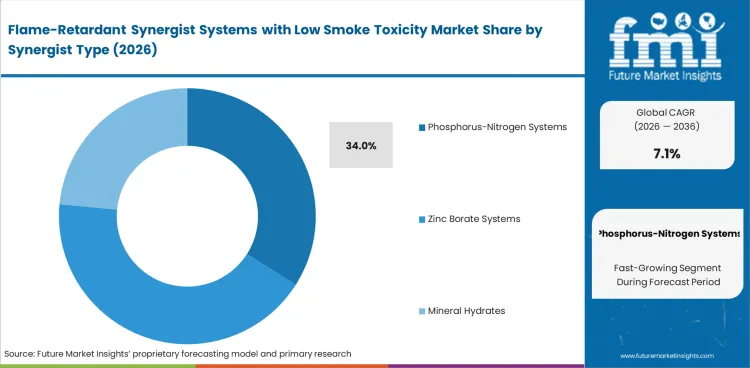
- Phosphorus-nitrogen systems are expected to account for 34.0% share in 2026 due to char-forming chemistry helping reduce flame spread and smoke output.
- Compounders prefer phosphorus-nitrogen systems for non-halogenated flame retardants led by char behavior exhibiting safer cable and electrical compounds.
Flame-Retardant Synergist Systems with Low Smoke Toxicity Market Analysis by Polymer Base
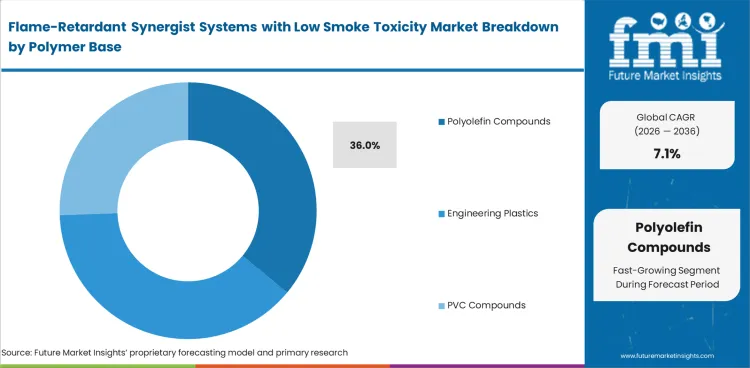
- Polyolefin compounds are projected to represent 36.0% share in 2026 since PE and PP cable grades can accept mineral loading for smoke control.
- Wire compounds and cable compounds use polyolefin bases in low-smoke jacketing as cable makers reduce corrosive smoke risk.
Flame-Retardant Synergist Systems with Low Smoke Toxicity Market Analysis by Application
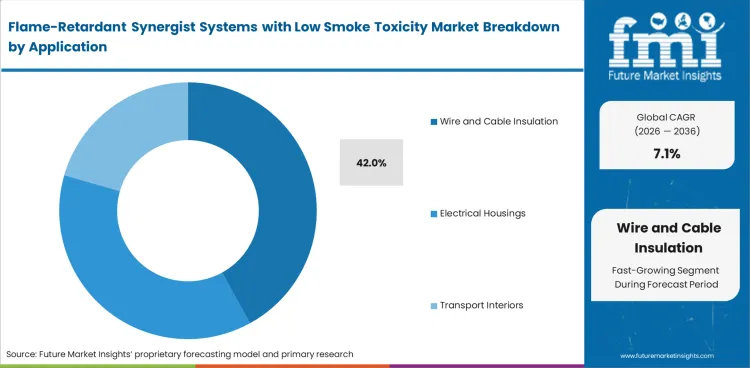
- Wire and cable insulation is anticipated to account for 42.0% share in 2026 as smoke output has direct safety value in buildings and trains.
- Fire-rated cables require additive systems able to maintain a stable insulation performance during heat and flame exposure.
Flame-Retardant Synergist Systems with Low Smoke Toxicity Market Analysis by Smoke Profile
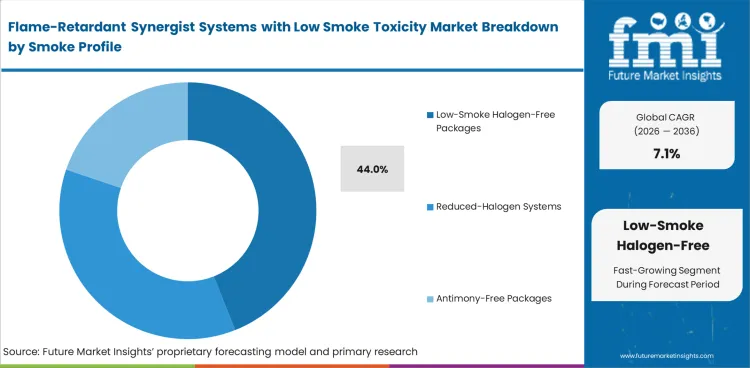
- Low-smoke halogen-free packages are projected to make up 44.0% share in 2026, led by cable buyers seeking lower corrosive gas release.
- Low-smoke toxicity flame retardants are preferred in enclosed public spaces since smoke output affects evacuation safety.
Flame-Retardant Synergist Systems with Low Smoke Toxicity Market Analysis by End Use
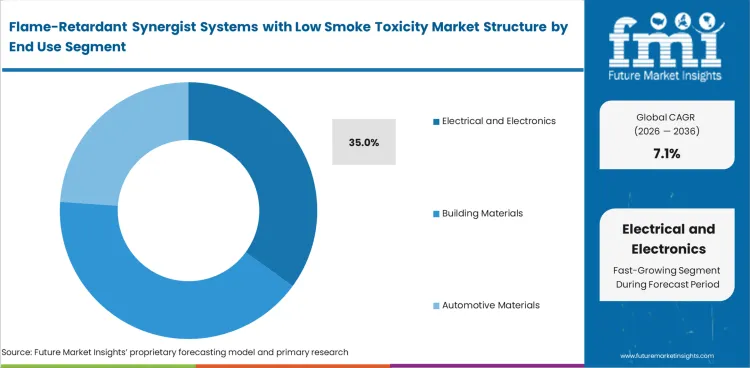
- Electrical and electronics use is expected to hold 35.0% share in 2026, driven by connectors and housings requiring flame rating with stable insulation.
- Automotive wire cable material promotes additive trials as electric vehicle wiring needs low-smoke insulation.
Flame-Retardant Synergist Systems with Low Smoke Toxicity Market Analysis by Sales Format
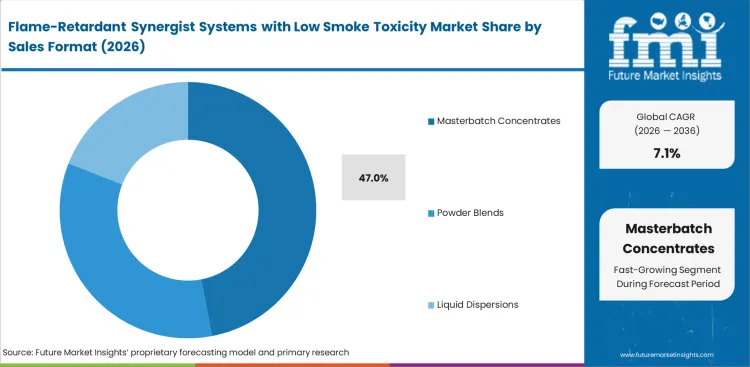
- Masterbatch concentrates are projected to make up 47.0% share in 2026, as controlled dosing lowers compounding error during additive loading.
- Fine hydrates and treated filler supply influence masterbatch formats because particle dispersion affects smoke performance.
Flame-Retardant Synergist Systems with Low Smoke Toxicity Market Drivers, Restraints, and Opportunities
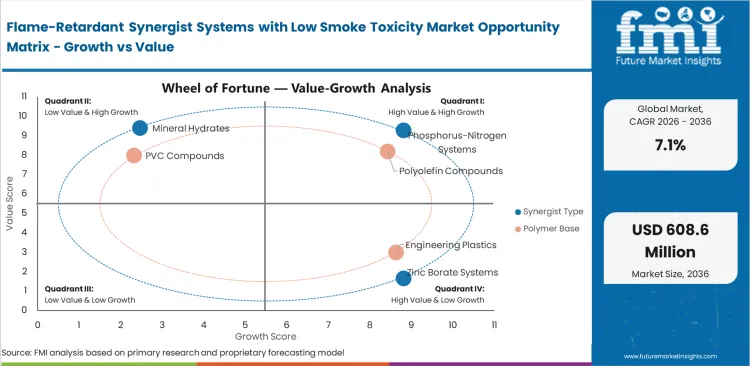
- Low-smoke cable specifications are expected to favor synergist packages reducing smoke density while preserving cable flexibility and processing stability.
- Antimony cost volatility and toxicology review are expected to pressure legacy halogen-antimony systems as compounders review lower-toxicity additive packages.
- Transport electrification is expected to create higher-value prospects as EV wiring and electrical housings require documented fire behavior.
Low-smoke cable demand is anticipated to pull synergist packages deeper into compound design through 2036. The National Fire Protection Association estimated 3,920 civilian fire deaths in the United States in 2024, supporting fire-safety review in building and transport materials. UL states that low-smoke halogen-free cables can reduce smoke toxicity and require standards-based testing. Formulators are expected to prefer systems meeting flame rating and smoke targets without heavy filler penalties.
Qualification work is expected to limit faster adoption in lower-price compound accounts. UK Government’s 2025 scoping review estimated 54% of GB flame-retardant inventory tonnage being used in polymers. Polymer adoption scale means additive changes must pass processing checks and end-product testing before supply approval. Supplier advantage is likely to shift toward companies providing test data along with dosing guidance and clear approval routes.
Application-Wise Use Analysis
Flame-retardant synergist systems with low smoke toxicity are expected to gain wider use in wire compounding and molded electrical parts. OICA reported 92.7 million motor vehicles produced worldwide in 2024, supporting the automotive polymer volume base. IEA data is more relevant for electrification, since global electric car sales exceeded 17 million units in 2024. Flame-retardant PCR plastics could extend use as recycled materials enter higher-safety plastic parts.
Technology Adoption and Compounding Control Analysis
Technology adoption is expected to center on compounding control and particle dispersion. Repeatable additive let-down remains part of the same approval work. Avient launched Cesa MAX FR on September 16, 2025 as a non-halogenated flame-retardant additive line for PE applications with smoke and fume limits. Compounders using automated feeders will still need masterbatch grades with stable loading and repeatable melt behavior. Suppliers can gain account access by linking dosing guidance with flame, smoke, and toxicity test results.
Regional Analysis
.webp "Top Country Growth Comparison Flame Retardant Synergist Systems With Low Smoke Toxicity Market Cagr (2026 2036)")
| Country | CAGR 2026 to 2036 |
|---|---|
| China | 8.3% |
| India | 8.1% |
| United States | 7.0% |
| Germany | 6.6% |
| South Korea | 6.4% |
| Japan | 6.1% |
| United Kingdom | 5.8% |
Source: Future Market Insights analysis based on primary research and public source checks in 2026.
Analysis of Flame-Retardant Synergist Systems with Low Smoke Toxicity by Key Countries
- China is projected to record 8.3% CAGR by 2036 as cable compounding and EV wiring demand increase low-smoke additive use.
- India is expected to advance at 8.1% CAGR by 2036, led by construction wire demand and transport electrification expanding from a lower base.
- United States demand is projected at 7.0% CAGR by 2036, driven by cable safety specifications and automotive electrical systems influencing additive adoption.
- Germany is expected to expand at 6.6% CAGR by 2036, reflecting rail material testing and automotive polymer approvals guiding low-smoke formulations.
- South Korea at 6.4% CAGR, Japan at 6.1% CAGR, and the United Kingdom at 5.8% CAGR advance through electronics and public infrastructure material needs.
Country performance varies with cable production scale and fire-safety testing pressure. China leads through large wire and cable compounding capacity. India follows as building electrification and local polymer compounding expands. United States demand expands through cable standards and automotive wiring applications. Germany advances through strict rail and transport material qualification. South Korea and Japan maintain steady use through electronics and vehicle polymer applications. United Kingdom demand remains stable as public infrastructure and building safety checks influence material choices.
Demand Outlook for Flame-Retardant Synergist Systems with Low Smoke Toxicity in China
Demand for flame-retardant synergist systems with low smoke toxicity in China is projected to rise at 8.3% CAGR by 2036 as large cable production and EV wiring growth increase additive use. Local compounders need synergist packages reducing smoke density while keeping polymer processing stable. China leads the country outlook due to wire producers and electrical component makers handling large polymer volumes across construction and transport applications.
- Large cable production promotes repeat synergist adoption as wire jacket producers seek lower smoke output without heavy filler loading.
- EV wiring and charging equipment applications are expected to raise use of flame-retardant compounds with documented smoke behavior.
- Local compounders gain more opportunity by supplying cost-balanced additive systems for PVC and polyolefin cable grades.
Demand Outlook for Flame-Retardant Synergist Systems with Low Smoke Toxicity in India
Flame-retardant synergist demand in India is projected to expand at 8.1% CAGR by 2036 due to construction electrification and stronger transport wiring demand from a smaller base. Domestic cable makers require additives that support safer insulation and jacketing performance in public buildings. India ranks second in the country set for the sector as urban construction and electrical infrastructure create a wider route for low-smoke compounds.
- Building wire demand increases additive use as cable makers respond to safer material preferences in commercial projects.
- Rail and metro expansion is expected to propel low-smoke compound adoption in transport wiring and interior polymer parts.
- Local suppliers can gain share by offering dosing and affordable grades suited to domestic compounding lines.
Demand Outlook for Flame-Retardant Synergist Systems with Low Smoke Toxicity in the United States
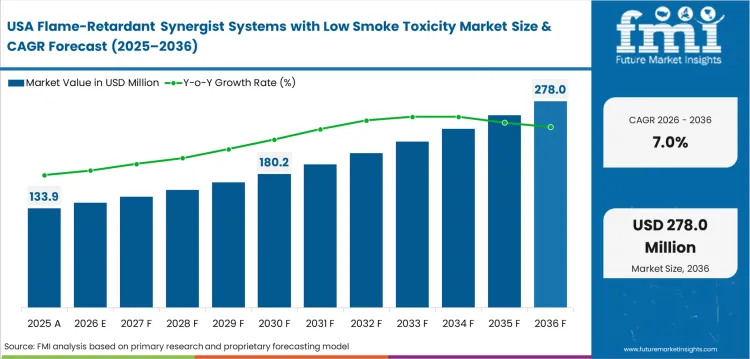
Sales of flame-retardant synergist systems with low smoke toxicity in the United States are projected to increase at 7.0% CAGR by 2036 as cable safety specifications and automotive electrical system demand guide additive use. Established compounders depend on additive systems balancing smoke control with mechanical performance. United States demand remains firm as building materials and transport applications require clearer fire-test documentation.
- Cable producers are expected to use low-smoke synergist packages as smoke density and toxicity guide material selection.
- Automotive suppliers require stable flame-retardant compounds for wire harnesses and molded electrical housings.
- Documentation requirements increase supplier value as compounders prefer grades based on test data and processing guidance.
Demand Outlook for Flame-Retardant Synergist Systems with Low Smoke Toxicity in Germany
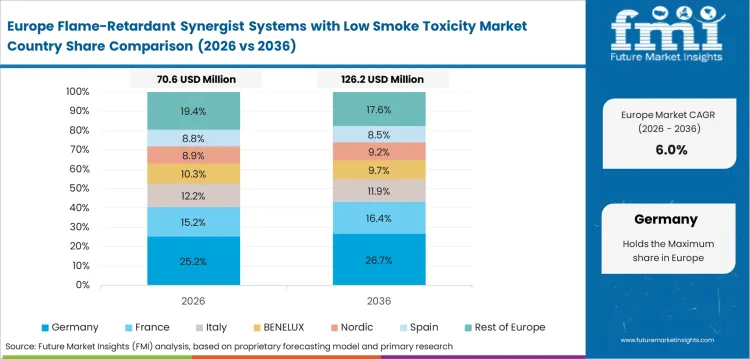
Flame-retardant synergist demand in Germany is projected to record 6.6% CAGR by 2036, as rail testing and automotive polymer approvals influence additive selection. German compounders focus on low-smoke performance with repeatable mechanical properties. Expansion remains measured due to technical qualification cycles being strict across rail interiors and electrical components.
- Rail material standards favor synergist systems leading to flame control and lower smoke output in polymer parts.
- Automotive compounders require repeatable fire performance before additives move into approved wiring and housing programs.
- Local testing practices hold longer approval timelines as producers validate smoke behavior and molded part strength.
Demand Outlook for Flame-Retardant Synergist Systems with Low Smoke Toxicity in South Korea
Industry demand in South Korea is forecast to grow at 6.4% CAGR by 2036 since electronics production and EV platforms sustain low-smoke additive use. Local material suppliers need synergist packages suited to compact electrical housings and cable insulation. South Korea maintains a solid position as battery systems and consumer electronics keep polymer fire performance under review.
- Electronics manufacturers promote additive demand through compact housings requiring flame resistance with controlled smoke output.
- EV battery and wiring applications are expected to implement low-smoke flame-retardant compounds in technical polymer grades.
- Domestic compounders benefit from supplying consistent masterbatch grades for electronics and transport material suppliers.
Demand Outlook for Flame-Retardant Synergist Systems with Low Smoke Toxicity in Japan
The sector in Japan is expected to expand at 6.1% CAGR by 2036 as mature electronics and automotive production maintain steady additive implementation. Japanese compounders focus on reliable dispersion and low odor across flame-retardant polymer systems. Japan records a stable pace driven by quality checks guiding additive approval across cable and molded electrical uses.
- Mature electronics production sustains synergist adoption in housings and connectors needing reliable flame performance.
- Automotive material suppliers prefer low-smoke additive systems preserving dimensional stability in molded components.
- Specialty compounders apply synergist packages to refine smoke behavior without changing established polymer systems.
Demand Outlook for Flame-Retardant Synergist Systems with Low Smoke Toxicity in the United Kingdom
Flame-retardant synergist demand in the United Kingdom is projected to rise at 5.8% CAGR by 2036, led by building safety review and rail material requirements promote technical additive use. Local compounders need systems providing clear smoke control and documented fire behavior. United Kingdom demand grows steadily since infrastructure materials and cable applications remain sensitive to safety performance.
- Building cable applications fuel low-smoke additive demand as safety review influences material specifications.
- Rail and public transport projects create requirements for polymer compounds with tested flame and smoke performance.
- Regional distributors serve smaller compounders needing standard grades and shorter approval for cable formulations.
Competitive Positioning and Strategic Supplier Strength
- Compounders are likely to favor suppliers offering polymer-specific dosing before cable jackets and molded electrical parts enter approval programs.
- Cable producers are likely to prefer additives backed by flame rating data and smoke performance proof across PVC and polyolefin compounds.
- EV and electronics suppliers are expected to screen additive partners on antimony-free positioning and repeatable dispersion control.
Supplier positioning in the flame‑retardant synergist systems market is increasingly defined by application‑specific chemistry and formulation guidance. Leading suppliers are strengthening competitive advantage by aligning synergist systems with named polymers and low‑smoke performance requirements.
Clariant and ICL demonstrate this shift through reactive phosphorus technologies and polymer‑specific validation. Clariant’s expansion of its Exolit® OP portfolio in 2025, including grades tailored for PBT applications in e‑mobility, reinforces its strength in engineering plastics requiring consistent flame and smoke performance. ICL’s introduction of VeriQuel™ R100 highlights demand for reactive synergists that chemically bond with the polymer matrix, delivering stable flame resistance with controlled smoke behavior. Buyers increasingly assess these systems based on combined flame rating and processing stability before approval.
On the mineral side, Huber Advanced Materials has strengthened its position by expanding its alumina trihydrate (ATH) and molybdate‑based smoke suppressant portfolio following the acquisition of R.J. Marshall’s assets. This reinforces Huber’s competitive role in mineral‑rich and antimony‑free synergist systems used in wire and construction compounds.
LANXESS has improved polymer‑side access by distributing FRX Nofia® flame retardants across engineering plastics and copper‑clad laminate applications, while Avient continues to build compounder relevance through non‑halogenated solutions such as Cesa™ MAX FR for polyethylene and OnFlex™ NHFR 7001 series for thermoplastic elastomers, both positioned around reduced smoke density claims. By 2036, competitive advantage is expected to favor suppliers that combine validated fire‑test data and low‑smoke formulation expertise.
Competitive Benchmarking: Flame-Retardant Synergist Systems with Low Smoke Toxicity Market
| Company | Low-Smoke Formulation Depth | Polymer Test Support | Mineral and Phosphorus Range | Footprint |
|---|---|---|---|---|
| Clariant | High | High | High | Global |
| ICL Group | High | Moderate | High | Global |
| Huber Advanced Materials | High | Moderate | High | Global |
| Rio Tinto Borates | Moderate | Moderate | High | Global |
| LANXESS | Moderate | High | Moderate | Global |
| FRX Innovations | High | Moderate | Moderate | Global |
| Avient | Moderate | High | Moderate | Global |
| BASF | Moderate | Moderate | High | Global |
Source: Future Market Insights competitive analysis based on public product portfolios and company activity in 2026.
Key Developments in the Flame-Retardant Synergist Systems with Low Smoke Toxicity Market
- In May 2025, Huber acquired R.J. Marshall ATH and antimony-free flame-retardant assets with molybdate smoke suppressant products.
- In September 2025, Avient launched Cesa MAX FR as a non-halogenated PE solution for applications where smoke and fumes are key concerns.
- In February 2026, Avient launched OnFlex NHFR 7001 Series TPEs designed to help reduce smoke density during combustion.
Key Players in the Flame-Retardant Synergist Systems with Low Smoke Toxicity Market
Phosphorus and reactive additive suppliers
- Clariant
- ICL Group
- LANXESS
- FRX Innovations
Mineral and smoke suppressant suppliers
- Huber Advanced Materials
- Rio Tinto Borates
- Nabaltec
- J.M. Huber Corporation
Compound and masterbatch specialists
- Avient
- BASF
- Italmatch Chemicals
- Adeka Corporation
Report Scope and Coverage
| Item | Value |
|---|---|
| Market value in 2025 | USD 286.2 million |
| Market value in 2026 | USD 306.5 million |
| Market value in 2036 | USD 608.6 million |
| CAGR from 2026 to 2036 | 7.1% |
| Quantitative units | USD million |
| Market definition | Synergist systems used with flame retardants to improve fire behavior and reduce smoke toxicity in polymer compounds |
| By synergist type | Phosphorus-nitrogen systems, zinc borate systems, mineral hydrates, molybdate systems, antimony-free blends, hybrid packages |
| By polymer base | Polyolefin compounds, engineering plastics, PVC compounds, polyurethane systems, rubber compounds, textile coatings |
| By application | Wire insulation, cable jackets, electrical housings, transport interiors, construction panels, coated fabrics |
| By smoke profile | Low-smoke halogen-free packages, reduced-halogen systems, antimony-free packages, char-forming systems, mineral-rich systems |
| By end use | Electrical products, building materials, automotive materials, rail systems, aerospace materials, electronics |
| By sales format | Masterbatch concentrates, powder blends, liquid dispersions, treated fillers, custom packages |
| Regions covered | North America, Latin America, Europe, East Asia, South Asia and Pacific, Middle East and Africa |
| Countries covered | China, India, United States, Germany, South Korea, Japan, United Kingdom |
| Key companies profiled | Clariant, ICL Group, Huber Advanced Materials, Rio Tinto Borates, LANXESS, FRX Innovations, Avient, BASF |
| Forecast period | 2026 to 2036 |
| Approach | FMI analysis based on polymer additive use, fire safety requirements, company activity, and public source checks |
Source: Future Market Insights analysis, 2026.
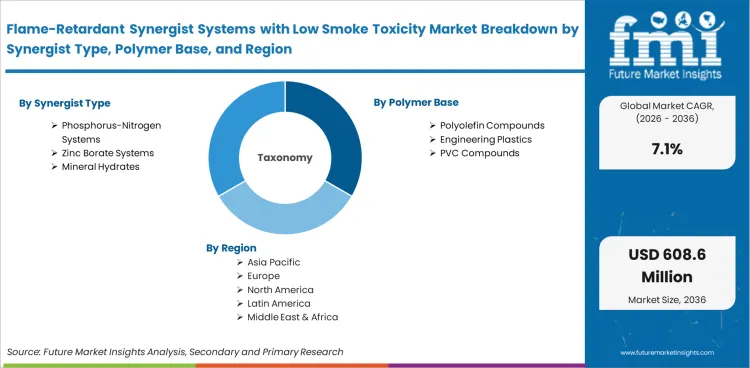
Flame-Retardant Synergist Systems with Low Smoke Toxicity Market Breakdown By Synergist Type, Polymer Base, Application, Smoke Profile, End Use, Sales Format, and Region
Flame-Retardant Synergist Systems with Low Smoke Toxicity Market Segmented by Synergist Type
- Phosphorus-Nitrogen Systems
- Zinc Borate Systems
- Mineral Hydrates
- Molybdate Systems
- Antimony-Free Blends
- Hybrid Packages
Flame-Retardant Synergist Systems with Low Smoke Toxicity Market Segmented by Polymer Base
- Polyolefin Compounds
- Engineering Plastics
- PVC Compounds
- Polyurethane Systems
- Rubber Compounds
- Textile Coatings
Flame-Retardant Synergist Systems with Low Smoke Toxicity Market Segmented by Application
- Wire Insulation
- Cable Jackets
- Electrical Housings
- Transport Interiors
- Construction Panels
- Coated Fabrics
Flame-Retardant Synergist Systems with Low Smoke Toxicity Market Segmented by Smoke Profile
- Low-Smoke Halogen-Free Packages
- Reduced-Halogen Systems
- Antimony-Free Packages
- Char-Forming Systems
- Mineral-Rich Systems
Flame-Retardant Synergist Systems with Low Smoke Toxicity Market Segmented by End Use
- Electrical Products
- Building Materials
- Automotive Materials
- Rail Systems
- Aerospace Materials
- Electronics
Flame-Retardant Synergist Systems with Low Smoke Toxicity Market Segmented by Sales Format
- Masterbatch Concentrates
- Powder Blends
- Liquid Dispersions
- Treated Fillers
- Custom Packages
Flame-Retardant Synergist Systems with Low Smoke Toxicity Market by Region
- North America
- United States
- Canada
- Mexico
- Latin America
- Brazil
- Chile
- Western Europe
- Germany
- United Kingdom
- Italy
- France
- Eastern Europe
- Poland
- East Asia
- China
- Japan
- South Korea
- South Asia and Pacific
- India
- ASEAN
- Australia and New Zealand
- Middle East and Africa
- Kingdom of Saudi Arabia
- South Africa
Research Sources and Bibliography
- Avient Corporation. (2025, September 16). New Cesa™ MAX flame retardant additives developed by Avient for strict industry standards.
- Avient Corporation. (2026, February 3). Avient expands non-halogen flame-retardant TPE portfolio with OnFlex™ NHFR 7001 Series.
- Clariant. (2025, October 14). Clariant increases capacity in Daya Bay facility and expands Exolit™ OP portfolio for e-mobility.
- Environment Agency. (2025, June 20). Flame retardant scoping review. GOV.UK.
- Hall, S. (2025, November). Fire loss in the United States during 2024. National Fire Protection Association.
- ICL Group. (2024, December 13). ICL unveils breakthrough in flame retardant technology.
- J.M. Huber Corporation. (2025, May 9). J.M. Huber Corporation announces acquisition of The R.J. Marshall Company’s alumina trihydrate (ATH), antimony-free flame retardant, and molybdate-based smoke suppressant assets.
- LANXESS & FRX Polymers. (2025, January 21). LANXESS to distribute FRX Polymers’ Nofia branded flame retardants in key segments. TheNewswire.
- Organisation Internationale des Constructeurs d’Automobiles. (2026, April 23). Auto industry growth shifted east in 2025 amid global repositioning.
- WorkSafeBC. (2025, February). The effects of Sb2O3 on human health.
Bibliography entries support reader source checking.
This Report Answers
- How large the flame-retardant synergist systems with low smoke toxicity sector is in 2026 and how far it can rise by 2036?
- Which synergist type and sales format hold the largest projected share positions in 2026?
- Why masterbatch concentrates and low-smoke halogen-free packages hold the clearest lead in current additive structure?
- Why China and India lead the country growth set through 2036?
- How cable insulation influences demand for low-smoke additive packages?
- Which supplier capabilities help companies defend position in polymer additive qualification?
- What public safety data and company launches support the forecast method used in this study?
Frequently Asked Questions
How large is the flame-retardant synergist systems with low smoke toxicity market in 2026?
The flame-retardant synergist systems with low smoke toxicity market is projected to reach USD 306.5 million in 2026.
What will the flame-retardant synergist systems with low smoke toxicity market be worth by 2036?
The flame-retardant synergist systems with low smoke toxicity market is forecast to reach USD 608.6 million by 2036.
What is the expected flame-retardant synergist systems with low smoke toxicity market CAGR?
The flame-retardant synergist systems with low smoke toxicity market is expected to expand at 7.1% CAGR from 2026 to 2036.
Which sales format leads the flame-retardant synergist systems with low smoke toxicity market?
Masterbatch concentrates are projected to account for 47.0% share in 2026 as compounders need controlled dosing and clean dispersion.
Which countries grow fastest in the flame-retardant synergist systems with low smoke toxicity market?
China at 8.3% CAGR and India at 8.1% CAGR are expected to grow fastest by 2036.
Which companies influence the flame-retardant synergist systems with low smoke toxicity market?
Clariant and ICL lead phosphorus chemistry. Huber and Rio Tinto influence mineral supply. LANXESS and Avient contribute to polymer-side access.
Preview the report firsthand - request a free sample
Get SampleGet the brochure for pricing and purchase details.
Get PDFTable of Content
- Executive Summary
- Global Market Outlook
- Demand-side Trends
- Supply-side Trends
- Technology Roadmap Analysis
- Analysis and Recommendations
- Market Overview
- Market Coverage / Taxonomy
- Market Definition / Scope / Limitations
- Research Methodology
- Chapter Orientation
- Analytical Lens and Working Hypotheses
- Market Structure, Signals, and Trend Drivers
- Benchmarking and Cross-market Comparability
- Market Sizing, Forecasting, and Opportunity Mapping
- Research Design and Evidence Framework
- Desk Research Programme (Secondary Evidence)
- Company Annual and Sustainability Reports
- Peer-reviewed Journals and Academic Literature
- Corporate Websites, Product Literature, and Technical Notes
- Earnings Decks and Investor Briefings
- Statutory Filings and Regulatory Disclosures
- Technical White Papers and Standards Notes
- Trade Journals, Industry Magazines, and Analyst Briefs
- Conference Proceedings, Webinars, and Seminar Materials
- Government Statistics Portals and Public Data Releases
- Press Releases and Reputable Media Coverage
- Specialist Newsletters and Curated Briefings
- Sector Databases and Reference Repositories
- FMI Internal Proprietary Databases and Historical Market Datasets
- Subscription Datasets and Paid Sources
- Social Channels, Communities, and Digital Listening Inputs
- Additional Desk Sources
- Expert Input and Fieldwork (Primary Evidence)
- Primary Modes
- Qualitative Interviews and Expert Elicitation
- Quantitative Surveys and Structured Data Capture
- Blended Approach
- Why Primary Evidence is Used
- Field Techniques
- Interviews
- Surveys
- Focus Groups
- Observational and In-context Research
- Social and Community Interactions
- Stakeholder Universe Engaged
- C-suite Leaders
- Board Members
- Presidents and Vice Presidents
- R&D and Innovation Heads
- Technical Specialists
- Domain Subject-matter Experts
- Scientists
- Physicians and Other Healthcare Professionals
- Governance, Ethics, and Data Stewardship
- Research Ethics
- Data Integrity and Handling
- Primary Modes
- Tooling, Models, and Reference Databases
- Desk Research Programme (Secondary Evidence)
- Data Engineering and Model Build
- Data Acquisition and Ingestion
- Cleaning, Normalisation, and Verification
- Synthesis, Triangulation, and Analysis
- Quality Assurance and Audit Trail
- Market Background
- Market Dynamics
- Drivers
- Restraints
- Opportunity
- Trends
- Scenario Forecast
- Demand in Optimistic Scenario
- Demand in Likely Scenario
- Demand in Conservative Scenario
- Opportunity Map Analysis
- Product Life Cycle Analysis
- Supply Chain Analysis
- Investment Feasibility Matrix
- Value Chain Analysis
- PESTLE and Porter’s Analysis
- Regulatory Landscape
- Regional Parent Market Outlook
- Production and Consumption Statistics
- Import and Export Statistics
- Market Dynamics
- Global Market Analysis 2021 to 2025 and Forecast, 2026 to 2036
- Historical Market Size Value (USD Million) Analysis, 2021 to 2025
- Current and Future Market Size Value (USD Million) Projections, 2026 to 2036
- Y-o-Y Growth Trend Analysis
- Absolute $ Opportunity Analysis
- Global Market Pricing Analysis 2021 to 2025 and Forecast 2026 to 2036
- Global Market Analysis 2021 to 2025 and Forecast 2026 to 2036, By Synergist Type
- Introduction / Key Findings
- Historical Market Size Value (USD Million) Analysis By Synergist Type , 2021 to 2025
- Current and Future Market Size Value (USD Million) Analysis and Forecast By Synergist Type , 2026 to 2036
- Phosphorus-Nitrogen Systems
- Zinc Borate Systems
- Mineral Hydrates
- Phosphorus-Nitrogen Systems
- Y-o-Y Growth Trend Analysis By Synergist Type , 2021 to 2025
- Absolute $ Opportunity Analysis By Synergist Type , 2026 to 2036
- Global Market Analysis 2021 to 2025 and Forecast 2026 to 2036, By Polymer Base
- Introduction / Key Findings
- Historical Market Size Value (USD Million) Analysis By Polymer Base, 2021 to 2025
- Current and Future Market Size Value (USD Million) Analysis and Forecast By Polymer Base, 2026 to 2036
- Polyolefin Compounds
- Engineering Plastics
- PVC Compounds
- Polyolefin Compounds
- Y-o-Y Growth Trend Analysis By Polymer Base, 2021 to 2025
- Absolute $ Opportunity Analysis By Polymer Base, 2026 to 2036
- Global Market Analysis 2021 to 2025 and Forecast 2026 to 2036, By Application
- Introduction / Key Findings
- Historical Market Size Value (USD Million) Analysis By Application, 2021 to 2025
- Current and Future Market Size Value (USD Million) Analysis and Forecast By Application, 2026 to 2036
- Wire and Cable Insulation
- Electrical Housings
- Transport Interiors
- Wire and Cable Insulation
- Y-o-Y Growth Trend Analysis By Application, 2021 to 2025
- Absolute $ Opportunity Analysis By Application, 2026 to 2036
- Global Market Analysis 2021 to 2025 and Forecast 2026 to 2036, By Smoke Profile
- Introduction / Key Findings
- Historical Market Size Value (USD Million) Analysis By Smoke Profile, 2021 to 2025
- Current and Future Market Size Value (USD Million) Analysis and Forecast By Smoke Profile, 2026 to 2036
- Low-Smoke Halogen-Free Packages
- Reduced-Halogen Systems
- Antimony-Free Packages
- Low-Smoke Halogen-Free Packages
- Y-o-Y Growth Trend Analysis By Smoke Profile, 2021 to 2025
- Absolute $ Opportunity Analysis By Smoke Profile, 2026 to 2036
- Global Market Analysis 2021 to 2025 and Forecast 2026 to 2036, By End Use
- Introduction / Key Findings
- Historical Market Size Value (USD Million) Analysis By End Use, 2021 to 2025
- Current and Future Market Size Value (USD Million) Analysis and Forecast By End Use, 2026 to 2036
- Electrical and Electronics
- Building Materials
- Automotive Materials
- Electrical and Electronics
- Y-o-Y Growth Trend Analysis By End Use, 2021 to 2025
- Absolute $ Opportunity Analysis By End Use, 2026 to 2036
- Global Market Analysis 2021 to 2025 and Forecast 2026 to 2036, By Sales Format
- Introduction / Key Findings
- Historical Market Size Value (USD Million) Analysis By Sales Format, 2021 to 2025
- Current and Future Market Size Value (USD Million) Analysis and Forecast By Sales Format, 2026 to 2036
- Masterbatch Concentrates
- Powder Blends
- Liquid Dispersions
- Masterbatch Concentrates
- Y-o-Y Growth Trend Analysis By Sales Format, 2021 to 2025
- Absolute $ Opportunity Analysis By Sales Format, 2026 to 2036
- Global Market Analysis 2021 to 2025 and Forecast 2026 to 2036, By Region
- Introduction
- Historical Market Size Value (USD Million) Analysis By Region, 2021 to 2025
- Current Market Size Value (USD Million) Analysis and Forecast By Region, 2026 to 2036
- North America
- Latin America
- Western Europe
- Eastern Europe
- East Asia
- South Asia and Pacific
- Middle East & Africa
- Market Attractiveness Analysis By Region
- North America Market Analysis 2021 to 2025 and Forecast 2026 to 2036, By Country
- Historical Market Size Value (USD Million) Trend Analysis By Market Taxonomy, 2021 to 2025
- Market Size Value (USD Million) Forecast By Market Taxonomy, 2026 to 2036
- By Country
- USA
- Canada
- Mexico
- By Synergist Type
- By Polymer Base
- By Application
- By Smoke Profile
- By End Use
- By Sales Format
- By Country
- Market Attractiveness Analysis
- By Country
- By Synergist Type
- By Polymer Base
- By Application
- By Smoke Profile
- By End Use
- By Sales Format
- Key Takeaways
- Latin America Market Analysis 2021 to 2025 and Forecast 2026 to 2036, By Country
- Historical Market Size Value (USD Million) Trend Analysis By Market Taxonomy, 2021 to 2025
- Market Size Value (USD Million) Forecast By Market Taxonomy, 2026 to 2036
- By Country
- Brazil
- Chile
- Rest of Latin America
- By Synergist Type
- By Polymer Base
- By Application
- By Smoke Profile
- By End Use
- By Sales Format
- By Country
- Market Attractiveness Analysis
- By Country
- By Synergist Type
- By Polymer Base
- By Application
- By Smoke Profile
- By End Use
- By Sales Format
- Key Takeaways
- Western Europe Market Analysis 2021 to 2025 and Forecast 2026 to 2036, By Country
- Historical Market Size Value (USD Million) Trend Analysis By Market Taxonomy, 2021 to 2025
- Market Size Value (USD Million) Forecast By Market Taxonomy, 2026 to 2036
- By Country
- Germany
- UK
- Italy
- Spain
- France
- Nordic
- BENELUX
- Rest of Western Europe
- By Synergist Type
- By Polymer Base
- By Application
- By Smoke Profile
- By End Use
- By Sales Format
- By Country
- Market Attractiveness Analysis
- By Country
- By Synergist Type
- By Polymer Base
- By Application
- By Smoke Profile
- By End Use
- By Sales Format
- Key Takeaways
- Eastern Europe Market Analysis 2021 to 2025 and Forecast 2026 to 2036, By Country
- Historical Market Size Value (USD Million) Trend Analysis By Market Taxonomy, 2021 to 2025
- Market Size Value (USD Million) Forecast By Market Taxonomy, 2026 to 2036
- By Country
- Russia
- Poland
- Hungary
- Balkan & Baltic
- Rest of Eastern Europe
- By Synergist Type
- By Polymer Base
- By Application
- By Smoke Profile
- By End Use
- By Sales Format
- By Country
- Market Attractiveness Analysis
- By Country
- By Synergist Type
- By Polymer Base
- By Application
- By Smoke Profile
- By End Use
- By Sales Format
- Key Takeaways
- East Asia Market Analysis 2021 to 2025 and Forecast 2026 to 2036, By Country
- Historical Market Size Value (USD Million) Trend Analysis By Market Taxonomy, 2021 to 2025
- Market Size Value (USD Million) Forecast By Market Taxonomy, 2026 to 2036
- By Country
- China
- Japan
- South Korea
- By Synergist Type
- By Polymer Base
- By Application
- By Smoke Profile
- By End Use
- By Sales Format
- By Country
- Market Attractiveness Analysis
- By Country
- By Synergist Type
- By Polymer Base
- By Application
- By Smoke Profile
- By End Use
- By Sales Format
- Key Takeaways
- South Asia and Pacific Market Analysis 2021 to 2025 and Forecast 2026 to 2036, By Country
- Historical Market Size Value (USD Million) Trend Analysis By Market Taxonomy, 2021 to 2025
- Market Size Value (USD Million) Forecast By Market Taxonomy, 2026 to 2036
- By Country
- India
- ASEAN
- Australia & New Zealand
- Rest of South Asia and Pacific
- By Synergist Type
- By Polymer Base
- By Application
- By Smoke Profile
- By End Use
- By Sales Format
- By Country
- Market Attractiveness Analysis
- By Country
- By Synergist Type
- By Polymer Base
- By Application
- By Smoke Profile
- By End Use
- By Sales Format
- Key Takeaways
- Middle East & Africa Market Analysis 2021 to 2025 and Forecast 2026 to 2036, By Country
- Historical Market Size Value (USD Million) Trend Analysis By Market Taxonomy, 2021 to 2025
- Market Size Value (USD Million) Forecast By Market Taxonomy, 2026 to 2036
- By Country
- Kingdom of Saudi Arabia
- Other GCC Countries
- Turkiye
- South Africa
- Other African Union
- Rest of Middle East & Africa
- By Synergist Type
- By Polymer Base
- By Application
- By Smoke Profile
- By End Use
- By Sales Format
- By Country
- Market Attractiveness Analysis
- By Country
- By Synergist Type
- By Polymer Base
- By Application
- By Smoke Profile
- By End Use
- By Sales Format
- Key Takeaways
- Key Countries Market Analysis
- USA
- Pricing Analysis
- Market Share Analysis, 2025
- By Synergist Type
- By Polymer Base
- By Application
- By Smoke Profile
- By End Use
- By Sales Format
- Canada
- Pricing Analysis
- Market Share Analysis, 2025
- By Synergist Type
- By Polymer Base
- By Application
- By Smoke Profile
- By End Use
- By Sales Format
- Mexico
- Pricing Analysis
- Market Share Analysis, 2025
- By Synergist Type
- By Polymer Base
- By Application
- By Smoke Profile
- By End Use
- By Sales Format
- Brazil
- Pricing Analysis
- Market Share Analysis, 2025
- By Synergist Type
- By Polymer Base
- By Application
- By Smoke Profile
- By End Use
- By Sales Format
- Chile
- Pricing Analysis
- Market Share Analysis, 2025
- By Synergist Type
- By Polymer Base
- By Application
- By Smoke Profile
- By End Use
- By Sales Format
- Germany
- Pricing Analysis
- Market Share Analysis, 2025
- By Synergist Type
- By Polymer Base
- By Application
- By Smoke Profile
- By End Use
- By Sales Format
- UK
- Pricing Analysis
- Market Share Analysis, 2025
- By Synergist Type
- By Polymer Base
- By Application
- By Smoke Profile
- By End Use
- By Sales Format
- Italy
- Pricing Analysis
- Market Share Analysis, 2025
- By Synergist Type
- By Polymer Base
- By Application
- By Smoke Profile
- By End Use
- By Sales Format
- Spain
- Pricing Analysis
- Market Share Analysis, 2025
- By Synergist Type
- By Polymer Base
- By Application
- By Smoke Profile
- By End Use
- By Sales Format
- France
- Pricing Analysis
- Market Share Analysis, 2025
- By Synergist Type
- By Polymer Base
- By Application
- By Smoke Profile
- By End Use
- By Sales Format
- India
- Pricing Analysis
- Market Share Analysis, 2025
- By Synergist Type
- By Polymer Base
- By Application
- By Smoke Profile
- By End Use
- By Sales Format
- ASEAN
- Pricing Analysis
- Market Share Analysis, 2025
- By Synergist Type
- By Polymer Base
- By Application
- By Smoke Profile
- By End Use
- By Sales Format
- Australia & New Zealand
- Pricing Analysis
- Market Share Analysis, 2025
- By Synergist Type
- By Polymer Base
- By Application
- By Smoke Profile
- By End Use
- By Sales Format
- China
- Pricing Analysis
- Market Share Analysis, 2025
- By Synergist Type
- By Polymer Base
- By Application
- By Smoke Profile
- By End Use
- By Sales Format
- Japan
- Pricing Analysis
- Market Share Analysis, 2025
- By Synergist Type
- By Polymer Base
- By Application
- By Smoke Profile
- By End Use
- By Sales Format
- South Korea
- Pricing Analysis
- Market Share Analysis, 2025
- By Synergist Type
- By Polymer Base
- By Application
- By Smoke Profile
- By End Use
- By Sales Format
- Russia
- Pricing Analysis
- Market Share Analysis, 2025
- By Synergist Type
- By Polymer Base
- By Application
- By Smoke Profile
- By End Use
- By Sales Format
- Poland
- Pricing Analysis
- Market Share Analysis, 2025
- By Synergist Type
- By Polymer Base
- By Application
- By Smoke Profile
- By End Use
- By Sales Format
- Hungary
- Pricing Analysis
- Market Share Analysis, 2025
- By Synergist Type
- By Polymer Base
- By Application
- By Smoke Profile
- By End Use
- By Sales Format
- Kingdom of Saudi Arabia
- Pricing Analysis
- Market Share Analysis, 2025
- By Synergist Type
- By Polymer Base
- By Application
- By Smoke Profile
- By End Use
- By Sales Format
- Turkiye
- Pricing Analysis
- Market Share Analysis, 2025
- By Synergist Type
- By Polymer Base
- By Application
- By Smoke Profile
- By End Use
- By Sales Format
- South Africa
- Pricing Analysis
- Market Share Analysis, 2025
- By Synergist Type
- By Polymer Base
- By Application
- By Smoke Profile
- By End Use
- By Sales Format
- USA
- Market Structure Analysis
- Competition Dashboard
- Competition Benchmarking
- Market Share Analysis of Top Players
- By Regional
- By Synergist Type
- By Polymer Base
- By Application
- By Smoke Profile
- By End Use
- By Sales Format
- Competition Analysis
- Competition Deep Dive
- Clariant
- Overview
- Product Portfolio
- Profitability by Market Segments (Product/Age /Sales Channel/Region)
- Sales Footprint
- Strategy Overview
- Marketing Strategy
- Product Strategy
- Channel Strategy
- ICL Group
- LANXESS
- FRX Innovations
- Huber Advanced Materials
- Rio Tinto Borates
- Clariant
- Competition Deep Dive
- Assumptions & Acronyms Used


