

- Industry Size (2025)
- USD 2.0 Bn
- Forecast (2035)
- USD 3.0 Bn
- CAGR (2025 to 2035)
- 4.3%
Demand for Soft Drinks Concentrates in Japan Forecast and Outlook 2025 to 2035
The demand for soft drinks concentrates in Japan is expected to grow from USD 2.0 billion in 2025 to USD 3.0 billion by 2035, reflecting a compound annual growth rate (CAGR) of 4.3%. Soft drink concentrates, used as base ingredients in the production of various beverage types, are popular for their convenience and cost-effectiveness. The growth is driven by the increasing consumption of flavored drinks, health-conscious trends favoring low-calorie and functional beverages, and innovations in beverage formulations. Japan’s strong beverage industry and its ongoing demand for high-quality, flavored, and customizable drink options will continue to drive the market for concentrates.
The market is also supported by the growing trend of home-based beverage preparation, where consumers and businesses seek more control over ingredient quality and drink formulations. As manufacturers continue to focus on reducing sugar content, enhancing flavors, and offering more sustainable packaging solutions, the demand for soft drink concentrates in Japan is expected to increase steadily, catering to both domestic preferences and export opportunities.
Quick Stats of the Demand for Soft Drinks Concentrates in Japan
- Demand for Soft Drinks Concentrates in Japan Value (2025): USD 2.0 billion
- Demand for Soft Drinks Concentrates in Japan Forecast Value (2035): USD 3.0 billion
- Demand for Soft Drinks Concentrates in Japan Forecast CAGR (2025-2035): 4.3%
- Demand for Soft Drinks Concentrates in Japan Leading Packaging: Cans (55%)
- Demand for Soft Drinks Concentrates in Japan Key Growth Regions: Kyushu & Okinawa, Kanto, Kansai, Chubu, Tohoku, Rest of Japan
- Demand for Soft Drinks Concentrates in Japan Key Players: The Coca-Cola Company, Beverage Corp, PepsiCo Inc., Cott Corporation, Kraft Foods
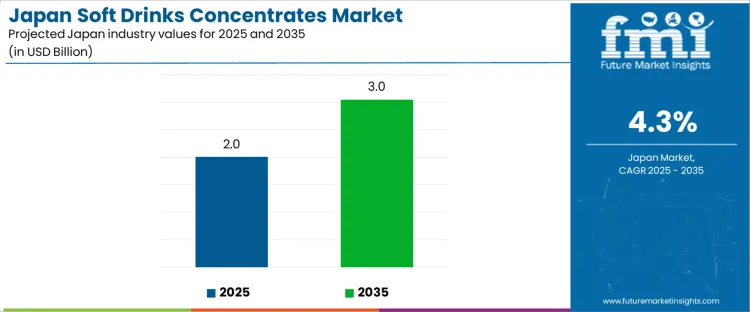
What is the Growth Forecast for the Soft Drinks Concentrates Market through 2035?
The market share erosion or gain analysis for the soft drinks concentrates market in Japan reveals a steady and consistent increase in demand, with gradual growth each year. Starting at USD 2.0 billion in 2025, the market grows to USD 2.1 billion in 2026 and USD 2.2 billion in 2027. This early-stage growth reflects steady consumer demand driven by an expanding market for flavored beverages, along with product innovations catering to health-conscious consumers.
From 2027 to 2030, the market continues its steady rise, reaching USD 2.3 billion in 2028, USD 2.4 billion in 2029, and USD 2.5 billion in 2030. This phase reflects the ongoing adoption of soft drink concentrates across the beverage industry, as manufacturers seek to streamline production and meet consumer preferences for healthier, low-calorie alternatives. By 2035, the market is projected to reach USD 3.0 billion, showing continued growth. The analysis indicates that the market will experience consistent gains in market share, driven by innovations in flavor profiles, health-focused formulations, and increased home-based drink production, which will likely stabilize demand while fueling gradual expansion.
Key Takeaways of Soft Drinks Concentrates Industry in Japan
| Metric | Value |
|---|---|
| Industry Sales Value (2025) | USD 2 billion |
| Industry Forecast Value (2035) | USD 3 billion |
| Industry Forecast CAGR (2025-2035) | 4.3% |
What Is Driving the Demand for Soft Drink Concentrates in Japan?
The demand for soft drink concentrates in Japan is supported by the structure of the beverage industry in which concentrates serve as input for manufacturers producing soft drinks, juices and value added beverages. Beverage producers use concentrates to streamline production, reduce transport and storage costs, and enable efficient large scale manufacturing. The established soft drinks market in Japan includes concentrates as a recognized segment. The use of concentrates helps companies respond to changing consumer preferences quickly by varying flavours and beverage types without reworking entire supply chains. Demand is also shaped by both commercial beverage producers and smaller beverage makers or food service operators that prefer concentrates for flexibility and cost efficiency.
Future demand for soft drink concentrates in Japan is expected to grow moderately as beverage consumption patterns adapt to evolving lifestyles and preferences. Demand will benefit from shifts toward ready to drink beverages, juices, flavoured drinks and functional drinks which can be produced from concentrates. Growth of retail and food service channels, along with manufacturers’ desire to manage costs and supply chains efficiently, will support continued use of concentrates. Demand may also be influenced by efforts to reformulate drinks to match health trends such as lower sugar, natural ingredients or enhanced nutrition-concentrates with those features could see increased uptake.
What Are the Key Segments in Soft Drinks Concentrates Market in Japan?
The soft drinks concentrates market in Japan is segmented by product type and packaging. Carbonated soft drink concentrates lead the product type segment, holding 35% of the market share. In terms of packaging, cans dominate, representing 55% of the market. The growing demand for convenient, flavorful, and refreshing beverage solutions is driving the adoption of soft drinks concentrates in Japan, particularly in the carbonated and non-carbonated drink categories.
Which Product Type Drives Soft Drinks Concentrates Demand in Japan?
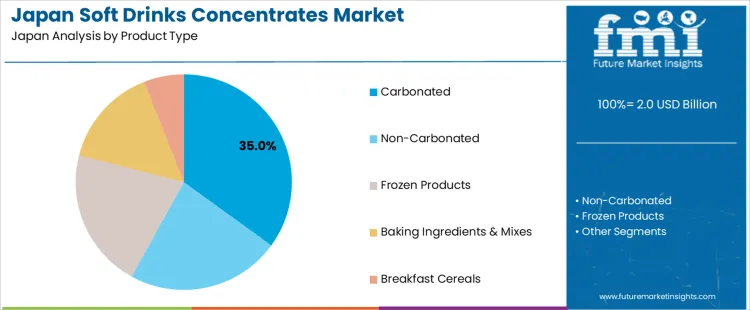
Carbonated soft drink concentrates are the most popular product type, accounting for 35% of the market share in Japan. Carbonated drinks remain a staple in the Japanese beverage market, with consumers preferring them for their refreshing qualities and effervescence. The demand for carbonated concentrates is driven by the continued popularity of sodas and sparkling beverages, both for home consumption and in foodservice outlets. These concentrates offer convenience for manufacturers and consumers alike, allowing for easy mixing and customization of carbonated drinks. While non-carbonated, frozen products, baking ingredients & mixes, and breakfast cereals are also part of the broader category, carbonated concentrates remain the dominant choice due to the established preference for fizzy beverages.
Which Packaging Drives Soft Drinks Concentrates Demand in Japan?
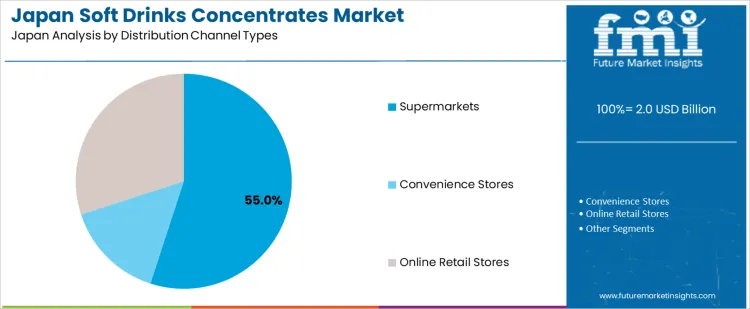
Cans are the leading packaging format for soft drinks concentrates in Japan, representing 55% of the market share. Cans are favored for their portability, convenience, and ability to maintain the quality and freshness of carbonated beverages. The popularity of cans is particularly strong in the ready-to-drink soft drink sector, where consumers value easy access to their beverages on-the-go. The packaging format is also cost-effective and sustainable, with aluminum cans being widely recyclable. While bottles are also commonly used for soft drink packaging, cans continue to dominate due to their efficiency, space-saving characteristics in transportation and storage, and appeal to convenience-driven consumers in Japan’s fast-paced society.
What is the Key Dynamics for Soft Drink Concentrates Demand in Japan?
Demand for soft drink concentrates in Japan is influenced by evolving consumer preferences toward convenient, customizable beverage options. As traditional ready-to-drink soft drinks face pressure from health trends and price sensitivity, concentrates (syrups, powders or liquid bases) offer flexibility and cost efficiency for both manufacturers and consumers. Concentrates serve diverse segments-carbonated drinks, flavored waters, home-mix beverages and ready-mix formats-supporting demand across retail and foodservice channels. The broader beverages market in Japan, including non-alcoholic drinks, underpins the base demand for concentrates as part of the overall soft drink ecosystem.
What are the Key Drivers for Soft Drink Concentrates Demand in Japan?
One driver is growing demand for beverages that allow customization and convenience-concentrates enable users to adjust flavor strength, sweetness or carbonation at home or on-trade venues. Another driver is cost efficiency for producers and retailers: concentrates reduce transportation and storage costs compared to bulk ready-to-drink products because they are lighter and more compact for logistics. Rising interest in functional or low-sugar drinks pushes manufacturers to use concentrates that can be tailored for diet, low-calorie or fortification needs. Demand in foodservice, catering, and vending channels-where mixing drinks on-site is common-supports continued uptake of concentrate-based products.
What are the Restraints for Soft Drink Concentrates Demand in Japan?
Health awareness and concern over sugar content pose a challenge for conventional sweetened concentrates, limiting demand among health-conscious consumers who avoid sugary soft drinks. Declining per capita consumption of traditional carbonated soft drinks in Japan has reduced the overall base for concentrate demand in classic soda categories. Competition from alternative beverages-such as bottled water, tea, coffee, functional drinks and low-sugar options-reduces demand for typical concentrate-based soft drinks. Additionally, demographic factors like an ageing population and shrinking youth cohorts may curb long-term growth in demand for sweet soft drink concentrates.
What are the Key Trends in Soft Drink Concentrates Demand in Japan?
A rising trend is the shift toward low-sugar, diet, or functional beverage concentrates reflecting growing health consciousness and demand for wellness-oriented drinks. Use of concentrates to prepare flavored water or lightly sweetened drinks instead of traditional sodas is gaining popularity. Beverage producers are increasingly offering concentrate formats for on-the-go preparation, vending machines, and foodservice outlets to allow fresh mixing and customization. Another trend is growth in home-mix and convenience-oriented beverage solutions, as consumers look for flexibility, cost savings and lower waste. Demand is also shifting toward concentrates for non-carbonated and functional beverages as the overall soft drink market evolves.
What is the Regional Demand Outlook for Soft Drink Concentrates in Japan?
The demand for soft drink concentrates in Japan is projected to grow steadily, with Kyushu & Okinawa leading the way at a projected CAGR of 5.3%. Kanto follows with a growth rate of 4.9%, while Kansai is expected to grow at 4.3%. Chubu is projected to grow at a rate of 3.8%, while Tohoku and Rest of Japan show more moderate growth, with CAGRs of 3.3% and 3.2%, respectively. The increasing popularity of ready-to-drink beverages and the growing preference for flavored soft drinks are driving the demand for soft drink concentrates in Japan. The continued adoption of healthier and more diverse beverage options is also contributing to this trend.
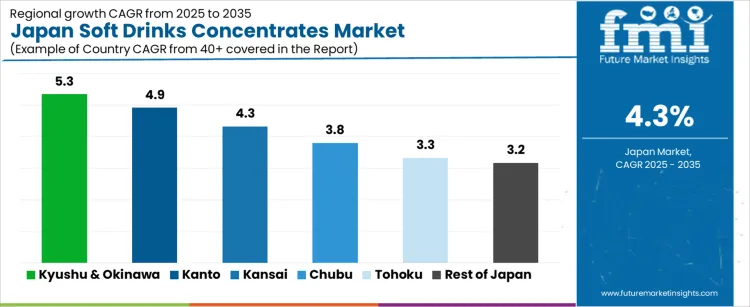
| Region | CAGR (2025-2035) |
|---|---|
| Kyushu & Okinawa | 5.3% |
| Kanto | 4.9% |
| Kansai | 4.3% |
| Chubu | 3.8% |
| Tohoku | 3.3% |
| Rest of Japan | 3.2% |
What is Driving the Growth of Soft Drink Concentrates in Kyushu & Okinawa?
Kyushu & Okinawa is projected to experience the highest growth in the soft drink concentrate market, with a projected CAGR of 5.3%. The region's increasing consumer demand for convenient, flavored, and ready-to-consume beverages is a major driver of this growth. As consumer preferences in Kyushu & Okinawa shift toward healthier options, there is a growing interest in fruit-based and natural soft drink concentrates. Additionally, the region’s focus on local and unique beverage flavors, particularly those reflecting the local culture and ingredients, is contributing to the rise in demand for soft drink concentrates. The availability of soft drink concentrates that cater to regional tastes, along with the growing trend of personalized beverages, is further driving the market's expansion. As the demand for innovative beverage products continues to rise, Kyushu & Okinawa is expected to remain a key region for soft drink concentrate consumption.
Why is the Soft Drink Concentrates Market Expanding in Kanto?
In Kanto, the demand for soft drink concentrates is projected to grow at a CAGR of 4.9%. Kanto, including Tokyo, is Japan’s largest and most urbanized region, with a diverse and health-conscious consumer base. As urban lifestyles continue to drive the demand for convenient and customizable beverages, soft drink concentrates are becoming increasingly popular in Kanto. The region’s large population and high disposable income are key factors supporting the adoption of flavored concentrates that can be mixed to create a wide variety of beverages. Furthermore, Kanto’s preference for innovative and premium beverage options, including low-sugar and functional drinks, is contributing to the market’s growth. As consumer tastes continue to evolve, the demand for soft drink concentrates in Kanto is expected to rise, particularly as manufacturers respond with more diverse and healthier concentrate options.
How is the Soft Drink Concentrates Market Growing in Kansai?
In Kansai, the soft drink concentrates market is projected to grow at a CAGR of 4.3%. Kansai, home to cities like Osaka and Kyoto, has a strong beverage manufacturing industry that is increasingly adopting soft drink concentrates to meet the growing demand for flavored beverages. The region’s interest in innovative food and beverage options, along with a preference for convenience, is driving the demand for ready-to-mix drink concentrates. Kansai’s diverse consumer base, including a growing number of health-conscious individuals, is further fueling the demand for natural and low-calorie beverage options. The region’s vibrant food culture and increasing popularity of health-focused drinks, such as those containing functional ingredients, are contributing to the growth of the soft drink concentrate market. As consumer demand for customizable and healthier beverage options continues to rise, Kansai’s market for soft drink concentrates is expected to expand steadily.
What is Contributing to the Growth of Soft Drink Concentrates in Chubu?
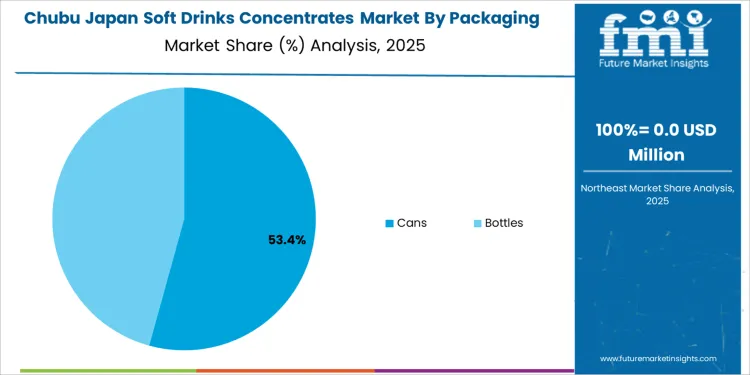
In Chubu, the soft drink concentrates market is expected to grow at a CAGR of 3.8%. Chubu, with its strong industrial base, has a growing food and beverage sector that is increasingly focusing on providing convenient and customizable beverage solutions. The demand for soft drink concentrates in Chubu is being driven by the rising popularity of ready-to-mix beverages in both the residential and commercial sectors. Additionally, Chubu’s growing preference for healthier and natural beverage options, including those with reduced sugar content and functional benefits, is contributing to the market’s steady growth. As consumer awareness about nutrition and health continues to rise, the demand for soft drink concentrates with added nutritional benefits, such as vitamins and minerals, is expected to increase. Chubu’s expanding retail network and focus on modernizing beverage offerings will also support the continued growth of the market.
What is Influencing the Growth of Soft Drink Concentrates in Tohoku?
In Tohoku, the soft drink concentrates market is projected to grow at a CAGR of 3.3%. While the growth rate is slower compared to other regions, the increasing adoption of convenient beverage solutions is contributing to the steady demand for soft drink concentrates. As the region’s consumer base becomes more health-conscious, there is a growing interest in beverages with functional ingredients, such as antioxidants and probiotics. Tohoku’s focus on improving food accessibility and modernizing its retail sector is driving the demand for soft drink concentrates in both rural and urban areas. Additionally, as consumer preferences shift toward natural and low-sugar products, the market for soft drink concentrates in Tohoku is expected to see gradual growth.
What is Contributing to the Growth of Soft Drink Concentrates in Rest of Japan?
In Rest of Japan, the soft drink concentrates market is expected to grow at a more moderate rate of 3.2%. Although demand is smaller compared to more urbanized regions, the adoption of soft drink concentrates is increasing due to the growing interest in healthier, convenient beverage solutions. As consumers in rural areas become more aware of the benefits of functional and customizable beverages, the market for soft drink concentrates is expected to expand steadily. The increased availability of these products in local supermarkets and retail outlets, as well as the demand for locally sourced and natural ingredients, is further contributing to market growth. With the ongoing trend of healthier and sustainable eating habits, Rest of Japan’s demand for soft drink concentrates is likely to grow at a steady pace.
What is the Competitive Landscape for Demand for Soft Drink Concentrates in Japan?
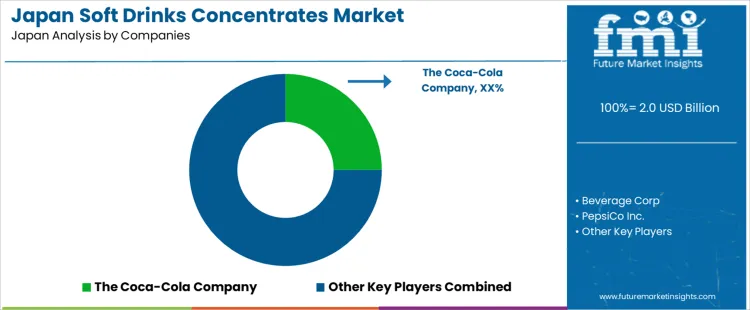
Demand for soft drink concentrates in Japan has seen mixed trends in recent years. On one hand, total soft drink consumption in Japan remains substantial, and the soft drinks sector continues to recover gradually, driven by functional drinks, bottled teas, ready to drink juices and non carbonated beverage segments-reflecting consumer interest in health, convenience, and variety. On the other hand, traditional concentrate products have faced headwinds: lower off trade volume sales and value sales declines have been observed, attributed in part to changing consumer habits and reduced at home consumption of concentrate based drinks. Nonetheless, the broader global growth forecast for soft drink concentrates-driven by convenience, cost effectiveness for producers, and rising demand for custom, on demand beverage preparation-suggests underlying potential for renewed uptake in Japan, especially if producers adapt with new formulations (such as low sugar or functional concentrates) and leverage evolving retail/online distribution channels. On the supply side, a small set of global beverage and concentrate producers dominate among established brands and concentrate ingredient providers.
Key Players of the Soft Drinks Concentrates Industry in Japan
- The Coca-Cola Company
- Beverage Corp
- PepsiCo Inc.
- Cott Corporation
- Kraft Foods
Scope of the Report
| Items | Values |
|---|---|
| Quantitative Units (2025) | USD Billion |
| Product Type | Carbonated, Non-Carbonated, Frozen Products, Baking Ingredients & Mixes, Breakfast Cereals |
| Packaging | Bottles, Cans |
| Distribution Channel Types | Supermarkets, Convenience Stores, Online Retail Stores |
| Companies | The Coca-Cola Company, Beverage Corp, PepsiCo Inc., Cott Corporation, Kraft Foods |
| Regions Covered | Kyushu & Okinawa, Kanto, Kansai, Chubu, Tohoku, Rest of Japan |
| Additional Attributes | Dollar by sales by product type, packaging, distribution channel types, and region. Includes concentrate formulation for carbonation, flavor profiles, cost-effectiveness, production methods, impact on consumer preferences, sustainability practices, shelf life, packaging innovations, and competitive positioning of key companies. Focuses on trends in consumer demand, the role of convenience and online retail channels, and developments in the soft drinks concentrate sector. |
Key Segments in the Demand for Soft Drinks Concentrates in Japan
Product Type
- Carbonated
- Non-Carbonated
- Frozen Products
- Baking Ingredients & Mixes
- Breakfast Cereals
Packaging
- Bottles
- Cans
Distribution Channel Types
- Supermarkets
- Convenience Stores
- Online Retail Stores
Region
- Kyushu & Okinawa
- Kanto
- Kansai
- Chubu
- Tohoku
- Rest of Japan
Frequently Asked Questions
How big is the demand for soft drinks concentrates in Japan in 2025?
The demand for soft drinks concentrates in Japan is estimated to be valued at USD 2.0 billion in 2025.
What will be the size of soft drinks concentrates in Japan in 2035?
The market size for the soft drinks concentrates in Japan is projected to reach USD 3.0 billion by 2035.
How much will be the demand for soft drinks concentrates in Japan growth between 2025 and 2035?
The demand for soft drinks concentrates in Japan is expected to grow at a 4.3% CAGR between 2025 and 2035.
What are the key product types in the soft drinks concentrates in Japan?
The key product types in soft drinks concentrates in Japan are carbonated, non-carbonated, frozen products, baking ingredients & mixes and breakfast cereals.
Which packaging segment is expected to contribute significant share in the soft drinks concentrates in Japan in 2025?
In terms of packaging, cans segment is expected to command 55.0% share in the soft drinks concentrates in Japan in 2025.
Preview the report firsthand - request a free sample
Get SampleGet the brochure for pricing and purchase details.
Get PDFTable of Content
- Executive Summary
- Japan Market Outlook
- Demand-side Trends
- Supply-side Trends
- Technology Roadmap Analysis
- Analysis and Recommendations
- Market Overview
- Market Coverage / Taxonomy
- Market Definition / Scope / Limitations
- Market Background
- Market Dynamics
- Drivers
- Restraints
- Opportunity
- Trends
- Scenario Forecast
- Demand in Optimistic Scenario
- Demand in Likely Scenario
- Demand in Conservative Scenario
- Opportunity Map Analysis
- Product Life Cycle Analysis
- Supply Chain Analysis
- Investment Feasibility Matrix
- Value Chain Analysis
- PESTLE and Porter’s Analysis
- Regulatory Landscape
- Regional Parent Market Outlook
- Production and Consumption Statistics
- Import and Export Statistics
- Market Dynamics
- Japan Market Analysis 2020 to 2024 and Forecast, 2025 to 2035
- Historical Market Size Value (USD Million) Analysis, 2020 to 2024
- Current and Future Market Size Value (USD Million) Projections, 2025 to 2035
- Y-o-Y Growth Trend Analysis
- Absolute $ Opportunity Analysis
- Japan Market Pricing Analysis 2020 to 2024 and Forecast 2025 to 2035
- Japan Market Analysis 2020 to 2024 and Forecast 2025 to 2035, By Product Type
- Introduction / Key Findings
- Historical Market Size Value (USD Million) Analysis By Product Type , 2020 to 2024
- Current and Future Market Size Value (USD Million) Analysis and Forecast By Product Type , 2025 to 2035
- Carbonated
- Non-Carbonated
- Frozen Products
- Baking Ingredients & Mixes
- Breakfast Cereals
- Y-o-Y Growth Trend Analysis By Product Type , 2020 to 2024
- Absolute $ Opportunity Analysis By Product Type , 2025 to 2035
- Japan Market Analysis 2020 to 2024 and Forecast 2025 to 2035, By Packaging
- Introduction / Key Findings
- Historical Market Size Value (USD Million) Analysis By Packaging, 2020 to 2024
- Current and Future Market Size Value (USD Million) Analysis and Forecast By Packaging, 2025 to 2035
- Cans
- Bottles
- Y-o-Y Growth Trend Analysis By Packaging, 2020 to 2024
- Absolute $ Opportunity Analysis By Packaging, 2025 to 2035
- Japan Market Analysis 2020 to 2024 and Forecast 2025 to 2035, By Distribution Channel Types
- Introduction / Key Findings
- Historical Market Size Value (USD Million) Analysis By Distribution Channel Types, 2020 to 2024
- Current and Future Market Size Value (USD Million) Analysis and Forecast By Distribution Channel Types, 2025 to 2035
- Supermarkets
- Convenience Stores
- Online Retail Stores
- Y-o-Y Growth Trend Analysis By Distribution Channel Types, 2020 to 2024
- Absolute $ Opportunity Analysis By Distribution Channel Types, 2025 to 2035
- Market Structure Analysis
- Competition Dashboard
- Competition Benchmarking
- Market Share Analysis of Top Players
- By Regional
- By Product Type
- By Packaging
- By Distribution Channel Types
- Competition Analysis
- Competition Deep Dive
- The Coca-Cola Company
- Overview
- Product Portfolio
- Profitability by Market Segments (Product/Age /Sales Channel/Region)
- Sales Footprint
- Strategy Overview
- Marketing Strategy
- Product Strategy
- Channel Strategy
- Beverage Corp
- PepsiCo Inc.
- Cott Corporation
- Kraft Foods
- The Coca-Cola Company
- Competition Deep Dive
- Assumptions & Acronyms Used
- Research Methodology


