

- Industry Size (2026)
- USD 1420 Mn
- Forecast (2036)
- USD 4980 Mn
- CAGR (2026 to 2036)
- 13.4%
Modular Packaging Architecture for Recyclability Market Forecast and Outlook 2026 to 2036
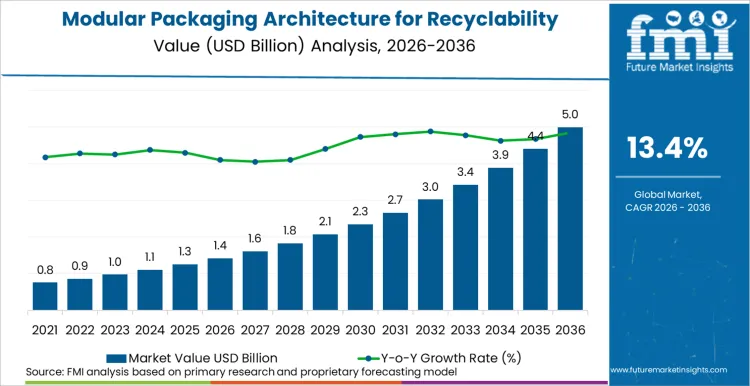
The modular packaging architecture for recyclability market revenue is likely to total USD 1,420 million in 2026, rising further to USD 4,980 million by 2036, at a CAGR of 13.4%. Future Market Insights analysis indicates this market is transitioning from conceptual design frameworks to commercialized, mass-produced packaging systems. This expansion through 2026 is propelled by the enforcement of packaging recyclability mandates that penalize hard-to-separate multi-material designs, the rising cost of sorting contaminated bales, and brand innovation in consumer experience that leverages modularity for refill and reuse models.
The PPWR is ushering a reset in how modular packaging is designed, shifting responsibility upstream from recyclers to packaging engineers. Under the regulation’s essential requirements, packaging formats that complicate sorting or contaminate recycling streams increasingly fail basic compliance thresholds. Labels, closures, sleeves, and secondary components are assessed not as ancillary elements, but as structural determinants of recyclability. Designs that obstruct optical sorting, rely on incompatible material pairings, or prevent clean separation are filtered out at the design stage rather than corrected downstream.
This has redirected industry attention away from branded modular concepts toward stricter design-for-recycling discipline. Guidance issued by organisations such as RECOUP, reinforced through supplier-facing recommendations from companies including Greiner Packaging, increasingly reads as a technical compliance checklist rather than a set of voluntary best practices. Material compatibility, decoration choices, and the elimination of features that degrade recyclate purity are being prioritised over visible modular innovation. In parallel, Horizon Europe’s 2025 circular-by-design funding priorities have channelled investment toward packaging architectures that demonstrate validated recyclability at industrial scale, rather than conceptual modularity in isolation.
In practical terms, modularity in packaging is advancing less through proprietary snap-fit systems and more through regulatory-aligned architectural decisions that prioritise separability, compatibility with existing sorting infrastructure, and predictable end-of-life performance. Innovation in this segment is becoming quieter and more structural, defined by compliance resilience rather than branded differentiation.
Packaging Architecture for Recyclability Market
What is the Long-Term Growth Outlook for the Modular Packaging Architecture Market?
FMI projects the global modular packaging architecture for recyclability market to expand from USD 1,420 million in 2026 to USD 4,980 million by 2036, registering a 13.4% CAGR. This accelerated growth reflects the packaging industry's response to the material purity crisis in recycling.
FMI Research Approach: This projection is derived from FMI's proprietary model analyzing the implementation timelines of design-for-recycling legislation (e.g., EU PPWR), the adoption of modular design principles by major FMCG brands, capital investment in modular production tooling by converters, and the growing cost differential between contaminated and clean recycled polymer flakes.
How do FMI Analysts Expect the Modular Packaging Architecture Market to Evolve Structurally?
FMI analysts anticipate a market evolution from simple two-component systems (e.g., separable label) to complex, multi-part architectures for premium products. The integration of smart indicators like RFID and QR codes on individual modules for tracking and sorting will advance.
FMI Research Approach: Insights are informed by tracking patent filings in snap-fit and separable packaging joints, analyzing new product launches that emphasize disassembly, and monitoring the guidelines from recycling organizations like RecyClass on design for disassembly.
Which Geographies Command Strategic Importance in the Modular Packaging Architecture Market?
Strategic growth is concentrated in regions with advanced regulatory frameworks for packaging recyclability and high-performance recycling infrastructure. The European Union, led by Germany, is the regulatory frontrunner. The United States shows strong growth driven by corporate sustainability goals and state-level policies. China and India represent high-growth markets where rapid industrialization of recycling is creating demand for optimally designed packaging inputs. Japan focuses on precision engineering for waste separation.
FMI Research Approach: Regional market sizing is based on the stringency of design-for-recycling laws, the sophistication of domestic sorting infrastructure, investments in packaging modernization by local FMCG brands, and consumer awareness regarding proper disposal.
What will be the Market Size of Modular Packaging Architecture by 2036?
By 2036, the modular packaging architecture market is expected to reach USD 4,980 million. This expansion will be sustained as modular design becomes a standard prerequisite for packaging in regulated markets, and as the economic benefits of supplying clean feedstock to recycling operations become undeniable for high-volume producers of packaged goods.
FMI Research Approach: The long-term outlook incorporates forecasts for global packaging demand, the phased implementation of mandatory design-for-recycling criteria worldwide, and the continuous innovation in joining technologies that reduce the cost and complexity of modular assembly.
What are some Globally Distinct Trends Shaping the Modular Packaging Architecture Market?
The convergence of modularity with refillable systems, the use of digital watermarks on individual modules for automated sorting, and the design of water-soluble or biodegradable adhesives for temporary bonds shape the market. The refill trend leverages modular durable containers.
FMI Research Approach: Trend identification involves monitoring pilot projects for smart sorting of packaging components, analyzing material science developments in functional adhesives, and reviewing case studies of refill system implementations that utilize modular components.
Modular Packaging Architecture for Recyclability Market Key Takeaways
| Metrics | Values |
|---|---|
| Expected Value (2026E) | USD 1,420 million |
| Projected Value (2036F) | USD 4,980 million |
| CAGR (2026 to 2036) | 13.4% |
Source: Future Market Insights (FMI) analysis, based on proprietary forecasting model and primary research
Why is the Modular Packaging Architecture for Recyclability Market Growing?
The primary growth driver is the operational efficiency imperative within the recycling value chain. Sorting facilities incur significant costs and yield losses from attempting to separate incompatible materials bonded together in traditional packaging. Modular designs that separate easily before or during the sorting process reduce machinery wear, improve sorting accuracy, and increase the throughput of pure material streams. This creates a powerful economic pull from recyclers, who are increasingly providing design feedback and incentives to brands.
Corporate commitments to achieving 100% recyclable packaging are facing the reality of technical recyclability versus practical recyclability. A package may be technically recyclable if made of compatible materials, but if components cannot be separated in practice, it contaminates streams. Modular architecture solves this by ensuring separation is a design feature. Brands are adopting modular principles to ensure their ambitious recyclability claims are valid and defensible, mitigating greenwashing risk.
Advancements in polymer engineering and joining technologies are enabling robust yet separable connections. Traditional packaging uses permanent heat seals or strong adhesives. New developments in interference-fit snap joints, magnetically assisted assemblies, and low-temperature thermal welds create packages that are secure during transport and use but can be disassembled with minimal force or specific stimuli. This removes the performance trade-off that previously hindered modular adoption.
How is Modular Packaging Architecture for Recyclability Market Segmented?
The market segment landscape is defined by the high-volume need for recyclability in fast-moving consumer goods. The FMCG and personal care sector leads demand, adopting modular bottle-cap-label systems as a solution. The material strategy focuses on using mono-material PP or PE for all components, and the enabling technology is design-for-disassembly using snap-fit systems.
How is the FMCG and Personal Care Sector Driving Commercialization?
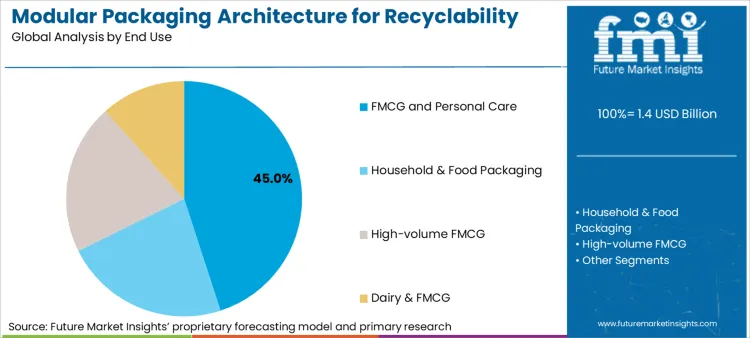
FMCG and personal care packaging represents the largest end-use segment with a 45.0% share. This sector produces billions of units of bottles, tubes, and jars annually, making it the largest contributor to plastic packaging waste. The shift to modular design in this sector, even for low-cost items, demonstrates a fundamental change in priorities. Brands in hair care, laundry, and skincare are piloting modular bottles where the pump, sleeve, and bottle are distinct, separable elements, each marked for recycling.
This segment’s volume makes it the critical testing ground for cost-effective modularity. Success is defined by achieving per-unit production costs that are competitive with traditional integrated designs while delivering the downstream recycling benefits. Early launches in 2025 by major brands indicate this balance is being reached through standardized, high-volume modular components.
Which Architecture Type is the Most Prevalent Solution?
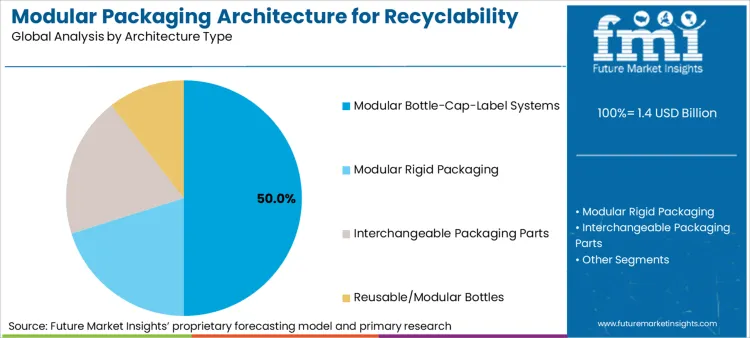
Modular bottle-cap-label systems constitute the leading architecture type segment with a 50.0% share. This refers to packaging where the primary container (bottle), closure (cap), and decoration (label) are designed as separate, mono-material entities that are easily separable. The label may be a shrink sleeve made of a polymer compatible with the bottle, or an in-mold label that is designed to detach in the wash. The cap may use a snap-fit rather than continuous threads to ease removal by machinery.
The dominance of this system reflects its immediate addressable market: the ubiquitous bottled goods category. It solves a major contamination issue (caps and labels) without radically altering the familiar bottle form factor, easing consumer acceptance and manufacturing conversion.
What is the Foundational Material Principle?
The use of mono-material PP or PE for all packaging components is the leading material strategy with a 55.0% share. This principle dictates that every part of the modular package-bottle, cap, label, even a potential overcap-should be made from the same polymer family (all PP or all PE). This ensures that even if separation is imperfect, the mixed materials are still compatible in the recycler’s melt, preventing the formation of non-recyclable polymer blends that degrade material quality.
This strategy drives innovation in material grades, requiring the development of clear, rigid PP for bottles alongside flexible PP for labels and durable PP for snap-fit caps, all from the same recyclable stream.
Which Technology is Central to Modular Functionality?
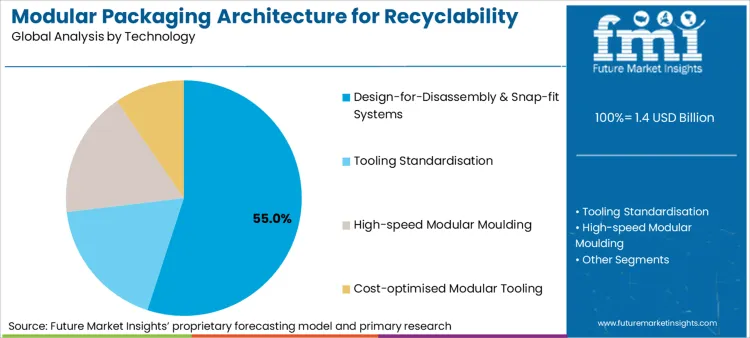
Design-for-disassembly and snap-fit systems represent the dominant technology segment with a 55.0% share. This encompasses the engineering of mechanical interfaces such as clips, bayonet mounts, and interference fits that hold components together securely during use but allow for non-destructive separation.
The design challenge is to create joints that are robust enough to prevent leakage and withstand logistics, yet weak enough to be broken by automated machinery or a consumer with minimal effort. This requires sophisticated simulation and testing to perfect.
What Drivers, Restraints, Opportunities, and Trends Prevail in the Modular Packaging Architecture Market?
Market expansion is critically driven by EPR fee modulation that rewards design for recyclability. EPR schemes in Europe and Canada are implementing fee structures where the cost to a brand is directly reduced if its packaging is verified as designed for easy recycling, including modularity. This creates a recurring annual financial incentive that can justify the upfront investment in new packaging tooling and design.
A significant restraint is the increase in part count and assembly complexity for manufacturers. Modular packaging requires producing and inventorying multiple separate components, which must then be assembled. This can slow down filling lines compared to handling a single pre-assembled container. Overcoming this requires significant re-engineering of filling and assembly operations, a capital and operational challenge that can delay adoption, especially for small and medium enterprises.
A major opportunity lies in modular design for e-commerce transit packaging. The secondary packaging used to ship goods is often a complex mix of cardboard, plastic films, tapes, and cushions. Designing modular e-commerce packaging where protective elements easily separate from the cardboard outer allows both streams (paper and plastic) to be recycled cleanly. This is a vast, growing application with less stringent aesthetic requirements than primary packaging.
A defining technical trend is the integration of disassembly triggers. Research is focused on packaging that self-disassembles under specific conditions in a recycling facility. Examples include labels bonded with a pH-sensitive adhesive that releases in the alkaline wash, or bi-component caps where a central core detaches when exposed to centrifugal force in a wash drum. This moves disassembly from a manual or mechanical step to an automated, integral part of the recycling process.
The trend toward modular luxury packaging is creating high-value applications. High-end cosmetics and spirits are adopting modular architectures not only for recyclability but also for consumer engagement. Elaborate, multi-component boxes and bottles that the consumer must assemble or disassemble create a ritualistic experience. This segment can bear the higher costs of complex modular design, serving as an incubator for technologies that may later trickle down to mass-market FMCG.
Analysis of Modular Packaging Architecture Market by Key Countries
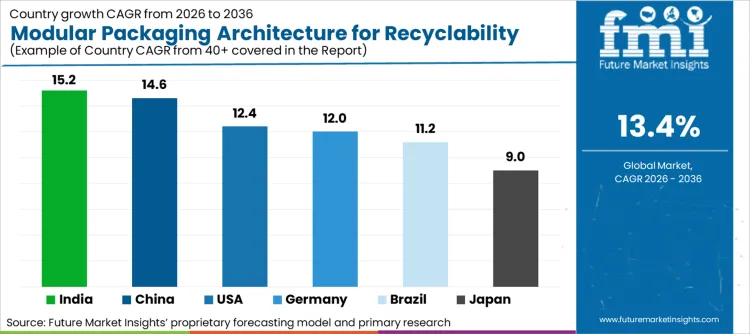
| Country | CAGR (2026-2036) |
|---|---|
| India | 15.2% |
| China | 14.6% |
| USA | 12.4% |
| Germany | 12.0% |
| Brazil | 11.2% |
| Japan | 9.0% |
Source: Future Market Insights (FMI) analysis, based on proprietary forecasting model and primary research
How are Dairy and Sachet Redesign Initiatives Catalyzing the Indian Market?
India is projected to expand at a 15.2% CAGR through 2036, the highest among key nations. This is driven by two parallel forces: the dairy industry's push to redesign HDPE milk pouches into modular, separable bottle systems to improve recycling value, and the effort to re-engineer multi-layer sachets into two-part modular structures where a protective outer layer can be peeled from an inner mono-material pouch. These initiatives, supported by the government's EPR framework, target the most voluminous and problematic packaging formats in the Indian waste stream, creating massive demand for cost-optimized modular solutions.
How do Vertical Manufacturing Ecosystems and Export Pressures Shape the Chinese Market?
China’s market is growing at a 14.6% CAGR, fueled by its integrated manufacturing ecosystems and the need for export compliance. Large packaging converters serving global FMCG brands are developing interchangeable packaging parts that can be mixed and matched for different products, maximizing production flexibility.
Pressure to meet the EU's PPWR for exported goods is driving the adoption of modular architectures, particularly in the high-volume FMCG sector, where Chinese manufacturers are innovating in high-speed modular molding to maintain cost leadership.
Which Retailer-Led Standards and Innovation Ecosystems Define the USA Market?
The United States market, with a 12.4% CAGR, is characterized by retailer-led sustainability standards and strong corporate R&D. Major retailers have begun specifying modular design in their packaging scorecards.
USA hosts several cross-industry consortia focused on tooling standardization for modular components, aiming to create commonality in snap-fit designs across brands to drive down tooling costs and simplify recycling sorting. This collaborative approach is accelerating commercial readiness.
How do the EU's PPWR and DRS Alignment Drive the German Market?
Germany, expanding at a 12.0% CAGR, is directly shaped by the EU PPWR's design mandates and the need for compatibility with Germany's efficient Deposit Return Scheme. The DRS infrastructure, which collects bottles, strongly benefits from modular designs where caps remain attached but are made of a compatible, separable material.
German engineering is focused on perfecting the modular bottle-cap-label system to ensure it withstands automated collection and handling while ensuring clean material outputs, setting a de facto standard for the region.
What Role does the Circular Economy Roadmap Play in the Brazilian Market?
The National Solid Waste Policy and sectoral agreements that are increasingly incorporating design-for-recycling principles influence Brazil’s market, with an 11.2% CAGR. The growing market for premium personal care and cosmetics in Brazil is adopting modular packaging for both sustainability and premium appeal. The large agro-industrial sector is exploring modular designs for chemical containers, where separating the handle, cap, and bottle improves recycling rates for large HDPE containers.
How does a Focus on High-Purity Output and Consumer Sorting Influence Japan?
Japan’s market, growing at a 9.0% CAGR, is defined by its demand for extremely high-purity recycled materials and a consumer culture meticulous about waste sorting. Modular packaging is designed to align with this system: packages are engineered to break down into the exact material categories that Japanese municipalities require consumers to sort.
The design focus is on creating intuitive, foolproof disassembly steps that the consumer can perform correctly, ensuring the modular system functions as intended within the unique Japanese disposal framework.
What is the Competition Outlook for Modular Packaging Architecture?
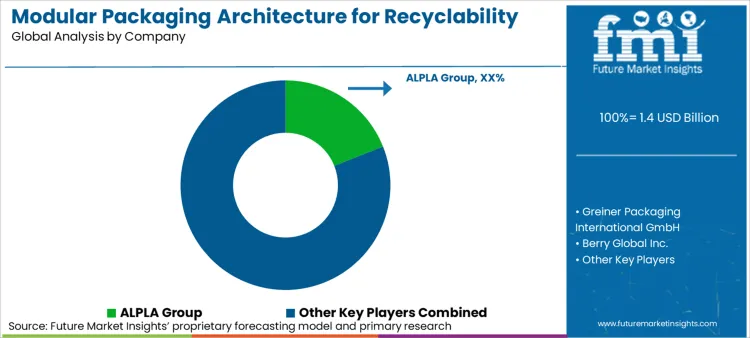
Competitive intensity centers on intellectual property surrounding joining mechanisms and securing partnerships with major FMCG brands for platform adoption. Leaders are those who can offer a portfolio of pre-validated, standardized modular connections that are licensed for use. The landscape features competition between large packaging converters with in-house design teams and specialized design firms that license their modular systems. Success depends on creating a system that is adopted by multiple brands, creating a network effect that makes the specific modular architecture a industry standard.
Strategic moves are characterized by the formation of modular design alliances. Competing converters are collaborating on open-source standards for certain basic connections (e.g., standard snap-fit for lotion bottle caps) to grow the overall market, while competing on proprietary designs for more complex or premium applications. This hybrid approach of cooperation and competition is intended to overcome the initial market fragmentation that could slow adoption.
Recent Developments:
- RECOUP updated its Recyclability by Design guidance in 2024, strengthening industry alignment around component-level packaging design that enables easier separation of labels, closures, sleeves, and base materials during recycling. The guidance reinforces that recyclability outcomes are increasingly determined at the packaging architecture stage, with design choices either enabling or obstructing high-quality material recovery.
- Greiner Packaging intensified its design-for-recycling framework in 2024, emphasising that packaging aesthetics, branding, and recyclability can be aligned through intentional structural design. The company highlighted how packaging architecture, including decoration methods and material combinations, directly influences sorting efficiency and recyclate quality rather than relying solely on downstream recycling technologies.
- Horizon Europe’s 2025 circular packaging funding priorities explicitly targeted circular-by-design packaging architectures, requiring validation of end-of-life performance at relevant industrial scale. These priorities signal growing policy and funding support for packaging concepts that embed recyclability into product architecture, reinforcing industry momentum toward separation-friendly and system-compatible packaging designs.
Key Players Profiled
- ALPLA Group
- Greiner Packaging International GmbH
- Berry Global Inc.
- Plastipak Holdings, Inc.
- Zijiang Enterprise Group Co., Ltd.
- Manjushree Technopack Ltd.
Market Definition
The modular packaging architecture for recyclability market comprises revenue generated from the design, tooling, and manufacture of packaging systems where primary components (e.g., container, closure, label, handle) are produced as separate, mono-material parts designed for easy disassembly at end-of-life. This packaging is engineered with specific mechanical, chemical, or magnetic interfaces that allow secure assembly for product protection and presentation, followed by non-destructive separation to facilitate clean material recycling.
The market scope includes the value of the packaging components and the specialized design and tooling services required to create them. It covers both rigid and flexible primary packaging for consumer goods. The market excludes traditional, permanently assembled packaging and packaging where disassembly is not a primary design feature, even if theoretically possible.
Scope of Report
| Items | Values |
|---|---|
| Quantitative Units | USD Million for revenue |
| End-use | FMCG & Personal Care, Household & Food Packaging, High-volume FMCG, Dairy & FMCG, Other |
| Architecture Type | Modular Bottle-Cap-Label Systems, Modular Rigid Packaging, Interchangeable Packaging Parts, Reusable/Modular Bottles, Other |
| Material Strategy | Mono-material PP / PE, PE / PP Mono-structures, Polyolefins, PE-based Systems, Other |
| Technology | Design-for-Disassembly & Snap-fit Systems, Tooling Standardisation, High-speed Modular Moulding, Cost-optimised Modular Tooling, Other |
| Regions Covered | North America, Europe, Asia-Pacific, Latin America, Middle East & Africa |
| Countries | USA, Germany, China, India, Brazil, Japan and 40+ countries |
| Key Companies | ALPLA, Greiner Packaging, Berry Global, Plastipak, Zijiang Enterprise, Manjushree Technopack |
Source: Future Market Insights (FMI) analysis, based on proprietary forecasting model and primary research
Modular Packaging Architecture for Recyclability Market Key Segments
End-use:
- FMCG & Personal Care
- Household & Food Packaging
- High-volume FMCG
- Dairy & FMCG
Architecture Type:
- Modular Bottle-Cap-Label Systems
- Modular Rigid Packaging
- Interchangeable Packaging Parts
- Reusable/Modular Bottles
Material Strategy:
- Mono-material PP/PE
- PE/PP Mono-structures
- Polyolefins
- PE-based Systems
Technology:
- Design-for-Disassembly & Snap-fit Systems
- Tooling Standardisation
- High-speed Modular Moulding
- Cost-optimised Modular Tooling
Region:
- North America
- Europe
- Asia-Pacific
- Latin America
- Middle East & Africa
Bibliography
- RecyClass. (2024). Design for disassembly guidelines for plastic packaging. RecyClass.
- RECOUP. (2024). Recyclability by design: Component-level guidance for plastic packaging. RECOUP.
- Greiner Packaging International GmbH. (2024). Design-for-recycling framework: Packaging architecture and material separability. Greiner Packaging.
- Industry Council for Packaging and the Environment. (2025). The modular imperative: Packaging design for a circular economy. INCPEN.
- Plastics Recyclers Europe. (2025). Guidance on component compatibility and separable packaging systems. Plastics Recyclers Europe.
- Packaging Europe. (2026). Advances in modular packaging design for recyclability and reuse systems. Packaging Europe.
Frequently Asked Questions
How big is the modular packaging architecture for recyclability market in 2026?
The global modular packaging architecture for recyclability market is estimated to be valued at USD 1.4 billion in 2026.
What will be the size of modular packaging architecture for recyclability market in 2036?
The market size for the modular packaging architecture for recyclability market is projected to reach USD 5.0 billion by 2036.
How much will be the modular packaging architecture for recyclability market growth between 2026 and 2036?
The modular packaging architecture for recyclability market is expected to grow at a 13.4% CAGR between 2026 and 2036.
What are the key product types in the modular packaging architecture for recyclability market?
The key product types in modular packaging architecture for recyclability market are fmcg and personal care , household & food packaging, high-volume fmcg and dairy & fmcg.
Which architecture type segment to contribute significant share in the modular packaging architecture for recyclability market in 2026?
In terms of architecture type, modular bottle-cap-label systems segment to command 50.0% share in the modular packaging architecture for recyclability market in 2026.
Preview the report firsthand - request a free sample
Get SampleGet the brochure for pricing and purchase details.
Get PDFTable of Content
- Executive Summary
- Global Market Outlook
- Demand-side Trends
- Supply-side Trends
- Technology Roadmap Analysis
- Analysis and Recommendations
- Market Overview
- Market Coverage / Taxonomy
- Market Definition / Scope / Limitations
- Research Methodology
- Chapter Orientation
- Analytical Lens and Working Hypotheses
- Market Structure, Signals, and Trend Drivers
- Benchmarking and Cross-market Comparability
- Market Sizing, Forecasting, and Opportunity Mapping
- Research Design and Evidence Framework
- Desk Research Programme (Secondary Evidence)
- Company Annual and Sustainability Reports
- Peer-reviewed Journals and Academic Literature
- Corporate Websites, Product Literature, and Technical Notes
- Earnings Decks and Investor Briefings
- Statutory Filings and Regulatory Disclosures
- Technical White Papers and Standards Notes
- Trade Journals, Industry Magazines, and Analyst Briefs
- Conference Proceedings, Webinars, and Seminar Materials
- Government Statistics Portals and Public Data Releases
- Press Releases and Reputable Media Coverage
- Specialist Newsletters and Curated Briefings
- Sector Databases and Reference Repositories
- FMI Internal Proprietary Databases and Historical Market Datasets
- Subscription Datasets and Paid Sources
- Social Channels, Communities, and Digital Listening Inputs
- Additional Desk Sources
- Expert Input and Fieldwork (Primary Evidence)
- Primary Modes
- Qualitative Interviews and Expert Elicitation
- Quantitative Surveys and Structured Data Capture
- Blended Approach
- Why Primary Evidence is Used
- Field Techniques
- Interviews
- Surveys
- Focus Groups
- Observational and In-context Research
- Social and Community Interactions
- Stakeholder Universe Engaged
- C-suite Leaders
- Board Members
- Presidents and Vice Presidents
- R&D and Innovation Heads
- Technical Specialists
- Domain Subject-matter Experts
- Scientists
- Physicians and Other Healthcare Professionals
- Governance, Ethics, and Data Stewardship
- Research Ethics
- Data Integrity and Handling
- Primary Modes
- Tooling, Models, and Reference Databases
- Desk Research Programme (Secondary Evidence)
- Data Engineering and Model Build
- Data Acquisition and Ingestion
- Cleaning, Normalisation, and Verification
- Synthesis, Triangulation, and Analysis
- Quality Assurance and Audit Trail
- Market Background
- Market Dynamics
- Drivers
- Restraints
- Opportunity
- Trends
- Scenario Forecast
- Demand in Optimistic Scenario
- Demand in Likely Scenario
- Demand in Conservative Scenario
- Opportunity Map Analysis
- Product Life Cycle Analysis
- Supply Chain Analysis
- Investment Feasibility Matrix
- Value Chain Analysis
- PESTLE and Porter’s Analysis
- Regulatory Landscape
- Regional Parent Market Outlook
- Production and Consumption Statistics
- Import and Export Statistics
- Market Dynamics
- Global Market Analysis 2021 to 2025 and Forecast, 2026 to 2036
- Historical Market Size Value (USD Million) Analysis, 2021 to 2025
- Current and Future Market Size Value (USD Million) Projections, 2026 to 2036
- Y-o-Y Growth Trend Analysis
- Absolute $ Opportunity Analysis
- Global Market Pricing Analysis 2021 to 2025 and Forecast 2026 to 2036
- Global Market Analysis 2021 to 2025 and Forecast 2026 to 2036, By End Use
- Introduction / Key Findings
- Historical Market Size Value (USD Million) Analysis By End Use , 2021 to 2025
- Current and Future Market Size Value (USD Million) Analysis and Forecast By End Use , 2026 to 2036
- FMCG and Personal Care
- Household & Food Packaging
- High-volume FMCG
- Dairy & FMCG
- FMCG and Personal Care
- Y-o-Y Growth Trend Analysis By End Use , 2021 to 2025
- Absolute $ Opportunity Analysis By End Use , 2026 to 2036
- Global Market Analysis 2021 to 2025 and Forecast 2026 to 2036, By Architecture Type
- Introduction / Key Findings
- Historical Market Size Value (USD Million) Analysis By Architecture Type, 2021 to 2025
- Current and Future Market Size Value (USD Million) Analysis and Forecast By Architecture Type, 2026 to 2036
- Modular Bottle-Cap-Label Systems
- Modular Rigid Packaging
- Interchangeable Packaging Parts
- Reusable/Modular Bottles
- Modular Bottle-Cap-Label Systems
- Y-o-Y Growth Trend Analysis By Architecture Type, 2021 to 2025
- Absolute $ Opportunity Analysis By Architecture Type, 2026 to 2036
- Global Market Analysis 2021 to 2025 and Forecast 2026 to 2036, By Material Strategy
- Introduction / Key Findings
- Historical Market Size Value (USD Million) Analysis By Material Strategy, 2021 to 2025
- Current and Future Market Size Value (USD Million) Analysis and Forecast By Material Strategy, 2026 to 2036
- Mono-material PP/PE
- PE/PP Mono-structures
- Polyolefins
- PE-based Systems
- Mono-material PP/PE
- Y-o-Y Growth Trend Analysis By Material Strategy, 2021 to 2025
- Absolute $ Opportunity Analysis By Material Strategy, 2026 to 2036
- Global Market Analysis 2021 to 2025 and Forecast 2026 to 2036, By Technology
- Introduction / Key Findings
- Historical Market Size Value (USD Million) Analysis By Technology, 2021 to 2025
- Current and Future Market Size Value (USD Million) Analysis and Forecast By Technology, 2026 to 2036
- Design-for-Disassembly & Snap-fit Systems
- Tooling Standardisation
- High-speed Modular Moulding
- Cost-optimised Modular Tooling
- Design-for-Disassembly & Snap-fit Systems
- Y-o-Y Growth Trend Analysis By Technology, 2021 to 2025
- Absolute $ Opportunity Analysis By Technology, 2026 to 2036
- Global Market Analysis 2021 to 2025 and Forecast 2026 to 2036, By Region
- Introduction
- Historical Market Size Value (USD Million) Analysis By Region, 2021 to 2025
- Current Market Size Value (USD Million) Analysis and Forecast By Region, 2026 to 2036
- North America
- Latin America
- Western Europe
- Eastern Europe
- East Asia
- South Asia and Pacific
- Middle East & Africa
- Market Attractiveness Analysis By Region
- North America Market Analysis 2021 to 2025 and Forecast 2026 to 2036, By Country
- Historical Market Size Value (USD Million) Trend Analysis By Market Taxonomy, 2021 to 2025
- Market Size Value (USD Million) Forecast By Market Taxonomy, 2026 to 2036
- By Country
- USA
- Canada
- Mexico
- By End Use
- By Architecture Type
- By Material Strategy
- By Technology
- By Country
- Market Attractiveness Analysis
- By Country
- By End Use
- By Architecture Type
- By Material Strategy
- By Technology
- Key Takeaways
- Latin America Market Analysis 2021 to 2025 and Forecast 2026 to 2036, By Country
- Historical Market Size Value (USD Million) Trend Analysis By Market Taxonomy, 2021 to 2025
- Market Size Value (USD Million) Forecast By Market Taxonomy, 2026 to 2036
- By Country
- Brazil
- Chile
- Rest of Latin America
- By End Use
- By Architecture Type
- By Material Strategy
- By Technology
- By Country
- Market Attractiveness Analysis
- By Country
- By End Use
- By Architecture Type
- By Material Strategy
- By Technology
- Key Takeaways
- Western Europe Market Analysis 2021 to 2025 and Forecast 2026 to 2036, By Country
- Historical Market Size Value (USD Million) Trend Analysis By Market Taxonomy, 2021 to 2025
- Market Size Value (USD Million) Forecast By Market Taxonomy, 2026 to 2036
- By Country
- Germany
- UK
- Italy
- Spain
- France
- Nordic
- BENELUX
- Rest of Western Europe
- By End Use
- By Architecture Type
- By Material Strategy
- By Technology
- By Country
- Market Attractiveness Analysis
- By Country
- By End Use
- By Architecture Type
- By Material Strategy
- By Technology
- Key Takeaways
- Eastern Europe Market Analysis 2021 to 2025 and Forecast 2026 to 2036, By Country
- Historical Market Size Value (USD Million) Trend Analysis By Market Taxonomy, 2021 to 2025
- Market Size Value (USD Million) Forecast By Market Taxonomy, 2026 to 2036
- By Country
- Russia
- Poland
- Hungary
- Balkan & Baltic
- Rest of Eastern Europe
- By End Use
- By Architecture Type
- By Material Strategy
- By Technology
- By Country
- Market Attractiveness Analysis
- By Country
- By End Use
- By Architecture Type
- By Material Strategy
- By Technology
- Key Takeaways
- East Asia Market Analysis 2021 to 2025 and Forecast 2026 to 2036, By Country
- Historical Market Size Value (USD Million) Trend Analysis By Market Taxonomy, 2021 to 2025
- Market Size Value (USD Million) Forecast By Market Taxonomy, 2026 to 2036
- By Country
- China
- Japan
- South Korea
- By End Use
- By Architecture Type
- By Material Strategy
- By Technology
- By Country
- Market Attractiveness Analysis
- By Country
- By End Use
- By Architecture Type
- By Material Strategy
- By Technology
- Key Takeaways
- South Asia and Pacific Market Analysis 2021 to 2025 and Forecast 2026 to 2036, By Country
- Historical Market Size Value (USD Million) Trend Analysis By Market Taxonomy, 2021 to 2025
- Market Size Value (USD Million) Forecast By Market Taxonomy, 2026 to 2036
- By Country
- India
- ASEAN
- Australia & New Zealand
- Rest of South Asia and Pacific
- By End Use
- By Architecture Type
- By Material Strategy
- By Technology
- By Country
- Market Attractiveness Analysis
- By Country
- By End Use
- By Architecture Type
- By Material Strategy
- By Technology
- Key Takeaways
- Middle East & Africa Market Analysis 2021 to 2025 and Forecast 2026 to 2036, By Country
- Historical Market Size Value (USD Million) Trend Analysis By Market Taxonomy, 2021 to 2025
- Market Size Value (USD Million) Forecast By Market Taxonomy, 2026 to 2036
- By Country
- Kingdom of Saudi Arabia
- Other GCC Countries
- Turkiye
- South Africa
- Other African Union
- Rest of Middle East & Africa
- By End Use
- By Architecture Type
- By Material Strategy
- By Technology
- By Country
- Market Attractiveness Analysis
- By Country
- By End Use
- By Architecture Type
- By Material Strategy
- By Technology
- Key Takeaways
- Key Countries Market Analysis
- USA
- Pricing Analysis
- Market Share Analysis, 2025
- By End Use
- By Architecture Type
- By Material Strategy
- By Technology
- Canada
- Pricing Analysis
- Market Share Analysis, 2025
- By End Use
- By Architecture Type
- By Material Strategy
- By Technology
- Mexico
- Pricing Analysis
- Market Share Analysis, 2025
- By End Use
- By Architecture Type
- By Material Strategy
- By Technology
- Brazil
- Pricing Analysis
- Market Share Analysis, 2025
- By End Use
- By Architecture Type
- By Material Strategy
- By Technology
- Chile
- Pricing Analysis
- Market Share Analysis, 2025
- By End Use
- By Architecture Type
- By Material Strategy
- By Technology
- Germany
- Pricing Analysis
- Market Share Analysis, 2025
- By End Use
- By Architecture Type
- By Material Strategy
- By Technology
- UK
- Pricing Analysis
- Market Share Analysis, 2025
- By End Use
- By Architecture Type
- By Material Strategy
- By Technology
- Italy
- Pricing Analysis
- Market Share Analysis, 2025
- By End Use
- By Architecture Type
- By Material Strategy
- By Technology
- Spain
- Pricing Analysis
- Market Share Analysis, 2025
- By End Use
- By Architecture Type
- By Material Strategy
- By Technology
- France
- Pricing Analysis
- Market Share Analysis, 2025
- By End Use
- By Architecture Type
- By Material Strategy
- By Technology
- India
- Pricing Analysis
- Market Share Analysis, 2025
- By End Use
- By Architecture Type
- By Material Strategy
- By Technology
- ASEAN
- Pricing Analysis
- Market Share Analysis, 2025
- By End Use
- By Architecture Type
- By Material Strategy
- By Technology
- Australia & New Zealand
- Pricing Analysis
- Market Share Analysis, 2025
- By End Use
- By Architecture Type
- By Material Strategy
- By Technology
- China
- Pricing Analysis
- Market Share Analysis, 2025
- By End Use
- By Architecture Type
- By Material Strategy
- By Technology
- Japan
- Pricing Analysis
- Market Share Analysis, 2025
- By End Use
- By Architecture Type
- By Material Strategy
- By Technology
- South Korea
- Pricing Analysis
- Market Share Analysis, 2025
- By End Use
- By Architecture Type
- By Material Strategy
- By Technology
- Russia
- Pricing Analysis
- Market Share Analysis, 2025
- By End Use
- By Architecture Type
- By Material Strategy
- By Technology
- Poland
- Pricing Analysis
- Market Share Analysis, 2025
- By End Use
- By Architecture Type
- By Material Strategy
- By Technology
- Hungary
- Pricing Analysis
- Market Share Analysis, 2025
- By End Use
- By Architecture Type
- By Material Strategy
- By Technology
- Kingdom of Saudi Arabia
- Pricing Analysis
- Market Share Analysis, 2025
- By End Use
- By Architecture Type
- By Material Strategy
- By Technology
- Turkiye
- Pricing Analysis
- Market Share Analysis, 2025
- By End Use
- By Architecture Type
- By Material Strategy
- By Technology
- South Africa
- Pricing Analysis
- Market Share Analysis, 2025
- By End Use
- By Architecture Type
- By Material Strategy
- By Technology
- USA
- Market Structure Analysis
- Competition Dashboard
- Competition Benchmarking
- Market Share Analysis of Top Players
- By Regional
- By End Use
- By Architecture Type
- By Material Strategy
- By Technology
- Competition Analysis
- Competition Deep Dive
- ALPLA Group
- Overview
- Product Portfolio
- Profitability by Market Segments (Product/Age /Sales Channel/Region)
- Sales Footprint
- Strategy Overview
- Marketing Strategy
- Product Strategy
- Channel Strategy
- Greiner Packaging International GmbH
- Berry Global Inc.
- Plastipak Holdings, Inc.
- Zijiang Enterprise Group Co., Ltd.
- ALPLA Group
- Competition Deep Dive
- Assumptions & Acronyms Used


