

- Industry Size (2026)
- USD 84.1 Mn
- Forecast (2036)
- USD 122.1 Mn
- CAGR (2026 to 2036)
- 3.8%
Demand for Bandsaw Machines in South Korea Forecast and Outlook 2026 to 2036
Sales of bandsaw machine units in South Korea are projected to be valued at USD 84.1 million in 2026. The industry is likely to reach USD 122.1 million by 2036, advancing at a compound annual growth rate of 3.8%. South Korea's industrial landscape, heavily anchored in shipbuilding and automotive manufacturing, necessitates high-precision cutting tools capable of handling advanced high-strength steels and alloys. The resurgence of the nation's shipyards, driven by global demand for eco-friendly LNG carriers, creates a sustained requirement for heavy-duty cutting equipment to process thick steel plates and structural components efficiently.
Growth is further stabilized by the thriving construction and infrastructure sectors. Urban redevelopment projects in metropolitan areas like Seoul and Busan require robust cutting and bending machine solutions for on-site fabrication. Small and medium-sized metalworking shops, often serving as tier-2 suppliers to major conglomerates (chaebols), are upgrading their legacy equipment to modern, semi-automated bandsaws. This modernization drive aims to combat rising labor costs and improve throughput consistency, ensuring these smaller entities remain competitive in the tight supply chain ecosystem.
Quick Stats for Demand for Bandsaw Machines in South Korea
- Demand for Bandsaw Machines in South Korea Value (2026): USD 84.1 million
- Demand for Bandsaw Machines in South Korea Forecast Value (2036): USD 122.1 million
- Demand for Bandsaw Machines in South Korea Forecast CAGR: 3.8%
- Leading Motor Power Segment for Bandsaw Machines Industry in South Korea: Medium Duty (47.4%)
- Leading End Use Segment for Bandsaw Machines Industry in South Korea: Metalworking (39.0%)
- Leading Orientation Segment for Bandsaw Machines Industry in South Korea: Horizontal (65.0%)
- Key Growth Regions for Bandsaw Machines Industry in South Korea: Jeju, South Gyeongsang, South Jeolla, North Jeolla
- Bandsaw Machines Industry in South Korea Key Players: Starrett, KASTO Maschinenbau, Cosen Saws, HE&M Saw, ITL Industries Ltd.
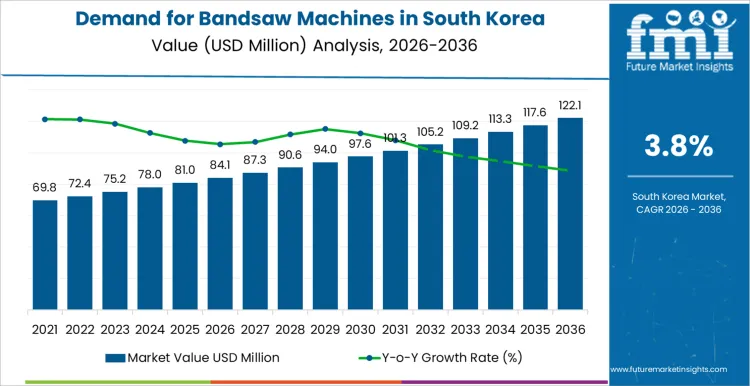
Technological integration is moving towards smart connectivity and automation. Manufacturers are incorporating sensors into stationary band saws to monitor blade wear and cutting accuracy in real-time, preventing costly downtime. The adoption of Computer Numerical Control (CNC) bandsaws is gaining traction, particularly in the aerospace and defense components sector where precision is non-negotiable. Innovation in high speed steel metal cutting tools is also extending the lifespan of consumables, enhancing the overall value proposition for end-users.
Demand for Bandsaw Machines in South Korea Key Takeaways
| Metric | Value |
|---|---|
| Industry Size (2026) | USD 84.1 million |
| Industry Value (2036) | USD 122.1 million |
| CAGR (2026 to 2036) | 3.8% |
What Industrial Trends Drive Cutting Equipment Sales?
A primary catalyst for growth is the transition towards high-value manufacturing in South Korea's core industries. The automotive sector's shift to electric vehicles (EVs) involves using lighter, yet harder, materials like high-tensile steel and aluminum alloys, which require specialized circular saw blade and bandsaw technologies for processing. The "Smart Factory" initiative promoted by the government encourages facility owners to replace manual cutting stations with automated systems that integrate into digital production lines. Demand for custom furniture and interior design is also fueling the adoption of precision woodworking cnc tools and vertical bandsaws in the woodworking sector.
How is the Sector Structured Across Key Segments?
The sector is segmented to address the varying power and precision needs of different workshops. It is primarily categorized by motor power, reflecting the machine's capacity. The end use segment highlights the industrial verticals driving consumption. The orientation segment distinguishes between gravity-fed and vertical contouring designs. Each segment plays a vital role, with medium-duty machines serving the broad SME base and metalworking applications dominating the revenue stream.
Why Do Medium Duty Machines Dominate?
Medium Duty machines command a 47.4% share of the industry. This prevalence is attributed to their versatility, striking a balance between power and footprint suitable for the majority of South Korean fabrication shops. These machines are capable of handling standard steel stock and pipes used in construction and general machinery manufacturing. The cost-to-performance ratio of medium-duty units makes them the preferred investment for workshops that need reliable daily operation without the capital expense of heavy industrial systems.
Is Heavy Duty Equipment Essential for Shipbuilding?
Heavy Duty machines account for 31.6% of the sector, driven largely by the shipbuilding and heavy machinery industries. Processing large metal billets, structural beams, and thick plates requires the high torque and rigid frame construction of heavy-duty bandsaws. South Gyeongsang, as a shipbuilding hub, concentrates the demand for these powerful units. The need to cut exotic alloys and titanium for defense and aerospace applications also sustains the high-value segment of heavy-duty saw blades.
Why Does Metalworking Lead Applications?
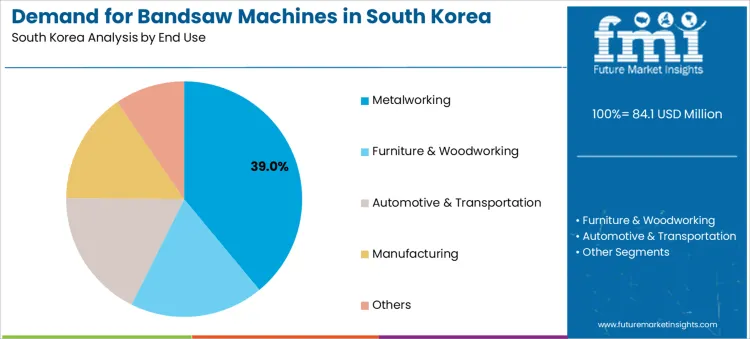
The Metalworking segment holds the majority share of 39.0%. South Korea's economy is fundamentally industrial, with a dense network of suppliers producing components for cars, ships, and electronics. Virtually every step of the supply chain involves cutting metal stock to size. This universal requirement ensures consistent demand for both portable band saws for on-site work and large stationary units for production lines. The continued strength of the steel industry ensures a steady flow of raw material requiring processing.
How is Furniture Manufacturing Evolving?
Furniture & Woodworking captures 20.0% of the usage. The rise of "self-interior" and DIY trends, alongside a robust domestic furniture manufacturing industry, drives demand for vertical bandsaws used in shaping wood. Modern workshops are adopting panel saw and bandsaw combinations to handle composite woods and intricate designs. The focus on customized, high-quality wooden furniture requires machines that offer smooth finishes and intricate cutting capabilities, moving away from mass-production rough cutting.
Will Automation Redefine the Cutting Floor?
A significant trend is the shift from manual to automated cutting cycles. Labor shortages in the manufacturing sector are pushing owners to invest in fully automatic bandsaws with auto-feeders. These machines can run unattended overnight, significantly boosting productivity. Suppliers are integrating IoT connectivity to allow remote monitoring of cutting progress and machine health. This evolution is particularly relevant for the automotive parts industry, where high-volume, repetitive cutting of meat cutting machine precision is required (metaphorically similar in process flow, though distinct in material).
Does Raw Material Volatility Impact Machine Sales?
The most significant restraint is the fluctuation in global steel and component prices. Bandsaw machines are capital goods; when the price of raw materials for end-products (like steel beams) rises, manufacturers may delay equipment upgrades to preserve cash flow. South Korean manufacturers are sensitive to these global economic pulses. Overcoming this requires machine builders to offer flexible financing options and emphasize the long-term ROI of energy-efficient models that reduce operational costs.
How Can Stone Cutting Open New Niches?
The emerging field of specialized material processing presents a frontier of opportunity. With the construction industry using more engineered stone and ceramics, there is a growing need for stone cutting saw blades and specialized bandsaws. Adapting metal-cutting platforms to handle abrasive materials allows manufacturers to tap into the interior design and architectural supply sectors. This diversification helps mitigate the cyclical risks associated with the heavy metalworking industries.
How is the Bandsaw Landscape Evolving Across South Korea's Regions?
The regional sphere shows a distinct pattern where heavy industrial zones drive demand for large-capacity machines, while urban centers focus on compact and versatile units. High-growth areas are characterizing their development by modernizing legacy industrial complexes. As distinct provinces support specific industries, the utilization of cutting machinery is becoming tailored to local output requirements.
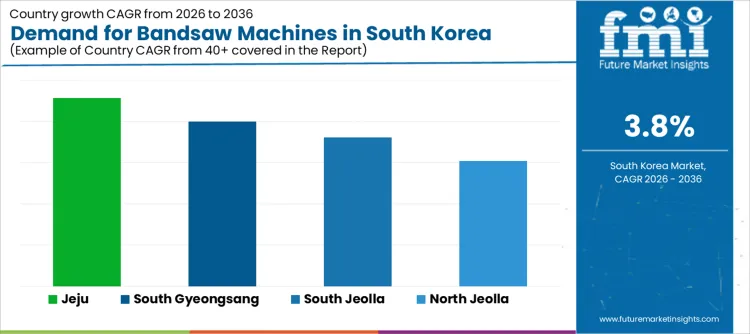
| Region | CAGR (2026 to 2036) |
|---|---|
| Jeju | 4.6% |
| South Gyeongsang | 4.0% |
| South Jeolla | 3.6% |
| North Jeolla | 3.0% |
Why is Infrastructure Maintenance Driving Jeju?
Adoption of cutting machinery in Jeju is projected to expand at a CAGR of 4.6%. While not a manufacturing hub, the island's booming tourism industry requires constant infrastructure maintenance and construction. The demand is driven by the need for miter saw and portable bandsaw units for hotel renovations, resort construction, and facility repairs. Small-scale metal fabrication shops serving the local construction sector are the primary purchasers of light and medium-duty equipment.
How is Shipbuilding Dominance Shaping South Gyeongsang?
Sales of industrial saws in South Gyeongsang are likely to reach a CAGR of 4.0%. This region is the epicenter of Korea's heavy industry, hosting the world's largest shipyards in Geoje and Ulsan. The demand is fueled by the relentless need to cut massive steel plates and pipes for vessel construction. Heavy-duty, horizontal bandsaws with high automation levels are standard here. The recovery of the shipbuilding order book translates directly into capital expenditure on new and replacement cutting machinery in this belt.
What Role Does Light Industry Play in South Jeolla?
The bandsaw sector in South Jeolla is anticipated to rise at a CAGR of 3.6%. Anchored by the Gwangju automotive cluster and Yeosu petrochemical complex, this region sees diverse industrial demand. Maintenance workshops in petrochemical plants require plasma cutting machine and bandsaw solutions for pipe fabrication. The agricultural machinery manufacturing base in the region also drives demand for metal cutting tools to produce chassis and components for farming equipment.
How is General Manufacturing Influencing North Jeolla?
Deployment of fabrication equipment in North Jeolla is expected to increase at a CAGR of 3.0%. The region's industrial parks, such as those in Gunsan, host a variety of general manufacturing and automotive component firms. The demand is driven by tier-2 and tier-3 suppliers requiring cost-effective cutting solutions. There is a growing trend towards retrofitting older factories with modern, safer cutting equipment to comply with strengthened workplace safety regulations.
What Strategies Define Leadership in Metal Cutting?
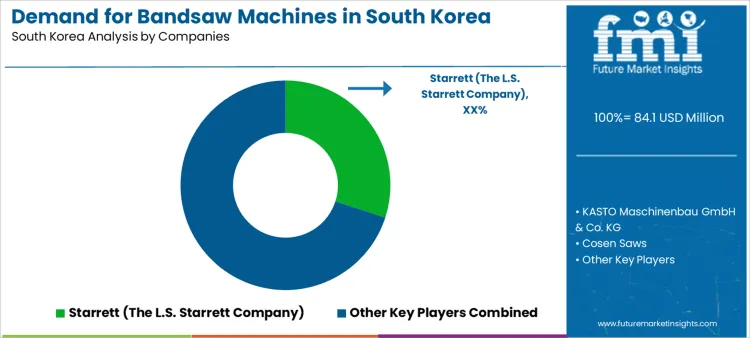
The competitive sphere is led by global precision experts who have established deep roots in the Korean industrial base. Starrett (The L.S. Starrett Company) maintains a dominant position with a 30.0% share, leveraging its reputation for durability and precision measuring integration. However, European manufacturers like KASTO are aggressively targeting the high-end automated segment, while local players focus on cost-effective mid-range solutions for general fabrication. This rivalry ensures that the sector remains dynamic, with a constant influx of advanced features filtering down to accessible price points through 2036.
How Are Asian Competitors Gaining Ground?
Competitors like Cosen Saws and ITL Industries are aggressively targeting the mid-market segment. By offering robust, feature-rich machines at competitive price points, they appeal to the vast number of SME fabricators in South Korea. These companies often emphasize rapid local service and spare parts availability, addressing a critical pain point for production managers. Domestic Korean machine tool builders are also integrating manufacturing equipment capabilities, offering bandsaws as part of broader turnkey machining cells to capture value across the entire production line.
Key Companies
- Starrett (The L.S. Starrett Company)
- KASTO Maschinenbau GmbH & Co. KG
- Cosen Saws
- HE&M Saw
- ITL Industries Ltd.
- Doosan Machine Tools (DN Solutions)
- Amada Co., Ltd.
- Behringer Saws
- Everising Machine Co.
- Delta Power Equipment Corporation
Scope of Report
| Items | Values |
|---|---|
| Quantitative Units | USD Million |
| End Use | Metalworking, Furniture & Woodworking, Automotive & Transportation, Manufacturing, Others |
| Motor Power | Medium Duty, Heavy Duty, Light Duty |
| Orientation | Horizontal, Vertical |
| Cutting Range | Upto 200 mm, 201 to 300 mm, 301 to 400 mm, Above 400 mm |
| Operation | Manual, Semi-Automatic, Fully Automatic |
| Regions Covered | Jeju, South Gyeongsang, South Jeolla, North Jeolla |
| Key Companies Profiled | Starrett, KASTO, Cosen Saws, HE&M Saw, ITL Industries, and others. |
Demand for Bandsaw Machines in South Korea by Segments
By End Use
- Metalworking
- Furniture & Woodworking
- Automotive & Transportation
- Manufacturing
- Others
By Motor Power
- Medium Duty
- Heavy Duty
- Light Duty
By Orientation
- Horizontal
- Vertical
By Cutting Range
- Upto 200 mm
- 201 to 300 mm
- 301 to 400 mm
- Above 400 mm
By Operation
- Manual
- Semi-Automatic
- Fully Automatic
Bibliography
- Korea Machine Tool Manufacturers’ Association. (2024, November 6). Korea machine tool industry. Korea Machine Tool Manufacturers’ Association, Republic of Korea.
- Ministry of Trade, Industry and Energy. (2024, July 2). K-Shipbuilding super gap vision 2040 and public-private joint technology roadmap announcement. Ministry of Trade, Industry and Energy, Republic of Korea.
- Korea Iron and Steel Association. (2025, April). Steel data monthly statistics. Korea Iron and Steel Association, Republic of Korea.
- Statistics Korea. (2025, March 3). Monthly industrial statistics, January 2025. Statistics Korea, Republic of Korea.
- Small Enterprise and Market Service. (2025, February 3). Smart manufacturing support program. Small Enterprise and Market Service, Republic of Korea.
Frequently Asked Questions
How big is the demand for Bandsaw Machines in South Korea in 2026?
The demand for bandsaw machines in South Korea is estimated to be valued at USD 84.1 million in 2026.
What will be the size of Bandsaw Machines in South Korea in 2036?
The industry size for the bandsaw machines in South Korea is projected to reach USD 122.1 million by 2036.
How much will be the demand for Bandsaw Machines in South Korea growth between 2026 and 2036?
The demand for bandsaw machines in South Korea is expected to grow at a 3.8% CAGR between 2026 and 2036.
What are the key product types in the Bandsaw Machines in South Korea?
The key product types in bandsaw machines in South Korea are medium duty, heavy duty, and light duty.
Which end user segment is expected to contribute significant share in the Bandsaw Machines in South Korea in 2026?
In terms of end user, the metalworking segment is expected to command 39.0% share in the bandsaw machines in South Korea in 2026.
Preview the report firsthand - request a free sample
Get SampleGet the brochure for pricing and purchase details.
Get PDFTable of Content
- Executive Summary
- South Korea Market Outlook
- Demand-side Trends
- Supply-side Trends
- Technology Roadmap Analysis
- Analysis and Recommendations
- Market Overview
- Market Coverage / Taxonomy
- Market Definition / Scope / Limitations
- Market Background
- Market Dynamics
- Drivers
- Restraints
- Opportunity
- Trends
- Scenario Forecast
- Demand in Optimistic Scenario
- Demand in Likely Scenario
- Demand in Conservative Scenario
- Opportunity Map Analysis
- Product Life Cycle Analysis
- Supply Chain Analysis
- Investment Feasibility Matrix
- Value Chain Analysis
- PESTLE and Porter’s Analysis
- Regulatory Landscape
- Regional Parent Market Outlook
- Production and Consumption Statistics
- Import and Export Statistics
- Market Dynamics
- South Korea Market Analysis 2021 to 2025 and Forecast, 2026 to 2036
- Historical Market Size Value (USD Million) Analysis, 2021 to 2025
- Current and Future Market Size Value (USD Million) Projections, 2026 to 2036
- Y-o-Y Growth Trend Analysis
- Absolute $ Opportunity Analysis
- South Korea Market Pricing Analysis 2021 to 2025 and Forecast 2026 to 2036
- South Korea Market Analysis 2021 to 2025 and Forecast 2026 to 2036, By End Use
- Introduction / Key Findings
- Historical Market Size Value (USD Million) Analysis By End Use , 2021 to 2025
- Current and Future Market Size Value (USD Million) Analysis and Forecast By End Use , 2026 to 2036
- Metalworking
- Furniture & Woodworking
- Automotive & Transportation
- Manufacturing
- Others
- Metalworking
- Y-o-Y Growth Trend Analysis By End Use , 2021 to 2025
- Absolute $ Opportunity Analysis By End Use , 2026 to 2036
- South Korea Market Analysis 2021 to 2025 and Forecast 2026 to 2036, By Motor Power
- Introduction / Key Findings
- Historical Market Size Value (USD Million) Analysis By Motor Power, 2021 to 2025
- Current and Future Market Size Value (USD Million) Analysis and Forecast By Motor Power, 2026 to 2036
- Medium Duty
- Heavy Duty
- Light Duty
- Medium Duty
- Y-o-Y Growth Trend Analysis By Motor Power, 2021 to 2025
- Absolute $ Opportunity Analysis By Motor Power, 2026 to 2036
- South Korea Market Analysis 2021 to 2025 and Forecast 2026 to 2036, By Orientation
- Introduction / Key Findings
- Historical Market Size Value (USD Million) Analysis By Orientation, 2021 to 2025
- Current and Future Market Size Value (USD Million) Analysis and Forecast By Orientation, 2026 to 2036
- Horizontal
- Vertical
- Horizontal
- Y-o-Y Growth Trend Analysis By Orientation, 2021 to 2025
- Absolute $ Opportunity Analysis By Orientation, 2026 to 2036
- South Korea Market Analysis 2021 to 2025 and Forecast 2026 to 2036, By Cutting Range
- Introduction / Key Findings
- Historical Market Size Value (USD Million) Analysis By Cutting Range, 2021 to 2025
- Current and Future Market Size Value (USD Million) Analysis and Forecast By Cutting Range, 2026 to 2036
- Upto 200 mm
- 201 to 300 mm
- 301 to 400 mm
- Above 400 mm
- Upto 200 mm
- Y-o-Y Growth Trend Analysis By Cutting Range, 2021 to 2025
- Absolute $ Opportunity Analysis By Cutting Range, 2026 to 2036
- South Korea Market Analysis 2021 to 2025 and Forecast 2026 to 2036, By Operation
- Introduction / Key Findings
- Historical Market Size Value (USD Million) Analysis By Operation, 2021 to 2025
- Current and Future Market Size Value (USD Million) Analysis and Forecast By Operation, 2026 to 2036
- Manual
- Automated
- Manual
- Y-o-Y Growth Trend Analysis By Operation, 2021 to 2025
- Absolute $ Opportunity Analysis By Operation, 2026 to 2036
- Market Structure Analysis
- Competition Dashboard
- Competition Benchmarking
- Market Share Analysis of Top Players
- By Regional
- By End Use
- By Motor Power
- By Orientation
- By Cutting Range
- By Operation
- Competition Analysis
- Competition Deep Dive
- Starrett (The L.S. Starrett Company)
- Overview
- Product Portfolio
- Profitability by Market Segments (Product/Age /Sales Channel/Region)
- Sales Footprint
- Strategy Overview
- Marketing Strategy
- Product Strategy
- Channel Strategy
- KASTO Maschinenbau GmbH & Co. KG
- Cosen Saws
- HE&M Saw
- ITL Industries Ltd.
- Starrett (The L.S. Starrett Company)
- Competition Deep Dive
- Assumptions & Acronyms Used
- Research Methodology


