

- Industry Size (2026)
- USD 50.3 Mn
- Forecast (2036)
- USD 75.8 Mn
- CAGR (2026 to 2036)
- 4.2%
Demand for Coffee Extracts in South Korea Forecast and Outlook 2026 to 2036
Sales of coffee extracts in South Korea are estimated to reach a valuation of USD 50.3 million in 2026. Financial trajectory for the sector is poised to climb to USD 75.8 million by 2036, progressing at a moderate compound annual growth rate of 4.2%. South Korea stands as one of the most dynamic coffee cultures globally, boasting one of the highest per capita consumption rates in Asia. This ingrained affinity for caffeine drives the industry beyond traditional brewing methods toward versatile derivatives that offer consistency and convenience.
Manufacturers are increasingly relying on concentrated formats to support the booming ready-to-drink beverage sector and the artisanal bakery landscape. The shift is not merely about caffeine delivery but involves capturing complex flavor profiles in stable liquid or powder forms that can be easily integrated into diverse industrial applications ranging from confectionery to functional health supplements.
Quick Stats for Demand for Coffee Extracts in South Korea
- Demand for Coffee Extracts in South Korea Industry Value (2026): USD 50.3 million
- Demand for Coffee Extracts in South Korea Industry Forecast Value (2036): USD 75.8 million
- Demand for Coffee Extracts in South Korea Forecast CAGR: 4.2%
- Demand for Coffee Extracts in South Korea Leading Nature: Conventional (80.5%)
- Demand for Coffee Extracts in South Korea Leading Product: Liquid Concentrate (42.8%)
- Demand for Coffee Extracts in South Korea Leading End Use: Beverage Industry (33.0%)
- Demand for Coffee Extracts in South Korea Key Growth Regions: Jeju, South Gyeongsang, South Jeolla, North Jeolla
- Demand for Coffee Extracts in South Korea Key Players: McCormick, Savory Spice, J. R. Watkins, NatureWise, Sports Research
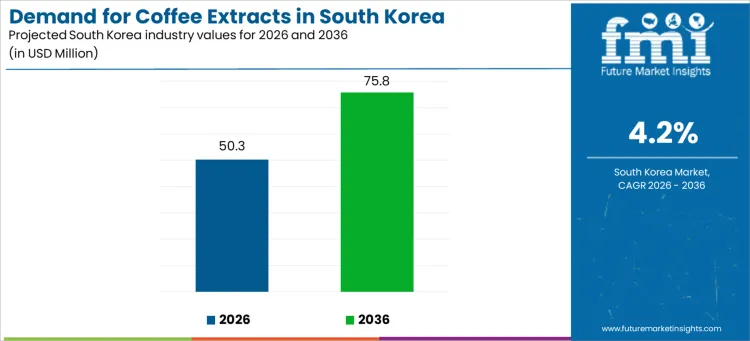
Expansion of domain is heavily influenced by the rapid growth of the "Home Cafe" trend which accelerated during the pandemic and has since become a permanent lifestyle fixture. Consumers are seeking high-quality liquid concentrates that allow them to replicate barista-level beverages at home without expensive machinery. Food scientists in the region are leveraging advanced cold-water extraction technologies to produce smoother, less acidic concentrates that appeal to the Korean palate's preference for iced americano styles. Local dairy companies are also significant purchasers, utilizing robust coffee extracts to formulate flavored milks and processed lattés which remain perennial bestsellers in convenience stores. This industrial demand ensures a steady baseline for volume growth, insulated from the day-to-day volatility of retail bean prices.
Innovation is pivoting toward functional differentiation where coffee extracts serve as delivery vehicles for health-promoting compounds. There is a surging interest in green coffee bean derivatives for their chlorogenic acid content, marketed heavily within the weight management and beauty sectors. Pharmaceutical and nutraceutical companies are incorporating these unroasted extracts into dietary supplements, capitalizing on the "Inner Beauty" movement prevalent among South Korean consumers.
Demand for Coffee Extracts in South Korea Key Takeaways
| Metric | Value |
|---|---|
| Industry Size (2026) | USD 50.3 million |
| Industry Value (2036) | USD 75.8 million |
| CAGR (2026 to 2036) | 4.2% |
What Factors Are Fueling Ingredient Innovation?
A primary catalyst for growth is the relentless demand for convenience and consistency in the massive South Korean food processing sector. Industrial bakers and beverage manufacturers prefer coffee extracts over brewing fresh coffee because extracts provide a standardized flavor profile that does not fluctuate between batches. The rise of the coffee concentrate segment is specifically driven by the popularity of cold brew products, which require time-intensive production if done traditionally but are instant with high-quality extracts. Health consciousness is another major driver, with consumers actively seeking functional ingredients that aid metabolism. This has led to the increased utilization of green coffee bean extract in diet pills and functional jellies, expanding the scope of the commodity beyond just taste and energy.
How is the Sector Structured Across Key Segments?
The sector is segmented to address the diverse viscosity and concentration needs of industrial clients. It is primarily categorized by product, reflecting the physical state of the extract. The nature segment distinguishes between standard farming and organic certification. The formulation segment highlights the processing stage of the bean. The end use segment underscores the industrial verticals driving consumption. Each segment plays a vital role, where liquid concentrates drive volume through beverage applications and dried forms support the baking and pharmaceutical industries.
Why Does the Beverage Industry Dominate Usage?
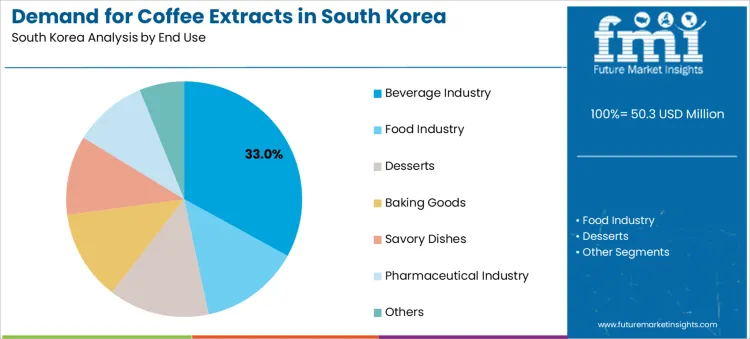
The Beverage Industry commands a 33.0% share of the sector volume. South Korea's convenience store culture relies heavily on ready-to-drink (RTD) coffee products sold in cans, cups, and pouches. Manufacturers of these ready to drink coffee products require vast quantities of stable, high-flavor liquid extracts to ensure product uniformity across millions of units. The trend towards flavored processed milks, such as the iconic "Coffee Milk," further cements the position of this segment. Extracts allow for precise flavor dosing that is difficult to achieve with brewed coffee, making them indispensable for large-scale bottling operations.
How Does Conventional Nature Maintain Leadership?
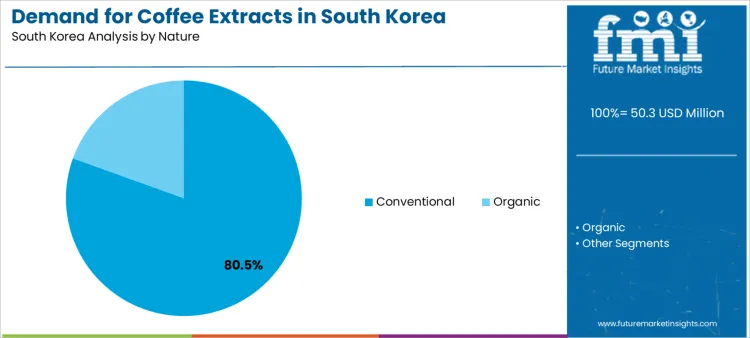
Conventional extracts account for 80.5% of the total value. The primary driver here is cost-efficiency in mass manufacturing. Major food and beverage conglomerates operate on tight margins and require cost-effective ingredients to keep retail prices competitive. While there is interest in organic products, the premium price of organic coffee beans often makes organic extracts prohibitively expensive for mass-market applications like coffee syrup or candies. Supply chain stability is another factor, as conventional beans are more readily available in the volumes required by large Korean processing plants.
Why is Liquid Concentrate the Preferred Form?

Liquid Concentrate holds a significant 42.8% share. This format is preferred for its solubility and ease of integration into wet processing lines. Unlike powders which may clump or require pre-dissolving, liquid extracts disperse instantly in cold milk or water, making them ideal for the out of home coffee and foodservice sectors. The proliferation of cafe franchises using pumpable bases to create signature drinks drives demand for this format. Recent advancements in cold-chain logistics have further enabled the distribution of high-quality, preservative-free liquid extracts that retain the volatile aromatics of fresh coffee.
How are Formulation Preferences Split?
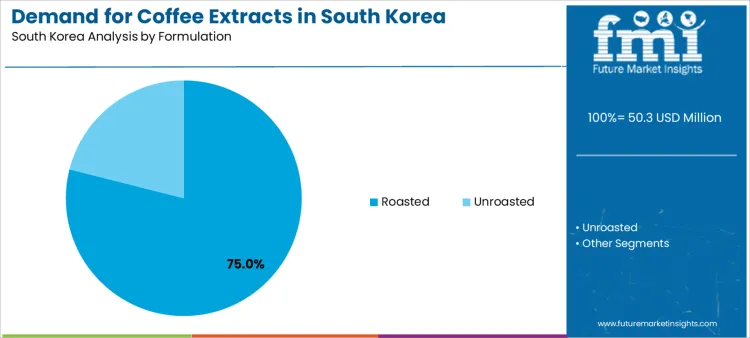
Roasted formulations capture 75.0% of the usage, driven by the demand for the traditional coffee flavor in food and beverages. Baking Goods and Desserts rely on roasted extracts to impart the signature mocha flavor in cakes, tiramisu, and coffee creamer products. Unroasted or green coffee extracts account for 20.0%, finding their niche primarily in the nutraceutical space. The high concentration of antioxidants in unroasted beans makes them valuable for adaptogen coffee blends and supplements, catering to a demographic that values coffee's chemical properties over its taste.
Will Functional Additives Redefine Coffee Culture?
A significant trend is the hybridization of coffee with other wellness ingredients. South Korean consumers are increasingly open to prebiotic coffee and other functional blends that claim to support gut health. Extracts serve as the perfect base for these innovations, allowing manufacturers to blend coffee with fiber, collagen, or MCT oil for butter coffee concepts without altering the texture. This moves the category into the wellness space, competing directly with traditional health supplements. The ability to mask the taste of functional additives with strong coffee extract flavor is a key formulation advantage.
Does Raw Material Volatility Impact Production?
The most significant restraint is the fluctuation in global green coffee prices due to climate change and logistical disruptions. Since South Korea imports 100% of its coffee beans, local extract manufacturers are highly vulnerable to international cost spikes. This volatility can squeeze margins, especially for players in the low-cost take out coffee supply chain. Overcoming this requires strategic stockpiling and the development of coffee grounds upcycling technologies to extract every bit of value from the imported raw material.
How Can Beauty Applications Unlock Value?
The emerging field of cosmetic ingredients presents a frontier of opportunity. Caffeine is a potent vasoconstrictor and antioxidant, leading to its inclusion in coffee beauty products like eye creams and cellulite scrubs. Suppliers who can produce high-purity, cosmetic-grade extracts stand to capture significant revenue from the booming K-Beauty industry. Coffee cherry extracts, derived from the fruit rather than the bean, are also gaining traction for their anti-aging properties, offering a sustainable way to utilize the entire coffee plant.
How is the Extract Landscape Evolving Across South Korea's Regions?
The regional analysis shows a distinct pattern where tourism hubs drive premium consumption while industrial zones focus on mass production. High-growth areas are characterizing their development by integrating local ingredients with coffee products. As distinct provinces implement local food industry support programs, the utilization of extracts is becoming tailored to regional economic activities.
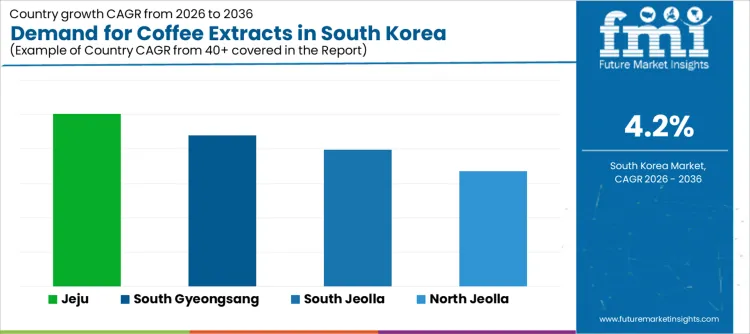
| Region | CAGR (2026 to 2036) |
|---|---|
| Jeju | 4.4% |
| South Gyeongsang | 3.9% |
| South Jeolla | 3.4% |
| North Jeolla | 3.0% |
Why is Cafe Culture Driving Demand in Jeju?
Adoption of premium extracts in Jeju is projected to expand at a CAGR of 4.4%. As South Korea's premier tourist destination, Jeju has an incredibly dense concentration of independent cafes and dessert shops. The demand is driven by the creation of signature tourism products, such as hallabong-coffee blends or volcanic soil-themed desserts using concentrated coffee. Local producers are experimenting with fermented coffee extracts to create unique flavor profiles that appeal to visitors seeking novel experiences. The island's focus on high-quality, artisanal food products supports a vibrant micro-market for specialized extracts.
How is Food Processing Influencing South Gyeongsang?
Sales of industrial extracts in South Gyeongsang are likely to reach a CAGR of 3.9%. This region is situated near Busan, a major port and logistics hub, and hosts numerous food processing facilities. The demand is fueled by large-scale bakeries and beverage plants that require bulk quantities of consistent liquid extract. Manufacturers here focus on cost-efficiency and stability, supplying the nationwide convenience store network with coffee-flavored snacks and drinks. The proximity to the port ensures easy access to imported beans for processing.
What Role Does Agriculture Play in South Jeolla?
The extract sector in South Jeolla is anticipated to rise at a CAGR of 3.4%. While traditionally agricultural, the region is diversifying into value-added food manufacturing. Small and medium enterprises are utilizing coffee extracts to flavor regional specialty snacks, aiming to modernize traditional treats for younger consumers. The demand is also supported by the health food sector, which utilizes green coffee extracts in locally produced diet supplements. Government initiatives to boost the local food industry are helping smaller players access better extraction technologies.
How are Food Clusters Shaping North Jeolla?
Deployment of food ingredients in North Jeolla is expected to increase at a CAGR of 3.0%. Anchored by the National Food Cluster in Iksan, this region is attracting food tech companies and research institutes. The demand is driven by innovation in functional foods, where researchers are studying the synergistic effects of coffee extracts with other bioactive compounds. Companies located in the cluster benefit from shared pilot plants and testing facilities, encouraging the development of high-value, functional coffee products for export markets.
What Strategies Define Leadership in Extract Supply?
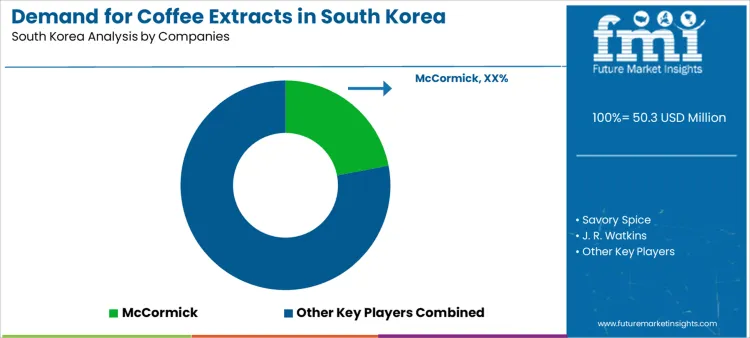
The competitive landscape is dominated by McCormick, which commands a notable 22.0% share of the sector. Their strategy centers on leveraging global sourcing capabilities to provide a consistent, high-quality supply of extracts to both retail and industrial clients. They focus on brand reliability and safety standards, which are paramount for major food manufacturers. Competitors like Savory Spice and J. R. Watkins focus on the premium retail segment, offering small-batch, artisanal extracts for home baking enthusiasts. Their packaging and marketing emphasize flavor purity and origin, appealing to the discerning "Home Cafe" demographic.
How Are Local Players Challenging Global Brands?
Domestic South Korean companies are carving out significant niches by specializing in ready-to-use liquid bases for cafes. They offer customized solutions that allow coffee shops to serve high-quality lattes and cold brews without brewing equipment. NatureWise and Sports Research are aggressive in the functional segment, dominating the online sales of green coffee bean supplements. These companies are adept at digital marketing, utilizing influencers and social media to educate consumers about the metabolic benefits of unroasted coffee extracts. This agility allows them to respond quickly to health trends that larger multinational ingredient suppliers might miss.
Key Companies
- McCormick
- Savory Spice
- J. R. Watkins
- NatureWise
- Sports Research
- Nielsen-Massey Vanillas
- Java Trading Co.
- Synergy Flavors
- Kerry Group
- Finlays
Scope of Report
| Items | Values |
|---|---|
| Quantitative Units | USD Million |
| End Use | Beverage Industry, Food Industry, Desserts, Baking Goods, Savory Dishes, Pharmaceutical Industry, Others |
| Nature | Conventional, Organic |
| Product | Liquid Concentrate, Dried Form, Capsules or Tablets |
| Formulation | Roasted, Unroasted |
| Regions Covered | Jeju, South Gyeongsang, South Jeolla, North Jeolla |
| Key Companies Profiled | McCormick, Savory Spice, J. R. Watkins, NatureWise, Sports Research, and others. |
Demand for Coffee Extracts in South Korea by Segments
By End Use
- Beverage Industry
- Food Industry
- Desserts
- Baking Goods
- Savory Dishes
- Pharmaceutical Industry
- Others
By Nature
- Conventional
- Organic
By Product
- Liquid Concentrate
- Dried Form
- Capsules or Tablets
By Formulation
- Roasted
- Unroasted
Bibliography
- Ministry of Food and Drug Safety. (2025, October 15). Imported food statistics service. Ministry of Food and Drug Safety, Republic of Korea.
- Ministry of Food and Drug Safety. (2025, July 2). Imported food inspection yearbook: 2024 results. Ministry of Food and Drug Safety, Republic of Korea.
- Statistics Korea. (2025, February 2). Monthly industrial statistics, December 2024. Statistics Korea, Republic of Korea.
- Ministry of Food and Drug Safety. (2025, June 11). Imported food information notice 2025-62: Inspection notification for Indonesian coffee beans. Ministry of Food and Drug Safety, Republic of Korea.
- Ministry of Food and Drug Safety. (2024, October 10). Inspection instruction 2024-96 and 2024-97: Strengthened inspection for Indonesian coffee beans. Ministry of Food and Drug Safety, Republic of Korea.
Frequently Asked Questions
How big is the demand for Coffee Extracts in South Korea in 2026?
The demand for coffee extracts in South Korea is estimated to be valued at USD 50.3 million in 2026.
What will be the size of Coffee Extracts in South Korea in 2036?
The industry size for the coffee extracts in South Korea is projected to reach USD 75.8 million by 2036.
How much will be the demand for Coffee Extracts in South Korea growth between 2026 and 2036?
The demand for coffee extracts in South Korea is expected to grow at a 4.2% CAGR between 2026 and 2036.
What are the key product types in the Coffee Extracts in South Korea?
The key product types in coffee extracts in South Korea are liquid concentrate, dried form, and capsules or tablets.
Which end user segment is expected to contribute significant share in the Coffee Extracts in South Korea in 2026?
In terms of end user, the beverage industry segment is expected to command 33.0% share in the coffee extracts in South Korea in 2026.
Preview the report firsthand - request a free sample
Get SampleGet the brochure for pricing and purchase details.
Get PDFTable of Content
- Executive Summary
- South Korea Market Outlook
- Demand-side Trends
- Supply-side Trends
- Technology Roadmap Analysis
- Analysis and Recommendations
- Market Overview
- Market Coverage / Taxonomy
- Market Definition / Scope / Limitations
- Market Background
- Market Dynamics
- Drivers
- Restraints
- Opportunity
- Trends
- Scenario Forecast
- Demand in Optimistic Scenario
- Demand in Likely Scenario
- Demand in Conservative Scenario
- Opportunity Map Analysis
- Product Life Cycle Analysis
- Supply Chain Analysis
- Investment Feasibility Matrix
- Value Chain Analysis
- PESTLE and Porter’s Analysis
- Regulatory Landscape
- Regional Parent Market Outlook
- Production and Consumption Statistics
- Import and Export Statistics
- Market Dynamics
- South Korea Market Analysis 2021 to 2025 and Forecast, 2026 to 2036
- Historical Market Size Value (USD Million) Analysis, 2021 to 2025
- Current and Future Market Size Value (USD Million) Projections, 2026 to 2036
- Y-o-Y Growth Trend Analysis
- Absolute $ Opportunity Analysis
- South Korea Market Pricing Analysis 2021 to 2025 and Forecast 2026 to 2036
- South Korea Market Analysis 2021 to 2025 and Forecast 2026 to 2036, By End Use
- Introduction / Key Findings
- Historical Market Size Value (USD Million) Analysis By End Use , 2021 to 2025
- Current and Future Market Size Value (USD Million) Analysis and Forecast By End Use , 2026 to 2036
- Beverage Industry
- Food Industry
- Desserts
- Baking Goods
- Savory Dishes
- Pharmaceutical Industry
- Others
- Beverage Industry
- Y-o-Y Growth Trend Analysis By End Use , 2021 to 2025
- Absolute $ Opportunity Analysis By End Use , 2026 to 2036
- South Korea Market Analysis 2021 to 2025 and Forecast 2026 to 2036, By Nature
- Introduction / Key Findings
- Historical Market Size Value (USD Million) Analysis By Nature, 2021 to 2025
- Current and Future Market Size Value (USD Million) Analysis and Forecast By Nature, 2026 to 2036
- Conventional
- Organic
- Conventional
- Y-o-Y Growth Trend Analysis By Nature, 2021 to 2025
- Absolute $ Opportunity Analysis By Nature, 2026 to 2036
- South Korea Market Analysis 2021 to 2025 and Forecast 2026 to 2036, By Product
- Introduction / Key Findings
- Historical Market Size Value (USD Million) Analysis By Product, 2021 to 2025
- Current and Future Market Size Value (USD Million) Analysis and Forecast By Product, 2026 to 2036
- Liquid Concentrate
- Dried Form
- Capsules or Tablets
- Liquid Concentrate
- Y-o-Y Growth Trend Analysis By Product, 2021 to 2025
- Absolute $ Opportunity Analysis By Product, 2026 to 2036
- South Korea Market Analysis 2021 to 2025 and Forecast 2026 to 2036, By Formulation
- Introduction / Key Findings
- Historical Market Size Value (USD Million) Analysis By Formulation, 2021 to 2025
- Current and Future Market Size Value (USD Million) Analysis and Forecast By Formulation, 2026 to 2036
- Roasted
- Unroasted
- Roasted
- Y-o-Y Growth Trend Analysis By Formulation, 2021 to 2025
- Absolute $ Opportunity Analysis By Formulation, 2026 to 2036
- Market Structure Analysis
- Competition Dashboard
- Competition Benchmarking
- Market Share Analysis of Top Players
- By Regional
- By End Use
- By Nature
- By Product
- By Formulation
- Competition Analysis
- Competition Deep Dive
- McCormick
- Overview
- Product Portfolio
- Profitability by Market Segments (Product/Age /Sales Channel/Region)
- Sales Footprint
- Strategy Overview
- Marketing Strategy
- Product Strategy
- Channel Strategy
- Savory Spice
- J. R. Watkins
- NatureWise
- Sports Research
- McCormick
- Competition Deep Dive
- Assumptions & Acronyms Used
- Research Methodology


