

- Industry Size (2026)
- USD 30.0 Mn
- Forecast (2036)
- USD 257.8 Mn
- CAGR (2026 to 2036)
- 24.0%
Subcutaneous Bispecific Antibody Auto-Injectors Market Size, Market Forecast and Outlook By FMI
The subcutaneous bispecific antibody auto-injectors market was valued at USD 24.2 million in 2025. The industry is poised to cross USD 30.0 million in 2026 at a CAGR of 24.0% during the forecast period. Demand outlook is expected to be USD 257.8 million through 2036 as pharmaceutical developers remove complex biologics delivery away from intravenous infusion suites to localised subcutaneous administration formats.
Biopharmaceutical manufacturers are being forced to redesign their entire clinical delivery strategies, moving away from post-formulation device selection toward parallel drug-device co-development. The stakes for delaying this integration involve severe late-stage clinical hold-ups and forfeiture of outpatient administration approvals within the market. While standard engineering focuses on expanding payload capacities, the actual friction point centers on the molecular rheology of the payload itself. Early integrators of wearable injectors gain a critical advantage by matching the device power curve to the specific viscosity profile of bispecific agents, validating the need for a high-viscosity bispecific auto-injector.
Summary of Subcutaneous Bispecific Antibody Auto-Injectors Market
- Subcutaneous Bispecific Antibody Auto-Injectors Market Definition:
- Engineered delivery systems specifically calibrated for the subcutaneous injection of dual-targeting antibodies. The boundary is defined by the device's capability to manage the unique volume, viscosity, and delivery duration requirements of bispecific combinations.
- Demand Drivers in the Market:
- Decentralization of oncology care forces hospital administrators to transition maintenance therapies to outpatient bispecific administration device formats.
- High viscosity profiles of concentrated dual-target agents require primary packaging engineers to adopt enhanced power-source delivery mechanisms.
- Healthcare resource constraints compel clinical pathway directors to eliminate lengthy intravenous chair times associated with systemic bispecific delivery.
- Key Segments Analyzed in the FMI Report:
- Hematologic malignancies: Hematologic malignancies are expected to hold 48.6% share in 2026, driven by the early clinical success and regulatory validation of subcutaneous bispecifics in blood cancers.
- Disposable spring-driven auto-injectors: Disposable spring-driven auto-injectors are poised to record 57.8% share in 2026, as they represent the most established and regulatorily de-risked pathway for combination product commercialization.
- Prefilled syringe-based systems: Prefilled syringe-based systems are estimated to grab 61.4% share in 2026, owing to vast existing fill-finish infrastructure and proven stability profiles.
- Hospital outpatient / oncology clinics: Hospital outpatient / oncology clinics are likely to garner 63.9% share in 2026, reflecting the stringent monitoring requirements still necessary for early-stage bispecific administration.
- Maintenance dosing: Maintenance dosing is projected to account for 46.7% share in 2026, where the transition from clinical to home-based delivery yields the highest operational value.
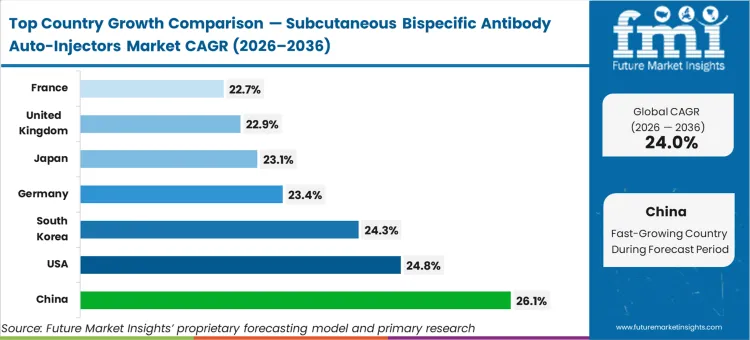
- China: 26.1% compound growth, enabled by intense domestic pipeline development and rapid expansion of specialized combination product manufactuspecialised
- Analyst Opinion at FMI:
- Sabyasachi Ghosh, Principal Analyst, Healthcare, at FMI, suggests, "The general consensus is that device engineering will simply scale up to meet the demands of higher-volume bispecific payloads. The physical limits of spring-powered mechanisms have already been reached for high-viscosity formulations. The actual transition hinges on molecular re-engineering and enzymatic co-formulation, which allows the drug to fit the device rather than forcing the device to accommodate the drug."
- Strategic Implications / Executive Takeaways:
- Biopharmaceutical device leads must parallel-track primary container qualification with phase II clinical trials to prevent launch delays.
- Primary packaging suppliers should invest heavily in high-strength materials to avoid container breakage under the extreme forces required for viscous delivery.
- Contract manufacturing organisations face intense pressure to upgrade fill-finish lines capable of handling highly sensitive, dual-targeting biologics in complex delivery formats.
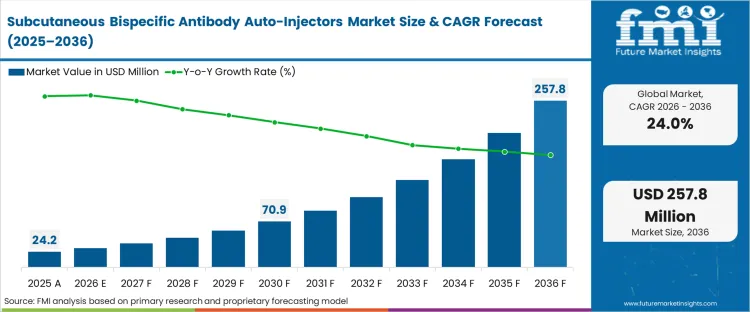
The qualification of a large-volume bispecific injection device that can reliably extrude viscous co-formulations without tissue damage must be achieved before growth becomes self-reinforcing. Primary packaging suppliers trigger this gate by commercialising advanced container architectures capable of withstanding extreme mechanical stress. Once this threshold is crossed, the transition from clinical monitoring to at-home maintenance dosing accelerates rapidly, elevating the subcutaneous bispecific antibody injector forecast.
China advances at 26.1%, driven by a hyper-accelerated pipeline of dual-targeting agents and rapidly scaling domestic manufacturing capacity. The United States follows closely at 24.8%, where aggressive transitions toward decentralised oncology care compel rapid adoption. South Korea tracks at 24.3%, leveraging its concentrated biomanufacturing infrastructure. Germany, Japan, the United Kingdom, and France are expected to register 23.4%, 23.1%, 22.9%, and 22.7%, respectively. The differences across regions highlight how prepared each national healthcare system is to transition the management of severe conditions management from monitored hospital settings into outpatient frameworks, defining overall growth.
Subcutaneous Bispecific Antibody Auto-Injectors Market Key Takeaways
| Metric | Details |
|---|---|
| Industry Size (2026) | USD 30.0 million |
| Industry Value (2036) | USD 257.8 million |
| CAGR (2026-2036) | 24.0% |
Source: Future Market Insights (FMI) analysis, based on proprietary forecasting model and primary research
Subcutaneous Bispecific Antibody Auto-Injectors Market Definition
The subcutaneous bispecific antibody auto-injectors market comprises specialised mechanical and electromechanical delivery devices engineered specifically for the self-administration or outpatient delivery of dual-targeting monoclonal antibodies. It is functionally distinct from standard biologic pens due to the specific power, volume, and viscosity requirements dictated by complex bispecific formulations and their unique pharmacokinetic delivery profiles.
Subcutaneous Bispecific Antibody Auto-Injectors Market Inclusions
The scope of the bispecific antibody auto-injector market includes disposable mechanical pens, reusable electromechanical drivers, and high-volume wearable modules designed exclusively for bispecific agents. It incorporates primary container components heavily integrated into these devices, as well as systems utilizing large volume injectors tailored for co-formulated enzymatic dispersion technologies. Equipment validated specifically for these complex therapeutic payloads falls entirely within this boundary.
Subcutaneous Bispecific Antibody Auto-Injectors Market Exclusions
Standard insulin pens, traditional single-target monoclonal antibody injectors, and general-purpose intravenous infusion pumps are explicitly excluded. These generic self administered parenteral formats are excluded because they lack the specific power mechanisms, container durability, and volume capacities required to handle the extreme rheological demands of bispecific antibody therapies.
Subcutaneous Bispecific Antibody Auto-Injectors Market Research Methodology
- Primary Research: Clinical trial directors, device engineering leads at biopharmaceutical firms, and primary packaging procurement heads.
- Desk Research: Device regulatory clearance databases, combination product patent filings, and clinical trial registry data mapping administration routes.
- Market-Sizing and Forecasting: Baseline anchored to the commercialization volume of approved subcutaneous bispecific agents and the pipeline maturation rate of late-stage candidates.
- Data Validation and Update Cycle: Forecasts triangulated against primary container manufacturing capacity expansions and biopharma partnership announcements.
Segmental Analysis
Subcutaneous Bispecific Antibody Auto-Injectors Market Analysis by Therapeutic Area
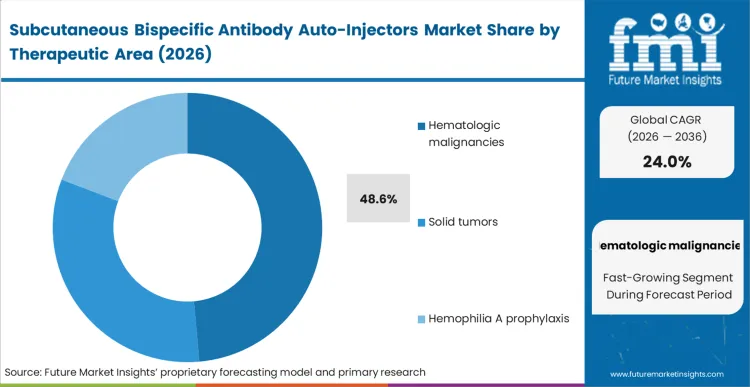
The reason hematologic malignancies hold 48.6% of this market comes down to a single operational reality: the first wave of approved subcutaneous bispecific therapies specifically targets blood cancers like multiple myeloma and lymphomas.
According to FMI's estimates, clinical developers prioritized these indications because frequent dosing regimens create an acute bottleneck in hospital infusion suites. Oncology pathway directors are altering their care models to route these specific patients away from intravenous chairs. The integration of connected drug delivery devices validates patient adherence without requiring physical hospital visits. Developers who delay the transition of their haematology pipelines to subcutaneous formats face immediate exclusion from decentralised procurement frameworks.
- Initial Qualification: Regulatory bodies prioritize these indications for subcutaneous transitions due to the sheer volume of clinical trial data demonstrating safety equivalency to intravenous routes, providing a de-risked pathway for combination product developers designing an auto-injector for multiple myeloma bispecifics.
- Protocol Validation: Oncology clinics validate the choice by tracking the reduction in chair-time utilization, directly correlating the device format with increased patient throughput.
- Workflow Expansion: Successful implementation in haematology establishes the operational blueprint that hospitals require before authorizing expansion into solid tumor indications, laying the groundwork for an auto-injector for EGFR-MET bispecific antibodies.
Subcutaneous Bispecific Antibody Auto-Injectors Market Analysis by Device Format
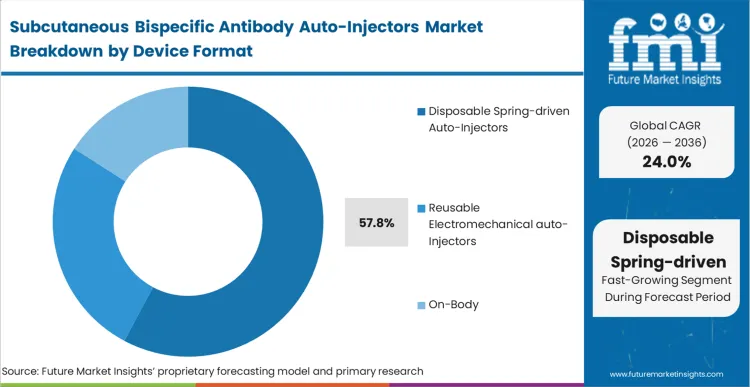
Disposable spring-driven auto-injectors command a 57.8% share because they represent the most mature, regulatorily validated pathway for primary container integration. Device engineers at leading biopharmaceutical firms rely on this format to avoid introducing novel mechanical risks during late-stage clinical reviews.
In FMI's view, the decision to utilise disposable mechanical systems is not driven by performance superiority, but by the necessity of moving rapidly through combination product regulatory gates. These systems integrate seamlessly into existing fill-finish architectures, minimising capital expenditure on novel assembly lines. Manufacturers clinging to complex, unvalidated delivery modules face severe commercial consequences as competitors reach the market years earlier with familiar subcutaneous drug delivery devices.
- Cost Origin: Cost savings originate primarily in the utilization of standardized manufacturing equipment, avoiding the massive capital expenditure required for novel electromechanical assembly.
- Hidden Friction: Hidden costs emerge during the clinical phase when highly viscous bispecifics push standard spring mechanisms to their physical breakage limits, triggering a critical wearable injector vs handheld auto-injector for bispecifics evaluation.
- Lifecycle Comparison: Total lifecycle analysis reveals that while disposable formats have higher per-unit material costs, they completely eliminate the reverse-logistics and sterilization burdens associated with reusable systems.
Subcutaneous Bispecific Antibody Auto-Injectors Market Analysis by Container Configuration
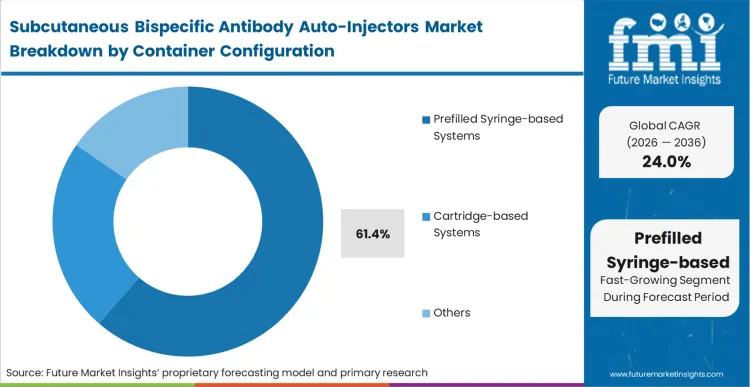
The specific choice facing primary packaging procurement heads right now is whether to push prefilled syringe architectures to their limits or pivot entirely to cartridge-based platforms. Prefilled syringe-based systems capture 61.4% share precisely because the global fill-finish ecosystem is overwhelmingly optimised for this format.
As per FMI's projection, abandoning this infrastructure introduces unacceptable risk and delay into the commercialisation timeline. The syringe acts as the building block of the combination product, requiring only minor adaptations to the external drug delivery technology housing. Biopharma companies that attempt to qualify novel container configurations late in the clinical process routinely experience multi-year regulatory delays.
- Breakage Prevention: Advanced glass strengthening and polymer applications prevent catastrophic container failure when high-force springs engage to extrude viscous payloads from a prefilled syringe bispecific auto-injector.
- Residual Contamination: Even with optimal design, the risk of silicone-induced protein aggregation remains a critical friction point requiring extensive stability testing.
- Operational Necessity: Buyers must rigorously align their container specifications with their contract manufacturing partners' existing line capabilities to capture the full commercial benefit of the format.
Subcutaneous Bispecific Antibody Auto-Injectors Market Analysis by End-Use Setting
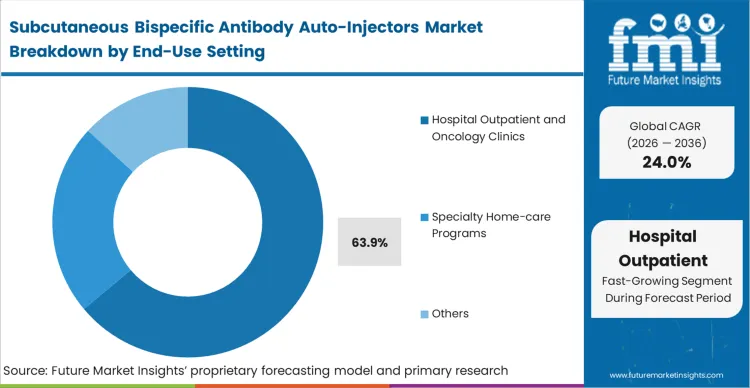
Hospital outpatient and oncology clinics dominate with a 63.9% share, reflecting the reality that bispecific antibodies carry severe immunologic monitoring requirements. Despite the physical capability of the device to enable home use, clinical pathway directors compel administration in monitored settings to manage cytokine release syndrome risks during step-up dosing.
Based on FMI's assessment, this setting provides the necessary clinical bridge, allowing healthcare systems to capture the efficiency of subcutaneous administration while maintaining acute monitoring capabilities. The integration of advanced drug delivery solutions within these clinics drastically reduces patient processing time. Institutions that fail to establish dedicated outpatient pathways for these therapies severely restrict their patient capacity.
- Early Adopters: Large academic medical centers adopt these workflows first to alleviate critical congestion in their primary intravenous infusion suites.
- System Integration: Community oncology networks follow, altering their staffing models to prioritize rapid-injection clinics utilizing oncology biologic self-injection systems.
- Ultimate Conversion: Specialty home-care programs arrive last, converting only after extensive post-market safety data completely de-risks the specific bispecific agent for unmonitored administration.
Subcutaneous Bispecific Antibody Auto-Injectors Market Analysis by Dosing Phase
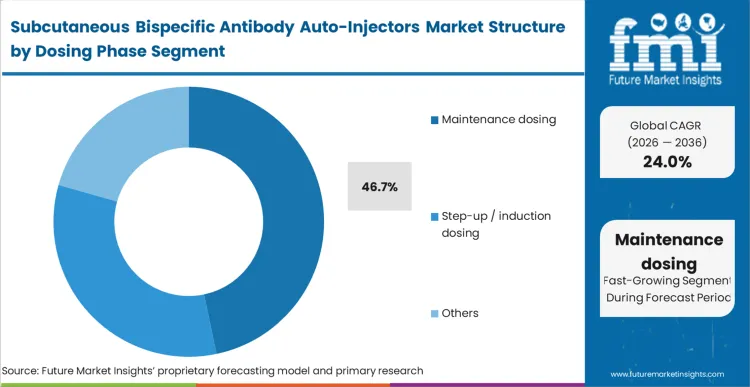
The commercial outcome of moving patients to maintenance dosing formats dictates the long-term profitability of the therapeutic agent. Maintenance dosing accounts for 46.7% share, representing the phase where the operational and economic benefits of auto-injectors are fully realized.
FMI analysts opine that once the acute monitoring of the induction phase is cleared, the requirement for localised administration becomes the primary determinant of patient adherence. Pharmaceutical developers design their delivery systems specifically to secure this long-tail revenue stream, utilizing injectable drugs packaged for maximum patient autonomy. Companies that fail to provide a viable auto-injector option for the maintenance phase routinely lose market share to competitors offering superior patient convenience.
- Core Capability: The format delivers precise, repeatable dosing without requiring complex reconstitution or clinical intervention by the patient.
- Material Constraint: The sheer volume required for maintenance dosing often pushes the physical limits of standard primary containers, demanding highly sophisticated delivery mechanisms to ensure complete payload expulsion.
- Qualification Standards: Specifying bodies and clinical regulators determine acceptability based strictly on human factors data, proving that patients can safely handle high-concentration biologic injection devices at home.
Subcutaneous Bispecific Antibody Auto-Injectors Market Drivers, Restraints, and Opportunities
The pressure of oncology care decentralization forces hospital administrators to transition maintenance therapies to outpatient administration formats. Biopharmaceutical developers are compelled to integrate delivery mechanisms directly into their clinical lifecycles to secure regulatory approval for these decentralized pathways. The commercial stakes are absolute: a dual-targeting agent without a validated subcutaneous delivery mechanism cannot compete in a market optimizing for patient throughput and reduced healthcare resource utilization. This change mandates the parallel development of highly specialized combination products tailored for complex biologics and creates massive demand for a reliable contract development for bispecific drug-device combination.
The extreme viscosity and massive molecular payload of bispecific agents create a critical physical friction point that cannot be solved by simply increasing spring tension. High-force mechanical drivers routinely shatter standard glass primary containers, while standard springs stall mid-injection, leading to incomplete dosing. This limitation requires extensive, costly re-engineering of the container-closure system and the integration of advanced polymers. While specialised biosimilars and follow on biologics developers explore enzymatic co-formulations to temporarily reduce viscosity, this adds profound complexity to the stability and regulatory qualification of the final product.
Opportunities in the Subcutaneous Bispecific Antibody Auto-Injectors Market
- Co-formulation architectures: Regulatory pathways clearing enzymatic dispersion technologies enable the delivery of previously impossible volumes. Primary packaging engineers capture this by designing modules specifically tailored for hyaluronidase-enabled bispecific subcutaneous delivery.
- Large-volume wearables: The physical limitation of hand-held pens creates an immediate requirement for body-worn systems. Device developers act as a large-volume biologic autoinjector partner for oncology by validating modules capable of delivering 5mL+ payloads over extended durations.
- High-viscosity power systems: The inadequacy of standard coil springs necessitates novel energy storage mechanisms. Engineering firms capture specialised biopharma partnerships by integrating targeted oncology biologics with compatible gas-powered or electromechanical drivers.
Regional Analysis
The regional breakdown shows that the Subcutaneous Bispecific Antibody Auto-Injectors market spans North America, Europe, Asia Pacific, and the rest of the world, covering more than 40 countries.
.webp "Top Country Growth Comparison Subcutaneous Bispecific Antibody Auto Injectors Market Cagr (2026 2036)")
| Country | CAGR (2026 to 2036) |
|---|---|
| China | 26.1% |
| United States | 24.8% |
| South Korea | 24.3% |
| Germany | 23.4% |
| Japan | 23.1% |
| United Kingdom | 22.9% |
| France | 22.7% |
Source: Future Market Insights (FMI) analysis, based on proprietary forecasting model and primary research
Asia Pacific Subcutaneous Bispecific Antibody Auto-Injectors Market Analysis
The hyper-accelerated expansion of domestic CDMO capacity for advanced combination products shapes the adoption curve across the Asia Pacific region. Rather than relying on imported delivery technology, regional biomanufacturing hubs are vertically integrating device engineering with biologic formulation. In FMI's view, this concentrated industrial strategy allows for the rapid iteration of delivery mechanisms tailored specifically to the unique rheological properties of dual-targeting agents. The regional deployment of next generation immunotherapies heavily depends on this localized production scale-up, insulating the market from global supply chain bottlenecks.
- China: A CAGR of 26.1% is expected for Subcutaneous Bispecific Antibody Auto-Injectors in China over the forecast period. The bispecific antibody injector market's intense domestic pipeline development and rapid expansion of specialised combination product manufacturing uniquely positions it as the fastest-growing market. Device engineers in China must operate under aggressive commercialisation timelines, forcing the rapid qualification of novel primary container architectures. The trajectory establishes the country not just as a consumer, but aspositiony exporter of validated high-volume delivery technologies to surrounding emerging markets.
- South Korea: The South Korea biologic auto-injector market for bispecifics leverages concentrated biologics contract manufacturing infrastructure to enable rapid transition from clinical formulation to commercial-scale combination product assembly. Procurement directors at local CDMOs secure advanced delivery modules to maintain their status as preferred global partners. The South Korea market for Subcutaneous Bispecific Antibody Auto-Injectors is likely to post a CAGR of 24.3%. The operational outcome simplifies the global supply chain for Western biopharma companies seeking fully integrated fill-finish and device assembly solutions in a single geographical node.
- Japan: Japan's stringent quality standards regarding patient comfort and injection pain force developers to extensively validate the user experience of high-viscosity delivery systems. Antibody Auto-Injectors sector grows at a compound annual rate of 23.1%. Clinical pathway directors operate under strict monitoring protocols, resulting in a more measured change toward home-based administration compared to other regions. The nuanced reality is that while the CAGR appears moderate, the premium pricing commanded by highly sophisticated, pain-mitigating delivery modules ensures outsized revenue generation.
FMI's report includes secondary markets across Southeast Asia and Australasia. Infrastructure readiness and the establishment of reliable cold chain logistics dictate the pace at which these nations can import and distribute complex biologic combination products.
North America Subcutaneous Bispecific Antibody Auto-Injectors Market Analysis
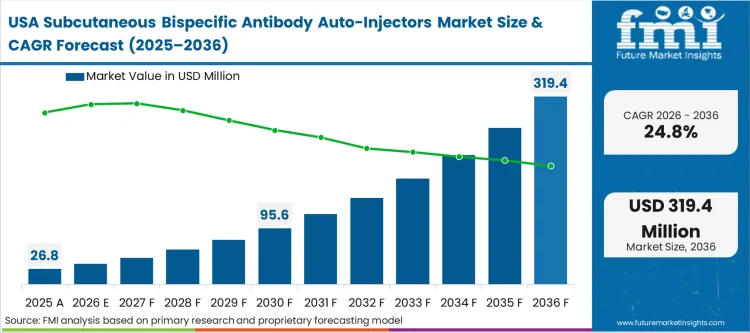
The intense push by commercial payers to decentralise oncology care and drastically reduce hospital resource utilization defines the North American trajectory. Reimbursement frameworks systematically penalise prolonged intravenous chair times, effectively forcing clinical pathway directors to mandate subcutaneous formats wherever clinically viable. FMI analysts opine that this dynamic creates a massive, immediate demand for validated delivery devices capable of handling complex payloads. The integration of specialised cancer biological therapy modules directly into outpatient procurement networks accelerates the transition at a scale unmatched globally.
- United States: The United States subcutaneous bispecific auto-injector market is driven by aggressive transitions toward decentralized oncology care and dominant commercial payer pressure, compelling rapid adoption of outpatient administration workflows. Pharmaceutical developers in the USA face an absolute mandate: secure a subcutaneous delivery format or forfeit formulary placement to competitors who do. The United States Subcutaneous Bispecific Antibody Auto-Injectors industry is projected to witness growth at a CAGR of 24.8%. The commercial opportunity for device manufacturers lies in securing exclusive, long-term supply agreements with tier-1 biopharmaceutical companies before the core bispecific pipelines mature.
FMI's report includes Canada and regional healthcare networks. The alignment of regulatory standards with the USA FDA allows for seamless cross-border commercialization of validated combination products.
Europe Subcutaneous Bispecific Antibody Auto-Injectors Market Analysis
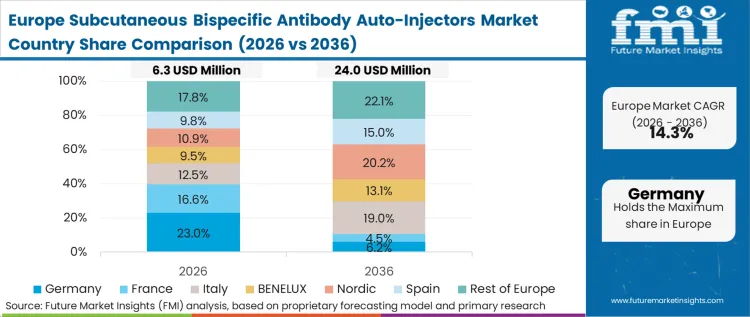
Extended producer responsibility and stringent medical device regulations (MDR) shape the qualification pathways for combination products across European jurisdictions. The regulatory environment forces device manufacturers to exhaustively document the human factors engineering and material safety profiles of high-power injection systems before commercialization is permitted. According to FMI's estimates, this rigorous scrutiny extends the development cycle but ultimately creates a highly resilient, deeply validated device ecosystem. The reliance on prefilled syringes drug molecules as the core container architecture mitigates some regulatory friction, providing a known baseline for safety assessments.
- Germany: Demand for Subcutaneous Bispecific Antibody Auto-Injectors in Germany is set to grow at 23.4%. The German SC bispecific delivery device market operates under rigid qualification frameworks for medical devices, demanding exhaustive clinical evidence proving that patient-administered subcutaneous bispecifics match the safety profiles of monitored clinical infusions. Clinical trial directors must embed comprehensive human factors testing directly into phase II/III studies to satisfy these requirements. The stringent regulatory gate ensures that once a device platform is qualified, it achieves a deeply entrenched competitive position that is exceedingly difficult for challengers to disrupt.
- United Kingdom: The United Kingdom bispecific auto-injector industry benefits from a centralized healthcare procurement model that enables the rapid, system-wide rollout of cost-saving outpatient therapies once clinical efficacy is proven. Procurement heads at the NHS actively seek out combination products that eliminate hospital admissions for maintenance dosing. FMI estimates the Subcutaneous Bispecific Antibody Auto-Injectors market in the United Kingdom to expand at an annual growth rate of 22.9%. The operational outcome clears massive backlogs in specialized oncology clinics, freeing critical resources for acute interventions.
- France: France's robust domestic pharmaceutical manufacturing base allows for tight integration between drug formulation and device assembly, reducing supply chain vulnerabilities. Biopharmaceutical operations heads leverage this proximity to rapidly iterate container designs capable of handling viscous polymer based prefilled syringe configurations. The trajectory positions the nation as a central hub for European combination product final assembly and specialized fill-finish operations.
FMI's report includes Italy, Spain, and the broader EU bloc. Harmonized medical device regulations across these nations dictate a unified approach to combination product registration, simplifying the regulatory strategy for global device manufacturers.
Competitive Aligners for Market Players
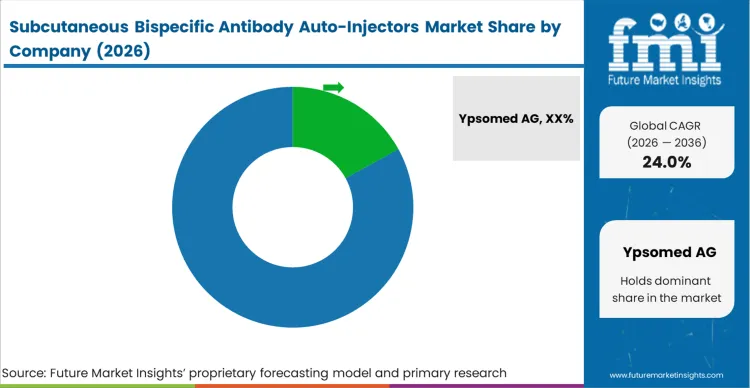
The extreme intellectual property barriers surrounding combination product engineering and the massive capital required for precision manufacturing dictate the highly concentrated scenario of this market. Buyers, specifically device engineering leads at major pharma companies evaluating an RFQ bispecific auto-injector platform, stinguish qualified from unqualified vendors based entirely on the vendor's documented track record of successfully guiding combination products through FDA and EMA approvals.
Top bispecific antibody auto-injector suppliers possess deeply entrenched, regulatorily validated platform architectures that biopharma companies can adopt with minimal customization risk. This advantage persists because changing the delivery device mid-clinical trial introduces catastrophic regulatory delays. A challenger must build a fully verified, massively scalable manufacturing infrastructure capable of producing zero-defect syringes and complex power mechanisms before a biopharma partner will even consider engaging in a pilot program. The capital requirement to build this capability from scratch virtually eliminates low-tier entrants.
Large biopharmaceutical buyers actively resist lock-in by mandating dual-sourcing capabilities for all primary packaging and device components, forcing standardization across supplier ecosystems to support syringes and injectable drugs packaging. However, the unique mechanical requirements of bispecific agents often necessitate bespoke device configurations, clashing with the buyers' desire for genericized supply chains. Through 2036, the market will inherently consolidate around the few specialized engineering firms capable of reliably producing the high-force, large-volume modules required for the next generation of dual-targeting therapies.
Key Players in Subcutaneous Bispecific Antibody Auto-Injectors Market
- Ypsomed AG
- SHL Medical AG
- Becton, Dickinson and Company
- Gerresheimer AG
- West Pharmaceutical Services, Inc.
- Johnson & Johnson Innovative Medicine
- F. Hoffmann-La Roche Ltd
Scope of the Report
| Metric | Value |
|---|---|
| Quantitative Units | USD 30.0 million to USD 257.8 million, at a CAGR of 24.0% |
| Market Definition | Specialized delivery devices engineered specifically for the self-administration or outpatient delivery of dual-targeting monoclonal antibodies, handling specific volume and viscosity requirements. |
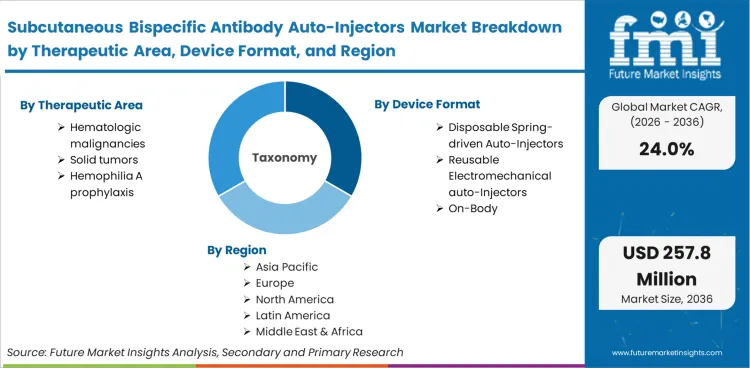
| Therapeutic area Segmentation | Hematologic malignancies, Solid tumors, Hemophilia A prophylaxis, Autoimmune / immunology pipeline |
| Device format Segmentation | Disposable spring-driven auto-injectors, Reusable electromechanical auto-injectors, On-body / wearable auto-injectors |
| Container configuration Segmentation | Prefilled syringe-based systems, Cartridge-based systems, Hyaluronidase-enabled co-formulated systems |
| End-use setting Segmentation | Hospital outpatient / oncology clinics, Specialty home-care programs, Ambulatory care centers |
| Regions Covered | North America, Europe, Asia Pacific, Rest of the World |
| Countries Covered | China, United States, South Korea, Germany, Japan, United Kingdom, France, and 40 plus countries |
| Key Companies Profiled | Ypsomed AG, SHL Medical AG, Becton, Dickinson and Company, Gerresheimer AG, West Pharmaceutical Services, Inc., Johnson & Johnson Innovative Medicine, F. Hoffmann-La Roche Ltd |
| Forecast Period | 2026 to 2036 |
| Approach | Primary interviews conducted with clinical trial directors and device engineering leads to establish adoption intent. Forecast baseline anchored to the commercialization volume of approved subcutaneous bispecific agents. Data validated against primary container manufacturing capacity expansions globally. |
Source: Future Market Insights (FMI) analysis, based on proprietary forecasting model and primary research
Subcutaneous Bispecific Antibody Auto-Injectors Market Analysis by Segments
Therapeutic area:
- Hematologic malignancies
- Solid tumors
- Hemophilia A prophylaxis
- Autoimmune / immunology pipeline
Device format:
- Disposable spring-driven auto-injectors
- Reusable electromechanical auto-injectors
- On-body / wearable auto-injectors
Container configuration:
- Prefilled syringe-based systems
- Cartridge-based systems
- Hyaluronidase-enabled co-formulated systems
End-use setting:
- Hospital outpatient / oncology clinics
- Specialty home-care programs
- Ambulatory care centers
Dosing phase:
- Maintenance dosing
- Step-up / induction dosing
- Long-interval prophylactic dosing
Region:
- North America
- United States
- Canada
- Europe
- Germany
- United Kingdom
- France
- Italy
- Spain
- Asia Pacific
- China
- Japan
- South Korea
- Taiwan
- Singapore
- Latin America
- Brazil
- Mexico
- Argentina
- Middle East & Africa
- GCC Countries
- South Africa
- Israel
Bibliography
- USA Food and Drug Administration. (2025). EPKINLY® (epcoritamab-bysp) injection, for subcutaneous use. USA Food and Drug Administration.
- Bittner, B., Munoz, J., Frank, S., Dolton, M., Ravanello, R., Dembowski, M., Clement, A., & Richter, W. F. (2025, November). Clinical qualification of subcutaneous injection devices for monoclonal antibodies. BioDrugs.
- Garfall, A. L., Banerjee, R., Frenzel, L., Khandanpour, C., Lin, Y., Ottoni, E., et al. (2025, July). A roadmap to implementing outpatient administration of bispecific antibodies in multiple myeloma. Frontiers in Oncology.
- Rahbari, K. J., del Toro Mijares, R., Kennedy, K., et al. (2025). Outpatient administration of bispecific antibody therapy for hematologic malignancies: A practical guide. JCO Oncology Practice.
- Becton, Dickinson and Company. (2025, January). BD highlights the latest innovations in drug delivery at Pharmapack 2025. Becton, Dickinson and Company.
- Gerresheimer AG. (2025, October). Gerresheimer at CPHI 2025: High-value solutions for innovative therapies. Gerresheimer AG.
This bibliography is provided for reader reference. The full FMI report contains the complete reference list with primary source documentation.
This Report Addresses
- Market intelligence to support strategic decision making across disposable spring-driven auto-injectors and high-volume wearable modules
- Market size estimation and 10-year revenue forecasts from 2026 to 2036, supported by commercialization volume modelling of approved subcutaneous agents
- Growth opportunity mapping across hematologic malignancies and solid tumours with emphasis on the qualification of high-payload delivery systems that can reliably extrude viscous co-formulations
- Segment and regional revenue forecasts covering prefilled syringe-based systems across strict European medical device regulation environments
- Competition strategy assessment including regulatory qualification track records, primary container validation, and dual-sourcing manufacturing capabilities
- Device capability development tracking including hyaluronidase-enabled co-formulation systems and high-force mechanical drivers
- Market access analysis covering FDA combination product pathways and NHS decentralized oncology care procurement directives
- Market report delivery in PDF, Excel, PPT, and interactive dashboard formats for executive strategy, combination product engineering, and operational benchmarking use
Frequently Asked Questions
How big is the bispecific auto-injector market?
The market is valued at USD 30.0 million in 2026. This figure establishes the baseline revenue generated strictly from the first wave of approved haematology-focused bispecific combination products transitioning into outpatient settings.
What will it be valued at by 2036?
It is projected to reach USD 257.8 million by 2036. This massive expansion reflects the integration of wearable and high-volume delivery formats across both solid tumour and immunology pipelines globally.
What are the growth drivers for SC bispecific auto-injectors through 2036?
A 24.0% CAGR maps directly to the regulatory approval calendar of subcutaneous formulation variants currently in late-stage clinical trials. The decentralisation of oncology care forces hospital administrators to mandate outpatient administration formats, changing drug-delivery timelines.
Which companies are leading subcutaneous bispecific injector development?
Ypsomed AG, SHL Medical AG, and Becton, Dickinson and Company secure dominant positions not merely through design innovation, but through their ability to navigate complex regulatory qualification processes alongside their biopharmaceutical partners.
Which Therapeutic Area segment leads?
Hematologic malignancies account for 48.6% of the market. Oncology pathway directors prioritize these indications for device integration because frequent blood cancer dosing regimens create severe bottlenecks inprioritiseinfusion suites.
Which Device Format segment leads?
Disposable spring-driven auto-injectors capture 57.8% share. Biopharmaceutical developers rely on this format to avoid introducing novel electromechanical risks during the already complex combination product regulatory review process.
Which Container Configuration segment leads?
Prefilled syringe-based systems hold 61.4% share. The global fill-finish ecosystem is overwhelmingly optimized foroptimisedlling device engineers to build delivery modules around this established architecture to prevent launch delays.
Why are bispecific antibodies moving to subcutaneous delivery?
The decentralization of oncology care forces hospital administrators to mandate outpatient administration formats. Biopharmaceutical firms that fail to provide a validated subcutaneous delivery device face immediate exclusion from these streamlined clinical pathways that reduce intravenous chair time.
What limits auto-injector use for oncology bispecifics?
The extreme viscosity of bispecific combinations routinely shatters standard glass primary containers under high spring tension. This failure mode requires extensive, costly re-engineering of the device's internal power mechanisms before clinical trials can proceed.
Which country grows fastest?
China expands at 26.1%, outpacing the United States' 24.8%. China's hyper-accelerated pipeline of dual-targeting agents pairs with massive domestic CDMO expansion, enabling rapid, localized iteration of high-volume delivery modules.
Can bispecific antibodies be self-administered?
Yes, but specialty home-care programs arrive last in the adoption sequence. Large academic medical centers adopt these workflows first, converting to at-home use only after extensive post-market safety data completely de-risks the specific bispecific agent for unmonitored administration.
Which bispecific antibodies are given subcutaneously?
The first wave of approved subcutaneous bispecific therapies specifically targets blood cancers, such as epcoritamab and teclistamab, with solid tumor agents like amivantamab rapidly following as specialized delivery devices gain regulatory clearance.
Compare manual injection versus auto-injector use for bispecific antibodies
Manual injection struggles with the massive molecular payload of bispecific agents, often causing patient pain or incomplete dosing due to high viscosity. Auto-injectors standardize the delivery force, though they require extensive re-engineering of container-closure systems to withstand that same pressure without shattering.
How fast could bispecific antibodies shift from clinic injection to self-injection?
The timeline depends heavily on the qualification of high-payload delivery systems that can reliably extrude viscous co-formulations. Once primary packaging suppliers commercialize advanced container architectures capable of withstanding extreme mechanical stress, the transition accelerates rapidly.
Auto-injector vs manual injection for bispecific antibodies - how do buyers choose?
Buyers distinguish qualified from unqualified vendors based entirely on the vendor's documented track record of successfully guiding complex combination products through FDA and EMA regulatory gates, rather than merely evaluating mechanical design.
Why do hospital outpatient clinics hold the largest end-use share?
Despite the physical capability of the device to enable home use, clinical pathway directors compel administration in monitored settings to manage severe cytokine release syndrome risks during the initial step-up dosing phases.
What role do cartridge-based systems play?
Cartridge configurations are utilized when the volume of the bispecific formulation strictly exceeds the 2.25mL limits of standard bfs syringes, requiring specialized dual-chamber or wide-barrel designs to accommodate the payload.
How does South Korea leverage its biomanufacturing infrastructure?
South Korea's concentrated CDMO landscape enables rapid transition from clinical formulation to commercial-scale combination product assembly, allowing procurement directors to secure advanced delivery modules locally.
What changes operationally when a clinic adopts these devices?
Institutions eliminate lengthy intravenous chair times associated with systemic bispecific delivery, clearing massive backlogs in specialized oncology clinics and freeing critical resources for acute interventions.
Why is maintenance dosing the dominant application phase?
Maintenance dosing represents the phase where the economic benefits of auto-injectors are fully realized. Once acute induction monitoring is cleared, localized administration becomes the primary determinant of long-term patient adherence.
How do large-volume wearables alter the competitive landscape?
Device developers secure premium biopharma contracts by validating on-body modules capable of delivering 5mL+ payloads over extended durations, a capability standard hand-held mechanical pens physically cannot match.
What is the consequence of selecting a delivery device post-formulation?
Biopharmaceutical manufacturers face severe late-stage clinical hold-ups because the high-viscosity drug profile inevitably clashes with standard device limits, forcing a multi-year delay to redesign the primary container.
How does the United States' reimbursement framework drive device integration?
Commercial payers systematically penalize prolonged intravenous chair times, effectively forcing clinical pathway directors to mandate subcutaneous auto-injector formats wherever clinically viable to maintain facility profitability.
Why are smart or connected technologies gaining traction in this space?
Connected nfc integrated autoinjector secondary packaging modules validate patient adherence remotely, providing clinical pathway directors the necessary data to authorize specialty home-care programs without requiring physical hospital visits for compliance checks.
What defines the growth trajectory of the Japanese market?
Japan's stringent quality standards regarding patient comfort and injection pain force developers to extensively validate the user experience, resulting in a more measured but highly premium-priced move toward home-based administration.
Preview the report firsthand - request a free sample
Get SampleGet the brochure for pricing and purchase details.
Get PDFTable of Content
- Executive Summary
- Global Market Outlook
- Demand-side Trends
- Supply-side Trends
- Technology Roadmap Analysis
- Analysis and Recommendations
- Market Overview
- Market Coverage / Taxonomy
- Market Definition / Scope / Limitations
- Research Methodology
- Chapter Orientation
- Analytical Lens and Working Hypotheses
- Market Structure, Signals, and Trend Drivers
- Benchmarking and Cross-market Comparability
- Market Sizing, Forecasting, and Opportunity Mapping
- Research Design and Evidence Framework
- Desk Research Programme (Secondary Evidence)
- Company Annual and Sustainability Reports
- Peer-reviewed Journals and Academic Literature
- Corporate Websites, Product Literature, and Technical Notes
- Earnings Decks and Investor Briefings
- Statutory Filings and Regulatory Disclosures
- Technical White Papers and Standards Notes
- Trade Journals, Industry Magazines, and Analyst Briefs
- Conference Proceedings, Webinars, and Seminar Materials
- Government Statistics Portals and Public Data Releases
- Press Releases and Reputable Media Coverage
- Specialist Newsletters and Curated Briefings
- Sector Databases and Reference Repositories
- FMI Internal Proprietary Databases and Historical Market Datasets
- Subscription Datasets and Paid Sources
- Social Channels, Communities, and Digital Listening Inputs
- Additional Desk Sources
- Expert Input and Fieldwork (Primary Evidence)
- Primary Modes
- Qualitative Interviews and Expert Elicitation
- Quantitative Surveys and Structured Data Capture
- Blended Approach
- Why Primary Evidence is Used
- Field Techniques
- Interviews
- Surveys
- Focus Groups
- Observational and In-context Research
- Social and Community Interactions
- Stakeholder Universe Engaged
- C-suite Leaders
- Board Members
- Presidents and Vice Presidents
- R&D and Innovation Heads
- Technical Specialists
- Domain Subject-matter Experts
- Scientists
- Physicians and Other Healthcare Professionals
- Governance, Ethics, and Data Stewardship
- Research Ethics
- Data Integrity and Handling
- Primary Modes
- Tooling, Models, and Reference Databases
- Desk Research Programme (Secondary Evidence)
- Data Engineering and Model Build
- Data Acquisition and Ingestion
- Cleaning, Normalisation, and Verification
- Synthesis, Triangulation, and Analysis
- Quality Assurance and Audit Trail
- Market Background
- Market Dynamics
- Drivers
- Restraints
- Opportunity
- Trends
- Scenario Forecast
- Demand in Optimistic Scenario
- Demand in Likely Scenario
- Demand in Conservative Scenario
- Opportunity Map Analysis
- Product Life Cycle Analysis
- Supply Chain Analysis
- Investment Feasibility Matrix
- Value Chain Analysis
- PESTLE and Porter’s Analysis
- Regulatory Landscape
- Regional Parent Market Outlook
- Production and Consumption Statistics
- Import and Export Statistics
- Market Dynamics
- Global Market Analysis 2021 to 2025 and Forecast, 2026 to 2036
- Historical Market Size Value (USD Million) Analysis, 2021 to 2025
- Current and Future Market Size Value (USD Million) Projections, 2026 to 2036
- Y-o-Y Growth Trend Analysis
- Absolute $ Opportunity Analysis
- Global Market Pricing Analysis 2021 to 2025 and Forecast 2026 to 2036
- Global Market Analysis 2021 to 2025 and Forecast 2026 to 2036, By Therapeutic Area
- Introduction / Key Findings
- Historical Market Size Value (USD Million) Analysis By Therapeutic Area , 2021 to 2025
- Current and Future Market Size Value (USD Million) Analysis and Forecast By Therapeutic Area , 2026 to 2036
- Hematologic malignancies
- Solid tumors
- Hemophilia A prophylaxis
- Hematologic malignancies
- Y-o-Y Growth Trend Analysis By Therapeutic Area , 2021 to 2025
- Absolute $ Opportunity Analysis By Therapeutic Area , 2026 to 2036
- Global Market Analysis 2021 to 2025 and Forecast 2026 to 2036, By Device Format
- Introduction / Key Findings
- Historical Market Size Value (USD Million) Analysis By Device Format, 2021 to 2025
- Current and Future Market Size Value (USD Million) Analysis and Forecast By Device Format, 2026 to 2036
- Disposable Spring-driven Auto-Injectors
- Reusable Electromechanical auto-Injectors
- On-Body
- Disposable Spring-driven Auto-Injectors
- Y-o-Y Growth Trend Analysis By Device Format, 2021 to 2025
- Absolute $ Opportunity Analysis By Device Format, 2026 to 2036
- Global Market Analysis 2021 to 2025 and Forecast 2026 to 2036, By Container Configuration
- Introduction / Key Findings
- Historical Market Size Value (USD Million) Analysis By Container Configuration, 2021 to 2025
- Current and Future Market Size Value (USD Million) Analysis and Forecast By Container Configuration, 2026 to 2036
- Prefilled Syringe-based Systems
- Cartridge-based Systems
- Others
- Prefilled Syringe-based Systems
- Y-o-Y Growth Trend Analysis By Container Configuration, 2021 to 2025
- Absolute $ Opportunity Analysis By Container Configuration, 2026 to 2036
- Global Market Analysis 2021 to 2025 and Forecast 2026 to 2036, By End-Use Setting
- Introduction / Key Findings
- Historical Market Size Value (USD Million) Analysis By End-Use Setting, 2021 to 2025
- Current and Future Market Size Value (USD Million) Analysis and Forecast By End-Use Setting, 2026 to 2036
- Hospital Outpatient and Oncology Clinics
- Specialty Home-care Programs
- Others
- Hospital Outpatient and Oncology Clinics
- Y-o-Y Growth Trend Analysis By End-Use Setting, 2021 to 2025
- Absolute $ Opportunity Analysis By End-Use Setting, 2026 to 2036
- Global Market Analysis 2021 to 2025 and Forecast 2026 to 2036, By Dosing Phase
- Introduction / Key Findings
- Historical Market Size Value (USD Million) Analysis By Dosing Phase, 2021 to 2025
- Current and Future Market Size Value (USD Million) Analysis and Forecast By Dosing Phase, 2026 to 2036
- Maintenance dosing
- Step-up / induction dosing
- Others
- Maintenance dosing
- Y-o-Y Growth Trend Analysis By Dosing Phase, 2021 to 2025
- Absolute $ Opportunity Analysis By Dosing Phase, 2026 to 2036
- Global Market Analysis 2021 to 2025 and Forecast 2026 to 2036, By Region
- Introduction
- Historical Market Size Value (USD Million) Analysis By Region, 2021 to 2025
- Current Market Size Value (USD Million) Analysis and Forecast By Region, 2026 to 2036
- North America
- Latin America
- Western Europe
- Eastern Europe
- East Asia
- South Asia and Pacific
- Middle East & Africa
- Market Attractiveness Analysis By Region
- North America Market Analysis 2021 to 2025 and Forecast 2026 to 2036, By Country
- Historical Market Size Value (USD Million) Trend Analysis By Market Taxonomy, 2021 to 2025
- Market Size Value (USD Million) Forecast By Market Taxonomy, 2026 to 2036
- By Country
- USA
- Canada
- Mexico
- By Therapeutic Area
- By Device Format
- By Container Configuration
- By End-Use Setting
- By Dosing Phase
- By Country
- Market Attractiveness Analysis
- By Country
- By Therapeutic Area
- By Device Format
- By Container Configuration
- By End-Use Setting
- By Dosing Phase
- Key Takeaways
- Latin America Market Analysis 2021 to 2025 and Forecast 2026 to 2036, By Country
- Historical Market Size Value (USD Million) Trend Analysis By Market Taxonomy, 2021 to 2025
- Market Size Value (USD Million) Forecast By Market Taxonomy, 2026 to 2036
- By Country
- Brazil
- Chile
- Rest of Latin America
- By Therapeutic Area
- By Device Format
- By Container Configuration
- By End-Use Setting
- By Dosing Phase
- By Country
- Market Attractiveness Analysis
- By Country
- By Therapeutic Area
- By Device Format
- By Container Configuration
- By End-Use Setting
- By Dosing Phase
- Key Takeaways
- Western Europe Market Analysis 2021 to 2025 and Forecast 2026 to 2036, By Country
- Historical Market Size Value (USD Million) Trend Analysis By Market Taxonomy, 2021 to 2025
- Market Size Value (USD Million) Forecast By Market Taxonomy, 2026 to 2036
- By Country
- Germany
- UK
- Italy
- Spain
- France
- Nordic
- BENELUX
- Rest of Western Europe
- By Therapeutic Area
- By Device Format
- By Container Configuration
- By End-Use Setting
- By Dosing Phase
- By Country
- Market Attractiveness Analysis
- By Country
- By Therapeutic Area
- By Device Format
- By Container Configuration
- By End-Use Setting
- By Dosing Phase
- Key Takeaways
- Eastern Europe Market Analysis 2021 to 2025 and Forecast 2026 to 2036, By Country
- Historical Market Size Value (USD Million) Trend Analysis By Market Taxonomy, 2021 to 2025
- Market Size Value (USD Million) Forecast By Market Taxonomy, 2026 to 2036
- By Country
- Russia
- Poland
- Hungary
- Balkan & Baltic
- Rest of Eastern Europe
- By Therapeutic Area
- By Device Format
- By Container Configuration
- By End-Use Setting
- By Dosing Phase
- By Country
- Market Attractiveness Analysis
- By Country
- By Therapeutic Area
- By Device Format
- By Container Configuration
- By End-Use Setting
- By Dosing Phase
- Key Takeaways
- East Asia Market Analysis 2021 to 2025 and Forecast 2026 to 2036, By Country
- Historical Market Size Value (USD Million) Trend Analysis By Market Taxonomy, 2021 to 2025
- Market Size Value (USD Million) Forecast By Market Taxonomy, 2026 to 2036
- By Country
- China
- Japan
- South Korea
- By Therapeutic Area
- By Device Format
- By Container Configuration
- By End-Use Setting
- By Dosing Phase
- By Country
- Market Attractiveness Analysis
- By Country
- By Therapeutic Area
- By Device Format
- By Container Configuration
- By End-Use Setting
- By Dosing Phase
- Key Takeaways
- South Asia and Pacific Market Analysis 2021 to 2025 and Forecast 2026 to 2036, By Country
- Historical Market Size Value (USD Million) Trend Analysis By Market Taxonomy, 2021 to 2025
- Market Size Value (USD Million) Forecast By Market Taxonomy, 2026 to 2036
- By Country
- India
- ASEAN
- Australia & New Zealand
- Rest of South Asia and Pacific
- By Therapeutic Area
- By Device Format
- By Container Configuration
- By End-Use Setting
- By Dosing Phase
- By Country
- Market Attractiveness Analysis
- By Country
- By Therapeutic Area
- By Device Format
- By Container Configuration
- By End-Use Setting
- By Dosing Phase
- Key Takeaways
- Middle East & Africa Market Analysis 2021 to 2025 and Forecast 2026 to 2036, By Country
- Historical Market Size Value (USD Million) Trend Analysis By Market Taxonomy, 2021 to 2025
- Market Size Value (USD Million) Forecast By Market Taxonomy, 2026 to 2036
- By Country
- Kingdom of Saudi Arabia
- Other GCC Countries
- Turkiye
- South Africa
- Other African Union
- Rest of Middle East & Africa
- By Therapeutic Area
- By Device Format
- By Container Configuration
- By End-Use Setting
- By Dosing Phase
- By Country
- Market Attractiveness Analysis
- By Country
- By Therapeutic Area
- By Device Format
- By Container Configuration
- By End-Use Setting
- By Dosing Phase
- Key Takeaways
- Key Countries Market Analysis
- USA
- Pricing Analysis
- Market Share Analysis, 2025
- By Therapeutic Area
- By Device Format
- By Container Configuration
- By End-Use Setting
- By Dosing Phase
- Canada
- Pricing Analysis
- Market Share Analysis, 2025
- By Therapeutic Area
- By Device Format
- By Container Configuration
- By End-Use Setting
- By Dosing Phase
- Mexico
- Pricing Analysis
- Market Share Analysis, 2025
- By Therapeutic Area
- By Device Format
- By Container Configuration
- By End-Use Setting
- By Dosing Phase
- Brazil
- Pricing Analysis
- Market Share Analysis, 2025
- By Therapeutic Area
- By Device Format
- By Container Configuration
- By End-Use Setting
- By Dosing Phase
- Chile
- Pricing Analysis
- Market Share Analysis, 2025
- By Therapeutic Area
- By Device Format
- By Container Configuration
- By End-Use Setting
- By Dosing Phase
- Germany
- Pricing Analysis
- Market Share Analysis, 2025
- By Therapeutic Area
- By Device Format
- By Container Configuration
- By End-Use Setting
- By Dosing Phase
- UK
- Pricing Analysis
- Market Share Analysis, 2025
- By Therapeutic Area
- By Device Format
- By Container Configuration
- By End-Use Setting
- By Dosing Phase
- Italy
- Pricing Analysis
- Market Share Analysis, 2025
- By Therapeutic Area
- By Device Format
- By Container Configuration
- By End-Use Setting
- By Dosing Phase
- Spain
- Pricing Analysis
- Market Share Analysis, 2025
- By Therapeutic Area
- By Device Format
- By Container Configuration
- By End-Use Setting
- By Dosing Phase
- France
- Pricing Analysis
- Market Share Analysis, 2025
- By Therapeutic Area
- By Device Format
- By Container Configuration
- By End-Use Setting
- By Dosing Phase
- India
- Pricing Analysis
- Market Share Analysis, 2025
- By Therapeutic Area
- By Device Format
- By Container Configuration
- By End-Use Setting
- By Dosing Phase
- ASEAN
- Pricing Analysis
- Market Share Analysis, 2025
- By Therapeutic Area
- By Device Format
- By Container Configuration
- By End-Use Setting
- By Dosing Phase
- Australia & New Zealand
- Pricing Analysis
- Market Share Analysis, 2025
- By Therapeutic Area
- By Device Format
- By Container Configuration
- By End-Use Setting
- By Dosing Phase
- China
- Pricing Analysis
- Market Share Analysis, 2025
- By Therapeutic Area
- By Device Format
- By Container Configuration
- By End-Use Setting
- By Dosing Phase
- Japan
- Pricing Analysis
- Market Share Analysis, 2025
- By Therapeutic Area
- By Device Format
- By Container Configuration
- By End-Use Setting
- By Dosing Phase
- South Korea
- Pricing Analysis
- Market Share Analysis, 2025
- By Therapeutic Area
- By Device Format
- By Container Configuration
- By End-Use Setting
- By Dosing Phase
- Russia
- Pricing Analysis
- Market Share Analysis, 2025
- By Therapeutic Area
- By Device Format
- By Container Configuration
- By End-Use Setting
- By Dosing Phase
- Poland
- Pricing Analysis
- Market Share Analysis, 2025
- By Therapeutic Area
- By Device Format
- By Container Configuration
- By End-Use Setting
- By Dosing Phase
- Hungary
- Pricing Analysis
- Market Share Analysis, 2025
- By Therapeutic Area
- By Device Format
- By Container Configuration
- By End-Use Setting
- By Dosing Phase
- Kingdom of Saudi Arabia
- Pricing Analysis
- Market Share Analysis, 2025
- By Therapeutic Area
- By Device Format
- By Container Configuration
- By End-Use Setting
- By Dosing Phase
- Turkiye
- Pricing Analysis
- Market Share Analysis, 2025
- By Therapeutic Area
- By Device Format
- By Container Configuration
- By End-Use Setting
- By Dosing Phase
- South Africa
- Pricing Analysis
- Market Share Analysis, 2025
- By Therapeutic Area
- By Device Format
- By Container Configuration
- By End-Use Setting
- By Dosing Phase
- USA
- Market Structure Analysis
- Competition Dashboard
- Competition Benchmarking
- Market Share Analysis of Top Players
- By Regional
- By Therapeutic Area
- By Device Format
- By Container Configuration
- By End-Use Setting
- By Dosing Phase
- Competition Analysis
- Competition Deep Dive
- Ypsomed AG
- Overview
- Product Portfolio
- Profitability by Market Segments (Product/Age /Sales Channel/Region)
- Sales Footprint
- Strategy Overview
- Marketing Strategy
- Product Strategy
- Channel Strategy
- SHL Medical AG
- Becton, Dickinson and Company
- Gerresheimer AG
- West Pharmaceutical Services, Inc.
- Johnson & Johnson Innovative Medicine
- F. Hoffmann-La Roche Ltd
- Ypsomed AG
- Competition Deep Dive
- Assumptions & Acronyms Used


