

- Industry Size (2026)
- USD 0.7 Mn
- Forecast (2036)
- USD 1.1 Mn
- CAGR (2026 to 2036)
- 4.7%
Demand for Aquarium & Fish Bowls in USA 2026 to 2036
Demand for aquarium & fish bowls in USA is valued at USD 0.7 Million in 2026 and is expected to reach USD 1.1 Million by 2036, reflecting a CAGR of 4.7%. Demand is supported by steady aquarium hobby participation, rising interest in home décor aquatics, and growth in beginner-friendly pet ownership. Expansion of compact urban living and stress-relief lifestyle trends sustains replacement and upgrade purchases.
Quick Stats for Demand for Aquarium & Fish Bowls in USA
- USA Aquarium & Fish Bowls Sales Value (2026): USD 0.7 Million
- USA Aquarium & Fish Bowls Forecast Value (2036): USD 1.1 Million
- USA Aquarium & Fish Bowls Forecast CAGR (2026 to 2036): 4.7%
- Leading Product Type in USA: Aquariums
- Key Growth Regions in USA: West USA, South USA, Northeast USA, Midwest USA
- Top Players in USA: Marina (Spectrum Brands), Penn Plax, Aqueon, Tetra, Fluval
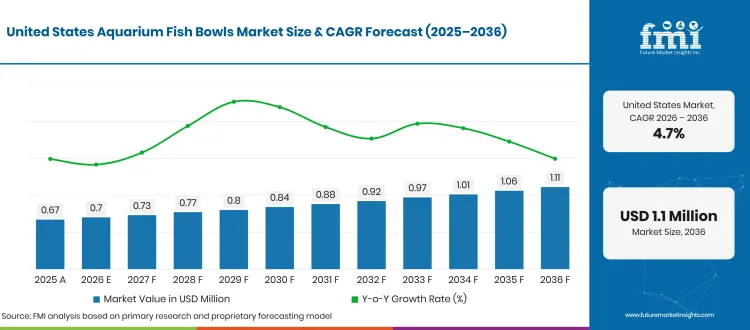
Aquariums lead product-type usage because controlled environments support filtration, heating, and lighting integration required for fish health and visual appeal. Consumers prefer aquariums over traditional bowls due to improved water stability, ease of maintenance, and compatibility with accessories. Design innovation, including rimless glass and modular setups, strengthens adoption across entry-level and premium segments.
West USA, South USA, Northeast USA, and Midwest USA represent key growth regions driven by urban populations, specialty pet retail presence, and e-commerce accessibility. Marina (Spectrum Brands), Penn Plax, Aqueon, Tetra, and Fluval anchor competitive activity through broad product assortments, durability-focused design, and distribution networks aligned with U.S. aquarium care standards and consumer expectations.
USA Aquarium & Fish Bowls Key Takeaways
| Metric | Value |
|---|---|
| USA Aquarium & Fish Bowls Sales Value (2026) | USD 0.7 Million |
| USA Aquarium & Fish Bowls Forecast Value (2036) | USD 1.1 Million |
| USA Aquarium & Fish Bowls Forecast CAGR (2026 to 2036) | 4.7% |
Why is the Demand for Aquarium & Fish Bowls in USA Growing?
Demand for aquarium and fish bowls in the United States grows due to sustained interest in low maintenance pets and decorative home elements. Urban households and rental properties favor compact aquatic setups that fit limited living space and require minimal infrastructure. Fish bowls serve as accessible entry points for beginners seeking simple pet ownership without complex equipment. Increased remote and hybrid work elevates preference for calming visual features within home offices and shared spaces. Retail availability across mass merchants and online platforms improves access to affordable designs in glass, acrylic, and decorative formats.
Educational use in classrooms supports steady purchasing for introductory biology observation and responsibility based learning. Gift purchases contribute consistent demand during holidays and seasonal occasions. Design trends emphasize minimalist and tabletop décor, which aligns with bowl based aquatic displays. Product variety includes ergonomic shapes, clearer materials, and compatibility with small filtration accessories, supporting usability and aesthetics. Public awareness of basic fish care improves responsible usage while sustaining replacement cycles. Interest in betta and small freshwater species reinforces continued adoption due to suitability for compact enclosures. Domestic distribution benefits from standardized manufacturing and logistics that support consistent supply across regions.
How Are the Segments Classified in the Demand for Aquarium and Fish Bowls in USA?
Demand for aquarium and fish bowls in USA is shaped by ornamental fish keeping practices, interior décor preferences, and awareness of aquatic welfare standards. Buyers assess visibility, structural durability, space utilization, and compatibility with filtration and lighting accessories. Adoption patterns reflect stronger preference for full aquariums over basic bowls, supported by emphasis on stable aquatic environments and long-term maintenance practicality across residential settings.
Which Product Type Accounts for the Majority of Aquarium and Fish Bowl Demand in USA?
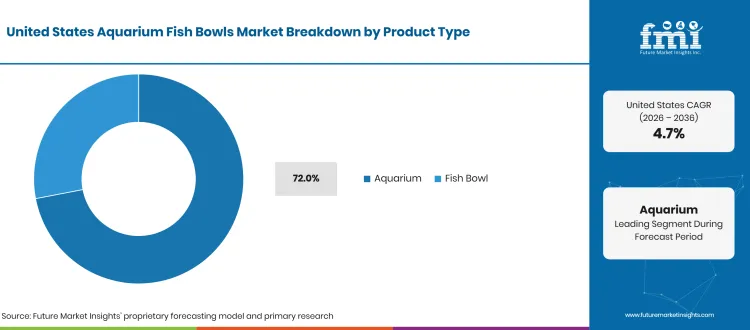
Aquariums hold 72.0%, accounting for the majority of demand in USA. Aquariums support integrated systems for filtration, heating, and lighting, enabling stable aquatic conditions for sustained fish care. Hobbyists favor aquariums for scalability and compatibility with modern accessories. Fish bowls hold 28.0%, used mainly for decorative purposes or entry-level setups with limited livestock. Product-type distribution reflects growing alignment with aquatic care standards and preference for controlled environments over minimal containment solutions.
Key Points
- Aquariums dominate due to system compatibility and stability.
- Integrated equipment support drives aquarium adoption.
- Fish bowls serve limited decorative or starter use.
Which Material Type Is Most Widely Used in Aquarium and Fish Bowl Products in USA?
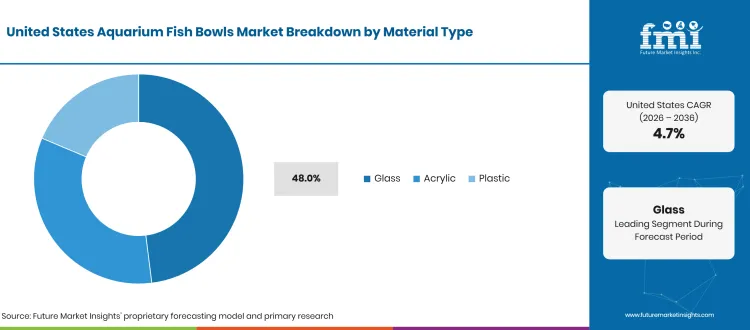
Glass holds 48.0%, making it the most widely used material type in USA demand. Glass provides high clarity, scratch resistance, and dimensional stability across freshwater and marine setups. Acrylic accounts for 32.0%, offering lightweight construction and impact resistance, especially for larger tanks. Plastic holds 20.0%, primarily used in small, portable, or entry-level products due to cost advantages. Material-type distribution reflects trade-offs between visual quality, durability, and portability.
Key Points
- Glass leads due to clarity and long-term durability.
- Acrylic supports lightweight and larger tank designs.
- Plastic serves entry-level and portable applications.
Which Shape Configuration Leads Aquarium and Fish Bowl Demand in USA?
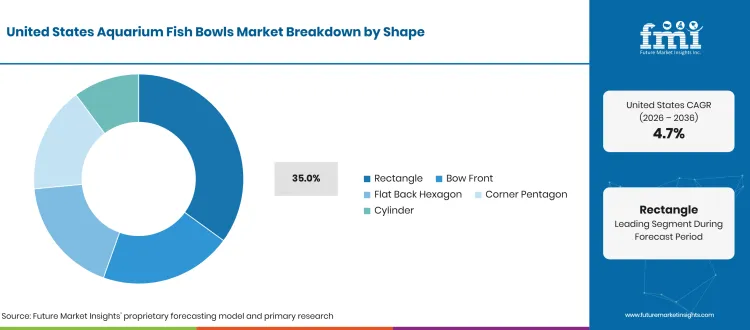
Rectangle shape holds 35.0%, leading shape configuration demand in USA. Rectangular tanks maximize usable volume, viewing angles, and compatibility with standard accessories. Bow front designs hold 20.0%, offering enhanced depth perception and visual appeal. Flat back hexagon accounts for 17.0%, supporting corner placement efficiency. Corner pentagon holds 15.0%, while cylinder shapes hold 13.0%, serving décor-focused installations. Shape distribution reflects preference for practical layouts balanced with aesthetic variation.
Key Points
- Rectangular tanks lead due to space and accessory compatibility.
- Bow front designs enhance visual presentation.
- Specialty shapes support décor-oriented placements.
What are the Key Dynamics in the Aquarium & Fish Bowls Industry?
Demand rises as pet ownership and interest in ornamental fish keeping remain popular across USA households. Aquarium and fish bowls support hobbyist communities, educational settings, and décor-driven purchases. Adoption aligns with strong pet care spending, impulse purchases at specialty and mass retailers, and online availability of compact aquatic systems. Usage concentrates in urban and suburban areas with individuals seeking low-maintenance pets and aesthetic water features.
How do pet ownership trends and lifestyle preferences drive demand in USA?
US consumers increasingly view fish keeping as an accessible pet option with lower space and time commitment compared with dogs or cats. Small aquariums and fish bowls appeal to apartment dwellers, families with children, and first-time hobbyists. Retail and e-commerce channels offer a wide range of sizes, designs, and starter kits that include filtration and lighting suited to beginners. Decorative fish bowls remain attractive for desktop or living space accents. Educational institutions and youth programs adopt aquariums for learning about ecosystems and responsibility. Social media and hobbyist groups influence participation by sharing setup ideas and species care tips.
How do care complexity, animal welfare awareness, and regulatory guidance influence demand stability in USA?
Animal welfare awareness affects species selection and tank choice, with many experts recommending aquariums over traditional fish bowls to support healthier living environments and stable water conditions. Consumers educated about oxygenation, filtration, and space needs may opt for larger aquarium systems. Misconceptions about fish bowls’ suitability for long-term care influence demand patterns. Seasonal purchase spikes occur around holidays and gift occasions. Cost considerations for ongoing supplies, water treatment, food, and maintenance affect long-term ownership decisions. Regulatory guidance on humane pet care and retail advisories shape marketing and product specifications. Demand remains stable with emphasis on responsible ownership and appropriate aquarium selection within USA pet care culture.
How Is Demand for Aquarium and Fish Bowls in the USA Evolving by Region?
Demand for aquarium and fish bowls in the USA is rising due to ornamental fish ownership, compact home décor trends, and entry-level pet adoption. West USA leads with a 5.4% CAGR, supported by urban lifestyles and specialty pet retail. South USA follows at 4.8%, driven by household pet ownership and value-oriented purchasing. Northeast USA records a 4.3% CAGR, shaped by apartment living and small-format aquariums. Midwest USA posts 3.7%, reflecting maintenance-led replacement and stable household demand. Regional variation reflects housing patterns, disposable income levels, retail access, and preference for small, low-maintenance aquatic setups across the USA.
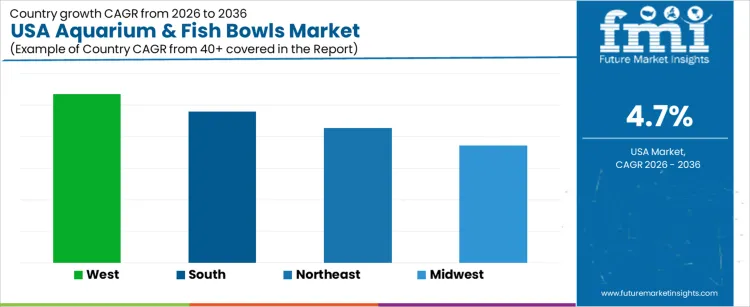
| Region | CAGR (2026 to 2036) |
|---|---|
| West USA | 5.4% |
| South USA | 4.8% |
| Northeast USA | 4.3% |
| Midwest USA | 3.7% |
What factors are shaping aquarium and fish bowl demand in West USA?
West USA drives demand through urban housing density, décor-oriented aquariums, and strong specialty pet retail networks. Region’s CAGR of 5.4% reflects preference for compact aquariums and designer fish bowls used as lifestyle accessories. Consumers favor minimalist designs, clear glass, and compatibility with small aquatic species. High discretionary spending supports premium materials and bundled starter kits. Retailers emphasize aesthetics, sustainability, and ease of maintenance. Demand benefits from gift purchases and entry-level hobby adoption. Replacement cycles remain active due to breakage and style refresh trends. Growth aligns with urban living preferences and visual appeal rather than large-tank installations.
- Urban décor-driven aquarium adoption
- Preference for compact and premium designs
- Strong specialty and boutique retail presence
- Style refresh and replacement demand
Why does South USA maintain steady growth in aquarium and fish bowl purchases?
South USA demand is shaped by household pet ownership, family-oriented purchasing, and value-conscious consumers. Region’s CAGR of 4.8% reflects widespread use of basic aquariums and fish bowls for freshwater species. Warm climate supports year-round pet activity and gifting occasions. Buyers prioritize affordability, durability, and availability through mass retailers. Entry-level kits with bowls, gravel, and accessories remain popular. Replacement demand follows household moves and routine wear. Growth remains volume-driven and practical, aligned with stable pet ownership patterns and broad retail distribution rather than premium customization.
- Family and entry-level pet ownership
- Emphasis on affordability and durability
- Strong mass retail availability
- Practical and volume-driven demand
How do living arrangements influence aquarium and fish bowl demand in Northeast USA?
Northeast USA demand reflects apartment living, space constraints, and indoor décor usage. Region’s CAGR of 4.3% is supported by preference for small fish bowls and nano aquariums suitable for limited spaces. Consumers select lightweight, easy-to-clean formats compatible with desks and shelves. Gifting and dormitory usage contribute to steady sales. Energy and maintenance awareness influences purchasing decisions. Retail channels include specialty pet stores and online platforms. Demand growth remains steady, aligned with maintaining existing small setups rather than expansion into larger aquariums.
- Apartment and small-space suitability
- Nano aquarium and bowl preference
- Gift and dormitory usage patterns
- Maintenance-conscious purchasing behavior
What drives replacement-focused aquarium and fish bowl demand in Midwest USA?
Midwest USA demand is anchored in household aquariums, value-oriented buying, and stable freshwater fish ownership. Region’s CAGR of 3.7% reflects replacement of basic glass bowls and small tanks due to wear or breakage. Consumers prioritize functionality, price stability, and compatibility with common fish species. Purchases often align with routine pet care cycles rather than décor trends. Retail access through general merchandise stores supports predictable sales. Growth remains necessity-driven and maintenance-focused, aligned with sustaining existing aquatic pets across residential households.
- Household freshwater fish ownership
- Value-focused and functional product choice
- Replacement-led purchasing cycles
- Stable and predictable demand patterns
What is the competitive landscape of demand for aquarium & fish bowls in the USA?
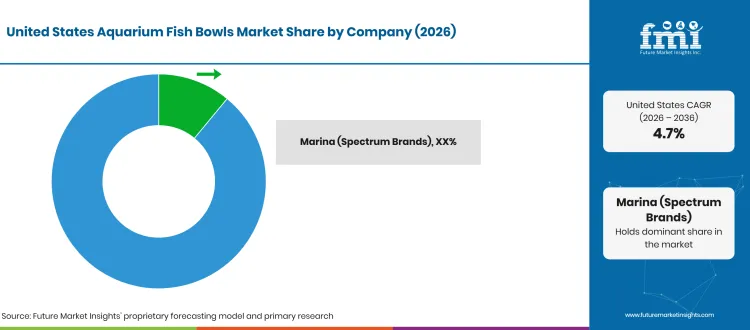
Demand for aquarium and fish bowls in the USA is driven by hobbyist interest, pet ownership trends, home décor integration, and classroom educational uses. Aquarium formats range from small decorative bowls and desktop aquaria to larger glass and acrylic tanks, each requiring stable construction, optical clarity, and ease of maintenance. Buyers evaluate material quality, shape stability, lid and feeding access, and compatibility with filtration and lighting systems. Procurement teams prioritize suppliers with strong retail and online distribution, product safety compliance, and breadth of size options. Trend in the USA market reflects sustained interest in low-maintenance aquatic pets, aesthetic tabletop aquaria, and products that integrate with interior décor while ensuring animal welfare.
Marina (part of Spectrum Brands) holds a strong position through widely distributed aquarium and bowl products available across pet store chains and online channels, supported by brand recognition and broad size offerings. Penn Plax participates with fish bowls, nano tanks, and integrated accessory packages favored by entry-level hobbyists. Aqueon (Central Life Sciences) supplies aquarium bowls and small tanks marketed through mass retail and pet specialty outlets with strong U.S. availability. Tetra USA contributes with decorative bowls and compact aquaria kits designed for ease of setup and maintenance. Fluval USA supports demand with higher-clarity fish bowls and integrated accessories positioned toward hobbyists seeking quality and aesthetic appeal. Competitive positioning in the USA reflects material durability, retail presence, product variety, and supplier ability to meet both beginner and experienced aquarist needs.
Key Players in USA Aquarium & Fish Bowls Demand
- Marina (Spectrum Brands)
- Penn Plax
- Aqueon (Central Life Sciences)
- Tetra
- Fluval
Scope of the Report
| Items | Details |
|---|---|
| Quantitative Units | USD Million |
| Product Type | Aquarium; Fish Bowl |
| Material Type | Glass; Acrylic; Plastic |
| Shape | Rectangle; Bow Front; Flat Back Hexagon; Corner Pentagon; Cylinder |
| Capacity | Up to 5 Gallons; Up to 10 Gallons; Up to 20 Gallons; Up to 40 Gallons; Over 40 Gallons |
| Application | Residential; Commercial |
| Regions Covered | West USA; South USA; Northeast USA; Midwest USA |
| Key Companies Profiled | Marina (Spectrum Brands); Penn Plax; Aqueon; Tetra; Fluval |
| Additional Attributes | Demand is driven by household aquarium adoption, urban apartment living, and growth of specialty pet retail chains. Glass aquariums dominate mid and large capacities, while acrylic gains traction for lightweight designs. Residential demand outweighs commercial use, with purchasing influenced by aesthetics, durability, and bundled accessory availability. |
USA Aquarium & Fish Bowls Demand by Segments
Product Type:
- Aquarium
- Fish Bowl
Material Type:
- Glass
- Acrylic
- Plastic
Shape:
- Rectangle
- Bow Front
- Flat Back Hexagon
- Corner Pentagon
- Cylinder
Capacity:
- Up to 10 Gallons
- Up to 5 Gallons
- Up to 20 Gallons
- Up to 40 Gallons
- Over 40 Gallons
Application:
- Residential
- Commercial
Region:
- West USA
- South USA
- Northeast USA
- Midwest USA
Frequently Asked Questions
How big is the demand for aquarium & fish bowls in USA in 2026?
The demand for aquarium & fish bowls in USA is estimated to be valued at USD 0.7 million in 2026.
What will be the size of aquarium & fish bowls in USA in 2036?
The market size for the aquarium & fish bowls in USA is projected to reach USD 1.1 million by 2036.
How much will be the demand for aquarium & fish bowls in USA growth between 2026 and 2036?
The demand for aquarium & fish bowls in USA is expected to grow at a 4.7% CAGR between 2026 and 2036.
What are the key product types in the aquarium & fish bowls in USA?
The key product types in aquarium & fish bowls in USA are aquarium and fish bowl.
Which material type segment is expected to contribute significant share in the aquarium & fish bowls in USA in 2026?
In terms of material type, glass segment is expected to command 48.0% share in the aquarium & fish bowls in USA in 2026.
Preview the report firsthand - request a free sample
Get SampleGet the brochure for pricing and purchase details.
Get PDFTable of Content
- Executive Summary
- USA Market Outlook
- Demand-side Trends
- Supply-side Trends
- Technology Roadmap Analysis
- Analysis and Recommendations
- Market Overview
- Market Coverage / Taxonomy
- Market Definition / Scope / Limitations
- Market Background
- Market Dynamics
- Drivers
- Restraints
- Opportunity
- Trends
- Scenario Forecast
- Demand in Optimistic Scenario
- Demand in Likely Scenario
- Demand in Conservative Scenario
- Opportunity Map Analysis
- Product Life Cycle Analysis
- Supply Chain Analysis
- Investment Feasibility Matrix
- Value Chain Analysis
- PESTLE and Porter’s Analysis
- Regulatory Landscape
- Regional Parent Market Outlook
- Production and Consumption Statistics
- Import and Export Statistics
- Market Dynamics
- USA Market Analysis 2021 to 2025 and Forecast, 2026 to 2036
- Historical Market Size Value (USD Million) Analysis, 2021 to 2025
- Current and Future Market Size Value (USD Million) Projections, 2026 to 2036
- Y-o-Y Growth Trend Analysis
- Absolute $ Opportunity Analysis
- USA Market Pricing Analysis 2021 to 2025 and Forecast 2026 to 2036
- USA Market Analysis 2021 to 2025 and Forecast 2026 to 2036, By Product Type
- Introduction / Key Findings
- Historical Market Size Value (USD Million) Analysis By Product Type , 2021 to 2025
- Current and Future Market Size Value (USD Million) Analysis and Forecast By Product Type , 2026 to 2036
- Aquarium
- Fish Bowl
- Aquarium
- Y-o-Y Growth Trend Analysis By Product Type , 2021 to 2025
- Absolute $ Opportunity Analysis By Product Type , 2026 to 2036
- USA Market Analysis 2021 to 2025 and Forecast 2026 to 2036, By Material Type
- Introduction / Key Findings
- Historical Market Size Value (USD Million) Analysis By Material Type, 2021 to 2025
- Current and Future Market Size Value (USD Million) Analysis and Forecast By Material Type, 2026 to 2036
- Glass
- Acrylic
- Plastic
- Glass
- Y-o-Y Growth Trend Analysis By Material Type, 2021 to 2025
- Absolute $ Opportunity Analysis By Material Type, 2026 to 2036
- USA Market Analysis 2021 to 2025 and Forecast 2026 to 2036, By Shape
- Introduction / Key Findings
- Historical Market Size Value (USD Million) Analysis By Shape, 2021 to 2025
- Current and Future Market Size Value (USD Million) Analysis and Forecast By Shape, 2026 to 2036
- Rectangle
- Bow Front
- Flat Back Hexagon
- Corner Pentagon
- Cylinder
- Rectangle
- Y-o-Y Growth Trend Analysis By Shape, 2021 to 2025
- Absolute $ Opportunity Analysis By Shape, 2026 to 2036
- USA Market Analysis 2021 to 2025 and Forecast 2026 to 2036, By Capacity
- Introduction / Key Findings
- Historical Market Size Value (USD Million) Analysis By Capacity, 2021 to 2025
- Current and Future Market Size Value (USD Million) Analysis and Forecast By Capacity, 2026 to 2036
- Up to 10 Gallons
- Up to 5 Gallons
- Up to 20 Gallons
- Up to 40 Gallons
- Over 40 Gallons
- Up to 10 Gallons
- Y-o-Y Growth Trend Analysis By Capacity, 2021 to 2025
- Absolute $ Opportunity Analysis By Capacity, 2026 to 2036
- USA Market Analysis 2021 to 2025 and Forecast 2026 to 2036, By Application
- Introduction / Key Findings
- Historical Market Size Value (USD Million) Analysis By Application, 2021 to 2025
- Current and Future Market Size Value (USD Million) Analysis and Forecast By Application, 2026 to 2036
- Residential
- Commercial
- Residential
- Y-o-Y Growth Trend Analysis By Application, 2021 to 2025
- Absolute $ Opportunity Analysis By Application, 2026 to 2036
- Market Structure Analysis
- Competition Dashboard
- Competition Benchmarking
- Market Share Analysis of Top Players
- By Regional
- By Product Type
- By Material Type
- By Shape
- By Capacity
- By Application
- Competition Analysis
- Competition Deep Dive
- Marina (Spectrum Brands)
- Overview
- Product Portfolio
- Profitability by Market Segments (Product/Age /Sales Channel/Region)
- Sales Footprint
- Strategy Overview
- Marketing Strategy
- Product Strategy
- Channel Strategy
- Penn Plax
- Aqueon
- Tetra
- Fluval
- Marina (Spectrum Brands)
- Competition Deep Dive
- Assumptions & Acronyms Used
- Research Methodology


