

- Industry Size (2026)
- USD 0.8 Bn
- Forecast (2036)
- USD 1.4 Bn
- CAGR (2026 to 2036)
- 5.2%
Cushioning Inserts for Computer Accessories Market Size and Share Forecast Outlook 2026 to 2036
The cushioning inserts for computer accessories market is projected to rise from USD 0.8 billion in 2026 to USD 1.4 billion by 2036, achieving a compound annual growth rate (CAGR) of 5.2%. Growth is driven by increasing usage frequency, substantiation of product claims, and a rise in repeat purchases. Expansion is not uniform; it concentrates heavily in regions where "packaging-near-chip-making" ecosystems are replacing traditional cross-border foam shipments. Official data from Vietnam’s General Statistics Office indicates that the manufacture of rubber and plastics products increased by 25.6% in the first eleven months of 2024, signaling a rapid localization of protective component production to support the global electronics supply chain.
As per FMI's projection, the shift is less about material substitution and more about throughput efficiency in space-constrained fulfillment centers. Omar Asali, Chairman & CEO of Ranpak, highlighted this operational reality in September 2024: "Our customers are seeking solutions that help them conserve space but maximize throughput across the warehouse. The Geami MV solution provides our customers with new technology that marries the efficiency of a powered converter solution with the smaller size profile that is becoming more important in environments where space is at a premium." This underscores how automation is becoming the decisive factor for adoption, pushing buyers toward systems that integrate cushioning directly into the packing line.
The regulatory environment acts as the final accelerator, forcing manufacturers to abandon legacy formats regardless of their low cost. With the European Council adopting the Packaging and Packaging Waste Regulation (PPWR) in late 2024, which mandates specific targets to reduce packaging waste by 5% by 2030, Asian contract manufacturers are scrambling to audit their material flows. This compliance pressure forces a departure from cheap expanded polyethylene (EPE) toward engineered molded pulp solutions that can pass strict recyclability tests in export markets.
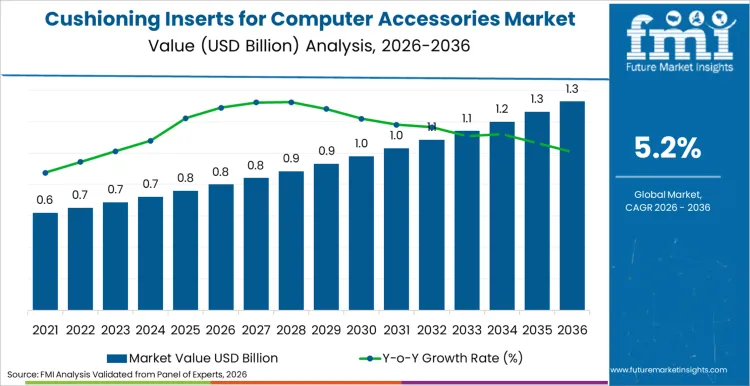
Summary of Cushioning Inserts for Computer Accessories Market
How Is the Market Growing Toward 2036?
Future Market Insights projects the global cushioning inserts for computer accessories market to grow from USD 0.8 billion in 2026 to USD 1.4 billion by 2036, representing a 5.2% CAGR over the forecast period.
FMI Research Approach: Based on FMI’s proprietary global modeling framework incorporating major operator capex plans (Mondi, Sealed Air), electronics export indices, and funding inflows into the sustainable materials startup ecosystem.
What Is the Core Evolution of the Industry?
FMI analysts opine that the industry is evolving from passive "throw-away" protection toward "performance-verified" sustainable systems. This shift is driven by buyers demanding packaging inserts that offer the same drop protection as plastic without the environmental liability.
FMI Research Approach: Developed using analysis of patent filings (Cruz Foam’s bio-beads), venture capital trends in material science (Notpla, Woola), and procurement data from major electronics ODMs.
Which Region Is Anchoring Global Demand?
India holds a significant growth potential with a 7.1% CAGR, supported by a massive expansion in domestic electronics manufacturing, where mobile phone exports grew 127 times over a decade.
FMI Research Approach: Built using country-level export reports (Ministry of Commerce & Industry), analysis of manufacturing output indices, and mapping of new facility openings by global packaging leaders.
Which Segment Dominates the Revenue Mix?
The E-commerce Fulfillment channel accounts for the largest share at 48.0%, driven by the need for foam packaging inserts and alternatives that survive complex last-mile logistics.
FMI Research Approach: Long-term forecasts rely on e-commerce shipment volume projections, return rate analysis for fragile electronics, and the scaling of automated packaging centers.
What Defines the Market Boundary?
The cushioning inserts for computer accessories market encompasses revenue generated from commercial protective materials designed specifically for IT peripherals, including molded pulp, engineered foam, and air cushion formats.
FMI Research Approach: Definition structured using FMI’s segmentation taxonomy covering material types, end-use applications, and distribution channels, explicitly excluding general industrial packaging.
What Trends Are Shaping Adoption Globally?
Globally, the sector is shaped by the "Zero-Plastic" mandate in developed markets and the "China Plus One" manufacturing shift in Asia, creating demand for localized, compliant packaging supply chains.
FMI Research Approach: Insights derived from global sustainability reports (Sonoco), startup funding patterns in Europe, and consumer behavior analysis regarding unboxing experiences.
Cushioning Inserts for Computer Accessories Market Key Takeaways
| Metric | Value |
|---|---|
| Industry Size (2026) | USD 0.8 billion |
| Industry Value (2036) | USD 1.4 billion |
| CAGR (2026-2036) | 5.2% |
Source: Future Market Insights (FMI) analysis, based on proprietary forecasting model and primary research.
Why Regulatory Compliance Is Reshaping Material Choice?
The enforcement of the EU’s Packaging and Packaging Waste Regulation (PPWR) is fundamentally altering the procurement criteria for electronics protection. Manufacturers who previously relied on low-cost packaging foam are now facing a compliance cliff, as the regulation mandates all packaging be recyclable by 2030. This policy shift forces a material substitution cycle where brands must qualify fiber-based alternatives that match the shock absorption properties of expanded polystyrene (EPS). Consequently, the cost of inaction has surpassed the cost of transition, driving rapid adoption of molded pulp solutions that offer verifiable end-of-life credentials.
The "China Plus One" strategy is redistributing manufacturing capacity, creating new centers of demand for protective packaging in Southeast Asia and India. As electronics production moves to Vietnam and Indonesia, the demand for localized EPE foam packaging and its sustainable successors is exploding. Data from Indonesia’s Badan Pusat Statistik shows the manufacturing industry grew by 3.26% in 2023, signaling a robust need for high-quality packaging infrastructure to support export-grade electronics. This geographic realignment ensures that the market for cushioning inserts is not just growing but also physically relocating to proximity with new semiconductor and assembly hubs.
How is Cushioning Inserts for Computer Accessories Market Segmented?
The segmentation outlook for cushioning inserts covers insert type, use case, and distribution channel, revealing a decisive shift toward materials that balance rigorous protection with automation compatibility. A clear "paper-for-plastic" substitution effect is visible across all dimensions, with Molded Pulp Inserts, Drop / Impact Protection, and E-commerce Fulfillment emerging as the dominant profit pools. As per FMI's estimates, the mix is rebalancing as procurement teams prioritize EPP foam packaging alternatives that can withstand global logistics while meeting strict sustainability scorecards. By 2036, the market will favor substrates that integrate seamlessly into high-speed packing lines, marginalizing manual, labor-intensive formats.
Why Molded Pulp Inserts Dominate the Material Mix?
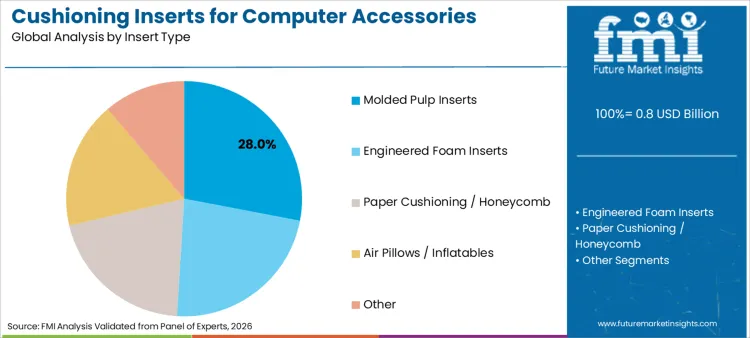
Molded Pulp Inserts command a 28.0% share of the market, serving as the preferred replacement for EPS in high-volume electronics packaging. This segment's dominance is driven by the material's ability to be thermoformed into complex geometries that cradle computer peripherals like keyboards and mice with precision. CEPI's 2024 key statistics report notes the European pulp sector produced 32.5 million tons of recycled fiber in 2024 (up 2.8% YoY), validating the massive scale-up of fiber capacity. For manufacturers, the implication is a necessary pivot toward dry molding technologies that eliminate water waste and reduce drying times, ensuring that sustainable choices do not compromise production velocity.
What Drives Drop / Impact Protection Usage?
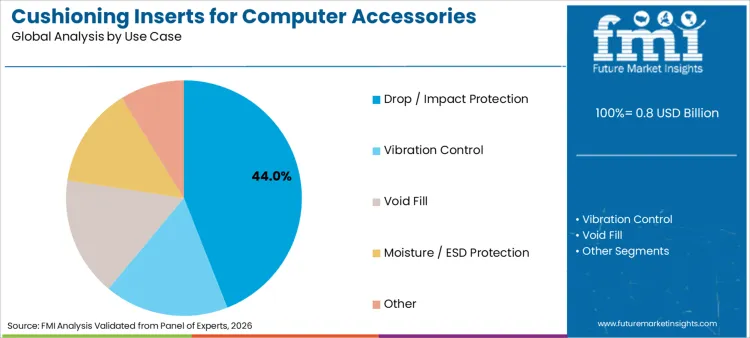
Drop / Impact Protection use cases account for 44.0% of the market, reflecting the non-negotiable requirement for safeguarding fragile electronics during transit. The growth of this segment is underpinned by the rising value of consumer electronics packaging contents, where a single damaged shipment incurs significant replacement costs and brand damage. Startups like Cruz Foam are addressing this by developing bio-based beads that match the compressive strength of traditional foams. This technical evolution ensures that brands no longer have to choose between environmental responsibility and the physical integrity of their products, driving higher conversion rates for next-generation protective materials.
Where Is E-commerce Fulfillment Creating Value?
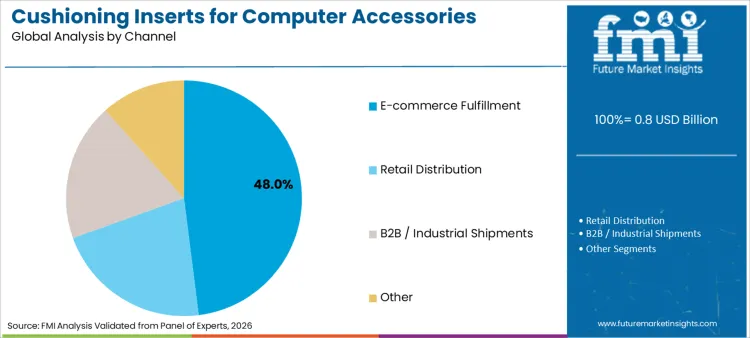
E-commerce Fulfillment captures 48.0% of the channel revenue, a direct result of the "ship-in-own-container" trend and the need for robust bio foam insert solutions. As direct-to-consumer volumes stabilize post-pandemic, retailers are optimizing for "unboxing experience" and return logistics. Ranpak reported a 17.1% year-over-year revenue increase in North America in Q2 2024, driven specifically by strength in e-commerce strategic accounts. This trend forces distributors to invest in automated void-fill systems that reduce pack times and material usage, effectively turning the packaging station from a cost center into a customer retention tool.
How Is Bio-Innovation Eliminating Plastic Dependency?
The race to eliminate petrochemicals is spawning a new generation of "bio-benign" materials that perform identically to their synthetic counterparts. Innovators are moving beyond simple paper recycling to leverage novel feedstocks like seaweed and agricultural waste, creating anti-static foam packaging solutions that are fully compostable. Notpla, a UK-based startup, raised £20 million in September 2024 to expand its seaweed-based packaging into the US market, proving that investors see scalable value in nature-derived polymers. This influx of capital allows these companies to move from pilot batches to commercial volumes, providing electronics brands with verifiable "plastic-free" claims that resonate with eco-conscious consumers.
This material revolution is also creating a "performance-first" dynamic where sustainability is no longer a concession on quality. Companies like Woola are utilizing waste sheep wool as a direct drop-in replacement for bubble wrap, securing partnerships with luxury conglomerates like LVMH. By utilizing anti-static foam pouch alternatives that offer superior shock absorption and thermal properties, these innovators are challenging the dominance of air pillows and foam sheets. For the broader industry, this signals a future where the most premium protective inserts are grown, not pumped, fundamentally decoupling packaging growth from fossil fuel volatility.
Where Is Regional Demand Concentrating?
The global market exhibits a sharp divergence between the mature, regulation-led markets of Europe and North America and the rapid, manufacturing-led expansion in Asia Pacific. While Western markets focus on replacing anti-static bubble pouch volumes with sustainable alternatives, Asian markets are building the foundational infrastructure to become the world's primary packaging workshops. India leads this charge with a 7.1% CAGR, followed closely by Vietnam at 6.6%, driven by the massive relocation of electronics assembly lines away from China. This regional split requires global suppliers to adopt a two-speed strategy: offering premium, automated fiber systems in the West while scaling high-volume, cost-effective molded pulp capacity in the East.
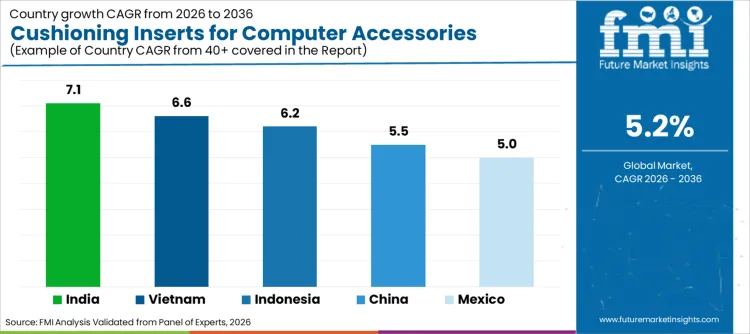
| Country | CAGR (2026 to 2036) |
|---|---|
| India | 7.1% |
| Vietnam | 6.6% |
| Indonesia | 6.2% |
| China | 5.5% |
| Mexico | 5.0% |
Source: Future Market Insights (FMI) analysis, based on proprietary forecasting model and primary research.
Why India Electronics Exports Are Surging?
Sales of cushioning inserts for computer accessories in India are set to rise at 7.1% CAGR. This explosive growth is anchored by the government's "Make in India" initiative, which has successfully attracted massive smartphone and peripheral manufacturing. Ministry of Commerce & Industry data reveals that mobile phone exports reached ₹2 lakh crore in 2024-25, growing 127 times in a single decade. This industrial scaling creates an unprecedented demand for protective packaging that meets international shipping standards. Consequently, local packaging converters are upgrading their technology stacks to produce export-grade cushioning, ensuring they can service global OEMs who now view India as a critical export hub.
How Vietnam Is Becoming a Packaging Hub?
Demand for cushioning inserts for computer accessories in Vietnam is anticipated to grow at 6.6% CAGR. The country has emerged as the primary beneficiary of supply chain diversification, attracting major semiconductor and electronics assembly investments. Ewa Rosinek, Global Semicon Segment Manager at NEFAB, noted in 2024: "Estimates suggest that the semiconductor sector will double in size by 2030, exceeding $1 trillion by the end of the decade. The potential is immense, and to seize the market, companies must act now. The semiconductors leaders should focus on four dimensions that will define tomorrow’s supply chain, i.e., sustainability, transparency, agility, and resilience." This reflects the strategic imperative for local suppliers to integrate advanced dunnage packaging capabilities directly adjacent to high-tech fabs.
What Drives Indonesia Manufacturing Growth?
The cushioning inserts for computer accessories industry in Indonesia is projected to expand at 6.2% CAGR. Growth here is fueled by a resilient manufacturing sector that is increasingly integrating into the global electronics value chain. According to Badan Pusat Statistik, the manufacturing industry grew by 1.56% in 2024, maintaining positive momentum despite global headwinds. This steady industrial output drives demand for robust corrugated boxes and internal cushioning solutions that can protect goods across the archipelago's complex logistics network. As a result, domestic packaging firms are investing in capacity to reduce reliance on imports, fostering a self-sufficient ecosystem for industrial protection.
Why China Remains a Critical Supplier?
Cushioning inserts for computer accessories in China are poised to register a 5.5% CAGR. Despite diversification trends, China remains the undisputed heavyweight in packaging scale and innovation, particularly in molded fiber technologies. Linus Larsson, CEO of PulPac, stated in January 2024: " Our duty to the planet is to spread this technology as fast and wide as we can. To achieve this, we are setting out to scale quickly through licensing. To empower the efforts further we have formed an open source alliance called the Dry Molded Fiber Technology Pool that welcomes any converter, brand or supplier in plastics or fiber that wish to grow with, and support the advancement in the Dry Molded Fiber process." This focus on licensing dry molded fiber IP allows Chinese manufacturers to upgrade their massive existing capacity, transitioning from cheap plastics to high-value sustainable exports that comply with Western regulations.
How Mexico Is Capturing Nearshoring Value?
The cushioning inserts for computer accessories market in Mexico is expected to grow at 5.0% CAGR. The driver here is the "nearshoring" wave, where US companies are relocating production closer to home to shorten supply chains. Data from INEGI published in February 2025 regarding the State Monthly Indicator of Manufacturing highlights the continued resilience of Mexico's industrial base. This proximity to the US market creates a unique requirement for europe and usa consumer electronics packaging standards, forcing Mexican maquiladoras to adopt sustainable cushioning materials that align with American corporate ESG goals. Consequently, cross-border trade in packaging materials is surging, with Mexico serving as the final assembly and pack-out point for the North American market.
How Competitive Strategy Is Shifting Profit Pools?
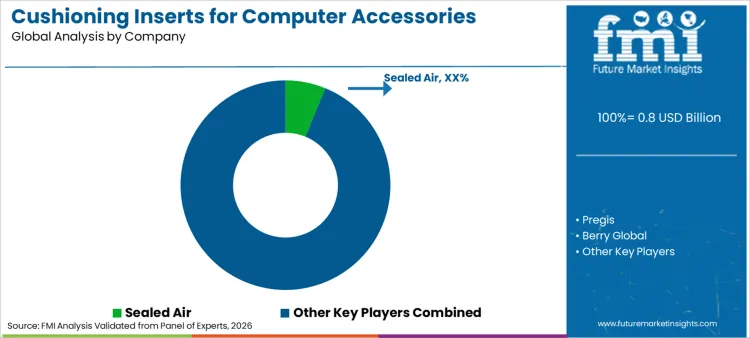
In the market for cushioning inserts in computer accessories, competition is increasingly determined not by the diversity of brands but by which entity manages the limitations that restrict scaling, such as evidence, compliance, channel access, or production capacity. Incumbents like Sealed Air are actively restructuring to defend their positions; the company reported a decrease of 8% in protective packaging net sales in Q3 2024, prompting a "CTO2Grow" cost-savings program. This pressure is driving a bifurcation where legacy players consolidate to protect margins evidenced by Sonoco selling its ThermoSafe unit for $725 million while agile challengers capture growth in sustainable niches. FMI analysts opine that profit pools are migrating toward high impact corrugated boxes and hybrid systems that combine structural integrity with curbside recyclability.
Rivalry inside cushioning inserts for computer accessories increasingly concentrates around control points that buyers cannot bypass, from audit readiness to channel terms and repeat-purchase economics. New entrants are disrupting the status quo by securing funding to scale bio-based alternatives; Notpla raised £20 million in September 2024 to bring its seaweed packaging to the US. Howard Coker, President & CEO of Sonoco, noted in November 2025: "The completion of the sale of ThermoSafe substantially concludes Sonoco’s portfolio transformation, which simplified our operations from a large portfolio of businesses into two core global business segments focused on metal and paper consumer and industrial packaging." This strategic clarity allows leaders to double down on corrugated and folding carton packaging platforms that offer the scale necessary to serve global electronics giants.
Recent Developments:
- In January 2026, HP showcased at CES its new plastic-free retail packaging for computer peripherals and accessories, including the 65W GaN Wall Charger and Portable USB-C 4K HDMI Hub. The design features FSC-certified paperboard boxes with molded pulp inserts, eliminating plastic blister packs, foam, and clamshells while preventing approximately 320 tons of plastic waste annually across its accessories portfolio.
- In January 2026, Dell introduced 100% renewable and recyclable packaging for its UltraSharp computer monitors at CES 2026, utilizing molded pulp inserts from bagasse and recycled paper-based cushioning paired with FSC-certified corrugated cardboard outer boxes. This replaces plastic films and foam, eliminating around 1,200 tons of plastic annually in commercial display lines and advancing sustainable retail solutions for large peripherals.
- In January 2026, Belkin showcased its Titan EcoGuard line at CES 2026, featuring fully recyclable, FSC-certified paper packaging for computer and mobile accessories such as chargers, hubs, and screen protectors. The design incorporates molded pulp trays, printed cardboard sleeves, and paper-based adhesives, replacing plastic inserts and seals to prioritize sustainability and biodegradability in retail merchandising for IT peripherals.
Key Players in Cushioning Inserts for Computer Accessories Market
- Sealed Air Corporation
- Pregis LLC
- Berry Global Inc.
- NEFAB Group
- Smurfit WestRock
- Mondi plc
- Sonoco Products Company
- Ranpak Holdings Corp.
- PulPac AB
- Ecovative Design
- Notpla Limited
- Woola
- Cruz Foam
- Storopack Hans Reichenecker GmbH
- Huhtamaki Oyj
Market Definition
The cushioning inserts for computer accessories market encompasses the aggregate revenue generated from the sale of protective inner packaging materials specifically engineered to secure IT peripherals and accessories during transit. This includes diverse material formats such as molded pulp trays, engineered foam inserts (EPS, EPE, EPP), paper-based cushioning pads, honeycomb structures, and inflatable air pillows. The market boundary strictly includes materials used for the primary protection of items like keyboards, mice, docking stations, external hard drives, and cabling, sold to OEMs, contract manufacturers, and e-commerce fulfillment centers.
It explicitly includes revenue from both traditional petrochemical-based solutions and emerging sustainable alternatives like mycelium, seaweed, and wool-based composites, provided they are used for cushioning applications. The scope covers all distribution channels, including direct B2B sales to electronics manufacturers, sales through industrial packaging distributors, and volume shipments to third-party logistics (3PL) providers. Value-added services such as custom design engineering and rapid prototyping for specific device geometries are also included within the market valuation when bundled with material sales.
The market explicitly excludes general-purpose shipping containers such as outer corrugated boxes, unless they are sold as an integrated unit with the cushioning insert. It also excludes protective packaging for heavy industrial machinery or large household appliances, focusing solely on the computer accessories sub-segment. Furthermore, the market valuation does not include the value of the computer accessories themselves, nor does it include revenue from the recycling or waste management of used packaging materials after the consumer has discarded them.
Scope of Report
| Items | Values |
|---|---|
| Quantitative Units (2026) | USD 0.8 billion |
| Product Type | Molded Pulp Inserts, Engineered Foam Inserts, Paper Cushioning / Honeycomb, Air Pillows / Inflatables |
| Application or Procedure type | Drop / Impact Protection, Vibration Control, Void Fill, Moisture / ESD Protection |
| End user | E-commerce Fulfillment, Retail Distribution, B2B / Industrial Shipments |
| Regions covered | North America, Europe, Asia Pacific, Latin America, Middle East & Africa |
| Countries covered | India, Vietnam, Indonesia, China, Mexico |
| Key companies profiled | Sealed Air, Pregis, Berry Global, NEFAB, Smurfit WestRock, Mondi |
| Additional attributes | Revenue analysis by segments, adoption trends across settings, regulatory and compliance landscape (as relevant), pricing and reimbursement considerations (when relevant), channel mix economics, supply chain exposure, and competitive positioning analysis |
Source: Future Market Insights (FMI) analysis, based on proprietary forecasting model and primary research.
Cushioning Inserts for Computer Accessories Market by Segments
By Insert Type:
- Molded Pulp Inserts
- Engineered Foam Inserts
- Paper Cushioning / Honeycomb
- Air Pillows / Inflatables
By Use Case:
- Drop / Impact Protection
- Vibration Control
- Void Fill
- Moisture / ESD Protection
By Channel:
- E-commerce Fulfillment
- Retail Distribution
- B2B / Industrial Shipments
By Region:
- North America
- Europe
- Asia Pacific
- Latin America
- Middle East & Africa
Bibliography
- General Statistics Office of Vietnam. (2024). Monthly Statistical Information: Industrial Production Index and Manufacturing Output.
- Badan Pusat Statistik Indonesia. (2024). Official Statistics News: Economic Growth and Manufacturing Sector Performance.
- Ministry of Commerce & Industry, Government of India. (2025). India’s Foreign Trade: April-September 2025 and Annual Export Data.
- Instituto Nacional de Estadística y Geografía (INEGI). (2025). Indicador Mensual de la Actividad Industrial por Entidad Federativa (IMAIEF).
- Sealed Air Corporation. (2024). Quarterly Financial Results and Investor Presentations.
- Mondi plc. (2025). Full Year Results 2024 and Capital Markets Day Presentations.
- Sonoco Products Company. (2025). Investor News: Divestiture of ThermoSafe and Strategic Portfolio Updates.
- European Council. (2024). Packaging and Packaging Waste Regulation (PPWR) Final Provisions.
Frequently Asked Questions
What is the current market size for cushioning inserts for computer accessories?
The market is valued at USD 0.8 billion in 2026, reflecting a baseline demand for protective materials in the global electronics supply chain.
What is the projected growth rate for the cushioning inserts market?
The market is projected to grow at a 5.2% CAGR from 2026 to 2036, driven by the expansion of e-commerce fulfillment and sustainable material adoption.
Which region is leading the growth in this market?
India is the fastest-growing market with a 7.1% CAGR, fueled by a 127-fold increase in mobile phone exports over the last decade.
Which product segment holds the largest share?
Molded Pulp Inserts are gaining significant traction, with the broader molded pulp trays segment projected to hold a 44.64% share by 2026.
Who are the key players in the cushioning inserts for computer accessories market?
Key players include Sealed Air, Mondi, Sonoco, and Ranpak, alongside emerging bio-material innovators like Notpla and Ecovative.
Preview the report firsthand - request a free sample
Get SampleGet the brochure for pricing and purchase details.
Get PDFTable of Content
- Executive Summary
- Global Market Outlook
- Demand-side Trends
- Supply-side Trends
- Technology Roadmap Analysis
- Analysis and Recommendations
- Market Overview
- Market Coverage / Taxonomy
- Market Definition / Scope / Limitations
- Market Background
- Market Dynamics
- Drivers
- Restraints
- Opportunity
- Trends
- Scenario Forecast
- Demand in Optimistic Scenario
- Demand in Likely Scenario
- Demand in Conservative Scenario
- Opportunity Map Analysis
- Product Life Cycle Analysis
- Supply Chain Analysis
- Investment Feasibility Matrix
- Value Chain Analysis
- PESTLE and Porter’s Analysis
- Regulatory Landscape
- Regional Parent Market Outlook
- Production and Consumption Statistics
- Import and Export Statistics
- Market Dynamics
- Global Market Analysis 2021 to 2025 and Forecast, 2026 to 2036
- Historical Market Size Value (USD Million) Analysis, 2021 to 2025
- Current and Future Market Size Value (USD Million) Projections, 2026 to 2036
- Y-o-Y Growth Trend Analysis
- Absolute $ Opportunity Analysis
- Global Market Pricing Analysis 2021 to 2025 and Forecast 2026 to 2036
- Global Market Analysis 2021 to 2025 and Forecast 2026 to 2036, By Insert Type
- Introduction / Key Findings
- Historical Market Size Value (USD Million) Analysis By Insert Type , 2021 to 2025
- Current and Future Market Size Value (USD Million) Analysis and Forecast By Insert Type , 2026 to 2036
- Molded Pulp Inserts
- Engineered Foam Inserts
- Paper Cushioning / Honeycomb
- Air Pillows / Inflatables
- Other
- Molded Pulp Inserts
- Y-o-Y Growth Trend Analysis By Insert Type , 2021 to 2025
- Absolute $ Opportunity Analysis By Insert Type , 2026 to 2036
- Global Market Analysis 2021 to 2025 and Forecast 2026 to 2036, By Use Case
- Introduction / Key Findings
- Historical Market Size Value (USD Million) Analysis By Use Case, 2021 to 2025
- Current and Future Market Size Value (USD Million) Analysis and Forecast By Use Case, 2026 to 2036
- Drop / Impact Protection
- Vibration Control
- Void Fill
- Moisture / ESD Protection
- Other
- Drop / Impact Protection
- Y-o-Y Growth Trend Analysis By Use Case, 2021 to 2025
- Absolute $ Opportunity Analysis By Use Case, 2026 to 2036
- Global Market Analysis 2021 to 2025 and Forecast 2026 to 2036, By Channel
- Introduction / Key Findings
- Historical Market Size Value (USD Million) Analysis By Channel, 2021 to 2025
- Current and Future Market Size Value (USD Million) Analysis and Forecast By Channel, 2026 to 2036
- E-commerce Fulfillment
- Retail Distribution
- B2B / Industrial Shipments
- Other
- E-commerce Fulfillment
- Y-o-Y Growth Trend Analysis By Channel, 2021 to 2025
- Absolute $ Opportunity Analysis By Channel, 2026 to 2036
- Global Market Analysis 2021 to 2025 and Forecast 2026 to 2036, By Region
- Introduction
- Historical Market Size Value (USD Million) Analysis By Region, 2021 to 2025
- Current Market Size Value (USD Million) Analysis and Forecast By Region, 2026 to 2036
- North America
- Latin America
- Western Europe
- Eastern Europe
- East Asia
- South Asia and Pacific
- Middle East & Africa
- Market Attractiveness Analysis By Region
- North America Market Analysis 2021 to 2025 and Forecast 2026 to 2036, By Country
- Historical Market Size Value (USD Million) Trend Analysis By Market Taxonomy, 2021 to 2025
- Market Size Value (USD Million) Forecast By Market Taxonomy, 2026 to 2036
- By Country
- USA
- Canada
- Mexico
- By Insert Type
- By Use Case
- By Channel
- By Country
- Market Attractiveness Analysis
- By Country
- By Insert Type
- By Use Case
- By Channel
- Key Takeaways
- Latin America Market Analysis 2021 to 2025 and Forecast 2026 to 2036, By Country
- Historical Market Size Value (USD Million) Trend Analysis By Market Taxonomy, 2021 to 2025
- Market Size Value (USD Million) Forecast By Market Taxonomy, 2026 to 2036
- By Country
- Brazil
- Chile
- Rest of Latin America
- By Insert Type
- By Use Case
- By Channel
- By Country
- Market Attractiveness Analysis
- By Country
- By Insert Type
- By Use Case
- By Channel
- Key Takeaways
- Western Europe Market Analysis 2021 to 2025 and Forecast 2026 to 2036, By Country
- Historical Market Size Value (USD Million) Trend Analysis By Market Taxonomy, 2021 to 2025
- Market Size Value (USD Million) Forecast By Market Taxonomy, 2026 to 2036
- By Country
- Germany
- UK
- Italy
- Spain
- France
- Nordic
- BENELUX
- Rest of Western Europe
- By Insert Type
- By Use Case
- By Channel
- By Country
- Market Attractiveness Analysis
- By Country
- By Insert Type
- By Use Case
- By Channel
- Key Takeaways
- Eastern Europe Market Analysis 2021 to 2025 and Forecast 2026 to 2036, By Country
- Historical Market Size Value (USD Million) Trend Analysis By Market Taxonomy, 2021 to 2025
- Market Size Value (USD Million) Forecast By Market Taxonomy, 2026 to 2036
- By Country
- Russia
- Poland
- Hungary
- Balkan & Baltic
- Rest of Eastern Europe
- By Insert Type
- By Use Case
- By Channel
- By Country
- Market Attractiveness Analysis
- By Country
- By Insert Type
- By Use Case
- By Channel
- Key Takeaways
- East Asia Market Analysis 2021 to 2025 and Forecast 2026 to 2036, By Country
- Historical Market Size Value (USD Million) Trend Analysis By Market Taxonomy, 2021 to 2025
- Market Size Value (USD Million) Forecast By Market Taxonomy, 2026 to 2036
- By Country
- China
- Japan
- South Korea
- By Insert Type
- By Use Case
- By Channel
- By Country
- Market Attractiveness Analysis
- By Country
- By Insert Type
- By Use Case
- By Channel
- Key Takeaways
- South Asia and Pacific Market Analysis 2021 to 2025 and Forecast 2026 to 2036, By Country
- Historical Market Size Value (USD Million) Trend Analysis By Market Taxonomy, 2021 to 2025
- Market Size Value (USD Million) Forecast By Market Taxonomy, 2026 to 2036
- By Country
- India
- ASEAN
- Australia & New Zealand
- Rest of South Asia and Pacific
- By Insert Type
- By Use Case
- By Channel
- By Country
- Market Attractiveness Analysis
- By Country
- By Insert Type
- By Use Case
- By Channel
- Key Takeaways
- Middle East & Africa Market Analysis 2021 to 2025 and Forecast 2026 to 2036, By Country
- Historical Market Size Value (USD Million) Trend Analysis By Market Taxonomy, 2021 to 2025
- Market Size Value (USD Million) Forecast By Market Taxonomy, 2026 to 2036
- By Country
- Kingdom of Saudi Arabia
- Other GCC Countries
- Turkiye
- South Africa
- Other African Union
- Rest of Middle East & Africa
- By Insert Type
- By Use Case
- By Channel
- By Country
- Market Attractiveness Analysis
- By Country
- By Insert Type
- By Use Case
- By Channel
- Key Takeaways
- Key Countries Market Analysis
- USA
- Pricing Analysis
- Market Share Analysis, 2025
- By Insert Type
- By Use Case
- By Channel
- Canada
- Pricing Analysis
- Market Share Analysis, 2025
- By Insert Type
- By Use Case
- By Channel
- Mexico
- Pricing Analysis
- Market Share Analysis, 2025
- By Insert Type
- By Use Case
- By Channel
- Brazil
- Pricing Analysis
- Market Share Analysis, 2025
- By Insert Type
- By Use Case
- By Channel
- Chile
- Pricing Analysis
- Market Share Analysis, 2025
- By Insert Type
- By Use Case
- By Channel
- Germany
- Pricing Analysis
- Market Share Analysis, 2025
- By Insert Type
- By Use Case
- By Channel
- UK
- Pricing Analysis
- Market Share Analysis, 2025
- By Insert Type
- By Use Case
- By Channel
- Italy
- Pricing Analysis
- Market Share Analysis, 2025
- By Insert Type
- By Use Case
- By Channel
- Spain
- Pricing Analysis
- Market Share Analysis, 2025
- By Insert Type
- By Use Case
- By Channel
- France
- Pricing Analysis
- Market Share Analysis, 2025
- By Insert Type
- By Use Case
- By Channel
- India
- Pricing Analysis
- Market Share Analysis, 2025
- By Insert Type
- By Use Case
- By Channel
- ASEAN
- Pricing Analysis
- Market Share Analysis, 2025
- By Insert Type
- By Use Case
- By Channel
- Australia & New Zealand
- Pricing Analysis
- Market Share Analysis, 2025
- By Insert Type
- By Use Case
- By Channel
- China
- Pricing Analysis
- Market Share Analysis, 2025
- By Insert Type
- By Use Case
- By Channel
- Japan
- Pricing Analysis
- Market Share Analysis, 2025
- By Insert Type
- By Use Case
- By Channel
- South Korea
- Pricing Analysis
- Market Share Analysis, 2025
- By Insert Type
- By Use Case
- By Channel
- Russia
- Pricing Analysis
- Market Share Analysis, 2025
- By Insert Type
- By Use Case
- By Channel
- Poland
- Pricing Analysis
- Market Share Analysis, 2025
- By Insert Type
- By Use Case
- By Channel
- Hungary
- Pricing Analysis
- Market Share Analysis, 2025
- By Insert Type
- By Use Case
- By Channel
- Kingdom of Saudi Arabia
- Pricing Analysis
- Market Share Analysis, 2025
- By Insert Type
- By Use Case
- By Channel
- Turkiye
- Pricing Analysis
- Market Share Analysis, 2025
- By Insert Type
- By Use Case
- By Channel
- South Africa
- Pricing Analysis
- Market Share Analysis, 2025
- By Insert Type
- By Use Case
- By Channel
- USA
- Market Structure Analysis
- Competition Dashboard
- Competition Benchmarking
- Market Share Analysis of Top Players
- By Regional
- By Insert Type
- By Use Case
- By Channel
- Competition Analysis
- Competition Deep Dive
- Sealed Air
- Overview
- Product Portfolio
- Profitability by Market Segments (Product/Age /Sales Channel/Region)
- Sales Footprint
- Strategy Overview
- Marketing Strategy
- Product Strategy
- Channel Strategy
- Pregis
- Berry Global
- NEFAB
- Smurfit WestRock / Mondi
- Sealed Air
- Competition Deep Dive
- Assumptions & Acronyms Used
- Research Methodology


