

- Industry Size (2026)
- USD 0.9 Bn
- Forecast (2036)
- USD 2.1 Bn
- CAGR (2026 to 2036)
- 8.8%
Multi-Enterprise Logistics Contract and SLA Performance Management Platforms Market Size, Market Forecast and Outlook By FMI
The multi-enterprise logistics contract and SLA performance management platforms market reached USD 0.8 billion in 2025. FMI estimates the market at USD 0.9 billion in 2026 and projects it to reach USD 2.1 billion by 2036, reflecting a CAGR of 8.8% during the forecast period. Expansion is being supported by a clear operating need across freight networks: shippers and forwarders want tighter control over contract execution, service compliance, and financial leakage across increasingly fragmented transport ecosystems.
Summary of Multi-Enterprise Logistics Contract and SLA Performance Management Platforms Market
- The market is forecast to reach USD 2.1 billion by 2036.
- The market is expected to grow at a CAGR of 8.8% from 2026 to 2036.
- The market was estimated at USD 0.8 billion in 2025.
- The forecast period represents an incremental opportunity of USD 1.2 billion.
- This market covers specialized software platforms used to manage logistics contracts, freight rates, SLA commitments, partner scorecards, and exception workflows across multi-party networks.
- Demand is driven by the need to replace fragmented, spreadsheet-based freight contract management with centralized, auditable digital systems.
- Adoption is supported by increasing logistics digitization and regulatory push toward digital freight information and documentation.
- Cloud deployment dominates with a 69% share, reflecting the need for collaborative, network-based logistics workflows.
- Contract lifecycle management leads the core function segment with a 30% share as the foundational layer for freight agreement governance.
- Shippers account for 38% of users, as they typically fund and control logistics contract standardization across partners.
- Multimodal transport coverage leads with a 45% share due to complexity across multiple transport legs and handoffs.
- Multi-party enterprise networks hold a 43% share, highlighting the value of coordination across shippers, carriers, and logistics providers.
- India, China, and GCC are the fastest-growing markets, with India leading at a 10.9% CAGR.
- Descartes Systems Group, Oracle, SAP, Blue Yonder, Infor, project44, and WiseTech Global (via e2open) are key participants in the competitive landscape.
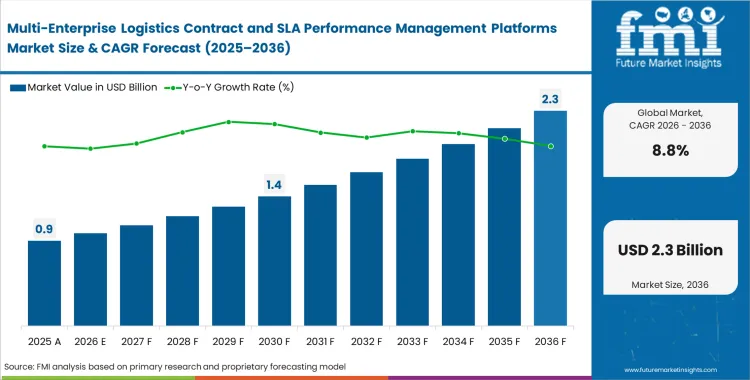
Commercial pressure in this market comes from the gap between contracted service terms and actual freight execution. Rate deviations, missed service commitments, billing exceptions, and penalty disputes often remain spread across separate systems instead of one auditable control structure. Manual review captures only part of this issue, especially when shipment milestones, invoices, carrier communication, and contract clauses are checked in isolation. Demand is therefore rising for digital logistics platforms that can connect shipment events with SLA rules, accessorial terms, and commercial commitments. This improves the ability to detect underperformance, validate charges, and reduce avoidable revenue leakage.
Adoption becomes stronger when contract governance shifts from periodic review into ongoing operational control. Linking ERP records, carrier data, and execution feeds to compliance rules helps identify exceptions earlier and supports faster resolution. This improves invoice accuracy, shortens dispute cycles, and builds a more reliable record of carrier performance over time. Market value is tied less to basic shipment monitoring and more to consistent enforcement of commercial terms across multi-party logistics relationships. That shift is making auditability and workflow control more central to platform selection.
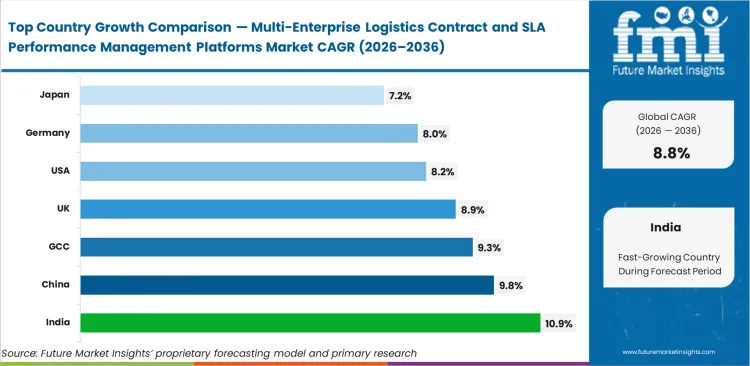
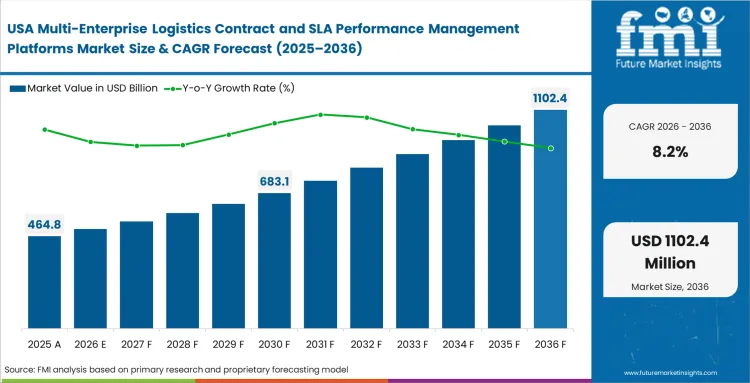
India is projected to expand at a CAGR of 10.9% through 2036, supported by continued formalization of freight networks and wider digital registry adoption across transport operations. China is estimated to grow at 9.8%, where large multimodal export systems create a stronger need for centralized SLA and contract oversight. GCC is likely to record 9.3% CAGR during the forecast period as cross-border trade corridors place greater importance on standardized data exchange and execution tracking. The United Kingdom is expected to register 8.9%, reflecting steady demand for tighter carrier accountability and automated service verification. The United States is projected to rise at 8.2%, while Germany is anticipated to post 8.0%, with both markets shaped more by optimization of complex existing freight networks than by first-time digital adoption. Japan is estimated to grow at 7.2%, where established logistics structures are moving more selectively toward integrated compliance management.
Segmental Analysis
Multi-Enterprise Logistics Contract and SLA Performance Management Platforms Market Analysis by Deployment Model
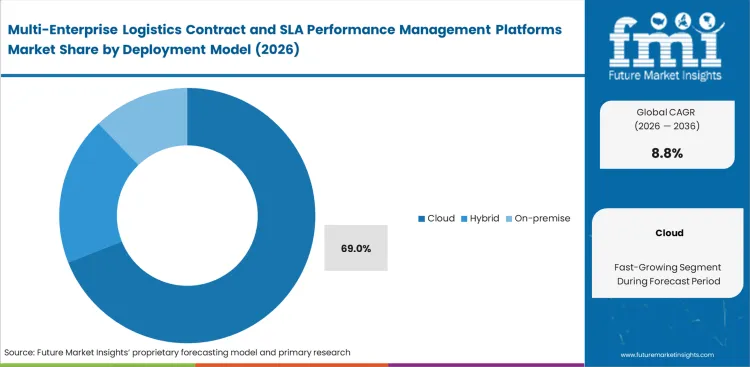
Cloud infrastructure is expected to account for 69.0% share in 2026. Distributed logistics networks now require access models that are not tied to one office, one server location, or one internal IT stack. Global shippers increasingly prefer centralized environments that can connect ports, carriers, and regional teams without rebuilding visibility architecture for every geography. Integration value also rises when cloud logistics & control towers can onboard new trading partners faster through existing API libraries instead of custom point-to-point development. Legacy carrier systems still slow implementation in many cases, but cloud deployment remains the more workable model for companies trying to scale SLA monitoring across multiple regions. On-premise builds often create heavier maintenance effort and slower expansion once lane count and partner count increase.
- Initial validation: Cloud deployment reduces the need for large server investment and gives logistics teams faster access to centralized monitoring dashboards.
- Technical friction: Legacy carrier feeds often contain inconsistent formatting that must be corrected before automated SLA auditing can function reliably.
- Expansion: Once primary lanes stabilize, organizations can extend monitoring to additional carriers and regions with less infrastructure strain.
Multi-Enterprise Logistics Contract and SLA Performance Management Platforms Market Analysis by Core Function
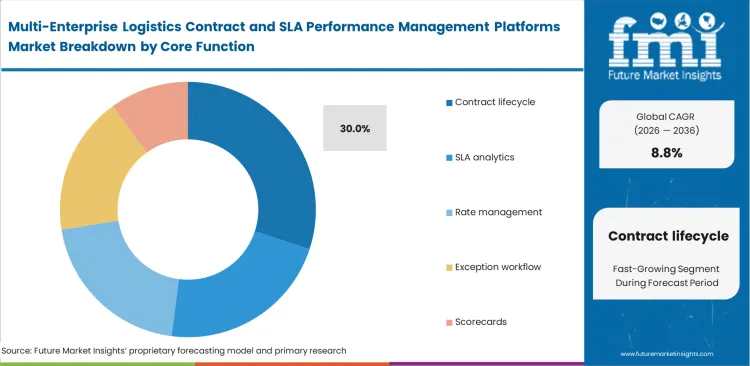
Contract lifecycle management remains central because carrier performance enforcement starts with how rates, penalties, and service terms are structured. This segment is poised to hold 30.0% share in 2026 as logistics teams move away from static spreadsheets and fragmented rate files toward dynamic commercial control. The value is not limited to document storage, since these modules also support ongoing tariff logic, surcharge adjustment, and accessorial validation during active freight execution. Integration with trade management software becomes especially useful when cross-border contracts need to align pricing rules with customs, duties, and shipment terms across different jurisdictions. Static contract handling weakens margin control because billing disputes and service failures become harder to validate when commercial logic is not digitized. Stronger contract visibility improves both cost discipline and carrier accountability across long freight cycles.
- Cost identification: Digital contract review helps expose accessorial charges and billing inconsistencies that are often missed in manual audits.
- Hidden operational expense: Maintaining routing guides and rate structures manually creates a recurring administrative burden as market conditions shift.
- Lifecycle assessment: Automated reconciliation improves cost control by replacing manual review with more consistent commercial validation logic.
Multi-Enterprise Logistics Contract and SLA Performance Management Platforms Market Analysis by User Type
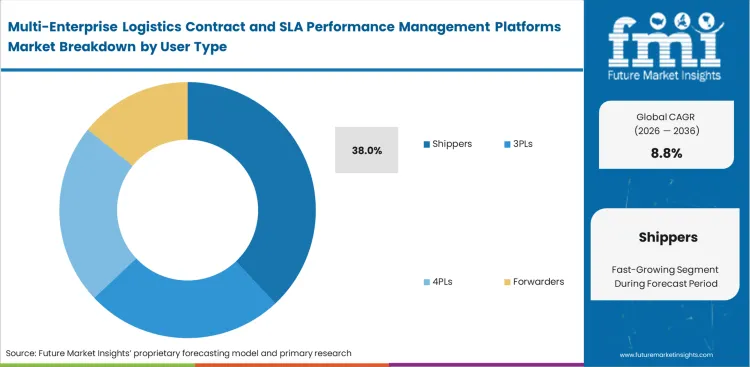
User adoption in this market depends largely on who absorbs the financial impact when freight execution falls below agreed service levels. Shippers carry that exposure more directly when missed milestones lead to production disruption, chargebacks, expedited freight, or weaker inventory visibility. Shippers are estimated to account for 38.0% share in 2026, as many large manufacturers prefer an independent system to measure carrier and intermediary performance instead of relying only on outsourced reporting. This requirement is also increasing demand for supply chain visibility software and 3PL software in settings where operational updates need to be compared against contractual compliance outcomes. Independent monitoring strengthens rebate, dispute, and renewal discussions because service data can be matched more clearly with commercial terms. Companies that leave compliance tracking fully with execution partners often retain less oversight over freight-related margin leakage.
- Shipper adoption: Large manufacturers often deploy compliance platforms first to build internal performance benchmarks outside carrier-generated reporting.
- Intermediary integration: 3PL operators use dedicated tools to monitor underlying providers and improve control during volatile capacity conditions.
- Tail-end conversion: Smaller players tend to digitize later, often after larger network partners begin requiring structured API-based reporting.
Multi-Enterprise Logistics Contract and SLA Performance Management Platforms Market Analysis by Mode Coverage
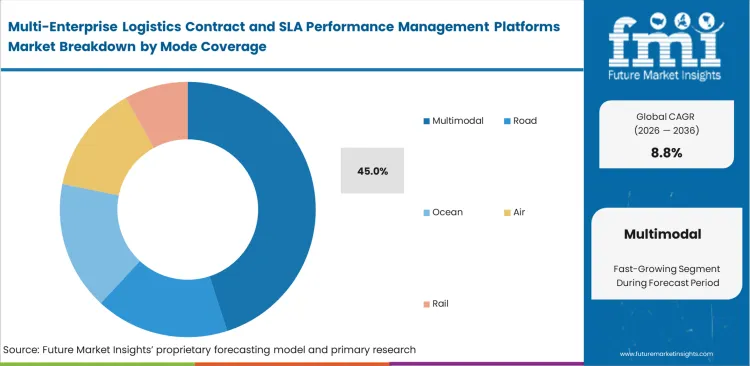
Mode coverage becomes more important when freight moves across multiple transport legs and service accountability must remain clear at each handoff. Single-mode tools often lose value once cargo shifts from port to rail, rail to truck, or warehouse to final-mile distribution. Global operators increasingly prefer one framework that can track milestone timing across these transitions without weakening SLA measurement. Multimodal applications are estimated to account for 45.0% share in 2026, as they help reduce visibility gaps at transfer points where delay costs and billing disputes often rise. Demand is also being supported by wider use of end-to-end multimodal shipment visibility platforms and supply chain management tools that combine ETA forecasting with milestone validation across transport modes. A larger issue is not only tracking shipment movement, but establishing where accountability changed once timing standards vary across transport partners.
- Port congestion failure: Isolated systems struggle to calculate dwell time accurately and weaken the ability to challenge demurrage and detention charges.
- Residual handoff risk: Digital timestamps can still conflict with yard-level reality, which makes manual review capability important in disputed cases.
- Value capture requirement: SLA platforms create stronger financial returns when milestone data is connected directly to invoice validation and payment workflows.
Multi-Enterprise Logistics Contract and SLA Performance Management Platforms Market Analysis by Enterprise Scope
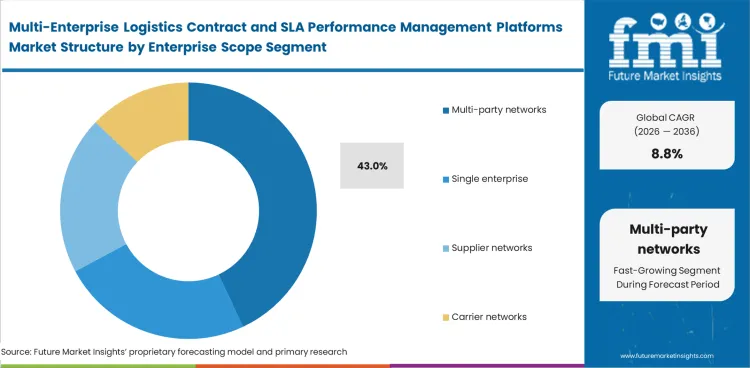
Network structure is becoming a bigger factor in platform selection across this market. Some logistics flows still run through bilateral relationships, while others now depend on shared operating models involving many participants. Multi-party platforms are gaining ground because freight execution now spans suppliers, plants, ports, carriers, and downstream delivery points. Shared visibility across this network can improve exception handling, though it also brings closer scrutiny of access control, data ownership, and platform influence. Ecosystem-based architectures are estimated to account for 43.0% share in 2026, reflecting the need to coordinate broader trading communities through common workflows instead of separate one-to-one systems. Collaborative transport network control tower services are seeing stronger uptake in settings where a large enterprise applies common operating rules across a wider vendor base. Better participation usually depends on reducing integration effort rather than adding one more closed portal for carriers to manage.
- Platform originators: Large enterprises often run network adoption by requiring suppliers and logistics partners to operate through shared control structures.
- Capacity constraints: Mid-sized carriers resist supporting too many proprietary portals because repeated integration demand creates avoidable IT strain.
- Future network state: Standardized APIs are likely to reduce custom connectivity work and shift differentiation toward analytics and execution quality.
Multi-Enterprise Logistics Contract and SLA Performance Management Platforms Market Drivers, Restraints, and Opportunities
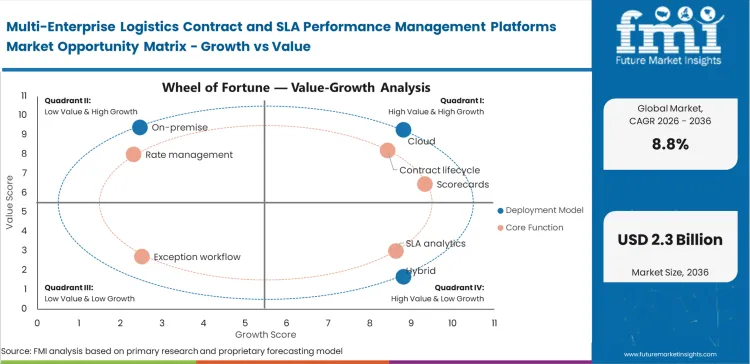
Freight audit discipline is gaining more attention as billing variance continues to affect transport spend control. Accessorial fees, detention charges, and invoice mismatches can reduce margin visibility when freight data sits across disconnected systems. Centralized freight management software is seeing stronger use because it helps companies compare billed charges with actual execution records in a more consistent way. Automated reconciliation tools also support earlier detection of disputed line items before they accumulate across larger shipment volumes. Objective execution records remain important in quarterly carrier reviews because they provide a firmer basis for validating charges against agreed service terms.
Platform onboarding still faces difficulty when carrier data arrives in inconsistent formats. Legacy messaging standards differ widely across transportation networks, which slows data normalization and complicates event mapping. Global visibility becomes harder to maintain when regional subcontractors provide limited or uneven milestone reporting. Carrier-agnostic parcel and freight visibility aggregation services help translate these fragmented signals into a more usable operating layer. Contract logic, however, remains difficult to apply when event quality varies by carrier and region. Data standardization therefore remains a core requirement for turning shipment visibility into dependable billing control.
Opportunities in Multi-Enterprise Logistics Contract and SLA Performance Management Platforms Market
- Sourcing validation: Companies designing an RFP for logistics performance management platform ensure automated SLA scoring is natively embedded within the initial bid requirement. Supply chain heads avoid purchasing standalone visibility tools that lack financial reconciliation capabilities.
- Dynamic pricing integration: Linking lane-specific dynamic pricing engines for freight contracts directly to freight transport management platforms allows automated rate adjustments. Automated systems allocate higher volumes to top-performing carriers.
- Scope 3 emissions tracking: Environmental reporting requirements push systems to calculate carbon footprints alongside financial metrics. Existing execution data is increasingly used to satisfy emerging regulatory mandates.
Regional Analysis
Based on regional analysis, multi-enterprise logistics contract and SLA performance management platforms market is segmented into South Asia, East Asia, Middle East and Africa, Europe, and North America across 40 plus countries.
.webp "Top Country Growth Comparison Multi Enterprise Logistics Contract And Sla Performance Management Platforms Market Cagr (2026 2036)")
| Country | CAGR (2026 to 2036) |
|---|---|
| India | 10.9% |
| China | 9.8% |
| GCC | 9.3% |
| United Kingdom | 8.9% |
| United States | 8.2% |
| Germany | 8.0% |
| Japan | 7.2% |
Source: Future Market Insights (FMI) analysis, based on proprietary forecasting model and primary research
South Asia Multi-Enterprise Logistics Contract and SLA Performance Management Platforms Market Analysis
State-backed digital infrastructure projects reshape logistics workflows across South Asia. Domestic conglomerates face increasing requirements to standardize fragmented transportation networks. FMI observes that supply chain operations must replace paper-based supplier collaboration and inbound logistics control tower workflows with unified digital portals. Transitioning to digitized systems removes chronic opacity in regional road freight operations. Tier-one manufacturers mandate electronic proof of delivery from transport partners to ensure compliance.
- India: State-driven unified logistics interfaces compel major shippers to overhaul legacy compliance tracking systems to prevent margin leakage. India is projected to witness 10.9% CAGR in the multi-enterprise logistics platforms segment during the assessment period. Manufacturers gain much-needed visibility into domestic truckload performance through this digital transition. Companies digitizing these complex workflows secure export contracts previously lost to opaque delivery timelines.
East Asia Multi-Enterprise Logistics Contract and SLA Performance Management Platforms Market Analysis
Export volume concentration creates platform requirements across East Asia. Regional manufacturing hubs need streamlined port connectivity to maintain global competitiveness. Based on FMI's assessment, these tools are deployed specifically to mitigate transshipment delays at busy coastal nodes. Operations must balance high-throughput execution against rigid international buyer delivery windows, making automated performance tracking essential.
- China: Extensive export networks require tight alignment between documentation and physical freight milestones. Trade compliance teams utilize automated platforms to ensure exact matching across complex supply chains. Demand for multi-enterprise logistics contract and SLA performance management platforms in China is anticipated to rise at a CAGR of 9.8% from 2026 to 2036. Such capability positions local forwarders to outcompete regional rivals lacking integrated tracking tools.
- Japan: Demographic shifts and an aging workforce force automation across legacy supply chain operations. Japan is expected to register a CAGR of 7.2% in the multi-enterprise logistics platforms industry through 2036. Logistics planners implement real-time transport capacity trading platforms alongside compliance tools to maximize limited driver availability. Manufacturers prioritize operational efficiency over pure volume expansion, relying on automated reconciliation to manage restricted carrier capacity effectively.
North America Multi-Enterprise Logistics Contract and SLA Performance Management Platforms Market Analysis
Capacity fluctuations and complex driver regulations dictate compliance strategies across North America. Enterprise shippers demand exact location updates to manage strict retail delivery windows. FMI analysts note that carrier relationship teams use these platforms to recover funds from missed service commitments. Contract compliance centers on the shifting power balances between asset-based carriers and large retail consignees.
- United States: Strict retail compliance programs require shippers to maintain accurate delivery records. Organizations successfully mastering this data layer improve their internal supply chain cost structures. Transportation teams deploy automated scoring to dispute chargebacks from major retailers. Sales of multi-enterprise logistics platforms in the United States are expected to increase at a CAGR of 8.2% during the forecast period. Mastering execution data prevents continuous margin erosion.
FMI's report includes the United Kingdom, Germany, and GCC. Environmental reporting mandates in European nations combine carbon tracking with traditional performance metrics. Vendors must deliver a unified Europe eFTI logistics performance platform capable of dual compliance tracking. Manufacturers rely on these integrated systems to meet regulatory standards while maintaining baseline carrier performance targets.
Competitive Aligners for Market Players
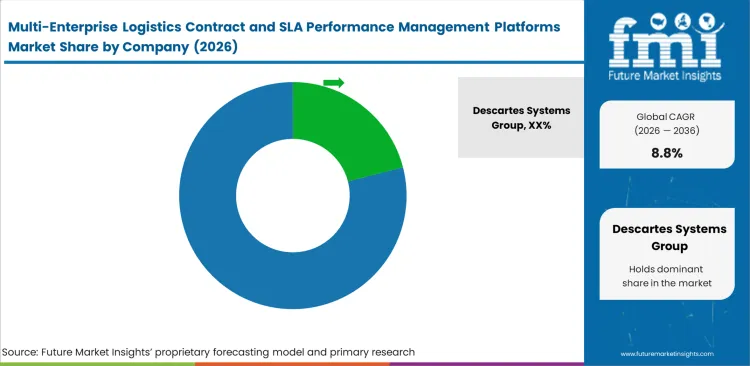
Vendor position in this sector depends heavily on integration depth and switching friction. Pre-built carrier connection libraries matter because they reduce onboarding effort and shorten time to usable workflow coverage. Buyer preference often leans toward platforms with broader network connectivity, since software value weakens when shipment, invoice, and service data cannot be linked across the carrier base. Network density also supports stronger platform retention because replacing established connections can require significant rebuilding effort.
Long operating histories give established providers an advantage in workflow tuning, exception detection, and predictive alerting. Historical execution data can improve SLA-risk modeling when event patterns are broad enough across carriers, regions, and service types. Newer entrants usually need narrower points of entry, often through specialized modules that fit into existing transport, ERP, or compliance environments. Platform evaluation therefore tends to focus on integration speed, connection stability, and the effort required to fit into current operating architecture.
Large multinational shippers often try to limit vendor dependence through modular software structures. Core workflow layers may remain in place while more specialized applications are connected for parcel, compliance, or contract-control use cases. This approach helps preserve pricing discipline across providers and reduces exposure to a single software stack. Basic connectivity may become less differentiating over time as integration standards improve. Competitive separation is more likely to center on analytics quality, workflow automation, and dispute-resolution capability.
Key Players in Multi-Enterprise Logistics Contract and SLA Performance Management Platforms Market
- Descartes Systems Group
- Oracle
- SAP
- Blue Yonder
- Infor
- project44
- WiseTech Global
Scope of the Report
| Metric | Value |
|---|---|
| Quantitative Units | USD 0.9 billion to USD 2.1 billion, at a CAGR of 8.8% |
| Market Definition | Software applications designed exclusively to monitor, execute, and reconcile service level agreements across multiple independent supply chain entities. These systems ingest contracted rates, compare them against real-time physical execution data, and automatically flag deviations to enforce vendor compliance. |
| Segmentation | Deployment model, Core function, User type, Mode coverage, Enterprise scope, Region |
| Regions Covered | North America, Latin America, Europe, East Asia, South Asia, Oceania, Middle East and Africa |
| Countries Covered | United States, Canada, Brazil, Mexico, Germany, United Kingdom, France, Spain, Italy, China, Japan, South Korea, India, ASEAN, ANZ, GCC, South Africa |
| Key Companies Profiled | Descartes Systems Group, Oracle, SAP, Blue Yonder, Infor, project44, WiseTech Global |
| Forecast Period | 2026 to 2036 |
| Approach | Annual enterprise software licensing renewals across top-tier logistics providers cross-referenced against global freight audit recovery volumes |
Source: Future Market Insights (FMI) analysis, based on proprietary forecasting model and primary research
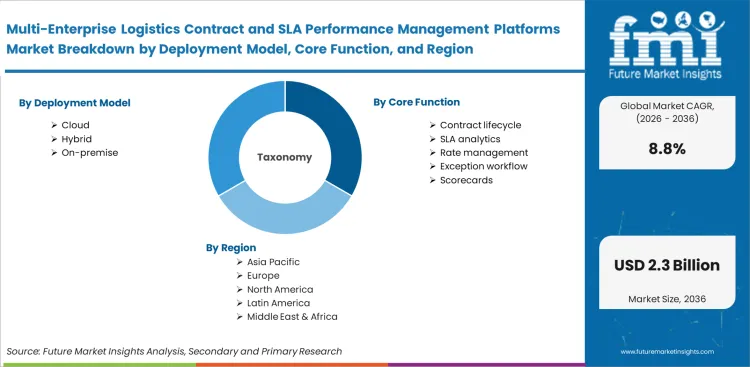
Multi-Enterprise Logistics Contract and SLA Performance Management Platforms Market Analysis by Segments
Deployment model
- Cloud
- Hybrid
- On-premise
Core function
- Contract lifecycle
- SLA analytics
- Rate management
- Exception workflow
- Scorecards
User type
- Shippers
- 3PLs
- 4PLs
- Forwarders
Mode coverage
- Multimodal
- Road
- Ocean
- Air
- Rail
Enterprise scope
- Multi-party networks
- Single enterprise
- Supplier networks
- Carrier networks
Region:
- North America
- United States
- Canada
- Europe
- Germany
- United Kingdom
- France
- Italy
- Spain
- Asia Pacific
- China
- Japan
- South Korea
- Taiwan
- Singapore
- Latin America
- Brazil
- Mexico
- Argentina
- Middle East & Africa
- GCC Countries
- South Africa
Bibliography
- Arvis, J.-F., Ulybina, D., & Wiederer, C. (2024). From survey to big data: The new Logistics Performance Index (Policy Research Working Paper 10772). World Bank.
- United States Department of Transportation, Federal Highway Administration. (2024). Annual modal research plans FY 2024: Program outlook FY 2025.
- Organization for Economic Co-operation and Development. (2024). OECD digital economy outlook 2024 (Volume 1): Embracing the technology frontier. OECD Publishing.
- Lam, H. Y., Tang, V., & Wong, L. (2024). Raising logistics performance to new levels through digital transformation. International Journal of Engineering Business Management, 16, Article 18479790241231730.
- Liu, Y., Zhao, S., & Zhao, S. (2025). Adoption of digital logistics platforms in the maritime logistics industry: Based on diffusion of innovations and extended technology acceptance. Humanities and Social Sciences Communications, 12, Article 791.
This bibliography is provided for reader reference. The full FMI report contains the complete reference list with primary source documentation.
This Report Addresses
- How companies integrate SLA monitoring before negotiating carrier rates.
- Why manual auditing captures merely a fraction of total volume deviations.
- What barriers prevent supply chain heads from achieving global visibility.
- How predictive penalty modeling forecasts violations before physical delays occur.
- Why cloud deployments frequently expose legacy carrier IT formatting deficiencies.
- How massive export networks push platform demand at 9.8% CAGR across China.
- What strategies independent carriers employ to support multiple proprietary network portals.
- How best-of-breed software approaches maintain competitive pricing tension among vendors.
Frequently Asked Questions
How large is the multi-enterprise logistics contract and SLA performance management platforms market?
FMI analysis indicates total valuation crossing USD 2.1 billion by 2036. Global forwarders mandate continuous digital compliance auditing across tier-two carrier networks to eliminate chronic overbilling.
Which platforms manage logistics contracts and SLA performance across multiple enterprises?
Systems developed by Descartes, Oracle, SAP, Blue Yonder, and project44 lead this sector. These applications actively monitor physical execution data against legally binding delivery contracts across disparate carrier networks.
What features matter most in logistics SLA management software?
Core features include dedicated rate management engines, automated scorecards, predictive exception workflows, and multi-party tracking modules. Organizations use these capabilities to convert location data into enforceable financial penalties.
Which vendors combine freight contracts, scorecards, and network visibility?
Leading incumbents like SAP and Oracle integrate these functions directly into massive ERP suites, while specialized providers like WiseTech Global and project44 connect contract logic to real-time execution milestones via extensive API libraries.
What is the difference between TMS and logistics SLA software?
A TMS handles operational load planning and dispatching, whereas SLA platforms focus exclusively on the financial reconciliation and performance governance of those loads against contracted baseline agreements.
How do shippers track 3PL SLA performance
Dedicated compliance tools are deployed to establish independent performance benchmarks. These platforms ingest physical tracking data directly, bypassing self-reported carrier metrics to calculate objective compliance scores.
How to automate carrier contract compliance
Automation requires linking legacy enterprise resource planning systems directly with third-party execution metrics. Once data flows continuously, software engines automatically flag volume deviations and activate penalty calculations without manual intervention.
Best KPIs for logistics contract management
Critical metrics include On-Time In-Full (OTIF) delivery rates, tender acceptance ratios, precise terminal dwell times, and accessorial fee variations. Vendor relationship departments utilize these precise calculations during capacity negotiations.
Which deployment model leads this segment?
Cloud infrastructure holds 69.0% share in 2026. Distributed availability is mandated to synchronize execution data across disparate global ports and inland terminals.
Why do shippers dominate user adoption?
Shippers are expected to capture 38.0% share. These platforms are deployed to reclaim control from outsourced providers and establish independent performance benchmarks.
How fast is demand expanding in India?
India tracks at 10.9% CAGR through 2036. State-driven unified logistics interfaces compel major domestic shippers to overhaul legacy compliance tracking and abandon paper-based workflows entirely.
What advantage do cloud-native architectures provide?
Cloud deployments reduce initial capital expenditure significantly for mid-sized forwarders. These systems frequently expose legacy carrier IT deficiencies, requiring extensive API mapping efforts before yielding actionable analytics.
Why does multimodal coverage command significant share?
Multimodal applications account for 45.0% share because global supply chain heads rely on them to bridge visibility gaps between ocean ports and inland rail terminals. Single-mode tools fail during transshipment handoffs.
What restricts multi-party network expansion?
Independent carriers struggle to support dozens of different proprietary portals simultaneously. Technology leads at mid-sized trucking firms push back against redundant integration requests from overlapping network operators.
How does manual tariff management impact operations?
Manual tariff management results in substantial revenue leakage. Companies must continuously update base rates to reflect changing market realities, but static spreadsheets invariably miss subtle accessorial fee shifts.
What differentiates China's growth trajectory from Japan's?
China expands at 9.8% CAGR driven by sprawling export networks requiring hyper-efficient port connectivity. Japan trails at 7.2%, focusing primarily on automation solutions to counter severe aging workforce demographics and driver shortages.
Why do logistics directors pursue modular architecture?
Core modules from massive ERP vendors are deployed while connecting specialized execution engines from niche providers. This approach prevents vendor lock-in and maintains competitive pricing tension.
How do platforms resolve port congestion disputes?
Advanced systems calculate exact terminal dwell times using predictive ETAs linked to actual gate milestones. This precise timestamp data is utilized to dispute unfair demurrage invoices effectively.
What role does predictive penalty modeling play?
Advanced algorithms forecast SLA violations before they occur based on real-time traffic and weather telemetry. Logistics planners gain critical time to reroute sensitive shipments and avoid massive contractual fines.
Why is independent compliance monitoring necessary?
Companies outsourcing compliance tracking to the organizations executing their freight face conflict-of-interest challenges. Independent platforms translate raw location data into objective financial penalties without vendor bias.
How do European reporting mandates affect platforms?
Strict environmental reporting mandates uniquely combine carbon tracking with traditional performance metrics. Vendors must deliver dual-capability platforms allowing utilization of existing execution data for compliance.
What drives adoption among tier-one forwarders?
Forwarders implement these platforms to manage their own underlying asset providers effectively. Firms gain crucial leverage during seasonal capacity negotiations by presenting objective historical scorecard data.
Why do single-mode tools fail during transshipments?
Accurately calculating demurrage across a port-to-rail transfer remains incredibly difficult due to conflicting timestamp standards. Failing to capture this specific handoff data destroys downstream SLA enforcement efforts entirely.
How do network owners maintain commercial leverage?
Network platform owners carefully restrict data access across their ecosystems. Ecosystem architects provide a single shared ledger of execution facts but limit full visibility to maintain power over tier-two suppliers.
Preview the report firsthand - request a free sample
Get SampleGet the brochure for pricing and purchase details.
Get PDFTable of Content
- Executive Summary
- Global Market Outlook
- Demand-side Trends
- Supply-side Trends
- Technology Roadmap Analysis
- Analysis and Recommendations
- Market Overview
- Market Coverage / Taxonomy
- Market Definition / Scope / Limitations
- Research Methodology
- Chapter Orientation
- Analytical Lens and Working Hypotheses
- Market Structure, Signals, and Trend Drivers
- Benchmarking and Cross-market Comparability
- Market Sizing, Forecasting, and Opportunity Mapping
- Research Design and Evidence Framework
- Desk Research Programme (Secondary Evidence)
- Company Annual and Sustainability Reports
- Peer-reviewed Journals and Academic Literature
- Corporate Websites, Product Literature, and Technical Notes
- Earnings Decks and Investor Briefings
- Statutory Filings and Regulatory Disclosures
- Technical White Papers and Standards Notes
- Trade Journals, Industry Magazines, and Analyst Briefs
- Conference Proceedings, Webinars, and Seminar Materials
- Government Statistics Portals and Public Data Releases
- Press Releases and Reputable Media Coverage
- Specialist Newsletters and Curated Briefings
- Sector Databases and Reference Repositories
- FMI Internal Proprietary Databases and Historical Market Datasets
- Subscription Datasets and Paid Sources
- Social Channels, Communities, and Digital Listening Inputs
- Additional Desk Sources
- Expert Input and Fieldwork (Primary Evidence)
- Primary Modes
- Qualitative Interviews and Expert Elicitation
- Quantitative Surveys and Structured Data Capture
- Blended Approach
- Why Primary Evidence is Used
- Field Techniques
- Interviews
- Surveys
- Focus Groups
- Observational and In-context Research
- Social and Community Interactions
- Stakeholder Universe Engaged
- C-suite Leaders
- Board Members
- Presidents and Vice Presidents
- R&D and Innovation Heads
- Technical Specialists
- Domain Subject-matter Experts
- Scientists
- Physicians and Other Healthcare Professionals
- Governance, Ethics, and Data Stewardship
- Research Ethics
- Data Integrity and Handling
- Primary Modes
- Tooling, Models, and Reference Databases
- Desk Research Programme (Secondary Evidence)
- Data Engineering and Model Build
- Data Acquisition and Ingestion
- Cleaning, Normalisation, and Verification
- Synthesis, Triangulation, and Analysis
- Quality Assurance and Audit Trail
- Market Background
- Market Dynamics
- Drivers
- Restraints
- Opportunity
- Trends
- Scenario Forecast
- Demand in Optimistic Scenario
- Demand in Likely Scenario
- Demand in Conservative Scenario
- Opportunity Map Analysis
- Product Life Cycle Analysis
- Supply Chain Analysis
- Investment Feasibility Matrix
- Value Chain Analysis
- PESTLE and Porter’s Analysis
- Regulatory Landscape
- Regional Parent Market Outlook
- Production and Consumption Statistics
- Import and Export Statistics
- Market Dynamics
- Global Market Analysis 2021 to 2025 and Forecast, 2026 to 2036
- Historical Market Size Value (USD Million) Analysis, 2021 to 2025
- Current and Future Market Size Value (USD Million) Projections, 2026 to 2036
- Y-o-Y Growth Trend Analysis
- Absolute $ Opportunity Analysis
- Global Market Pricing Analysis 2021 to 2025 and Forecast 2026 to 2036
- Global Market Analysis 2021 to 2025 and Forecast 2026 to 2036, By Deployment Model
- Introduction / Key Findings
- Historical Market Size Value (USD Million) Analysis By Deployment Model , 2021 to 2025
- Current and Future Market Size Value (USD Million) Analysis and Forecast By Deployment Model , 2026 to 2036
- Cloud
- Hybrid
- On-premise
- Cloud
- Y-o-Y Growth Trend Analysis By Deployment Model , 2021 to 2025
- Absolute $ Opportunity Analysis By Deployment Model , 2026 to 2036
- Global Market Analysis 2021 to 2025 and Forecast 2026 to 2036, By Core Function
- Introduction / Key Findings
- Historical Market Size Value (USD Million) Analysis By Core Function, 2021 to 2025
- Current and Future Market Size Value (USD Million) Analysis and Forecast By Core Function, 2026 to 2036
- Contract lifecycle
- SLA analytics
- Rate management
- Exception workflow
- Scorecards
- Contract lifecycle
- Y-o-Y Growth Trend Analysis By Core Function, 2021 to 2025
- Absolute $ Opportunity Analysis By Core Function, 2026 to 2036
- Global Market Analysis 2021 to 2025 and Forecast 2026 to 2036, By User Type
- Introduction / Key Findings
- Historical Market Size Value (USD Million) Analysis By User Type, 2021 to 2025
- Current and Future Market Size Value (USD Million) Analysis and Forecast By User Type, 2026 to 2036
- Shippers
- 3PLs
- 4PLs
- Forwarders
- Shippers
- Y-o-Y Growth Trend Analysis By User Type, 2021 to 2025
- Absolute $ Opportunity Analysis By User Type, 2026 to 2036
- Global Market Analysis 2021 to 2025 and Forecast 2026 to 2036, By Mode Coverage
- Introduction / Key Findings
- Historical Market Size Value (USD Million) Analysis By Mode Coverage, 2021 to 2025
- Current and Future Market Size Value (USD Million) Analysis and Forecast By Mode Coverage, 2026 to 2036
- Multimodal
- Road
- Ocean
- Air
- Rail
- Multimodal
- Y-o-Y Growth Trend Analysis By Mode Coverage, 2021 to 2025
- Absolute $ Opportunity Analysis By Mode Coverage, 2026 to 2036
- Global Market Analysis 2021 to 2025 and Forecast 2026 to 2036, By Enterprise Scope
- Introduction / Key Findings
- Historical Market Size Value (USD Million) Analysis By Enterprise Scope, 2021 to 2025
- Current and Future Market Size Value (USD Million) Analysis and Forecast By Enterprise Scope, 2026 to 2036
- Multi-party networks
- Single enterprise
- Supplier networks
- Carrier networks
- Multi-party networks
- Y-o-Y Growth Trend Analysis By Enterprise Scope, 2021 to 2025
- Absolute $ Opportunity Analysis By Enterprise Scope, 2026 to 2036
- Global Market Analysis 2021 to 2025 and Forecast 2026 to 2036, By Region
- Introduction
- Historical Market Size Value (USD Million) Analysis By Region, 2021 to 2025
- Current Market Size Value (USD Million) Analysis and Forecast By Region, 2026 to 2036
- North America
- Latin America
- Western Europe
- Eastern Europe
- East Asia
- South Asia and Pacific
- Middle East & Africa
- Market Attractiveness Analysis By Region
- North America Market Analysis 2021 to 2025 and Forecast 2026 to 2036, By Country
- Historical Market Size Value (USD Million) Trend Analysis By Market Taxonomy, 2021 to 2025
- Market Size Value (USD Million) Forecast By Market Taxonomy, 2026 to 2036
- By Country
- USA
- Canada
- Mexico
- By Deployment Model
- By Core Function
- By User Type
- By Mode Coverage
- By Enterprise Scope
- By Country
- Market Attractiveness Analysis
- By Country
- By Deployment Model
- By Core Function
- By User Type
- By Mode Coverage
- By Enterprise Scope
- Key Takeaways
- Latin America Market Analysis 2021 to 2025 and Forecast 2026 to 2036, By Country
- Historical Market Size Value (USD Million) Trend Analysis By Market Taxonomy, 2021 to 2025
- Market Size Value (USD Million) Forecast By Market Taxonomy, 2026 to 2036
- By Country
- Brazil
- Chile
- Rest of Latin America
- By Deployment Model
- By Core Function
- By User Type
- By Mode Coverage
- By Enterprise Scope
- By Country
- Market Attractiveness Analysis
- By Country
- By Deployment Model
- By Core Function
- By User Type
- By Mode Coverage
- By Enterprise Scope
- Key Takeaways
- Western Europe Market Analysis 2021 to 2025 and Forecast 2026 to 2036, By Country
- Historical Market Size Value (USD Million) Trend Analysis By Market Taxonomy, 2021 to 2025
- Market Size Value (USD Million) Forecast By Market Taxonomy, 2026 to 2036
- By Country
- Germany
- UK
- Italy
- Spain
- France
- Nordic
- BENELUX
- Rest of Western Europe
- By Deployment Model
- By Core Function
- By User Type
- By Mode Coverage
- By Enterprise Scope
- By Country
- Market Attractiveness Analysis
- By Country
- By Deployment Model
- By Core Function
- By User Type
- By Mode Coverage
- By Enterprise Scope
- Key Takeaways
- Eastern Europe Market Analysis 2021 to 2025 and Forecast 2026 to 2036, By Country
- Historical Market Size Value (USD Million) Trend Analysis By Market Taxonomy, 2021 to 2025
- Market Size Value (USD Million) Forecast By Market Taxonomy, 2026 to 2036
- By Country
- Russia
- Poland
- Hungary
- Balkan & Baltic
- Rest of Eastern Europe
- By Deployment Model
- By Core Function
- By User Type
- By Mode Coverage
- By Enterprise Scope
- By Country
- Market Attractiveness Analysis
- By Country
- By Deployment Model
- By Core Function
- By User Type
- By Mode Coverage
- By Enterprise Scope
- Key Takeaways
- East Asia Market Analysis 2021 to 2025 and Forecast 2026 to 2036, By Country
- Historical Market Size Value (USD Million) Trend Analysis By Market Taxonomy, 2021 to 2025
- Market Size Value (USD Million) Forecast By Market Taxonomy, 2026 to 2036
- By Country
- China
- Japan
- South Korea
- By Deployment Model
- By Core Function
- By User Type
- By Mode Coverage
- By Enterprise Scope
- By Country
- Market Attractiveness Analysis
- By Country
- By Deployment Model
- By Core Function
- By User Type
- By Mode Coverage
- By Enterprise Scope
- Key Takeaways
- South Asia and Pacific Market Analysis 2021 to 2025 and Forecast 2026 to 2036, By Country
- Historical Market Size Value (USD Million) Trend Analysis By Market Taxonomy, 2021 to 2025
- Market Size Value (USD Million) Forecast By Market Taxonomy, 2026 to 2036
- By Country
- India
- ASEAN
- Australia & New Zealand
- Rest of South Asia and Pacific
- By Deployment Model
- By Core Function
- By User Type
- By Mode Coverage
- By Enterprise Scope
- By Country
- Market Attractiveness Analysis
- By Country
- By Deployment Model
- By Core Function
- By User Type
- By Mode Coverage
- By Enterprise Scope
- Key Takeaways
- Middle East & Africa Market Analysis 2021 to 2025 and Forecast 2026 to 2036, By Country
- Historical Market Size Value (USD Million) Trend Analysis By Market Taxonomy, 2021 to 2025
- Market Size Value (USD Million) Forecast By Market Taxonomy, 2026 to 2036
- By Country
- Kingdom of Saudi Arabia
- Other GCC Countries
- Turkiye
- South Africa
- Other African Union
- Rest of Middle East & Africa
- By Deployment Model
- By Core Function
- By User Type
- By Mode Coverage
- By Enterprise Scope
- By Country
- Market Attractiveness Analysis
- By Country
- By Deployment Model
- By Core Function
- By User Type
- By Mode Coverage
- By Enterprise Scope
- Key Takeaways
- Key Countries Market Analysis
- USA
- Pricing Analysis
- Market Share Analysis, 2025
- By Deployment Model
- By Core Function
- By User Type
- By Mode Coverage
- By Enterprise Scope
- Canada
- Pricing Analysis
- Market Share Analysis, 2025
- By Deployment Model
- By Core Function
- By User Type
- By Mode Coverage
- By Enterprise Scope
- Mexico
- Pricing Analysis
- Market Share Analysis, 2025
- By Deployment Model
- By Core Function
- By User Type
- By Mode Coverage
- By Enterprise Scope
- Brazil
- Pricing Analysis
- Market Share Analysis, 2025
- By Deployment Model
- By Core Function
- By User Type
- By Mode Coverage
- By Enterprise Scope
- Chile
- Pricing Analysis
- Market Share Analysis, 2025
- By Deployment Model
- By Core Function
- By User Type
- By Mode Coverage
- By Enterprise Scope
- Germany
- Pricing Analysis
- Market Share Analysis, 2025
- By Deployment Model
- By Core Function
- By User Type
- By Mode Coverage
- By Enterprise Scope
- UK
- Pricing Analysis
- Market Share Analysis, 2025
- By Deployment Model
- By Core Function
- By User Type
- By Mode Coverage
- By Enterprise Scope
- Italy
- Pricing Analysis
- Market Share Analysis, 2025
- By Deployment Model
- By Core Function
- By User Type
- By Mode Coverage
- By Enterprise Scope
- Spain
- Pricing Analysis
- Market Share Analysis, 2025
- By Deployment Model
- By Core Function
- By User Type
- By Mode Coverage
- By Enterprise Scope
- France
- Pricing Analysis
- Market Share Analysis, 2025
- By Deployment Model
- By Core Function
- By User Type
- By Mode Coverage
- By Enterprise Scope
- India
- Pricing Analysis
- Market Share Analysis, 2025
- By Deployment Model
- By Core Function
- By User Type
- By Mode Coverage
- By Enterprise Scope
- ASEAN
- Pricing Analysis
- Market Share Analysis, 2025
- By Deployment Model
- By Core Function
- By User Type
- By Mode Coverage
- By Enterprise Scope
- Australia & New Zealand
- Pricing Analysis
- Market Share Analysis, 2025
- By Deployment Model
- By Core Function
- By User Type
- By Mode Coverage
- By Enterprise Scope
- China
- Pricing Analysis
- Market Share Analysis, 2025
- By Deployment Model
- By Core Function
- By User Type
- By Mode Coverage
- By Enterprise Scope
- Japan
- Pricing Analysis
- Market Share Analysis, 2025
- By Deployment Model
- By Core Function
- By User Type
- By Mode Coverage
- By Enterprise Scope
- South Korea
- Pricing Analysis
- Market Share Analysis, 2025
- By Deployment Model
- By Core Function
- By User Type
- By Mode Coverage
- By Enterprise Scope
- Russia
- Pricing Analysis
- Market Share Analysis, 2025
- By Deployment Model
- By Core Function
- By User Type
- By Mode Coverage
- By Enterprise Scope
- Poland
- Pricing Analysis
- Market Share Analysis, 2025
- By Deployment Model
- By Core Function
- By User Type
- By Mode Coverage
- By Enterprise Scope
- Hungary
- Pricing Analysis
- Market Share Analysis, 2025
- By Deployment Model
- By Core Function
- By User Type
- By Mode Coverage
- By Enterprise Scope
- Kingdom of Saudi Arabia
- Pricing Analysis
- Market Share Analysis, 2025
- By Deployment Model
- By Core Function
- By User Type
- By Mode Coverage
- By Enterprise Scope
- Turkiye
- Pricing Analysis
- Market Share Analysis, 2025
- By Deployment Model
- By Core Function
- By User Type
- By Mode Coverage
- By Enterprise Scope
- South Africa
- Pricing Analysis
- Market Share Analysis, 2025
- By Deployment Model
- By Core Function
- By User Type
- By Mode Coverage
- By Enterprise Scope
- USA
- Market Structure Analysis
- Competition Dashboard
- Competition Benchmarking
- Market Share Analysis of Top Players
- By Region
- By Deployment Model
- By Core Function
- By User Type
- By Mode Coverage
- By Enterprise Scope
- Competition Analysis
- Competition Deep Dive
- Descartes Systems Group
- Overview
- Product Portfolio
- Profitability by Market Segments (Product/Age /Sales Channel/Region)
- Sales Footprint
- Strategy Overview
- Marketing Strategy
- Product Strategy
- Channel Strategy
- Oracle
- SAP
- Blue Yonder
- Infor
- project44
- WiseTech Global
- Descartes Systems Group
- Competition Deep Dive
- Assumptions & Acronyms Used


