

- Market Size (2026)
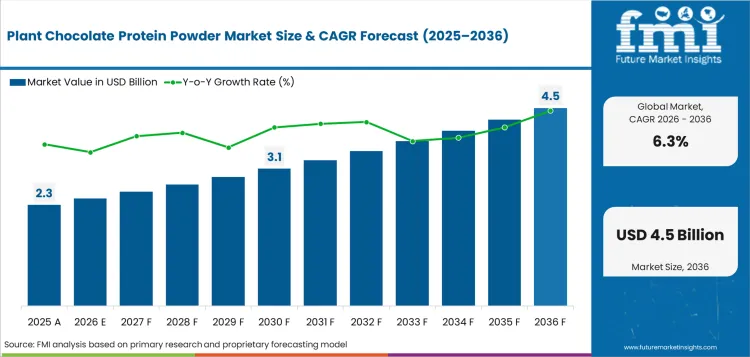
- USD 2.28 Bn
- Forecast (2036)
- USD 4.20 Bn
- CAGR (2026 to 2036)
- 6.3%
Plant Chocolate Protein Powder Market Size, Market Forecast and Outlook By FMI
Summary of the Plant Chocolate Protein Powder Market
- Demand and Growth Drivers
- Dairy-free protein demand supports chocolate plant protein powder as consumers avoid whey due to vegan, lactose-free or digestive preferences.
- Sports nutrition use supports demand because chocolate remains one of the easiest flavors for masking pea and rice protein notes.
- Multi-source blends improve amino acid coverage as brands combine pea, rice, seed and nut proteins.
- Testing transparency is becoming more important because plant-based and chocolate-flavored protein powders face higher heavy-metal scrutiny.
- Product and Segment View
- Pea protein blends are projected to account for 41.0% share in 2026 as pea protein gives brands a neutral base for chocolate flavoring.
- Organic claims are estimated to represent 36.0% share in 2026 as buyers connect plant-based nutrition with cleaner ingredient panels.
- Tubs are expected to hold 62.0% share in 2026 since repeat protein users buy larger pack sizes for daily shakes.
- Geography and Competitive Outlook
- India is projected to record 8.4% CAGR by 2036 as fitness retail and vegetarian protein demand expand together.
- China is expected to expand at 7.9% CAGR by 2036 as sports nutrition and weight-management use grow in urban consumers.
- Orgain, Vega and Garden of Life hold strong positions through chocolate plant protein ranges and broad retail access.
- OWYN, PlantFusion and Sprout Living compete through allergen control, clean-label claims and multi-source plant protein blends.
- Analyst Opinion
- Nandini Roy Choudhury, Principal Consultant at FMI, observes, plant chocolate protein powder is not a simple vegan version of whey. The real problem is taste, texture and trust in the same scoop. Pea and rice proteins can taste earthy or gritty. Chocolate helps mask that, but cocoa also brings more scrutiny on cadmium and lead testing.
- Plant Chocolate Protein Powder Market Value Analysis
- Daily shake use supports recurring revenue because protein powder is bought as a routine supplement.
- Chocolate flavor increases repeat purchase when it reduces plant protein bitterness and chalky mouthfeel.
- Organic and non-GMO claims support premium pricing but raise scrutiny around heavy-metal testing.
- E-commerce subscription programs improve retention as shoppers reorder tubs and sachets without store visits.
Key Takeaways, Market Size, and Forecast
- The plant chocolate protein powder market value is estimated at USD 2.18 billion in 2025.
- Global plant chocolate protein powder market is projected to reach USD 4.20 billion by 2036 as vegan sports nutrition and dairy-free daily protein use expand.
- The market is expected to expand at 6.3% CAGR from 2026 to 2036 across pea, soy, rice and multi-source plant protein blends.
- The market is projected to create an incremental opportunity of USD 1.92 billion between 2026 and 2036.
- Pea protein blends are expected to account for 41.0% share in 2026 due to broad use in dairy-free sports nutrition.
- Organic claims are estimated to represent 36.0% share in 2026 as clean-label positioning remains important for plant-based protein buyers.
- India at 8.4% CAGR and China at 7.9% CAGR are expected to record the fastest country-level pace by 2036.
Chocolate plant protein powder is expanding because it sits at the overlap of sports nutrition, dairy-free wellness and daily protein supplementation. Orgain’s chocolate plant-based protein powder range lists 20g to 30g protein per serving across different product lines, demonstrating how brands use chocolate to carry higher protein loads in vegan formats. Vega’s 2025 product refresh also points to plant-based protein products positioned around performance and taste improvement. Safety and testing remain central concerns. Clean Label Project’s 2024-25 protein powder category report found plant-based protein powders had higher heavy-metal concern than whey-based alternatives, and chocolate-flavored powders were a specific concern due to cocoa-linked cadmium exposure.
Plant Chocolate Protein Powder Market Definition
The sector covers plant-based protein powders sold in chocolate or chocolate-led flavors for shakes, smoothies, baking and sports nutrition use. Included products cover pea protein, soy protein, rice protein, seed protein and multi-source plant protein blends. The scope includes powders sold in tubs, pouches and single-serve sachets through retail, e-commerce, gyms and healthcare channels.
Whey protein, casein protein, collagen protein, ready-to-drink shakes and non-chocolate plant protein powders fall outside this study. Protein bars and meal-replacement drinks are excluded unless powdered plant chocolate protein is the main product.
Plant Chocolate Protein Powder Market Inclusions
The study includes chocolate plant protein powders made from pea, soy, rice, pumpkin seed, hemp, almond and multi-source plant protein blends. It covers organic, non-GMO, gluten-free and allergen-free claims across tubs, pouches, sachets, specialty retail, grocery retail, gyms, pharmacies and online channels.
Market scope covers commercially traded plant chocolate protein powders by protein source, including pea and soy; claim type, including organic and non-GMO; packaging format, including tubs and pouches; and distribution channel, including e-commerce and specialty retail.
Revenue scope covers 2026 to 2036. The key stakeholders include plant protein ingredient suppliers, sports nutrition brands, contract manufacturers, cocoa suppliers, flavor houses, supplement testing labs, retailers, fitness chains and regulatory bodies.
Plant Chocolate Protein Powder Market Exclusions
The study excludes whey protein powder, casein protein powder, collagen powder, ready-to-drink protein shakes, protein bars, meal-replacement beverages and non-chocolate plant protein powders.
Plant Chocolate Protein Powder Market Research Methodology
- Primary Research: FMI analysts reviewed sports nutrition brands, plant protein ingredient suppliers, contract manufacturers and supplement retailers. Interviews focused on flavor masking, protein claims, repeat purchase, testing requirements and pack-size economics.
- Desk Research: The desk review used product labels, company product pages, nutrition databases, testing reports and plant-based protein literature. The addressable pool was checked against chocolate-flavored vegan protein powders sold as powders.
- Market Sizing and Forecasting: The forecast combined average selling price, estimated unit volume, channel mix and country-level fitness nutrition demand. Segment shares were checked against product listings and ingredient patterns.
- Data Validation: Final values were checked against vegan sports nutrition trends, protein content claims, chocolate flavor prevalence and retail availability across key markets.
Why is the Plant Chocolate Protein Powder Market Growing?
- Chocolate masks earthy notes in pea, rice and seed proteins better than many fruit flavors.
- Dairy-free positioning supports demand among vegan, lactose-sensitive and flexitarian consumers.
- Sports nutrition buyers use plant protein when they want recovery support without whey or casein.
- Multi-source blends improve amino acid coverage and reduce dependence on a single plant protein.
- Heavy-metal testing is becoming a purchase factor because plant-based and chocolate products face higher contamination scrutiny.
Market Segmentation Analysis
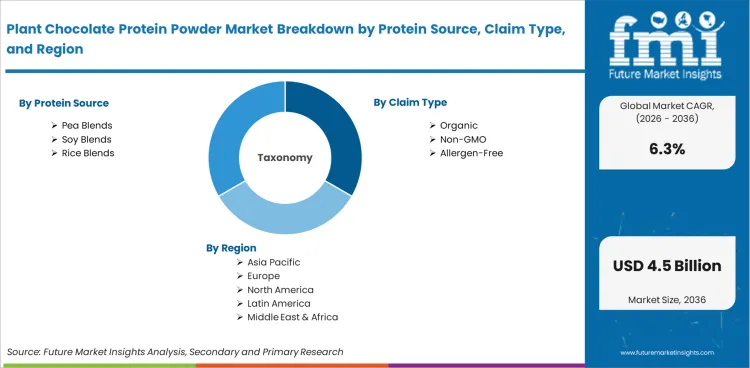
The plant chocolate protein powder market is segmented by protein source into pea blends, soy blends, rice blends and seed blends. By claim type, the market is divided into organic, non-GMO, allergen-free and high-protein claims.
Based on packaging format, the market is segmented into tubs, pouches and sachets. By distribution channel, the market is categorized into e-commerce, specialty retail, grocery retail and pharmacies.
Plant chocolate protein powder grows when brands solve taste and trust together. USDA FoodData Central provides nutrition data for foods and branded products, which gives shoppers and formulators a public reference point for protein and nutrient comparison. Orgain lists chocolate plant protein powders with 20g to 30g protein per serving across different product lines. This supports a clear buyer promise, but the claim must be backed by texture and safety. The most credible brands will compete on tested cocoa, full amino acid profile and lower grit.
Plant Chocolate Protein Powder Market Analysis by Protein Source
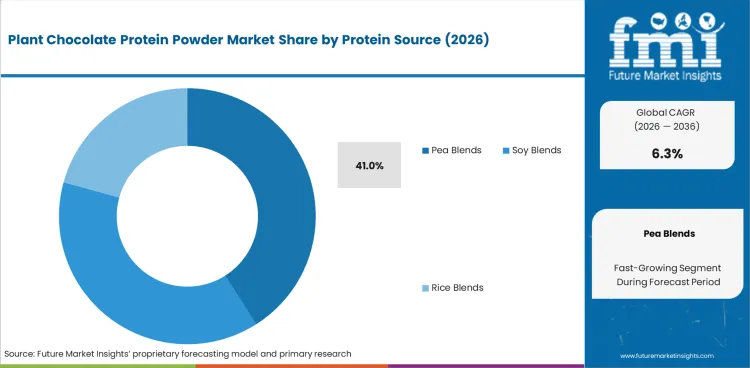
- Pea protein blends are expected to account for 41.0% share in 2026 as pea protein supports dairy-free sports nutrition and mixes well with cocoa systems.
- Soy protein remains relevant where brands want a complete plant protein profile and lower raw material cost.
Insights into Soy Protein Segment
- Soy protein demand is steadier in value-focused products because it has strong protein quality and established supply.
- A 2025 review in PMC notes that soy protein has a Protein Digestibility-Corrected Amino Acid Score of 1.00, comparable to high-quality animal protein.
Plant Chocolate Protein Powder Market Analysis by Claim Type
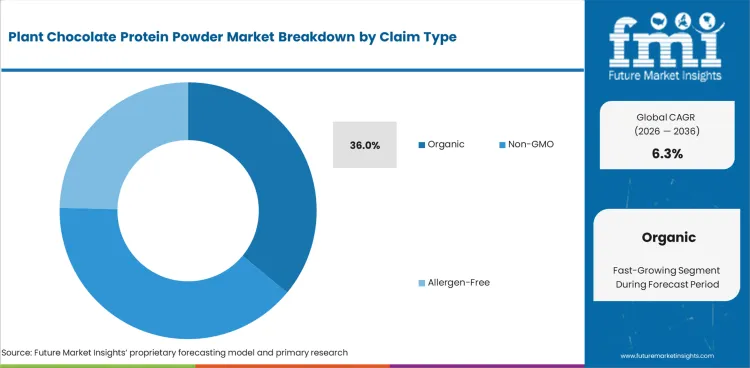
- Organic claims are estimated to represent 36.0% share in 2026 as buyers associate plant protein with clean-label nutrition.
- Non-GMO claims remain important for pea and soy-based products where consumers check ingredient origin and farming claims.
Insights into Non-GMO Segment
- Non-GMO claims support consumer trust in soy and pea formulas, especially when the product targets wellness buyers rather than only gym users.
- Orgain’s plant protein collection highlights USDA Organic, vegan and non-GMO positioning across several protein powder products.
Plant Chocolate Protein Powder Market Analysis by Packaging Format
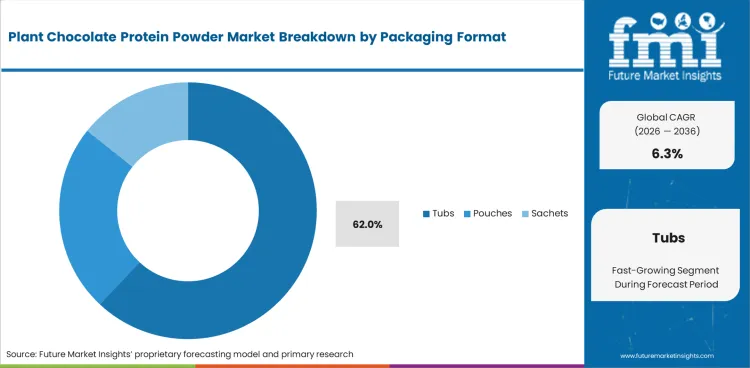
- Tubs are expected to hold 62.0% share in 2026 as repeat users prefer lower cost per serving for daily shakes.
- Pouches gain use where brands want lighter shipping, refill formats and smaller pantry footprint.
Insights into Pouches Segment
- Pouches are gaining relevance in e-commerce because lighter packs reduce shipping burden and give brands more flexible trial sizes.
- Sachets remain useful for gym sampling and travel, but they carry higher packaging cost per serving.
Plant Chocolate Protein Powder Market Analysis by Distribution Channel
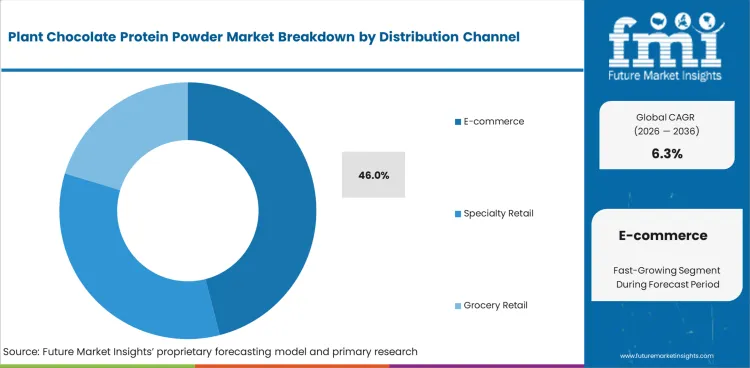
- E-commerce is projected to hold 46.0% share in 2026 as subscriptions and direct-to-consumer bundles support repeat protein purchases.
- Specialty retail remains relevant where shoppers want staff guidance on taste, allergens and protein quality.
Insights into Specialty Retail Segment
- Specialty retail supports higher conversion for first-time buyers because taste anxiety is higher in plant protein powder than in whey protein.
- Retailers can steer buyers toward third-party tested brands when shoppers ask about heavy metals and ingredient sourcing.
Plant Chocolate Protein Powder Market Drivers, Restraints, and Opportunities
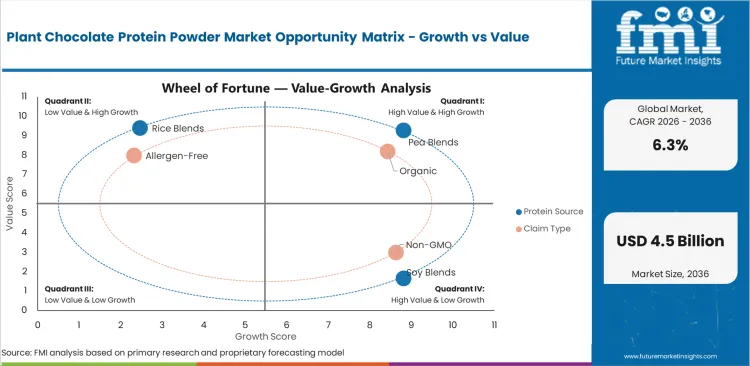
- Chocolate flavor masking drives repeat purchase as cocoa reduces bitterness in pea and rice protein blends.
- Dairy-free sports nutrition supports demand among vegan and lactose-sensitive buyers.
- Multi-source protein systems create an opportunity to improve amino acid coverage and texture.
- Heavy-metal concerns restrain trust because plant-based and chocolate formulas can carry higher contamination risk.
- Single-serve sampling creates opportunity for brands that need to overcome taste doubts before tub purchase.
Chocolate Flavor Masking
Chocolate is central to plant protein powder because taste is the first repeat-purchase test. Pea and rice proteins can create earthy notes, and cocoa helps cover those flavors without making the product feel like medicine. Orgain’s chocolate plant protein powder lists 30g protein in one format and 21g protein in another chocolate plant-based powder. Brands use chocolate across both performance and daily wellness use. The commercial impact is clear. Chocolate is not just a flavor choice. It is a formulation tool that makes higher protein loads easier to sell.
Heavy-Metal Testing Pressure
Heavy-Metal Testing Pressure. Clean Label Project’s 2024-25 protein powder category report tested 160 products from 70 brands and found that 47% exceeded California Proposition 65 thresholds for toxic metals. The report stated that plant-based products showed higher lead concern than whey-based products, and chocolate-flavored powders were a specific concern. These findings place a direct commercial burden on plant chocolate protein brands. Safety proof is now part of the value proposition. Brands with third-party testing and transparent batch documentation will be better placed than brands relying on broad clean-label language.
Daily Protein And Digestive Fit
Plant chocolate protein powder benefits from daily wellness use beyond bodybuilding. Many consumers use it in smoothies, oats or baking rather than only post-workout shakes. Orgain positions its Creamy Chocolate Fudge plant protein powder as a versatile ingredient with 21g protein and 7g prebiotic fiber per serving. That widens the use case from gym recovery to everyday nutrition. The challenge is digestive comfort. Fiber and plant protein blends can create bloating for some consumers. Brands that balance protein, fiber and texture will hold stronger repeat demand.
Regional Analysis
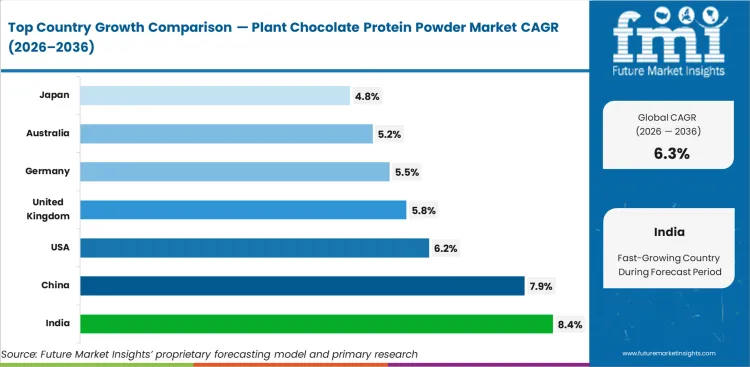
.webp "Top Country Growth Comparison Plant Chocolate Protein Powder Market Cagr (2026 2036)")
| Country | CAGR 2026 to 2036 |
|---|---|
| India | 8.4% |
| China | 7.9% |
| United States | 6.2% |
| United Kingdom | 5.8% |
| Germany | 5.5% |
| Australia | 5.2% |
| Japan | 4.8% |
Source: Future Market Insights analysis based on plant protein demand, sports nutrition retail and public product evidence in 2026.
Analysis of Plant Chocolate Protein Powder Market by Key Countries
- India is expected to grow at 8.4% CAGR by 2036, led by vegetarian protein demand and urban fitness retail expansion.
- China is projected to follow at 7.9% CAGR by 2036 as sports nutrition and weight-management demand expand in large cities.
- United States demand is expected to advance at 6.2% CAGR by 2036 as vegan protein brands compete on taste and testing.
- The United Kingdom is forecast at 5.8% CAGR by 2036 through vegan retail and gym nutrition channels.
- Germany is expected to expand at 5.5% CAGR by 2036 as organic and clean-label claims support premium plant protein use.
- Australia at 5.2% CAGR expands through fitness retail and dairy-free sports nutrition demand.
- Japan at 4.8% CAGR grows through smaller-format wellness nutrition and convenience-led protein use.
Country growth differs with diet patterns, fitness culture and retail access. India and China are forecast above the global pace because urban fitness demand and plant-based nutrition interest are still building. The United States remains a large value pool but faces stronger testing scrutiny and crowded brand competition. Germany, Australia and Japan grow steadily through premium wellness channels and controlled-format adoption.
Demand Outlook for Plant Chocolate Protein Powder Market in India
Demand for plant chocolate protein powder in India is projected to rise at 8.4% CAGR by 2036, supported by vegetarian protein demand and fitness retail growth. The country has a large vegetarian consumer base, but protein supplementation is still underpenetrated outside metros. Chocolate flavor matters because it fits familiar milkshake and malt-drink taste cues. Mumbai, Delhi NCR and Bengaluru are likely early demand centers. Growth will depend on price per serving and whether brands can prove digestive comfort in pea and soy blends.
- Mumbai supports premium demand through gyms, nutrition stores and e-commerce-led sports supplement buying.
- Delhi NCR adds demand through fitness chains and urban consumers seeking vegetarian protein supplementation.
- Bengaluru supports subscription-led protein powder purchases from younger professionals and gym users.
Demand Outlook for Plant Chocolate Protein Powder Market in China
The sector in China is expected to expand at 7.9% CAGR by 2036 as sports nutrition and weight-management use grow. Urban consumers are becoming more familiar with protein supplements through gyms and online wellness platforms. Chocolate plant protein fits shoppers who want dairy-free nutrition without a medicinal flavor. Shanghai, Beijing and Shenzhen are the clearest demand centers. Local success will depend on taste localization and trusted safety testing. Brands that explain protein quality and heavy-metal controls will earn stronger repeat purchase.
- Shanghai supports early plant protein demand through premium gyms and imported nutrition retail.
- Beijing adds demand through wellness consumers who compare plant protein with weight-management products.
- Shenzhen supports online-first brands that sell through social commerce and fitness communities.
Demand Outlook for Plant Chocolate Protein Powder Market in the United States
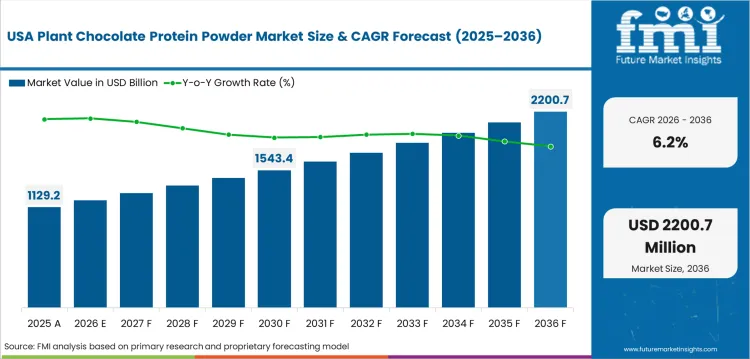
Sales of plant chocolate protein powder in the United States are projected to increase at 6.2% CAGR by 2036 as vegan protein and clean-label sports nutrition mature. The market is large but highly crowded. Clean Label Project’s 2024-25 report found higher heavy-metal concern in plant-based and chocolate-flavored protein powders. Testing and sourcing remain central to USA brand trust. Growth will come from better taste, smaller trial packs and clearer third-party certification. Brands that cannot answer safety questions will lose premium shelf space.
- California supports premium plant protein demand through vegan retail and wellness-focused specialty stores.
- New York adds demand through boutique fitness channels and online subscription purchases.
- Texas supports broader sports nutrition use through gyms and mass retail supplement aisles.
Demand Outlook for Plant Chocolate Protein Powder Market in the United Kingdom
The sector in the United Kingdom is expected to grow at 5.8% CAGR by 2036 as vegan retail and fitness nutrition overlap. UK shoppers are familiar with plant-based foods, but protein powder buying remains taste-led. Chocolate formats give brands a familiar entry point into vegan sports nutrition. London and Manchester are likely early growth centers due to gym density and specialty retail. Growth depends on whether products can deliver smooth texture without high sugar or artificial flavor load.
- London supports plant protein demand through vegan retail, boutique fitness and premium grocery channels.
- Manchester adds demand through sports nutrition stores and younger gym consumers.
- Bristol remains relevant due to plant-based food culture and specialty wellness retail.
Demand Outlook for Plant Chocolate Protein Powder Market in Germany
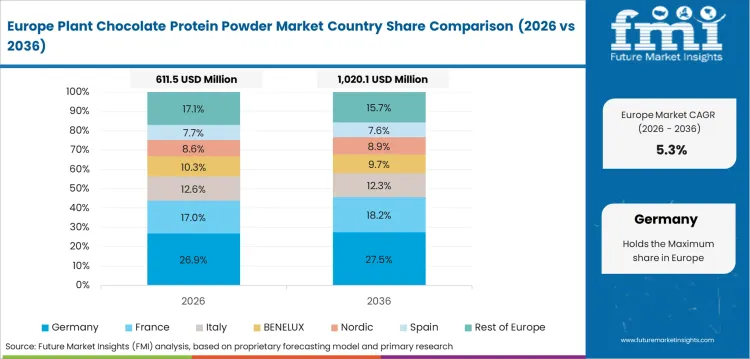
Plant chocolate protein powder demand in Germany is projected to record 5.5% CAGR by 2036 as organic and clean-label claims influence buying. German consumers are likely to check ingredient origin, certification and sugar content before repeat purchase. Chocolate plant protein fits premium wellness positioning but must avoid overly sweet profiles. Berlin and Munich are early demand centers. The strongest suppliers will connect plant protein quality with credible testing and simple ingredient panels.
- Berlin supports vegan protein use through plant-based food culture and independent wellness retail.
- Munich adds premium demand through fitness studios and higher-income health consumers.
- Hamburg supports e-commerce demand through urban shoppers seeking clean-label sports nutrition.
Demand Outlook for Plant Chocolate Protein Powder Market in Australia
The sector in Australia is expected to expand at 5.2% CAGR by 2036 due to fitness culture and dairy-free nutrition demand. Australian consumers are familiar with protein powder, but whey remains a strong competitor. Chocolate plant protein gains where shoppers want vegan claims and lighter digestion. Sydney and Melbourne are the main demand centers. Growth will depend on taste parity with whey and whether brands can manage cocoa and plant-protein sourcing concerns.
- Sydney supports demand through gyms, supplement retailers and urban wellness consumers.
- Melbourne adds demand through plant-based cafés and specialty nutrition channels.
- Brisbane supports seasonal smoothie and fitness usage due to warmer climate and active-lifestyle retail.
Demand Outlook for Plant Chocolate Protein Powder Market in Japan
The sector in Japan is expected to expand at 4.8% CAGR by 2036 through smaller-format wellness nutrition and fitness use. Japan has a more cautious supplement culture than the United States. Smaller packs and mild chocolate flavors are likely to perform better than large tubs with heavy sweetness. Tokyo and Osaka remain the main demand centers. Adoption will be slower because shoppers often prefer functional drinks and convenient single-serve nutrition.
- Tokyo supports demand through premium gyms and wellness retail in dense urban districts.
- Osaka adds demand through sports stores and e-commerce protein supplement channels.
- Convenience-led nutrition habits favor sachets and smaller pouches over large tubs.
Competitive Landscape
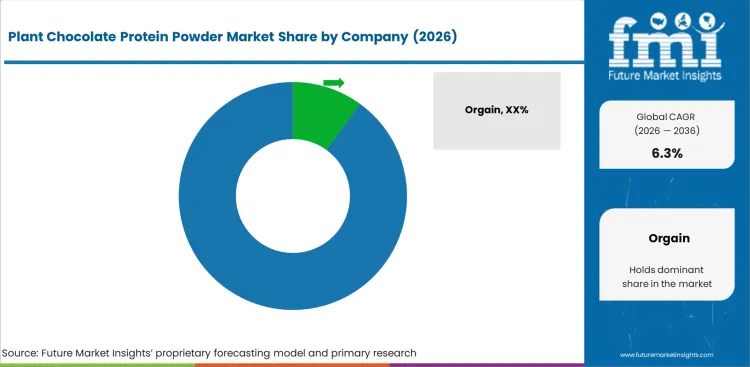
- The market is moderately fragmented with large wellness brands competing against specialist vegan protein brands.
- Orgain holds a strong position through organic chocolate plant protein products and broad retail access.
- Vega competes through plant-based performance positioning and refreshed product ranges.
- Garden of Life, OWYN and PlantFusion compete through vegan, allergen-aware and clean-label claims.
- Entry barriers include flavor masking, protein texture, safety testing and repeat-purchase economics.
Competition in plant chocolate protein powder is defined by taste credibility and label trust. Orgain lists several chocolate plant protein powders with 20g to 30g protein per serving, including organic and simple-ingredient lines. Vega’s 2025 refresh points to performance-led plant nutrition and taste improvement. These brands have an advantage because buyers recognize them across grocery, supplement retail and e-commerce. The challenge is that every claim invites scrutiny. Protein grams, sugar load and testing proof now shape premium positioning.
Specialist brands compete by narrowing the buyer promise. OWYN focuses on plant-based and allergen-conscious nutrition. PlantFusion competes through plant protein blends and digestibility positioning. Sprout Living uses multi-source plant proteins such as pea, pumpkin seed, sunflower seed and chia seed in chocolate formats. These firms can appeal to shoppers who read ingredient panels closely. Their challenge is scale. Retailers need repeat velocity, not just a clean label or a vegan claim.
The safety issue is now a competitive filter. Clean Label Project’s report placed plant-based and chocolate-flavored powders under heavier scrutiny for toxic metals. These findings do not mean every product is unsafe. It means buyers will ask for proof more often. Brands with third-party testing, supplier audits and clear cocoa sourcing can defend premium pricing. Brands that use broad wellness language without documentation risk losing trust as media coverage around lead and cadmium spreads.
Competitive Benchmarking: Plant Chocolate Protein Powder Market
| Company | Chocolate Flavor Masking | Protein Source Breadth | Testing and Claim Depth | Geographic Footprint |
|---|---|---|---|---|
| Orgain | High | High | Strong | North America and online |
| Vega | High | High | Strong | North America and select global markets |
| Garden of Life | Medium | High | Strong | North America and global retail |
| OWYN | Medium | Medium | Strong | United States |
| PlantFusion | Medium | High | Medium | United States and online |
| Sprout Living | Medium | High | Medium | United States and online |
| KOS | Medium | Medium | Medium | United States and online |
Source: Future Market Insights competitive analysis, 2026. Ratings reflect relative positioning based on chocolate flavor masking, protein source breadth and testing and claim depth.
Key Developments in Plant Chocolate Protein Powder Market
- In December 2024, Orgain introduced Orgain Perfect Blend as a plant-based protein powder made with 6 to 7 USDA Certified Organic ingredients. The launch reinforced simple-ingredient positioning.
- In 2025, Vega highlighted its refreshed plant-based protein range with performance products positioned around protein, BCAAs and recovery. The refresh supports performance-led vegan protein demand.
- In 2024, Clean Label Project released its 2024-25 protein powder category report covering 160 products from 70 brands. The report raised scrutiny around plant-based and chocolate-flavored powders.
- In 2024, Orgain’s healthcare product material listed multiple creamy chocolate plant-based protein powders across powders and meal nutrition products. This confirms breadth in chocolate plant protein formats.
- In 2025, academic review work on dietary plant-based protein supplements noted soy protein’s PDCAAS of 1.00. This supports protein-quality positioning for selected plant sources.
Key Companies in the Plant Chocolate Protein Powder Market
- Orgain
- Vega
- Garden of Life
- OWYN
- PlantFusion
- Sprout Living
- KOS
Global and Retail Leaders
- Orgain
- Vega
- Garden of Life
Specialist Vegan Protein Brands
- OWYN
- PlantFusion
- Sprout Living
- KOS
Report Scope and Coverage
| Parameter | Details |
|---|---|
| Quantitative Units | USD 2.28 billion in 2026 to USD 4.20 billion in 2036, at a CAGR of 6.3% |
| Market Definition | Plant-based protein powders sold in chocolate or chocolate-led flavors for shakes, smoothies, baking and sports nutrition use. |
| Regions Covered | North America, Latin America, Europe, East Asia, South Asia and Pacific, Middle East and Africa |
| Countries Covered | India, China, United States, United Kingdom, Germany, Australia, Japan and 30+ countries |
| Key Companies Profiled | Orgain, Vega, Garden of Life, OWYN, PlantFusion, Sprout Living and KOS |
| Forecast Period | 2026 to 2036 |
| Approach | Hybrid bottom-up and top-down methodology based on average selling price, unit volume, protein-source mix and country-level sports nutrition demand |
Plant Chocolate Protein Powder Market by Segments
Plant Chocolate Protein Powder Market Segmented by Protein Source:
- Pea Blends
- Soy Blends
- Rice Blends
- Seed Blends
- Multi-Source Blends
Plant Chocolate Protein Powder Market Segmented by Claim Type:
- Organic
- Non-GMO
- Allergen-Free
- High-Protein
Plant Chocolate Protein Powder Market Segmented by Packaging Format:
- Tubs
- Pouches
- Sachets
Plant Chocolate Protein Powder Market Segmented by Distribution Channel:
- E-commerce
- Specialty Retail
- Grocery Retail
- Pharmacies
Plant Chocolate Protein Powder Market by Region:
- North America
- United States
- Canada
- Mexico
- Latin America
- Brazil
- Chile
- Rest of Latin America
- Western Europe
- Germany
- UK
- France
- Italy
- Spain
- BENELUX
- Nordic
- Rest of Western Europe
- Eastern Europe
- Russia
- Poland
- Hungary
- Balkan and Baltic
- Rest of Eastern Europe
- East Asia
- China
- Japan
- South Korea
- South Asia and Pacific
- India
- ASEAN
- Australia and New Zealand
- Rest of South Asia and Pacific
- Middle East and Africa
- Kingdom of Saudi Arabia
- Other GCC Countries
- Turkiye
- South Africa
- Other African Union
- Rest of Middle East and Africa
Research Sources and Bibliography
- Clean Label Project. 2025. 2024-25 Protein Powder Category Report.
- Orgain. 2024. Orgain Perfect Blend product announcement.
- Orgain. 2024. Renal-Friendly Products 2024.
- Orgain. 2026. 30g Chocolate Plant Based Protein Powder product information.
- Orgain. 2026. Organic Plant-Based Protein Powder product information.
- Vega. 2025. Perform Better in 2025 with the All New Vega.
- USDA FoodData Central. FoodData Central.
- Sharma, K. et al. 2025. Dietary Plant-Based Protein Supplements: Sources, Composition and Nutritional Considerations.
- Specialty Coffee Association. 2024. 2024 National Coffee Data Trends Specialty Coffee Breakout Report now available.
This Report Answers
- How large is the plant chocolate protein powder market in 2026 and how much incremental value is expected by 2036?
- What factors are shaping demand for pea, soy, rice and multi-source chocolate plant protein blends?
- Which claim types are expected to lead adoption across organic, non-GMO, allergen-free and high-protein products?
- How are taste masking and heavy-metal testing changing the competitive structure of the category?
- Which countries are forecast to grow faster than the global average and why?
- How do cocoa sourcing, protein quality and digestive comfort affect repeat purchase?
- Which companies are best positioned across chocolate flavor design, protein-source breadth and testing depth?
Frequently Asked Questions
What is the current value of the plant chocolate protein powder market?
The plant chocolate protein powder market is estimated at USD 2.28 billion in 2026.
What is the projected value of the plant chocolate protein powder market by 2036?
The market is forecast to reach USD 4.20 billion by 2036.
What CAGR is expected for the plant chocolate protein powder market?
The market is projected to expand at 6.3% CAGR from 2026 to 2036.
Which protein source is expected to lead the plant chocolate protein powder market?
Pea protein blends are expected to lead with 41.0% share in 2026.
Which claim type is expected to lead the market?
Organic claims are projected to lead with 36.0% share in 2026.
Which country is expected to grow fastest?
India is projected to grow fastest at 8.4% CAGR by 2036.
What is the main competitive shift in this market?
The main competitive shift is from generic vegan protein claims toward taste, digestibility and third-party testing proof.
What is plant chocolate protein powder used for?
Plant chocolate protein powder is used for shakes, smoothies, baking, post-workout recovery and daily protein supplementation without whey or casein.
Is plant chocolate protein powder better than whey?
Plant chocolate protein powder is better for vegan and dairy-free users. Whey often has smoother texture and stronger amino acid density per serving.
What should buyers check before buying plant chocolate protein powder?
Buyers should check protein grams, sugar content, protein source, allergen claims, third-party testing and whether the chocolate flavor uses cocoa with safety testing.
What are the disadvantages of plant chocolate protein powder?
The main disadvantages are gritty texture, earthy taste, weaker amino acid profile in some blends and possible heavy-metal concern from plant inputs or cocoa
Preview the report firsthand - request a free sample
Get SampleGet the brochure for pricing and purchase details.
Get PDFTable of Content
- Executive Summary
- Global Market Outlook
- Demand-side Trends
- Supply-side Trends
- Technology Roadmap Analysis
- Analysis and Recommendations
- Market Overview
- Market Coverage / Taxonomy
- Market Definition / Scope / Limitations
- Research Methodology
- Chapter Orientation
- Analytical Lens and Working Hypotheses
- Market Structure, Signals, and Trend Drivers
- Benchmarking and Cross-market Comparability
- Market Sizing, Forecasting, and Opportunity Mapping
- Research Design and Evidence Framework
- Desk Research Programme (Secondary Evidence)
- Company Annual and Sustainability Reports
- Peer-reviewed Journals and Academic Literature
- Corporate Websites, Product Literature, and Technical Notes
- Earnings Decks and Investor Briefings
- Statutory Filings and Regulatory Disclosures
- Technical White Papers and Standards Notes
- Trade Journals, Industry Magazines, and Analyst Briefs
- Conference Proceedings, Webinars, and Seminar Materials
- Government Statistics Portals and Public Data Releases
- Press Releases and Reputable Media Coverage
- Specialist Newsletters and Curated Briefings
- Sector Databases and Reference Repositories
- FMI Internal Proprietary Databases and Historical Market Datasets
- Subscription Datasets and Paid Sources
- Social Channels, Communities, and Digital Listening Inputs
- Additional Desk Sources
- Expert Input and Fieldwork (Primary Evidence)
- Primary Modes
- Qualitative Interviews and Expert Elicitation
- Quantitative Surveys and Structured Data Capture
- Blended Approach
- Why Primary Evidence is Used
- Field Techniques
- Interviews
- Surveys
- Focus Groups
- Observational and In-context Research
- Social and Community Interactions
- Stakeholder Universe Engaged
- C-suite Leaders
- Board Members
- Presidents and Vice Presidents
- R&D and Innovation Heads
- Technical Specialists
- Domain Subject-matter Experts
- Scientists
- Physicians and Other Healthcare Professionals
- Governance, Ethics, and Data Stewardship
- Research Ethics
- Data Integrity and Handling
- Primary Modes
- Tooling, Models, and Reference Databases
- Desk Research Programme (Secondary Evidence)
- Data Engineering and Model Build
- Data Acquisition and Ingestion
- Cleaning, Normalisation, and Verification
- Synthesis, Triangulation, and Analysis
- Quality Assurance and Audit Trail
- Market Background
- Market Dynamics
- Drivers
- Restraints
- Opportunity
- Trends
- Scenario Forecast
- Demand in Optimistic Scenario
- Demand in Likely Scenario
- Demand in Conservative Scenario
- Opportunity Map Analysis
- Product Life Cycle Analysis
- Supply Chain Analysis
- Investment Feasibility Matrix
- Value Chain Analysis
- PESTLE and Porter’s Analysis
- Regulatory Landscape
- Regional Parent Market Outlook
- Production and Consumption Statistics
- Import and Export Statistics
- Market Dynamics
- Global Market Analysis 2021 to 2025 and Forecast, 2026 to 2036
- Historical Market Size Value (USD Million) Analysis, 2021 to 2025
- Current and Future Market Size Value (USD Million) Projections, 2026 to 2036
- Y-o-Y Growth Trend Analysis
- Absolute $ Opportunity Analysis
- Global Market Pricing Analysis 2021 to 2025 and Forecast 2026 to 2036
- Global Market Analysis 2021 to 2025 and Forecast 2026 to 2036, By Protein Source
- Introduction / Key Findings
- Historical Market Size Value (USD Million) Analysis By Protein Source , 2021 to 2025
- Current and Future Market Size Value (USD Million) Analysis and Forecast By Protein Source , 2026 to 2036
- Pea Blends
- Soy Blends
- Rice Blends
- Pea Blends
- Y-o-Y Growth Trend Analysis By Protein Source , 2021 to 2025
- Absolute $ Opportunity Analysis By Protein Source , 2026 to 2036
- Global Market Analysis 2021 to 2025 and Forecast 2026 to 2036, By Claim Type
- Introduction / Key Findings
- Historical Market Size Value (USD Million) Analysis By Claim Type, 2021 to 2025
- Current and Future Market Size Value (USD Million) Analysis and Forecast By Claim Type, 2026 to 2036
- Organic
- Non-GMO
- Allergen-Free
- Organic
- Y-o-Y Growth Trend Analysis By Claim Type, 2021 to 2025
- Absolute $ Opportunity Analysis By Claim Type, 2026 to 2036
- Global Market Analysis 2021 to 2025 and Forecast 2026 to 2036, By Packaging Format
- Introduction / Key Findings
- Historical Market Size Value (USD Million) Analysis By Packaging Format, 2021 to 2025
- Current and Future Market Size Value (USD Million) Analysis and Forecast By Packaging Format, 2026 to 2036
- Tubs
- Pouches
- Sachets
- Tubs
- Y-o-Y Growth Trend Analysis By Packaging Format, 2021 to 2025
- Absolute $ Opportunity Analysis By Packaging Format, 2026 to 2036
- Global Market Analysis 2021 to 2025 and Forecast 2026 to 2036, By Distribution Channel
- Introduction / Key Findings
- Historical Market Size Value (USD Million) Analysis By Distribution Channel, 2021 to 2025
- Current and Future Market Size Value (USD Million) Analysis and Forecast By Distribution Channel, 2026 to 2036
- E-commerce
- Specialty Retail
- Grocery Retail
- E-commerce
- Y-o-Y Growth Trend Analysis By Distribution Channel, 2021 to 2025
- Absolute $ Opportunity Analysis By Distribution Channel, 2026 to 2036
- Global Market Analysis 2021 to 2025 and Forecast 2026 to 2036, By Region
- Introduction
- Historical Market Size Value (USD Million) Analysis By Region, 2021 to 2025
- Current Market Size Value (USD Million) Analysis and Forecast By Region, 2026 to 2036
- North America
- Latin America
- Western Europe
- Eastern Europe
- East Asia
- South Asia and Pacific
- Middle East & Africa
- Market Attractiveness Analysis By Region
- North America Market Analysis 2021 to 2025 and Forecast 2026 to 2036, By Country
- Historical Market Size Value (USD Million) Trend Analysis By Market Taxonomy, 2021 to 2025
- Market Size Value (USD Million) Forecast By Market Taxonomy, 2026 to 2036
- By Country
- USA
- Canada
- Mexico
- By Protein Source
- By Claim Type
- By Packaging Format
- By Distribution Channel
- By Country
- Market Attractiveness Analysis
- By Country
- By Protein Source
- By Claim Type
- By Packaging Format
- By Distribution Channel
- Key Takeaways
- Latin America Market Analysis 2021 to 2025 and Forecast 2026 to 2036, By Country
- Historical Market Size Value (USD Million) Trend Analysis By Market Taxonomy, 2021 to 2025
- Market Size Value (USD Million) Forecast By Market Taxonomy, 2026 to 2036
- By Country
- Brazil
- Chile
- Rest of Latin America
- By Protein Source
- By Claim Type
- By Packaging Format
- By Distribution Channel
- By Country
- Market Attractiveness Analysis
- By Country
- By Protein Source
- By Claim Type
- By Packaging Format
- By Distribution Channel
- Key Takeaways
- Western Europe Market Analysis 2021 to 2025 and Forecast 2026 to 2036, By Country
- Historical Market Size Value (USD Million) Trend Analysis By Market Taxonomy, 2021 to 2025
- Market Size Value (USD Million) Forecast By Market Taxonomy, 2026 to 2036
- By Country
- Germany
- UK
- Italy
- Spain
- France
- Nordic
- BENELUX
- Rest of Western Europe
- By Protein Source
- By Claim Type
- By Packaging Format
- By Distribution Channel
- By Country
- Market Attractiveness Analysis
- By Country
- By Protein Source
- By Claim Type
- By Packaging Format
- By Distribution Channel
- Key Takeaways
- Eastern Europe Market Analysis 2021 to 2025 and Forecast 2026 to 2036, By Country
- Historical Market Size Value (USD Million) Trend Analysis By Market Taxonomy, 2021 to 2025
- Market Size Value (USD Million) Forecast By Market Taxonomy, 2026 to 2036
- By Country
- Russia
- Poland
- Hungary
- Balkan & Baltic
- Rest of Eastern Europe
- By Protein Source
- By Claim Type
- By Packaging Format
- By Distribution Channel
- By Country
- Market Attractiveness Analysis
- By Country
- By Protein Source
- By Claim Type
- By Packaging Format
- By Distribution Channel
- Key Takeaways
- East Asia Market Analysis 2021 to 2025 and Forecast 2026 to 2036, By Country
- Historical Market Size Value (USD Million) Trend Analysis By Market Taxonomy, 2021 to 2025
- Market Size Value (USD Million) Forecast By Market Taxonomy, 2026 to 2036
- By Country
- China
- Japan
- South Korea
- By Protein Source
- By Claim Type
- By Packaging Format
- By Distribution Channel
- By Country
- Market Attractiveness Analysis
- By Country
- By Protein Source
- By Claim Type
- By Packaging Format
- By Distribution Channel
- Key Takeaways
- South Asia and Pacific Market Analysis 2021 to 2025 and Forecast 2026 to 2036, By Country
- Historical Market Size Value (USD Million) Trend Analysis By Market Taxonomy, 2021 to 2025
- Market Size Value (USD Million) Forecast By Market Taxonomy, 2026 to 2036
- By Country
- India
- ASEAN
- Australia & New Zealand
- Rest of South Asia and Pacific
- By Protein Source
- By Claim Type
- By Packaging Format
- By Distribution Channel
- By Country
- Market Attractiveness Analysis
- By Country
- By Protein Source
- By Claim Type
- By Packaging Format
- By Distribution Channel
- Key Takeaways
- Middle East & Africa Market Analysis 2021 to 2025 and Forecast 2026 to 2036, By Country
- Historical Market Size Value (USD Million) Trend Analysis By Market Taxonomy, 2021 to 2025
- Market Size Value (USD Million) Forecast By Market Taxonomy, 2026 to 2036
- By Country
- Kingdom of Saudi Arabia
- Other GCC Countries
- Turkiye
- South Africa
- Other African Union
- Rest of Middle East & Africa
- By Protein Source
- By Claim Type
- By Packaging Format
- By Distribution Channel
- By Country
- Market Attractiveness Analysis
- By Country
- By Protein Source
- By Claim Type
- By Packaging Format
- By Distribution Channel
- Key Takeaways
- Key Countries Market Analysis
- USA
- Pricing Analysis
- Market Share Analysis, 2025
- By Protein Source
- By Claim Type
- By Packaging Format
- By Distribution Channel
- Canada
- Pricing Analysis
- Market Share Analysis, 2025
- By Protein Source
- By Claim Type
- By Packaging Format
- By Distribution Channel
- Mexico
- Pricing Analysis
- Market Share Analysis, 2025
- By Protein Source
- By Claim Type
- By Packaging Format
- By Distribution Channel
- Brazil
- Pricing Analysis
- Market Share Analysis, 2025
- By Protein Source
- By Claim Type
- By Packaging Format
- By Distribution Channel
- Chile
- Pricing Analysis
- Market Share Analysis, 2025
- By Protein Source
- By Claim Type
- By Packaging Format
- By Distribution Channel
- Germany
- Pricing Analysis
- Market Share Analysis, 2025
- By Protein Source
- By Claim Type
- By Packaging Format
- By Distribution Channel
- UK
- Pricing Analysis
- Market Share Analysis, 2025
- By Protein Source
- By Claim Type
- By Packaging Format
- By Distribution Channel
- Italy
- Pricing Analysis
- Market Share Analysis, 2025
- By Protein Source
- By Claim Type
- By Packaging Format
- By Distribution Channel
- Spain
- Pricing Analysis
- Market Share Analysis, 2025
- By Protein Source
- By Claim Type
- By Packaging Format
- By Distribution Channel
- France
- Pricing Analysis
- Market Share Analysis, 2025
- By Protein Source
- By Claim Type
- By Packaging Format
- By Distribution Channel
- India
- Pricing Analysis
- Market Share Analysis, 2025
- By Protein Source
- By Claim Type
- By Packaging Format
- By Distribution Channel
- ASEAN
- Pricing Analysis
- Market Share Analysis, 2025
- By Protein Source
- By Claim Type
- By Packaging Format
- By Distribution Channel
- Australia & New Zealand
- Pricing Analysis
- Market Share Analysis, 2025
- By Protein Source
- By Claim Type
- By Packaging Format
- By Distribution Channel
- China
- Pricing Analysis
- Market Share Analysis, 2025
- By Protein Source
- By Claim Type
- By Packaging Format
- By Distribution Channel
- Japan
- Pricing Analysis
- Market Share Analysis, 2025
- By Protein Source
- By Claim Type
- By Packaging Format
- By Distribution Channel
- South Korea
- Pricing Analysis
- Market Share Analysis, 2025
- By Protein Source
- By Claim Type
- By Packaging Format
- By Distribution Channel
- Russia
- Pricing Analysis
- Market Share Analysis, 2025
- By Protein Source
- By Claim Type
- By Packaging Format
- By Distribution Channel
- Poland
- Pricing Analysis
- Market Share Analysis, 2025
- By Protein Source
- By Claim Type
- By Packaging Format
- By Distribution Channel
- Hungary
- Pricing Analysis
- Market Share Analysis, 2025
- By Protein Source
- By Claim Type
- By Packaging Format
- By Distribution Channel
- Kingdom of Saudi Arabia
- Pricing Analysis
- Market Share Analysis, 2025
- By Protein Source
- By Claim Type
- By Packaging Format
- By Distribution Channel
- Turkiye
- Pricing Analysis
- Market Share Analysis, 2025
- By Protein Source
- By Claim Type
- By Packaging Format
- By Distribution Channel
- South Africa
- Pricing Analysis
- Market Share Analysis, 2025
- By Protein Source
- By Claim Type
- By Packaging Format
- By Distribution Channel
- USA
- Market Structure Analysis
- Competition Dashboard
- Competition Benchmarking
- Market Share Analysis of Top Players
- By Regional
- By Protein Source
- By Claim Type
- By Packaging Format
- By Distribution Channel
- Competition Analysis
- Competition Deep Dive
- Orgain
- Overview
- Product Portfolio
- Profitability by Market Segments (Product/Age /Sales Channel/Region)
- Sales Footprint
- Strategy Overview
- Marketing Strategy
- Product Strategy
- Channel Strategy
- Vega
- Garden of Life
- OWYN
- PlantFusion
- Sprout Living
- KOS
- Orgain
- Competition Deep Dive
- Assumptions & Acronyms Used


