

- Industry Size (2026)
- USD 112.0 Mn
- Forecast (2036)
- USD 643.2 Mn
- CAGR (2026 to 2036)
- 19.10%
Self-Amplifying RNA Cancer Immunotherapy Platforms Market Size, Market Forecast and Outlook By FMI
The self-amplifying RNA cancer immunotherapy platforms market was valued at USD 94.0 Million in 2025. The saRNA cancer immunotherapy platform market is poised to surpass USD 112.0 million in 2026 at a CAGR of 19.10% during the forecast period. Continued investment propels the valuation to USD 643.2 million through 2036 as the profound dose-sparing capability of self-amplifying RNA cancer therapeutics solves the systemic toxicity bottlenecks that have historically stalled conventional RNA-based solid tumour programs.
Oncology pipeline directors face an imperative to transition from standard linear constructs to a self-amplifying mRNA cancer platform model. This transition forces developers to abandon established delivery vectors in favour of novel platforms capable of protecting much larger transcripts. Organizations delaying this pivot risk stranding their mrna cancer vaccine biologic lines in phase I purgatory, where high-dose toxicity frequently outweighs therapeutic benefit. The actual bottleneck shaping the self-replicating RNA cancer immunotherapy market is not the immunogenicity of the replicon sequence itself, but the physical challenge of purifying 10kb-plus RNA transcripts at clinical grade without shearing the delicate molecular backbone.
Summary of Self-Amplifying RNA Cancer Immunotherapy Platforms Market
- Self-Amplifying RNA Cancer Immunotherapy Platforms Market Definition:
- The market centers on the engineering and delivery of self-replicating RNA therapeutics for oncology. By integrating viral polymerase machinery, these constructs amplify their payload inside target cells, differentiating themselves from conventional linear mRNA by delivering sustained antigen expression at a fraction of the systemic dose.
- Demand Drivers in the Market:
- Severe dose-limiting toxicities associated with conventional linear mRNA compel translational directors to adopt a replicon RNA cancer vaccine platform for challenging solid tumor indications.
- Clinical durability requirements force biotechnology innovators to seek a saRNA tumor vaccine platform that maintains T-cell activation without perpetual reliance on checkpoint blockade.
- Complex personalized manufacturing economics push pipeline managers navigating the broader cancer immunotherapy RNA platform market toward saRNA to capture the profound dose-sparing efficiencies necessary for viability.
- Key Segments Analyzed in the FMI Report:
- Personalized neoantigen saRNA platforms: The individualized saRNA neoantigen vaccine platform is estimated to capture 42.6% share in 2026, as off-the-shelf shared antigens repeatedly fail to overcome the highly immunosuppressive nature of individual tumor microenvironments.
- Lipid nanoparticle (LNP)-based delivery: Self-amplifying RNA lipid nanoparticle cancer delivery is expected to record 51.8% share in 2026, remaining the most scalable non-viral method to physically protect massive replicon transcripts from degradation.
- Solid tumors: The saRNA solid tumor vaccine platform is anticipated to hold 63.1% share in 2026, driven by the acute clinical need to generate profound T-cell infiltration within dense, hostile tumor architectures.
- Standalone therapeutic cancer vaccines: Standalone therapeutic cancer vaccines is poised to garner 38.9% share in 2026, representing the primary format for the initial wave of IND-cleared evaluations.
- Clinical-stage biotech innovators: Clinical-stage biotech innovators is projected to dominate with 58.2% share in 2026, as specialized organizations control the foundational viral replicon intellectual property.
- Japan: 21.4% compound growth, enabled by early regulatory alignment and concerted domestic initiatives targeting solid tumour manufacturing scale-up.
- Analyst Opinion at FMI:
- Sabyasachi Ghosh, Principal Analyst, Healthcare, at FMI, opines, "Standard investment models evaluate this market by measuring the elegance and predicted immunogenicity of the replicon sequence itself. This metric holds true only until the construct reaches downstream processing. At the clinical scale, the true barrier becomes physically purifying these massive 10kb-plus RNA transcripts without shearing them. Developers who prioritize their downstream purification architecture over marginal antigen optimization are capturing the actual commercial advantage."
- Strategic Implications / Executive Takeaways:
- Translational oncology directors must secure access to large-format LNP delivery systems to prevent transcript degradation prior to early-phase clinical evaluations.
- Biopharmaceutical pipeline managers should partner aggressively with clinical-stage biotech innovators to bypass the extensive patent thickets surrounding foundational alphavirus structures.
- Leaders managing a saRNA cancer vaccine CDMO face an immediate requirement to upgrade downstream purification trains to handle the extreme physical size and fragility of saRNA molecules, demanding specialized self-amplifying RNA GMP manufacturing services.
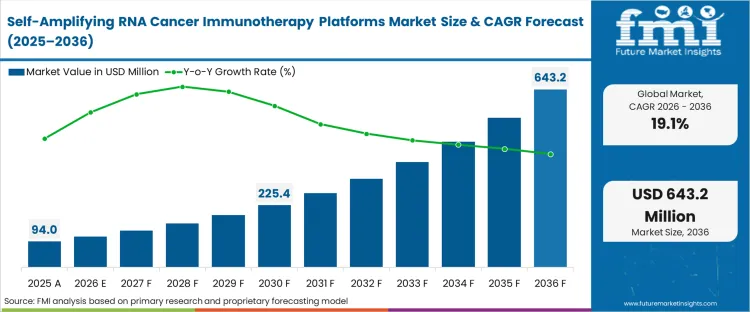
Before the saRNA oncology platform market achieves self-reinforcing scale, developers must demonstrate that saRNA constructs can trigger durable T-cell memory responses without the continuous co-administration of checkpoint inhibitors. Clinical-stage biotechs pass this gate in the self-amplifying RNA cancer vaccine platform market when they successfully uncouple lipid delivery toxicity from the replicon payload itself. Once this separation is achieved, the rapid iteration of patient-specific neoantigen targets becomes commercially viable for a much wider tier of mid-sized biopharmaceutical developers mapping how big could the saRNA oncology platform market be by 2036.
The Japan saRNA cancer immunotherapy market advances at 21.4%, followed by the China at 20.8%, the United States market advances at 20.2%, Germany at 19.0%, the United Kingdom market advances at 18.7%, the Indian market grows at 18.3%, and South Korea at 17.9%. Japan's trajectory is set to record the fastest pace among saRNA cancer vaccine companies, driven by a first-of-its-kind commercial saRNA regulatory pathway and domestic manufacturing initiatives specifically targeting solid tumours. The divergence across these geographies stems from the varying capacity of localized biotech ecosystems to handle complex, large-format nucleic acid manufacturing compared to regions resting on older, conventional oncology installed bases.
Self-Amplifying RNA Cancer Immunotherapy Platforms Market Key Takeaways
| Metric | Details |
|---|---|
| Industry Size (2026) | USD 112.0 Million |
| Industry Value (2036) | USD 643.2 Million |
| CAGR (2026-2036) | 19.10% |
Source: Future Market Insights (FMI) analysis, based on proprietary forecasting model and primary research
Self-Amplifying RNA Cancer Immunotherapy Platforms Market Definition
If asking what is a self-amplifying RNA cancer immunotherapy platform, the market encompasses the biological constructs, engineering technologies, and specialised delivery systems used to deploy viral-derived, self-replicating RNA in oncology. The functional boundary defining this market is the inclusion of genes encoding an RNA-dependent RNA polymerase, enabling the therapeutic payload to amplify intracellularly. This mechanism distinguishes the market from standard linear mRNA platforms, allowing for profound dose-sparing and extended antigen expression within the tumor microenvironment.
Self-Amplifying RNA Cancer Immunotherapy Platforms Market Inclusions
Inclusions cover personalized and off-the-shelf neoantigen cancer vaccines, cytokine-expressing replicon vectors forming a true saRNA dose-sparing oncology platform, and intratumoral saRNA cancer immunotherapy amplifiers utilized alongside cellular therapies. The scope explicitly captures the large-format lipid nanoparticles and engineered viral replicon particles designed to transport saRNA. Technologies supporting the formulation and stabilization of these highly complex, 9-to-12 kilobase structures are fully integrated within the market boundary.
Self-Amplifying RNA Cancer Immunotherapy Platforms Market Exclusions
Explicitly excluded are conventional, non-amplifying mRNA therapies evaluated in a saRNA vs mRNA cancer vaccine comparison, unmodified plasmid DNA vectors, and standard prophylactic viral vaccines for infectious diseases. These constructs lack the autonomous self-replication machinery required for inclusion. Furthermore, general-purpose liposomes and delivery vectors not optimized for massive transcript protection are excluded, as they physically cannot deliver the large saRNA payloads without triggering premature degradation.
Self-Amplifying RNA Cancer Immunotherapy Platforms Market Research Methodology
- Primary Research: Chief Scientific Officers and Translational Oncology Directors leading a self-amplifying RNA oncology pipeline were interviewed to determine the actual maturity of downstream purification capabilities.
- Desk Research: IND clearance announcements, clinical trial registries targeting solid tumors, and proprietary delivery technology licensing agreements provided the baseline.
- Market-Sizing and Forecasting: The baseline anchors directly to the verifiable count of clinical-stage oncology saRNA platforms and the declared manufacturing capacity of leading developers.
- Data Validation and Update Cycle: Forecasts were triangulated against peer-reviewed technical publications confirming dose-sparing ratios and delivery platform viability across diverse tumor targets.
Segmental Analysis
Self-Amplifying RNA Cancer Immunotherapy Platforms Market Analysis by Platform type
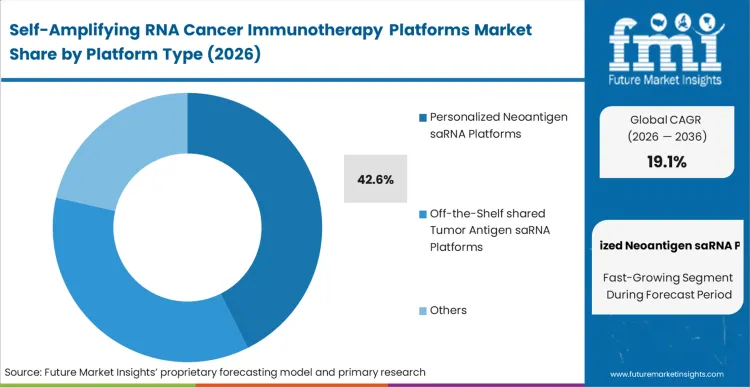
When evaluating a personalized saRNA vaccine vs off-the-shelf tumor antigen vaccine, conventional shared antigen approaches consistently fail to generate sufficient T-cell infiltration against highly heterogeneous malignancies, forcing the transition toward personalized replicon architectures.
According to FMI's estimates, Personalized neoantigen saRNA platforms capture 42.6% share by aligning the extreme dose-sparing capability of alphavirus replicon cancer vaccine technology with patient-specific MHC-binding precision. Oncology pipeline managers utilize this platform to bypass the systemic toxicity that typically halts high-dose linear mRNA trials in phase II. By leveraging next generation immunotherapies, developers physically reduce the required payload size while sustaining antigen expression for weeks rather than days. Companies operating a saRNA cytokine cancer immunotherapy program that attempt to apply linear mRNA economics to personalized solid tumor vaccines face unsustainable per-patient manufacturing costs.
- Initial target identification: Clinical teams sequence patient tumors to identify specific neoantigens that bypass central tolerance. Developers capture early engagement by proving their algorithms yield highly immunogenic targets.
- Vector qualification: Regulatory bodies assess the specific replicon backbone for autonomous amplification stability. Organizations that pass this gate secure the ability to iterate payloads without requalifying the entire viral structure.
- Commercial scaling: Manufacturing directors optimize the patient-specific turnaround time from biopsy to formulated vaccine. Facilities that fail to compress this window lose the clinical viability of the personalized intervention.
Self-Amplifying RNA Cancer Immunotherapy Platforms Market Analysis by Delivery system
The 51.8% share held by Lipid nanoparticle (LNP)-based delivery stems entirely from the physical impossibility of transporting 10kb-plus transcripts through the bloodstream unprotected. Securing the best self-amplifying RNA delivery system for oncology is mandatory; without LNP encapsulation, ubiquitous ribonucleases destroy the delicate saRNA backbone before it reaches the targeted antigen-presenting cells. Translational directors seek a highly specialized saRNA LNP formulation partner for cancer vaccines utilizing advanced mrna synthesis raw materials to formulate lipid envelopes that accommodate massive payload sizes without triggering severe hepatotoxicity.
FMI analysts opine that the challenge for any immuno-oncology RNA delivery system lies in balancing the cationic lipid ratio to ensure endosomal escape without destroying the encapsulated replicon during formulation. Developers relying on older, first-generation liposomes inevitably experience catastrophic payload shearing during the extrusion process.
- Transcript shearing: Excessive pressure during standard nanoparticle extrusion physically tears the massive saRNA molecule. Facilities prevent this failure by qualifying low-shear microfluidic mixing protocols.
- Endosomal entrapment: Insufficient ionizable lipid density traps the intact replicon inside the endosome, preventing amplification. Formulators mitigate this risk by fine-tuning the pKa of their proprietary lipid libraries.
- Systemic toxicity: Over-accumulation of empty or partially loaded LNPs in the liver triggers severe inflammatory responses. Clinical teams capture the full dose-sparing benefit only by achieving near-perfect payload encapsulation efficiency.
Self-Amplifying RNA Cancer Immunotherapy Platforms Market Analysis by Cancer focus
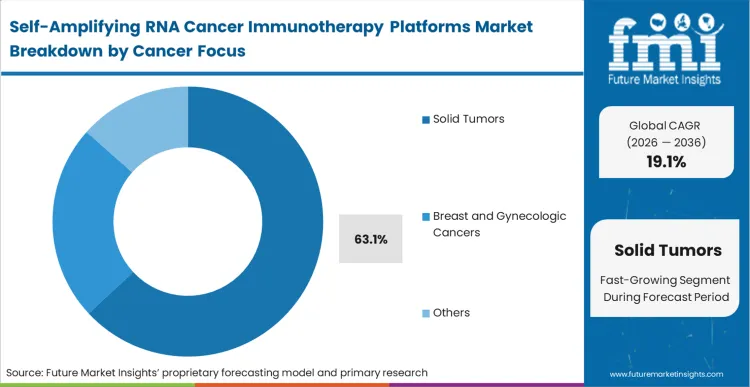
The profound failure of conventional biologics to penetrate dense fibrotic tissue in non-hematologic malignancies dictates the trajectory of this segment. Solid tumors represent 63.1% of the market because the localized immunosuppressive microenvironment actively neutralises standard systemic interventions. Whether operating a saRNA breast cancer vaccine platform, a saRNA gastrointestinal cancer vaccine, a saRNA melanoma immunotherapy platform, or a saRNA lung cancer immunotherapy program, Chief Medical Officers deploy saRNA constructs to force continuous, localized expression of neoantigens directly within the tumor mass.
Based on FMI's assessment, applying targeted oncology biologics in this format creates an extended therapeutic window that linear mRNA cannot match without repeated, toxic dosing. Programs that fail to achieve this localized amplification are rapidly outcompeted by therapies that break solid tumor tolerance without destroying the patient's broader immune function.
- Dose formulation savings: Utilizing self-amplifying vectors drastically reduces the raw transcript volume required per patient. Procurement managers capture substantial cost savings on expensive enzymatic rna manufacturing reagents.
- Cold chain logistics: The extreme fragility of large saRNA constructs demands ultra-low temperature storage throughout the clinical supply chain. Logistics directors face compounding hidden costs when maintaining -80°C stability across global trial sites.
- Total lifecycle value: The extended duration of antigen expression reduces the frequency of clinical administration. Payers evaluate this reduced clinical burden against the premium upfront manufacturing cost of the complex biological asset.
Self-Amplifying RNA Cancer Immunotherapy Platforms Market Analysis by Therapeutic Configuration
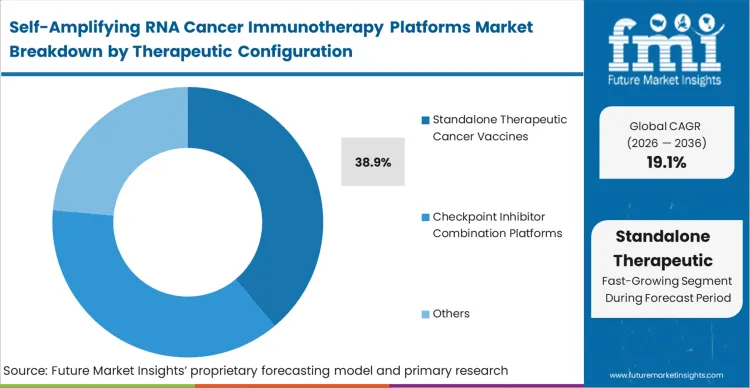
The clinical desire for standalone efficacy versus the biological reality that established tumours heavily express exhaustion markers. Standalone therapeutic cancer vaccines lead with 38.9% share, representing the initial wave of IND-cleared programs striving for monotherapy proof-of-concept. However, translational teams increasingly recognize that even a powerful saRNA CAR-T amplifier vaccine or a cell therapy adjunct saRNA vaccine cannot overcome deep PD-L1 expression alone without complementary modalities.
In FMI's view, this tension forces the integration of saRNA cancer biological therapy with established checkpoint inhibitors to unlock full T-cell functionality. Developers clinging rigidly to a monotherapy paradigm for advanced solid tumours risk stalling their pipelines against entrenched immunosuppressive barriers.
- Early phase adopters: Clinical-stage biotechs initiate monotherapy trials in highly controlled patient populations to establish baseline safety. These early movers prove the fundamental replicon amplification mechanism without confounding variables.
- Combination followers: Mid-tier pharmaceutical developers quickly pair saRNA with their proprietary PD-1/PD-L1 assets. This switch changes the clinical expectation, forcing all subsequent platforms to demonstrate synergistic, rather than merely additive, efficacy.
- Late stage integrators: Major oncology organizations ultimately absorb saRNA technology directly into complex cell therapy workflows. This final conversion occurs when the replicon is utilized as an amplifier for engineered CAR-T cells, fundamentally altering the therapeutic landscape.
Self-Amplifying RNA Cancer Immunotherapy Platforms Market Analysis by Developer type
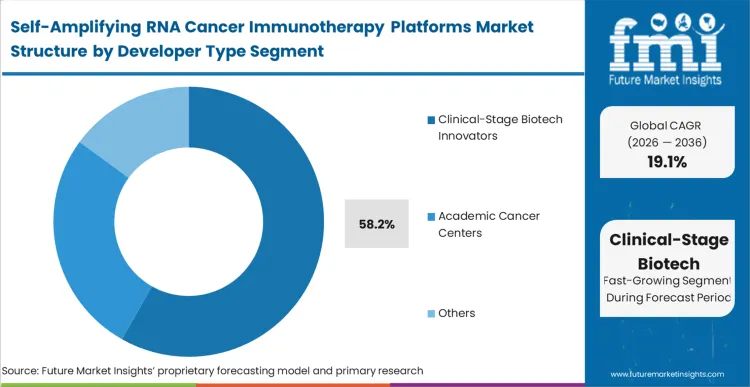
Large pharmaceutical organizations face an immediate decision: build internal large-format RNA infrastructure from scratch or secure self-amplifying RNA oncology platform licensing deals with specialized innovators. Clinical-stage biotech innovators dominate the landscape with 58.2% share because they possess the foundational intellectual property surrounding viral alphavirus backbones and large-transcript biologics contract manufacturing.
As per FMI's projection, massive incumbent organizations seeking oncology saRNA platform collaboration opportunities cannot easily pivot their established linear mRNA platforms to accommodate 12kb replicon structures without violating these existing patents. Consequently, biotech innovators serve as the primary supply node for translational know-how. Incumbents that delay licensing or acquiring these specialized developers find themselves completely locked out of the dose-sparing advantages critical for next-generation oncology pipelines.
- Foundational IP holders: Specialized biotechs control the core patents for alphavirus-derived replication machinery. These entities maintain their position by aggressively licensing access to their proprietary backbone structures.
- LNP formulators: Niche delivery companies control the specific lipid libraries required to encapsulate massive transcripts. Pipeline directors plan around these supply constraints by securing exclusive access to novel ionizable lipids early in development.
- Manufacturing network: A limited number of contract facilities possess the downstream purification capability to handle saRNA at scale. By 2036, the supply moves toward fully integrated, closed-system manufacturing suites dedicated entirely to replicon production.
Self-Amplifying RNA Cancer Immunotherapy Platforms Market Drivers, Restraints, and Opportunities
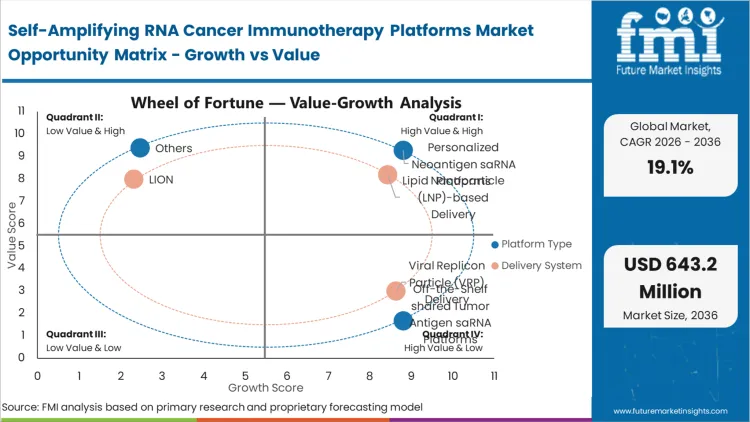
When examining what drives adoption of saRNA cancer immunotherapy platforms, the severe systemic toxicity associated with high-dose linear mRNA compels translational oncology directors to transition to self-amplifying architectures. In solid tumor indications, achieving therapeutic T-cell activation requires consistent antigen presentation that conventional transcripts cannot provide without repeated, highly toxic dosing. This pressure forces pipeline managers to adopt saRNA constructs, which utilize cell and gene therapy manufacturing techniques to amplify a minute initial dose into a massive intracellular payload. Companies that aggressively implement these dose-sparing platforms capture a decisive commercial advantage by advancing through phase II safety gates that consistently halt linear mRNA solid tumor programs.
Conversely, assessing what are the main risks of self-amplifying RNA cancer platforms, the cancer vaccine manufacturing saRNA complexity of large replicon constructs creates a profound operational friction for personalized neoantigen developers. Unlike standard 2kb linear mRNA, saRNA transcripts span 9 to 12 kilobases, making them highly susceptible to physical shearing during standard cell therapy manufacturing and downstream purification. This friction is rooted in the sheer physical size and fragility of the molecule, severely limiting the speed of patient-specific iteration. While advanced low-shear microfluidic systems offer a partial solution, their throughput remains heavily constrained, bottlenecking clinical trial expansion.
Opportunities in the Self-Amplifying RNA Cancer Immunotherapy Platforms Market
- Downstream purification architecture: The severe fragility of 10kb-plus transcripts creates an acute need for a specialized self-amplifying RNA cancer vaccine supplier offering low-shear chromatography systems. Contract manufacturing directors who integrate these capabilities capture premium cell and gene therapy clinical trial partnerships by guaranteeing high-yield, intact replicon recovery.
- Proprietary lipid library development: The inadequacy of standard liposomes to protect massive payloads enables the commercialization of novel ionizable lipids for a precision oncology saRNA platform. Delivery formulators who tune their lipid pKa specifically for large-construct endosomal escape become mandatory partners for any organization advancing a saRNA pipeline.
- In vivo CAR-T application: The ability of saRNA to express durable payloads locally enables the direct reprogramming of immune cells inside the patient. Biotech innovators who deploy replicons as in vivo CAR-T amplifiers capture a transformative segment of the market, entirely bypassing the cost of ex vivo cell manipulation.
Regional Analysis
According to the regional assessment, the Self-Amplifying RNA Cancer Immunotherapy Platforms Market is divided into Asia Pacific, North America, and Europe, covering more than 40 countries.
| Country | CAGR (2026 to 2036) |
|---|---|
| Japan | 21.4% |
| China | 20.8% |
| United States | 20.2% |
| Germany | 19.0% |
| United Kingdom | 18.7% |
| India | 18.3% |
| South Korea | 17.9% |
Source: Future Market Insights (FMI) analysis, based on proprietary forecasting model and primary research
Asia Pacific Self-Amplifying RNA Cancer Immunotherapy Platforms Market Analysis
The regulatory environment shaping personalized immunotherapy across Asia Pacific actively prioritizes the commercialization of advanced nucleic acid technologies, bypassing the prolonged hesitancy seen in older regulatory frameworks. Health ministries in this region have established specific, accelerated pathways for self-amplifying architectures, treating them as functionally distinct from standard gene therapies.
FMI analysts suggests that this policy alignment allows regional biotechs to move from computational antigen design to IND clearance significantly faster than their Western counterparts. The market dynamic is driven by aggressive state-backed initiatives to build localized, large-format RNA manufacturing sovereignty, directly reducing the historical reliance on imported biologics.
- Japan: FMI estimates the saRNA market in Japan to expand at an annual growth rate of 21.4%. Japan's first-in-class commercial saRNA regulatory framework creates a highly predictable pathway for domestic scale-up. Operations heads leverage this predictability to establish specialized solid tumor collaborations. Companies operating in this environment transition rapidly from experimental design to established personalized medicine manufacturing, establishing a blueprint that adjacent Asian markets will invariably copy.
- China: The China saRNA oncology platform sector is expected to see its sector grow at a compound annual rate of 20.8%. The deep integration of self-replicating RNA oncology work into state-supported biotech zones forces rapid clinical translation. Clinical directors in China benefit from dense local networks of LNP formulators and rapid IND-cleared evaluations for advanced solid tumours. Buyers in this market capture a distinct cost advantage by sourcing critical synthetic enzymes and raw materials entirely from domestic supply chains, shielding their programs from global supply shocks.
- India: India's rapid expansion of generalized RNA capability is pivoting sharply toward highly engineered replicon constructs. The India saRNA cancer vaccine platform landscape is set to achieve a CAGR of 18.3%. Contract manufacturing leaders in India must bridge the gap between their massive generic biologics infrastructure and the ultra-low shear requirements of 12kb saRNA transcripts. Facilities that successfully upgrade their downstream purification trains open lucrative commercial opportunities as overflow partners for global biotechs facing capacity constraints.
- South Korea: South Korea's highly concentrated biomanufacturing sector mandates strict adherence to complex export-quality standards for complex biologics. Procurement teams here operate under intense pressure to secure stable supplies of proprietary capping analogs required for replicon stability. South Korea's saRNA industry is projected to witness growth at a CAGR of 17.9%. The nuance behind this figure is the intense competition between massive domestic chaebols attempting to acquire early-stage saRNA innovators before they scale independently.
FMI's report includes extensive analysis of emerging biomanufacturing hubs across Southeast Asia and Oceania. A consistent pattern across these additional markets is the aggressive implementation of technology-transfer agreements, allowing nascent biotech sectors to bypass early-generation linear mRNA completely and leapfrog directly to replicon capabilities.
North America Self-Amplifying RNA Cancer Immunotherapy Platforms Market Analysis
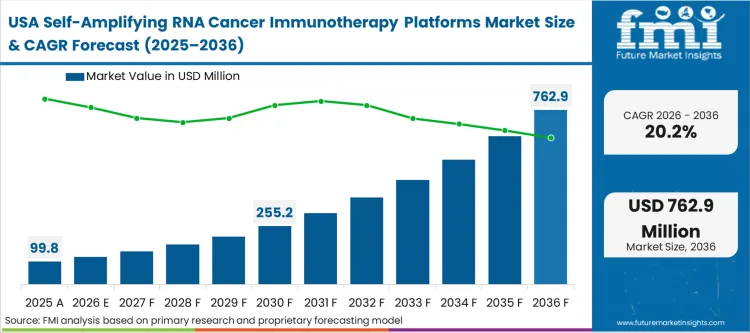
The sheer density of specialized venture capital and established translational oncology infrastructure defines North America's position. Unlike regions building capability from the ground up, the ecosystem here operates on a massive base of legacy mRNA experience, providing an unparalleled network of specialized LNP formulators, sequencing facilities, and clinical trial networks. As per FMI's assessment, this deep infrastructure forces a highly competitive environment where biotechs must prove not just safety, but superior dose-sparing economics to secure next-round funding. The fundamental condition is a mature, highly critical buyer base demanding verifiable evidence that saRNA can shatter the solid tumor barriers that linear transcripts failed to breach.
- United States: The concentration of fundamental alphavirus IP and leading delivery patent holders inside the US forces immense licensing activity. Biopharmaceutical strategy directors must navigate an incredibly dense patent thicket to secure freedom to operate for any new replicon design. The United States saRNA cancer platform market is forecast to register a CAGR of 20.2%. Organizations that secure exclusive rights to advanced delivery vectors capture a dominant competitive position, leveraging molecular biomarkers for cancer detection to stratify patients perfectly for early-phase, high-stakes clinical validation.
FMI's report includes analysis of the Canadian advanced biologics sector. The path of these adjacent markets reflects deep integration into the US supply chain, primarily acting as specialized nodes for lipid nanoparticle development and specialized raw material synthesis rather than full-scale independent platform development.
Europe Self-Amplifying RNA Cancer Immunotherapy Platforms Market Analysis
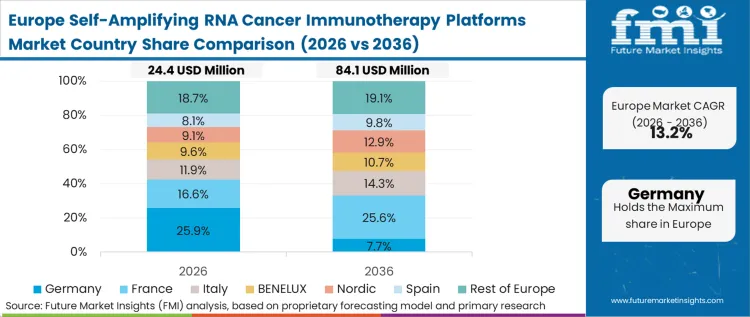
Cost structures and stringent cross-border clinical qualification standards drive adoption across Europe. Procurement cycles heavily scrutinise the total lifecycle cost of personalised oncology interventions, demanding therapies that minimise clinical administration burden. Based on FMI's projection, this economic pressure perfectly aligns with the dose-sparing nature of self-amplifying constructs, which require significantly less raw material and fewer clinical visits than conventional mRNA therapies. A landscape is revealed where massive incumbent oncology players are systematically absorbing agile saRNA innovators to defend their highly profitable, yet ageing, solid tumour portfolios from patent cliffs.
- Germany: Germany's unparalleled depth in RNA oncology anchors the region's technical capability. Translational leaders operating here utilize highly integrated domestic supply chains to push complex replicon constructs rapidly from algorithm to formulated vial. Demand within the Germany self-amplifying RNA cancer market is set to grow at 19.0%. The operational outcome for facilities that master this localized integration is a seamless, closed-loop manufacturing process that significantly reduces the catastrophic batch-failure rates associated with large-construct handling.
- United Kingdom: A CAGR of 18.7% is expected for the United Kingdom saRNA oncology platform over the forecast period. The UK's highly centralized genomic infrastructure forces a specific focus on precise, lung cancer molecular biomarker driven neoantigen selection. Clinical teams leverage this national capability to feed highly accurate data directly into their replicon design algorithms. Developers who fail to tightly integrate their bioinformatics capabilities with this centralized genomic data face immediate disqualification from major national procurement pathways.
FMI's report includes an evaluation of specialised manufacturing clusters across Switzerland and the Nordics. The unifying pattern across these markets is their transition from broad-spectrum biological manufacturing toward highly specialized, low-volume, high-value pd-l1 biomarker testing linked saRNA synthesis hubs.
Competitive Aligners for Market Players
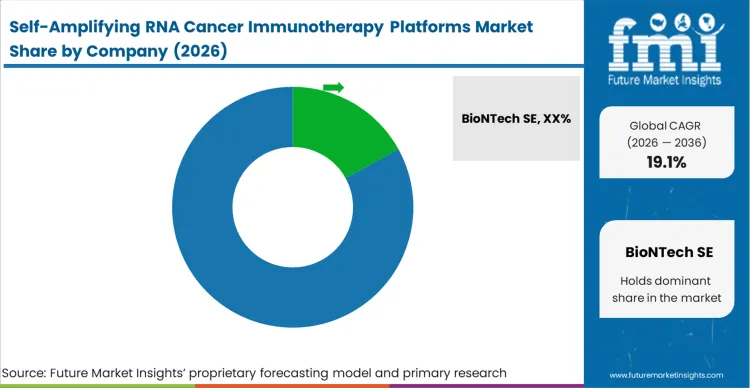
For executives analyzing which saRNA oncology companies look most advanced in 2026 or aiming to build a market map of self-amplifying RNA cancer platform developers, the competitive situation of the oncology biotech saRNA platform market remains highly concentrated because foundational intellectual property surrounding viral replicon backbones acts as an immense barrier. Companies such as BioNTech SE and Arcturus Therapeutics Holdings Inc. hold dominant positions not merely due to scale, but because they control the specific genetic architectures and delivery systems required to make saRNA functional. Buyers in this space, translational oncology directors and large pharmaceutical pipeline managers, use clinical-grade downstream purification capability as their primary variable to distinguish qualified innovators from computational generalists. An organization possessing an elegant algorithm but lacking the physical infrastructure to purify a 10kb transcript without shearing is systematically excluded from serious partnering discussions.
Incumbents like Immorna Biotherapeutics, Inc. possess a specific advantage: they have already navigated the complex IND clearance process for massive saRNA constructs and established immuno oncology assay validated delivery mechanisms. This advantage persists because the regulatory learning curve for large-format RNA is steep, and early movers have essentially written the quality control standards alongside regulators. To replicate this position, a challenger must build a highly specialized delivery capability, specifically, novel ionizable lipid libraries designed explicitly for large-transcript endosomal escape, rather than attempting to engineer around ironclad alphavirus patents using older, easily sheared nucleic acid isolation and purification technologies.
As the market progresses toward 2036, major pharmaceutical buyers actively resist lock-in by aggressively funding early-stage platform developers with alternative, non-alphavirus replicon designs. A tension exists between these massive buyers, who desire commoditized, modular rna targeted small molecules and RNA components, and the dominant saRNA vendors, whose incentives lie in maintaining closed, end-to-end proprietary platforms. Ultimately, the market trajectory points toward further concentration, as the extreme capital requirements of clinical-stage oncology trials force smaller innovators to be absorbed by major incumbents seeking to replace their failing linear mRNA solid tumor pipelines.
Key Players in Self-Amplifying RNA Cancer Immunotherapy Platforms Market
- BioNTech SE
- Arcturus Therapeutics Holdings Inc.
- Meiji Seika Pharma Co., Ltd.
- Immunomic Therapeutics, Inc.
- Immorna Biotherapeutics, Inc.
- HDT Bio Corp.
- AlphaVax, Inc.
Scope of the Report
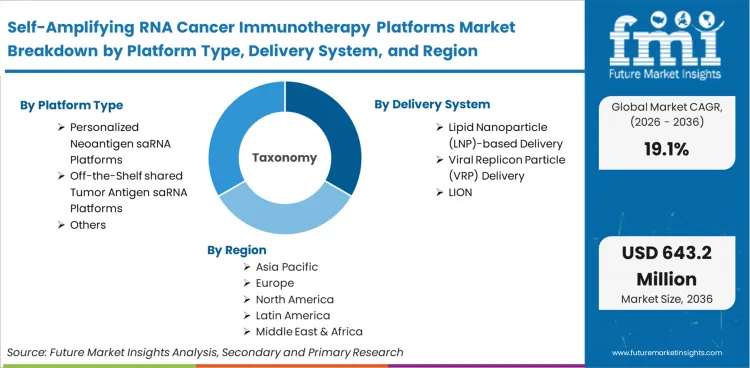
| Metric | Value |
|---|---|
| Quantitative Units | USD 112.0 Million to USD 643.2 Million, at a CAGR of 19.10% |
| Market Definition | The market covers the biological engineering, construct design, and lipid/viral delivery of self-replicating viral-derived RNA specific to oncology. It captures the technologies enabling intracellular payload amplification, functionally separating these dose-sparing platforms from conventional linear mRNA. |
| Platform type Segmentation | Personalized neoantigen saRNA platforms, Off-the-shelf shared tumor antigen saRNA platforms, Cytokine-encoding saRNA immunotherapy platforms, saRNA amplifier or adjunct platforms for cell therapy |
| Delivery system Segmentation | Lipid nanoparticle (LNP)-based delivery, Viral replicon particle (VRP) delivery, LION / emulsion-based delivery, Polymeric or hybrid nanoparticle delivery |
| Cancer focus Segmentation | Solid tumors, Breast and gynecologic cancers, Gastrointestinal cancers, Thoracic and head & neck cancers, Virus-associated malignancies |
| Therapeutic configuration Segmentation | Standalone therapeutic cancer vaccines, Checkpoint inhibitor combination platforms, Cytokine-expressing immune activation platforms, CAR-T / cell-therapy amplification platforms |
| Developer type Segmentation | Clinical-stage biotech innovators, Academic cancer centers, Pharma-partnered translational programs, Government-backed research collaborations |
| Regions Covered | Asia Pacific, North America, Europe |
| Countries Covered | Japan, China, United States, Germany, United Kingdom, India, South Korea, and 40 plus countries |
| Key Companies Profiled | BioNTech SE, Arcturus Therapeutics Holdings Inc., Meiji Seika Pharma Co., Ltd., Immunomic Therapeutics, Inc., Immorna Biotherapeutics, Inc., HDT Bio Corp., AlphaVax, Inc. |
| Forecast Period | 2026 to 2036 |
| Approach | Chief Scientific Officers and Translational Oncology Directors were interviewed to assess pipeline maturity. The baseline anchors to verified IND clearances and active clinical evaluations. Forecasts were cross-validated against peer-reviewed technical assumptions regarding dose-sparing ratios and delivery platform viability. |
Source: Future Market Insights (FMI) analysis, based on proprietary forecasting model and primary research
Self-Amplifying RNA Cancer Immunotherapy Platforms Market Analysis by Segments
Platform type:
- Personalized neoantigen saRNA platforms
- Off-the-shelf shared tumor antigen saRNA platforms
- Cytokine-encoding saRNA immunotherapy platforms
- saRNA amplifier or adjunct platforms for cell therapy
Delivery system:
- Lipid nanoparticle (LNP)-based delivery
- Viral replicon particle (VRP) delivery
- LION / emulsion-based delivery
- Polymeric or hybrid nanoparticle delivery
Cancer focus:
- Solid tumors
- Breast and gynecologic cancers
- Gastrointestinal cancers
- Thoracic and head & neck cancers
- Virus-associated malignancies
Therapeutic configuration:
- Standalone therapeutic cancer vaccines
- Checkpoint inhibitor combination platforms
- Cytokine-expressing immune activation platforms
- CAR-T / cell-therapy amplification platforms
Developer type:
- Clinical-stage biotech innovators
- Academic cancer centers
- Pharma-partnered translational programs
- Government-backed research collaborations
Region:
- North America
- United States
- Canada
- Europe
- Germany
- United Kingdom
- France
- Italy
- Spain
- Asia Pacific
- China
- Japan
- South Korea
- Taiwan
- Singapore
- Latin America
- Brazil
- Mexico
- Argentina
- Middle East & Africa
- GCC Countries
- South Africa
- Israel
Bibliography
- Casmil, I. C., Jin, J., Won, E.-J., Huang, C., Liao, S., Cha-Molstad, H., & Blakney, A. K. (2025). The advent of clinical self-amplifying RNA vaccines. Molecular Therapy, 33(6), 2565–2582.
- ClinicalTrials.gov. (2024, December 16). Intratumoral delivery of viral replicon particles (VRP) encapsulated saRNA encoding EBV-LMP2 to patients with EBV-positive malignancies (NCT06736379). U.S. National Library of Medicine.
- Immorna Biotherapeutics. (2025). Immorna Biotherapeutics receives U.S. FDA IND clearance to conduct Phase 1/2 study of JCXH-211 IV as monotherapy and in combination with checkpoint inhibitor in patients with advanced solid tumors.
- Li, J., Liu, Y., Dai, J., Yang, L., Xiong, F., Xia, J., Jin, J., Wu, Y., & Peng, X. (2025). mRNA vaccines: Current applications and future directions. MedComm, 6(11), e70434.
- Meiji Seika Pharma Co., Ltd. (2025, November 12). Meiji Seika Pharma initiates research collaboration with National Cancer Center on novel solid tumor therapy applying self-amplifying mRNA vaccine.
- Tang, L., Que, H., Wei, Y., Yang, T., Tong, A., & Wei, X. (2025). Replicon RNA vaccines: Design, delivery, and immunogenicity in infectious diseases and cancer. Journal of Hematology & Oncology, 18, 43.
- Vallet, T., & Vignuzzi, M. (2025). Self-amplifying RNA: Advantages and challenges of a versatile platform for vaccine development. Viruses, 17(4), 566.
- Yaremenko, A. V., Gupta, A., Chen, T., & Irvine, D. J. (2025). Clinical advances of mRNA vaccines for cancer immunotherapy. Med, 6(1), 100562.
This bibliography is provided for reader reference. The full FMI report contains the complete reference list with primary source documentation.
This Report Addresses
- Market intelligence to support strategic decision making across personalized neoantigen saRNA platforms and cytokine-encoding constructs
- Market size estimation and 10-year revenue forecasts from 2026 to 2036, supported by verifiable counts of clinical-stage oncology saRNA active evaluations
- Growth opportunity mapping across specific lipid nanoparticle delivery vectors with emphasis on the gate of uncoupling lipid delivery toxicity from replicon payloads
- Segment and regional revenue forecasts covering standalone therapeutic cancer vaccines and solid tumor models across advanced state-backed biomanufacturing environments
- Competition strategy assessment including proprietary alphavirus IP control, large-format downstream purification capabilities, and LNP encapsulation efficiency
- Platform capability development tracking including the optimization of ultra-low shear microfluidic mixing protocols and specialized ionizable lipid libraries
- Market access analysis covering fast-tracked commercial saRNA regulatory pathways in Asia Pacific and rigorous cross-border qualification standards in Europe
- Market report delivery in PDF, Excel, PPT, and interactive dashboard formats for executive strategy, translational oncology pipeline planning, and contract manufacturing operational benchmarking
Frequently Asked Questions
How large is the Self-Amplifying RNA Cancer Immunotherapy Platforms Market in 2026?Compare saRNA and mRNA for cancer immunotherapy use?
The industry value reaches USD 112.0 million in 2026, signalling the transition of self-amplifying platforms from academic computational models into heavily funded, IND-cleared clinical evaluations targeting intractable solid tumours.
What will it be valued at by 2036?
The market is projected to reach USD 643.2 million by 2036. This substantial accumulation reflects the widespread replacement of early-generation linear mRNA programs with replicon architectures capable of extreme dose-sparing economics.
What CAGR is projected?
The 19.10% CAGR reflects the pace at which developers are solving massive-transcript downstream purification bottlenecks, rather than the raw speed of antigen discovery. The rate is constrained by the physical difficulty of manufacturing 10kb-plus constructs without catastrophic batch shearing.
Which Platform type segment leads?
Personalized neoantigen saRNA platforms capture 42.6% share because off-the-shelf shared antigens consistently fail to overcome highly immunosuppressive, patient-specific tumor microenvironments. Pipeline managers utilize these specific platforms to align the replicon's amplification power with precise MHC-binding profiles.
Which Delivery system segment leads?
Lipid nanoparticle (LNP)-based delivery holds 51.8% of the market. This mechanism dominates because naked 12kb RNA transcripts are instantly destroyed by ubiquitous ribonucleases in the bloodstream, forcing reliance on highly specialized, low-shear lipid encapsulation protocols to achieve cellular entry.
Which Cancer focus segment leads?
Solid tumors dominate with 63.1% share. The unique capacity of saRNA to force continuous, localized antigen expression breaks the systemic tolerance barriers that deeply fibrotic malignancies utilize to neutralize conventional systemic biologics.
What drives rapid growth?
The severe systemic toxicity associated with high-dose conventional mRNA forces translational directors to pivot toward saRNA. Replicon vectors solve this bottleneck by amplifying a minute initial payload intracellularly, delivering sustained T-cell activation without the dose-limiting inflammation of linear transcripts.
What is the primary restraint?
The extreme physical fragility of massive 9-to-12 kilobase RNA molecules bottlenecks commercial scale-up. Contract manufacturers face profound friction when attempting to adapt legacy downstream purification systems, which routinely shear the delicate saRNA backbone under pressure.
Which country grows fastest?
Japan advances at 21.4%, outpacing China's 20.8% trajectory because Japan combines a first-in-class commercial saRNA regulatory framework with deeply integrated domestic manufacturing initiatives specifically optimized for solid tumor interventions.
How does delivery vector toxicity impact adoption?
Developers must definitively uncouple the inflammatory profile of the lipid envelope from the immunogenicity of the replicon itself. Platforms that fail to fine-tune their ionizable lipids trigger severe hepatotoxicity before the viral polymerase can initiate meaningful payload amplification.
What dictates the shift from standalone to combination therapies?
While standalone cancer vaccines prove baseline mechanism functionality, advanced solid tumors heavily express exhaustion markers that neutralize isolated T-cell responses. This biological reality forces clinical-stage biotechs to integrate their saRNA constructs alongside established checkpoint inhibitors to unlock full therapeutic efficacy.
Why is foundational IP a critical competitive aligner?
The specific genetic sequences governing alphavirus-derived replication machinery are locked behind dense patent thickets controlled by a few clinical-stage biotechs. Incumbent pharmaceutical giants must aggressively license these platforms, as engineering novel, non-infringing replicon backbones requires years of unproven development.
How does China's market position differ from the United States?
China leverages deep state-supported biotech zones and highly localized raw material synthesis to aggressively compress IND clearance timelines. In contrast, the US market is defined by a dense, highly competitive venture capital ecosystem where biotechs must prove superior dose-sparing economics to survive intense patent scrutiny.
What role do academic cancer centers play in developer type segmentation?
Academic centers provide the highly centralized genomic sequencing required for accurate neoantigen identification. Their deeply characterized patient cohorts act as the critical testing ground for algorithms before biotech innovators scale those designs into commercial manufacturing.
Why do polymeric nanoparticle deliveries trail LNP adoption?
Polymeric hybrid systems struggle to consistently encapsulate massive 12kb transcripts without triggering early degradation or immune rejection. Until these alternative vectors match the predictable endosomal escape rates of finely tuned ionizable lipids, LNP formats will retain their dominant commercial position.
What limits the expansion of saRNA in South Korea?
South Korean procurement teams face intense pressure to secure reliable supplies of proprietary enzymatic capping analogs vital for large-transcript stability. The market growth is dictated by the fierce competition between major domestic conglomerates attempting to internalize these supply chains before scaling globally.
How do extended producer responsibility frameworks influence this market?
Unlike rigid physical goods, the regulatory equivalent in this space involves total lifecycle tracking of custom biological materials. Developers must guarantee the exact traceability of patient biopsies through the entire localized manufacturing loop, forcing massive investments in secure, closed-system digital tracking.
Why are standard liposomes excluded from this market's definition?
General-purpose liposomes lack the precisely engineered cationic lipid ratios necessary to physically accommodate a massive saRNA molecule. Attempting to force a 10kb replicon into a standard liposome results in catastrophic shearing and zero therapeutic viability.
What changes when saRNA is applied as an in vivo CAR-T amplifier?
Utilizing a replicon to locally reprogram immune cells inside the patient eliminates the immense cost and complexity of ex vivo cell manipulation. This approach fundamentally transforms the market from a vaccine-centric model toward fully integrated, scalable cellular therapy.
How do low-shear microfluidic mixing protocols influence market dynamics?
Contract manufacturers who implement low-shear microfluidics capture a decisive advantage by drastically reducing batch failure rates. Without this specific hardware capability, developers cannot consistently formulate intact saRNA, creating a hard ceiling on their clinical trial expansion capabilities.
Explain the self-amplifying RNA cancer platform market in simple terms?
The mRNA cancer vaccine market is often the baseline for understanding this sector. While traditional mRNA delivers instructions that degrade quickly, self-amplifying RNA (saRNA) acts like a biological copy machine inside the cell. Once delivered, it copies itself repeatedly, producing cancer-fighting antigens for weeks from a very small initial dose, solving the toxic side effects of high-dose traditional therapies.
Compare saRNA and mRNA for cancer immunotherapy use?
In a direct saRNA vs mRNA cancer vaccine comparison, traditional mRNA requires massive, frequent doses to keep fighting a solid tumor, which frequently poisons the patient's liver with lipid accumulation before the tumor dies. In contrast, saRNA requires a fraction of the dose because it amplifies itself autonomously once inside the target cell.
What is a self-amplifying RNA cancer immunotherapy platform?
It is a highly engineered biological system, combining a viral-derived replicating RNA backbone, a cancer-specific payload, and a specialized lipid delivery envelope, designed to trigger a profound, long-lasting immune response against tumors without the dose-limiting toxicity of older technologies.
How is saRNA different from mRNA in cancer vaccines?
The difference is the inclusion of genes encoding an RNA-dependent RNA polymerase. This viral machinery allows the saRNA construct to autonomously copy its own instructions inside the cell, meaning developers can use drastically lower initial doses to achieve significantly longer therapeutic expression.
Are any saRNA cancer vaccines approved?
While self-amplifying RNA has reached commercial approval for infectious diseases (such as COVID-19 in Japan), the oncology applications remain strictly in clinical and translational evaluation phases. Biotechs are currently focused on proving safety and uncoupling delivery toxicity from payload efficacy in early-stage solid tumor trials.
Which companies are developing saRNA cancer therapies?
The landscape is heavily concentrated around foundational IP holders and specialized biotech innovators such as BioNTech SE, Arcturus Therapeutics Holdings Inc., Meiji Seika Pharma Co., Ltd., Immorna Biotherapeutics, Inc., and HDT Bio Corp.
Why is saRNA promising for oncology?
The core promise is dose-sparing. Because the RNA copies itself, translational teams can bypass the extreme systemic toxicity that halts conventional linear mRNA trials, allowing them to safely target dense, immunosuppressive solid tumors that require sustained T-cell activation over weeks rather than days.
How does a self-amplifying RNA vs DNA cancer vaccine comparison look functionally?
Unlike DNA vaccines, which must physically cross into the cell's nucleus to function (risking genomic integration), saRNA platforms operate entirely within the cytoplasm. This provides the consistent expression profile typically associated with DNA vectors without the severe regulatory and biological risks of nuclear entry.
How does saRNA compare in a saRNA vs viral vector cancer immunotherapy evaluation?
While viral vectors (like adenoviruses) excel at delivery, patients rapidly develop neutralizing antibodies against the viral shell, preventing repeated dosing. Self-amplifying RNA delivers the replication power of a virus but uses a synthetic lipid envelope, allowing for repeated patient dosing without triggering anti-vector immunity.
How does a saRNA platform vs dendritic cell vaccine platform evaluation shape procurement?
Dendritic cell platforms require extracting the patient's cells, engineering them in a specialized lab, and re-infusing them, an incredibly slow and expensive process. A personalized cancer vaccine market analysis shows saRNA platforms bypass this entirely by delivering the instructions directly into the patient's body in vivo, massively simplifying the manufacturing and supply chain.
What roles do the lipid nanoparticle oncology market play in saRNA advancement?
Without advanced LNP engineering, saRNA cannot exist as a commercial therapy. The sheer size of a 10kb-plus replicon requires highly specialized lipid ratios to physically protect the molecule in the bloodstream and ensure it escapes the endosome once inside the cell.
Preview the report firsthand - request a free sample
Get SampleGet the brochure for pricing and purchase details.
Get PDFTable of Content
- Executive Summary
- Global Market Outlook
- Demand-side Trends
- Supply-side Trends
- Technology Roadmap Analysis
- Analysis and Recommendations
- Market Overview
- Market Coverage / Taxonomy
- Market Definition / Scope / Limitations
- Research Methodology
- Chapter Orientation
- Analytical Lens and Working Hypotheses
- Market Structure, Signals, and Trend Drivers
- Benchmarking and Cross-market Comparability
- Market Sizing, Forecasting, and Opportunity Mapping
- Research Design and Evidence Framework
- Desk Research Programme (Secondary Evidence)
- Company Annual and Sustainability Reports
- Peer-reviewed Journals and Academic Literature
- Corporate Websites, Product Literature, and Technical Notes
- Earnings Decks and Investor Briefings
- Statutory Filings and Regulatory Disclosures
- Technical White Papers and Standards Notes
- Trade Journals, Industry Magazines, and Analyst Briefs
- Conference Proceedings, Webinars, and Seminar Materials
- Government Statistics Portals and Public Data Releases
- Press Releases and Reputable Media Coverage
- Specialist Newsletters and Curated Briefings
- Sector Databases and Reference Repositories
- FMI Internal Proprietary Databases and Historical Market Datasets
- Subscription Datasets and Paid Sources
- Social Channels, Communities, and Digital Listening Inputs
- Additional Desk Sources
- Expert Input and Fieldwork (Primary Evidence)
- Primary Modes
- Qualitative Interviews and Expert Elicitation
- Quantitative Surveys and Structured Data Capture
- Blended Approach
- Why Primary Evidence is Used
- Field Techniques
- Interviews
- Surveys
- Focus Groups
- Observational and In-context Research
- Social and Community Interactions
- Stakeholder Universe Engaged
- C-suite Leaders
- Board Members
- Presidents and Vice Presidents
- R&D and Innovation Heads
- Technical Specialists
- Domain Subject-matter Experts
- Scientists
- Physicians and Other Healthcare Professionals
- Governance, Ethics, and Data Stewardship
- Research Ethics
- Data Integrity and Handling
- Primary Modes
- Tooling, Models, and Reference Databases
- Desk Research Programme (Secondary Evidence)
- Data Engineering and Model Build
- Data Acquisition and Ingestion
- Cleaning, Normalisation, and Verification
- Synthesis, Triangulation, and Analysis
- Quality Assurance and Audit Trail
- Market Background
- Market Dynamics
- Drivers
- Restraints
- Opportunity
- Trends
- Scenario Forecast
- Demand in Optimistic Scenario
- Demand in Likely Scenario
- Demand in Conservative Scenario
- Opportunity Map Analysis
- Product Life Cycle Analysis
- Supply Chain Analysis
- Investment Feasibility Matrix
- Value Chain Analysis
- PESTLE and Porter’s Analysis
- Regulatory Landscape
- Regional Parent Market Outlook
- Production and Consumption Statistics
- Import and Export Statistics
- Market Dynamics
- Global Market Analysis 2021 to 2025 and Forecast, 2026 to 2036
- Historical Market Size Value (USD Million) Analysis, 2021 to 2025
- Current and Future Market Size Value (USD Million) Projections, 2026 to 2036
- Y-o-Y Growth Trend Analysis
- Absolute $ Opportunity Analysis
- Global Market Pricing Analysis 2021 to 2025 and Forecast 2026 to 2036
- Global Market Analysis 2021 to 2025 and Forecast 2026 to 2036, By Platform Type
- Introduction / Key Findings
- Historical Market Size Value (USD Million) Analysis By Platform Type , 2021 to 2025
- Current and Future Market Size Value (USD Million) Analysis and Forecast By Platform Type , 2026 to 2036
- Personalized Neoantigen saRNA Platforms
- Off-the-Shelf shared Tumor Antigen saRNA Platforms
- Others
- Personalized Neoantigen saRNA Platforms
- Y-o-Y Growth Trend Analysis By Platform Type , 2021 to 2025
- Absolute $ Opportunity Analysis By Platform Type , 2026 to 2036
- Global Market Analysis 2021 to 2025 and Forecast 2026 to 2036, By Delivery System
- Introduction / Key Findings
- Historical Market Size Value (USD Million) Analysis By Delivery System, 2021 to 2025
- Current and Future Market Size Value (USD Million) Analysis and Forecast By Delivery System, 2026 to 2036
- Lipid Nanoparticle (LNP)-based Delivery
- Viral Replicon Particle (VRP) Delivery
- LION
- Lipid Nanoparticle (LNP)-based Delivery
- Y-o-Y Growth Trend Analysis By Delivery System, 2021 to 2025
- Absolute $ Opportunity Analysis By Delivery System, 2026 to 2036
- Global Market Analysis 2021 to 2025 and Forecast 2026 to 2036, By Cancer Focus
- Introduction / Key Findings
- Historical Market Size Value (USD Million) Analysis By Cancer Focus, 2021 to 2025
- Current and Future Market Size Value (USD Million) Analysis and Forecast By Cancer Focus, 2026 to 2036
- Solid Tumors
- Breast and Gynecologic Cancers
- Others
- Solid Tumors
- Y-o-Y Growth Trend Analysis By Cancer Focus, 2021 to 2025
- Absolute $ Opportunity Analysis By Cancer Focus, 2026 to 2036
- Global Market Analysis 2021 to 2025 and Forecast 2026 to 2036, By Therapeutic Configuration
- Introduction / Key Findings
- Historical Market Size Value (USD Million) Analysis By Therapeutic Configuration, 2021 to 2025
- Current and Future Market Size Value (USD Million) Analysis and Forecast By Therapeutic Configuration, 2026 to 2036
- Standalone Therapeutic Cancer Vaccines
- Checkpoint Inhibitor Combination Platforms
- Others
- Standalone Therapeutic Cancer Vaccines
- Y-o-Y Growth Trend Analysis By Therapeutic Configuration, 2021 to 2025
- Absolute $ Opportunity Analysis By Therapeutic Configuration, 2026 to 2036
- Global Market Analysis 2021 to 2025 and Forecast 2026 to 2036, By Developer Type
- Introduction / Key Findings
- Historical Market Size Value (USD Million) Analysis By Developer Type, 2021 to 2025
- Current and Future Market Size Value (USD Million) Analysis and Forecast By Developer Type, 2026 to 2036
- Clinical-Stage Biotech Innovators
- Academic Cancer Centers
- Others
- Clinical-Stage Biotech Innovators
- Y-o-Y Growth Trend Analysis By Developer Type, 2021 to 2025
- Absolute $ Opportunity Analysis By Developer Type, 2026 to 2036
- Global Market Analysis 2021 to 2025 and Forecast 2026 to 2036, By Region
- Introduction
- Historical Market Size Value (USD Million) Analysis By Region, 2021 to 2025
- Current Market Size Value (USD Million) Analysis and Forecast By Region, 2026 to 2036
- North America
- Latin America
- Western Europe
- Eastern Europe
- East Asia
- South Asia and Pacific
- Middle East & Africa
- Market Attractiveness Analysis By Region
- North America Market Analysis 2021 to 2025 and Forecast 2026 to 2036, By Country
- Historical Market Size Value (USD Million) Trend Analysis By Market Taxonomy, 2021 to 2025
- Market Size Value (USD Million) Forecast By Market Taxonomy, 2026 to 2036
- By Country
- USA
- Canada
- Mexico
- By Platform Type
- By Delivery System
- By Cancer Focus
- By Therapeutic Configuration
- By Developer Type
- By Country
- Market Attractiveness Analysis
- By Country
- By Platform Type
- By Delivery System
- By Cancer Focus
- By Therapeutic Configuration
- By Developer Type
- Key Takeaways
- Latin America Market Analysis 2021 to 2025 and Forecast 2026 to 2036, By Country
- Historical Market Size Value (USD Million) Trend Analysis By Market Taxonomy, 2021 to 2025
- Market Size Value (USD Million) Forecast By Market Taxonomy, 2026 to 2036
- By Country
- Brazil
- Chile
- Rest of Latin America
- By Platform Type
- By Delivery System
- By Cancer Focus
- By Therapeutic Configuration
- By Developer Type
- By Country
- Market Attractiveness Analysis
- By Country
- By Platform Type
- By Delivery System
- By Cancer Focus
- By Therapeutic Configuration
- By Developer Type
- Key Takeaways
- Western Europe Market Analysis 2021 to 2025 and Forecast 2026 to 2036, By Country
- Historical Market Size Value (USD Million) Trend Analysis By Market Taxonomy, 2021 to 2025
- Market Size Value (USD Million) Forecast By Market Taxonomy, 2026 to 2036
- By Country
- Germany
- UK
- Italy
- Spain
- France
- Nordic
- BENELUX
- Rest of Western Europe
- By Platform Type
- By Delivery System
- By Cancer Focus
- By Therapeutic Configuration
- By Developer Type
- By Country
- Market Attractiveness Analysis
- By Country
- By Platform Type
- By Delivery System
- By Cancer Focus
- By Therapeutic Configuration
- By Developer Type
- Key Takeaways
- Eastern Europe Market Analysis 2021 to 2025 and Forecast 2026 to 2036, By Country
- Historical Market Size Value (USD Million) Trend Analysis By Market Taxonomy, 2021 to 2025
- Market Size Value (USD Million) Forecast By Market Taxonomy, 2026 to 2036
- By Country
- Russia
- Poland
- Hungary
- Balkan & Baltic
- Rest of Eastern Europe
- By Platform Type
- By Delivery System
- By Cancer Focus
- By Therapeutic Configuration
- By Developer Type
- By Country
- Market Attractiveness Analysis
- By Country
- By Platform Type
- By Delivery System
- By Cancer Focus
- By Therapeutic Configuration
- By Developer Type
- Key Takeaways
- East Asia Market Analysis 2021 to 2025 and Forecast 2026 to 2036, By Country
- Historical Market Size Value (USD Million) Trend Analysis By Market Taxonomy, 2021 to 2025
- Market Size Value (USD Million) Forecast By Market Taxonomy, 2026 to 2036
- By Country
- China
- Japan
- South Korea
- By Platform Type
- By Delivery System
- By Cancer Focus
- By Therapeutic Configuration
- By Developer Type
- By Country
- Market Attractiveness Analysis
- By Country
- By Platform Type
- By Delivery System
- By Cancer Focus
- By Therapeutic Configuration
- By Developer Type
- Key Takeaways
- South Asia and Pacific Market Analysis 2021 to 2025 and Forecast 2026 to 2036, By Country
- Historical Market Size Value (USD Million) Trend Analysis By Market Taxonomy, 2021 to 2025
- Market Size Value (USD Million) Forecast By Market Taxonomy, 2026 to 2036
- By Country
- India
- ASEAN
- Australia & New Zealand
- Rest of South Asia and Pacific
- By Platform Type
- By Delivery System
- By Cancer Focus
- By Therapeutic Configuration
- By Developer Type
- By Country
- Market Attractiveness Analysis
- By Country
- By Platform Type
- By Delivery System
- By Cancer Focus
- By Therapeutic Configuration
- By Developer Type
- Key Takeaways
- Middle East & Africa Market Analysis 2021 to 2025 and Forecast 2026 to 2036, By Country
- Historical Market Size Value (USD Million) Trend Analysis By Market Taxonomy, 2021 to 2025
- Market Size Value (USD Million) Forecast By Market Taxonomy, 2026 to 2036
- By Country
- Kingdom of Saudi Arabia
- Other GCC Countries
- Turkiye
- South Africa
- Other African Union
- Rest of Middle East & Africa
- By Platform Type
- By Delivery System
- By Cancer Focus
- By Therapeutic Configuration
- By Developer Type
- By Country
- Market Attractiveness Analysis
- By Country
- By Platform Type
- By Delivery System
- By Cancer Focus
- By Therapeutic Configuration
- By Developer Type
- Key Takeaways
- Key Countries Market Analysis
- USA
- Pricing Analysis
- Market Share Analysis, 2025
- By Platform Type
- By Delivery System
- By Cancer Focus
- By Therapeutic Configuration
- By Developer Type
- Canada
- Pricing Analysis
- Market Share Analysis, 2025
- By Platform Type
- By Delivery System
- By Cancer Focus
- By Therapeutic Configuration
- By Developer Type
- Mexico
- Pricing Analysis
- Market Share Analysis, 2025
- By Platform Type
- By Delivery System
- By Cancer Focus
- By Therapeutic Configuration
- By Developer Type
- Brazil
- Pricing Analysis
- Market Share Analysis, 2025
- By Platform Type
- By Delivery System
- By Cancer Focus
- By Therapeutic Configuration
- By Developer Type
- Chile
- Pricing Analysis
- Market Share Analysis, 2025
- By Platform Type
- By Delivery System
- By Cancer Focus
- By Therapeutic Configuration
- By Developer Type
- Germany
- Pricing Analysis
- Market Share Analysis, 2025
- By Platform Type
- By Delivery System
- By Cancer Focus
- By Therapeutic Configuration
- By Developer Type
- UK
- Pricing Analysis
- Market Share Analysis, 2025
- By Platform Type
- By Delivery System
- By Cancer Focus
- By Therapeutic Configuration
- By Developer Type
- Italy
- Pricing Analysis
- Market Share Analysis, 2025
- By Platform Type
- By Delivery System
- By Cancer Focus
- By Therapeutic Configuration
- By Developer Type
- Spain
- Pricing Analysis
- Market Share Analysis, 2025
- By Platform Type
- By Delivery System
- By Cancer Focus
- By Therapeutic Configuration
- By Developer Type
- France
- Pricing Analysis
- Market Share Analysis, 2025
- By Platform Type
- By Delivery System
- By Cancer Focus
- By Therapeutic Configuration
- By Developer Type
- India
- Pricing Analysis
- Market Share Analysis, 2025
- By Platform Type
- By Delivery System
- By Cancer Focus
- By Therapeutic Configuration
- By Developer Type
- ASEAN
- Pricing Analysis
- Market Share Analysis, 2025
- By Platform Type
- By Delivery System
- By Cancer Focus
- By Therapeutic Configuration
- By Developer Type
- Australia & New Zealand
- Pricing Analysis
- Market Share Analysis, 2025
- By Platform Type
- By Delivery System
- By Cancer Focus
- By Therapeutic Configuration
- By Developer Type
- China
- Pricing Analysis
- Market Share Analysis, 2025
- By Platform Type
- By Delivery System
- By Cancer Focus
- By Therapeutic Configuration
- By Developer Type
- Japan
- Pricing Analysis
- Market Share Analysis, 2025
- By Platform Type
- By Delivery System
- By Cancer Focus
- By Therapeutic Configuration
- By Developer Type
- South Korea
- Pricing Analysis
- Market Share Analysis, 2025
- By Platform Type
- By Delivery System
- By Cancer Focus
- By Therapeutic Configuration
- By Developer Type
- Russia
- Pricing Analysis
- Market Share Analysis, 2025
- By Platform Type
- By Delivery System
- By Cancer Focus
- By Therapeutic Configuration
- By Developer Type
- Poland
- Pricing Analysis
- Market Share Analysis, 2025
- By Platform Type
- By Delivery System
- By Cancer Focus
- By Therapeutic Configuration
- By Developer Type
- Hungary
- Pricing Analysis
- Market Share Analysis, 2025
- By Platform Type
- By Delivery System
- By Cancer Focus
- By Therapeutic Configuration
- By Developer Type
- Kingdom of Saudi Arabia
- Pricing Analysis
- Market Share Analysis, 2025
- By Platform Type
- By Delivery System
- By Cancer Focus
- By Therapeutic Configuration
- By Developer Type
- Turkiye
- Pricing Analysis
- Market Share Analysis, 2025
- By Platform Type
- By Delivery System
- By Cancer Focus
- By Therapeutic Configuration
- By Developer Type
- South Africa
- Pricing Analysis
- Market Share Analysis, 2025
- By Platform Type
- By Delivery System
- By Cancer Focus
- By Therapeutic Configuration
- By Developer Type
- USA
- Market Structure Analysis
- Competition Dashboard
- Competition Benchmarking
- Market Share Analysis of Top Players
- By Regional
- By Platform Type
- By Delivery System
- By Cancer Focus
- By Therapeutic Configuration
- By Developer Type
- Competition Analysis
- Competition Deep Dive
- BioNTech SE
- Overview
- Product Portfolio
- Profitability by Market Segments (Product/Age /Sales Channel/Region)
- Sales Footprint
- Strategy Overview
- Marketing Strategy
- Product Strategy
- Channel Strategy
- Arcturus Therapeutics Holdings Inc.
- Meiji Seika Pharma Co., Ltd.
- Immunomic Therapeutics, Inc.
- Immorna Biotherapeutics, Inc.
- HDT Bio Corp.
- BioNTech SE
- Competition Deep Dive
- Assumptions & Acronyms Used


