

- Industry Size (2026)
- USD 36.6 Mn
- Forecast (2036)
- USD 139.2 Mn
- CAGR (2026 to 2036)
- 14.3%
Spirulina Beverages Market Size, Market Forecast and Outlook By FMI
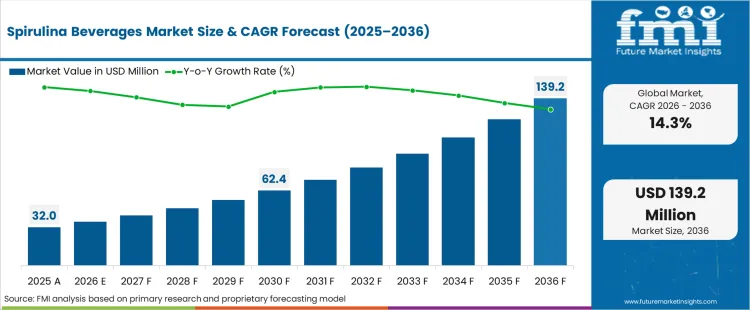
The spirulina beverages market was valued at USD 32.00 million in 2025, projected to reach USD 36.6 million in 2026, and is forecast to expand to USD 139.2 million by 2036 at a 14.3% CAGR. Superfood ingredient integration into ready-to-drink beverage formats and the clean-label functional beverages trend are converting spirulina from a capsule-based supplement ingredient into a beverage-format delivery vehicle. Spirulina's complete protein profile, natural blue-green pigmentation, and documented antioxidant properties create a multi-functional ingredient that serves both nutritional and visual differentiation objectives for beverage formulators.
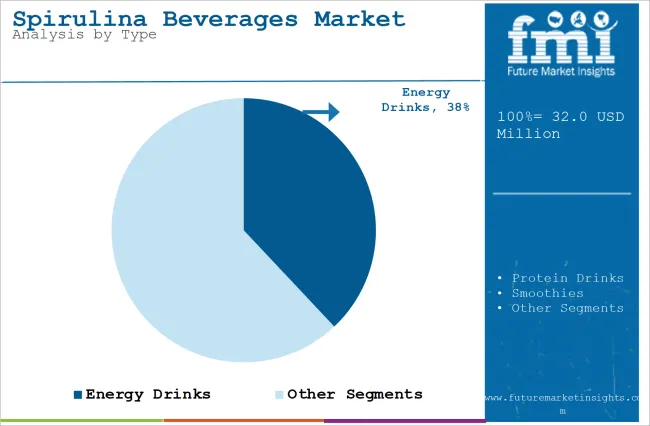
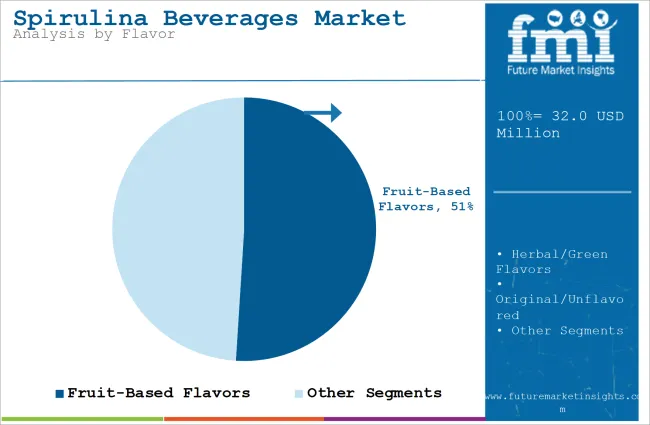
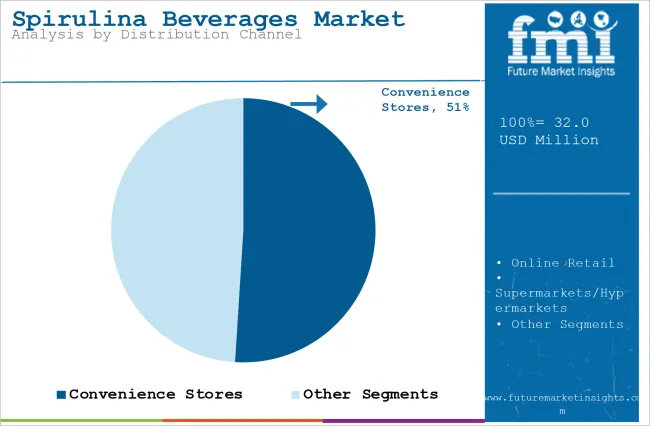
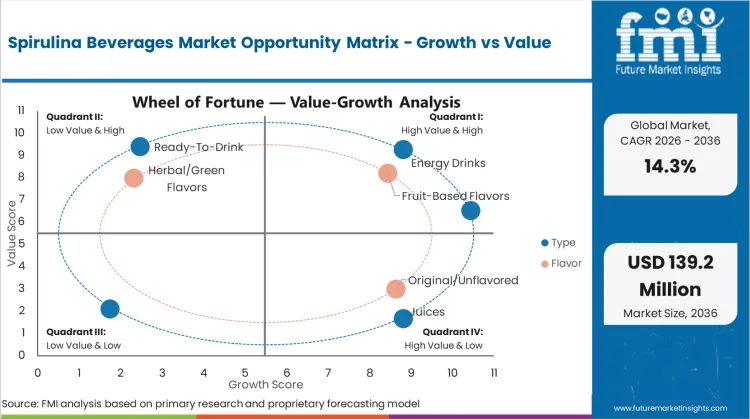
As per FMI, energy drinks hold 38.0% of type share because spirulina's protein and B-vitamin content aligns with the functional energy delivery proposition, and spirulina-infused energy drinks differentiate from synthetic caffeine-based competitors through natural ingredient positioning. Fruit-based flavours command 51.0% share because fruit flavour profiles effectively mask the natural algal taste of spirulina that consumers unfamiliar with the ingredient may find challenging in unflavoured formats. Convenience stores hold 51.0% of distribution as single-serve spirulina beverages fit the impulse and on-the-go purchasing occasions that convenience retail serves.
Summary of Spirulina Beverages Market
- Spirulina Beverages Market Definition
- Spirulina beverages are functional drinks formulated with spirulina (Arthrospira platensis) as a primary bioactive ingredient, delivering protein, B-vitamins, iron, and antioxidant phycocyanin in ready-to-drink formats. These products span energy drinks, juices, smoothies, protein drinks, and ready-to-drink formats distributed through convenience, grocery, specialty health, and online channels.
- Demand Drivers in the Market
- Superfood beverage format migration: Consumers are shifting superfood intake from capsule supplements to beverage-format products that integrate nutrition into daily drinking occasions. FMI analysts note that spirulina beverages convert a supplement dosing ritual into a refreshment occasion, increasing consumption frequency and compliance among health-conscious consumers.
- Natural energy drink differentiation: Based on FMI's report, spirulina's natural protein and B-vitamin content provides a plant-based energy delivery mechanism that differentiates spirulina energy drinks from synthetic caffeine competitors. This natural energy positioning captures consumers seeking stimulant alternatives within the clean-label functional beverages category.
- Phycocyanin natural colouring dual function: As per FMI, spirulina's natural blue-green phycocyanin pigment provides both visual product differentiation and antioxidant functionality. Beverage formulators use spirulina to create visually distinctive products that stand out on retail shelves while delivering a documented health benefit through a single ingredient addition.
- Key Segments Analyzed in the FMI Report
- Energy drink functional alignment: Energy Drinks holds 38.0% share in 2026. Spirulina's protein and micronutrient content aligns with the functional energy proposition, creating a natural-ingredient energy drink sub-category that captures health-conscious consumers who avoid synthetic caffeine and artificial ingredients.
- Fruit flavour taste masking: Fruit-Based Flavors commands 51.0% share in 2026. Tropical and berry fruit flavour profiles effectively mask spirulina's natural algal taste, making spirulina beverages palatable for mainstream consumers who value the nutritional benefits but have not developed a taste preference for unflavoured algae.
- Convenience store impulse access: Convenience Stores holds 51.0% share in 2026. Single-serve spirulina beverages fit the on-the-go, impulse-driven purchasing behaviour of convenience retail, where health-conscious consumers select functional beverages for immediate consumption during commutes and workday breaks.
- Analyst Opinion at FMI
- FMI analysts observe that the spirulina beverages market is at the early growth stage where the 14.3% CAGR reflects the rapid expansion from a small base as beverage manufacturers commercialize spirulina formulations for mainstream retail distribution. The category's growth trajectory depends on two factors: taste optimization that makes spirulina beverages palatable to mainstream consumers, and price point management that positions spirulina drinks competitively against established functional beverage categories. Producers who solve the taste and pricing equations will capture the mainstream market that early-stage spirulina beverages currently serve only partially.
- Strategic Implications / Executive Takeaways
- Beverage formulators should invest in taste masking and flavour optimization to develop spirulina beverages that achieve mainstream consumer palatability without diluting the spirulina nutritional contribution.
- Spirulina cultivators should scale production capacity and optimize extraction processes to reduce the per-kilogram ingredient cost that currently positions spirulina beverages at premium price points.
- Convenience and grocery retailers should allocate trial-enabling shelf space for spirulina beverages within functional beverage fixtures to expose the category to mainstream shoppers.
- Methodology
- Primary Research: FMI conducted technical interviews with procurement specialists and operations directors across 40 countries to validate adoption timelines.
- Desk Research: Analysts aggregated public regulatory documentation, industry standards, and corporate disclosure filings.
- Market-Sizing and Forecasting: Forecasting models apply hybrid methodology starting with global production metrics and projecting adoption conversion rates.
- Data Validation and Update Cycle: Segment forecasts undergo cross-validation against quarterly and annual industry production volumes.
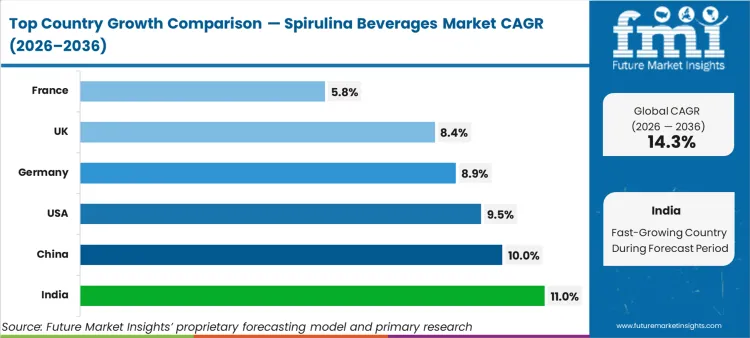
India leads with an 11.0% CAGR, driven by the established spirulina cultivation infrastructure and the growing health beverage market. China follows at 10.0% as the functional beverage sector and domestic spirulina production capacity create both supply and demand growth. USA registers a 9.5% pace driven by the superfood beverage trend and health-food retail distribution. Germany tracks at 8.9% reflecting the EU novel food compliance pathway for spirulina ingredients. UK operations advance at 8.4%, supported by the cold-pressed juice and health beverage retail sector. France registers a 5.8% pace as the natural food ingredient sector develops spirulina beverage formulations.
Spirulina Beverages Market Key Takeaways
| Metric | Details |
|---|---|
| Industry Size (2026) | USD 36.6 Million |
| Industry Value (2036) | USD 139.2 Million |
| CAGR (2026-2036) | 14.3% |
Spirulina Beverages Market Definition
Spirulina beverages are functional drinks formulated with spirulina (Arthrospira platensis) as a primary bioactive ingredient, delivering protein, B-vitamins, iron, and antioxidant phycocyanin in ready-to-drink formats. These products span energy drinks, juices, smoothies, protein drinks, and ready-to-drink formats distributed through convenience, grocery, specialty health, and online channels.
Spirulina Beverages Market Inclusions
Market scope includes spirulina-infused energy drinks, juices, ready-to-drink beverages, smoothies, and protein drinks in bottle, can, and carton packaging. The report covers global and regional market sizes from 2026 to 2036, segmented by type, flavour, packaging, distribution channel, and geography.
Spirulina Beverages Market Exclusions
Spirulina capsules, tablets, and powder supplements sold without beverage formulation are excluded. Spirulina used as a food colouring ingredient in beverages where it serves a pigmentation rather than nutritional function falls outside scope. Spirulina-fortified solid food products are excluded.
Spirulina Beverages Market Research Methodology
- Primary Research: Analysts engaged with procurement specialists, production managers, and supply chain directors to map purchasing cycles and supplier qualification requirements.
- Desk Research: Data collection aggregated regulatory filings, industry standards, trade association publications, and public company disclosures.
- Market-Sizing and Forecasting: Baseline values derive from hybrid top-down and bottom-up methodology, applying region-specific adoption curves through 2036.
- Data Validation and Update Cycle: Projections tested against publicly reported production volumes, trade data, and industry benchmarks with annual recalibration.
Segmental Analysis
By Product Type
| Attributes | Market Share in 2026 |
|---|---|
| Top Product Type (Energy Drinks) | 38% |
By Product Type, spirulina energy drinks are expected to occupy 38% of the market share in 2026. These drinks are popular because they provide an energy boost and deliver essential nutrients as well. Many consumers look for healthier alternatives to traditional energy drinks, which often contain high levels of sugar and artificial ingredients.
Spirulina energy drinks offer a natural source of energy, and also a high protein and vitamin content. This makes them appealing to athletes and fitness enthusiasts who want to improve their performance. The growing trend towards healthier lifestyles is driving the demand for these drinks, allowing them to capture a significant portion of the market.
By Application
| Attributes | Market Share in 2026 |
|---|---|
| Top Application (Food and Beverages) | 43% |
Food and beverages have a significant 43% market share by application. Spirulina is increasingly used in a variety of food products, such as juices, snacks, and smoothies.
Spirulina's high protein content and antioxidant qualities attract consumers who are health-conscious. The demand for spirulina in food and beverages is rising as more people look for nutrient-dense options in their diets, which is strengthening its place in the market.
By Flavor
| Attributes | Market Share in 2026 |
|---|---|
| Top Flavor (Fruit-based Flavors) | 51% |
According to flavor, fruit-based flavors are increasing in popularity. Different tastes appeals to consumers. The strong taste of spirulina may put off many consumers, but by mixing it with fruits such as citrus or berries, the spirulina taste can be subdued.
This combination attracts buyers. As companies continue to innovate with fruit-based flavors, they are likely to capture more market share by attracting consumers looking for delicious and healthy beverage options.
By Packaging
| Attributes | Market Share in 2026 |
|---|---|
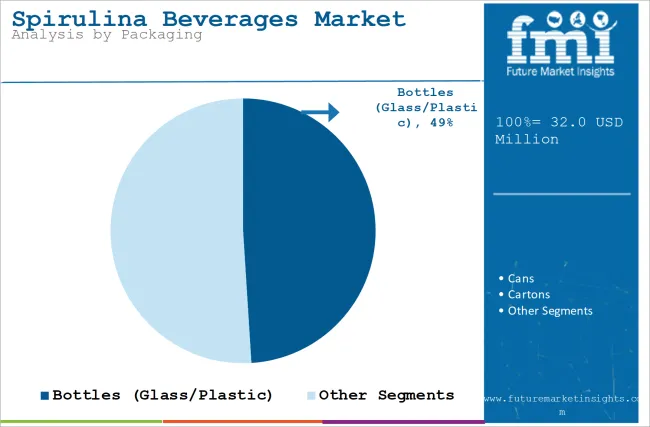
| Top Packaging (Glass) | 49% |
In terms of packaging, bottles-both glass and plastic-play an important role in the spirulina beverages market. Bottles offer consumers convenience as they can be carried easily for on-the-go consumption. For consumers, the glass bottle often symbolizes the premium feel, and plastic bottles will provide a more lightweight option for carrying.
As more consumers become environmentally conscious, such a trend would give much preference to brands with eco-friendly packaging. Efficient packaging enhances product recognition and availability, thus positively impacting the sales of the spirulina beverages segment.
By Distribution Channel
| Attributes | Market Share in 2026 |
|---|---|
| Top Distribution Channel (Convenience Stores) | 51% |
Convenience stores play a significant role in the distribution of spirulina beverages. People look for wholesome and nutritious drinks. These shops are a popular option for customers searching for quick and healthful drink options because they are conveniently positioned in neighbourhoods and are easy to get to. Spirulina beverages replace sugary sodas and other soft drinks as their production and distribution is increased.
Convenience stores house a wide variety of spirulina beverages. The easy availability of these drinks at convenience stores boosts brand visibility and creates room for impulsive purchases while helping the overall growth of the spirulina beverages market.
Key Drivers Fueling Demand in the Spirulina Beverages Category
Rising Health Awareness Encourages Demand
The growing health and nutrition awareness in the consumers drives the spirulina beverages market ahead. As people become informed about the benefits of superfoods, they tend to seek products that help in their well-being. Spirulina is known for high-protein content and a variety of vitamins and minerals, which makes it appealing for end-use consumption.
Shift Towards Plant-Based Diets
Another key factor influencing the growth of the spirulina beverages market is the increasing popularity of plant-based diets. Many individuals are adopting vegan or vegetarian lifestyles from a health aspect.
Spirulina, being a powerful plant-based protein source, fits perfectly into this trend. It provides essential nutrients that are often lacking in traditional diets, making it a preferred choice for those seeking to replace meat with healthier options. The rising number of consumers looking for sustainable food sources further fuels the demand for spirulina beverages positioning them as a viable alternative in the beverage market.
Convenience Shapes Consumer Trends
Convenience plays a crucial role in the spirulina beverages market expansion. Consumers lead a busy life and are looking for simpler ways to make their diets nutritious. Spirulina beverages provide the convenience of a nutrient-dense drink for on-the-go consumption.
Growth in online retail platforms has increased the availability of these products. As more individuals get to know the advantages of using spirulina in their daily routines, this helps in the organic expansion of the market.
Spirulina Processing is Expensive
One of the main challenges facing the spirulina beverages market is the high costs associated with growing and processing spirulina. Cultivating spirulina requires specific conditions, including controlled temperatures and clean water sources, which requires high costs of maintenance.
This further reflects on the product prices, and some people might not choose spirulina drinks. If prices remain high, it could limit the demand as many consumers can opt for better affordable beverage options. Companies need to find ways to reduce production costs without compromising quality to make spirulina beverages more accessible.
Unappealing Beverage Taste and Flavor
Another factor that may restrain the growth of the spirulina beverages market is the taste of spirulina itself. Some consumers find the flavor of spirulina to be strong or unappealing, that further deters them from trying these drinks.
Even though many brands are working on improving flavors by adding fruits or other ingredients, some people who are sensitive to taste, might not choose these drinks. Companies must invest in product development to improve the taste and attract a broader audience. If consumers do not enjoy the taste, it can limit the market potential and slow down its growth.
Consumer Trend Highlights in Functional and Nutritional Beverages
Spirulina beverage is popular in the consumer market and gained much traction for its nutritional profile. It highly contains Vitamins, essential nutrients, and minerals. A lot of consumers choose plant-based, nutrient-dense alternatives, mainly in the increasing wellness trend. Moreover, as plant-based and vegan-diets are becoming popular, Spirulina is much often included in these diets mainly for its plant-based protein, iron, and omega-3 fatty acids.
Regional Trends in Spirulina Beverages Across Developed and Emerging Markets
.webp "Top Country Growth Comparison Spirulina Beverages Market Cagr (2026 2036)")
| Countries | CAGR |
|---|---|
| USA | 9.5% |
| Germany | 8.9% |
| UK | 8.4% |
| China | 10.0% |
| India | 11.0% |
| France | 5.8% |
USA - Increase in Trends of Health and Wellness
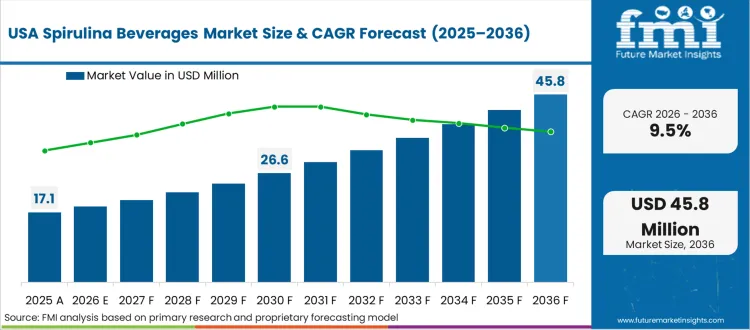
In the United States, the spirulina beverages industry is expected to grow at a CAGR of 9.5% over the forecast period. This is primarily because of an increasing trend of health and wellness among consumers.
Many Americans are turning to superfoods as part of their diets, and spirulina is well-regarded for its high protein and nutrient content. Functional beverages are increasing in demand because of the fitness culture.
Furthermore, there is a sizable market for organic goods in the USA, where buyers are prepared to spend more for natural components. The United States is a prospective market for spirulina beverages because of its emphasis on quality health.
Germany - The Food Industry Promotes Spirulina as an Organic Beverage
Germany is expected to witness a CAGR of 8.9% over the forecast period. Fueled by its pursuit for sustainability and organic products, Germany is experiencing growth in the spirulina beverages market. Germany has a strong organic food industry that promotes healthy organic food alternatives, which are environment friendly.
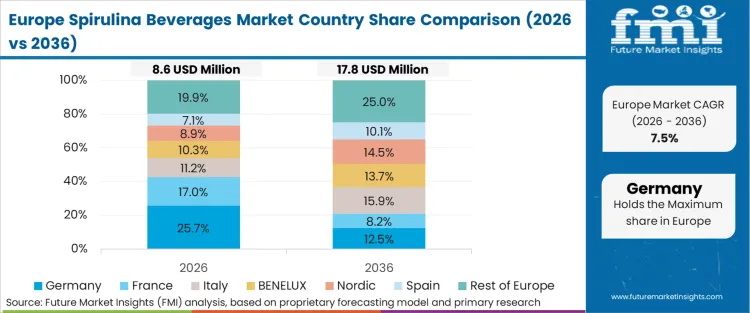
Spirulina, being marketed as a superfood, has always aligned with this trend. There are strict food safety standards in Germany, because of which, spirulina beverages of a high quality are produced. In addition, the health-conscious lifestyle and a demand for dietary supplements increases the popularity of spirulina drinks among German consumers.
UK - Consumer Preference Toward Healthy Drinks
In the UK, the spirulina beverages market is expected to grow at a CAGR of 8.4% over the forecast period because of trending veganism and plant-based diets. Many consumers are actively seeking alternatives to animal-based proteins, making spirulina an attractive choice due to its rich nutritional profile.
The Government of UK supports initiatives promoting healthy eating, which encourages people to explore superfoods. Additionally, social media plays a crucial role in influencing consumer choices, with many health influencers promoting the benefits of spirulina drinks. This combination of dietary trends and social influence positions the UK as a growing market for these beverages.
China - Rapid Urbanization Fuels the Demand for Health Supplements
China is projected to witness a CAGR or 10% during the forecast period. There is a rise in disposable incomes and urbanisation in China. Spirulina is seen as a beneficial supplement to diets, particularly by young people who place a high value on their health. Through numerous public health initiatives, the Government of China is also encouraging people to eat healthy and choose nutrient-dense foods.
India - Rise in Popularity to Attract Demand
In India, the spirulina drinks market is expected to grow at a CAGR of 11% during the forecast period. In India, the legacy of Ayurveda has continued since ages. Spirulina as a superfood, is extremely popular.
Ayurvedic brands advertise its benefits and sell it in the most effective way. With a growing middle-income groups, people spend on healthier products. As a vast population learn about the health benefits of superfoods and natural ingredients, spirulina drinks are likely to become more popular in India.
France - Consumer Awareness and Effective Marketing to Create More Avenues
France is projected to attain a positive CAGR of 5.8% by 2035 based on increased consumer awareness and wider adoption across various age groups. The marketing strategies will focus on educating consumers about spirulina’s health benefits.
The French market is likely to witness increased attention to food safety regulations around Spirulina, mainly by sourcing and manufacturing standards. The companies will have to comply with EU regulations on algae-based products and health claims.
| Demographic Aspect & Key Shifts | Comparison of Western Markets vs. Asian Markets (South Korea, and Japan) |
|---|---|
| Health-Conscious & Beauty-Focused Consumers (Millennials & Gen Z) | Western markets: Focus on functional beverages for immunity, energy, and wellness. Asian markets: Strong emphasis on beauty-from-within, spirulina for anti-aging and skin health. |
| Preference for Functional Beverages & Convenience | Western markets: Demand for immune-boosting, energy drinks in RTD formats like smoothies and shots. Asian markets: Demand for longevity, beauty benefits with spirulina in smaller, portable formats. |
| Sustainability & Eco-Conscious Consumers | Western markets: 40% of suppliers focus on sustainable sourcing and eco-friendly packaging. Asian markets: Japan demands organic certification and sustainable packaging for spirulina. |
| Urban Consumers with Higher Disposable Income | Western markets: Consumers are willing to pay for premium spirulina products. Asian markets: Premium spirulina products are increasingly popular in South Korea and Japan, with focus on luxury wellness. |
| Online Shopping & Subscription Models | Western markets: 20% of suppliers use e-commerce platforms like Amazon for direct sales. Asian markets: South Korea favors online platforms and customized subscription services. |
Competitive Landscape Analysis in the Spirulina Beverages Market
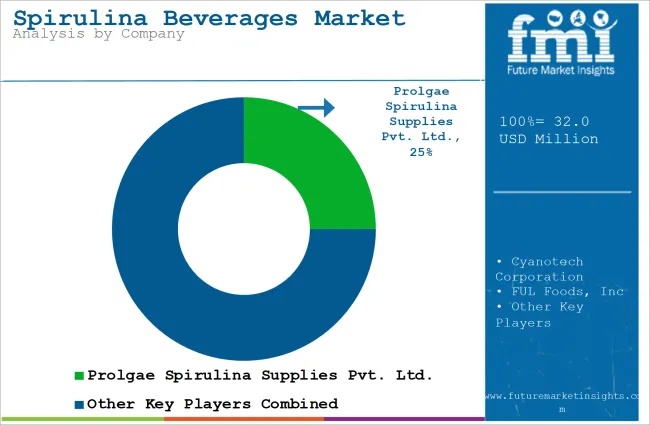
The spirulina drink market is changing rapidly, with a high competition among companies to acquire more customers. Top players are creating new products to meet the growing demand for healthy drinks, by launching new flavors and diversifying their varieties. This makes the spirulina drinks more popular for customers.
Online shopping has its own convenience. Spirulina beverage brands are introducing a variety of spirulina beverages on the e-commerce platforms. This helps them reach customers who prefer buying healthy drinks online.
Spirulina consumption needs to be done in limited amounts, because it is a concentrated source of protein. To ensure that one reaps maximum benefits out of the healthy spirulina drinks, their amount in the beverages is tightly maintained. There has to be a balance between nutritional benefits and the flavour of beverages. Spirulina beverage manufacturers are ensuring that the correct balance is maintained, and maximum profits are reaped.
| Company Name | Area of Focus |
|---|---|
| Prolgae Spirulina Supplies Pvt. Ltd. | Specializes in spirulina production and supplies |
| Cyanotech Corporation | Focuses on microalgae-based products |
| FUL Foods, Inc. | Known for creating health-focused spirulina beverages |
| Sol-ti, Inc. | Specializes in organic, ready-to-drink spirulina beverages |
Core Market Strategies Adopted by Leading Spirulina Beverage Brands
Businesses in the market for spirulina beverages are using a variety of tactics to survive and grow in the market. Product innovation is a crucial strategy, as companies are launching novel tastes and formulations that incorporate spirulina with other components such as fruits and superfoods.
This increases the beverages' commercial appeal and serves to focus on spirulina's health advantages as well. Clean-label products, which prioritise ingredient and production process transparency, are another area of interest for businesses.
The expansion of distribution channels, particularly through e-commerce platforms marks as an essential strategy. As online shopping increases, companies invest in their digital presence to reach a broader audience.
Collaborating with health influencers and using social media marketing are other effective ways to engage consumers and promote products. Additionally, companies explore sustainable packaging options to appeal to environmentally conscious consumers. By integrating these strategies, businesses in the spirulina beverages market can position themselves for long-term success.
Key Players Leading Growth and Innovation in the Spirulina Beverages Industry
- Prolgae Spirulina Supplies Pvt. Ltd.
- Cyanotech Corporation
- FUL Foods, Inc
- Sol-ti, Inc.
- RAW JUICERY INC
- PHYCOMANIA
- Buried Treasure Liquid Nutrients
- Wild Fuel
- Bitez of Love
Scope of the Report
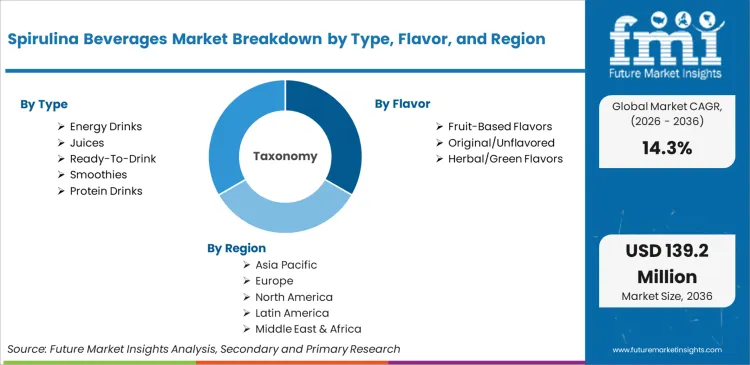
| Metric | Value |
|---|---|
| Quantitative Units | USD Million 36.6 to USD Million 139.2, at a CAGR of 14.3% |
| Market Definition | Spirulina beverages are functional drinks formulated with spirulina (Arthrospira platensis) as a primary bioactive ingredient, delivering protein, B-vitamins, iron, and antioxidant phycocyanin in ready-to-drink formats. These products span energy drinks, juices, smoothies, protein drinks, and ready-to-drink formats distributed through convenience, grocery, specialty health, and online channels. |
| Type Segmentation | Energy Drinks, Juices, Ready-To-Drink, Smoothies, Protein Drinks |
| Flavor Segmentation | Fruit-Based Flavors, Original/Unflavored, Herbal/Green Flavors |
| Packaging Segmentation | Bottles, Cans, Cartons |
| Distribution Channel Segmentation | Convenience Stores, Supermarkets/Hypermarkets, Specialty Health Stores, Online Retail |
| Regions Covered | North America, Latin America, Europe, East Asia, South Asia, Oceania, Middle East & Africa |
| Countries Covered | India, China, USA, Germany, UK, France, and 40 plus countries |
| Key Companies Profiled | Prolgae Spirulina Supplies Pvt. Ltd., Cyanotech Corporation, FUL Foods Inc, Sol-ti Inc., RAW JUICERY INC, PHYCOMANIA, Buried Treasure Liquid Nutrients, Wild Fuel, Bitez of Love |
| Forecast Period | 2026 to 2036 |
| Approach | Hybrid top-down and bottom-up modelling anchored by primary interviews and public data benchmarking |
Top Segments Studied in the Spirulina Beverages Market: Product Type, Flavor, Sales Channel, Target Demographic, and Region
The global spirulina beverages market is segmented into type, flavor, packaging, distribution channel, and region.
By Type:
By type, the global spirulina beverages market is sub-segmented into smoothies, juices, ready-to-drink (RTD) drinks, energy drinks, and protein drinks.
By Flavor:
By flavor, the global spirulina beverages market is sub-segmented into original/unflavored, fruit-based flavors, and herbal/green flavors.
By Packaging:
By Packaging, the global spirulina beverages market is sub-segmented into Bottles (Glass/Plastic), Cans, and Cartons.
By Distribution Channel:
By Distribution Channel, the global spirulina beverages market is sub-segmented into Online Retail, Supermarkets/Hypermarkets, Specialty Health Stores, and Convenience Stores.
By Region:
By Region, the global spirulina beverages market is sub-segmented into North America, Latin America, Western Europe, South Asia and Pacific, East Asia, and Middle East and Africa.
Bibliography
- European Food Safety Authority. (2024). Scientific Opinion on Spirulina as a Novel Food Ingredient. EFSA Journal.
- Food and Agriculture Organization of the United Nations. (2024). Spirulina Production and Utilization: Technical Guidelines. FAO.
- United States Food and Drug Administration. (2024). GRAS Notification for Spirulina (Arthrospira platensis). FDA.
- World Health Organization. (2024). Microalgae in Human Nutrition: Safety and Efficacy Review. WHO.
- Algae Biomass Organization. (2024). State of the Algae Industry Report. ABO.
This bibliography is provided for reader reference. The full FMI report contains the complete reference list with primary research documentation.
Frequently Asked Questions
How large is the demand for Spirulina Beverages in the global market in 2026?
Demand for Spirulina Beverages in the global market is estimated to be valued at USD Million 36.6 in 2026.
What will be the market size of Spirulina Beverages in the global market by 2036?
Market size for Spirulina Beverages is projected to reach USD Million 139.2 by 2036.
What is the expected demand growth for Spirulina Beverages in the global market between 2026 and 2036?
Demand for Spirulina Beverages is expected to grow at a CAGR of 14.3% between 2026 and 2036.
Which Type is poised to lead global sales by 2026?
Energy Drinks accounts for 38.0% share in 2026.
How significant is the role of Fruit-Based Flavors in Flavor?
Fruit-Based Flavors commands 51.0% of the flavor segment in 2026.
What is the growth outlook for India?
India is projected to grow at a CAGR of 11.0% during 2026 to 2036.
What is the growth rate for China in this market?
China is projected to expand at a CAGR of 10.0% during 2026 to 2036.
What is Spirulina Beverages and what is it mainly used for?
Spirulina beverages are functional drinks formulated with spirulina (Arthrospira platensis) as a primary bioactive ingredient, delivering protein, B-vitamins, iron, and antioxidant phycocyanin in ready-to-drink formats. These products span energy drinks, juices, smoothies, protein drinks, and ready-to-drink formats distributed through convenience, grocery, specialty health, and online channels.
What is included in the scope of this Spirulina Beverages report?
Market scope includes spirulina-infused energy drinks, juices, ready-to-drink beverages, smoothies, and protein drinks in bottle, can, and carton packaging. The report covers global and regional market sizes from 2026 to 2036, segmented by type, flavour, packaging, distribution channel, and geography.
What is excluded from the scope of this report?
Spirulina capsules, tablets, and powder supplements sold without beverage formulation are excluded. Spirulina used as a food colouring ingredient in beverages where it serves a pigmentation rather than nutritional function falls outside scope.
What does market forecast mean on this page?
The market forecast represents a model-based projection built on defined industry and supply chain assumptions for strategic planning purposes.
How does FMI build and validate the Spirulina Beverages forecast?
Forecasting models apply a hybrid top-down and bottom-up methodology and cross-validate projections against publicly available industry data and primary research inputs.
What does zero reliance on speculative third-party market research mean here?
Primary interviews, verified public regulatory documentation, and official industry standards registries are used instead of unverified syndicated estimates.
Preview the report firsthand - request a free sample
Get SampleGet the brochure for pricing and purchase details.
Get PDFTable of Content
- Executive Summary
- Global Market Outlook
- Demand-side Trends
- Supply-side Trends
- Technology Roadmap Analysis
- Analysis and Recommendations
- Market Overview
- Market Coverage / Taxonomy
- Market Definition / Scope / Limitations
- Research Methodology
- Chapter Orientation
- Analytical Lens and Working Hypotheses
- Market Structure, Signals, and Trend Drivers
- Benchmarking and Cross-market Comparability
- Market Sizing, Forecasting, and Opportunity Mapping
- Research Design and Evidence Framework
- Desk Research Programme (Secondary Evidence)
- Company Annual and Sustainability Reports
- Peer-reviewed Journals and Academic Literature
- Corporate Websites, Product Literature, and Technical Notes
- Earnings Decks and Investor Briefings
- Statutory Filings and Regulatory Disclosures
- Technical White Papers and Standards Notes
- Trade Journals, Industry Magazines, and Analyst Briefs
- Conference Proceedings, Webinars, and Seminar Materials
- Government Statistics Portals and Public Data Releases
- Press Releases and Reputable Media Coverage
- Specialist Newsletters and Curated Briefings
- Sector Databases and Reference Repositories
- FMI Internal Proprietary Databases and Historical Market Datasets
- Subscription Datasets and Paid Sources
- Social Channels, Communities, and Digital Listening Inputs
- Additional Desk Sources
- Expert Input and Fieldwork (Primary Evidence)
- Primary Modes
- Qualitative Interviews and Expert Elicitation
- Quantitative Surveys and Structured Data Capture
- Blended Approach
- Why Primary Evidence is Used
- Field Techniques
- Interviews
- Surveys
- Focus Groups
- Observational and In-context Research
- Social and Community Interactions
- Stakeholder Universe Engaged
- C-suite Leaders
- Board Members
- Presidents and Vice Presidents
- R&D and Innovation Heads
- Technical Specialists
- Domain Subject-matter Experts
- Scientists
- Physicians and Other Healthcare Professionals
- Governance, Ethics, and Data Stewardship
- Research Ethics
- Data Integrity and Handling
- Primary Modes
- Tooling, Models, and Reference Databases
- Desk Research Programme (Secondary Evidence)
- Data Engineering and Model Build
- Data Acquisition and Ingestion
- Cleaning, Normalisation, and Verification
- Synthesis, Triangulation, and Analysis
- Quality Assurance and Audit Trail
- Market Background
- Market Dynamics
- Drivers
- Restraints
- Opportunity
- Trends
- Scenario Forecast
- Demand in Optimistic Scenario
- Demand in Likely Scenario
- Demand in Conservative Scenario
- Opportunity Map Analysis
- Product Life Cycle Analysis
- Supply Chain Analysis
- Investment Feasibility Matrix
- Value Chain Analysis
- PESTLE and Porter’s Analysis
- Regulatory Landscape
- Regional Parent Market Outlook
- Production and Consumption Statistics
- Import and Export Statistics
- Market Dynamics
- Global Market Analysis 2021 to 2025 and Forecast, 2026 to 2036
- Historical Market Size Value (USD Million) Analysis, 2021 to 2025
- Current and Future Market Size Value (USD Million) Projections, 2026 to 2036
- Y-o-Y Growth Trend Analysis
- Absolute $ Opportunity Analysis
- Global Market Pricing Analysis 2021 to 2025 and Forecast 2026 to 2036
- Global Market Analysis 2021 to 2025 and Forecast 2026 to 2036, By Type
- Introduction / Key Findings
- Historical Market Size Value (USD Million) Analysis By Type , 2021 to 2025
- Current and Future Market Size Value (USD Million) Analysis and Forecast By Type , 2026 to 2036
- Energy Drinks
- Juices
- Ready-To-Drink
- Smoothies
- Protein Drinks
- Energy Drinks
- Y-o-Y Growth Trend Analysis By Type , 2021 to 2025
- Absolute $ Opportunity Analysis By Type , 2026 to 2036
- Global Market Analysis 2021 to 2025 and Forecast 2026 to 2036, By Flavor
- Introduction / Key Findings
- Historical Market Size Value (USD Million) Analysis By Flavor, 2021 to 2025
- Current and Future Market Size Value (USD Million) Analysis and Forecast By Flavor, 2026 to 2036
- Fruit-Based Flavors
- Original/Unflavored
- Herbal/Green Flavors
- Fruit-Based Flavors
- Y-o-Y Growth Trend Analysis By Flavor, 2021 to 2025
- Absolute $ Opportunity Analysis By Flavor, 2026 to 2036
- Global Market Analysis 2021 to 2025 and Forecast 2026 to 2036, By Packaging
- Introduction / Key Findings
- Historical Market Size Value (USD Million) Analysis By Packaging, 2021 to 2025
- Current and Future Market Size Value (USD Million) Analysis and Forecast By Packaging, 2026 to 2036
- Bottles
- Cans
- Cartons
- Bottles
- Y-o-Y Growth Trend Analysis By Packaging, 2021 to 2025
- Absolute $ Opportunity Analysis By Packaging, 2026 to 2036
- Global Market Analysis 2021 to 2025 and Forecast 2026 to 2036, By Distribution Channel
- Introduction / Key Findings
- Historical Market Size Value (USD Million) Analysis By Distribution Channel, 2021 to 2025
- Current and Future Market Size Value (USD Million) Analysis and Forecast By Distribution Channel, 2026 to 2036
- Convenience Stores
- Supermarkets/Hypermarkets
- Specialty Health Stores
- Online Retail
- Convenience Stores
- Y-o-Y Growth Trend Analysis By Distribution Channel, 2021 to 2025
- Absolute $ Opportunity Analysis By Distribution Channel, 2026 to 2036
- Global Market Analysis 2021 to 2025 and Forecast 2026 to 2036, By Region
- Introduction
- Historical Market Size Value (USD Million) Analysis By Region, 2021 to 2025
- Current Market Size Value (USD Million) Analysis and Forecast By Region, 2026 to 2036
- North America
- Latin America
- Western Europe
- Eastern Europe
- East Asia
- South Asia and Pacific
- Middle East & Africa
- Market Attractiveness Analysis By Region
- North America Market Analysis 2021 to 2025 and Forecast 2026 to 2036, By Country
- Historical Market Size Value (USD Million) Trend Analysis By Market Taxonomy, 2021 to 2025
- Market Size Value (USD Million) Forecast By Market Taxonomy, 2026 to 2036
- By Country
- USA
- Canada
- Mexico
- By Type
- By Flavor
- By Packaging
- By Distribution Channel
- By Country
- Market Attractiveness Analysis
- By Country
- By Type
- By Flavor
- By Packaging
- By Distribution Channel
- Key Takeaways
- Latin America Market Analysis 2021 to 2025 and Forecast 2026 to 2036, By Country
- Historical Market Size Value (USD Million) Trend Analysis By Market Taxonomy, 2021 to 2025
- Market Size Value (USD Million) Forecast By Market Taxonomy, 2026 to 2036
- By Country
- Brazil
- Chile
- Rest of Latin America
- By Type
- By Flavor
- By Packaging
- By Distribution Channel
- By Country
- Market Attractiveness Analysis
- By Country
- By Type
- By Flavor
- By Packaging
- By Distribution Channel
- Key Takeaways
- Western Europe Market Analysis 2021 to 2025 and Forecast 2026 to 2036, By Country
- Historical Market Size Value (USD Million) Trend Analysis By Market Taxonomy, 2021 to 2025
- Market Size Value (USD Million) Forecast By Market Taxonomy, 2026 to 2036
- By Country
- Germany
- UK
- Italy
- Spain
- France
- Nordic
- BENELUX
- Rest of Western Europe
- By Type
- By Flavor
- By Packaging
- By Distribution Channel
- By Country
- Market Attractiveness Analysis
- By Country
- By Type
- By Flavor
- By Packaging
- By Distribution Channel
- Key Takeaways
- Eastern Europe Market Analysis 2021 to 2025 and Forecast 2026 to 2036, By Country
- Historical Market Size Value (USD Million) Trend Analysis By Market Taxonomy, 2021 to 2025
- Market Size Value (USD Million) Forecast By Market Taxonomy, 2026 to 2036
- By Country
- Russia
- Poland
- Hungary
- Balkan & Baltic
- Rest of Eastern Europe
- By Type
- By Flavor
- By Packaging
- By Distribution Channel
- By Country
- Market Attractiveness Analysis
- By Country
- By Type
- By Flavor
- By Packaging
- By Distribution Channel
- Key Takeaways
- East Asia Market Analysis 2021 to 2025 and Forecast 2026 to 2036, By Country
- Historical Market Size Value (USD Million) Trend Analysis By Market Taxonomy, 2021 to 2025
- Market Size Value (USD Million) Forecast By Market Taxonomy, 2026 to 2036
- By Country
- China
- Japan
- South Korea
- By Type
- By Flavor
- By Packaging
- By Distribution Channel
- By Country
- Market Attractiveness Analysis
- By Country
- By Type
- By Flavor
- By Packaging
- By Distribution Channel
- Key Takeaways
- South Asia and Pacific Market Analysis 2021 to 2025 and Forecast 2026 to 2036, By Country
- Historical Market Size Value (USD Million) Trend Analysis By Market Taxonomy, 2021 to 2025
- Market Size Value (USD Million) Forecast By Market Taxonomy, 2026 to 2036
- By Country
- India
- ASEAN
- Australia & New Zealand
- Rest of South Asia and Pacific
- By Type
- By Flavor
- By Packaging
- By Distribution Channel
- By Country
- Market Attractiveness Analysis
- By Country
- By Type
- By Flavor
- By Packaging
- By Distribution Channel
- Key Takeaways
- Middle East & Africa Market Analysis 2021 to 2025 and Forecast 2026 to 2036, By Country
- Historical Market Size Value (USD Million) Trend Analysis By Market Taxonomy, 2021 to 2025
- Market Size Value (USD Million) Forecast By Market Taxonomy, 2026 to 2036
- By Country
- Kingdom of Saudi Arabia
- Other GCC Countries
- Turkiye
- South Africa
- Other African Union
- Rest of Middle East & Africa
- By Type
- By Flavor
- By Packaging
- By Distribution Channel
- By Country
- Market Attractiveness Analysis
- By Country
- By Type
- By Flavor
- By Packaging
- By Distribution Channel
- Key Takeaways
- Key Countries Market Analysis
- USA
- Pricing Analysis
- Market Share Analysis, 2025
- By Type
- By Flavor
- By Packaging
- By Distribution Channel
- Canada
- Pricing Analysis
- Market Share Analysis, 2025
- By Type
- By Flavor
- By Packaging
- By Distribution Channel
- Mexico
- Pricing Analysis
- Market Share Analysis, 2025
- By Type
- By Flavor
- By Packaging
- By Distribution Channel
- Brazil
- Pricing Analysis
- Market Share Analysis, 2025
- By Type
- By Flavor
- By Packaging
- By Distribution Channel
- Chile
- Pricing Analysis
- Market Share Analysis, 2025
- By Type
- By Flavor
- By Packaging
- By Distribution Channel
- Germany
- Pricing Analysis
- Market Share Analysis, 2025
- By Type
- By Flavor
- By Packaging
- By Distribution Channel
- UK
- Pricing Analysis
- Market Share Analysis, 2025
- By Type
- By Flavor
- By Packaging
- By Distribution Channel
- Italy
- Pricing Analysis
- Market Share Analysis, 2025
- By Type
- By Flavor
- By Packaging
- By Distribution Channel
- Spain
- Pricing Analysis
- Market Share Analysis, 2025
- By Type
- By Flavor
- By Packaging
- By Distribution Channel
- France
- Pricing Analysis
- Market Share Analysis, 2025
- By Type
- By Flavor
- By Packaging
- By Distribution Channel
- India
- Pricing Analysis
- Market Share Analysis, 2025
- By Type
- By Flavor
- By Packaging
- By Distribution Channel
- ASEAN
- Pricing Analysis
- Market Share Analysis, 2025
- By Type
- By Flavor
- By Packaging
- By Distribution Channel
- Australia & New Zealand
- Pricing Analysis
- Market Share Analysis, 2025
- By Type
- By Flavor
- By Packaging
- By Distribution Channel
- China
- Pricing Analysis
- Market Share Analysis, 2025
- By Type
- By Flavor
- By Packaging
- By Distribution Channel
- Japan
- Pricing Analysis
- Market Share Analysis, 2025
- By Type
- By Flavor
- By Packaging
- By Distribution Channel
- South Korea
- Pricing Analysis
- Market Share Analysis, 2025
- By Type
- By Flavor
- By Packaging
- By Distribution Channel
- Russia
- Pricing Analysis
- Market Share Analysis, 2025
- By Type
- By Flavor
- By Packaging
- By Distribution Channel
- Poland
- Pricing Analysis
- Market Share Analysis, 2025
- By Type
- By Flavor
- By Packaging
- By Distribution Channel
- Hungary
- Pricing Analysis
- Market Share Analysis, 2025
- By Type
- By Flavor
- By Packaging
- By Distribution Channel
- Kingdom of Saudi Arabia
- Pricing Analysis
- Market Share Analysis, 2025
- By Type
- By Flavor
- By Packaging
- By Distribution Channel
- Turkiye
- Pricing Analysis
- Market Share Analysis, 2025
- By Type
- By Flavor
- By Packaging
- By Distribution Channel
- South Africa
- Pricing Analysis
- Market Share Analysis, 2025
- By Type
- By Flavor
- By Packaging
- By Distribution Channel
- USA
- Market Structure Analysis
- Competition Dashboard
- Competition Benchmarking
- Market Share Analysis of Top Players
- By Regional
- By Type
- By Flavor
- By Packaging
- By Distribution Channel
- Competition Analysis
- Competition Deep Dive
- Prolgae Spirulina Supplies Pvt. Ltd.
- Overview
- Product Portfolio
- Profitability by Market Segments (Product/Age /Sales Channel/Region)
- Sales Footprint
- Strategy Overview
- Marketing Strategy
- Product Strategy
- Channel Strategy
- Cyanotech Corporation
- FUL Foods, Inc
- Sol-ti, Inc.
- RAW JUICERY INC
- PHYCOMANIA
- Buried Treasure Liquid Nutrients
- Wild Fuel
- Bitez of Love
- Prolgae Spirulina Supplies Pvt. Ltd.
- Competition Deep Dive
- Assumptions & Acronyms Used


