

- Market Size (2026)
- USD 193.0 Mn
- Forecast (2036)
- USD 875.0 Mn
- CAGR (2026 to 2036)
- 16.3%
Battery-Turbine Hybrid Propulsion Control Units Market Size, Forecast, and Outlook By FMI
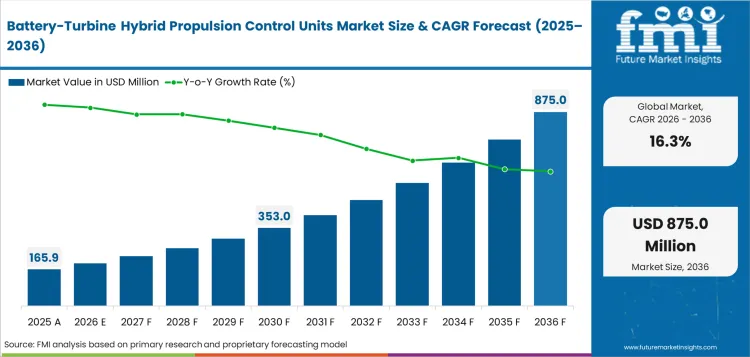
Battery-turbine hybrid propulsion control units generated USD 165.9 million in 2025, with demand expected to reach USD 193.0 million by end-2026. The market is forecast to advance at a 16.3% CAGR from 2026 to 2036 and reach USD 875.0 million by 2036.
Summary of the Battery-Turbine Hybrid Propulsion Control Units Market
- Demand and Growth Drivers
- Aircraft makers need hybrid control units as battery discharge and turbine generation move into one power path.
- Certification evidence raises demand for control hardware able to manage safe power transfer across flight modes.
- High-voltage aircraft designs reinforce demand for protected switching and thermal control inside propulsion electronics.
- Product and Segment View
- OEM fitment is projected to capture 71.0% of sales channel share in 2026 as aircraft makers prefer control units validated during factory integration.
- High voltage systems are expected to represent 46.0% of voltage class demand in 2026, mainly as aircraft programs work to reduce cable weight.
- Series hybrid layouts hold stronger commercial value since turbine generators can supply electric power buses with less mechanical coupling.
- Geography and Competitive Outlook
- The USA is expected to record a CAGR of 18.2% through 2036 as powered-lift certification activity expands.
- France is projected to expand at 17.6% CAGR by 2036 as hybrid-electric flight testing deepens.
- Companies combining propulsion control software with aircraft-grade power electronics are strengthening their market position during the forecast period.
- Analyst Opinion
- Nikhil Kaitwade, Principal Consultant for Automotive at FMI, says, “Battery-turbine hybrid propulsion control is becoming evidence for aircraft programs seeking range with lower fuel burn. Aircraft makers need power units balancing generator output and battery discharge. High-voltage insulation and software assurance raise cost while certification records reduce redesign risk.”
- Battery-Turbine Hybrid Propulsion Control Units Market Value Analysis
- The battery-turbine hybrid propulsion control units market is moving from demonstrator hardware into a structured aircraft certification demand base.
- Aircraft programs are adopting these units to manage battery power and turbine-generator output with stronger safety control.
- The market is benefiting from deeper use of aircraft electrification across regional aircraft and advanced air mobility programs.
- Demand is carried by control records meeting flight safety and power transfer requirements. These records help align propulsion performance with aircraft certification timing.
Key Takeaways, Market Size, and Forecast
- The battery-turbine hybrid propulsion control units market was valued at USD 165.9 million in 2025.
- By 2036, the battery-turbine hybrid propulsion control units market is expected to be worth USD 875.0 million.
- From 2026 to 2036, the market is projected to expand at a CAGR of 16.3%.
- The market is projected to create an incremental opportunity of USD 682.0 million between 2026 and 2036.
- In 2026, OEM fitment is expected to account for 71.0% of sales channel demand.
- The USA is projected to lead at 18.2% CAGR, followed by France at 17.6% CAGR, reflecting stronger hybrid-electric aircraft development activity.
Hybrid aircraft programs need control units with strong safety proof before large orders can begin. EASA’s February 2025 certification of Safran’s ENGINeUS 100 under SC E-19 gives aircraft makers a reference point for electric and hybrid propulsion approval. The certified B1 model starts a series planned to cover 89 kW to 180 kW, which makes documentation quality a major supplier filter. Airbus proved aircraft-level testing through EcoPulse, which completed about 50 test flights and 100 flight hours with an 800 VDC high-voltage battery. RTX added another signal in June 2025 by testing a hybrid propulsion system using a 1 MW electric motor and 200 kWh batteries. Control unit suppliers with certification records and high voltage test evidence will be better placed for long-cycle OEM programs. Suppliers who demonstrate strong thermal control capability will be better positioned for long-cycle OEM programs.
Battery-Turbine Hybrid Propulsion Control Units Market Definition
The Battery-Turbine hybrid propulsion control units market includes aircraft-grade electronic control systems used before and during hybrid propulsion operation. These systems manage battery power, turbine generator output, inverter commands, and thermal limits. Scope includes power management units, hybrid controllers, battery control units, turbine controllers, and thermal controllers. Finished aircraft sales and standalone batteries are outside the scope.
Battery-Turbine Hybrid Propulsion Control Units Market Inclusions
Market scope covers all commercially traded battery-turbine hybrid propulsion control units categorized by control architecture, including power management units, hybrid controllers, battery control units, turbine controllers, and thermal controllers; propulsion layout, including series hybrid, parallel hybrid, turboelectric, and range extender systems; platform type, including regional aircraft, AAM aircraft, UAVs, business aircraft, and defense aircraft; and voltage class, including high voltage, medium voltage, and low voltage systems. Revenue scope covers 2026 to 2036. Key stakeholders include aircraft manufacturers, propulsion system integrators, turbine generator suppliers, battery system providers, avionics companies, power electronics manufacturers, aerospace testing laboratories, certification bodies, defense agencies, airlines, component distributors, and MRO service providers.
Battery-Turbine Hybrid Propulsion Control Units Market Exclusions
Scope does not include conventional FADEC systems, standalone turbine engines, battery cells, ground charging hardware, automotive hybrid controllers, or complete aircraft sales.
Battery-Turbine Hybrid Propulsion Control Units Market Research Methodology
- Primary Research: Across key markets, FMI analysts assessed aircraft OEMs, propulsion system integrators, avionics companies, and power electronics specialists.
- Desk Research: Combined data from certification guidance, company program disclosures, and hybrid-electric aircraft development records.
- Market sizing and forecasting: Added likely control-unit use across platform types and propulsion layouts from the bottom up.
- Data validation: Cross-checked every three months against aircraft program activity, certification progress, and company product coverage.
Why is the Battery-Turbine Hybrid Propulsion Control Units Market Growing?
- Aircraft programs are using hybrid control earlier to reduce redesign risk before flight certification begins.
- Power electronics partners are becoming important as aircraft designs combine batteries and turbine generators.
- Manufacturers are outsourcing complex control modules to firms with stronger aerospace software and testing systems.
Powered-lift certification is increasing the need for reliable energy control across new aircraft formats. FAA stated in October 2024 powered-lift is the first new civil aircraft category since helicopters in the 1940s. This regulatory step helps create a clearer path for air taxis and cargo aircraft using electric propulsion. Control-unit providers gain importance as aircraft makers need safe changeover between power sources during flight.
Hybrid-electric regional aircraft programs require deeper power control compared with small battery-only aircraft. Clean Aviation’s HERA project targets regional turboprop aircraft carrying 50 to 100 passengers over missions up to 1000 km with entry into service from 2035. This aircraft scale increases the need for coordinated battery and turbine generator control. Suppliers with verified energy scheduling can address future hybrid aircraft designs.
Market Segmentation Analysis
- Power management units are projected to hold a 34.0% control architecture share in 2026, as hybrid aircraft programs need supervisory energy scheduling between turbine output and battery discharge.
- Series hybrid layouts lead propulsion configuration with 41.0% share, supported by generator-fed electric powertrains which simplify control rationale.
- Regional aircraft account for 32.5% of platform type share in 2026, reflecting short-haul use cases where range protection is a key design priority.
- High voltage systems represent 46.0% of voltage class revenue share, driven by compact power distribution needs across hybrid propulsion designs.
- OEM fitment leads the sales channel mix with 71.0% share in 2026, since line-fit certification records carry higher value in aircraft control-unit adoption.
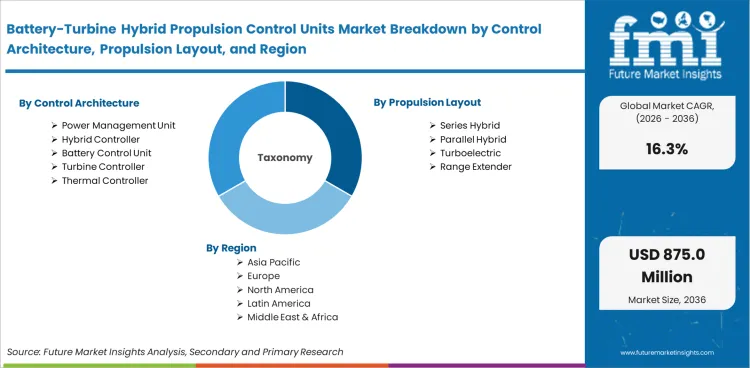
The market for Battery-Turbine hybrid propulsion control units is divided into five primary segment groups based on control architecture, propulsion layout, platform type, voltage class, and sales channel. Control architecture includes power management unit, hybrid controller, battery control unit, turbine controller, and thermal controller. Propulsion layout includes series hybrid, parallel hybrid, turboelectric, and range extender. Platform type includes regional aircraft, AAM Aircraft, UAVs, business aircraft, and defense aircraft. Voltage class includes high voltage, medium voltage, and low voltage. Sales channel includes oem fitment, retrofit kits, test units, and service spares.
Insights into Battery-Turbine Hybrid Propulsion Control Units Market by Control Architecture
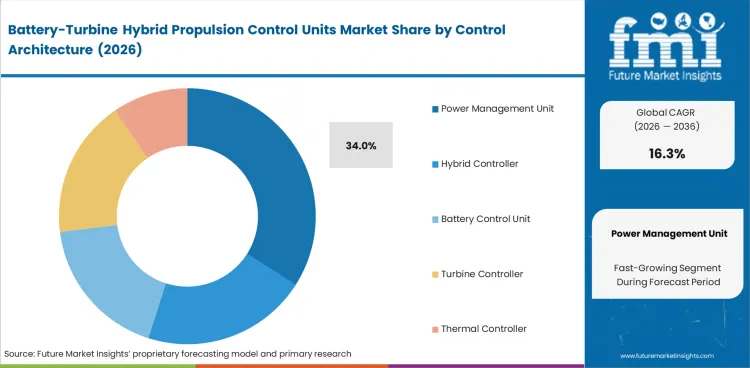
- Power management units are predicted to hold 34.0% of the control architecture segment in 2026. These units support central coordination across turbine output and battery discharge during flight.
- Hybrid controllers and battery control units address selected aircraft programs. Their value improves in designs needing stronger battery protection and faster thermal response.
Insights into Battery-Turbine Hybrid Propulsion Control Units Market by Propulsion Layout
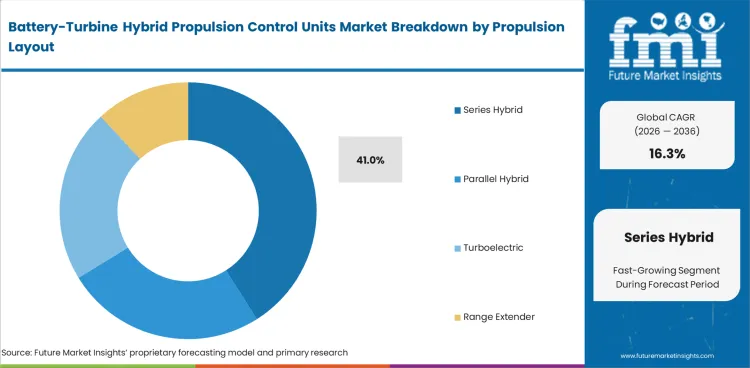
- Series hybrid layouts are poised to account for 41.0% of the propulsion layout segment in 2026. Generator-fed electric architectures reduce mechanical coupling needs across regional aircraft programs.
- Parallel hybrid and turboelectric formats favor selected platform needs. Their role improves in aircraft programs requiring direct engine assistance or distributed electric power.
Insights into Battery-Turbine Hybrid Propulsion Control Units Market by Platform Type
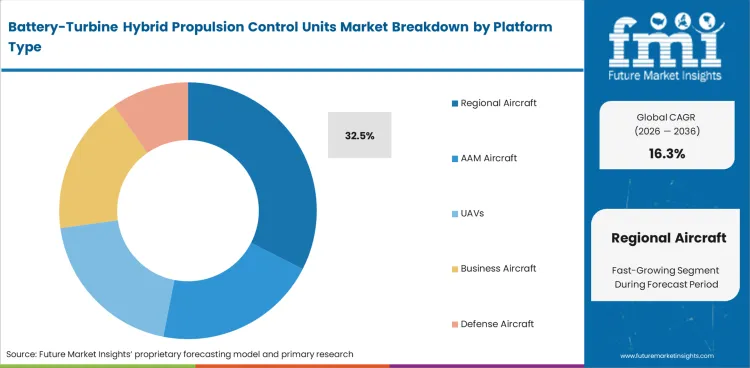
- Regional aircraft are forecast to hold 32.5% of platform type demand in 2026. Short-haul operators need range assurance and fuel savings across scheduled flight routes.
- AAM aircraft and UAVs address earlier-stage demand. Their value improves in programs requiring compact control units and fast power response.
Insights into Battery-Turbine Hybrid Propulsion Control Units Market by Voltage Class
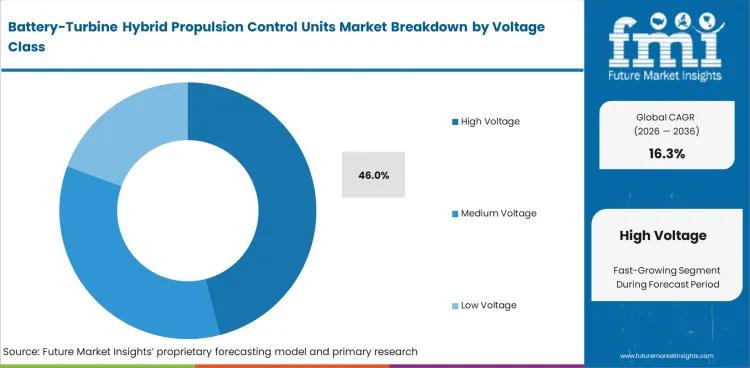
- High voltage systems are expected to represent 46.0% of voltage class demand in 2026. Higher-voltage formats help reduce wiring weight and improve packaging across aircraft power systems.
- Medium voltage systems enhance smaller aircraft and test platforms. Their use improves in designs requiring lower insulation burden and simpler validation work.
Insights into Battery-Turbine Hybrid Propulsion Control Units Market by Sales Channel
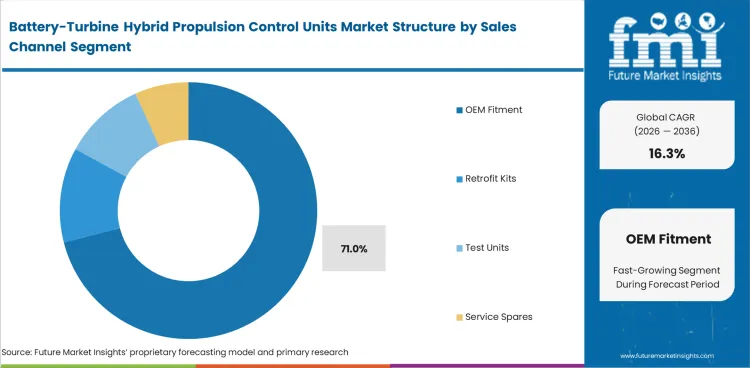
- OEM fitment is projected to hold 71.0% of sales channel demand in 2026. Aircraft makers prefer factory-installed units for certification control and aircraft-level documentation.
- Retrofit kits and test units favors demonstrator programs. Their value improves in aircraft trials requiring limited production hardware and controlled validation cycles.
Battery-Turbine Hybrid Propulsion Control Units Market Drivers, Restraints, and Opportunities
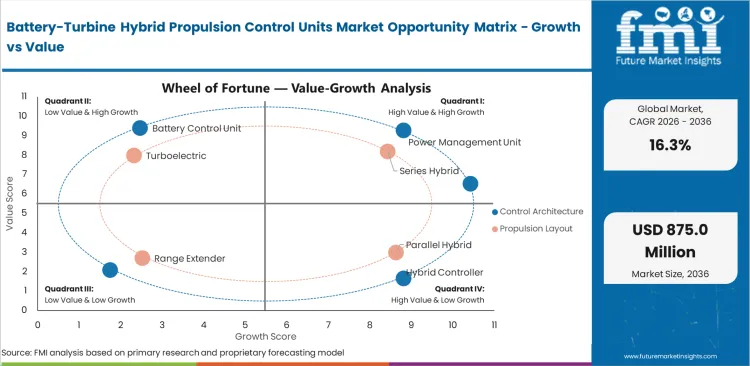
- Certification filing pressure is creating structured demand for hybrid propulsion control evidence across higher-risk aircraft programs.
- Advanced testing tools and skilled software teams increase pricing pressure for smaller control-unit providers.
- Regional and AAM aircraft improve service opportunity through thermal control and power electronics validation needs.
Battery-turbine hybrid propulsion control units keep growing as aircraft programs need safer power scheduling between battery packs and turbine-generator systems. Certification pressure and high validation costs can slow broader adoption. Growth continues through high-voltage control units and regional aircraft programs.
Battery Cost Dispersion Is Resetting Quotes
Battery-turbine hybrid propulsion control unit pricing is shifting from fixed prototype quotes toward indexed battery-side cost clauses. In June 2025, NREL placed the 2024 starting point for a four-hour lithium-ion battery system at $334/kWh and projected 2025 costs at $295/kWh, $321/kWh, or $350/kWh across low, mid, and high cases. The same update notes the high case reflects near-term supply-chain constraints and tariff impacts. For propulsion control units, the signal does not suggest aerospace pack pricing will match grid storage. Thermal control logic now carries a wider cost range across certified propulsion systems. Certification buffers now carry a broader cost range across complex aerospace programs. Suppliers are defending quote validity periods and charging separately for software calibration. Suppliers are charging separately for safety case rework due to evolving requirements.
Fuel Volatility Supports Value-Based Pricing
Fuel-price volatility is changing how battery-turbine hybrid propulsion control units are priced. In September 2025, BTS reported that USA scheduled airlines used 1.760 billion gallons of fuel in July 2025, up 4.3% from June, while the cost per gallon rose 5.5% to $2.34 and total fuel expenditure increased 10.0% to $4.12 billion. The month-to-month swing strengthens the commercial case for controls optimizing turbine loading. It supports battery assist with improved efficiency across varying operating conditions. Route level energy management benefits from these controls with stronger overall system performance. It gives certified suppliers room to price beyond hardware cost when they can show fuel-burn reduction, redundancy, and dispatch reliability. Buyers should expect value-based pricing, milestone payments, and tighter warranty boundaries.
Analysis of Battery-Turbine Hybrid Propulsion Control Units Market By Key Countries
.webp "Top Country Growth Comparison Battery Turbine Hybrid Propulsion Control Units Market Cagr (2026 2036)")
| Country | CAGR |
|---|---|
| USA | 18.2% |
| France | 17.6% |
| Germany | 16.9% |
| UK | 16.5% |
| China | 16.1% |
| Japan | 15.4% |
| Brazil | 14.9% |
Source: Future Market Insights, 2026.
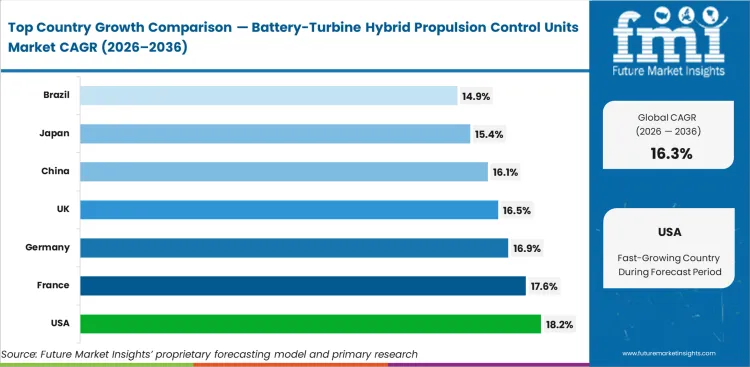
Battery-Turbine Hybrid Propulsion Control Units Market CAGR Analysis By Country
- USA leads the country group with an 18.2% CAGR through 2036, supported by powered-lift certification activity and defense-backed hybrid propulsion programs.
- France is projected to grow at 17.6% CAGR, with hybrid-electric flight trials and aircraft systems integration strengthening demand for control-unit technologies.
- Germany’s 16.9% CAGR is due to deep aerospace research capacity and continued work on hybrid powertrain configurations.
- UK demand is expected to advance at 16.5% CAGR by 2036 as aerospace funding and control electronics capability support early-stage platform development.
- China records a 16.1% CAGR, helped by low-altitude aviation programs and the scale of its civil aviation ecosystem.
- Japan is set to expand at 15.4% CAGR, as public funding continues to lift the electrified aircraft propulsion technologies.
- Brazil’s 14.9% CAGR comes from eVTOL manufacturing momentum and established regional aircraft engineering expertise.
Demand for battery-turbine hybrid propulsion control units is forecast to rise at 16.3% CAGR from 2026 to 2036. Country-level analysis covers the major markets contributing to this forecast, with the key markets listed below.
Demand Outlook for Battery-Turbine Hybrid Propulsion Control Units Market in the USA
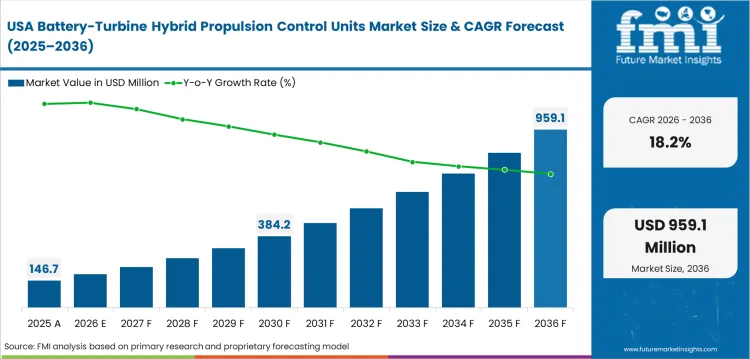
The USA battery-turbine hybrid propulsion control units industry is projected to record a CAGR of 18.2% through 2036. FAA issued final airworthiness criteria for Joby’s Model JAS4-1 powered-lift aircraft in March 2024, with effective criteria from April 2024. This certification activity creates a stronger base for USA Battery-Turbine hybrid propulsion control units. Local suppliers can gain from aircraft developers needing FAA-aligned control evidence before commercial service.
- Powered-lift certification activity raises demand for flight-safe power management and software evidence.
- Defense hybrid aircraft work increases demand for rugged control units and fault isolation.
- Aircraft makers need control suppliers with certification records and high-voltage electronics depth.
Sales Analysis of Battery-Turbine Hybrid Propulsion Control Units Market in France
The battery-turbine hybrid propulsion control units sector in France is expected to expand at a CAGR of 17.6% during the assessment period. French aircraft systems companies are using demonstrator programs to validate hybrid propulsion and control functions. A June 2025 French consortium announced work on hybrid-electric propulsion architecture for light aircraft with optimized propeller efficiency. This raises demand for France Battery-Turbine hybrid propulsion control units across general aviation and early regional aircraft pathways.
- French demonstrator programs reinforce demand for hybrid controllers and power management systems.
- Local aircraft systems groups can shorten the distance between flight testing and control-unit redesign.
- Hybrid-electric architecture work improves supplier readiness for advanced air mobility programs.
Demand Outlook for Battery-Turbine Hybrid Propulsion Control Units Market in Germany
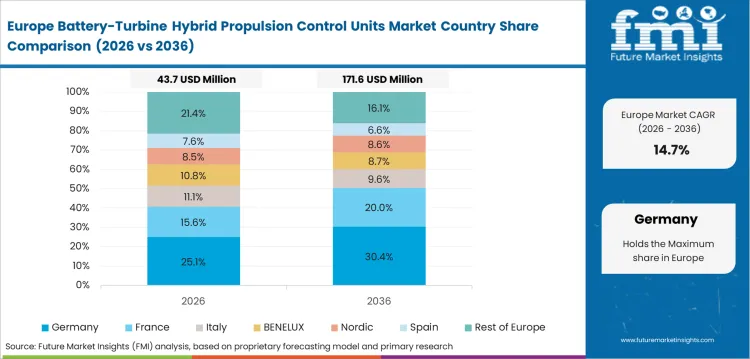
Germany's battery-turbine hybrid propulsion control units industry is forecast to grow at a CAGR of 16.9% by 2036. DLR presented future aircraft configurations in May 2024 showing battery-powered flight over 500 km and hybrid-electric operation with sustainable fuels up to 2800 km. This operating range gap increases the need for reliable control over energy source changeover. German suppliers with aircraft electronics and powertrain modeling depth can gain from early system design work.
- Aircraft research programs raise demand for battery and turbine generator control integration.
- German aerospace clusters strengthen testing depth for high-voltage and thermal safety functions.
- Regional aircraft concepts need control units able to manage mission length and power reserve.
Opportunity Analysis of Battery-Turbine Hybrid Propulsion Control Units Market in the UK
The battery-turbine hybrid propulsion control units segment in the UK is projected to advance at 16.5% CAGR over the forecast years. The UK government announced over GBP 250 million joint aerospace investment in June 2025 for green aerospace technologies including gas turbines and hydrogen-powered flight. This investment base improves demand for UK Battery-Turbine hybrid propulsion control units. Control suppliers can serve aircraft makers needing verified electrical control interfaces and system safety records.
- Aerospace funding helps move hybrid propulsion work from study programs toward hardware testing.
- UK avionics and control electronics capability improves access to aircraft-grade certification work.
- Aircraft developers need interface discipline across propulsion controls and aircraft interface device systems.
Future Outlook for Battery-Turbine Hybrid Propulsion Control Units Market in China
The battery-turbine hybrid propulsion control units industry in China is expected to post 16.1% CAGR by 2036. CAAC reported 148.52 billion tonne-km in total civil aviation transport turnover for 2024 in a January 2025 update. This aviation base boosts a large operating context for future electric and hybrid aircraft trials. Domestic aircraft programs need control units suited to local certification and high-volume manufacturing targets.
- Low-altitude aviation planning increases demand for certified power control electronics.
- Civil aviation scale enhances a future service base for hybrid propulsion inspection.
- Local aircraft developers need control units matching domestic safety and operating rules.
Demand Outlook for Battery-Turbine Hybrid Propulsion Control Units Market in Japan
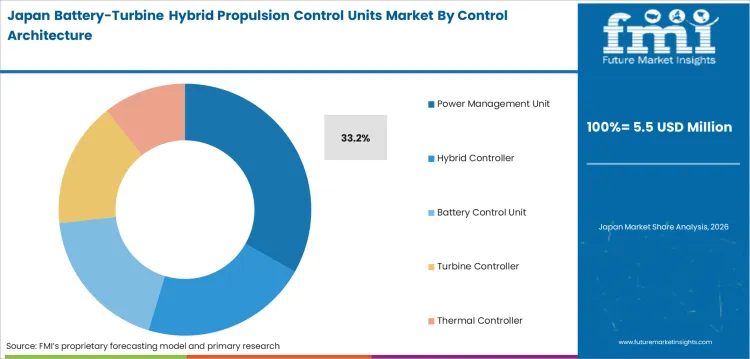
The battery-turbine hybrid propulsion control units industry in Japan is projected to record a CAGR of 15.4% from 2026 to 2036. NEDO lists a FY2024 to FY2026 project period for innovative aircraft propulsion systems, with a FY2025 budget of JPY 700 million. This public program creates a technical base for electric motors, inverters, and propulsion control systems. Japanese suppliers can address compact thermal designs and high-reliability electronics for future aircraft programs.
- Public funding reinforces local research around megawatt-class propulsion and control integration.
- Electronics depth helps suppliers address compact inverter and thermal control requirements.
- Aircraft programs need proven software and hardware evidence before control-unit scale-up.
In-depth Analysis of Battery-Turbine Hybrid Propulsion Control Units Market in Brazil
The brazil battery-turbine hybrid propulsion control units industry is expected to expand at 14.9% CAGR through 2036. Eve Air Mobility secured a USD 88 million BNDES loan in October 2024 to finance an eVTOL manufacturing facility in Taubaté. This manufacturing activity creates an ecosystem for Brazil Battery-Turbine hybrid propulsion control units. Local aerospace suppliers can gain as aircraft programs move from prototypes toward certified production systems.
- São Paulo aerospace activity improves local access to electric aircraft manufacturing programs.
- Embraer ecosystem depth improves future control-unit demand across eVTOL and regional aircraft platforms.
- Certification work raises demand for aviation test equipment tied to power electronics validation.
Competitive Landscape and Strategic Positioning
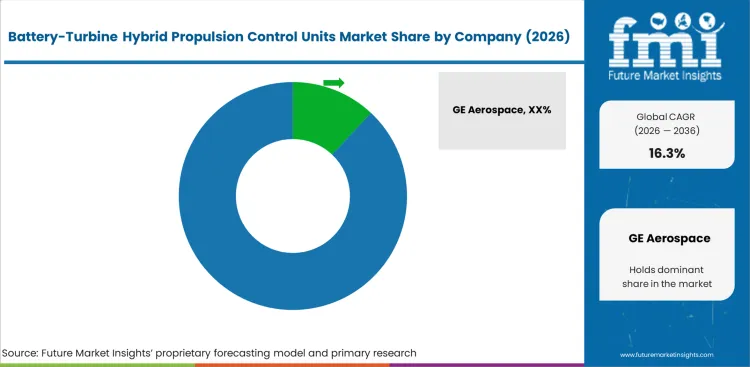
- GE Aerospace brings turbine-control depth and hybrid turbogenerator work into certified aircraft power-management programs globally.
- Safran emphasizes on certified electric propulsion capability and aircraft electrical systems for new mobility aircraft.
- RTX adds high-voltage distribution experience through Collins power systems and Pratt & Whitney Canada hybrid demonstrator work.
Aircraft OEMs are narrowing supplier lists around proven propulsion controls and flight-ready power electronics evidence. GE Aerospace enters this field with turbine-generator coordination experience and hybrid turbogenerator development. Safran adds credibility through ENGINeUS certification and aircraft electrical systems capability. RTX strengthens its position through Collins power distribution and Pratt & Whitney Canada hybrid propulsion demonstrator activity.
Honeywell add avionics integration experience across flight-critical electronic systems. Smaller companies can serve test programs, but full aircraft approval needs software evidence and thermal validation. Long-cycle OEM wins will favor companies able to prove fault isolation depth and reduce integration work for aircraft manufacturers.
Key Companies in the Battery-Turbine Hybrid Propulsion Control Units Market
Key global companies leading the Battery-Turbine hybrid propulsion control units market include:
- GE Aerospace, Safran, and RTX have strong propulsion control infrastructure for hybrid aircraft study programs and certified system delivery.
- Honeywell and BAE Systems serve manufacturers through flight-critical electronics and avionics integration coverage.
- BETA Technologies, H55, and Ascendance hold specialist positions across aircraft power control and electric propulsion support systems.
Competitive Benchmarking: Battery-Turbine Hybrid Propulsion Control Units Market
| Company | Hybrid Control Depth | High-Voltage Integration | Certification Evidence | Geographic Footprint |
|---|---|---|---|---|
| GE Aerospace | High | High | Strong | North America, Europe, Asia Pacific, Middle East, and Latin America |
| Safran | High | High | Strong | France-led global footprint across Europe, North America, Asia Pacific, and Middle East |
| RTX | High | High | Strong | United States-led global footprint across North America, Europe, Asia Pacific, and Middle East |
| Honeywell | Medium | High | Strong | North America, Europe, India, Asia Pacific, Latin America, and Middle East |
| BAE Systems | Medium | Medium | Strong | United Kingdom and United States core footprint with Australia, Saudi Arabia, and Canada coverage |
Source: Future Market Insights, 2026.
Key Developments in Battery-Turbine Hybrid Propulsion Control Units Market
- In July 2024, RTX announced that its STEP-Tech hybrid-electric demonstrator had validated sustained operation of the thermal engine, electrical generator, battery system, and propulsors through a high-voltage electrical network. RTX confirmed that the battery system could start the thermal engine and that electrical power from the turbogenerator could recharge batteries used to drive propulsor motors. This development directly influences the control-unit demand because it demonstrates real battery-turbine energy management across propulsion-relevant operating modes.
- In January 2026, GE Aerospace successfully completed the first ground test of a commercial hybrid-electric engine demonstrator under NASA’s Turbofan Engine Power Extraction Demonstration project. The test validated power transfer, extraction, and injection in a high-bypass turbofan, while advancing system integration and controls for a hybrid-electric architecture that can operate with or without battery energy storage. This is highly relevant to battery-turbine hybrid propulsion control units because it proves control coordination between gas turbine operation, electric motor-generators, and high-power electrical pathways.
Key Players in the Battery-Turbine Hybrid Propulsion Control Units Market
Major Global Players:
- GE Aerospace
- Safran
- RTX
- Honeywell
- BAE Systems
Specialist Players:
- BETA Technologies
- H55
- Ascendance
Report Scope and Coverage
| Parameter | Details |
|---|---|
| Quantitative Units | USD 193.0 million to USD 875.0 million, at a CAGR of 16.3% |
| Market Definition | The Battery-Turbine hybrid propulsion control units market encompasses aircraft-grade electronic systems used to manage battery power and turbine generator output during hybrid propulsion operation. |
| Regions Covered | North America, Latin America, Europe, East Asia, South Asia and Pacific, Middle East and Africa |
| Countries Covered | USA, France, Germany, UK, China, Japan, Brazil, and 30 plus countries |
| Key Companies Profiled | GE Aerospace, Safran, RTX, Honeywell, BAE Systems, BETA Technologies, H55, Ascendance |
| Forecast Period | 2026 to 2036 |
| Approach | Hybrid bottom-up and top-down methodology starting with aircraft program demand and verified control-unit use patterns. |
Battery-Turbine Hybrid Propulsion Control Units Market by Segments
Battery-Turbine Hybrid Propulsion Control Units Market Segmented by Control Architecture:
- Power Management Unit
- Hybrid Controller
- Battery Control Unit
- Turbine Controller
- Thermal Controller
Battery-Turbine Hybrid Propulsion Control Units Market Segmented by Propulsion Layout:
- Series Hybrid
- Parallel Hybrid
- Turboelectric
- Range Extender
Battery-Turbine Hybrid Propulsion Control Units Market Segmented by Platform Type:
- Regional Aircraft
- AAM Aircraft
- UAVs
- Business Aircraft
- Defense Aircraft
Battery-Turbine Hybrid Propulsion Control Units Market Segmented by Voltage Class:
- High Voltage
- Medium Voltage
- Low Voltage
Battery-Turbine Hybrid Propulsion Control Units Market Segmented by Sales Channel:
- OEM Fitment
- Retrofit Kits
- Test Units
- Service Spares
Battery-Turbine Hybrid Propulsion Control Units Market by Region:
- North America
- USA
- Canada
- Mexico
- Latin America
- Brazil
- Chile
- Rest of Latin America
- Europe
- Germany
- UK
- Italy
- Spain
- France
- Rest of Europe
- East Asia
- China
- Japan
- South Korea
- South Asia and Pacific
- India
- ASEAN
- Australia & New Zealand
- Rest of South Asia and Pacific
- Middle East and Africa
- Saudi Arabia
- Other GCC Countries
- South Africa
- Rest of Middle East and Africa
Research Sources and Bibliography
- Federal Aviation Administration. (2024, October 22). With new rule, FAA is ready for air travel of the future.
Source link: https://www.faa.gov/newsroom/new-rule-faa-ready-air-travel-future - Clean Aviation. (2024, January 22). CHYLA & SIENA reveal scaling-up opportunities of hybrid-electric propulsion in aviation.
Source link: https://www.clean-aviation.eu/chyla-siena-reveal-scaling-up-opportunities-of-hybrid-electric-propulsion-in-aviation - Airbus. (2024, December 10). EcoPulse paves the way for more sustainable aviation.
Source link: https://www.airbus.com/en/newsroom/press-releases/2024-12-ecopulse-paves-the-way-for-more-sustainable-aviation - RTX. (2025, June 16). RTX Hybrid-Electric Flight Demonstrator program achieves full power test milestone for propulsion system and batteries.
Source link: https://www.rtx.com/news/news-center/2025/06/16/rtx-hybrid-electric-flight-demonstrator-program-achieves-full-power-test-mileston - Safran. (2025, February 3). Safran obtains EASA certification of the first electric motor for new air mobility.
Source link: https://www.safran-group.com/pressroom/safran-obtains-easa-certification-first-electric-motor-new-air-mobility-2025-02-03 - Federal Register. (2024, March 8). Airworthiness criteria: Special class airworthiness criteria for the Joby Aero, Inc. Model JAS4-1 powered-lift.
Source link: https://www.federalregister.gov/documents/2024/03/08/2024-04690/airworthiness-criteria-special-class-airworthiness-criteria-for-the-joby-aero-inc-model-jas4-1 - Safran. (2025, June 18). A French aerospace consortium launches an initiative to develop hybrid-electric propulsion for general aviation.
Source link: https://www.safran-group.com/pressroom/french-aerospace-consortium-launches-initiative-develop-hybrid-electric-propulsion-general-aviation-2025-06-18 - Deutsches Zentrum für Luft- und Raumfahrt. (2024, May 7). DLR showcases aircraft configurations of the future.
Source link: https://www.dlr.de/en/latest/news/2024/dlr-showcases-aircraft-configurations-of-the-future - Department for Business and Trade. (2025, June 17). £250m for green aerospace projects ahead of Industrial Strategy.
Source link: https://www.gov.uk/government/news/250m-for-green-aerospace-projects-ahead-of-industrial-strategy - The State Council of the People’s Republic of China. (2025, January 10). China’s civil aviation sector soars in 2024, eyes faster international flight recovery.
Source link: https://english.www.gov.cn/news/202501/10/content_WS678058d1c6d0868f4e8eea62.html - New Energy and Industrial Technology Development Organization. (2025, May 12). Development of Innovative Aircraft Propulsion Systems.
Source link: https://www.nedo.go.jp/english/activities/activities_ZZJP_100308.htm - Eve Air Mobility. (2024, October 15). Eve Air Mobility secures USD$88 million from BNDES to finance eVTOL manufacturing.
Source link: https://www.eveairmobility.com/eve-air-mobility-secures-usd88-million-from-bndes-to-finance-evtol-manufacturing/ - European Union Aviation Safety Agency. (2025, February 4). How EASA certified Safran’s ENGINeUS 100 electric engine.
Source link: https://www.easa.europa.eu/en/newsroom-and-events/press-releases/how-easa-certified-safrans-engineus-100-electric-engine - Airbus. (2024, December 10). EcoPulse paves the way for more sustainable aviation.
Source link: https://www.airbus.com/en/newsroom/press-releases/2024-12-ecopulse-paves-the-way-for-more-sustainable-aviation - RTX. (2025, June 16). RTX Hybrid-Electric Flight Demonstrator program achieves full power test milestone for propulsion system and batteries.
Source link: https://www.rtx.com/news/news-center/2025/06/16/rtx-hybrid-electric-flight-demonstrator-program-achieves-full-power-test-mileston
This Report Answers
- What is the current and future size of the Battery-Turbine hybrid propulsion control units market?
- How fast is the Battery-Turbine hybrid propulsion control units market expected to expand between 2026 and 2036?
- Which sales channel is expected to lead the market by 2026?
- Which voltage class segment is expected to account for the leading demand by 2026?
- What factors are driving demand for Battery-Turbine hybrid propulsion control units globally?
- How are certification evidence needs influencing adoption of hybrid propulsion control units?
- Why is OEM fitment the main demand base for control units?
- How are high-voltage aircraft systems creating demand for specialized propulsion control validation?
- Which countries are projected to record faster expansion through 2036?
- What is driving market expansion in the USA and France?
- Who are the key companies active in the Battery-Turbine hybrid propulsion control units market?
- How does FMI estimate and validate the market forecast?
Frequently Asked Questions
What is the global market demand for Battery-Turbine Hybrid Propulsion Control Units in 2026?
In 2026, the global market for Battery-Turbine hybrid propulsion control units is expected to be worth USD 193.0 million.
How big will the market for Battery-Turbine Hybrid Propulsion Control Units be in 2036?
By 2036, the market for Battery-Turbine hybrid propulsion control units is expected to be worth USD 875.0 million.
How much is demand for Battery-Turbine Hybrid Propulsion Control Units expected to expand between 2026 and 2036?
Between 2026 and 2036, demand for Battery-Turbine hybrid propulsion control units is expected to expand at a CAGR of 16.3%.
Which sales channel segment is likely to be the leading seller globally by 2026?
OEM fitment will account for 71.0% of the sales channel segment in 2026.
What is causing demand to rise in the USA?
The USA Battery-Turbine hybrid propulsion control units market is projected to record 18.2% CAGR through 2036, driven by powered-lift certification and hybrid aircraft programs.
What is causing demand to rise in France?
The France Battery-Turbine hybrid propulsion control units market is projected to expand at 17.6% CAGR through 2036, driven by hybrid-electric flight testing and aircraft systems integration.
What does this report mean by Battery-Turbine Hybrid Propulsion Control Units Market definition?
The market includes aircraft-grade electronic systems used to manage battery power and turbine generator output during hybrid propulsion operation.
How does FMI make the Battery-Turbine Hybrid Propulsion Control Units forecast and check it?
Forecasting models use a hybrid bottom-up and top-down approach, starting with aircraft program demand and checking it against control-unit use patterns.
Preview the report firsthand - request a free sample
Get SampleGet the brochure for pricing and purchase details.
Get PDFTable of Content
- Executive Summary
- Global Market Outlook
- Demand-side Trends
- Supply-side Trends
- Technology Roadmap Analysis
- Analysis and Recommendations
- Market Overview
- Market Coverage / Taxonomy
- Market Definition / Scope / Limitations
- Research Methodology
- Chapter Orientation
- Analytical Lens and Working Hypotheses
- Market Structure, Signals, and Trend Drivers
- Benchmarking and Cross-market Comparability
- Market Sizing, Forecasting, and Opportunity Mapping
- Research Design and Evidence Framework
- Desk Research Programme (Secondary Evidence)
- Company Annual and Sustainability Reports
- Peer-reviewed Journals and Academic Literature
- Corporate Websites, Product Literature, and Technical Notes
- Earnings Decks and Investor Briefings
- Statutory Filings and Regulatory Disclosures
- Technical White Papers and Standards Notes
- Trade Journals, Industry Magazines, and Analyst Briefs
- Conference Proceedings, Webinars, and Seminar Materials
- Government Statistics Portals and Public Data Releases
- Press Releases and Reputable Media Coverage
- Specialist Newsletters and Curated Briefings
- Sector Databases and Reference Repositories
- FMI Internal Proprietary Databases and Historical Market Datasets
- Subscription Datasets and Paid Sources
- Social Channels, Communities, and Digital Listening Inputs
- Additional Desk Sources
- Expert Input and Fieldwork (Primary Evidence)
- Primary Modes
- Qualitative Interviews and Expert Elicitation
- Focus Groups
- Observational and In-context Research
- Social and Community Interactions
- Stakeholder Universe Engaged
- C-suite Leaders
- Board Members
- Presidents and Vice Presidents
- R&D and Innovation Heads
- Technical Specialists
- Domain Subject-matter Experts
- Scientists
- Physicians and Other Healthcare Professionals
- Governance, Ethics, and Data Stewardship
- Research Ethics
- Data Integrity and Handling
- Primary Modes
- Tooling, Models, and Reference Databases
- Desk Research Programme (Secondary Evidence)
- Data Engineering and Model Build
- Data Acquisition and Ingestion
- Cleaning, Normalisation, and Verification
- Synthesis, Triangulation, and Analysis
- Quality Assurance and Audit Trail
- Market Background
- Market Dynamics
- Drivers
- Restraints
- Opportunity
- Trends
- Scenario Forecast
- Demand in Optimistic Scenario
- Demand in Likely Scenario
- Demand in Conservative Scenario
- Opportunity Map Analysis
- Product Life Cycle Analysis
- Supply Chain Analysis
- Investment Feasibility Matrix
- Value Chain Analysis
- PESTLE and Porter’s Analysis
- Regulatory Landscape
- Regional Parent Market Outlook
- Production and Consumption Statistics
- Import and Export Statistics
- Market Dynamics
- Global Market Analysis 2021 to 2025 and Forecast, 2026 to 2036
- Historical Market Size Value (USD Million) Analysis, 2021 to 2025
- Current and Future Market Size Value (USD Million) Projections, 2026 to 2036
- Y-o-Y Growth Trend Analysis
- Absolute $ Opportunity Analysis
- Global Market Pricing Analysis 2021 to 2025 and Forecast 2026 to 2036
- Global Market Analysis 2021 to 2025 and Forecast 2026 to 2036, By Control Architecture
- Introduction / Key Findings
- Historical Market Size Value (USD Million) Analysis By Control Architecture , 2021 to 2025
- Current and Future Market Size Value (USD Million) Analysis and Forecast By Control Architecture , 2026 to 2036
- Power Management Value (USD Million)
- Hybrid Controller
- Battery Control Value (USD Million)
- Turbine Controller
- Thermal Controller
- Power Management Value (USD Million)
- Y-o-Y Growth Trend Analysis By Control Architecture , 2021 to 2025
- Absolute $ Opportunity Analysis By Control Architecture , 2026 to 2036
- Global Market Analysis 2021 to 2025 and Forecast 2026 to 2036, By Propulsion Layout
- Introduction / Key Findings
- Historical Market Size Value (USD Million) Analysis By Propulsion Layout, 2021 to 2025
- Current and Future Market Size Value (USD Million) Analysis and Forecast By Propulsion Layout, 2026 to 2036
- Series Hybrid
- Parallel Hybrid
- Turboelectric
- Range Extender
- Series Hybrid
- Y-o-Y Growth Trend Analysis By Propulsion Layout, 2021 to 2025
- Absolute $ Opportunity Analysis By Propulsion Layout, 2026 to 2036
- Global Market Analysis 2021 to 2025 and Forecast 2026 to 2036, By Platform Type
- Introduction / Key Findings
- Historical Market Size Value (USD Million) Analysis By Platform Type, 2021 to 2025
- Current and Future Market Size Value (USD Million) Analysis and Forecast By Platform Type, 2026 to 2036
- Regional Aircraft
- AAM Aircraft
- UAVs
- Business Aircraft
- Defense Aircraft
- Regional Aircraft
- Y-o-Y Growth Trend Analysis By Platform Type, 2021 to 2025
- Absolute $ Opportunity Analysis By Platform Type, 2026 to 2036
- Global Market Analysis 2021 to 2025 and Forecast 2026 to 2036, By Voltage Class
- Introduction / Key Findings
- Historical Market Size Value (USD Million) Analysis By Voltage Class, 2021 to 2025
- Current and Future Market Size Value (USD Million) Analysis and Forecast By Voltage Class, 2026 to 2036
- High Voltage
- Medium Voltage
- Low Voltage
- High Voltage
- Y-o-Y Growth Trend Analysis By Voltage Class, 2021 to 2025
- Absolute $ Opportunity Analysis By Voltage Class, 2026 to 2036
- Global Market Analysis 2021 to 2025 and Forecast 2026 to 2036, By Sales Channel
- Introduction / Key Findings
- Historical Market Size Value (USD Million) Analysis By Sales Channel, 2021 to 2025
- Current and Future Market Size Value (USD Million) Analysis and Forecast By Sales Channel, 2026 to 2036
- OEM Fitment
- Retrofit Kits
- Test Value (USD Million)s
- Service Spares
- OEM Fitment
- Y-o-Y Growth Trend Analysis By Sales Channel, 2021 to 2025
- Absolute $ Opportunity Analysis By Sales Channel, 2026 to 2036
- Global Market Analysis 2021 to 2025 and Forecast 2026 to 2036, By Region
- Introduction
- Historical Market Size Value (USD Million) Analysis By Region, 2021 to 2025
- Current Market Size Value (USD Million) Analysis and Forecast By Region, 2026 to 2036
- North America
- Latin America
- Western Europe
- Eastern Europe
- East Asia
- South Asia and Pacific
- Middle East & Africa
- Market Attractiveness Analysis By Region
- North America Market Analysis 2021 to 2025 and Forecast 2026 to 2036, By Country
- Historical Market Size Value (USD Million) Trend Analysis By Market Taxonomy, 2021 to 2025
- Market Size Value (USD Million) Forecast By Market Taxonomy, 2026 to 2036
- By Country
- USA
- Canada
- Mexico
- By Control Architecture
- By Propulsion Layout
- By Platform Type
- By Voltage Class
- By Sales Channel
- By Country
- Market Attractiveness Analysis
- By Country
- By Control Architecture
- By Propulsion Layout
- By Platform Type
- By Voltage Class
- By Sales Channel
- Key Takeaways
- Latin America Market Analysis 2021 to 2025 and Forecast 2026 to 2036, By Country
- Historical Market Size Value (USD Million) Trend Analysis By Market Taxonomy, 2021 to 2025
- Market Size Value (USD Million) Forecast By Market Taxonomy, 2026 to 2036
- By Country
- Brazil
- Chile
- Rest of Latin America
- By Control Architecture
- By Propulsion Layout
- By Platform Type
- By Voltage Class
- By Sales Channel
- By Country
- Market Attractiveness Analysis
- By Country
- By Control Architecture
- By Propulsion Layout
- By Platform Type
- By Voltage Class
- By Sales Channel
- Key Takeaways
- Western Europe Market Analysis 2021 to 2025 and Forecast 2026 to 2036, By Country
- Historical Market Size Value (USD Million) Trend Analysis By Market Taxonomy, 2021 to 2025
- Market Size Value (USD Million) Forecast By Market Taxonomy, 2026 to 2036
- By Country
- Germany
- UK
- Italy
- Spain
- France
- Nordic
- BENELUX
- Rest of Western Europe
- By Control Architecture
- By Propulsion Layout
- By Platform Type
- By Voltage Class
- By Sales Channel
- By Country
- Market Attractiveness Analysis
- By Country
- By Control Architecture
- By Propulsion Layout
- By Platform Type
- By Voltage Class
- By Sales Channel
- Key Takeaways
- Eastern Europe Market Analysis 2021 to 2025 and Forecast 2026 to 2036, By Country
- Historical Market Size Value (USD Million) Trend Analysis By Market Taxonomy, 2021 to 2025
- Market Size Value (USD Million) Forecast By Market Taxonomy, 2026 to 2036
- By Country
- Russia
- Poland
- Hungary
- Balkan & Baltic
- Rest of Eastern Europe
- By Control Architecture
- By Propulsion Layout
- By Platform Type
- By Voltage Class
- By Sales Channel
- By Country
- Market Attractiveness Analysis
- By Country
- By Control Architecture
- By Propulsion Layout
- By Platform Type
- By Voltage Class
- By Sales Channel
- Key Takeaways
- East Asia Market Analysis 2021 to 2025 and Forecast 2026 to 2036, By Country
- Historical Market Size Value (USD Million) Trend Analysis By Market Taxonomy, 2021 to 2025
- Market Size Value (USD Million) Forecast By Market Taxonomy, 2026 to 2036
- By Country
- China
- Japan
- South Korea
- By Control Architecture
- By Propulsion Layout
- By Platform Type
- By Voltage Class
- By Sales Channel
- By Country
- Market Attractiveness Analysis
- By Country
- By Control Architecture
- By Propulsion Layout
- By Platform Type
- By Voltage Class
- By Sales Channel
- Key Takeaways
- South Asia and Pacific Market Analysis 2021 to 2025 and Forecast 2026 to 2036, By Country
- Historical Market Size Value (USD Million) Trend Analysis By Market Taxonomy, 2021 to 2025
- Market Size Value (USD Million) Forecast By Market Taxonomy, 2026 to 2036
- By Country
- India
- ASEAN
- Australia & New Zealand
- Rest of South Asia and Pacific
- By Control Architecture
- By Propulsion Layout
- By Platform Type
- By Voltage Class
- By Sales Channel
- By Country
- Market Attractiveness Analysis
- By Country
- By Control Architecture
- By Propulsion Layout
- By Platform Type
- By Voltage Class
- By Sales Channel
- Key Takeaways
- Middle East & Africa Market Analysis 2021 to 2025 and Forecast 2026 to 2036, By Country
- Historical Market Size Value (USD Million) Trend Analysis By Market Taxonomy, 2021 to 2025
- Market Size Value (USD Million) Forecast By Market Taxonomy, 2026 to 2036
- By Country
- Kingdom of Saudi Arabia
- Other GCC Countries
- Turkiye
- South Africa
- Other African Union
- Rest of Middle East & Africa
- By Control Architecture
- By Propulsion Layout
- By Platform Type
- By Voltage Class
- By Sales Channel
- By Country
- Market Attractiveness Analysis
- By Country
- By Control Architecture
- By Propulsion Layout
- By Platform Type
- By Voltage Class
- By Sales Channel
- Key Takeaways
- Key Countries Market Analysis
- USA
- Pricing Analysis
- Market Share Analysis, 2025
- By Control Architecture
- By Propulsion Layout
- By Platform Type
- By Voltage Class
- By Sales Channel
- Canada
- Pricing Analysis
- Market Share Analysis, 2025
- By Control Architecture
- By Propulsion Layout
- By Platform Type
- By Voltage Class
- By Sales Channel
- Mexico
- Pricing Analysis
- Market Share Analysis, 2025
- By Control Architecture
- By Propulsion Layout
- By Platform Type
- By Voltage Class
- By Sales Channel
- Brazil
- Pricing Analysis
- Market Share Analysis, 2025
- By Control Architecture
- By Propulsion Layout
- By Platform Type
- By Voltage Class
- By Sales Channel
- Chile
- Pricing Analysis
- Market Share Analysis, 2025
- By Control Architecture
- By Propulsion Layout
- By Platform Type
- By Voltage Class
- By Sales Channel
- Germany
- Pricing Analysis
- Market Share Analysis, 2025
- By Control Architecture
- By Propulsion Layout
- By Platform Type
- By Voltage Class
- By Sales Channel
- UK
- Pricing Analysis
- Market Share Analysis, 2025
- By Control Architecture
- By Propulsion Layout
- By Platform Type
- By Voltage Class
- By Sales Channel
- Italy
- Pricing Analysis
- Market Share Analysis, 2025
- By Control Architecture
- By Propulsion Layout
- By Platform Type
- By Voltage Class
- By Sales Channel
- Spain
- Pricing Analysis
- Market Share Analysis, 2025
- By Control Architecture
- By Propulsion Layout
- By Platform Type
- By Voltage Class
- By Sales Channel
- France
- Pricing Analysis
- Market Share Analysis, 2025
- By Control Architecture
- By Propulsion Layout
- By Platform Type
- By Voltage Class
- By Sales Channel
- India
- Pricing Analysis
- Market Share Analysis, 2025
- By Control Architecture
- By Propulsion Layout
- By Platform Type
- By Voltage Class
- By Sales Channel
- ASEAN
- Pricing Analysis
- Market Share Analysis, 2025
- By Control Architecture
- By Propulsion Layout
- By Platform Type
- By Voltage Class
- By Sales Channel
- Australia & New Zealand
- Pricing Analysis
- Market Share Analysis, 2025
- By Control Architecture
- By Propulsion Layout
- By Platform Type
- By Voltage Class
- By Sales Channel
- China
- Pricing Analysis
- Market Share Analysis, 2025
- By Control Architecture
- By Propulsion Layout
- By Platform Type
- By Voltage Class
- By Sales Channel
- Japan
- Pricing Analysis
- Market Share Analysis, 2025
- By Control Architecture
- By Propulsion Layout
- By Platform Type
- By Voltage Class
- By Sales Channel
- South Korea
- Pricing Analysis
- Market Share Analysis, 2025
- By Control Architecture
- By Propulsion Layout
- By Platform Type
- By Voltage Class
- By Sales Channel
- Russia
- Pricing Analysis
- Market Share Analysis, 2025
- By Control Architecture
- By Propulsion Layout
- By Platform Type
- By Voltage Class
- By Sales Channel
- Poland
- Pricing Analysis
- Market Share Analysis, 2025
- By Control Architecture
- By Propulsion Layout
- By Platform Type
- By Voltage Class
- By Sales Channel
- Hungary
- Pricing Analysis
- Market Share Analysis, 2025
- By Control Architecture
- By Propulsion Layout
- By Platform Type
- By Voltage Class
- By Sales Channel
- Kingdom of Saudi Arabia
- Pricing Analysis
- Market Share Analysis, 2025
- By Control Architecture
- By Propulsion Layout
- By Platform Type
- By Voltage Class
- By Sales Channel
- Turkiye
- Pricing Analysis
- Market Share Analysis, 2025
- By Control Architecture
- By Propulsion Layout
- By Platform Type
- By Voltage Class
- By Sales Channel
- South Africa
- Pricing Analysis
- Market Share Analysis, 2025
- By Control Architecture
- By Propulsion Layout
- By Platform Type
- By Voltage Class
- By Sales Channel
- USA
- Market Structure Analysis
- Competition Dashboard
- Competition Benchmarking
- Market Share Analysis of Top Players
- By Regional
- By Control Architecture
- By Propulsion Layout
- By Platform Type
- By Voltage Class
- By Sales Channel
- Competition Analysis
- Competition Deep Dive
- GE Aerospace
- Overview
- Product Portfolio
- Profitability by Market Segments (Product/Age /Sales Channel/Region)
- Sales Footprint
- Strategy Overview
- Marketing Strategy
- Product Strategy
- Channel Strategy
- Safran
- RTX
- Honeywell
- BAE Systems
- GE Aerospace
- Competition Deep Dive
- Assumptions & Acronyms Used


