

- Industry Size (2026)
- USD 1.5 Bn
- Forecast (2036)
- USD 3.1 Bn
- CAGR (2026 to 2036)
- 7.5%
Disinfectant Fogging and Misting Chemicals for Large Facilities Market Size, Market Forecast and Outlook By FMI
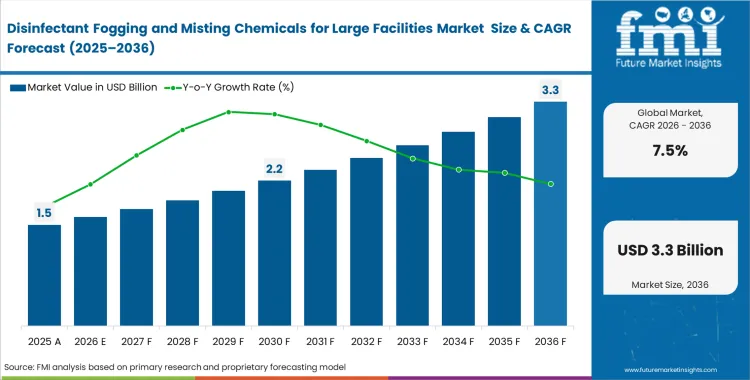
The disinfectant fogging and misting chemicals for large facilities market valuation stood at USD 0.7 billion in 2025. Sales are expected to cross USD 1.5 billion in 2026 at a CAGR of 7.5% during the forecast years. Total revenue is anticipated to reach USD 3.1 billion, driven by growing adoption of airborne disinfection solutions across extensive infrastructure.
Summary of Disinfectant Fogging and Misting Chemicals for Large Facilities Market
- The market is forecast to reach USD 3.1 billion by 2036.
- The market is expected to grow at a CAGR of 7.5% from 2026 to 2036.
- The market was estimated at USD 0.7 billion in 2025.
- The forecast period represents an incremental opportunity of USD 2.4 billion.
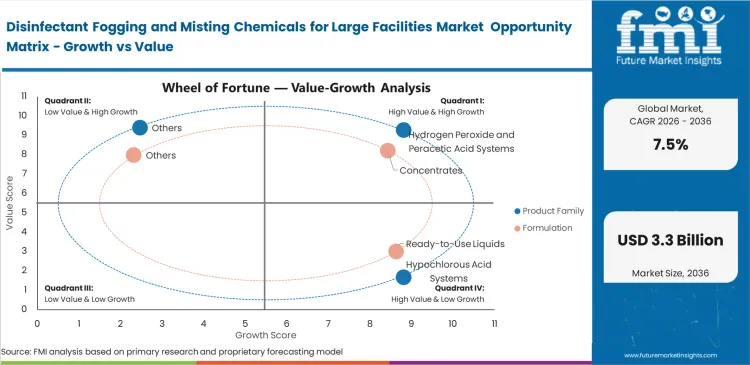
- Hydrogen peroxide and peracetic acid systems lead the product segment with 33% share, driven by effective large-area disinfection and low residue.
- Concentrates dominate the formulation segment with 37% share, supported by better dilution control and equipment compatibility.
- Healthcare laboratories account for 29% share in end use, reflecting stricter decontamination requirements.
- Cold fogging leads application methods with 31% share, supported by uniform airborne dispersion capability.
- Key companies in the market include Ecolab, CloroxPro, SC Johnson Professional, Reckitt Pro Solutions, Solenis (Diversey), SteraMist / TOMI Environmental Solutions, and Briotech.
Large facilities face operational constraints balancing rapid turnover requirements against rigorous infection control protocols. Shifting operational demands drive the renegotiation of master service agreements to acquire highly specialized fluids. Chemical agents must treat complex geometries without leaving corrosive residues on sensitive electronics. Waiting out legacy liquid application methods leaves institutions exposed to huge labor costs and inconsistent pathogen eradication across expansive square footage. A non-obvious reality persists regarding the large facility fogging disinfectant chemicals market. Many prominent chemical suppliers sacrifice absolute kill rates to achieve compatibility with cheap deployment hardware. Misaligned active ingredients and micron specifications cause improperly dispersed chemicals to pool with exact micron specifications discover that improperly dispersed disinfectant chemicals simply pool on horizontal planes, leaving vertical and hidden areas entirely untreated.
When occupational health authorities enforce updated airborne pathogen mitigation rules, the misting disinfectant chemicals market expands rapidly. Hardware dependencies force contract cleaning firms to exclusively source authorized chemical refills to prevent nozzle calcification. Integrating precise large facility disinfectant misting solutions eliminates human error during application, sharply reducing active ingredient waste while guaranteeing total volume coverage inside critical infrastructure.
China is projected to grow at a CAGR of 8.1%, followed by India at 7.8% and Brazil at 7.6%, supported by expansion across transport and public infrastructure. The United States is expected to grow at 7.1%, while the United Kingdom and Germany are forecast at 6.9% and 6.8%, with Japan at 6.4%, reflecting a shift from initial deployment toward system upgrades and specialized application methods.
Segmental Analysis
Disinfectant Fogging and Misting Chemicals for Large Facilities Market Analysis by Product Family
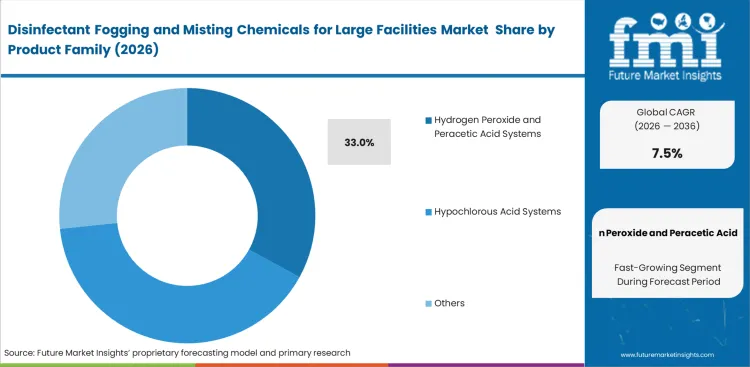
Rapid volumetric coverage dictates chemical selection across large-scale indoor environments. Hydrogen peroxide and peracetic acid systems is set to command around 33.0% share in 2026, driven entirely by their ability to break down into harmless oxygen and water following application. Sensitive environments require formulations that do not leave deploying formulations that leave corrosive films or toxic airborne byproducts. Relying on generic multi surface disinfectant cleaners for spatial decontamination frequently clogs expensive misting equipment. Selection between hydrogen peroxide and peracetic acid systems depends on degradation speeds degradation speeds against distinct material compatibility profiles.
- Purchasing triggers: Sudden localized contamination events drive immediate demand for peracetic acid to execute rapid area recovery.
- Validation protocols: Specific droplet suspension times are measured to verify that the selected chemistry matches the hardware output profile perfectly.
- Contract renewals: Prolonged material compatibility remains the ultimate deciding factor. Formulations causing rust on exposed metal fixtures prompt immediate vendor replacement.
Disinfectant Fogging and Misting Chemicals for Large Facilities Market Analysis by Formulation
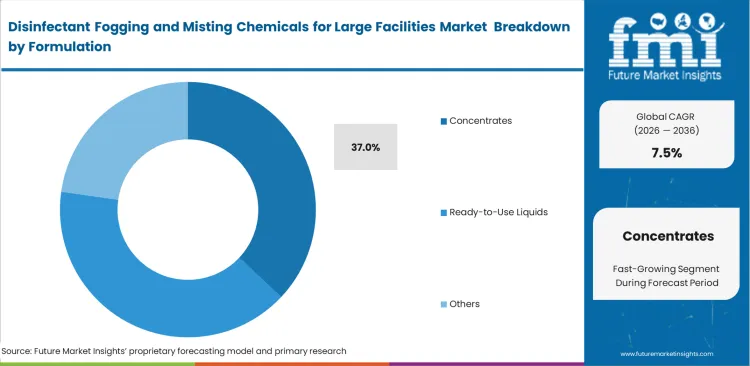
Concentrates are estimated to hold a 37.0% segment share in 2026, significantly reducing shipping weights and onsite storage requirements. Distributing large volumes of pre-mixed liquids across sprawling transportation terminals or convention centers strains limited sanitation staging areas. Sourcing high-quality industrial institutional cleaning chemicals in hyper-concentrated formats ensures that remote custodial outposts never run empty during critical operational shifts. When untrained staff attempt to manually mix these potent biocides, improper dilution rates severely compromise pathogen elimination efficacy. Utilizing advanced electrostatic spray-compatible dilutions prevents worker error by strictly regulating the active ingredient ratio fed into the deployment nozzle. Organizations prioritizing safety increasingly shift toward automated dispensing systems utilizing dilution control cleaning chemical cartridges that extract concentrate directly into the misting hardware.
- Operational savings: Implementing concentrated formulas slashes freight expenditures immediately. Financial controllers rely on exact cost-per-cubic-meter modeling to justify vendor selections.
- Unexpected expenditures: Hard water supplies severely degrade the efficacy of manually mixed concentrates. Plumbers must occasionally install specialized filtration systems to protect the chemical integrity.
- Lifecycle comparisons: Total cost analysis proves that precision-diluted concentrates vastly outperform ready-to-use bulk liquids when servicing massive facilities.
Disinfectant Fogging and Misting Chemicals for Large Facilities Market Analysis by End-use Environment
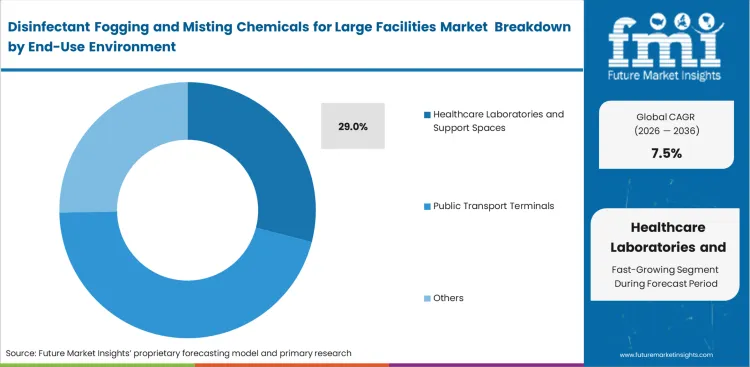
Strict infection control mandates permanently alter the operational cadence of clinical and diagnostic facilities. Healthcare laboratories and support spaces are predicted to capture 29.0% share in 2026, requiring absolute environmental sterilization between critical research shifts. Operations directors sourcing fogging disinfectants for healthcare laboratories cannot tolerate lingering residues that might cross-contaminate sensitive diagnostic assays. Procuring specialized professional cleaning products formulated for aerosolization ensures complete coverage of complex laboratory benches. Meanwhile, public transport terminals demand rapid turnaround capabilities. Securing fast-acting disinfectant misting chemicals for transport hubs allows ground crews to decontaminate entire passenger waiting areas within thirty minutes during the overnight maintenance window. Educational campuses face intense scrutiny regarding indoor air quality, while hospitality venue fogging disinfectants prevent lingering odors from triggering asthmatic responses in crowded spaces. The inability to rapidly decontaminate these sprawling public venues directly results in extended facility closures.
- Initial implementation: Transitioning a massive convention venue to automated misting temporarily disrupts existing janitorial schedules while staff adapt to strict room isolation protocols.
- Hardware friction: Outdated ventilation architecture struggles to clear chemical fog within the required timeframe. Facility engineers must recalibrate HVAC systems to accelerate air exchange rates.
- Realized advantages: Aerosolized application reaches microscopic crevices entirely missed by manual wiping. Infection control teams document significant reductions in surface-level pathogen transmission.
Disinfectant Fogging and Misting Chemicals for Large Facilities Market Analysis by Application Method
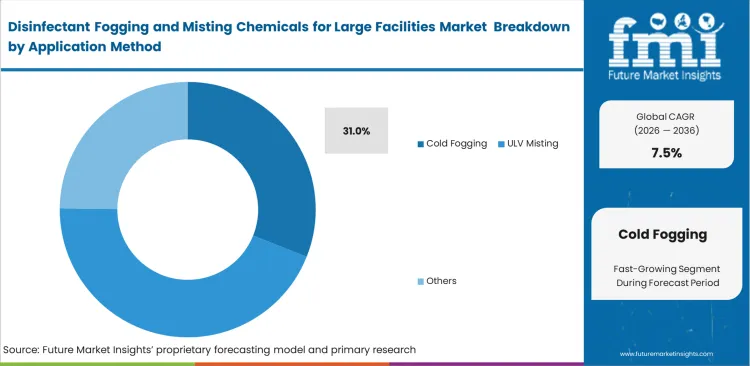
Cold fogging is projected to capture a 31.0% share of application methods by 2036, relying on intense mechanical pressure to fracture liquid disinfectants into suspended microscopic droplets. This approach requires chemistry specifically formulated to resist shearing forces without losing active biocidal properties. Teams comparing fogging vs electrostatic spray disinfection constantly evaluate rapid-acting formulations to ensure the selected liquid produces a dry mist that will not saturate electrical panels. Conversely, manual pump misting generates much larger, heavier droplets that pool quickly on flat surfaces. Utilizing basic restroom cleaning chemicals inside high-pressure fogging machines causes immediate foaming blockages and voids expensive hardware warranties. Understanding how to choose chemicals for electrostatic disinfection determines the long-term viability of facility sanitation programs.
- Performance maximums: Ultra-low volume mists penetrate deep into porous fabrics and complex geometries. Operations directors deploy this method to sanitize hundreds of upholstered auditorium seats simultaneously.
- Temperature constraints: Intense mechanical shearing sometimes elevates the fluid temperature. Chemists must stabilize the active ingredients to prevent premature degradation during the atomization process.
- Safety thresholds: Occupational health guidelines govern exact reentry times based on droplet settling rates. Compliance officers strictly enforce isolation periods to protect unprotected facility staff.
Disinfectant Fogging and Misting Chemicals for Large Facilities Market Analysis by Supply Channel
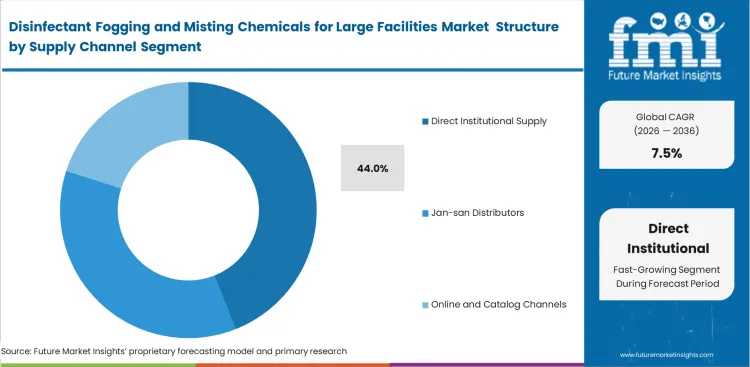
Securing uninterrupted access to specialized biocides dictates the commercial survival of massive building portfolios. Direct institutional supply is expected to capture 44.0% share in 2026, enabling global property management firms to lock in pricing and guarantee inventory across hundreds of locations. Relying on fragmented regional distributors introduces unacceptable variations in chemical quality. Supply chain vice presidents utilize automated ordering to eliminate manual inventory errors across their networks. When seeking elite fogging disinfectant chemical suppliers, facility directors lacking direct manufacturer relationships often scramble to secure emergency inventory at premium prices. Specialized infection-control contractors increasingly bypass traditional jan-san distributors entirely, forming strategic alliances with prime electrostatic spray disinfectant manufacturers to acquire exclusive access to proprietary blends. Integrating air duct cleaning chemicals into these direct purchasing agreements further centralizes total facility hygiene management.
- Early adopters: Flagship healthcare networks pioneer direct supply agreements to guarantee uninterrupted access to critical peracetic acid formulations during regional supply shortages.
- Mainstream followers: Mid-tier commercial real estate operators adopt centralized procurement strategies to match the hygiene standards of premium office complexes while controlling costs.
- Late converts: Independent warehousing facilities finally abandon generic hardware store chemicals when stringent corporate client mandates require proof of specialized volumetric decontamination.
Disinfectant Fogging and Misting Chemicals for Large Facilities Market Drivers, Restraints, and Opportunities
Stringent occupational health mandates compel facility operators to rethink conventional sanitation logic. Wiping down thousands of square feet manually introduces massive human error and requires unsustainable labor expenditures. Consequently, operations directors evaluating routine cleaning vs fogging disinfection increasingly authorize the procurement of specialized aerosolized chemistry to ensure total volumetric coverage in a fraction of the time. The ability to deploy fragrance free cleaning chemicals via electrostatic sprayers dramatically improves surface contact time on curved architectural elements. Stockpiling outbreak response disinfection chemicals prevents large public venues from remaining vulnerable to forced closures during localized viral emergencies. Institutional buyers willingly pay premium per-liter prices for highly stabilized oxidizing blends that guarantee immediate pathogen elimination without damaging sensitive facility infrastructure.
Intense regulatory scrutiny regarding indoor air quality restricts the deployment speed of aerosolized biocides. Generating microscopic chemical droplets inherently increases inhalation risks for unprotected building occupants. Safety managers rigidly audit the PPE for disinfectant fogging chemicals required during active application shifts. Compliance officers strictly enforce mandatory clearance times before civilians can reenter a treated zone. This enforced downtime impacts operational efficiency in busy public transit hubs busy public transit hubs or 24-hour manufacturing facilities.
Opportunities in the Disinfectant Fogging and Misting Chemicals for Large Facilities Market
- Rapid-degradation hydrogen peroxide: Formulators engineering compounds that break down into water and oxygen within minutes significantly reduce mandatory facility isolation periods.
- Integrated hardware-chemistry ecosystems: Chemical manufacturers partnering directly with robotics firms to create locked-cartridge dispensing systems capture highly lucrative, long-term recurring revenue streams.
- Low-toxicity botanical stabilizers: Developing active stabilizers that eliminate harsh fumes opens massive revenue avenues across cleaning chemicals for schools environments demanding zero respiratory irritation.
Regional Analysis
.webp "Top Country Growth Comparison Disinfectant Fogging And Misting Chemicals For Large Facilities Market Cagr (2026 2036)")
Based on regional analysis, Water-Saving Cleaning Chemical Systems for Professional Use is segmented into Asia Pacific, Latin America, North America, and Western Europe across numerous key countries.
| Country | CAGR (2026 to 2036) |
|---|---|
| China | 8.5% |
| Brazil | 8.3% |
| India | 8.0% |
| United States | 7.2% |
| United Kingdom | 7.2% |
| Germany | 7.1% |
| Japan | 6.6% |
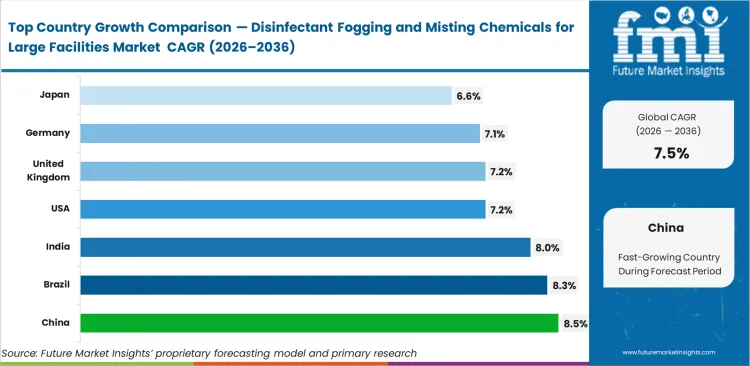
Source: Future Market Insights (FMI) analysis, based on proprietary forecasting model and primary research
Asia Pacific Water-Saving Cleaning Chemical Systems for Professional Use Market Analysis
Centralized government mandates dictate environmental standards for newly constructed urban commercial zones. Property developers building massive mixed-use districts must secure strict green building permits prior to occupancy, forcing an immediate transition toward low-moisture sanitation chemistry. Procurement officers negotiate bulk contracts covering entire skyscraper portfolios, prioritizing highly concentrated formulas that minimize storage footprint in dense metropolitan hubs. Expanding medical tourism drives demand further, as private hospitals upgrade sanitation protocols to match international accreditation requirements. Sourcing advanced systems for massive airports and transport hubs aligns perfectly with regional municipal regulations targeting excessive commercial wastewater generation.
- China: Urban development policies strictly gate commercial occupancy permits behind rigorous utility conservation credentials. Water-saving cleaning chemicals in China adoption is set to accelerate at an 8.5% annual rate as building service contractors transitioning early to certified low-rinse formulas dominate competitive municipal bidding processes across massive coastal metropolitan zones. Establishing a verified environmental compliance history secures preferred vendor status for highly lucrative future state-funded infrastructure projects. Operations directors flatly refuse to risk massive institutional investments by utilizing unverified legacy products requiring massive fluid volumes.
- India: Rapid expansion of private commercial infrastructure creates massive new requirements for standardized sanitation protocols. The sector is poised to expand at a CAGR of 8.0% through 2036 as purchasing directors moving away from traditional flood-mop procedures prioritize safer dry-foam chemistries to prevent floor damage. Volume surges as corporate networks standardize procurement across hundreds of regional branches. Awareness regarding facility utility limits permanently penetrates the commercial property sector.
- Japan: Aging workforce demographics forcefully push commercial cleaning contractors toward non-toxic formulas that minimize physical lifting stress for senior custodial staff members. Facility directors increasingly prioritize ergonomic, lightweight low-moisture chemical pods requiring absolute zero manual bucket filling. Industry in Japan is expected to garner a 6.6% growth trajectory by 2036 ensures avoiding massive washdown procedures completely prevents catastrophic moisture contamination within highly sensitive technological assembly environments.
Latin America Water-Saving Cleaning Chemical Systems for Professional Use Market Analysis
Multinational corporate mandates establish uniform facility hygiene standards across all regional operations, successfully bypassing much slower municipal regulatory timelines. International networks entering the territory absolutely refuse to compromise their deeply established low-utility clinical protocols, forcing local janitorial distributors to immediately overhaul their entire institutional chemical inventory. Facility managers operating within premium commercial real estate sectors constantly balance pathogen control against preserving delicate interior architectural finishes, utilizing advanced systems that leave zero standing fluid behind after application. Eliminating heavy mop buckets drastically reduces custodial staff physical injuries, effectively solving chronic absenteeism problems currently plaguing regional contract cleaning firms. Incorporating specialized green floor care systems entirely removes hazardous wastewater pooling from enclosed maintenance bays.
- Brazil: Multinational corporate lease mandates are actively establishing uniform facility hygiene standards across sprawling Latin American operations to guarantee consistent environmental and safety compliance. Brazil is predicted to sustain a CAGR of 8.3% through 2036 as it allows building service contractors transitioning early to verified zero-rinse formulas to dominate competitive bidding processes for premium commercial office parks located in major financial districts. Upgrading to professional-grade chemistry immediately allows regional property managers to attract international corporate tenants demanding strict utility usage guarantees before signing leases.
North America Water-Saving Cleaning Chemical Systems for Professional Use Market Analysis
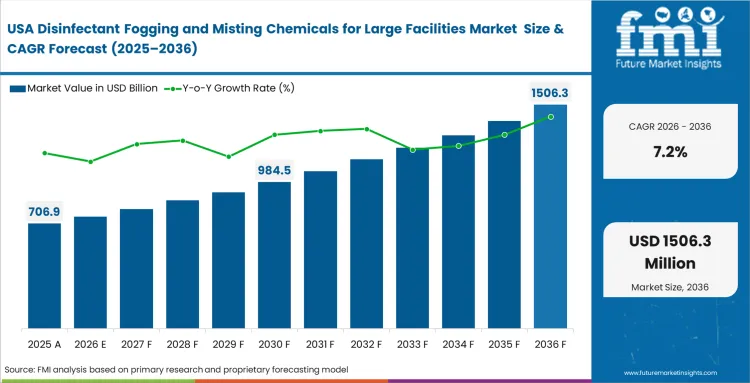
Strict occupational health guidelines structurally encode low-moisture requirements directly into vast government service contracts across the entire continent. State-level facility directors face automatic budget penalties if their custodial supply manifests contain high-volume conventional washdown chemicals. Private sector property management firms actively mimic these federal guidelines, attempting to align their commercial portfolios with recognized green building certifications to attract elite multinational tenants. Massive educational districts aggressively phase out legacy flood-and-extract carpet routines, responding directly to intense pressure from parent advocacy groups demanding zero-mold learning environments. Employing highly regulated fragrance free cleaning formulations safely sanitizes confined spaces without leaving residual moisture that promotes fungal growth.
- United States: Corporate real estate trusts mandate certified protocols to satisfy escalating environmental reporting demands from demanding institutional investors. Water-saving cleaning chemicals USA volume is set to secure a 7.2% CAGR through 2036 operational increase as procurement vice presidents lock in premium rental rates by marketing buildings as fully compliant green environments lacking excessive utility consumption. Mastering complex municipal water compliance documentation allows distributors to deeply entrench themselves within regional commercial supply chains, preventing agile startups from gaining market share. Resolving slip-and-fall liabilities immediately reduces legal costs tied to wet-floor claims.
Western Europe Water-Saving Cleaning Chemical Systems for Professional Use Market Analysis
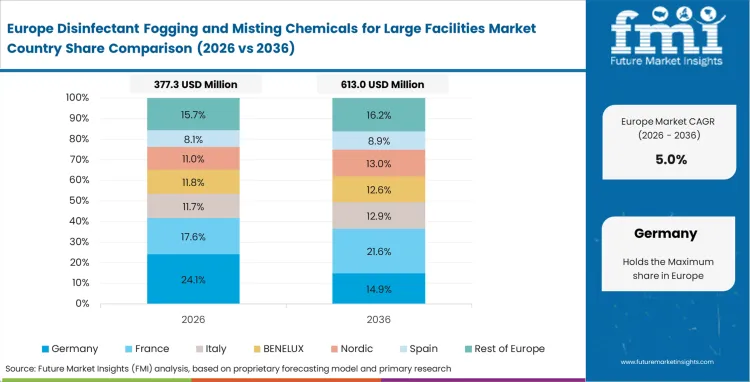
Overarching regulatory frameworks systematically eliminate hazardous and highly wasteful chemicals from institutional supply chains across the entire continent. Sustainability directors for massive healthcare networks actively overhaul infection control protocols, seeking verified solutions that never compromise stringent environmental emission limits or require massive freshwater resources. Cross-border facility management firms quickly consolidate their supplier bases, deliberately choosing manufacturers capable of delivering identically certified formulas across multiple jurisdictions to guarantee absolute legal compliance. Sourcing green cleaning chemicals acts as an absolute baseline necessity for commercial survival when participating in highly competitive civic maintenance tenders.
- United Kingdom: Public sector austerity measures directly accelerate chemical concentrate adoption as city councils seek to slash utility bills and freight transportation expenditures. The UK is projected to register a CAGR of 7.2% through 2036, as operations managers increasingly audit automated dilution equipment to curb water waste caused by improper manual overfilling by untrained staff. Eliminating high-volume washdowns directly prevents building-wide structural rot inside aging public administrative structures.
- Germany: Deeply embedded ecological regulations heavily penalize commercial facilities generating excessive wastewater containing prohibited synthetic solvents. Property managers exclusively authorize fully verified low-rinse formulations to completely avoid severe municipal financial penalties. Germany is estimated to record a CAGR of 7.1% over the forecast period, as early institutional compliance with water‑use regulations helps commercial property operators mitigate risks from unpredictable shifts in allowable daily water quotas.
Competitive Aligners for Market Players
Chemical manufacturers dominating this sector embed themselves deeply into facility operations, moving far beyond the simple transaction of liquid concentrates. Ecolab and CloroxPro secure huge enterprise agreements by engineering proprietary chemical cartridges that lock directly into highly calibrated electrostatic sprayers. Tracking the disinfectant fogging chemicals market share reveals these formidable transition expenses effectively secure highly lucrative, decade-long supply relationships across major healthcare and logistics networks. The ability to supply targeted cleaning chemicals for retail and shopping centres alongside advanced airborne biocides determines which vendors ultimately capture massive corporate lease accounts.
Major formulators respond to this resistance by engineering highly unique, stabilized hypochlorous acid blends that bypass traditional mixing requirements entirely. Shifting the competitive battleground away from pure plumbing integration toward supreme liquid stability forces institutional buyers to evaluate suppliers based heavily on chemical shelf life. Incorporating broad spectrum disinfectant wipes specifically engineered to complement the aerosolized primary chemistry solidifies total vendor dominance across diverse corporate portfolios.
Innovation across the spatial decontamination sector focuses heavily on eliminating the severe respiratory hazards historically associated with airborne biocides. Formulators engineer advanced hydrogen peroxide solutions that rapidly degrade into harmless molecular oxygen upon making contact with structural surfaces. Supplying comprehensive cleaning chemicals for fitness and recreation facilities alongside specialized enclosed-space misting chemistry allows manufacturers to completely monopolize regional facility maintenance contracts. Strategic distribution partners secure recurring revenue by managing the incredibly complex compliance documentation required during annual infection control audits, acting as critical optimization partners rather than mere logistics providers.
Key Players in Disinfectant Fogging and Misting Chemicals for Large Facilities Market
- Ecolab
- CloroxPro
- SC Johnson Professional
- Reckitt Pro Solutions
- Solenis (Diversey)
- SteraMist / TOMI Environmental Solutions
- Briotech
Scope of the Report
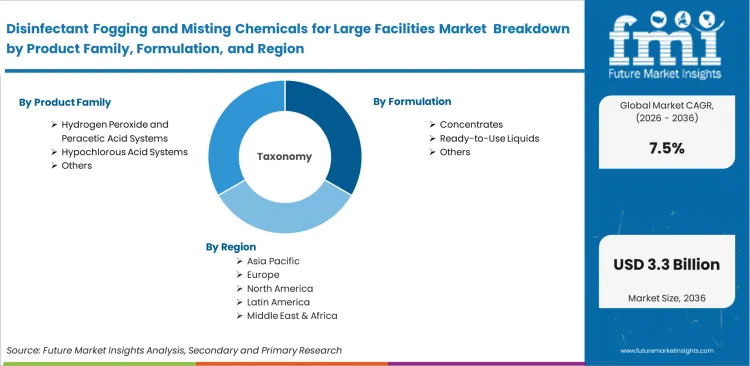
The disinfectant fogging and misting chemicals for large facilities market is segmented by Product Family (Hydrogen peroxide and peracetic acid systems, Quat-based fogging concentrates, Hypochlorous acid systems, Electrostatic spray-ready disinfectants, Specialty enclosed-space decontamination blends), Formulation (Concentrates, Ready-to-use liquids, Electrostatic spray-compatible dilutions, Ultra-low-volume concentrates, Stabilized oxidizing blends), End-use Environment (Healthcare laboratories and support spaces, Public transport terminals, Hospitality complexes and convention venues, Warehouses and logistics hubs, Education and public-institution campuses), Application Method (Cold fogging, ULV misting, Electrostatic spray application, Manual pump misting, Hybrid room decontamination systems), Supply Channel (Direct institutional supply, Jan-san distributors, Specialized infection-control contractors, Facility-services procurement contracts, Online and catalog channels), and Region. Forecast for 2026 to 2036.
| Metric | Value |
|---|---|
| Quantitative Units | USD 1.50 billion to USD 3.10 billion, at a CAGR of 7.5% |
| Market Definition | Commercial-grade sanitation formulations engineered specifically for aerosolized deployment across expansive indoor environments to maintain pathogen suspension and uniform surface settling. |
| Segmentation | Product Family, Formulation, End-use Environment, Application Method, Supply Channel |
| Regions Covered | North America, Latin America, Western Europe, Eastern Europe, Asia Pacific, Middle East and Africa |
| Countries Covered | United States, Canada, Brazil, Mexico, Germany, United Kingdom, France, Spain, Italy, Russia, China, Japan, India, South Korea, Australia, Saudi Arabia, United Arab Emirates, South Africa |
| Key Companies Profiled | Ecolab, CloroxPro, SC Johnson Professional, Reckitt Pro Solutions, Solenis (Diversey), SteraMist / TOMI Environmental Solutions, Briotech |
| Forecast Period | 2026 to 2036 |
| Approach | Total addressable square footage of enclosed civic infrastructure mapped against recommended fluid ounce application rates per cubic meter. |
Source: Future Market Insights (FMI) analysis, based on proprietary forecasting model and primary research
Disinfectant Fogging and Misting Chemicals for Large Facilities Market Analysis by Segments
Product Family:
- Hydrogen peroxide and peracetic acid systems
- Quat-based fogging concentrates
- Hypochlorous acid systems
- Electrostatic spray-ready disinfectants
- Specialty enclosed-space decontamination blends
Formulation:
- Concentrates
- Ready-to-use liquids
- Electrostatic spray-compatible dilutions
- Ultra-low-volume concentrates
- Stabilized oxidizing blends
End-use Environment:
- Healthcare laboratories and support spaces
- Public transport terminals
- Hospitality complexes and convention venues
- Warehouses and logistics hubs
- Education and public-institution campuses
Application Method:
- Cold fogging
- ULV misting
- Electrostatic spray application
- Manual pump misting
- Hybrid room decontamination systems
Supply Channel:
- Direct institutional supply
- Jan-san distributors
- Specialized infection-control contractors
- Facility-services procurement contracts
- Online and catalog channels
Region:
- North America
- United States
- Canada
- Latin America
- Brazil
- Mexico
- Western Europe
- Germany
- United Kingdom
- France
- Spain
- Italy
- Eastern Europe
- Russia
- Poland
- Asia Pacific
- China
- India
- Japan
- South Korea
- Australia
- Middle East and Africa
- Saudi Arabia
- United Arab Emirates
- South Africa
Bibliography
- Centers for Disease Control and Prevention. (2024, April 12). Summary of recommendations: Infection control. Ecolab
- National Institute for Occupational Safety and Health. (2025). Exposure assessment of peracetic acid-based disinfectant during terminal room and incubator cleaning at a children’s hospital (EPHB Report No. 358-12a; 2025-DFSE-2041). Centers for Disease Control and Prevention.
- Ding, X., Jiang, J., Shah, A. D., & Jung, N. (2025). Peracetic acid emissions and exposures during building disinfection events. Building and Environment, 269, 112221.
- Fontana, L., Stabile, L., Caracci, E., Chaillon, A., Ait-Ikhlef, K., & Buonanno, G. (2025). Occupational health effects of chlorine spraying in healthcare workers: A systematic review and meta-analysis of alternative disinfectants and application methods. International Journal of Environmental Research and Public Health, 22(6), 942.
- National Centre for Disease Control. (2024, March). National guidelines for infection prevention and control in healthcare facilities
This bibliography is provided for reader reference. The full FMI report contains the complete reference list with primary source documentation.
Frequently Asked Questions
When procurement teams ask how big is the disinfectant fogging and misting chemicals market, what does the data show?
The valuation stood at USD 0.7 billion in 2025. Projections indicate total sales will cross USD 1.5 billion in 2026, steadily advancing to reach USD 3.1 billion by 2036.
What is the disinfectant fogging chemicals CAGR?
The category is expected to expand at a 7.5% compound annual growth rate through 2036. Labor constraints force facility administrators to replace manual surface wiping with rapid aerosolized deployment protocols.
Why do hydrogen peroxide systems hold 33.0% share?
These highly reactive compounds quickly break down into harmless oxygen and water following spatial application. Facility managers operating highly sensitive environments avoid deploying formulations that leave corrosive films or toxic airborne residues.
How does direct institutional supply maintain 44.0% dominance?
Enterprise operations demand absolute volumetric hygiene standardization across multiple geographic locations. Corporate procurement teams negotiate bulk manufacturing contracts, forcing franchised operators to strictly utilize approved vendor lists.
What creates hidden costs for ULV misting hardware?
Aggressive raw hypochlorite liquids rapidly corrode delicate internal atomization nozzles and rubber seals. Operations managers face unexpected repair bills from specialized hardware maintenance technicians. Improper fluid viscosity causes uncalibrated equipment to waste expensive active biocides.
Why do concentrates lead the formulation type?
Logistics vice presidents completely restructure distribution networks to exclusively transport high-density active ingredients. Shipping massive volumes of liquid water across continental supply chains severely destroys environmental sustainability metrics.
How do cheap chemical substitutes complicate daily operations?
Generic biocides lacking proper liquid conductivity completely negate the intended wraparound effect of electrostatic sprayers. Custodial supervisors discover that basic liquids simply pool on flat horizontal planes rather than adhering to vertical structures.
Why do healthcare laboratories lead application environments?
Diagnostic testing spaces represent highly sensitive square footage demanding absolute environmental sterilization between operational shifts. Clinical technicians require rapid-degradation formulations capable of treating complex laboratory benches and overhead ductwork simultaneously.
How do premium facility fixtures complicate chemical purchasing?
Aggressive quaternary ammonium compounds easily etch expensive acrylic viewing panels and tarnish decorative brass fittings. Luxury venue directors quietly seek milder airborne agents to preserve highly specialized interior finishes.
Why does cold fogging capture 31.0% application share?
This mechanical method relies on intense pressure to fracture liquid disinfectants into suspended microscopic droplets. Operations managers utilize this technique to completely saturate porous fabrics and highly complex structural geometries.
Preview the report firsthand - request a free sample
Get SampleGet the brochure for pricing and purchase details.
Get PDFTable of Content
- Executive Summary
- Global Market Outlook
- Demand-side Trends
- Supply-side Trends
- Technology Roadmap Analysis
- Analysis and Recommendations
- Market Overview
- Market Coverage / Taxonomy
- Market Definition / Scope / Limitations
- Research Methodology
- Chapter Orientation
- Analytical Lens and Working Hypotheses
- Market Structure, Signals, and Trend Drivers
- Benchmarking and Cross-market Comparability
- Market Sizing, Forecasting, and Opportunity Mapping
- Research Design and Evidence Framework
- Desk Research Programme (Secondary Evidence)
- Company Annual and Sustainability Reports
- Peer-reviewed Journals and Academic Literature
- Corporate Websites, Product Literature, and Technical Notes
- Earnings Decks and Investor Briefings
- Statutory Filings and Regulatory Disclosures
- Technical White Papers and Standards Notes
- Trade Journals, Industry Magazines, and Analyst Briefs
- Conference Proceedings, Webinars, and Seminar Materials
- Government Statistics Portals and Public Data Releases
- Press Releases and Reputable Media Coverage
- Specialist Newsletters and Curated Briefings
- Sector Databases and Reference Repositories
- FMI Internal Proprietary Databases and Historical Market Datasets
- Subscription Datasets and Paid Sources
- Social Channels, Communities, and Digital Listening Inputs
- Additional Desk Sources
- Expert Input and Fieldwork (Primary Evidence)
- Primary Modes
- Qualitative Interviews and Expert Elicitation
- Quantitative Surveys and Structured Data Capture
- Blended Approach
- Why Primary Evidence is Used
- Field Techniques
- Interviews
- Surveys
- Focus Groups
- Observational and In-context Research
- Social and Community Interactions
- Stakeholder Universe Engaged
- C-suite Leaders
- Board Members
- Presidents and Vice Presidents
- R&D and Innovation Heads
- Technical Specialists
- Domain Subject-matter Experts
- Scientists
- Physicians and Other Healthcare Professionals
- Governance, Ethics, and Data Stewardship
- Research Ethics
- Data Integrity and Handling
- Primary Modes
- Tooling, Models, and Reference Databases
- Desk Research Programme (Secondary Evidence)
- Data Engineering and Model Build
- Data Acquisition and Ingestion
- Cleaning, Normalisation, and Verification
- Synthesis, Triangulation, and Analysis
- Quality Assurance and Audit Trail
- Market Background
- Market Dynamics
- Drivers
- Restraints
- Opportunity
- Trends
- Scenario Forecast
- Demand in Optimistic Scenario
- Demand in Likely Scenario
- Demand in Conservative Scenario
- Opportunity Map Analysis
- Product Life Cycle Analysis
- Supply Chain Analysis
- Investment Feasibility Matrix
- Value Chain Analysis
- PESTLE and Porter’s Analysis
- Regulatory Landscape
- Regional Parent Market Outlook
- Production and Consumption Statistics
- Import and Export Statistics
- Market Dynamics
- Global Market Analysis 2021 to 2025 and Forecast, 2026 to 2036
- Historical Market Size Value (USD Million) Analysis, 2021 to 2025
- Current and Future Market Size Value (USD Million) Projections, 2026 to 2036
- Y-o-Y Growth Trend Analysis
- Absolute $ Opportunity Analysis
- Global Market Pricing Analysis 2021 to 2025 and Forecast 2026 to 2036
- Global Market Analysis 2021 to 2025 and Forecast 2026 to 2036, By Product Family
- Introduction / Key Findings
- Historical Market Size Value (USD Million) Analysis By Product Family , 2021 to 2025
- Current and Future Market Size Value (USD Million) Analysis and Forecast By Product Family , 2026 to 2036
- Hydrogen Peroxide and Peracetic Acid Systems
- Hypochlorous Acid Systems
- Others
- Hydrogen Peroxide and Peracetic Acid Systems
- Y-o-Y Growth Trend Analysis By Product Family , 2021 to 2025
- Absolute $ Opportunity Analysis By Product Family , 2026 to 2036
- Global Market Analysis 2021 to 2025 and Forecast 2026 to 2036, By Formulation
- Introduction / Key Findings
- Historical Market Size Value (USD Million) Analysis By Formulation, 2021 to 2025
- Current and Future Market Size Value (USD Million) Analysis and Forecast By Formulation, 2026 to 2036
- Concentrates
- Ready-to-Use Liquids
- Others
- Concentrates
- Y-o-Y Growth Trend Analysis By Formulation, 2021 to 2025
- Absolute $ Opportunity Analysis By Formulation, 2026 to 2036
- Global Market Analysis 2021 to 2025 and Forecast 2026 to 2036, By End-Use Environment
- Introduction / Key Findings
- Historical Market Size Value (USD Million) Analysis By End-Use Environment, 2021 to 2025
- Current and Future Market Size Value (USD Million) Analysis and Forecast By End-Use Environment, 2026 to 2036
- Healthcare Laboratories and Support Spaces
- Public Transport Terminals
- Others
- Healthcare Laboratories and Support Spaces
- Y-o-Y Growth Trend Analysis By End-Use Environment, 2021 to 2025
- Absolute $ Opportunity Analysis By End-Use Environment, 2026 to 2036
- Global Market Analysis 2021 to 2025 and Forecast 2026 to 2036, By Application Method
- Introduction / Key Findings
- Historical Market Size Value (USD Million) Analysis By Application Method, 2021 to 2025
- Current and Future Market Size Value (USD Million) Analysis and Forecast By Application Method, 2026 to 2036
- Cold Fogging
- ULV Misting
- Others
- Cold Fogging
- Y-o-Y Growth Trend Analysis By Application Method, 2021 to 2025
- Absolute $ Opportunity Analysis By Application Method, 2026 to 2036
- Global Market Analysis 2021 to 2025 and Forecast 2026 to 2036, By Supply Channel
- Introduction / Key Findings
- Historical Market Size Value (USD Million) Analysis By Supply Channel, 2021 to 2025
- Current and Future Market Size Value (USD Million) Analysis and Forecast By Supply Channel, 2026 to 2036
- Direct Institutional Supply
- Jan-san Distributors
- Online and Catalog Channels
- Direct Institutional Supply
- Y-o-Y Growth Trend Analysis By Supply Channel, 2021 to 2025
- Absolute $ Opportunity Analysis By Supply Channel, 2026 to 2036
- Global Market Analysis 2021 to 2025 and Forecast 2026 to 2036, By Region
- Introduction
- Historical Market Size Value (USD Million) Analysis By Region, 2021 to 2025
- Current Market Size Value (USD Million) Analysis and Forecast By Region, 2026 to 2036
- North America
- Latin America
- Western Europe
- Eastern Europe
- East Asia
- South Asia and Pacific
- Middle East & Africa
- Market Attractiveness Analysis By Region
- North America Market Analysis 2021 to 2025 and Forecast 2026 to 2036, By Country
- Historical Market Size Value (USD Million) Trend Analysis By Market Taxonomy, 2021 to 2025
- Market Size Value (USD Million) Forecast By Market Taxonomy, 2026 to 2036
- By Country
- USA
- Canada
- Mexico
- By Product Family
- By Formulation
- By End-Use Environment
- By Application Method
- By Supply Channel
- By Country
- Market Attractiveness Analysis
- By Country
- By Product Family
- By Formulation
- By End-Use Environment
- By Application Method
- By Supply Channel
- Key Takeaways
- Latin America Market Analysis 2021 to 2025 and Forecast 2026 to 2036, By Country
- Historical Market Size Value (USD Million) Trend Analysis By Market Taxonomy, 2021 to 2025
- Market Size Value (USD Million) Forecast By Market Taxonomy, 2026 to 2036
- By Country
- Brazil
- Chile
- Rest of Latin America
- By Product Family
- By Formulation
- By End-Use Environment
- By Application Method
- By Supply Channel
- By Country
- Market Attractiveness Analysis
- By Country
- By Product Family
- By Formulation
- By End-Use Environment
- By Application Method
- By Supply Channel
- Key Takeaways
- Western Europe Market Analysis 2021 to 2025 and Forecast 2026 to 2036, By Country
- Historical Market Size Value (USD Million) Trend Analysis By Market Taxonomy, 2021 to 2025
- Market Size Value (USD Million) Forecast By Market Taxonomy, 2026 to 2036
- By Country
- Germany
- UK
- Italy
- Spain
- France
- Nordic
- BENELUX
- Rest of Western Europe
- By Product Family
- By Formulation
- By End-Use Environment
- By Application Method
- By Supply Channel
- By Country
- Market Attractiveness Analysis
- By Country
- By Product Family
- By Formulation
- By End-Use Environment
- By Application Method
- By Supply Channel
- Key Takeaways
- Eastern Europe Market Analysis 2021 to 2025 and Forecast 2026 to 2036, By Country
- Historical Market Size Value (USD Million) Trend Analysis By Market Taxonomy, 2021 to 2025
- Market Size Value (USD Million) Forecast By Market Taxonomy, 2026 to 2036
- By Country
- Russia
- Poland
- Hungary
- Balkan & Baltic
- Rest of Eastern Europe
- By Product Family
- By Formulation
- By End-Use Environment
- By Application Method
- By Supply Channel
- By Country
- Market Attractiveness Analysis
- By Country
- By Product Family
- By Formulation
- By End-Use Environment
- By Application Method
- By Supply Channel
- Key Takeaways
- East Asia Market Analysis 2021 to 2025 and Forecast 2026 to 2036, By Country
- Historical Market Size Value (USD Million) Trend Analysis By Market Taxonomy, 2021 to 2025
- Market Size Value (USD Million) Forecast By Market Taxonomy, 2026 to 2036
- By Country
- China
- Japan
- South Korea
- By Product Family
- By Formulation
- By End-Use Environment
- By Application Method
- By Supply Channel
- By Country
- Market Attractiveness Analysis
- By Country
- By Product Family
- By Formulation
- By End-Use Environment
- By Application Method
- By Supply Channel
- Key Takeaways
- South Asia and Pacific Market Analysis 2021 to 2025 and Forecast 2026 to 2036, By Country
- Historical Market Size Value (USD Million) Trend Analysis By Market Taxonomy, 2021 to 2025
- Market Size Value (USD Million) Forecast By Market Taxonomy, 2026 to 2036
- By Country
- India
- ASEAN
- Australia & New Zealand
- Rest of South Asia and Pacific
- By Product Family
- By Formulation
- By End-Use Environment
- By Application Method
- By Supply Channel
- By Country
- Market Attractiveness Analysis
- By Country
- By Product Family
- By Formulation
- By End-Use Environment
- By Application Method
- By Supply Channel
- Key Takeaways
- Middle East & Africa Market Analysis 2021 to 2025 and Forecast 2026 to 2036, By Country
- Historical Market Size Value (USD Million) Trend Analysis By Market Taxonomy, 2021 to 2025
- Market Size Value (USD Million) Forecast By Market Taxonomy, 2026 to 2036
- By Country
- Kingdom of Saudi Arabia
- Other GCC Countries
- Turkiye
- South Africa
- Other African Union
- Rest of Middle East & Africa
- By Product Family
- By Formulation
- By End-Use Environment
- By Application Method
- By Supply Channel
- By Country
- Market Attractiveness Analysis
- By Country
- By Product Family
- By Formulation
- By End-Use Environment
- By Application Method
- By Supply Channel
- Key Takeaways
- Key Countries Market Analysis
- USA
- Pricing Analysis
- Market Share Analysis, 2025
- By Product Family
- By Formulation
- By End-Use Environment
- By Application Method
- By Supply Channel
- Canada
- Pricing Analysis
- Market Share Analysis, 2025
- By Product Family
- By Formulation
- By End-Use Environment
- By Application Method
- By Supply Channel
- Mexico
- Pricing Analysis
- Market Share Analysis, 2025
- By Product Family
- By Formulation
- By End-Use Environment
- By Application Method
- By Supply Channel
- Brazil
- Pricing Analysis
- Market Share Analysis, 2025
- By Product Family
- By Formulation
- By End-Use Environment
- By Application Method
- By Supply Channel
- Chile
- Pricing Analysis
- Market Share Analysis, 2025
- By Product Family
- By Formulation
- By End-Use Environment
- By Application Method
- By Supply Channel
- Germany
- Pricing Analysis
- Market Share Analysis, 2025
- By Product Family
- By Formulation
- By End-Use Environment
- By Application Method
- By Supply Channel
- UK
- Pricing Analysis
- Market Share Analysis, 2025
- By Product Family
- By Formulation
- By End-Use Environment
- By Application Method
- By Supply Channel
- Italy
- Pricing Analysis
- Market Share Analysis, 2025
- By Product Family
- By Formulation
- By End-Use Environment
- By Application Method
- By Supply Channel
- Spain
- Pricing Analysis
- Market Share Analysis, 2025
- By Product Family
- By Formulation
- By End-Use Environment
- By Application Method
- By Supply Channel
- France
- Pricing Analysis
- Market Share Analysis, 2025
- By Product Family
- By Formulation
- By End-Use Environment
- By Application Method
- By Supply Channel
- India
- Pricing Analysis
- Market Share Analysis, 2025
- By Product Family
- By Formulation
- By End-Use Environment
- By Application Method
- By Supply Channel
- ASEAN
- Pricing Analysis
- Market Share Analysis, 2025
- By Product Family
- By Formulation
- By End-Use Environment
- By Application Method
- By Supply Channel
- Australia & New Zealand
- Pricing Analysis
- Market Share Analysis, 2025
- By Product Family
- By Formulation
- By End-Use Environment
- By Application Method
- By Supply Channel
- China
- Pricing Analysis
- Market Share Analysis, 2025
- By Product Family
- By Formulation
- By End-Use Environment
- By Application Method
- By Supply Channel
- Japan
- Pricing Analysis
- Market Share Analysis, 2025
- By Product Family
- By Formulation
- By End-Use Environment
- By Application Method
- By Supply Channel
- South Korea
- Pricing Analysis
- Market Share Analysis, 2025
- By Product Family
- By Formulation
- By End-Use Environment
- By Application Method
- By Supply Channel
- Russia
- Pricing Analysis
- Market Share Analysis, 2025
- By Product Family
- By Formulation
- By End-Use Environment
- By Application Method
- By Supply Channel
- Poland
- Pricing Analysis
- Market Share Analysis, 2025
- By Product Family
- By Formulation
- By End-Use Environment
- By Application Method
- By Supply Channel
- Hungary
- Pricing Analysis
- Market Share Analysis, 2025
- By Product Family
- By Formulation
- By End-Use Environment
- By Application Method
- By Supply Channel
- Kingdom of Saudi Arabia
- Pricing Analysis
- Market Share Analysis, 2025
- By Product Family
- By Formulation
- By End-Use Environment
- By Application Method
- By Supply Channel
- Turkiye
- Pricing Analysis
- Market Share Analysis, 2025
- By Product Family
- By Formulation
- By End-Use Environment
- By Application Method
- By Supply Channel
- South Africa
- Pricing Analysis
- Market Share Analysis, 2025
- By Product Family
- By Formulation
- By End-Use Environment
- By Application Method
- By Supply Channel
- USA
- Market Structure Analysis
- Competition Dashboard
- Competition Benchmarking
- Market Share Analysis of Top Players
- By Region
- By Product Family
- By Formulation
- By End-Use Environment
- By Application Method
- By Supply Channel
- Competition Analysis
- Competition Deep Dive
- Ecolab
- Overview
- Product Portfolio
- Profitability by Market Segments (Product/Age /Sales Channel/Region)
- Sales Footprint
- Strategy Overview
- Marketing Strategy
- Product Strategy
- Channel Strategy
- CloroxPro
- SC Johnson Professional
- Reckitt Pro Solutions
- Solenis (Diversey)
- SteraMist / TOMI Environmental Solutions
- Ecolab
- Competition Deep Dive
- Assumptions & Acronyms Used


