

- Industry Size (2026)
- USD 2.5 Bn
- Forecast (2036)
- USD 7.0 Bn
- CAGR (2026 to 2036)
- 10.8%
High-Value Healthcare Asset Tracking and Recovery Platforms Market Size, Market Forecast and Outlook By FMI
The high-value healthcare asset tracking and recovery platforms market crossed a valuation of USD 2.2 billion in 2025 and is set to rise to USD 2.5 billion in 2026, supported by a 10.8% CAGR through 2036. Total valuation is projected to reach USD 7.0 billion, driven by hospitals linking nursing workflow performance to equipment location time and by broader adoption of wireless healthcare asset management as a core operational system.
Hospitals carry rising financial pressure from avoidable rentals and redundant purchases. CFOs continue to approve additional infusion pump acquisitions because clinical engineering teams cannot reliably locate existing units across large campuses. The shift from manual search routines to wireless healthcare asset management platforms changes this cost baseline. Real‑time equipment visibility removes incentives for nursing units to hold private reserves, eliminates most shrinkage, and enables administrators to reduce fleet sizes while maintaining equipment availability.
Summary of High-Value Healthcare Asset Tracking and Recovery Platforms Market
- Market Snapshot
- The High‑Value Healthcare Asset Tracking and Recovery Platforms Market is valued at USD 2.2 billion in 2025 and is projected to reach USD 7.0 billion by 2036.
- The industry is expected to grow at a 10.8% CAGR from 2026 to 2036, generating USD 4.8 billion in incremental opportunity.
- The category consists of hospital‑operations software and infrastructure focused on real‑time visibility, recovery workflows, utilization analytics, and alert‑based control for expensive mobile equipment.
- The scope is narrower than full healthcare asset management because it excludes fixed‑asset ledgers and concentrates on mobile, high‑value, clinically critical equipment where search time, shrinkage, and rental leakage carry direct operational and clinical consequences.
- Demand and Growth Drivers
- Demand is increasing as hospitals adopt RTLS and location‑based tools to reduce equipment search time, raise utilization, and support faster care delivery.
- BLE, RFID, and hybrid indoor‑location technologies are gaining traction as they provide room‑level or near‑room precision without requiring major changes to existing operational systems.
- Smart‑hospital programs, particularly in markets with large hospital estates and active digital‑health budgets, continue to support category expansion.
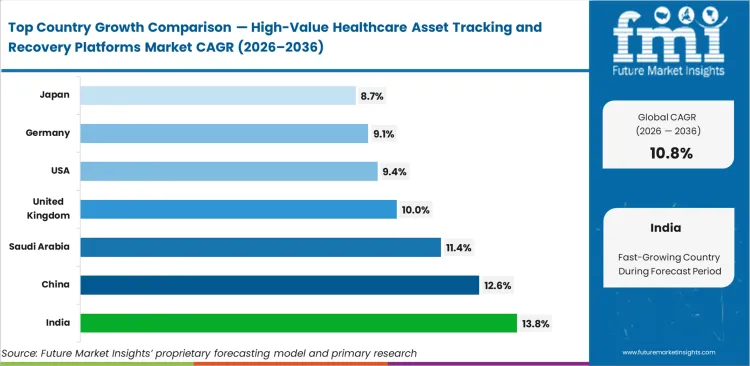
- Growth varies by country, with India at 13.8% CAGR, China at 12.6%, Saudi Arabia at 11.4%, the United Kingdom at 10.0%, the United States at 9.4%, Germany at 9.1%, and Japan at 8.7%.
- Adoption is moderated by integration cost, signal‑environment complexity, and the need to link asset data with biomedical engineering, maintenance, and clinical workflows before returns become clearly visible.
- Product and Segment View
- The market includes RTLS and retrieval platforms built on BLE, RFID, UWB, and Wi‑Fi, along with software, tags, readers, and managed services supporting visibility and recovery functions.
- Use cases span asset locating, recovery workflows, rental reduction, preventive‑maintenance coordination, and utilization analysis across hospitals and multi‑site health systems.
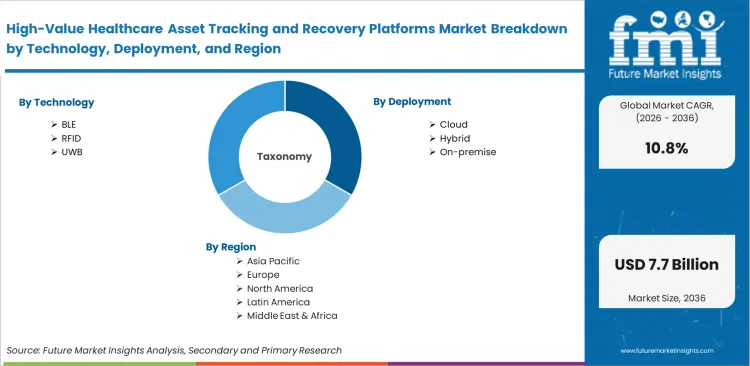
- BLE leads the Technology segment with 34% share, supported by lower deployment friction and broader adoption in visibility programs.
- Cloud leads the Deployment segment with 46% share, driven by the need for multi‑site dashboards, analytics, and streamlined updates.
- Infusion pumps lead the Asset Class segment with 29% share due to their volume, mobility, criticality, and recurring focus in utilization and shrink‑reduction initiatives.
- Hospitals lead the End User segment with 61% share, reflecting the operational burden created by missing or underutilized mobile assets in inpatient settings.
- Software leads the Component segment with 39% share, reflecting the central role of analytics, alerting, and workflow orchestration in value delivery.
- The category covers high‑value asset tracking, alerting, analytics, and recovery logic, excluding low‑value consumables, standalone patient‑only tracking, and fixed‑asset accounting systems.
- Geography and Competitive Outlook
- India, China, and Saudi Arabia represent the fastest‑growing markets, while the United States remains the largest near‑term demand base due to its hospital scale and earlier adoption of enterprise visibility tools.
- Competitive differentiation is shaped by interoperability, floor‑level accuracy, tag economics, analytics depth, and the ability to integrate asset data with biomedical engineering and hospital operations.
- Key participants include Zebra Technologies, CenTrak, Securitas Healthcare, Infor, AiRISTA Flow, Midmark RTLS, and Kontakt.io, with Zebra holding a leading position in this high‑value segment.
- The market remains moderately fragmented, as hospitals typically select vendors based on workflow fit, installed infrastructure, and service capability rather than hardware alone.
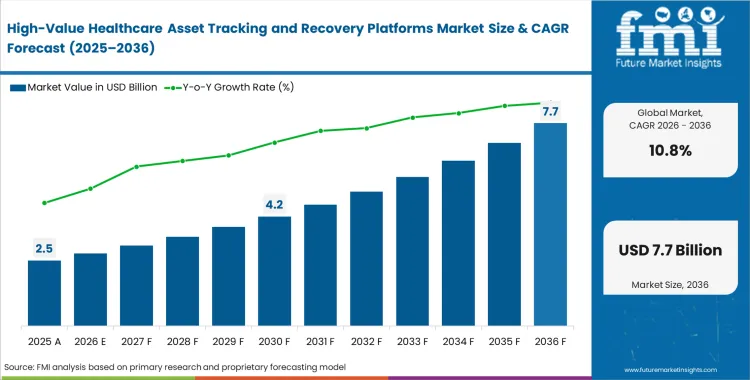
Clinical engineering teams that complete full-campus deployments report steady performance gains. Consistent system accuracy builds staff trust, removes informal equipment stashes, and lifts true utilization beyond typical industry thresholds. The improvement compounds as more departments adopt the platform and standardize retrieval workflows.
India is expected to record a CAGR of 13.8% in the market through 2036, supported by smart-hospital development that integrates tracking systems from the outset. China is projected to expand at a CAGR of 12.6% as large medical centers continue adopting connected asset-monitoring solutions. Saudi Arabia is likely to post 11.4% CAGR during the forecast period, reflecting healthcare modernization priorities. The United Kingdom and the United States are anticipated to grow at CAGRs of 10.0% and 9.4%, respectively. Germany is set to register 9.1% CAGR, while Japan is expected to see 8.7% growth. Replacement cycles and workflow-integration priorities continue to shape adoption patterns across mature healthcare markets.
Segmental Analysis
High-Value Healthcare Asset Tracking and Recovery Platforms Market Analysis by Technology
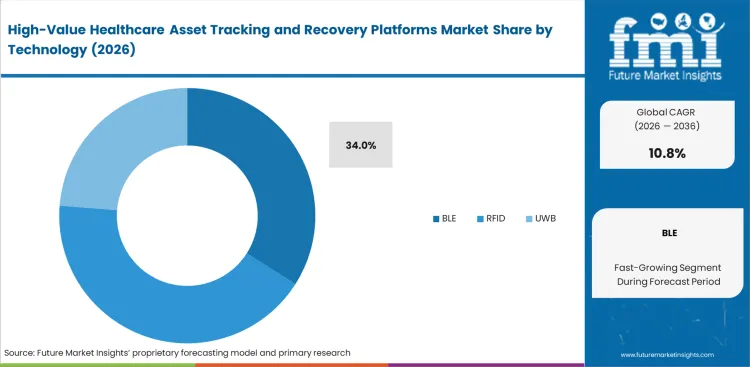
Hospital IT directors often reject proprietary infrastructure that requires dedicated cabling across patient floors. BLE is expected to hold 34.0% share because tags can use existing wireless access points to triangulate positions without disruptive ceiling installations. Clinical engineers value the sub-meter accuracy needed to locate hidden infusion pumps, and they do not have to absorb millions in hardwiring costs to get it. Facility planners also tend to miss a larger advantage during early cost comparisons. When hospitals standardize on BLE-based systems, they also create a practical base for future patient wayfinding applications. By contrast, heavier proprietary radio systems can lock health networks into single-vendor hardware upgrade cycles that last for decades. Advances in micro location technology continue to improve beacon battery life and support wider BLE adoption across hospital environments. Waiting too long to adopt standards-based architecture can also reduce interoperability across clinical systems.
- Infrastructure avoidance: Leveraging existing wireless networks drops deployment expenses dramatically. IT directors avoid disruptive cabling projects entirely.
- Precision mapping: High-value equipment workflows often require better location precision. Administrators analyzing UWB hospital asset tracking gain centimeter-level accuracy for tight clinical spaces.
- Legacy comparison: Capturing operational buyers comparing legacy and newer tag methods remains critical. Facilities evaluating RFID hospital equipment tracking must weigh lower tag costs against heavier reader infrastructure requirements.
High-Value Healthcare Asset Tracking and Recovery Platforms Market Analysis by Deployment
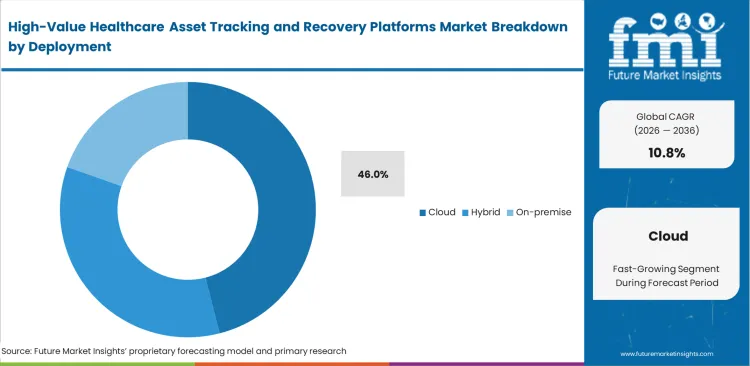
Multi‑campus health networks require unified inventory visibility to coordinate equipment across dispersed locations. Operations teams depend on consistent, system‑wide data to avoid over‑stocking at some sites while critical units run short at others. Hospital IT groups also push for architectures that reduce maintenance workloads and simplify security oversight. Procurement leaders, in turn, rely on cross‑campus transparency to shift high‑demand assets, such as ventilators, from lower‑acuity clinics to urban centers experiencing surges. Cloud architecture accounts for 46.0% of deployments, supported by its ability to centralize data and avoid the operational risks tied to local servers. Ransomware events or localized outages often leave legacy on‑premise environments without asset visibility for extended periods, while cloud‑based wireless healthcare asset and hospital capacity management preserves offsite location data and maintains continuity across the network.
- Cross-campus visibility: Unified dashboards reveal total fleet utilization. Procurement directors reduce rental costs with hospital asset tracking instead of approving redundant leases.
- Update automation: Remote patches ensure security compliance continuously. IT security officers avoid manual vulnerability scanning across distributed servers.
- Ransomware resilience: Offsite data hosting protects crucial inventory records during local network breaches. Emergency response teams maintain equipment access despite localized digital outages.
High-Value Healthcare Asset Tracking and Recovery Platforms Market Analysis by Asset Class
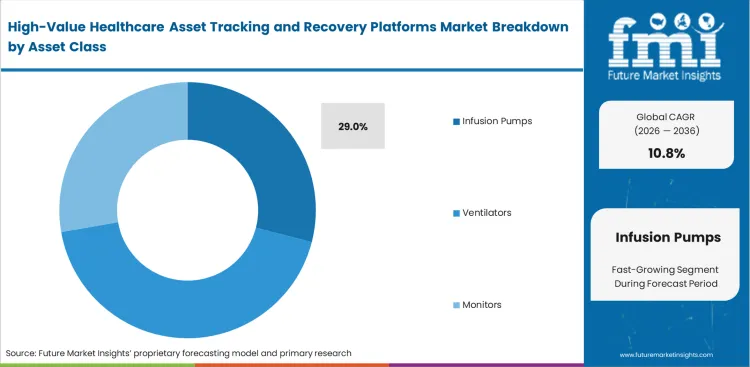
Nursing units often hold onto mobile drug delivery devices to make sure they are available during shift changes. Infusion pumps account for 29.0% share because they move frequently across departments and remain essential in critical care, which makes them common targets for unauthorized stockpiling. Based on FMI’s assessment, the ability to locate these hidden devices helps biomedical technicians complete mandated preventive maintenance without losing hours searching through hospital corridors. When hospitals connect location data with medical carts and drug delivery systems, they uncover a costly operating pattern. Many facilities end up buying more pumps than peak census actually requires because localized hoarding distorts true equipment availability.
- Hoarding prevention: Real-time visibility eliminates artificial scarcity panics among floor staff. Charge nurses stop hiding equipment in soiled utility rooms.
- Maintenance efficiency: Exact room-level locations slash search times. Biomedical technicians complete compliance checks faster, improving overall fleet readiness.
- Capital reduction: Utilization data proves actual fleet requirements fall below perceived needs. Chief financial officers confidently reject requests for redundant inventory expansion.
High-Value Healthcare Asset Tracking and Recovery Platforms Market Analysis by End User
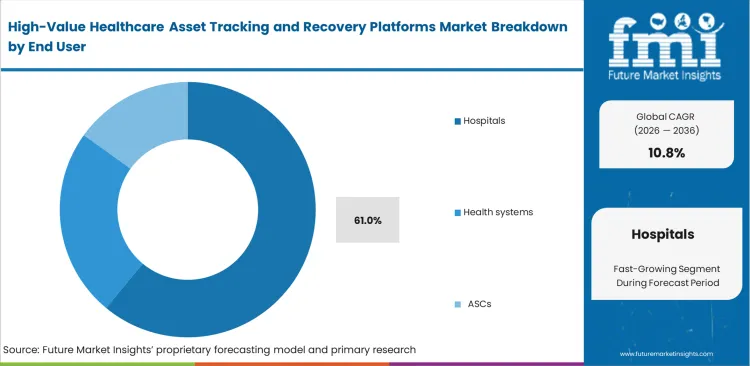
High square footage transforms manual equipment locating into mathematically impossible tasks. Hospitals hold 61.0% share because sprawling campuses generate the highest search-time penalties for clinical staff. FMI observes that implementing a real time location system allows nursing superintendents to reallocate thousands of wasted hours directly back into patient care activities. Viewing hospital asset tracking market expansion merely as a cost-saving exercise misses the critical patient safety dimension, finding crash carts instantly during cardiac events alters mortality statistics directly. Smaller clinics delaying implementation suffer continuous rental fee bleeding as untracked specialty devices disappear during inter-facility patient transfers.
- Scale complexity: Million-square-foot facilities destroy manual tracking effectiveness. Supply chain directors require automated continuous monitoring.
- Staff efficiency: Eliminating search times reclaims thousands of nursing hours annually. Chief nursing officers direct recovered labor toward direct patient interactions.
- Emergency response: Instant location data accelerates critical equipment delivery during codes. Clinical directors improve response metrics demonstrably.
High-Value Healthcare Asset Tracking and Recovery Platforms Market Analysis by Component
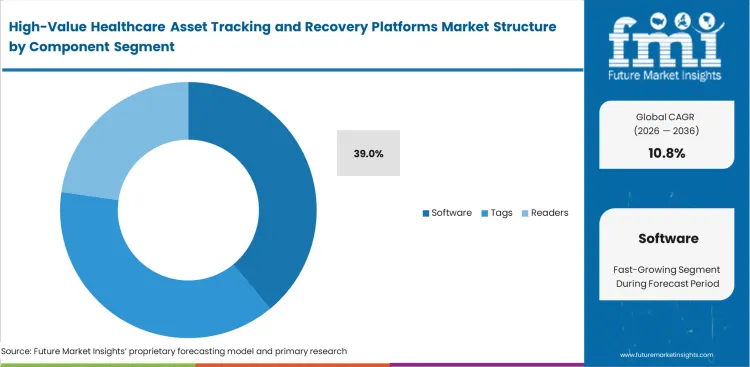
Raw location coordinates have limited operational value until workflow rules convert them into meaningful actions. Hospitals rely on software to interpret tag signals, route alerts to the right teams, and embed equipment visibility into daily routines. Clinical operations improve only when the system distinguishes meaningful events, such as an idle infusion pump in a high‑demand ward, from routine movement. Medical device & equipment tags continue to function as data sources rather than decision engines, placing greater weight on the platform’s analytical layer.
Biomedical leaders see this distinction clearly during procurement evaluations. Software accounts for 39.0% of market share, reflecting its role as the component that determines whether hospitals achieve measurable reductions in rentals and shrinkage. Hardware pitches centered on tag specifications rarely influence outcomes when restrictive interfaces limit staff adoption. Systems that surface dense data but fail to offer intuitive mobile tools force administrators back into manual audits, reinforcing why the hospital equipment recovery software segment anchors differentiation in wireless healthcare asset management programs.
- Alert rule configuration: Geofencing initiates notifications when expensive equipment nears exit doors. Security personnel intercept thefts before assets leave premises.
- Utilization analytics: Dashboards highlight devices sitting idle for days. Fleet managers deploying healthcare asset utilization analytics rebalance inventory dynamically across departments.
- Interface adoption: Intuitive mobile applications maintain and run daily staff usage. Nursing educators spend minimal time training floor staff on system navigation.
High-Value Healthcare Asset Tracking and Recovery Platforms Market Drivers, Restraints, and Opportunities
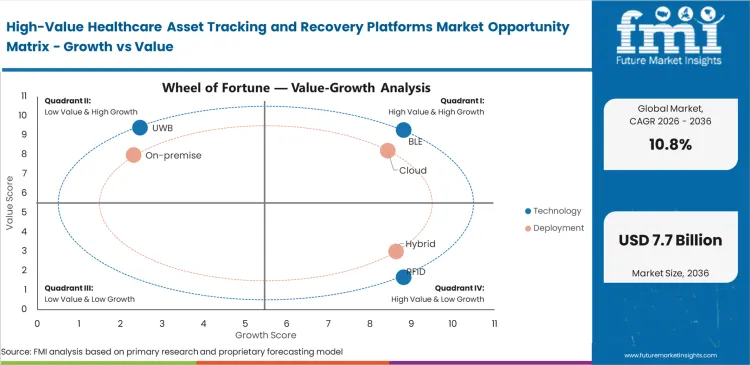
Severe margin compression forces hospital chief financial officers to scrutinize significant monthly equipment rental invoices. Relying on AI hospital inventory analytics, administrators discover millions wasted renting extra ventilators while owned units sit idle in storage closets. Implementing enterprise visibility systems instantly converts these hidden assets into active fleet capacity. Delaying deployment guarantees continued budget bleeding through unnecessary lease agreements, accelerating adoption urgency among large multi-site health systems evaluating the healthcare asset tracking market trends.
Cross-departmental political friction blocks rapid system utilization even after technical installation succeeds. Nursing units accustomed to hoarding specific monitors resist adopting shared-fleet models, viewing centralized distribution as a threat to their immediate operational readiness. Overcoming this cultural barrier requires executive mandates tying department budgets to proven utilization metrics, a slow organizational change management process that extends realization of full ROI well beyond initial hardware activation dates. Complexities surrounding hospital asset tracking integration with CMMS further slow operational deployment.
Opportunities in the High-Value Healthcare Asset Tracking and Recovery Platforms Market
- Automated compliance reporting: Linking IoT based asset tracking directly with Joint Commission audit logs. Clinical engineers eliminate manual documentation, guaranteeing flawless regulatory inspections.
- Theft reduction: Analyzing equipment movement patterns to identify unauthorized removal. Security directors implement hospital equipment theft prevention software to stop asset shrinkage at exit points.
- Patient flow integration: Correlating wheelchair locations with discharge bottlenecks. Operations directors accelerate bed turnover rates by ensuring transport equipment availability.
Regional Analysis
Based on regional analysis, high-value healthcare asset tracking and recovery platforms market is segmented into North America, Europe, Asia Pacific, and Middle East and Africa across 40 plus countries.
.webp "Top Country Growth Comparison High Value Healthcare Asset Tracking And Recovery Platforms Market Cagr (2026 2036)")
| Country | CAGR (2026 to 2036) |
|---|---|
| India | 13.8% |
| China | 12.6% |
| Saudi Arabia | 11.4% |
| United Kingdom | 10.0% |
| United States | 9.4% |
| Germany | 9.1% |
| Japan | 8.7% |
Source: Future Market Insights (FMI) analysis, based on proprietary forecasting model and primary research
North America High-Value Healthcare Asset Tracking and Recovery Platforms Market Analysis
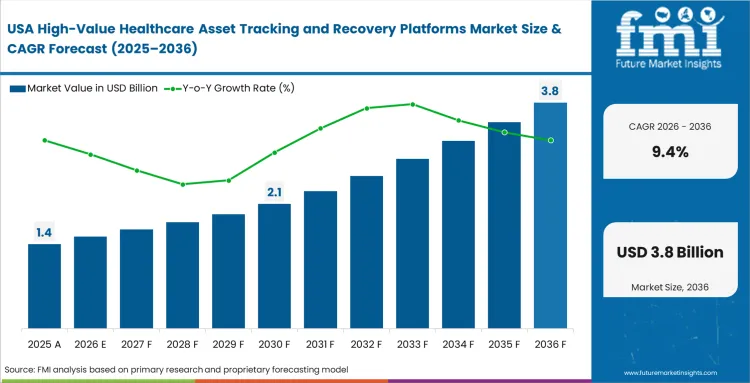
Large installed bases of legacy medical equipment force hospital administrators to prioritize backwards compatibility over greenfield sensor deployment. FMI notes North American facilities operate highly fragmented IT environments resulting from decades of health system mergers. Integrating location data across diverse network architectures demands sophisticated middleware capable of translating various radio frequency protocols into unified dashboards. Delaying standardization leaves merged systems operating blind across newly acquired clinical sites.
- United States: Strict Joint Commission compliance mandates lead to adoption across the country. Biomedical engineering directors leverage exact asset locations to execute mandatory preventive maintenance without missing required service windows. The United States high-value healthcare asset tracking sector is expected to register a CAGR of 9.4% through 2036, fueled by large-scale demand for IoT integration projects. This exact inventory data allows procurement officers to cancel millions in redundant specialty bed rentals.
Asia Pacific High-Value Healthcare Asset Tracking and Recovery Platforms Market Analysis
Aggressive smart-hospital construction pipelines allow administrators to embed location infrastructure directly into facility blueprints. FMI analysts note new regional medical centers avoid retrofitting costs entirely by deploying BLE beacon networks alongside initial IT cabling. This architectural foresight collapses deployment timelines significantly compared to Western counterparts struggling with concrete-walled legacy buildings.
- India: Considerable private healthcare expansion creates pristine environments for native tracking integration. IT directors deploy comprehensive systems from day one, skipping evolutionary manual phases entirely. Demand for high-value healthcare asset tracking and recovery platforms in India is anticipated to rise at a CAGR of 13.8% through the forecast period. Rapid rollout speeds grant immediate competitive advantages in patient throughput optimization across these newly established medical campuses.
- China: Tier-one municipal hospitals face large patient volumes requiring absolute equipment efficiency to maintain care standards. The high-value healthcare asset tracking and recovery platforms in China is poised to expand at a CAGR of 12.6% through 2036. Supply chain managers implement continuous tracking to ensure the immediate availability of critical respiratory devices. The resulting data stream connects directly with centralized municipal health dashboards for broader population management.
- Japan: Super-aged demographics are putting added pressure on hospital staff capacity, pushing administrators to improve daily workflow efficiency. Nursing directors are adopting healthcare location tracking systems to reduce time spent on manual search tasks and preserve staff effort for direct geriatric care. Japan is likely to post a CAGR of 8.7% in healthcare location tracking adoption by 2036. Facilities are focusing more on deep software integration than rapid expansion to make better use of limited labor resources.
Europe High-Value Healthcare Asset Tracking and Recovery Platforms Market Analysis
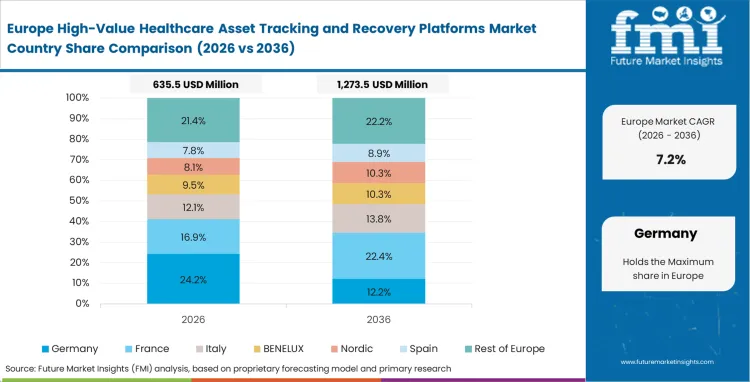
Nationalized health systems centralize procurement decisions, requiring vendors to prove systemic ROI before securing regional contracts. According to FMI's estimates, European trust administrators demand rigorous data privacy compliance alongside location tracking capabilities, severely limiting aggressive cloud telemetry models common elsewhere.
- United Kingdom: National Health Service trust budget deficits force the immediate elimination of excess equipment leases. The United Kingdom is projected to witness a 10.0% CAGR in the healthcare asset tracking market through 2036. Clinical engineering leads utilize location systems to prove actual utilization rates fall far below perceived needs. Shrinking fleet sizes without impacting patient care validates these localized expansion strategies.
- Germany: Strict labor union regulations shape how Europe hospital capacity solutions monitor equipment attached to staff workflows. Facility planners carefully configure software alerts to track asset movement without violating worker surveillance prohibitions. Germany is set to record a CAGR of 9.1% in asset tracking platform demand during the assessment period. These privacy-first architectural implementations dictate the pace of hardware procurement across the country.
Middle East and Africa High-Value Healthcare Asset Tracking and Recovery Platforms Market Analysis
Government-funded healthcare modernization programs lead to rapid uptake of advanced location analytics.
- Saudi Arabia: Ministry of Health digitalization targets mandate smart-tracking architecture inside all new mega-hospital projects. Healthcare asset tracking sales in Saudi Arabia are poised to grow at a CAGR of 11.4% during the assessment period. Procurement officials actively specify location-ready equipment during initial vendor selection processes. Such greenfield investment secures long-term operational superiority and data visibility over older manual facilities.
FMI's report includes extensive analysis covering South Korea, Brazil, Australia, and South Africa. Maturing IT infrastructure across these regions unlocks secondary waves of adoption.
Competitive Aligners for Market Players
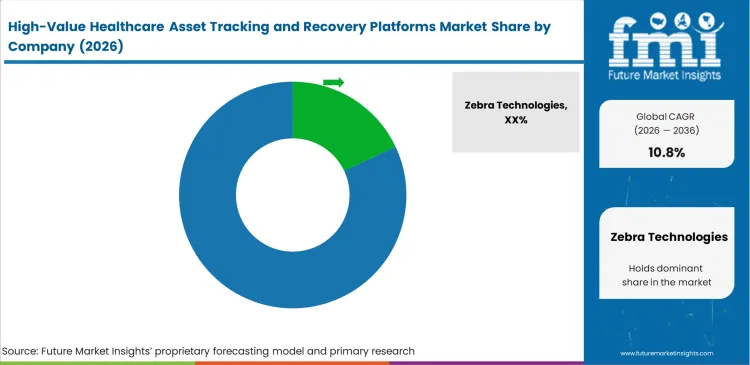
Suppliers selling raw location coordinates face rapid commoditization, while vendors offering deep clinical workflow integration maintain pricing power. AiRISTA Flow and CenTrak secure enterprise contracts not by boasting superior battery life, but by connecting tag data directly to specific digital healthcare maintenance software. IT directors base purchasing decisions entirely on API reliability rather than physical hardware aesthetics when evaluating hospital asset tracking vendors.
Incumbents possess large libraries of pre-built integrations with major electronic health record systems. Securitas Healthcare leverages decades of proprietary interfaces, creating severe friction for new entrants attempting to plug unfamiliar tags into entrenched hospital networks. Replicating this connectivity layer requires years of software development and complex vendor partnership negotiations, acting as a nearly impenetrable moat shielding legacy healthcare RTLS vendors from low-cost hardware disruptors.
Hospital procurement committees actively combat vendor lock-in by demanding hardware-agnostic software architectures. Zebra Technologies encounters health systems requiring open-standard Bluetooth tags capable of communicating across multiple third-party analytic dashboards. Large buying groups leverage their high scale to force interoperability, ensuring global digital health investments remain flexible. Future competitive advantages will rely strictly on software intelligence rather than proprietary radio frequency monopolies among the top companies in the healthcare asset tracking market.
Key Players in High-Value Healthcare Asset Tracking and Recovery Platforms Market
- Zebra Technologies
- CenTrak
- Securitas Healthcare
- Infor
- AiRISTA Flow
- Midmark RTLS
- Kontakt.io
Scope of the Report
| Metric | Value |
|---|---|
| Quantitative Units | USD 2.5 billion to USD 7.0 billion, at a CAGR of 10.8% |
| Market Definition | Integrated hardware and software ecosystems enable real-time location monitoring and utilization analytics for critical medical equipment inside clinical environments. |
| Segmentation | Technology, Deployment, Asset Class, End User, Component |
| Regions Covered | North America, Europe, Asia Pacific, Middle East and Africa, Latin America |
| Countries Covered | United States, United Kingdom, Germany, Japan, China, India, Saudi Arabia |
| Key Companies Profiled | Zebra Technologies, CenTrak, Securitas Healthcare, Infor, AiRISTA Flow, Midmark RTLS, Kontakt.io |
| Forecast Period | 2026 to 2036 |
| Approach | Hospital bed counts correlated with average infusion pump fleet sizes. |
Source: Future Market Insights (FMI) analysis, based on proprietary forecasting model and primary research
High-Value Healthcare Asset Tracking and Recovery Platforms Market Analysis by Segments
Technology
- BLE
- RFID
- UWB
- Wi-Fi
Deployment
- Cloud
- Hybrid
- On-premise
Asset Class
- Infusion pumps
- Ventilators
- Monitors
- Wheelchairs
- Imaging carts
End User
- Hospitals
- Health systems
- ASCs
- Clinics
Component
- Software
- Tags
- Readers
- Services
Region:
- North America
- United States
- Canada
- Europe
- Germany
- United Kingdom
- France
- Italy
- Spain
- Asia Pacific
- China
- Japan
- South Korea
- Taiwan
- Singapore
- Latin America
- Brazil
- Mexico
- Argentina
- Middle East & Africa
- GCC Countries
- South Africa
Bibliography
- American Hospital Association. (2026). Fast facts on USA hospitals, 2026.
- Arumugam, G. R. M., Govindaraju, V., & colleagues. (2025). An IoT BLE-based system literature review of real-time location monitoring and tracking to shorten patient wait times in Malaysian public hospitals.
- Bendavid, Y., Rostampour, S., Berrabah, Y., Bagheri, N., & Safkhani, M. (2024). The rise of passive RFID RTLS solutions in Industry 5.0. Sensors, 24(5), Article 1711.
- Kim, M. H., & Park, Y. S. (2024). Use of a real-time locating system in infection control. Infection & Chemotherapy, 56(4), 427-431.
- Lopes, E. T., Lopes, D. C., Pedrozo, G., Alves, I. O., Käfer, G. A., Santos de Medeiros, P. H., Gonçalves, B. S., Fernandes, S. E. S., & Lima, R. M. (2025). Use of indoor location technologies in healthcare contexts: A scoping review. Applied Sciences, 15(11), Article 6231.
This bibliography is provided for reader reference. The full FMI report contains the complete reference list with primary source documentation.
This Report Addresses
- Evaluation criteria hospitals utilize when selecting RFID tag specifications.
- Integration pathways connecting RFID in pharmaceuticals tracking with broader facility asset monitoring.
- Financial impact of lost medical equipment on annual hospital capital expenditure budgets.
- Implementation timelines for cloud-hosted clinical location platforms across multi-site health systems.
- Privacy compliance considerations when tracking mobile assets continuously across sensitive patient care areas.
- Strategic positioning of legacy hardware providers against new software-centric platform entrants.
- Infrastructure requirements differentiating ultra-wideband deployments from standard BLE beacon installations.
- Utilization metrics proving actual return on investment for enterprise equipment visibility platforms.
Frequently Asked Questions
What is the high-value healthcare asset tracking and recovery platforms market?
This sector comprises integrated hardware and software ecosystems designed to locate, monitor, and manage critical medical equipment indoors. Such architecture connects physical tags attached to capital assets with facility-wide sensor networks to establish a true hospital asset tracking market forecast foundation.
How large is the hospital asset tracking market in 2026 and 2036?
Demand is poised to reach USD 2.5 billion in 2026 at a CAGR of 10.8%. Revenue expansion propels total valuation to USD 7.0 billion through 2036 according to the forecast for hospital asset tracking market 2036.
Why are hospitals investing in RTLS and recovery workflows for equipment?
Large square footage completely neutralizes manual searching efficiency, forcing clinical staff to waste thousands of hours annually. Automating location data returns this lost time directly back into direct patient care workflows, expanding the RTLS in healthcare market.
Which technology leads hospital asset tracking: BLE, RFID, UWB, or Wi-Fi?
BLE holds 34.0% share because tags utilize existing IT networks instead of demanding new hardwired infrastructure. Facility managers achieve necessary precision without disrupting patient care areas for complex ceiling installations.
What assets are most often tracked in hospitals?
High mobility makes infusion pumps prime targets for nursing staff hoarding behaviors. Tracking them precisely allows biomedical technicians to execute compliance maintenance swiftly while reducing overall required fleet sizes.
Who are the leading companies in healthcare asset tracking and recovery platforms?
Zebra Technologies, CenTrak, Securitas Healthcare, Infor, AiRISTA Flow, Midmark RTLS, and Kontakt.io represent core innovators pushing advanced analytics engines.
Which countries are growing fastest in this market?
India leads regional adoption at 13.8% as greenfield smart hospitals embed tracking infrastructure during initial construction. China tracks closely at 12.6% due to large scale deployments in tier-one medical centers.
How do hospitals calculate ROI from asset tracking platforms?
Concrete utilization data reveals exactly how often rented specialty beds hold patients. Officers leverage this exact mathematical reality to slash redundant contracts previously justified purely by anecdotal capacity fears.
What is the difference between asset tracking and full hospital asset management?
Tracking provides raw physical coordinates. Full asset management includes intelligent analytics engines translating those coordinates into actionable alerts, maintenance scheduling, and capital procurement logic.
What are the main deployment challenges for healthcare RTLS platforms?
Cross-departmental political friction blocks rapid system utilization even after technical installation succeeds. Nursing units accustomed to hoarding specific monitors resist adopting shared-fleet models, viewing centralized distribution as a threat to their immediate operational readiness.
Why does software capture significant financial share?
Raw physical coordinates lack operational value without intelligent analytics engines translating them into actionable alerts. Complex geofencing capabilities prevent equipment theft while dashboards identify chronically underutilized assets for redistribution.
How does India outpace global deployment rates?
Huge private healthcare investments fund greenfield smart-hospital construction projects embedding location sensors immediately. IT directors avoid expensive retrofitting completely, enabling day-one operational optimization across large new medical campuses.
What separates China's implementation strategy from Western models?
Crushing patient volumes at tier-one municipal medical centers demand absolute equipment availability guarantees. Supply chain managers deploy tracking at a very large scale, integrating localized data directly into broader municipal health monitoring dashboards.
Why does Saudi Arabia expand rapidly in this sector?
National modernization mandates force smart-tracking capabilities into all new medical construction plans. Purchasing officials actively select healthcare analytics and tracking infrastructure to guarantee long-term operational superiority over older facilities.
How does the UK address tracking ROI?
National trust budget deficits necessitate immediate validation of capital expenditure requests. Clinical engineers use location systems to prove exact utilization rates, confidently shrinking overall fleet sizes without compromising critical care delivery.
What constraints affect German deployment speeds?
Strict labor union protections require careful software configuration to prevent accidental staff surveillance while tracking mobile equipment. Privacy-first architecture dictates deployment pacing, prioritizing compliance over rapid system expansion.
How do aging demographics influence Japanese strategies?
Severe clinical staff shortages force nursing directors to eliminate all non-clinical administrative tasks. Tracking systems directly alleviate physical searching burdens, preserving limited staff energy entirely for complex geriatric patient management.
Why do USA hospitals focus heavily on compliance?
Strict regulatory audits mandate precise preventive maintenance schedules for all active medical devices. Tracking systems guarantee biomedical technicians locate every required asset before mandatory servicing windows expire, avoiding severe operational penalties.
How does interoperability shape competitive dynamics?
Large health systems actively reject proprietary single-vendor hardware lock-in attempts. Purchasing committees demand open-standard beacons capable of interacting smoothly with multiple third-party clinical software platforms.
What role do battery lifecycles play in adoption?
Micro-location tags require physical replacement every few years, creating continuous maintenance obligations. Facilities must integrate beacon swapping directly into existing biomedical routine schedules to prevent system blackout events.
How do systems prevent equipment shrinkage?
Geofencing rules initiate instant security alerts whenever expensive tagged assets approach unauthorized exit vectors. Guards intercept intentional thefts and accidental misplacements before hardware leaves the monitored clinical campus entirely.
What vulnerabilities affect on-premise tracking architectures?
Localized data hosting exposes critical inventory records to isolated ransomware attacks or physical server failures. Distributed telemetry ensures emergency response teams maintain equipment access despite localized digital network outages.
How do hospitals track items beyond electronic devices?
Advanced systems utilize patient identification wristbands and asset tags simultaneously to map complex clinical workflows. Correlating asset location with patient movement reveals severe bottlenecks in discharge and transfer processes.
Why do RFID blood monitoring protocols integrate with broader platforms?
Unified dashboards prevent IT departments from managing disconnected location databases for different asset classes. Consolidating pharmaceutical, blood product, and capital equipment tracking onto single interfaces drastically reduces ongoing software maintenance burdens.
What future capabilities will tracking infrastructure enable?
Evaluating RTLS vs RFID for hospitals helps planners maximize initial investments. Standardized BLE beacon networks provide the foundational layer for upcoming patient and visitor indoor navigation applications.
How do ASCs approach tracking differently than large hospitals?
Smaller footprints make manual searching physically possible, shifting the ROI calculation away from time-savings toward absolute theft prevention. Clinics deploy the best hospital asset tracking software with precise exit-monitoring nodes to prevent specialized surgical tools from disappearing during chaotic inter-facility transfers.
Preview the report firsthand - request a free sample
Get SampleGet the brochure for pricing and purchase details.
Get PDFTable of Content
- Executive Summary
- Global Market Outlook
- Demand-side Trends
- Supply-side Trends
- Technology Roadmap Analysis
- Analysis and Recommendations
- Market Overview
- Market Coverage / Taxonomy
- Market Definition / Scope / Limitations
- Research Methodology
- Chapter Orientation
- Analytical Lens and Working Hypotheses
- Market Structure, Signals, and Trend Drivers
- Benchmarking and Cross-market Comparability
- Market Sizing, Forecasting, and Opportunity Mapping
- Research Design and Evidence Framework
- Desk Research Programme (Secondary Evidence)
- Company Annual and Sustainability Reports
- Peer-reviewed Journals and Academic Literature
- Corporate Websites, Product Literature, and Technical Notes
- Earnings Decks and Investor Briefings
- Statutory Filings and Regulatory Disclosures
- Technical White Papers and Standards Notes
- Trade Journals, Industry Magazines, and Analyst Briefs
- Conference Proceedings, Webinars, and Seminar Materials
- Government Statistics Portals and Public Data Releases
- Press Releases and Reputable Media Coverage
- Specialist Newsletters and Curated Briefings
- Sector Databases and Reference Repositories
- FMI Internal Proprietary Databases and Historical Market Datasets
- Subscription Datasets and Paid Sources
- Social Channels, Communities, and Digital Listening Inputs
- Additional Desk Sources
- Expert Input and Fieldwork (Primary Evidence)
- Primary Modes
- Qualitative Interviews and Expert Elicitation
- Quantitative Surveys and Structured Data Capture
- Blended Approach
- Why Primary Evidence is Used
- Field Techniques
- Interviews
- Surveys
- Focus Groups
- Observational and In-context Research
- Social and Community Interactions
- Stakeholder Universe Engaged
- C-suite Leaders
- Board Members
- Presidents and Vice Presidents
- R&D and Innovation Heads
- Technical Specialists
- Domain Subject-matter Experts
- Scientists
- Physicians and Other Healthcare Professionals
- Governance, Ethics, and Data Stewardship
- Research Ethics
- Data Integrity and Handling
- Primary Modes
- Tooling, Models, and Reference Databases
- Desk Research Programme (Secondary Evidence)
- Data Engineering and Model Build
- Data Acquisition and Ingestion
- Cleaning, Normalisation, and Verification
- Synthesis, Triangulation, and Analysis
- Quality Assurance and Audit Trail
- Market Background
- Market Dynamics
- Drivers
- Restraints
- Opportunity
- Trends
- Scenario Forecast
- Demand in Optimistic Scenario
- Demand in Likely Scenario
- Demand in Conservative Scenario
- Opportunity Map Analysis
- Product Life Cycle Analysis
- Supply Chain Analysis
- Investment Feasibility Matrix
- Value Chain Analysis
- PESTLE and Porter’s Analysis
- Regulatory Landscape
- Regional Parent Market Outlook
- Production and Consumption Statistics
- Import and Export Statistics
- Market Dynamics
- Global Market Analysis 2021 to 2025 and Forecast, 2026 to 2036
- Historical Market Size Value (USD Million) Analysis, 2021 to 2025
- Current and Future Market Size Value (USD Million) Projections, 2026 to 2036
- Y-o-Y Growth Trend Analysis
- Absolute $ Opportunity Analysis
- Global Market Pricing Analysis 2021 to 2025 and Forecast 2026 to 2036
- Global Market Analysis 2021 to 2025 and Forecast 2026 to 2036, By Technology
- Introduction / Key Findings
- Historical Market Size Value (USD Million) Analysis By Technology , 2021 to 2025
- Current and Future Market Size Value (USD Million) Analysis and Forecast By Technology , 2026 to 2036
- BLE
- RFID
- UWB
- BLE
- Y-o-Y Growth Trend Analysis By Technology , 2021 to 2025
- Absolute $ Opportunity Analysis By Technology , 2026 to 2036
- Global Market Analysis 2021 to 2025 and Forecast 2026 to 2036, By Deployment
- Introduction / Key Findings
- Historical Market Size Value (USD Million) Analysis By Deployment, 2021 to 2025
- Current and Future Market Size Value (USD Million) Analysis and Forecast By Deployment, 2026 to 2036
- Cloud
- Hybrid
- On-premise
- Cloud
- Y-o-Y Growth Trend Analysis By Deployment, 2021 to 2025
- Absolute $ Opportunity Analysis By Deployment, 2026 to 2036
- Global Market Analysis 2021 to 2025 and Forecast 2026 to 2036, By Asset Class
- Introduction / Key Findings
- Historical Market Size Value (USD Million) Analysis By Asset Class, 2021 to 2025
- Current and Future Market Size Value (USD Million) Analysis and Forecast By Asset Class, 2026 to 2036
- Infusion Pumps
- Ventilators
- Monitors
- Infusion Pumps
- Y-o-Y Growth Trend Analysis By Asset Class, 2021 to 2025
- Absolute $ Opportunity Analysis By Asset Class, 2026 to 2036
- Global Market Analysis 2021 to 2025 and Forecast 2026 to 2036, By End User
- Introduction / Key Findings
- Historical Market Size Value (USD Million) Analysis By End User, 2021 to 2025
- Current and Future Market Size Value (USD Million) Analysis and Forecast By End User, 2026 to 2036
- Hospitals
- Health systems
- ASCs
- Hospitals
- Y-o-Y Growth Trend Analysis By End User, 2021 to 2025
- Absolute $ Opportunity Analysis By End User, 2026 to 2036
- Global Market Analysis 2021 to 2025 and Forecast 2026 to 2036, By Component
- Introduction / Key Findings
- Historical Market Size Value (USD Million) Analysis By Component, 2021 to 2025
- Current and Future Market Size Value (USD Million) Analysis and Forecast By Component, 2026 to 2036
- Software
- Tags
- Readers
- Software
- Y-o-Y Growth Trend Analysis By Component, 2021 to 2025
- Absolute $ Opportunity Analysis By Component, 2026 to 2036
- Global Market Analysis 2021 to 2025 and Forecast 2026 to 2036, By Region
- Introduction
- Historical Market Size Value (USD Million) Analysis By Region, 2021 to 2025
- Current Market Size Value (USD Million) Analysis and Forecast By Region, 2026 to 2036
- North America
- Latin America
- Western Europe
- Eastern Europe
- East Asia
- South Asia and Pacific
- Middle East & Africa
- Market Attractiveness Analysis By Region
- North America Market Analysis 2021 to 2025 and Forecast 2026 to 2036, By Country
- Historical Market Size Value (USD Million) Trend Analysis By Market Taxonomy, 2021 to 2025
- Market Size Value (USD Million) Forecast By Market Taxonomy, 2026 to 2036
- By Country
- USA
- Canada
- Mexico
- By Technology
- By Deployment
- By Asset Class
- By End User
- By Component
- By Country
- Market Attractiveness Analysis
- By Country
- By Technology
- By Deployment
- By Asset Class
- By End User
- By Component
- Key Takeaways
- Latin America Market Analysis 2021 to 2025 and Forecast 2026 to 2036, By Country
- Historical Market Size Value (USD Million) Trend Analysis By Market Taxonomy, 2021 to 2025
- Market Size Value (USD Million) Forecast By Market Taxonomy, 2026 to 2036
- By Country
- Brazil
- Chile
- Rest of Latin America
- By Technology
- By Deployment
- By Asset Class
- By End User
- By Component
- By Country
- Market Attractiveness Analysis
- By Country
- By Technology
- By Deployment
- By Asset Class
- By End User
- By Component
- Key Takeaways
- Western Europe Market Analysis 2021 to 2025 and Forecast 2026 to 2036, By Country
- Historical Market Size Value (USD Million) Trend Analysis By Market Taxonomy, 2021 to 2025
- Market Size Value (USD Million) Forecast By Market Taxonomy, 2026 to 2036
- By Country
- Germany
- UK
- Italy
- Spain
- France
- Nordic
- BENELUX
- Rest of Western Europe
- By Technology
- By Deployment
- By Asset Class
- By End User
- By Component
- By Country
- Market Attractiveness Analysis
- By Country
- By Technology
- By Deployment
- By Asset Class
- By End User
- By Component
- Key Takeaways
- Eastern Europe Market Analysis 2021 to 2025 and Forecast 2026 to 2036, By Country
- Historical Market Size Value (USD Million) Trend Analysis By Market Taxonomy, 2021 to 2025
- Market Size Value (USD Million) Forecast By Market Taxonomy, 2026 to 2036
- By Country
- Russia
- Poland
- Hungary
- Balkan & Baltic
- Rest of Eastern Europe
- By Technology
- By Deployment
- By Asset Class
- By End User
- By Component
- By Country
- Market Attractiveness Analysis
- By Country
- By Technology
- By Deployment
- By Asset Class
- By End User
- By Component
- Key Takeaways
- East Asia Market Analysis 2021 to 2025 and Forecast 2026 to 2036, By Country
- Historical Market Size Value (USD Million) Trend Analysis By Market Taxonomy, 2021 to 2025
- Market Size Value (USD Million) Forecast By Market Taxonomy, 2026 to 2036
- By Country
- China
- Japan
- South Korea
- By Technology
- By Deployment
- By Asset Class
- By End User
- By Component
- By Country
- Market Attractiveness Analysis
- By Country
- By Technology
- By Deployment
- By Asset Class
- By End User
- By Component
- Key Takeaways
- South Asia and Pacific Market Analysis 2021 to 2025 and Forecast 2026 to 2036, By Country
- Historical Market Size Value (USD Million) Trend Analysis By Market Taxonomy, 2021 to 2025
- Market Size Value (USD Million) Forecast By Market Taxonomy, 2026 to 2036
- By Country
- India
- ASEAN
- Australia & New Zealand
- Rest of South Asia and Pacific
- By Technology
- By Deployment
- By Asset Class
- By End User
- By Component
- By Country
- Market Attractiveness Analysis
- By Country
- By Technology
- By Deployment
- By Asset Class
- By End User
- By Component
- Key Takeaways
- Middle East & Africa Market Analysis 2021 to 2025 and Forecast 2026 to 2036, By Country
- Historical Market Size Value (USD Million) Trend Analysis By Market Taxonomy, 2021 to 2025
- Market Size Value (USD Million) Forecast By Market Taxonomy, 2026 to 2036
- By Country
- Kingdom of Saudi Arabia
- Other GCC Countries
- Turkiye
- South Africa
- Other African Union
- Rest of Middle East & Africa
- By Technology
- By Deployment
- By Asset Class
- By End User
- By Component
- By Country
- Market Attractiveness Analysis
- By Country
- By Technology
- By Deployment
- By Asset Class
- By End User
- By Component
- Key Takeaways
- Key Countries Market Analysis
- USA
- Pricing Analysis
- Market Share Analysis, 2025
- By Technology
- By Deployment
- By Asset Class
- By End User
- By Component
- Canada
- Pricing Analysis
- Market Share Analysis, 2025
- By Technology
- By Deployment
- By Asset Class
- By End User
- By Component
- Mexico
- Pricing Analysis
- Market Share Analysis, 2025
- By Technology
- By Deployment
- By Asset Class
- By End User
- By Component
- Brazil
- Pricing Analysis
- Market Share Analysis, 2025
- By Technology
- By Deployment
- By Asset Class
- By End User
- By Component
- Chile
- Pricing Analysis
- Market Share Analysis, 2025
- By Technology
- By Deployment
- By Asset Class
- By End User
- By Component
- Germany
- Pricing Analysis
- Market Share Analysis, 2025
- By Technology
- By Deployment
- By Asset Class
- By End User
- By Component
- UK
- Pricing Analysis
- Market Share Analysis, 2025
- By Technology
- By Deployment
- By Asset Class
- By End User
- By Component
- Italy
- Pricing Analysis
- Market Share Analysis, 2025
- By Technology
- By Deployment
- By Asset Class
- By End User
- By Component
- Spain
- Pricing Analysis
- Market Share Analysis, 2025
- By Technology
- By Deployment
- By Asset Class
- By End User
- By Component
- France
- Pricing Analysis
- Market Share Analysis, 2025
- By Technology
- By Deployment
- By Asset Class
- By End User
- By Component
- India
- Pricing Analysis
- Market Share Analysis, 2025
- By Technology
- By Deployment
- By Asset Class
- By End User
- By Component
- ASEAN
- Pricing Analysis
- Market Share Analysis, 2025
- By Technology
- By Deployment
- By Asset Class
- By End User
- By Component
- Australia & New Zealand
- Pricing Analysis
- Market Share Analysis, 2025
- By Technology
- By Deployment
- By Asset Class
- By End User
- By Component
- China
- Pricing Analysis
- Market Share Analysis, 2025
- By Technology
- By Deployment
- By Asset Class
- By End User
- By Component
- Japan
- Pricing Analysis
- Market Share Analysis, 2025
- By Technology
- By Deployment
- By Asset Class
- By End User
- By Component
- South Korea
- Pricing Analysis
- Market Share Analysis, 2025
- By Technology
- By Deployment
- By Asset Class
- By End User
- By Component
- Russia
- Pricing Analysis
- Market Share Analysis, 2025
- By Technology
- By Deployment
- By Asset Class
- By End User
- By Component
- Poland
- Pricing Analysis
- Market Share Analysis, 2025
- By Technology
- By Deployment
- By Asset Class
- By End User
- By Component
- Hungary
- Pricing Analysis
- Market Share Analysis, 2025
- By Technology
- By Deployment
- By Asset Class
- By End User
- By Component
- Kingdom of Saudi Arabia
- Pricing Analysis
- Market Share Analysis, 2025
- By Technology
- By Deployment
- By Asset Class
- By End User
- By Component
- Turkiye
- Pricing Analysis
- Market Share Analysis, 2025
- By Technology
- By Deployment
- By Asset Class
- By End User
- By Component
- South Africa
- Pricing Analysis
- Market Share Analysis, 2025
- By Technology
- By Deployment
- By Asset Class
- By End User
- By Component
- USA
- Market Structure Analysis
- Competition Dashboard
- Competition Benchmarking
- Market Share Analysis of Top Players
- By Regional
- By Technology
- By Deployment
- By Asset Class
- By End User
- By Component
- Competition Analysis
- Competition Deep Dive
- Zebra Technologies
- Overview
- Product Portfolio
- Profitability by Market Segments (Product/Age /Sales Channel/Region)
- Sales Footprint
- Strategy Overview
- Marketing Strategy
- Product Strategy
- Channel Strategy
- CenTrak
- Securitas Healthcare
- Infor
- AiRISTA Flow
- Midmark RTLS
- Kontakt.io
- Zebra Technologies
- Competition Deep Dive
- Assumptions & Acronyms Used


