

- Industry Size (2026)
- USD 989 Mn
- Forecast (2036)
- USD 1804.9 Mn
- CAGR (2026 to 2036)
- 6.2%
Infant Transport Devices Market Forecast and Outlook 2026 to 2036
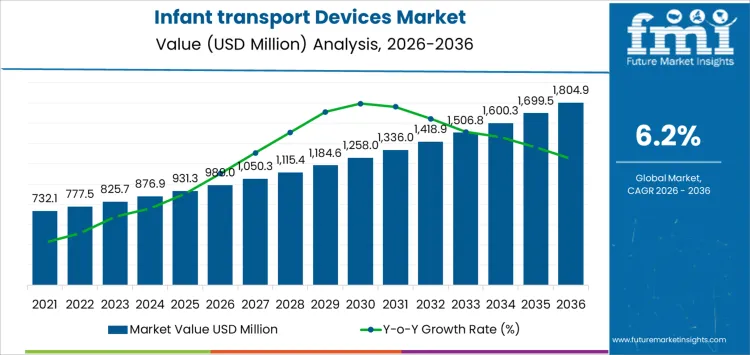
The infant transport devices market is likely to be valued at USD 989 million in 2026, growing to USD 1,804.9 million by 2036 at a 6.2% CAGR. Device selection depends on patient safety, mobility within NICU and operating areas, and integration with life support systems rather than brand presence. Features such as vibration damping, temperature control, and monitoring integration guide adoption. Once a unit is approved in a hospital fleet, replacements follow the same specifications to maintain staff training consistency and procedural reliability. Purchasing teams track maintenance cycles, consumable availability, and warranty coverage. Ergonomics and workflow efficiency influence final choice.
Commercial performance follows adoption patterns and capacity expansion rather than sales promotions. Production emphasizes frame strength, mattress support, restraint systems, and electronics integration. Release requires functional testing, electrical safety verification, and sterilization checks. Distributors align inventory to hospitals and emergency transport hubs. Service contracts cover calibration, battery management, and routine inspection. Facility planners coordinate devices with room layouts, corridor width, and ambulance access. Profitability depends on reliability, yield, and predictable maintenance schedules rather than rapid product refreshes or pricing tactics.
Quick Stats for Infant Transport Devices Market
- Infant Transport Devices Market Value (2026): USD 989 million
- Infant Transport Devices Market Forecast Value (2036): USD 1,804.9 million
- Infant Transport Devices Market Forecast CAGR (2026-2036): 6.2%
- Leading Type in Infant Transport Devices Market: Transport incubators
- Key Growth Regions in Infant Transport Devices Market: Asia Pacific, North America, Europe
- Top Players in Infant Transport Devices Market: Dräger, GE HealthCare, Atom Medical, Inspiration Healthcare, Phoenix Medical
What Is the Growth Forecast for the Infant Transport Devices Market through 2036?
Hospital protocol design and neonatal care standards determine demand in the infant transport devices market more than overall birth rates. In 2026, at about USD 989 million, adoption is concentrated in neonatal intensive care units, regional perinatal centers, and specialized transport teams where safety, thermal regulation, and monitoring integration are critical. Device selection is fixed during unit planning and remains in use across long operating periods, which ties purchasing to expansion of critical care services rather than routine replacement cycles. Utilization grows as more hospitals implement mobile care protocols and as inter facility transfer programs expand. The upward trajectory reflects wider deployment across healthcare networks rather than rapid turnover of existing transport equipment.
Service support and reliability requirements shape the later phase of the infant transport devices market. As value approaches roughly USD 1,804.9 million by 2036, buyers focus on mechanical durability, monitor compatibility, and ease of cleaning and maintenance. Manufacturers invest in modular designs, battery management, and standardized safety systems to support multi-site deployment. The move from under one billion into the low two billion reflects cumulative expansion across neonatal units and transport programs rather than a single policy or guideline change. Suppliers that provide dependable performance, consistent delivery schedules, and responsive technical support tend to secure long term positions in critical care infrastructure.
Infant Transport Devices Market Key Takeaways
| Metric | Value |
|---|---|
| Market Value (2026) | USD 989 million |
| Forecast Value (2036) | USD 1,804.9 million |
| Forecast CAGR (2026-2036) | 6.2% |
How Is the Infant Transport Devices Market Supporting Safe and Controlled Neonatal Movement?
Infant transport devices, including incubators, bassinets, and portable isolettes, are used to move newborns safely between delivery, neonatal, and diagnostic areas while maintaining controlled temperature, humidity, and oxygen levels. Clinical teams often benchmark transport performance against broader infant incubators specifications when standardizing neonatal thermal control across units. Earlier transport relied on open bassinets or manually stabilized incubators, which increased risk of hypothermia, infection, and physiological stress. Modern devices integrate temperature regulation, vibration dampening, oxygen supplementation, and monitoring systems to support continuous care during transfer. Some programs add redundancy by pairing transport platforms with an infant heart monitor standard to keep alarm logic and documentation consistent during transfers. Hospitals specify these devices by weight capacity, battery life, mobility, and alarm integration rather than by size alone. Use is concentrated in NICUs, maternity wards, and emergency transport. Capital planning for transport fleets is typically evaluated alongside broader fetal and neonatal care equipment budgeting and unit expansion decisions. Adoption is guided by workflow requirements, procedural compliance, and clinical protocol adherence to reduce risk during transfers of fragile infants.
Procurement decisions involve neonatal clinical teams, biomedical engineers, and hospital logistics managers because device choice affects both patient safety and operational efficiency. Earlier purchases tolerated mixed device types, which complicated staff training, maintenance schedules, and spare parts management. Current programs favor standardization across units with consistent features, monitoring interfaces, and accessories. Manufacturers compete on temperature stability, shock absorption, and reliability under continuous operation rather than on external aesthetics. Buyers assess total cost through maintenance effort, downtime, and device longevity, not unit price alone. Procurement committees often compare transport units against adjacent infant care equipment categories to justify standardization, spares, and service coverage. Distributors provide value through preventive maintenance, training, and rapid parts replacement. Over time, demand follows expansion of neonatal care services, inter-facility transport protocols, and regulatory expectations, where reliable, standardized transport devices reduce clinical risk and improve workflow efficiency across hospitals.
What Factors Are Driving the Demand for Infant Transport Devices Market in 2026?
Growth in the Infant Transport Devices Market is influenced by neonatal patient acuity, hospital operational protocols, and regulatory compliance standards rather than short-term procurement cycles. Equipment choice is embedded into NICU workflows, including monitoring integration, thermal management, and emergency readiness. Differences in mobility, environmental stability, and device complexity define segment demand. Hospitals prioritize reliability, maintenance support, and clinical outcome assurance when selecting devices. Suppliers offering preventive maintenance programs, consistent consumable supply, and training solutions are well-positioned to secure multi-year contracts. Expansion of NICU services and inter-hospital transfer networks drives predictable adoption, creating long-term planning opportunities for manufacturers and distributors.
Product Type Segment: Operational Planning and Supplier Responsibilities

High-capacity transport incubators dominate the segment due to their ability to maintain controlled temperature and humidity during high-risk neonatal transport. Manufacturers must ensure training, preventive maintenance, and calibration protocols are implemented across facilities to meet safety and regulatory requirements. Smaller transport warmers serve short-duration transfers, emphasizing mobility and rapid activation while increasing the need for flexible service contracts. Monitoring accessories, including integrated sensors and alarms, require routine validation and spare part support. Product type selection directly affects supplier obligations for on-site service, logistics, and staff training, highlighting the importance of bundled support agreements to secure long-term adoption.
Operational considerations extend to workflow integration, staff allocation, and facility readiness. Incubators reduce variability in procedural outcomes and allow NICU staff to optimize transport scheduling. Warmers provide rapid intervention options for stable patients, supporting flexible hospital operations. Monitoring accessories enhance real-time oversight, requiring alignment between supplier support and clinical workflow. Once a device type is standardized, hospitals rarely switch models due to procedural validation, training, and regulatory compliance requirements. Suppliers that offer modular service packages, predictive maintenance scheduling, and consumable logistics gain a competitive advantage and can optimize revenue streams across both high-volume and specialized use cases.
Application Segment: Market Volume and Commercial Opportunity
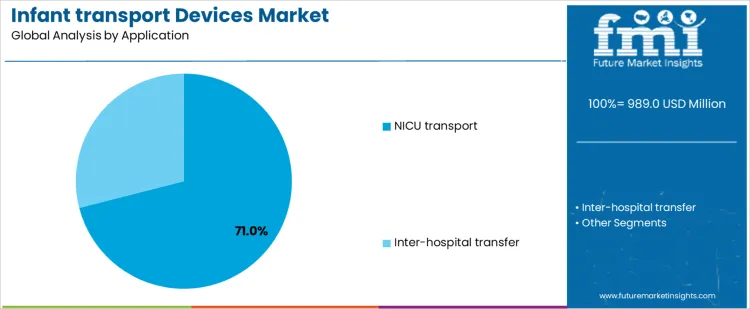
NICU transport represents the largest application due to the high frequency of critically ill infant transfers and the necessity for controlled environmental conditions. Hospitals require devices that integrate with monitoring systems and provide consistent performance to minimize clinical risk. Inter-hospital transfers demand mobile, battery-backed equipment capable of safe operation during transit, creating a niche for specialized devices. Suppliers benefit from targeting both high-volume NICU deployments and smaller, mission-critical transfer programs. Device performance, service reliability, and training support are key differentiators for capturing long-term contracts in both segments.
Clinical deployment patterns shape procurement strategies and technical support requirements. NICU programs prioritize predictive maintenance, calibration, and validation aligned with hospital audit cycles. Smaller inter-hospital transfer services require rapid-response support, high durability, and portable devices. Vendors offering integrated training programs, preventive maintenance plans, and rapid spare part replacement can secure larger market share. Segment distribution depends on NICU capacity expansion, standardized transport protocols, and inter-facility coordination rather than short-term hospital spending, creating a structured and predictable market for suppliers and manufacturers.
How Is the Infant Transport Devices Market Being Defined by Safety And Mobility Requirements?
The Infant Transport Devices Market is shaped by the need to move neonatal and pediatric patients safely between hospital areas, during emergency transport, and across care units. Devices are evaluated for thermal control, vibration absorption, stability under movement, and compatibility with monitoring equipment. Procurement decisions involve clinical engineers, transport teams, and neonatal care managers. Suppliers that provide robust devices with clear handling procedures and reliable alarm systems are preferred. This makes transport devices a critical part of patient care workflows rather than optional equipment, emphasizing safety and operational reliability.
How Are Standardized Clinical Protocols Changing Expectations in The Infant Transport Devices Market?
Hospitals increasingly adopt uniform neonatal transport protocols to ensure consistent care across multiple departments or facilities. This creates demand for devices that perform consistently, support standard attachment points for monitoring and life support systems, and are easy for staff to operate under stress. Buyers value modular accessories, straightforward setup, and predictable performance across repeated use. Suppliers that can provide detailed training, service support, and documentation gain preference. Devices that fit seamlessly into standardized workflows are more likely to be chosen for fleet adoption across multiple units.
Where Is Repeat Purchase Demand Being Created in The Infant Transport Devices Market?
Repeat orders come from hospitals, neonatal intensive care units, and emergency medical services that manage high patient turnover or multiple transport events daily. Each patient transfer requires a fully functional and ready-to-use device. The Infant Transport Devices Market also benefits when hospital networks expand to additional wards or locations and adopt the same device model. Suppliers that offer maintenance programs, rapid part replacement, and user training secure recurring business. Embedding devices into standard operating protocols ensures steady demand tied to patient volume and hospital expansion plans.
Why Do Cost and Regulatory Considerations Limit Broader Adoption in The Infant Transport Devices Market?
High device cost, staff training requirements, and regulatory scrutiny limit fast adoption of new infant transport devices. Hospitals may postpone purchases until funding is available or until staff are trained on safe handling and operation. Changing devices mid-protocol carries risk, which makes switching from existing devices slow. Service and compliance expectations add complexity for new suppliers entering the market. These factors concentrate adoption in larger hospitals or specialized transport units where safety and efficiency are critical, rather than in smaller or lower-volume facilities.
What is the Demand for Infant Transport Devices by Country?
| Country | CAGR |
|---|---|
| USA | 8.5% |
| Brazil | 9.0% |
| China | 9.5% |
| India | 9.7% |
| Germany | 6.7% |
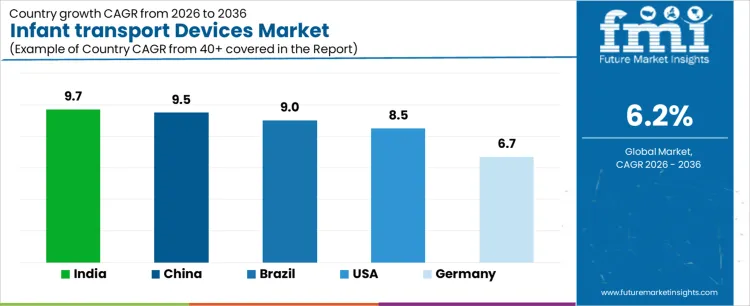
Demand for infant transport devices is rising as hospitals and neonatal care units expand critical care capacity and upgrade equipment for safe in hospital and inter hospital movement of newborns. India leads with a 9.7% CAGR, supported by increasing neonatal care infrastructure, government health initiatives, and growing adoption of advanced incubator and transport systems. China follows at 9.5%, driven by expansion of NICUs, higher birth rates, and focus on reducing infant morbidity. Brazil records 9.0%, reflecting private and public hospital investments in neonatal transport solutions. The USA grows at 8.5%, shaped by modernization of neonatal units and regulatory compliance. Germany, at 6.7%, reflects a mature healthcare system with stable demand for device replacement and upgrades.
How Are Neonatal Care Programs Driving Demand in the Infant Transport Devices Market in the United States?
Expansion of neonatal care units and critical transport programs underpins a projected 8.5% CAGR for infant transport devices demand in United States. Procurement is controlled by NICU directors, hospital engineering teams, and pediatric transport coordinators. Adoption focuses on incubators, mobile resuscitation units, and ventilator compatible systems. Device selection emphasizes safety, thermal regulation, and ease of mobility within hospitals and during ambulance transfers. Once approved, deployment spreads across multiple hospitals in integrated health systems. Training and protocol alignment affect utilization rates. Import units dominate high acuity applications, while domestic suppliers cover standard devices. Replacement cycles follow wear and regulatory safety checks. Budget allocation aligns with hospital expansion and NICU growth. Commercial success depends on inclusion in hospital capital planning and framework procurement rather than individual department purchases.
How Are Hospital Expansion Programs Influencing Demand in the Infant Transport Devices Market in Brazil?
Growth of private and public neonatal facilities drives an anticipated 9% CAGR for infant transport devices in Brazil. Purchasing authority sits with hospital networks and neonatal service committees. Device selection emphasizes portability, thermal control, and compatibility with monitoring systems. Import units dominate higher specification mobile incubators, while local suppliers cover standard devices. Once approved, deployment spans multiple affiliated hospitals. Training, maintenance access, and protocol adherence affect adoption. Spending follows new hospital openings and NICU expansions. Replacement cycles align with device life and usage intensity. Budget planning is linked to network growth. Commercial success depends on inclusion in network approved equipment lists and framework agreements rather than individual hospital purchases or isolated clinic sales. Audit schedules and safety compliance influence timing.
What Institutional Programs Drive Adoption in the Infant Transport Devices Market in China?
Centralized hospital network planning and neonatal care modernization support a 9.5% CAGR for infant transport devices demand in China. Large maternity hospitals and tertiary NICUs control most procurement. Adoption targets mobile incubators, emergency transport units, and ventilator compatible devices. High-acuity transfers also increase demand for aligned airway management devices where transport teams need standardized interfaces and predictable setup under time pressure. Domestic suppliers dominate standard platforms, while international brands retain positions in advanced life support units. Tender cycles and multi-year capital plans govern timing. Training programs, safety audits, and workflow integration influence selection. Once validated, deployment extends across multiple hospitals and NICU units. Replacement cycles track regulatory compliance and device wear. Capital allocation aligns with hospital expansion and neonatal program growth. Commercial success depends on inclusion in provincial and national hospital equipment catalogs rather than fragmented clinic sales or individual physician requests.
Why Are Neonatal Service Expansions Driving Growth in the Infant Transport Devices Market in India?
Expansion of NICUs and neonatal transport programs supports a 9.7% CAGR for infant transport devices in India. Large private hospital chains and specialty maternity centers lead procurement. Device choice emphasizes portability, thermal control, and ventilator compatibility. Import systems dominate high acuity centers, while domestic suppliers cover standard transport incubators. Procurement authority sits with hospital engineering, NICU directors, and service line committees. Once approved, devices are deployed across affiliated hospital networks. Training and protocol alignment influence utilization. Replacement cycles follow usage intensity and regulatory safety inspections. Capital budgets align with NICU openings and service expansion. Commercial success depends on inclusion in network approved equipment lists and framework agreements rather than selling to isolated clinics or individual hospital departments.
How Are Guidelines and Reimbursement Structures Shaping Demand in the Infant Transport Devices Market in Germany?
Guideline compliance and reimbursement planning support a 6.7% CAGR for infant transport devices demand in Germany. University hospitals and regional maternity centers control most procurement. Adoption focuses on mobile incubators, ventilator compatible units, and resuscitation devices. Device evaluation emphasizes thermal regulation, portability, and operator ergonomics. Procurement follows structured health technology assessment and capital approval processes. Import brands dominate premium units while domestic suppliers handle routine neonatal transport. Once approved, deployment spreads across departments and regional centers. Training and workflow compatibility affect utilization. Replacement cycles follow regulatory inspections and device wear. Capital allocation aligns with neonatal unit expansion. Commercial success depends on framework agreements, guideline adherence, and network standardization rather than isolated clinic purchases or physician preferences.
How Do Suppliers Secure Procurement Decisions in the Infant Transport Devices Market?
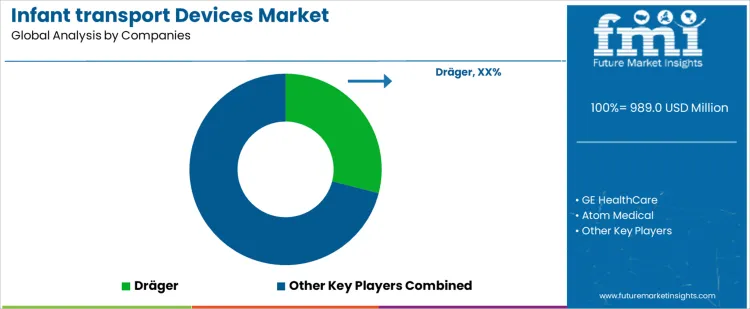
Infant transport device adoption relies on workflow integration, monitoring connectivity, and safety compliance rather than product range alone. Hospitals define incubator dimensions, mobility requirements, thermal control, vibration tolerance, and interface compatibility before selecting vendors. Dräger, GE HealthCare, Atom Medical, Inspiration Healthcare, and Phoenix Medical compete at specification and pilot evaluation stages. Once units are approved for standard operating procedures, staff certification, maintenance planning, and service contracts anchor the platform. Dräger leverages integration with ventilators and monitoring systems for NICU and emergency transport programs. GE HealthCare aligns devices with existing neonatal monitoring infrastructure. Atom Medical focuses on modular, adaptable designs suited for interfacility transfers. Inspiration Healthcare emphasizes ergonomics and low weight for routine handling. Phoenix Medical targets facilities with budget constraints while maintaining durability and ease of cleaning.
Competitive positioning depends on performance verification, service network reliability, and compliance documentation rather than pricing. Clinical teams assess temperature stability, vibration damping, alarm responsiveness, battery endurance, and ease of handling during trial evaluations. Facilities favor suppliers capable of supporting training programs and providing predictable part replacement. Dräger maintains positions through established technical support and global service coverage. GE HealthCare secures programs where device integration with existing hospital equipment drives selection. Atom Medical gains placements in ambulance and NICU transfer programs requiring flexibility. Inspiration Healthcare competes in smaller hospitals seeking lightweight and reliable units. Phoenix Medical benefits from dependable supply and simplified maintenance models. Market share varies by hospital size, transport frequency, and internal quality control standards.
Key Players in the Infant Transport Devices Market
- Dräger
- GE HealthCare
- Atom Medical
- Inspiration Healthcare
- Phoenix Medical
- Others
Scope of the Report
| Items | Values |
|---|---|
| Quantitative Units (2026) | USD million |
| Product Type | Transport incubators; Transport warmers; Monitoring accessories |
| Application | NICU transport; Inter-hospital transfer |
| End User | Hospitals; Emergency services; Others |
| Region | Asia Pacific; Europe; North America; Latin America; Middle East & Africa |
| Countries Covered | United States, Canada, Mexico, Germany, United Kingdom, France, Italy, Spain, Nordic, BENELUX, China, Japan, South Korea, India, Australia & New Zealand, ASEAN, Brazil, Chile, Saudi Arabia, Turkey, South Africa, Rest of regions |
| Key Companies Profiled | Dräger; GE HealthCare; Atom Medical; Inspiration Healthcare; Phoenix Medical |
| Additional Attributes | Dollar by sales by product and application, installed base by hospital type, maintenance and calibration cycles, battery and uptime performance, integration with monitoring and ventilators, service contract penetration, fleet standardization trends, new build versus replacement demand, training and certification requirements |
Infant Transport Devices Market Segmentation
Product Type:
- Transport incubators
- Transport warmers
- Monitoring accessories
Application:
- NICU transport
- Inter-hospital transfer
End User:
- Hospitals
- Emergency services
- Others
Region:
- Asia Pacific
- China
- Japan
- South Korea
- India
- Australia & New Zealand
- ASEAN
- Rest of Asia Pacific
- Europe
- Germany
- United Kingdom
- France
- Italy
- Spain
- Nordic
- BENELUX
- Rest of Europe
- North America
- United States
- Canada
- Mexico
- Latin America
- Brazil
- Chile
- Rest of Latin America
- Middle East & Africa
- Kingdom of Saudi Arabia
- Other GCC Countries
- Turkey
- South Africa
- Other African Union
- Rest of Middle East & Africa
Bibliography
- European Commission Directorate‑General for Health and Food Safety. (2024). Minimum equipment and environmental requirements for neonatal transport programs in EU member states. Publications Office of the European Union.
- World Health Organization. (2024). Standards for newborn care and intra‑facility transport in low‑ and middle‑income countries. WHO.
- World Health Organization. (2023). Temperature control and transport safety for preterm and low‑birthweight infants: Updated technical guidance. WHO.
Frequently Asked Questions
How big is the infant transport devices market in 2026?
The global infant transport devices market is estimated to be valued at USD 989.0 million in 2026.
What will be the size of infant transport devices market in 2036?
The market size for the infant transport devices market is projected to reach USD 1,804.9 million by 2036.
How much will be the infant transport devices market growth between 2026 and 2036?
The infant transport devices market is expected to grow at a 6.2% CAGR between 2026 and 2036.
What are the key product types in the infant transport devices market?
The key product types in infant transport devices market are transport incubators, transport warmers and monitoring accessories.
Which application segment to contribute significant share in the infant transport devices market in 2026?
In terms of application, nicu transport segment to command 71.0% share in the infant transport devices market in 2026.
Preview the report firsthand - request a free sample
Get SampleGet the brochure for pricing and purchase details.
Get PDFTable of Content
- Executive Summary
- Global Market Outlook
- Demand-side Trends
- Supply-side Trends
- Technology Roadmap Analysis
- Analysis and Recommendations
- Market Overview
- Market Coverage / Taxonomy
- Market Definition / Scope / Limitations
- Market Background
- Market Dynamics
- Drivers
- Restraints
- Opportunity
- Trends
- Scenario Forecast
- Demand in Optimistic Scenario
- Demand in Likely Scenario
- Demand in Conservative Scenario
- Opportunity Map Analysis
- Product Life Cycle Analysis
- Supply Chain Analysis
- Investment Feasibility Matrix
- Value Chain Analysis
- PESTLE and Porter’s Analysis
- Regulatory Landscape
- Regional Parent Market Outlook
- Production and Consumption Statistics
- Import and Export Statistics
- Market Dynamics
- Global Market Analysis 2021 to 2025 and Forecast, 2026 to 2036
- Historical Market Size Value (USD Million) Analysis, 2021 to 2025
- Current and Future Market Size Value (USD Million) Projections, 2026 to 2036
- Y-o-Y Growth Trend Analysis
- Absolute $ Opportunity Analysis
- Global Market Pricing Analysis 2021 to 2025 and Forecast 2026 to 2036
- Global Market Analysis 2021 to 2025 and Forecast 2026 to 2036, By Product Type
- Introduction / Key Findings
- Historical Market Size Value (USD Million) Analysis By Product Type , 2021 to 2025
- Current and Future Market Size Value (USD Million) Analysis and Forecast By Product Type , 2026 to 2036
- Transport incubators
- Transport warmers
- Monitoring accessories
- Transport incubators
- Y-o-Y Growth Trend Analysis By Product Type , 2021 to 2025
- Absolute $ Opportunity Analysis By Product Type , 2026 to 2036
- Global Market Analysis 2021 to 2025 and Forecast 2026 to 2036, By Application
- Introduction / Key Findings
- Historical Market Size Value (USD Million) Analysis By Application, 2021 to 2025
- Current and Future Market Size Value (USD Million) Analysis and Forecast By Application, 2026 to 2036
- NICU transport
- Inter-hospital transfer
- NICU transport
- Y-o-Y Growth Trend Analysis By Application, 2021 to 2025
- Absolute $ Opportunity Analysis By Application, 2026 to 2036
- Global Market Analysis 2021 to 2025 and Forecast 2026 to 2036, By End User
- Introduction / Key Findings
- Historical Market Size Value (USD Million) Analysis By End User, 2021 to 2025
- Current and Future Market Size Value (USD Million) Analysis and Forecast By End User, 2026 to 2036
- Hospitals
- Emergency services
- Others
- Hospitals
- Y-o-Y Growth Trend Analysis By End User, 2021 to 2025
- Absolute $ Opportunity Analysis By End User, 2026 to 2036
- Global Market Analysis 2021 to 2025 and Forecast 2026 to 2036, By Region
- Introduction
- Historical Market Size Value (USD Million) Analysis By Region, 2021 to 2025
- Current Market Size Value (USD Million) Analysis and Forecast By Region, 2026 to 2036
- North America
- Latin America
- Western Europe
- Eastern Europe
- East Asia
- South Asia and Pacific
- Middle East & Africa
- Market Attractiveness Analysis By Region
- North America Market Analysis 2021 to 2025 and Forecast 2026 to 2036, By Country
- Historical Market Size Value (USD Million) Trend Analysis By Market Taxonomy, 2021 to 2025
- Market Size Value (USD Million) Forecast By Market Taxonomy, 2026 to 2036
- By Country
- USA
- Canada
- Mexico
- By Product Type
- By Application
- By End User
- By Country
- Market Attractiveness Analysis
- By Country
- By Product Type
- By Application
- By End User
- Key Takeaways
- Latin America Market Analysis 2021 to 2025 and Forecast 2026 to 2036, By Country
- Historical Market Size Value (USD Million) Trend Analysis By Market Taxonomy, 2021 to 2025
- Market Size Value (USD Million) Forecast By Market Taxonomy, 2026 to 2036
- By Country
- Brazil
- Chile
- Rest of Latin America
- By Product Type
- By Application
- By End User
- By Country
- Market Attractiveness Analysis
- By Country
- By Product Type
- By Application
- By End User
- Key Takeaways
- Western Europe Market Analysis 2021 to 2025 and Forecast 2026 to 2036, By Country
- Historical Market Size Value (USD Million) Trend Analysis By Market Taxonomy, 2021 to 2025
- Market Size Value (USD Million) Forecast By Market Taxonomy, 2026 to 2036
- By Country
- Germany
- UK
- Italy
- Spain
- France
- Nordic
- BENELUX
- Rest of Western Europe
- By Product Type
- By Application
- By End User
- By Country
- Market Attractiveness Analysis
- By Country
- By Product Type
- By Application
- By End User
- Key Takeaways
- Eastern Europe Market Analysis 2021 to 2025 and Forecast 2026 to 2036, By Country
- Historical Market Size Value (USD Million) Trend Analysis By Market Taxonomy, 2021 to 2025
- Market Size Value (USD Million) Forecast By Market Taxonomy, 2026 to 2036
- By Country
- Russia
- Poland
- Hungary
- Balkan & Baltic
- Rest of Eastern Europe
- By Product Type
- By Application
- By End User
- By Country
- Market Attractiveness Analysis
- By Country
- By Product Type
- By Application
- By End User
- Key Takeaways
- East Asia Market Analysis 2021 to 2025 and Forecast 2026 to 2036, By Country
- Historical Market Size Value (USD Million) Trend Analysis By Market Taxonomy, 2021 to 2025
- Market Size Value (USD Million) Forecast By Market Taxonomy, 2026 to 2036
- By Country
- China
- Japan
- South Korea
- By Product Type
- By Application
- By End User
- By Country
- Market Attractiveness Analysis
- By Country
- By Product Type
- By Application
- By End User
- Key Takeaways
- South Asia and Pacific Market Analysis 2021 to 2025 and Forecast 2026 to 2036, By Country
- Historical Market Size Value (USD Million) Trend Analysis By Market Taxonomy, 2021 to 2025
- Market Size Value (USD Million) Forecast By Market Taxonomy, 2026 to 2036
- By Country
- India
- ASEAN
- Australia & New Zealand
- Rest of South Asia and Pacific
- By Product Type
- By Application
- By End User
- By Country
- Market Attractiveness Analysis
- By Country
- By Product Type
- By Application
- By End User
- Key Takeaways
- Middle East & Africa Market Analysis 2021 to 2025 and Forecast 2026 to 2036, By Country
- Historical Market Size Value (USD Million) Trend Analysis By Market Taxonomy, 2021 to 2025
- Market Size Value (USD Million) Forecast By Market Taxonomy, 2026 to 2036
- By Country
- Kingdom of Saudi Arabia
- Other GCC Countries
- Turkiye
- South Africa
- Other African Union
- Rest of Middle East & Africa
- By Product Type
- By Application
- By End User
- By Country
- Market Attractiveness Analysis
- By Country
- By Product Type
- By Application
- By End User
- Key Takeaways
- Key Countries Market Analysis
- USA
- Pricing Analysis
- Market Share Analysis, 2025
- By Product Type
- By Application
- By End User
- Canada
- Pricing Analysis
- Market Share Analysis, 2025
- By Product Type
- By Application
- By End User
- Mexico
- Pricing Analysis
- Market Share Analysis, 2025
- By Product Type
- By Application
- By End User
- Brazil
- Pricing Analysis
- Market Share Analysis, 2025
- By Product Type
- By Application
- By End User
- Chile
- Pricing Analysis
- Market Share Analysis, 2025
- By Product Type
- By Application
- By End User
- Germany
- Pricing Analysis
- Market Share Analysis, 2025
- By Product Type
- By Application
- By End User
- UK
- Pricing Analysis
- Market Share Analysis, 2025
- By Product Type
- By Application
- By End User
- Italy
- Pricing Analysis
- Market Share Analysis, 2025
- By Product Type
- By Application
- By End User
- Spain
- Pricing Analysis
- Market Share Analysis, 2025
- By Product Type
- By Application
- By End User
- France
- Pricing Analysis
- Market Share Analysis, 2025
- By Product Type
- By Application
- By End User
- India
- Pricing Analysis
- Market Share Analysis, 2025
- By Product Type
- By Application
- By End User
- ASEAN
- Pricing Analysis
- Market Share Analysis, 2025
- By Product Type
- By Application
- By End User
- Australia & New Zealand
- Pricing Analysis
- Market Share Analysis, 2025
- By Product Type
- By Application
- By End User
- China
- Pricing Analysis
- Market Share Analysis, 2025
- By Product Type
- By Application
- By End User
- Japan
- Pricing Analysis
- Market Share Analysis, 2025
- By Product Type
- By Application
- By End User
- South Korea
- Pricing Analysis
- Market Share Analysis, 2025
- By Product Type
- By Application
- By End User
- Russia
- Pricing Analysis
- Market Share Analysis, 2025
- By Product Type
- By Application
- By End User
- Poland
- Pricing Analysis
- Market Share Analysis, 2025
- By Product Type
- By Application
- By End User
- Hungary
- Pricing Analysis
- Market Share Analysis, 2025
- By Product Type
- By Application
- By End User
- Kingdom of Saudi Arabia
- Pricing Analysis
- Market Share Analysis, 2025
- By Product Type
- By Application
- By End User
- Turkiye
- Pricing Analysis
- Market Share Analysis, 2025
- By Product Type
- By Application
- By End User
- South Africa
- Pricing Analysis
- Market Share Analysis, 2025
- By Product Type
- By Application
- By End User
- USA
- Market Structure Analysis
- Competition Dashboard
- Competition Benchmarking
- Market Share Analysis of Top Players
- By Regional
- By Product Type
- By Application
- By End User
- Competition Analysis
- Competition Deep Dive
- Dräger
- Overview
- Product Portfolio
- Profitability by Market Segments (Product/Age /Sales Channel/Region)
- Sales Footprint
- Strategy Overview
- Marketing Strategy
- Product Strategy
- Channel Strategy
- GE HealthCare
- Atom Medical
- Inspiration Healthcare
- Phoenix Medical
- Others
- Dräger
- Competition Deep Dive
- Assumptions & Acronyms Used
- Research Methodology


