

- Market Size (2026)
- USD 39.1 Bn
- Forecast (2036)
- USD 63.0 Bn
- CAGR (2026 to 2036)
- 5.0%
Pre-mixed or RTD Alcoholic Drink Market Size, Market Forecast and Outlook By FMI
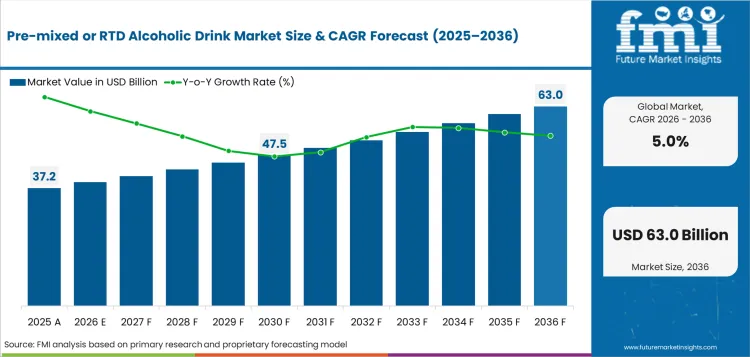
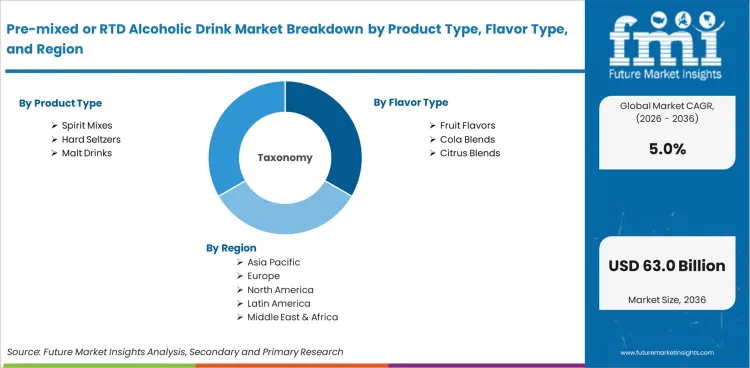
Pre-mixed or RTD alcoholic drink market was valued at USD 37.2 billion in 2025 and is expected to reach USD 39.1 billion in 2026. Industry revenue is forecast to reach USD 63.0 billion by 2036 at 5.0% CAGR during the forecast period. Cans are expected to account for 62.0% share of packaging format demand in 2026. Fruit flavors are forecast to hold 53.0% share of flavor type demand in 2026.
Key Takeaways, Market Size, and Forecast
| Metric | Value |
|---|---|
| Market Size (2025) | USD 37.2 Billion |
| Market Size (2036) | USD 63.0 Billion |
| CAGR (Forecast Period) | 5.0% |
| Incremental Opportunity (2026–2036) | USD 23.9 Billion |
| Leading Pack Format (2026) | Cans (62.0%) |
| Leading Flavor (2026) | Fruit Flavors (53.0%) |
| Fastest-Growing Countries | Australia (6.4% CAGR), Mexico (6.2% CAGR) |
Summary of the Pre-mixed or RTD Alcoholic Drink Market
- Demand and Growth Drivers
- Demand is supported by consumers who want a ready drink with steady taste and simple serving.
- Younger legal-age drinkers are choosing flavored alcohol packs because the taste feels easier and more familiar.
- Canned cocktails work well for outdoor use with home gatherings and casual weekend drinking.
- Product and Segment View
- Cans lead the product format because they cool quickly and fit multipack retail shelves.
- Fruit flavors stay important as citrus and berry profiles make alcohol taste softer.
- Spirit mixes are gaining better shelf attention as premium brands move bar-style drinks into ready packs.
- Geography and Competitive Outlook
- Australia has better readiness because premix alcohol already has a clear retail and tax route.
- Mexico offers room for branded RTD launches as tequila-based and cola-based drinks fit local taste habits.
- Suppliers with wide retail access and clear labels are better placed to expand across licensed stores.
- Analyst Opinion
- Nandini Roy Choudhury, Principal Analyst at FMI says, “RTD alcohol is becoming a format decision for beverage companies. Consumers want consistent taste without mixing steps. Retailers want packs moving quickly from chilled shelves. Expansion will favor suppliers able to balance known spirit brands with clear alcohol strength. Practical can design and suitable pricing will support grocery and liquor store access.”
- Pre-mixed or RTD Alcoholic Drink Market Value Analysis
- The pre-mixed or RTD alcoholic drink market is moving from basic convenience drinks into a more defined packaged cocktail space.
- Adoption is being driven by canned formats that give consumers a ready drink without mixing steps.
- The market is benefiting from spirit-based launches that use familiar vodka and whiskey brands.
- Demand is supported by retail formats that balance taste and easy chilled shelf placement.
Pre-mixed alcohol brands now need pack flexibility and trusted retail cues as canned cocktails move closer to familiar bar services. In January 2025, TTB authorized 15 additional distilled spirits container sizes and removed the separate can rule for distilled spirits standards of fill. The rule gives producers more freedom to match can size with price points, retail shelves, and drinking occasions. In September 2024, Coca-Cola and Bacardi announced BACARDÍ Mixed with Coca-Cola for select European markets and Mexico in 2025. The launch brings a known Cuba Libre serve into packaged alcohol and gives distributors a simpler listing story. Portfolio control is becoming just as important. In December 2025, Brown-Forman said its RTD portfolio improved in the first half of fiscal 2026, but Jack Daniel’s RTD/RTP faced pressure after retail absence in most Canadian provinces. That gap shows why route access and market-level execution will decide which RTD lines keep shelf space.
Pre-mixed or RTD Alcoholic Drink Market Definition
The pre-mixed or RTD alcoholic drink market refers to packaged alcoholic beverages prepared before sale and consumed directly from the pack. These drinks combine alcohol with flavors, soda, juice, tea, or other beverage bases. They are sold through licensed retail stores, supermarkets, liquor stores, convenience outlets, and on-trade channels. Products in this market serve consumers who want a ready drink with consistent taste and no mixing step.
Pre-mixed or RTD Alcoholic Drink Market Inclusions
Market scope covers pre-mixed or RTD alcoholic drinks categorized by product type, including spirit mixes and hard seltzers. Malt drinks, wine spritzers, and hard teas complete the product scope. Flavor type includes fruit flavors and cola blends. Citrus blends, tea flavors, and spiced flavors are included. Packaging format covers cans and bottles. Multi-serve packs are included where the drink is sold ready for direct serving. Sales channel includes hypermarkets and supermarkets. Convenience stores, liquor stores, online retail, and on-trade channels are included. ABV range covers below 4.0% ABV, 4-6% ABV, and above 6.0% ABV. Revenue scope covers 2026 to 2036. The key stakeholders include spirits companies and beverage manufacturers. Licensed distributors, retail chains, liquor stores, flavor suppliers, packaging companies, and alcohol regulators are included.
Pre-mixed or RTD Alcoholic Drink Market Exclusions
Scope excludes beer sold without flavor blending and bottled spirits sold for home mixing. Still wine and sparkling table wine are excluded. Non-alcoholic cocktail mixers are outside scope. Alcohol-free canned drinks are excluded unless the same brand line includes alcohol RTD variants.
Pre-mixed or RTD Alcoholic Drink Market Research Methodology
- Primary Research: FMI analysts reviewed RTD portfolios and licensed retail formats. Distributor feedback and packaged alcohol shelf behavior were checked across major beverage countries.
- Desk Research: Public sources from alcohol regulators and official tax agencies were used for market checks. Trade body data and company releases supported validation.
- Market Sizing and Forecasting: Market size was estimated using retail RTD sales pools and channel mix. Pack pricing and brand portfolio expansion were used for cross-checks.
- Data Validation: Forecast checks compared country alcohol rules and canned beverage use. Company launches and premium spirit-based RTD pricing supported final checks.
Why is the Pre-mixed or RTD Alcoholic Drink Market Growing?
- Ready cans reduce mixing work for consumers and give retailers a simple chilled pack for weekend and outdoor occasions.
- Spirit-based RTDs are moving beyond basic cola mixes as brands use vodka tea and fruit seltzer formats to reach more drinking occasions.
- Duty rules and label checks make product planning more complex, so larger suppliers have an edge in faster launches.
Ready-to-drink alcohol demand is growing as brands turn classic serves into simple cans. Boston Beer said in March 2026 that Sun Cruiser became the official ready-to-drink cocktail of the USA Open and USA Women’s Open. Event placement helps vodka tea and lemonade formats move beyond liquor shelves into hospitality spaces. The same shift supports premium alcoholic beverages as brands sell convenience with a premium cue.
Flavor design is another reason RTD alcohol is expanding. Suntory Global Spirits launched -196 nationally in the United States in May 2025 with a Strawberry flavor and a whole-fruit process using premium vodka. The line uses single-flavor four-packs and eight-can variety packs. Such launches help alcoholic flavors suppliers serve canned drinks that need stable taste and clean finish.
Packaging choice supports the market because cans fit chilled shelves and single-serve use. Dogfish Head said in March 2026 that Blueberry Citrus Vodka Lemon Drop and Peach Mango Rum Punch were moving into 4-pack 12.0 oz cans. The brand also moved two canned cocktails into 570.0 ml single-serve cans. Pack flexibility gives retailers a better way to test flavors before wider distribution.
Market Segmentation Analysis
- Cans are expected to lead packaging format demand with 62.0% share in 2026.
- In 2026, fruit flavors are anticipated to hold 53.0% share.
- Weekly shopping trips are forecast to place hypermarkets and supermarkets at 45.0% share in 2026.
- Branded vodka and rum cocktails are expected to support spirit mixes at 38.5% share in 2026.
- Mid-strength positioning is forecast to keep 4-6% ABV drinks at 51.5% share in 2026.
The market for pre-mixed or RTD alcoholic drinks is divided into five primary segment groups. Product type explains base alcohol and formulation choice. Flavor type shows how taste is used to widen trial. Packaging format and sales channel explain shelf placement. ABV range shows how pricing and tax exposure affect product design.
Insights into Pre-mixed or RTD Alcoholic Drink Market by Product Type
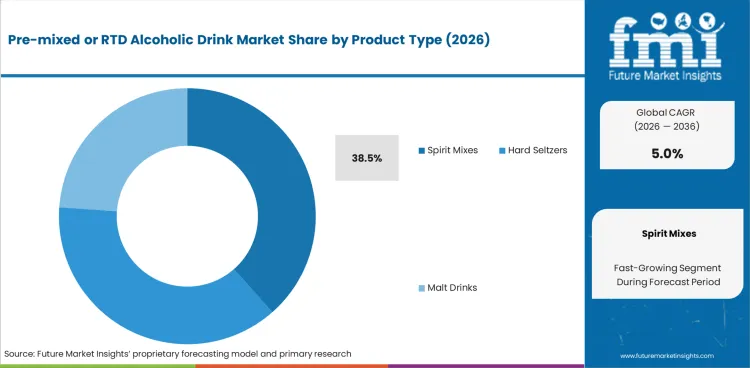
- Spirit mixes are expected to hold 38.5% share in 2026 as known vodka and rum labels give shoppers a familiar route into canned cocktails.
- Hard seltzers support lighter drinking occasions as clear taste and simple calorie claims help casual drinkers choose ready cans.
Insights into Pre-mixed or RTD Alcoholic Drink Market by Flavor Type
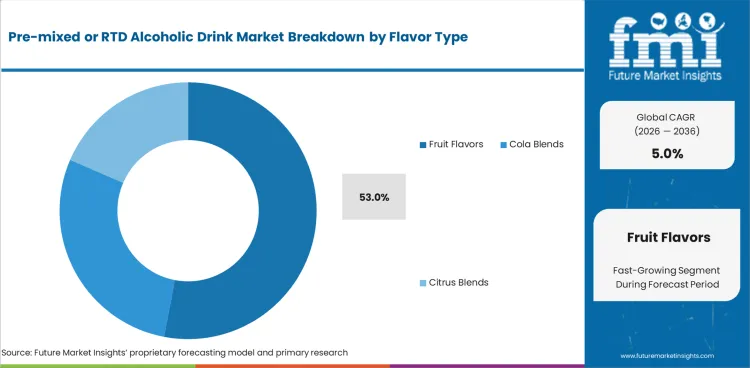
- In 2026, fruit flavors are forecast to account for 53.0% share as citrus and berry notes make alcohol strength easier to accept.
- Cola blends work well with rum and whiskey mixes as shoppers already understand the taste before trying the canned version.
Insights into Pre-mixed or RTD Alcoholic Drink Market by Packaging Format
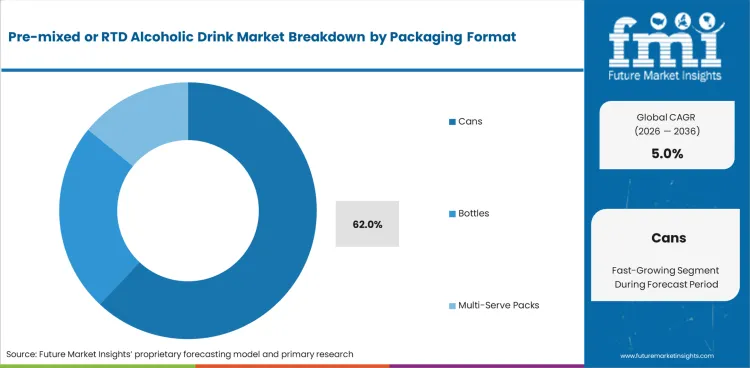
- Retail chilled displays are expected to place cans at 62.0% share in 2026 as fast cooling and low breakage suit ready drink sales.
- Bottles support premium cocktail packs as glass gives a more gift-ready look for home use and small gatherings.
Insights into Pre-mixed or RTD Alcoholic Drink Market by Sales Channel
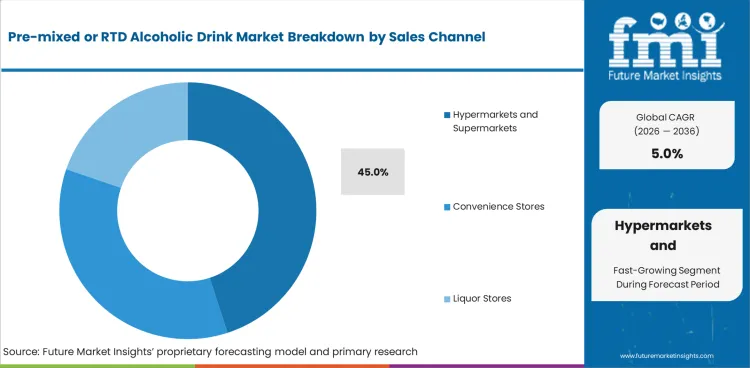
- Hypermarkets and supermarkets are forecast to account for 45.0% share in 2026 as multipacks fit weekly shopping and chilled aisle displays.
- Liquor stores support premium RTD placement as staff guidance and brand variety help shoppers compare spirit-based canned cocktails.
Insights into Pre-mixed or RTD Alcoholic Drink Market by ABV Range
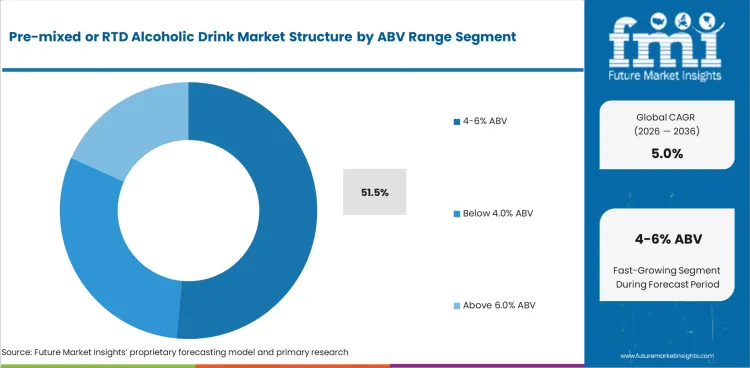
- The 4-6% ABV range is expected to hold 51.5% share in 2026 as mid-strength drinks balance taste and drinkability.
- Below 4.0% ABV drinks suit lighter occasions as consumers look for lower alcohol strength with familiar flavor cues.
Pre-mixed or RTD Alcoholic Drink Market Drivers, Restraints, and Opportunities
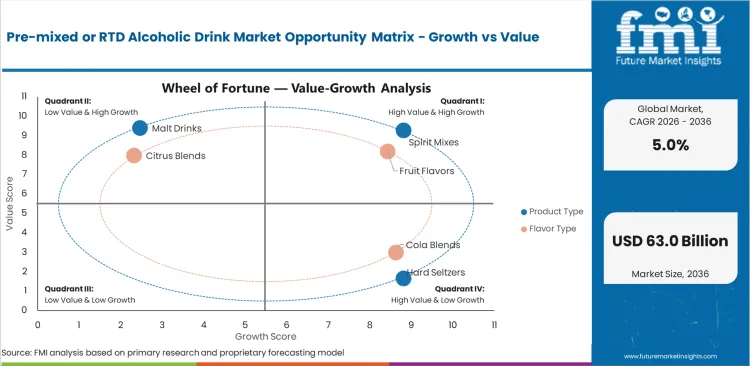
- Chilled retail and event channels are lifting RTD can use as consumers want drinks that are ready without mixing.
- Duty rules can slow supplier planning because alcohol type and ABV band affect the final price.
- Vodka tea and fruit seltzer formats open space for brands that need lighter taste and repeat trial.
Chilled Retail Placement Raises Trial
RTD alcohol benefits from simple shelf handling and fast cooling. Boston Beer launched Sun Cruiser White Tea + Vodka in April 2026 across select USA states. The variety pack has 100.0 calories, 1.0 g of sugar and no bubbles. Such products give retailers a lighter vodka-based choice for shoppers already buying flavored tea or lemonade cans. The same movement supports zero sugar beverages as calorie and sugar claims become easier to compare in the aisle.
Duty Rules Keep Launch Work Heavy
RTD alcohol needs careful planning before launch because tax bands change pricing. HM Revenue and Customs updated Alcohol Duty rates on 1 February 2026. Spirit-based products with 3.5% to 8.4% ABV carry GBP 26.61 per liter of pure alcohol. Mid-strength canned cocktails must balance taste and duty exposure. Smaller suppliers can face slower launch cycles if pack size and ABV need repeated checks.
Premium Cans Create Higher-value Shelf Space
Premium RTD products can earn better shelf space when the pack gives a clear reason to pay more. Pernod Ricard UK brought Jameson Ginger & Lime back in October 2025 in a new 330.0 ml ready-to-drink format. The launch shows how whiskey brands can move familiar serves into a larger can without changing the drinking occasion. Canned formats also support beverage processing equipment demand through mixing and filling needs.
Analysis of Pre-mixed or RTD Alcoholic Drink Market by Key Countries
.webp "Top Country Growth Comparison Pre Mixed Or Rtd Alcoholic Drink Market Cagr (2026 2036)")
| Country | CAGR |
|---|---|
| Australia | 6.4% |
| Mexico | 6.2% |
| United States | 5.8% |
| Canada | 5.6% |
| United Kingdom | 5.3% |
| Japan | 4.9% |
| Germany | 4.6% |
Source: Future Market Insights analysis, 2026.
Pre-mixed or RTD Alcoholic Drink Market CAGR Analysis by Country
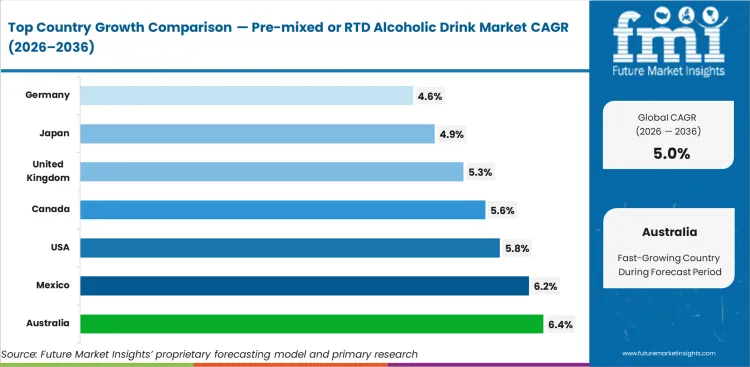
- Australia is expected to record 6.4% CAGR through 2036.
- Co-branded canned cocktails are expected to lift Mexico to 6.2% CAGR by 2036.
- United States is forecast to advance at 5.8% CAGR between 2026 and 2036.
- Canada is expected to advance at 5.6% CAGR through 2036.
- Grocery access and duty bands support United Kingdom demand at 5.3% CAGR through 2036.
- Japan is forecast at 4.9% CAGR from 2026 to 2036.
- Germany is expected to post 4.6% CAGR through 2036.
Country differences are tied to alcohol duty and retail access. Consumer familiarity with flavored canned alcohol shapes the pace as much as supplier launches. Australia and Mexico are forecast above the global pace due to clear product identity or fresh brand entry. Japan and Germany are forecast below faster markets as beer and chu-hi habits already make RTD alcohol more established.
Demand Outlook for Pre-mixed or RTD Alcoholic Drink Market in Australia
The Australian Taxation Office updated alcohol excise duty rates in January 2026, which keeps ABV planning important for RTD suppliers. Australia is forecast to expand at 6.4% CAGR through 2036 as excise rules and chilled retail habits make premix products easier to place. Alcohol brands need clear strength claims before launch because price sensitivity is high in premix alcohol.
- Licensed stores need RTD cans with simple ABV wording and pack sizes that match local price points.
- Domestic producers can adjust formulas faster because tax and labeling work can be handled closer to launch.
- Imported brands need careful pricing because freight and excise can limit retailer margin.
Opportunity Analysis of Pre-mixed or RTD Alcoholic Drink Market in Mexico
Brown-Forman’s RTD portfolio gives a clear signal for Mexico. The company said in March 2026 that New Mix increased 37.0% in net sales, driven by market share progress in Mexico and USA launch activity. Mexico is expected to record 6.2% CAGR in this market during the forecast period. Tequila-based RTDs have a natural link with local taste habits. Suppliers can use that link to support flavor trial and wider store access.
- Tequila-based cans can work well because New Mix already gives RTD suppliers a local proof point.
- Convenience stores support single-can trial and fast repeat sales for flavored alcoholic drinks.
- Premium formats need distributor depth because shelf access can decide early launch success.
Sales Analysis of Pre-mixed or RTD Alcoholic Drink Market in the United States
The market in the United States is projected to expand at a CAGR of 5.8% through 2036. Boston Beer launched Sun Cruiser White Tea + Vodka in April 2026 across Ohio and Massachusetts. Select-market launches help suppliers test white tea flavors before national rollout. The variety pack uses fruit-forward flavors and no bubbles, which gives the brand a lighter profile than carbonated vodka seltzers. Retailers can use such packs to serve outdoor and cooler-based occasions.
- Vodka tea formats can add variety without moving far from familiar iced tea drinking habits.
- Select-state rollout lowers risk before broader sales expansion.
- Multipacks support planned shopping because shoppers can compare flavors in one pack.
Demand Outlook for Pre-mixed or RTD Alcoholic Drink Market in Canada
Statistics Canada reported in March 2026 that ciders and coolers sales rose 4.8% to CAD 2.4 billion in 2024/2025. Volumes increased 2.2% to 385.0 million liters in the same fiscal year. Canada is expected to advance at 5.6% CAGR through 2036 as flavored alcohol packs already have a clear retail role. The data supports RTD alcohol demand because cooler-style packs already train shoppers to buy flavored alcohol in ready form.
- Provincial alcohol systems make listing quality important for new canned cocktails.
- Cooler shelf familiarity supports trial for vodka lemonade and hard tea packs.
- Suppliers need local channel discipline because retail access changes by province.
Sales Analysis of Pre-mixed or RTD Alcoholic Drink Market in the United Kingdom
Pernod Ricard UK brought Jameson Ginger & Lime ready-to-drink cans back in October 2025 with a new 330.0 ml format. The industry outlook in the United Kingdom points to 5.3% CAGR through 2036. Larger cans can suit matchday and outdoor use because drinkers get a familiar whiskey serve in a ready pack. Grocery and convenience stores can use such formats to serve shoppers looking for simple spirit mixes.
- Whiskey-based RTDs can support premium shelf placement with known brand names.
- 330.0 ml cans give retailers a format close to beer and cider packs.
- Duty rules keep ABV planning important for spirits-based RTD launches.
Future Outlook for Pre-mixed or RTD Alcoholic Drink Market in Japan
Suntory Global Spirits launched -196 nationally in the United States in May 2025, using a process developed from Japanese fruit-infusion know-how. The process flash-freezes fruit at -196°C before infusion into premium vodka. Japan is forecast to register 4.9% CAGR in this market over the forecast period. Japanese suppliers can use such product design to carry domestic RTD knowledge into export markets.
- Japanese RTD know-how supports clean fruit taste and precise can formulation.
- Supplier strength comes from flavor process control and packaged drink experience.
- Export launches can position Japanese-style seltzers as premium ready drinks.
Opportunity Analysis of Pre-mixed or RTD Alcoholic Drink Market in Germany
Germany is expected to post 4.6% CAGR through 2036 as beer demand weakens and lighter spirit mixes get more room. Destatis reported in February 2026 that German beer sales were about 7.8 billion liters in 2025, down 6.0% from 2024. Lower beer sales can create testing space for canned cocktails and fruit-flavored alcohol packs. Suppliers will need careful pricing because beer still shapes alcohol value expectations.
- Retailers can use lighter RTD packs to offset pressure in beer-heavy shelves.
- Fruit and cola blends may work better when pricing stays close to familiar alcohol packs.
- Deposit and duty rules make packaging compliance important before wide rollout.
Competitive Landscape and Strategic Positioning
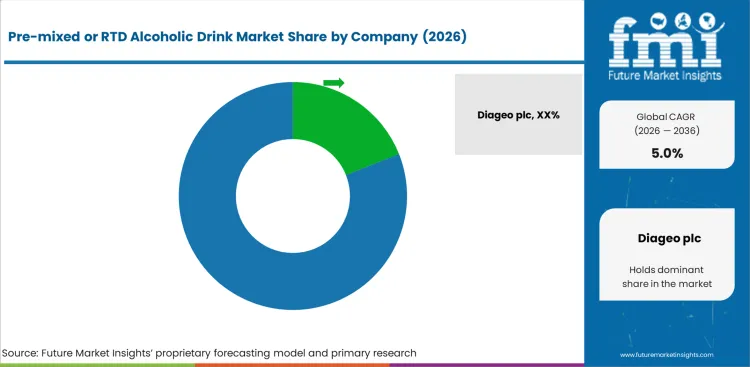
- Competition is centered on spirit brand strength and licensed distribution reach.
- RTD brands need clear taste claims and pack formats that work in chilled retail.
- Larger suppliers stand out with tax handling and multi-state distributor coverage.
- Entry barriers include ABV planning and formula control.
Competitive positioning is shifting toward brands that can pair known spirits with simple canned formats. Brown-Forman expanded its California distributor partnership with Reyes Beverage Group in February 2025. The company said Reyes already supported Jack Daniel’s & Coca-Cola RTD in California. Distribution depth is important because RTD alcohol needs the right licensed route before shelf sales can scale.
Bacardi and Coca-Cola also show how classic bar serves are moving into cans. Bacardi’s product page states that BACARDÍ & Coca-Cola came to market in 2025 as a ready-to-drink can. A known rum-and-cola serve gives retailers a simple message and gives legal-age drinkers a familiar taste. Such products support premium canned cocktail positioning without asking shoppers to mix drinks at home.
Key Companies in the Pre-mixed or RTD Alcoholic Drink Market
- Global Spirits Groups: Diageo plc and Suntory Holdings Limited hold solid positions through known spirit labels and cocktail depth.
- Spirits Brand Owners: Brown-Forman Corporation and Pernod Ricard SA use whiskey and liqueur brands for premium canned serves.
- Beverage Partnership Specialists: The Coca-Cola Company and Bacardi Limited use co-branded cola and rum formats.
- RTD and Brewer-backed Players: The Boston Beer Company and Molson Coors Beverage Company use flavored alcohol portfolios and canning scale.
Competitive Benchmarking: Pre-mixed or RTD Alcoholic Drink Market
| Company | Spirit Brand Depth | Licensed Channel Reach | Can Format Scale | Geographic Footprint |
|---|---|---|---|---|
| Diageo plc | High | High | Medium | Global with North American strength |
| Suntory Holdings Limited | High | Medium | High | Japan and North America centered |
| Brown-Forman Corporation | High | High | Medium | Global with USA strength |
| The Coca-Cola Company | Medium | High | High | Global beverage system |
| Bacardi Limited | High | High | Medium | Global rum and cocktail strength |
| Pernod Ricard SA | High | Medium | Medium | Europe and global spirits reach |
| The Boston Beer Company | Medium | Medium | High | United States focused |
Source: Future Market Insights competitive analysis, 2026.
Key Developments in Pre-mixed or RTD Alcoholic Drink Market
- In May 2025, Suntory Global Spirits introduced On The Rocks Sparkling Cans in three ready-to-sip cocktail varieties. The launch marked the brand’s first canned format.
- In February 2026, The Boston Beer Company expanded Sun Cruiser with Blueberry Lemonade & Vodka. The launch supports RTD alcohol demand by widening vodka-based lemonade options in multipacks and single-serve cans.
Key Players in the Pre-mixed or RTD Alcoholic Drink Market
Major Global Players
- Diageo plc
- Suntory Holdings Limited
- Brown-Forman Corporation
- Bacardi Limited
- Pernod Ricard SA
Beverage Partnership and RTD Specialists
- The Coca-Cola Company
- The Boston Beer Company
- Molson Coors Beverage Company
- Anheuser-Busch InBev SA NV
- Mark Anthony Group
Report Scope and Coverage
| Parameter | Details |
|---|---|
| Quantitative Units | USD 39.1 billion to USD 63.0 billion at 5.0% CAGR |
| Market Definition | Packaged alcoholic drinks sold ready for direct consumption through licensed retail and on-trade channels |
| Segments Covered | Product type, flavor type, packaging format, sales channel, ABV range, and region |
| Product Type | Spirit mixes, hard seltzers, malt drinks, wine spritzers, and hard teas |
| Flavor Type | Fruit flavors, cola blends, citrus blends, tea flavors, and spiced flavors |
| Packaging Format | Cans, bottles, and multi-serve packs |
| Sales Channel | Hypermarkets and supermarkets, convenience stores, liquor stores, online retail, and on-trade |
| ABV Range | Below 4.0% ABV, 4-6% ABV, and above 6.0% ABV |
| Regions Covered | North America, Latin America, Western Europe, Eastern Europe, East Asia, South Asia and Pacific, Middle East and Africa |
| Countries Covered | United States, Canada, Mexico, United Kingdom, Germany, Japan, Australia, and more than 30.0 countries |
| Key Companies Profiled | Diageo plc, Suntory Holdings Limited, Brown-Forman Corporation, The Coca-Cola Company, Bacardi Limited, Pernod Ricard SA, and The Boston Beer Company |
| Forecast Period | 2026 to 2036 |
| Approach | Hybrid bottom-up and top-down method using RTD retail sales pools, pack pricing, channel mix, duty rules, and supplier activity |
Source: Future Market Insights, 2026.
Pre-mixed or RTD Alcoholic Drink Market Breakdown by Product Type, Flavor Type, Packaging Format, Sales Channel, ABV Range, and Region
Pre-mixed or RTD Alcoholic Drink Market Segmented by Product Type
- Spirit Mixes
- Hard Seltzers
- Malt Drinks
- Wine Spritzers
- Hard Teas
Pre-mixed or RTD Alcoholic Drink Market Segmented by Flavor Type
- Fruit Flavors
- Cola Blends
- Citrus Blends
- Tea Flavors
- Spiced Flavors
Pre-mixed or RTD Alcoholic Drink Market Segmented by Packaging Format
- Cans
- Bottles
- Multi-Serve Packs
Pre-mixed or RTD Alcoholic Drink Market Segmented by Sales Channel
- Hypermarkets and Supermarkets
- Convenience Stores
- Liquor Stores
- Online Retail
- On-Trade
Pre-mixed or RTD Alcoholic Drink Market Segmented by ABV Range
- Below 4.0% ABV
- 4-6% ABV
- Above 6.0% ABV
Pre-mixed or RTD Alcoholic Drink Market Segmented by Region
- North America
- Latin America
- Western Europe
- Eastern Europe
- East Asia
- South Asia and Pacific
- Middle East and Africa
Research Sources and Bibliography
- Alcohol and Tobacco Tax and Trade Bureau. (2025, January 10). Standards of fill for wine and distilled spirits. Federal Register.
- Australian Taxation Office. (2026, January 28). Excise duty rates for alcohol. Australian Taxation Office.
- Bacardi. (2025, March 27). BACARDÍ & Coca-Cola. Bacardi.
- Brown-Forman Corporation. (2025, February 24). Brown-Forman and Reyes Beverage Group announce new California distributor partnership. Brown-Forman Corporation.
- Brown-Forman Corporation. (2025, December 4). Brown-Forman reports first half fiscal 2026 results, reaffirms full-year outlook. Brown-Forman Corporation.
- Brown-Forman Corporation. (2026, March 4). Brown-Forman reports year-to-date fiscal 2026 results, reaffirms full-year outlook. Brown-Forman Corporation.
- Federal Statistical Office of Germany. (2026, February 2). Beer sales down in 2025. Destatis.
- HM Revenue & Customs. (2026, February 4). Alcohol Duty uprating. GOV.UK.
- Pernod Ricard UK. (2025, October 7). Bigger cans, bigger cheers: Jameson, Ginger & Lime ready-to-drink cans are back!. Pernod Ricard
- Statistics Canada. (2026, March 5). Control and sale of alcoholic beverages and cannabis, April 1, 2024, to March 31, 2025. The Daily.
- Suntory Global Spirits. (2025, May 1). On The Rocks Premium Cocktails introduces canned sparkling cocktails. Suntory Global Spirits.
- Suntory Global Spirits. (2025, May 15). Suntory Global Spirits brings Japanese innovation to the vodka seltzer category with the nationwide launch of -196™. Suntory Global Spirits.
- The Boston Beer Company. (2026, February 18). Sun Cruiser introduces new Blueberry Lemonade & Vodka to its fast-growing lemonade lineup. The Boston Beer Company.
- The Boston Beer Company. (2026, March 10). Sun Cruiser to become official ready-to-drink cocktail of the USA Open and USA Women’s Open presented by Ally. The Boston Beer Company.
- The Boston Beer Company. (2026, March 24). Sip into sunnier days with Dogfish Head’s seasonal lineup of beverages. The Boston Beer Company.
- The Boston Beer Company. (2026, April 2). Sun Cruiser expands offerings with new category innovation: White Tea + Vodka. The Boston Beer Company.
- The Coca-Cola Company. (2024, September 17). The Coca-Cola Company and Bacardi Limited announce plans to debut BACARDÍ & Coca-Cola ready-to-drink cocktail. The Coca-Cola Company.
This Report Answers
- What is the 2026 value of the pre-mixed or RTD alcoholic drink market?
- What revenue size is forecast for the pre-mixed or RTD alcoholic drink market by 2036?
- What CAGR is expected for the pre-mixed or RTD alcoholic drink market during the forecast period?
- Which packaging format is expected to hold the leading share in 2026?
- Which flavor type is forecast to lead pre-mixed or RTD alcoholic drink demand in 2026?
- How do hypermarkets and supermarkets affect RTD alcohol volume sales?
- Which countries are expected to expand faster during the forecast period?
- How does FMI estimate the pre-mixed or RTD alcoholic drink market forecast?
Frequently Asked Questions
How big is the pre-mixed or RTD alcoholic drink market in 2026?
Pre-mixed or RTD Alcoholic Drink Market is expected to reach USD 39.1 billion in 2026, supported by retail can sales and branded cocktails.
What will be the size of the pre-mixed or RTD alcoholic drink market in 2036?
Pre-mixed or RTD Alcoholic Drink Market is forecast to reach USD 63.0 billion by 2036 as licensed retail access widens.
How fast will the pre-mixed or RTD alcoholic drink market expand from 2026 to 2036?
Demand is expected to advance at 5.0% CAGR from 2026 to 2036, with cans and fruit flavors leading uptake.
Which packaging format leads the pre-mixed or RTD alcoholic drink market in 2026?
Cans are expected to account for 62.0% share in 2026 as chilled retail and multipack handling favor aluminum formats.
Which flavor type leads the pre-mixed or RTD alcoholic drink market in 2026?
Fruit flavors are forecast to hold 53.0% share in 2026 as citrus and berry profiles support easier product trial.
Which sales channel leads the pre-mixed or RTD alcoholic drink market in 2026?
Hypermarkets and supermarkets are anticipated at 45.0% share in 2026 as chilled displays support multipack sales.
Preview the report firsthand - request a free sample
Get SampleGet the brochure for pricing and purchase details.
Get PDFTable of Content
- Executive Summary
- Global Market Outlook
- Demand-side Trends
- Supply-side Trends
- Technology Roadmap Analysis
- Analysis and Recommendations
- Market Overview
- Market Coverage / Taxonomy
- Market Definition / Scope / Limitations
- Research Methodology
- Chapter Orientation
- Analytical Lens and Working Hypotheses
- Market Structure, Signals, and Trend Drivers
- Benchmarking and Cross-market Comparability
- Market Sizing, Forecasting, and Opportunity Mapping
- Research Design and Evidence Framework
- Desk Research Programme (Secondary Evidence)
- Company Annual and Sustainability Reports
- Peer-reviewed Journals and Academic Literature
- Corporate Websites, Product Literature, and Technical Notes
- Earnings Decks and Investor Briefings
- Statutory Filings and Regulatory Disclosures
- Technical White Papers and Standards Notes
- Trade Journals, Industry Magazines, and Analyst Briefs
- Conference Proceedings, Webinars, and Seminar Materials
- Government Statistics Portals and Public Data Releases
- Press Releases and Reputable Media Coverage
- Specialist Newsletters and Curated Briefings
- Sector Databases and Reference Repositories
- FMI Internal Proprietary Databases and Historical Market Datasets
- Subscription Datasets and Paid Sources
- Social Channels, Communities, and Digital Listening Inputs
- Additional Desk Sources
- Expert Input and Fieldwork (Primary Evidence)
- Primary Modes
- Qualitative Interviews and Expert Elicitation
- Quantitative Surveys and Structured Data Capture
- Blended Approach
- Why Primary Evidence is Used
- Field Techniques
- Interviews
- Surveys
- Focus Groups
- Observational and In-context Research
- Social and Community Interactions
- Stakeholder Universe Engaged
- C-suite Leaders
- Board Members
- Presidents and Vice Presidents
- R&D and Innovation Heads
- Technical Specialists
- Domain Subject-matter Experts
- Scientists
- Physicians and Other Healthcare Professionals
- Governance, Ethics, and Data Stewardship
- Research Ethics
- Data Integrity and Handling
- Primary Modes
- Restraints
- Opportunity
- Trends
- Desk Research Programme (Secondary Evidence)
- Scenario Forecast
- Demand in Optimistic Scenario
- Demand in Likely Scenario
- Demand in Conservative Scenario
- Opportunity Map Analysis
- Product Life Cycle Analysis
- Supply Chain Analysis
- Investment Feasibility Matrix
- Value Chain Analysis
- PESTLE and Porter’s Analysis
- Regulatory Landscape
- Regional Parent Market Outlook
- Production and Consumption Statistics
- Import and Export Statistics
- Global Market Analysis 2021 to 2025 and Forecast, 2026 to 2036
- Historical Market Size Value (USD Million) Analysis, 2021 to 2025
- Current and Future Market Size Value (USD Million) Projections, 2026 to 2036
- Y-o-Y Growth Trend Analysis
- Absolute $ Opportunity Analysis
- Global Market Pricing Analysis 2021 to 2025 and Forecast 2026 to 2036
- Global Market Analysis 2021 to 2025 and Forecast 2026 to 2036, By Product Type
- Introduction / Key Findings
- Historical Market Size Value (USD Million) Analysis By Product Type , 2021 to 2025
- Current and Future Market Size Value (USD Million) Analysis and Forecast By Product Type , 2026 to 2036
- Spirit Mixes
- Hard Seltzers
- Malt Drinks
- Spirit Mixes
- Y-o-Y Growth Trend Analysis By Product Type , 2021 to 2025
- Absolute $ Opportunity Analysis By Product Type , 2026 to 2036
- Global Market Analysis 2021 to 2025 and Forecast 2026 to 2036, By Flavor Type
- Introduction / Key Findings
- Historical Market Size Value (USD Million) Analysis By Flavor Type, 2021 to 2025
- Current and Future Market Size Value (USD Million) Analysis and Forecast By Flavor Type, 2026 to 2036
- Fruit Flavors
- Cola Blends
- Citrus Blends
- Fruit Flavors
- Y-o-Y Growth Trend Analysis By Flavor Type, 2021 to 2025
- Absolute $ Opportunity Analysis By Flavor Type, 2026 to 2036
- Global Market Analysis 2021 to 2025 and Forecast 2026 to 2036, By Packaging Format
- Introduction / Key Findings
- Historical Market Size Value (USD Million) Analysis By Packaging Format, 2021 to 2025
- Current and Future Market Size Value (USD Million) Analysis and Forecast By Packaging Format, 2026 to 2036
- Cans
- Bottles
- Multi-Serve Packs
- Cans
- Y-o-Y Growth Trend Analysis By Packaging Format, 2021 to 2025
- Absolute $ Opportunity Analysis By Packaging Format, 2026 to 2036
- Global Market Analysis 2021 to 2025 and Forecast 2026 to 2036, By Sales Channel
- Introduction / Key Findings
- Historical Market Size Value (USD Million) Analysis By Sales Channel, 2021 to 2025
- Current and Future Market Size Value (USD Million) Analysis and Forecast By Sales Channel, 2026 to 2036
- Hypermarkets and Supermarkets
- Convenience Stores
- Liquor Stores
- Hypermarkets and Supermarkets
- Y-o-Y Growth Trend Analysis By Sales Channel, 2021 to 2025
- Absolute $ Opportunity Analysis By Sales Channel, 2026 to 2036
- Global Market Analysis 2021 to 2025 and Forecast 2026 to 2036, By ABV Range
- Introduction / Key Findings
- Historical Market Size Value (USD Million) Analysis By ABV Range, 2021 to 2025
- Current and Future Market Size Value (USD Million) Analysis and Forecast By ABV Range, 2026 to 2036
- 4-6% ABV
- Below 4.0% ABV
- Above 6.0% ABV
- 4-6% ABV
- Y-o-Y Growth Trend Analysis By ABV Range, 2021 to 2025
- Absolute $ Opportunity Analysis By ABV Range, 2026 to 2036
- Global Market Analysis 2021 to 2025 and Forecast 2026 to 2036, By Region
- Introduction
- Historical Market Size Value (USD Million) Analysis By Region, 2021 to 2025
- Current Market Size Value (USD Million) Analysis and Forecast By Region, 2026 to 2036
- North America
- Latin America
- Western Europe
- Eastern Europe
- East Asia
- South Asia and Pacific
- Middle East & Africa
- Market Attractiveness Analysis By Region
- North America Market Analysis 2021 to 2025 and Forecast 2026 to 2036, By Country
- Historical Market Size Value (USD Million) Trend Analysis By Market Taxonomy, 2021 to 2025
- Market Size Value (USD Million) Forecast By Market Taxonomy, 2026 to 2036
- By Country
- USA
- Canada
- Mexico
- By Product Type
- By Flavor Type
- By Packaging Format
- By Sales Channel
- By ABV Range
- By Country
- Market Attractiveness Analysis
- By Country
- By Product Type
- By Flavor Type
- By Packaging Format
- By Sales Channel
- By ABV Range
- Key Takeaways
- Latin America Market Analysis 2021 to 2025 and Forecast 2026 to 2036, By Country
- Historical Market Size Value (USD Million) Trend Analysis By Market Taxonomy, 2021 to 2025
- Market Size Value (USD Million) Forecast By Market Taxonomy, 2026 to 2036
- By Country
- Brazil
- Chile
- Rest of Latin America
- By Product Type
- By Flavor Type
- By Packaging Format
- By Sales Channel
- By ABV Range
- By Country
- Market Attractiveness Analysis
- By Country
- By Product Type
- By Flavor Type
- By Packaging Format
- By Sales Channel
- By ABV Range
- Key Takeaways
- Western Europe Market Analysis 2021 to 2025 and Forecast 2026 to 2036, By Country
- Historical Market Size Value (USD Million) Trend Analysis By Market Taxonomy, 2021 to 2025
- Market Size Value (USD Million) Forecast By Market Taxonomy, 2026 to 2036
- By Country
- Germany
- UK
- Italy
- Spain
- France
- Nordic
- BENELUX
- Rest of Western Europe
- By Product Type
- By Flavor Type
- By Packaging Format
- By Sales Channel
- By ABV Range
- By Country
- Market Attractiveness Analysis
- By Country
- By Product Type
- By Flavor Type
- By Packaging Format
- By Sales Channel
- By ABV Range
- Key Takeaways
- Eastern Europe Market Analysis 2021 to 2025 and Forecast 2026 to 2036, By Country
- Historical Market Size Value (USD Million) Trend Analysis By Market Taxonomy, 2021 to 2025
- Market Size Value (USD Million) Forecast By Market Taxonomy, 2026 to 2036
- By Country
- Russia
- Poland
- Hungary
- Balkan & Baltic
- Rest of Eastern Europe
- By Product Type
- By Flavor Type
- By Packaging Format
- By Sales Channel
- By ABV Range
- By Country
- Market Attractiveness Analysis
- By Country
- By Product Type
- By Flavor Type
- By Packaging Format
- By Sales Channel
- By ABV Range
- Key Takeaways
- East Asia Market Analysis 2021 to 2025 and Forecast 2026 to 2036, By Country
- Historical Market Size Value (USD Million) Trend Analysis By Market Taxonomy, 2021 to 2025
- Market Size Value (USD Million) Forecast By Market Taxonomy, 2026 to 2036
- By Country
- China
- Japan
- South Korea
- By Product Type
- By Flavor Type
- By Packaging Format
- By Sales Channel
- By ABV Range
- By Country
- Market Attractiveness Analysis
- By Country
- By Product Type
- By Flavor Type
- By Packaging Format
- By Sales Channel
- By ABV Range
- Key Takeaways
- South Asia and Pacific Market Analysis 2021 to 2025 and Forecast 2026 to 2036, By Country
- Historical Market Size Value (USD Million) Trend Analysis By Market Taxonomy, 2021 to 2025
- Market Size Value (USD Million) Forecast By Market Taxonomy, 2026 to 2036
- By Country
- India
- ASEAN
- Australia & New Zealand
- Rest of South Asia and Pacific
- By Product Type
- By Flavor Type
- By Packaging Format
- By Sales Channel
- By ABV Range
- By Country
- Market Attractiveness Analysis
- By Country
- By Product Type
- By Flavor Type
- By Packaging Format
- By Sales Channel
- By ABV Range
- Key Takeaways
- Middle East & Africa Market Analysis 2021 to 2025 and Forecast 2026 to 2036, By Country
- Historical Market Size Value (USD Million) Trend Analysis By Market Taxonomy, 2021 to 2025
- Market Size Value (USD Million) Forecast By Market Taxonomy, 2026 to 2036
- By Country
- Kingdom of Saudi Arabia
- Other GCC Countries
- Turkiye
- South Africa
- Other African Union
- Rest of Middle East & Africa
- By Product Type
- By Flavor Type
- By Packaging Format
- By Sales Channel
- By ABV Range
- By Country
- Market Attractiveness Analysis
- By Country
- By Product Type
- By Flavor Type
- By Packaging Format
- By Sales Channel
- By ABV Range
- Key Takeaways
- Key Countries Market Analysis
- USA
- Pricing Analysis
- Market Share Analysis, 2025
- By Product Type
- By Flavor Type
- By Packaging Format
- By Sales Channel
- By ABV Range
- Canada
- Pricing Analysis
- Market Share Analysis, 2025
- By Product Type
- By Flavor Type
- By Packaging Format
- By Sales Channel
- By ABV Range
- Mexico
- Pricing Analysis
- Market Share Analysis, 2025
- By Product Type
- By Flavor Type
- By Packaging Format
- By Sales Channel
- By ABV Range
- Brazil
- Pricing Analysis
- Market Share Analysis, 2025
- By Product Type
- By Flavor Type
- By Packaging Format
- By Sales Channel
- By ABV Range
- Chile
- Pricing Analysis
- Market Share Analysis, 2025
- By Product Type
- By Flavor Type
- By Packaging Format
- By Sales Channel
- By ABV Range
- Germany
- Pricing Analysis
- Market Share Analysis, 2025
- By Product Type
- By Flavor Type
- By Packaging Format
- By Sales Channel
- By ABV Range
- UK
- Pricing Analysis
- Market Share Analysis, 2025
- By Product Type
- By Flavor Type
- By Packaging Format
- By Sales Channel
- By ABV Range
- Italy
- Pricing Analysis
- Market Share Analysis, 2025
- By Product Type
- By Flavor Type
- By Packaging Format
- By Sales Channel
- By ABV Range
- Spain
- Pricing Analysis
- Market Share Analysis, 2025
- By Product Type
- By Flavor Type
- By Packaging Format
- By Sales Channel
- By ABV Range
- France
- Pricing Analysis
- Market Share Analysis, 2025
- By Product Type
- By Flavor Type
- By Packaging Format
- By Sales Channel
- By ABV Range
- India
- Pricing Analysis
- Market Share Analysis, 2025
- By Product Type
- By Flavor Type
- By Packaging Format
- By Sales Channel
- By ABV Range
- ASEAN
- Pricing Analysis
- Market Share Analysis, 2025
- By Product Type
- By Flavor Type
- By Packaging Format
- By Sales Channel
- By ABV Range
- Australia & New Zealand
- Pricing Analysis
- Market Share Analysis, 2025
- By Product Type
- By Flavor Type
- By Packaging Format
- By Sales Channel
- By ABV Range
- China
- Pricing Analysis
- Market Share Analysis, 2025
- By Product Type
- By Flavor Type
- By Packaging Format
- By Sales Channel
- By ABV Range
- Japan
- Pricing Analysis
- Market Share Analysis, 2025
- By Product Type
- By Flavor Type
- By Packaging Format
- By Sales Channel
- By ABV Range
- South Korea
- Pricing Analysis
- Market Share Analysis, 2025
- By Product Type
- By Flavor Type
- By Packaging Format
- By Sales Channel
- By ABV Range
- Russia
- Pricing Analysis
- Market Share Analysis, 2025
- By Product Type
- By Flavor Type
- By Packaging Format
- By Sales Channel
- By ABV Range
- Poland
- Pricing Analysis
- Market Share Analysis, 2025
- By Product Type
- By Flavor Type
- By Packaging Format
- By Sales Channel
- By ABV Range
- Hungary
- Pricing Analysis
- Market Share Analysis, 2025
- By Product Type
- By Flavor Type
- By Packaging Format
- By Sales Channel
- By ABV Range
- Kingdom of Saudi Arabia
- Pricing Analysis
- Market Share Analysis, 2025
- By Product Type
- By Flavor Type
- By Packaging Format
- By Sales Channel
- By ABV Range
- Turkiye
- Pricing Analysis
- Market Share Analysis, 2025
- By Product Type
- By Flavor Type
- By Packaging Format
- By Sales Channel
- By ABV Range
- South Africa
- Pricing Analysis
- Market Share Analysis, 2025
- By Product Type
- By Flavor Type
- By Packaging Format
- By Sales Channel
- By ABV Range
- USA
- Market Structure Analysis
- Competition Dashboard
- Competition Benchmarking
- Market Share Analysis of Top Players
- By Regional
- By Product Type
- By Flavor Type
- By Packaging Format
- By Sales Channel
- By ABV Range
- Competition Analysis
- Competition Deep Dive
- Diageo plc
- Overview
- Product Portfolio
- Profitability by Market Segments (Product/Age /Sales Channel/Region)
- Sales Footprint
- Strategy Overview
- Marketing Strategy
- Product Strategy
- Channel Strategy
- Suntory Holdings Limited
- Brown-Forman Corporation
- Bacardi Limited
- Pernod Ricard SA
- Diageo plc
- Competition Deep Dive
- Assumptions & Acronyms Used


