

- Market Size (2026)
- USD 1.4 Bn
- Forecast (2036)
- USD 2.7 Bn
- CAGR
- 6.8 (2026 to 2036)
Alternative Fuel-Compatible Lubricant Additive Systems Market Size, Market Forecast and Outlook By FMI
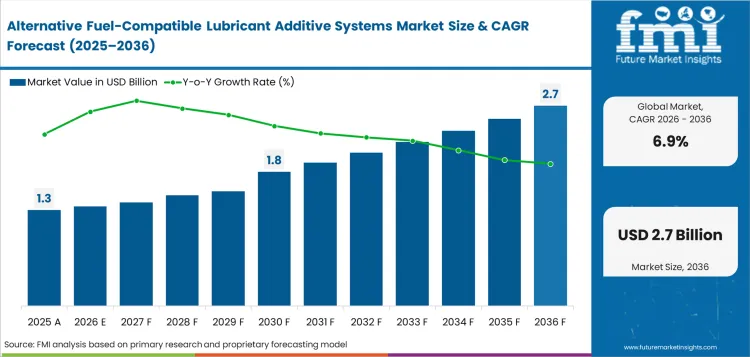
The alternative fuel-compatible lubricant additive systems market size stood at USD 1.3 billion in 2025 and is projected to cross USD 1.4 billion in 2026. Industry is forecast to increase to USD 2.7 billion by 2036 at 6.9% CAGR. By base oil, synthetic oils are estimated to account for 54.0% share in 2026. Engine oils are anticipated to represent 48.0% share of application in 2026.
Fuel-blend tolerance now acts as a clear formulation test for alternative fuel-compatible lubricant additive systems. In June 2024, ASTM International stated in ASTM D6751-24 that biodiesel B100 covers six grades. The standard includes low-metals grades with a 4 ppm maximum for combined sodium, potassium, calcium and magnesium. Additive selection will favor ash-aware corrosion and oxidation control since biodiesel exposure can affect aftertreatment durability and engine cleanliness. In May 2024, ISO stated that ISO 8217:2024 covers marine fuels from petroleum, synthetic and renewable sources.
The standard coverage reflects how ship operators are moving toward wider fuel variation across distillate and residual fuel categories. In June 2024, Chevron Oronite said two 40 BN marine cylinder oil additive formulations passed the WinGD Dual Fuel validated No Objection Letter test protocol. The approval followed MAN Energy Solutions Category II approval. This gives lubricant brands a stronger case for additive systems proven across dual-fuel and renewable-fuel operating conditions.
Summary of Alternative Fuel-Compatible Lubricant Additive Systems Market
- Demand and Growth Drivers
- Biofuel blend mandates are increasing need for oxidation control and deposit handling in engine oils.
- Hybrid vehicles keep combustion engines in service while adding hotter stop-start duty cycles.
- Hydrogen engine trials are creating a new need for water control and corrosion resistance.
- Product and Segment View
- Synthetic oils are projected to account for 54.0% share in 2026 due to low-viscosity formulations needing stable additive solubility.
- Engine oils are anticipated to capture 48.0% share in 2026 since alternative fuel exposure first affects crankcase lubricants.
- Biodiesel blends are forecast to represent 34.0% share in 2026 as B10 to B20 diesel use keeps widening fleet exposure.
- Geography and Competitive Outlook
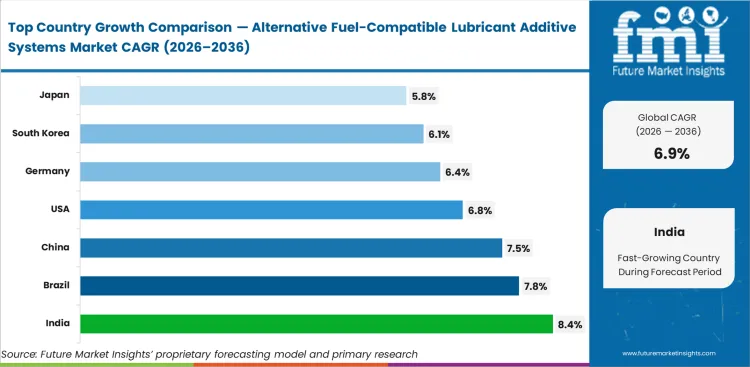
- India is projected to record 8.4% CAGR by 2036, led by ethanol blending and vehicle output raising lubricant reformulation needs.
- Brazil is expected to expand at 7.8% CAGR by 2036 since biodiesel rules make fuel compatibility part of fleet oil selection.
- Players such as Lubrizol, Afton Chemical, Chevron Oronite, and Infineum are leading industry.
- Analyst Opinion
- Nikhil Kaitwade, Principal Consultant for Chemicals and Materials at FMI, notes, “Lubricant additive value is shifting toward proof under mixed fuel use. Fuel-neutral oils can serve near-term fleet needs, while hydrogen engines and high-biofuel diesel blends are changing approval work. Suppliers able to show oxidation control and elastomer-safe chemistry should hold stable positions with oil marketers and fleet lubricant brands.”
- Alternative Fuel-Compatible Lubricant Additive Systems Market Value Analysis
- Value is moving from broad engine oil additives toward formulations tested against fuel dilution and alternative combustion byproducts.
- Manufacturer spending follows additive packages proving cleanliness under biodiesel and ethanol exposure.
- Formulators are linking synthetic base oil choice with detergent and antioxidant balance.
- Demand is supported by lubricant additives suppliers serving oil brands needing faster fuel-fit approval cycles.
Key Takeaways, Market Size, and Forecast
- The alternative fuel-compatible lubricant additive systems market size was valued at USD 1.3 billion in 2025.
- The alternative fuel-compatible lubricant additive systems industry value is expected to rise to USD 2.7 billion by 2036.
- From 2026 to 2036, the sector is anticipated to expand at 6.9% CAGR.
- Industry revenue is forecast to create an incremental opportunity of USD 1.3 billion from 2026 to 2036.
- Synthetic oils are projected to represent 54.0% share of base oil in 2026.
- Engine oils are anticipated to account for 48.0% share of application in 2026.
- India is projected to record a stable country pace at 8.4% CAGR by 2036, with industry in Brazil expanding at 7.8% CAGR.
Alternative Fuel-Compatible Lubricant Additive Systems Market Definition
Alternative fuel-compatible lubricant additive systems market covers additive packages and component chemistries used in lubricants for engines and equipment operating on alternative fuels. Scope includes detergents, dispersants, antioxidants and anti-wear agents used in finished lubricants. Systems are counted only for sale for lubricant formulation and compatibility with biodiesel, ethanol, renewable diesel, gas or hydrogen duty. Finished lubricants are outside scope unless additive value can be separated.
Alternative Fuel-Compatible Lubricant Additive Systems Market Inclusions
Scope includes additive concentrates used in engine oils, transmission fluids and hydraulic fluids for alternative fuel exposure. Included chemistries cover detergent dispersants, antioxidants, friction modifiers and corrosion inhibitors. Applications include commercial vehicles, passenger vehicles, off-highway machines and marine engines. Adjacent industrial products are included only if fuel-contact or combustion byproduct exposure affects lubricant formulation.
Alternative Fuel-Compatible Lubricant Additive Systems Market Exclusions
Scope excludes finished engine oils sold without separable additive value. Fuel treatment products such as fuel additives are excluded unless sold as part of a lubricant additive package. Base oils, coolants and neat process chemicals are outside scope. General industrial chemicals for coating additives are excluded unless formulated directly into a lubricant system.
Alternative Fuel-Compatible Lubricant Additive Systems Market Research Methodology
- Primary Research: FMI analysts reviewed additive selection with lubricant formulators and fleet oil distributors. OEM specification feedback was reviewed separately.
- Desk Research: Official biofuel policy data and public vehicle production data supported demand checks. Company releases supported supplier mapping.
- Market Sizing and Forecasting: Forecast values used additive treat-rate assumptions and fuel-blend exposure mapping. Base oil and application shares refined estimates.
- Data Validation: Checks compared 2026 value with 2036 value. Segment share balance was reviewed against fuel use and vehicle duty exposure.
Why is the Alternative Fuel-Compatible Lubricant Additive Systems Market Growing?
- Biofuel rules are raising formulation work for crankcase oils exposed to ester dilution and acid formation.
- Hydrogen combustion engines are creating a water-handling requirement that conventional diesel oil packages cannot fully cover.
- Hybrid powertrains are extending the need for combustion clean-up additives in engines with more stop-start operation.
Industry expansion follows fuels changing what engine oil must tolerate during service. The United States Environmental Protection Agency finalized 2026 and 2027 Renewable Fuel Standard volumes in March 2026. Total applicable renewable fuel volumes reached 26.81 billion Renewable Identification Number credits for 2026 and 27.02 billion for 2027. Renewable diesel and biodiesel use keep pushing lubricant brands to manage fuel dilution and deposit control. Alternative fuel exposure makes additive performance a specification issue instead of a routine blending choice.
Market Segmentation Analysis
- Biodiesel blends are projected to capture 34.0% share in 2026 due to diesel fleets needing oils built to resist oxidation and deposit buildup under ester fuel dilution.
- Detergent dispersants are anticipated to hold 29.0% share in 2026 since soot control and sludge suspension remain core needs in mixed-duty engines.
- Engine oils are forecast to account for 48.0% share in 2026, led by crankcase lubricants facing the earliest contact with alternative fuel byproducts.
- Synthetic oils are projected to represent 54.0% share in 2026 through low-viscosity platforms needing stable additive response at higher operating heat.
- Commercial vehicles are anticipated to account for 33.0% share in 2026 as freight fleets are early adopters of renewable diesel and biodiesel blends.
Segmentation is divided into five parent groups based on fuel exposure and lubricant formulation route. Fuel compatibility separates biodiesel, ethanol and gas fuel conditions. Additive function shows performance chemistry. Application explains fluid exposure. Base oil defines formulation platform. End use separates fleet duty cycles from passenger vehicle and industrial engine needs.
Insights into Alternative Fuel-Compatible Lubricant Additive Systems Market by Fuel Compatibility
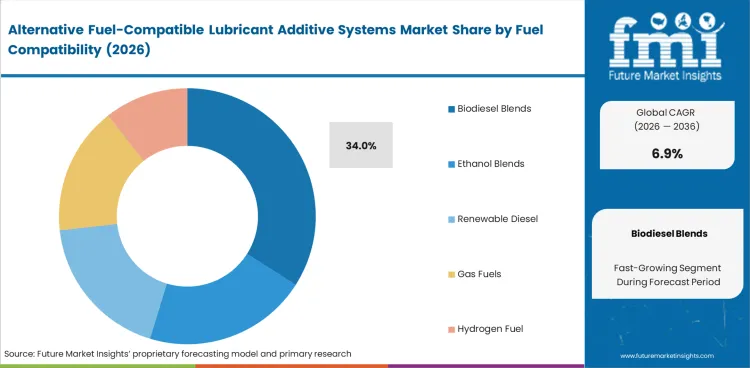
- Biodiesel blends are projected to account for 34.0% share in 2026, driven by B10 to B20 use creating oxidation stress and ester-linked deposits in diesel engine oils.
- Hydrogen fuel is gaining attention as water handling and corrosion control become selection tests for new heavy-duty combustion engines.
Insights into Alternative Fuel-Compatible Lubricant Additive Systems Market by Additive Function
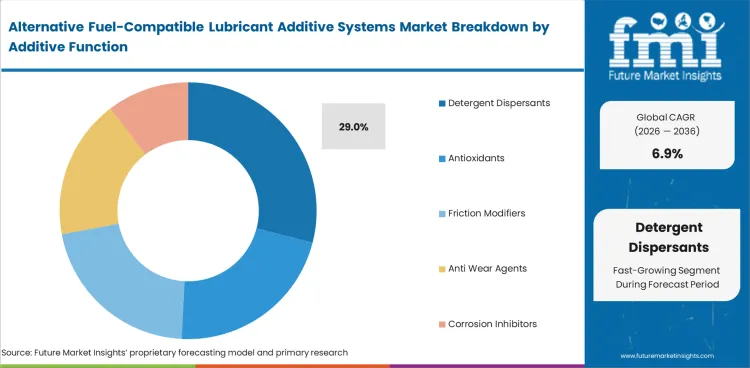
- Detergent Dispersants are anticipated to account for 29.0% share in 2026 since alternative fuel combustion creates acids and fine deposits needing suspension control.
- Friction modifier additive for EV driveline additives are gaining use led by hybrid powertrains needing lower drag while preserving film strength during repeated engine restarts.
Insights into Alternative Fuel-Compatible Lubricant Additive Systems Market by Application
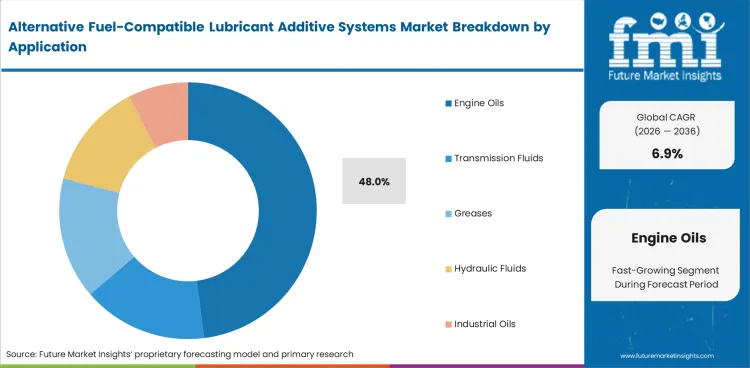
- Engine oils are forecast to account for 48.0% share in 2026, influenced by crankcase fluids facing fuel dilution before transmission fluids or grease applications.
- Automotive oil formulators are using additive systems to keep deposit control stable across ethanol and renewable diesel exposure.
Insights into Alternative Fuel-Compatible Lubricant Additive Systems Market by Base Oil
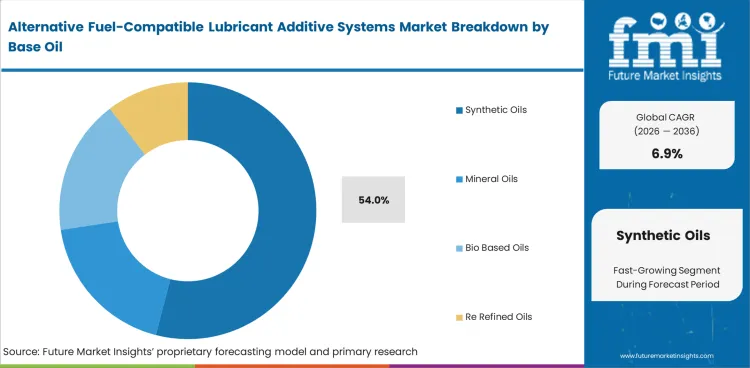
- Synthetic oils are projected to account for 54.0% share in 2026, reflected by synthetic lubricants and functional fluids giving formulators better volatility control under hot hybrid duty.
- Bio-based oils are building a smaller but useful position in low-carbon lubricant claims for industrial and specialty fleet users.
Insights into Alternative Fuel-Compatible Lubricant Additive Systems Market by End Use
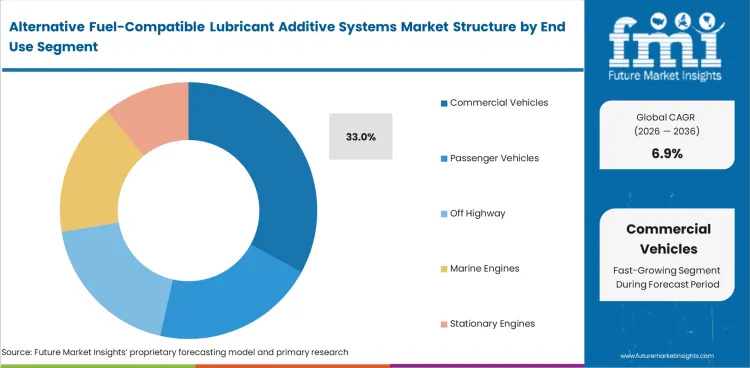
- Commercial vehicles are anticipated to represent 33.0% share in 2026 as freight and bus fleets face early exposure to renewable diesel and biodiesel supply.
- Off-highway engines support additive demand for industrial lubricants used in machines operating under fuel variability and long service intervals.
Alternative Fuel-Compatible Lubricant Additive Systems Market Drivers, Restraints and Opportunities
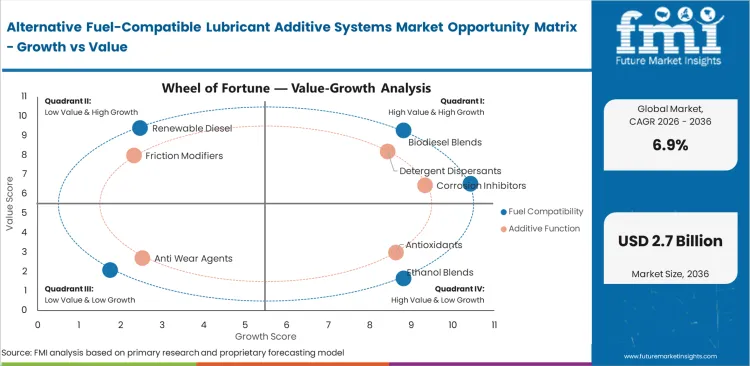
- Biofuel compatibility is supporting repeat formulation work across commercial diesel and mixed-fleet engine oil programs.
- Engine oil validation cost is expected to restrain smaller additive suppliers with limited access to formal testing and licensing routes.
- Hydrogen and gas-fuel combustion creates opportunities for additive packages with water control and corrosion protection proof.
Growth outlook for alternative fuel-compatible lubricant additive systems is moving toward proof-based formulation. European Automobile Manufacturers’ Association reported 3,733,325 hybrid-electric car registrations in the EU during 2025 and 34.5% share of new car registrations. Hybrid scale keeps combustion engines active in stop-start duty and raises need for friction control with stronger deposit handling. American Petroleum Institute lists engine oil license application and renewal fees at USD 6,300 each from January 2026.
Formal licensing cost adds pressure on smaller suppliers before engine testing and field validation are counted. Cummins started full production of the X15N natural gas heavy-duty engine in September 2024 after field testing 24 trucks across 16 fleets for over 1.5 million miles. Fuel-flexible engine platforms will favor additive suppliers able to prove water handling and corrosion control before broad hydrogen combustion use.
Buyer Identification and Procurement Structure Analysis
Buying structure in the alternative fuel-compatible lubricant additive sector is expected to center on oil marketers and engine platform owners. System integrators and plant operators will prove more important in stationary engine and industrial fuel-conversion applications, where lubricant performance is aligned to uptime and service risk.
American Petroleum Institute reported in August 2025, more than 1,800 ILSAC GF-7 engine oils had been licensed since March 31, 2025. API Service Category SQ had more than 2,500 licensed products by the same update. Such licensing scale reflects buyers moving toward documented performance categories instead of informal formulation claims. Procurement decisions will therefore favor additive suppliers with OEM approval support and fuel-fit testing records for hybrid and alternative-fuel engines.
Regulatory Compliance and Operating Standards Analysis
Operating standards for alternative fuel-compatible lubricant additives are expected to tighten around licensed claims, test evidence, and compliance records. API 1509, 23rd Edition, published in February 2025, states that ILSAC GF-7A and GF-7B became effective on March 31, 2025 for passenger car engine oils. It also states that individual OEMs may require performance parameters beyond included tests. For industrial lubricants, the same pressure will push additive suppliers to document compatibility and field performance before wider approval. Fuel-compatible packages will need stronger proof around oxidation stability and low-speed preignition control. Suppliers with auditable formulation files and test support will be better placed as hybrid engines and future hydrogen combustion platforms raise approval complexity.
Analysis of Alternative Fuel-Compatible Lubricant Additive Systems Market by Key Countries
.webp "Top Country Growth Comparison Alternative Fuel Compatible Lubricant Additive Systems Market Cagr (2026 2036)")
| Country | CAGR |
|---|---|
| India | 8.4% |
| Brazil | 7.8% |
| China | 7.5% |
| USA | 6.8% |
| Germany | 6.4% |
| South Korea | 6.1% |
| Japan | 5.8% |
Source: Future Market Insights, 2026.
Alternative Fuel-Compatible Lubricant Additive Systems Market CAGR Analysis by Country
- India is projected to record 8.4% CAGR by 2036, influenced by ethanol blending and high vehicle production.
- Brazil is expected to expand at 7.8% CAGR by 2036 as biodiesel blending makes fuel fit part of lubricant buying.
- China is forecast to grow at 7.5% CAGR by 2036 through new energy vehicle output and commercial fleet scale.
- USA is expected to advance at 6.8% CAGR by 2036, driven by renewable diesel capacity and fleet oil reformulation.
- Germany is projected to rise at 6.4% CAGR by 2036 due to hybrid production and European oil specification pressure.
- South Korea is forecast at 6.1% CAGR by 2036 since vehicle exports and hybrid output sustain additive demand.
- Japan is expected to post 5.8% CAGR by 2036 reflecting hybrid adoption and selective alternative fuel uptake.
Country performance differs by biofuel policy, vehicle output and fleet fuel exposure. India, Brazil and China track above the global line since fuel transition is visible in both regulation and vehicle production. USA follows close to the global pace through renewable diesel capacity. Germany, South Korea and Japan grow at measured rates as additive needs are tied to mature but specification-heavy vehicle programs.
Demand Outlook for Alternative Fuel-Compatible Lubricant Additive Systems in India
Demand in India is projected to record 8.4% CAGR by 2036, led by ethanol blending keeping reformulation work active. India’s petroleum ministry reported average ethanol blending of 19.05 percent in ESY 2024 to 2025 as of July 31 2025. July 2025 alone reached 19.93 percent blending. Higher alcohol exposure raises interest in seal-safe oils and deposit control packages. Bioethanol use therefore supports a stronger case for additive systems tested against fuel dilution.
- Ethanol blending raises need for oxidation control in oils used across gasoline and hybrid platforms.
- Commercial vehicle output keeps diesel oil additive packages in high-volume qualification work.
- Local blending capacity can reduce lead time for lubricant brands serving national oil channels.
Growth Outlook for Alternative Fuel-Compatible Lubricant Additive Systems in Brazil
Industry in Brazil is expected to expand at 7.8% CAGR by 2036, influenced by biodiesel rules making additive compatibility commercially visible. Brazil’s National Energy Policy Council approved the rise in biodiesel blending from 14% to 15% from August 1, 2025. Higher methyl ester exposure can increase oxidation and deposit risk during engine service. Lubricant brands need additive packages able to manage fuel dilution in heavy-duty oils. Distribution partnerships become more valuable as regional blending needs rise.
- Biodiesel exposure supports detergent dispersant packages for truck and bus engine oils.
- Agricultural fleets create demand for oils built around heavy load and mixed fuel quality.
- Regional distributors gain value once oil marketers need faster additive supply for blend changes.
Opportunity Analysis of Alternative Fuel-Compatible Lubricant Additive Systems in China
Industry in China is forecast to grow at 7.5% CAGR by 2036 through vehicle output scale and alternative powertrain penetration. China State Council reported 16.49 million new energy vehicle sales in 2025. Commercial fleets and hybrid vehicles keep combustion engines in service during powertrain transition. Additive suppliers need local testing and blending support to handle both low-viscosity oils and fuel-blend exposure. China therefore remains a core supply and demand center for fuel-compatible formulations.
- New energy vehicle scale supports hybrid oils with oxidation and corrosion control needs.
- Domestic engine oil blending gives additive producers a direct route into national lubricant brands.
- Local production sites can reduce approval delays for OEM and fleet lubricant programs.
Demand Analysis of Alternative Fuel-Compatible Lubricant Additive Systems in the United States
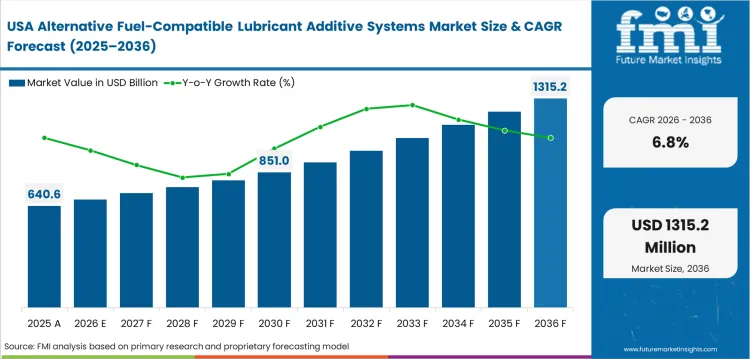
Demand in the United States is expected to advance at 6.8% CAGR by 2036, led by renewable diesel supply raising compatibility needs in fleet oils. United States Energy Information Administration counted 19 renewable diesel and other biofuel plants at the start of 2025. Nameplate capacity reached 4,719 million gallons per year. Commercial fleets can switch fuels faster than lubricant specifications change. Additive suppliers with renewable diesel and biodiesel evidence can gain a stronger position with oil marketers.
- Renewable diesel use supports additive packages tested for deposit control and longer drain intervals.
- Fleet maintenance channels keep engine oil filters and lubricant changes tied to fuel quality exposure.
- Hydrogen engine trials create a small but visible opening for water-handling additive systems.
Sales Outlook for Alternative Fuel-Compatible Lubricant Additive Systems in Germany
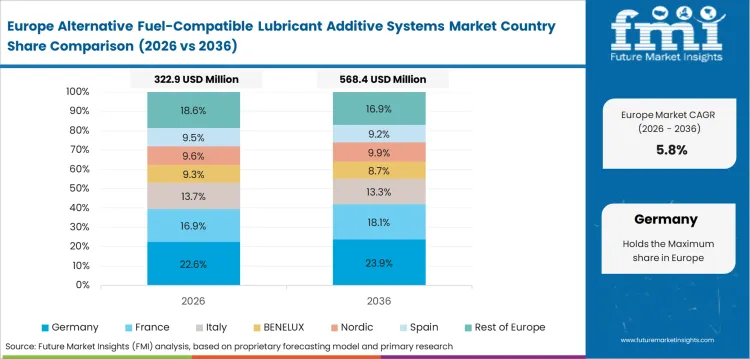
Sales in Germany is projected to rise at 6.4% CAGR by 2036 due to hybrid output and European oil performance rules. VDA reported 1.67 million electric passenger cars produced in Germany in 2025. Plug-in hybrid production reached 0.45 million units during the year. Hybrid engines keep oil stress high under repeated restart conditions. Additive packages with oxidation control and friction balance suit German lubricant specification work.
- Hybrid vehicle output supports oils built for frequent engine restart and high thermal cycling.
- European low-emission standards keep low-SAPS packages used in diesel and hybrid fleets.
- German oil marketers favor approval records reducing reformulation risk in premium engines.
Future Outlook for Alternative Fuel-Compatible Lubricant Additive Systems in South Korea
Industry in South Korea is forecast at 6.1% CAGR by 2036, reflecting vehicle exports and hybrid production maintaining active additive requirements. South Korea’s industry ministry reported 2025 automotive exports of USD 72.0 billion in January 2026. Domestic vehicle production reached 4.10 million units during 2025. Export programs need lubricant specifications accepted across multiple fuel environments. Additive suppliers can gain traction by aligning with Korean OEM service-fill and factory-fill requirements.
- Export-heavy vehicle production supports additive packages approved for multiple regional fuel blends.
- Hybrid and gasoline platforms increase demand for friction modifiers with deposit control balance.
- Local blending partners improve service speed for lubricant brands supplying Asian vehicle programs.
Sales Analysis of Alternative Fuel-Compatible Lubricant Additive Systems in Japan
Japan is expected to post 5.8% CAGR by 2036 as hybrid strength keeps combustion lubricant demand selective. International Energy Agency data placed Japan’s electric car share near 3 percent of sales in 2024. Hybrid vehicles therefore remain important in the transition. Oil marketers need additives protecting engines running shorter combustion cycles. Japanese OEM quality expectations keep approval work tight for additive suppliers.
- Hybrid platforms support low-viscosity engine oils with strong oxidation and wear control.
- Gasoline engines keep detergent dispersant demand active in passenger vehicle service oils.
- Factory equipment creates additional need for hydraulic power unit fluids using stable anti-wear systems.
Competitive Landscape and Strategic Positioning
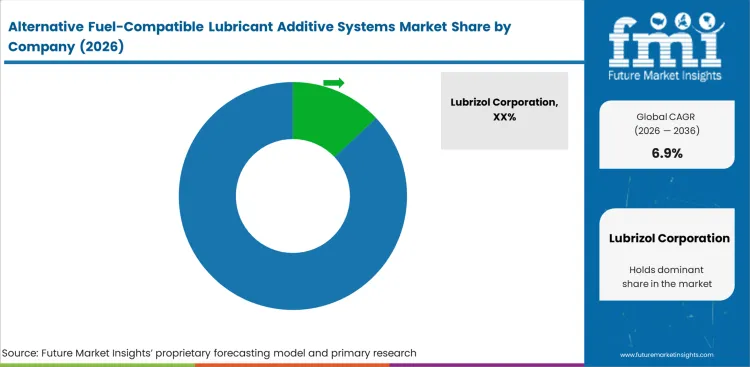
- Global additive suppliers hold an advantage through approval history with oil brands and engine makers.
- Regional blending partners compete through supply speed and local fuel regulation familiarity.
- Specialist chemistry firms gain value through antioxidants and friction modifiers for alternative fuel duty.
Competition in alternative fuel-compatible additive systems is shaped by fuel testing depth and access to engine data. Lubrizol, Infineum and Afton Chemical compete across heavy-duty engine oil additive platforms. Chevron Oronite adds regional supply strength through distributor and manufacturing networks. BASF, Evonik and LANXESS bring component chemistry used in antioxidant and sulfur carrier systems. Oil marketers tend to favor suppliers able to shorten formulation work without increasing engine test risk.
Supplier advantage is strongest at fuel interfaces creating deposit, corrosion or oxidation problems. Biodiesel and renewable diesel users need additive packages protecting commercial engines under varied fuel quality. Hydrogen combustion needs water control and pre-ignition resistance. Regional players can secure supply work through blending speed and application knowledge. Global suppliers are better positioned to win platform approvals since formulation libraries and test records carry more weight during oil brand selection.
Key Companies in the Alternative Fuel-Compatible Lubricant Additive Systems Market
Competitive structure is differentiated by grouping companies around engine oil additive platforms, component chemistry and regional supply support.
- Engine Oil Additive Leaders: Lubrizol Corporation, Infineum International Limited, Afton Chemical Corporation and Chevron Oronite compete through approved engine oil packages and fuel-fit testing.
- Component Chemistry Specialists: BASF SE, Evonik Oil Additives and LANXESS AG support formulation work through antioxidants, ester chemistries and sulfur carriers.
- Regional Supply Partners: Distributor and blending partners support additive delivery in Brazil, India and China as fuel rules create faster reformulation cycles.
Competitive Benchmarking: Alternative Fuel-Compatible Lubricant Additive Systems Market
| Company | Biofuel Validation Depth | Hybrid Oil Coverage | Regional Supply Reach | Fuel Fit |
|---|---|---|---|---|
| Lubrizol Corporation | High | Strong | Global | Heavy-duty and passenger oils |
| Infineum International Limited | High | Strong | Global | Hybrid and OEM approvals |
| Afton Chemical Corporation | High | Medium | Global | Hydrogen and heavy-duty oils |
| Chevron Oronite | High | Medium | Global | Biofuel and regional supply |
| BASF SE | Medium | Medium | Global | Antioxidant and component chemistry |
| Evonik Oil Additives | Medium | Strong | Global | Synthetic base and viscosity systems |
| LANXESS AG | Medium | Medium | Global | Sulfur carriers and specialty additives |
Source: Future Market Insights competitive analysis 2026. Ratings reflect relative positioning based on biofuel validation and hybrid oil coverage.
Key Developments in Alternative Fuel-Compatible Lubricant Additive Systems Market
- In September 2025, Afton Chemical launched HiTEC 12582 for hydrogen heavy-duty engine oil formulations.
- In March 2026, Infineum opened a new additive blending facility in Patalganga, Maharashtra to improve Indian supply responsiveness.
- In April 2026, Infineum P6895 obtained Stellantis FPW9.55535/03 approval for oils serving ICE and hybrid vehicles.
Key Players in the Alternative Fuel-Compatible Lubricant Additive Systems Market
Major Global Players:
- Lubrizol Corporation
- Infineum International Limited
- Afton Chemical Corporation
- Chevron Oronite
Specialist Chemistry Players:
- BASF SE
- Evonik Oil Additives
- LANXESS AG
Market Report Scope and Coverage
| Parameter | Details |
|---|---|
| Quantitative Units | USD 1.4 billion to USD 2.7 billion, at 6.9% CAGR |
| Market Definition | Additive packages and component chemistries used in lubricants for engines and equipment operating on alternative fuels |
| Fuel Compatibility | Biodiesel blends, ethanol blends, renewable diesel, gas fuels, hydrogen fuel |
| Additive Function | Detergent dispersants, antioxidants, friction modifiers, anti-wear agents, corrosion inhibitors |
| Application | Engine oils, transmission fluids, greases, hydraulic fluids, industrial oils |
| Base Oil | Synthetic oils, mineral oils, bio-based oils, re-refined oils |
| End Use | Commercial vehicles, passenger vehicles, off-highway, marine engines, stationary engines |
| Regions Covered | North America, Latin America, Western Europe, Eastern Europe, East Asia, South Asia and Pacific, Middle East and Africa |
| Countries Covered | USA, Germany, China, India, Japan, Brazil, South Korea and 30+ countries |
| Key Companies Profiled | Lubrizol Corporation, Infineum International Limited, Afton Chemical Corporation, Chevron Oronite, BASF SE, Evonik Oil Additives, LANXESS AG |
| Forecast Period | 2026 to 2036 |
| Approach | Biofuel policy checks, vehicle output review, supplier evidence and segment share estimates |
Source: Future Market Insights, 2026.
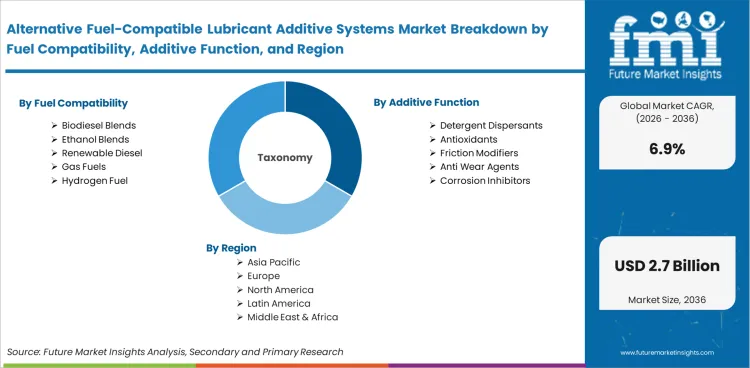
Alternative Fuel-Compatible Lubricant Additive Systems Market Breakdown by Fuel Compatibility, Additive Function, Application, Base Oil, End Use and Region.
By Fuel Compatibility:
- Biodiesel Blends
- Ethanol Blends
- Renewable Diesel
- Gas Fuels
- Hydrogen Fuel
By Additive Function:
- Detergent Dispersants
- Antioxidants
- Friction Modifiers
- Anti Wear Agents
- Corrosion Inhibitors
By Application:
- Engine Oils
- Transmission Fluids
- Greases
- Hydraulic Fluids
- Industrial Oils
By Base Oil:
- Synthetic Oils
- Mineral Oils
- Bio Based Oils
- Re Refined Oils
By End Use:
- Commercial Vehicles
- Passenger Vehicles
- Off Highway
- Marine Engines
- Stationary Engines
By Region:
- North America
- Latin America
- Western Europe
- Eastern Europe
- East Asia
- South Asia and Pacific
- Middle East and Africa
Research Sources and Bibliography
- American Petroleum Institute. (2025, February). Engine oil licensing and certification system: API 1509, 23rd edition.
- American Petroleum Institute. (2026). EOLCS application and fees.
- European Automobile Manufacturers’ Association. (2026, January 27). New car registrations: +1.8% in 2025; battery-electric 17.4% market share.
- International Energy Agency. (2025, May 14). Global EV Outlook 2025.
- MOTOR Information Systems. (2025, August 13). API licenses over 1,800 ILSAC GF-7 engine oils as new standard gains traction.
- USA Environmental Protection Agency. (2026, March 27). Final renewable fuel standards for 2026 and 2027.
- USA Energy Information Administration. (2025, September 26). USA renewable diesel fuel and other biofuels plant production capacity.
- Press Information Bureau. (2025, August 11). Government speed up ethanol blending with expanded production and infrastructure.
- State Council of the People’s Republic of China. (2026, January 14). China’s auto output, sales reach new highs in 2025.
- Verband der Automobilindustrie. (2026, February 3). New record: 40% electric share of passenger car production in 2025.
- Ministry of Trade, Industry and Energy. (2026, January 15). 2025 automobile exports reach USD 72.0 billion.
- Afton Chemical Corporation. (2025, September 15). Afton Chemical launches the world’s first commercially available dedicated additive for hydrogen heavy-duty engines.
- Infineum International Limited. (2026, March 9). Infineum inaugurates new blending facility in India to support the country’s growing mobility and energy needs.
- Infineum International Limited. (2026, April 30). Next generation additive technology: Infineum P6895 approved against Stellantis’ new FPW9.55535/03 specification.
- Reuters. (2025, June 25). Brazil raises biofuel levels, sees gasoline self-sufficiency.
- ASTM International. (2024). ASTM D6751-24: Standard specification for biodiesel fuel blend stock (B100) for middle distillate fuels.
- International Organization for Standardization. (2024). ISO 8217:2024: Products from petroleum, synthetic and renewable sources: Fuels (class F): Specifications of marine fuels.
- Chevron Oronite. (2024, June 13). Chevron Oronite has obtained the WinGD dual fuel validated NOL.
Bibliography uses government sources, official company evidence and non-commercial trade data relevant to market demand signals.
This Report Answers
- What is the value of the alternative fuel-compatible lubricant additive systems market from 2026 to 2036?
- Which fuel compatibility segment creates the clearest need for additive reformulation?
- Why do synthetic oils and engine oils carry the two leading parent segment shares?
- Which countries show faster readiness for alternative fuel-compatible lubricant additive systems?
- Which companies have verified activity in fuel-compatible lubricant additive chemistry?
- How do biofuel rules, hydrogen engines and hybrid duty cycles affect supplier positioning?
Frequently Asked Questions
What is the alternative fuel-compatible lubricant additive systems market value in 2026?
The alternative fuel-compatible lubricant additive systems market size is projected at USD 1.4 billion in 2026, based on additive use across biofuel and hybrid lubricant applications.
What is the expected size of the alternative fuel-compatible lubricant additive systems market by 2036?
The alternative fuel-compatible lubricant additive systems industry value is forecast to reach USD 2.7 billion by 2036 as alternative fuel exposure changes lubricant formulation needs.
Which segment holds a leading share in the alternative fuel-compatible lubricant additive systems market?
Synthetic oils are projected to hold 54.0% share in 2026 as low-viscosity formulations need stable additive response.
Which country records the stronger pace in the alternative fuel-compatible lubricant additive systems market?
India is projected to record 8.4% CAGR by 2036 as ethanol blending and vehicle output lift reformulation work.
Who are the key players in the alternative fuel-compatible lubricant additive systems market?
Lubrizol, Infineum, Afton Chemical and Chevron Oronite are market participants with verified activity in fuel-compatible lubricant additive systems.
Preview the report firsthand - request a free sample
Get SampleGet the brochure for pricing and purchase details.
Get PDFTable of Content
- Executive Summary
- Global Market Outlook
- Demand-side Trends
- Supply-side Trends
- Technology Roadmap Analysis
- Analysis and Recommendations
- Market Overview
- Market Coverage / Taxonomy
- Market Definition / Scope / Limitations
- Research Methodology
- Chapter Orientation
- Analytical Lens and Working Hypotheses
- Market Structure, Signals, and Trend Drivers
- Benchmarking and Cross-market Comparability
- Market Sizing, Forecasting, and Opportunity Mapping
- Research Design and Evidence Framework
- Desk Research Programme (Secondary Evidence)
- Company Annual and Sustainability Reports
- Peer-reviewed Journals and Academic Literature
- Corporate Websites, Product Literature, and Technical Notes
- Earnings Decks and Investor Briefings
- Statutory Filings and Regulatory Disclosures
- Technical White Papers and Standards Notes
- Trade Journals, Industry Magazines, and Analyst Briefs
- Conference Proceedings, Webinars, and Seminar Materials
- Government Statistics Portals and Public Data Releases
- Press Releases and Reputable Media Coverage
- Specialist Newsletters and Curated Briefings
- Sector Databases and Reference Repositories
- FMI Internal Proprietary Databases and Historical Market Datasets
- Subscription Datasets and Paid Sources
- Social Channels, Communities, and Digital Listening Inputs
- Additional Desk Sources
- Expert Input and Fieldwork (Primary Evidence)
- Primary Modes
- Qualitative Interviews and Expert Elicitation
- Quantitative Surveys and Structured Data Capture
- Blended Approach
- Why Primary Evidence is Used
- Field Techniques
- Interviews
- Surveys
- Focus Groups
- Observational and In-context Research
- Social and Community Interactions
- Stakeholder Universe Engaged
- C-suite Leaders
- Board Members
- Presidents and Vice Presidents
- R&D and Innovation Heads
- Technical Specialists
- Domain Subject-matter Experts
- Scientists
- Physicians and Other Healthcare Professionals
- Governance, Ethics, and Data Stewardship
- Research Ethics
- Data Integrity and Handling
- Primary Modes
- Tooling, Models, and Reference Databases
- Desk Research Programme (Secondary Evidence)
- Data Engineering and Model Build
- Data Acquisition and Ingestion
- Cleaning, Normalisation, and Verification
- Synthesis, Triangulation, and Analysis
- Quality Assurance and Audit Trail
- Market Background
- Market Dynamics
- Drivers
- Restraints
- Investment Feasibility Matrix
- Value Chain Analysis
- PESTLE and Porter’s Analysis
- Regulatory Landscape
- Regional Parent Market Outlook
- Production and Consumption Statistics
- Import and Export Statistics
- Global Market Analysis 2021 to 2025 and Forecast, 2026 to 2036
- Historical Market Size Value (USD Million) Analysis, 2021 to 2025
- Current and Future Market Size Value (USD Million) Projections, 2026 to 2036
- Y-o-Y Growth Trend Analysis
- Absolute $ Opportunity Analysis
- Global Market Pricing Analysis 2021 to 2025 and Forecast 2026 to 2036
- Global Market Analysis 2021 to 2025 and Forecast 2026 to 2036, By Fuel Compatibility
- Introduction / Key Findings
- Historical Market Size Value (USD Million) Analysis By Fuel Compatibility , 2021 to 2025
- Current and Future Market Size Value (USD Million) Analysis and Forecast By Fuel Compatibility , 2026 to 2036
- Biodiesel Blends
- Ethanol Blends
- Renewable Diesel
- Gas Fuels
- Hydrogen Fuel
- Biodiesel Blends
- Y-o-Y Growth Trend Analysis By Fuel Compatibility , 2021 to 2025
- Absolute $ Opportunity Analysis By Fuel Compatibility , 2026 to 2036
- Global Market Analysis 2021 to 2025 and Forecast 2026 to 2036, By Additive Function
- Introduction / Key Findings
- Historical Market Size Value (USD Million) Analysis By Additive Function, 2021 to 2025
- Current and Future Market Size Value (USD Million) Analysis and Forecast By Additive Function, 2026 to 2036
- Detergent Dispersants
- Antioxidants
- Friction Modifiers
- Anti Wear Agents
- Corrosion Inhibitors
- Detergent Dispersants
- Y-o-Y Growth Trend Analysis By Additive Function, 2021 to 2025
- Absolute $ Opportunity Analysis By Additive Function, 2026 to 2036
- Global Market Analysis 2021 to 2025 and Forecast 2026 to 2036, By Application
- Introduction / Key Findings
- Historical Market Size Value (USD Million) Analysis By Application, 2021 to 2025
- Current and Future Market Size Value (USD Million) Analysis and Forecast By Application, 2026 to 2036
- Engine Oils
- Transmission Fluids
- Greases
- Hydraulic Fluids
- Industrial Oils
- Engine Oils
- Y-o-Y Growth Trend Analysis By Application, 2021 to 2025
- Absolute $ Opportunity Analysis By Application, 2026 to 2036
- Global Market Analysis 2021 to 2025 and Forecast 2026 to 2036, By Base Oil
- Introduction / Key Findings
- Historical Market Size Value (USD Million) Analysis By Base Oil, 2021 to 2025
- Current and Future Market Size Value (USD Million) Analysis and Forecast By Base Oil, 2026 to 2036
- Synthetic Oils
- Mineral Oils
- Bio Based Oils
- Re Refined Oils
- Synthetic Oils
- Y-o-Y Growth Trend Analysis By Base Oil, 2021 to 2025
- Absolute $ Opportunity Analysis By Base Oil, 2026 to 2036
- Global Market Analysis 2021 to 2025 and Forecast 2026 to 2036, By End Use
- Introduction / Key Findings
- Historical Market Size Value (USD Million) Analysis By End Use, 2021 to 2025
- Current and Future Market Size Value (USD Million) Analysis and Forecast By End Use, 2026 to 2036
- Commercial Vehicles
- Passenger Vehicles
- Off Highway
- Marine Engines
- Stationary Engines
- Commercial Vehicles
- Y-o-Y Growth Trend Analysis By End Use, 2021 to 2025
- Absolute $ Opportunity Analysis By End Use, 2026 to 2036
- Global Market Analysis 2021 to 2025 and Forecast 2026 to 2036, By Region
- Introduction
- Historical Market Size Value (USD Million) Analysis By Region, 2021 to 2025
- Current Market Size Value (USD Million) Analysis and Forecast By Region, 2026 to 2036
- North America
- Latin America
- Western Europe
- Eastern Europe
- East Asia
- South Asia and Pacific
- Middle East & Africa
- Market Attractiveness Analysis By Region
- North America Market Analysis 2021 to 2025 and Forecast 2026 to 2036, By Country
- Historical Market Size Value (USD Million) Trend Analysis By Market Taxonomy, 2021 to 2025
- Market Size Value (USD Million) Forecast By Market Taxonomy, 2026 to 2036
- By Country
- USA
- Canada
- Mexico
- By Fuel Compatibility
- By Additive Function
- By Application
- By Base Oil
- By End Use
- By Country
- Market Attractiveness Analysis
- By Country
- By Fuel Compatibility
- By Additive Function
- By Application
- By Base Oil
- By End Use
- Key Takeaways
- Latin America Market Analysis 2021 to 2025 and Forecast 2026 to 2036, By Country
- Historical Market Size Value (USD Million) Trend Analysis By Market Taxonomy, 2021 to 2025
- Market Size Value (USD Million) Forecast By Market Taxonomy, 2026 to 2036
- By Country
- Brazil
- Chile
- Rest of Latin America
- By Fuel Compatibility
- By Additive Function
- By Application
- By Base Oil
- By End Use
- By Country
- Market Attractiveness Analysis
- By Country
- By Fuel Compatibility
- By Additive Function
- By Application
- By Base Oil
- By End Use
- Key Takeaways
- Western Europe Market Analysis 2021 to 2025 and Forecast 2026 to 2036, By Country
- Historical Market Size Value (USD Million) Trend Analysis By Market Taxonomy, 2021 to 2025
- Market Size Value (USD Million) Forecast By Market Taxonomy, 2026 to 2036
- By Country
- Germany
- UK
- Italy
- Spain
- France
- Nordic
- BENELUX
- Rest of Western Europe
- By Fuel Compatibility
- By Additive Function
- By Application
- By Base Oil
- By End Use
- By Country
- Market Attractiveness Analysis
- By Country
- By Fuel Compatibility
- By Additive Function
- By Application
- By Base Oil
- By End Use
- Key Takeaways
- Eastern Europe Market Analysis 2021 to 2025 and Forecast 2026 to 2036, By Country
- Historical Market Size Value (USD Million) Trend Analysis By Market Taxonomy, 2021 to 2025
- Market Size Value (USD Million) Forecast By Market Taxonomy, 2026 to 2036
- By Country
- Russia
- Poland
- Hungary
- Balkan & Baltic
- Rest of Eastern Europe
- By Fuel Compatibility
- By Additive Function
- By Application
- By Base Oil
- By End Use
- By Country
- Market Attractiveness Analysis
- By Country
- By Fuel Compatibility
- By Additive Function
- By Application
- By Base Oil
- By End Use
- Key Takeaways
- East Asia Market Analysis 2021 to 2025 and Forecast 2026 to 2036, By Country
- Historical Market Size Value (USD Million) Trend Analysis By Market Taxonomy, 2021 to 2025
- Market Size Value (USD Million) Forecast By Market Taxonomy, 2026 to 2036
- By Country
- China
- Japan
- South Korea
- By Fuel Compatibility
- By Additive Function
- By Application
- By Base Oil
- By End Use
- By Country
- Market Attractiveness Analysis
- By Country
- By Fuel Compatibility
- By Additive Function
- By Application
- By Base Oil
- By End Use
- Key Takeaways
- South Asia and Pacific Market Analysis 2021 to 2025 and Forecast 2026 to 2036, By Country
- Historical Market Size Value (USD Million) Trend Analysis By Market Taxonomy, 2021 to 2025
- Market Size Value (USD Million) Forecast By Market Taxonomy, 2026 to 2036
- By Country
- India
- ASEAN
- Australia & New Zealand
- Rest of South Asia and Pacific
- By Fuel Compatibility
- By Additive Function
- By Application
- By Base Oil
- By End Use
- By Country
- Market Attractiveness Analysis
- By Country
- By Fuel Compatibility
- By Additive Function
- By Application
- By Base Oil
- By End Use
- Key Takeaways
- Middle East & Africa Market Analysis 2021 to 2025 and Forecast 2026 to 2036, By Country
- Historical Market Size Value (USD Million) Trend Analysis By Market Taxonomy, 2021 to 2025
- Market Size Value (USD Million) Forecast By Market Taxonomy, 2026 to 2036
- By Country
- Kingdom of Saudi Arabia
- Other GCC Countries
- Turkiye
- South Africa
- Other African Union
- Rest of Middle East & Africa
- By Fuel Compatibility
- By Additive Function
- By Application
- By Base Oil
- By End Use
- By Country
- Market Attractiveness Analysis
- By Country
- By Fuel Compatibility
- By Additive Function
- By Application
- By Base Oil
- By End Use
- Key Takeaways
- Key Countries Market Analysis
- USA
- Pricing Analysis
- Market Share Analysis, 2025
- By Fuel Compatibility
- By Additive Function
- By Application
- By Base Oil
- By End Use
- Canada
- Pricing Analysis
- Market Share Analysis, 2025
- By Fuel Compatibility
- By Additive Function
- By Application
- By Base Oil
- By End Use
- Mexico
- Pricing Analysis
- Market Share Analysis, 2025
- By Fuel Compatibility
- By Additive Function
- By Application
- By Base Oil
- By End Use
- Brazil
- Pricing Analysis
- Market Share Analysis, 2025
- By Fuel Compatibility
- By Additive Function
- By Application
- By Base Oil
- By End Use
- Chile
- Pricing Analysis
- Market Share Analysis, 2025
- By Fuel Compatibility
- By Additive Function
- By Application
- By Base Oil
- By End Use
- Germany
- Pricing Analysis
- Market Share Analysis, 2025
- By Fuel Compatibility
- By Additive Function
- By Application
- By Base Oil
- By End Use
- UK
- Pricing Analysis
- Market Share Analysis, 2025
- By Fuel Compatibility
- By Additive Function
- By Application
- By Base Oil
- By End Use
- Italy
- Pricing Analysis
- Market Share Analysis, 2025
- By Fuel Compatibility
- By Additive Function
- By Application
- By Base Oil
- By End Use
- Spain
- Pricing Analysis
- Market Share Analysis, 2025
- By Fuel Compatibility
- By Additive Function
- By Application
- By Base Oil
- By End Use
- France
- Pricing Analysis
- Market Share Analysis, 2025
- By Fuel Compatibility
- By Additive Function
- By Application
- By Base Oil
- By End Use
- India
- Pricing Analysis
- Market Share Analysis, 2025
- By Fuel Compatibility
- By Additive Function
- By Application
- By Base Oil
- By End Use
- ASEAN
- Pricing Analysis
- Market Share Analysis, 2025
- By Fuel Compatibility
- By Additive Function
- By Application
- By Base Oil
- By End Use
- Australia & New Zealand
- Pricing Analysis
- Market Share Analysis, 2025
- By Fuel Compatibility
- By Additive Function
- By Application
- By Base Oil
- By End Use
- China
- Pricing Analysis
- Market Share Analysis, 2025
- By Fuel Compatibility
- By Additive Function
- By Application
- By Base Oil
- By End Use
- Japan
- Pricing Analysis
- Market Share Analysis, 2025
- By Fuel Compatibility
- By Additive Function
- By Application
- By Base Oil
- By End Use
- South Korea
- Pricing Analysis
- Market Share Analysis, 2025
- By Fuel Compatibility
- By Additive Function
- By Application
- By Base Oil
- By End Use
- Russia
- Pricing Analysis
- Market Share Analysis, 2025
- By Fuel Compatibility
- By Additive Function
- By Application
- By Base Oil
- By End Use
- Poland
- Pricing Analysis
- Market Share Analysis, 2025
- By Fuel Compatibility
- By Additive Function
- By Application
- By Base Oil
- By End Use
- Hungary
- Pricing Analysis
- Market Share Analysis, 2025
- By Fuel Compatibility
- By Additive Function
- By Application
- By Base Oil
- By End Use
- Kingdom of Saudi Arabia
- Pricing Analysis
- Market Share Analysis, 2025
- By Fuel Compatibility
- By Additive Function
- By Application
- By Base Oil
- By End Use
- Turkiye
- Pricing Analysis
- Market Share Analysis, 2025
- By Fuel Compatibility
- By Additive Function
- By Application
- By Base Oil
- By End Use
- South Africa
- Pricing Analysis
- Market Share Analysis, 2025
- By Fuel Compatibility
- By Additive Function
- By Application
- By Base Oil
- By End Use
- USA
- Market Structure Analysis
- Competition Dashboard
- Competition Benchmarking
- Market Share Analysis of Top Players
- By Regional
- By Fuel Compatibility
- By Additive Function
- By Application
- By Base Oil
- By End Use
- Competition Analysis
- Competition Deep Dive
- Lubrizol Corporation
- Overview
- Product Portfolio
- Profitability by Market Segments (Product/Age /Sales Channel/Region)
- Sales Footprint
- Strategy Overview
- Marketing Strategy
- Product Strategy
- Channel Strategy
- Infineum International Limited
- Afton Chemical Corporation
- Chevron Oronite
- BASF SE
- Evonik Oil Additives
- LANXESS AG
- Lubrizol Corporation
- Competition Deep Dive
- Market Dynamics
- Assumptions & Acronyms Used


