

- Industry Size (2026)
- USD 101.6 Mn
- Forecast (2036)
- USD 198.0 Mn
- CAGR (2026 to 2036)
- 6.90%
Repairable Composite Leading-Edge Components Market Size, Market Forecast and Outlook By FMI
The repairable composite leading-edge components market was valued at USD 95.4 million in 2025. The sector is expected to surpass USD 101.6 million in 2026 at a CAGR of 6.90% during the forecast period. Revenue expansion propels the total valuation to USD 198.0 million through 2036 as the global fleet pivots from legacy "scrap and replace" protocols toward complex, localized structural restoration strategies for expensive primary aerostructures.
Maintenance directors at global airlines are currently forced to decide between the high capital expense of whole-unit replacement and the operational downtime required for specialized composite repair qualification. The stakes of delay are becoming severe, as a grounding due to leading-edge erosion or bird-strike damage can sideline a high-utilization aircraft fairings unit for weeks if repair capacity is not pre-positioned. Practitioners recognize that while "repairable" structures are designed for longevity, the actual constraint is the specialized moisture-ingress testing that often disqualifies a component before a technician even applies a patch. This structural bottleneck forces a move toward automated scarfing and digital inspection tools to maintain fleet readiness.
Summary of Repairable Composite Leading-Edge Components Market
- Repairable Composite Leading-Edge Components Market Definition:
- The market represents the ecosystem of aerostructures and maintenance protocols designed to restore the structural integrity and aerodynamic profile of wing and nacelle leading edges through specialized composite bonding and injection techniques.
- Demand Drivers in the Market:
- High component replacement costs compel procurement officers at commercial airlines to prioritize the acquisition of repairable airframe structures over legacy disposable formats.
- Increased bird-strike frequency in emerging aviation hubs drives a structural requirement for rapid, certified field-repair capabilities to minimize aircraft-on-ground (AOG) time.
- Sustained environmental exposure on long-haul routes requires fleet managers to adopt leading edges capable of undergoing multiple localized resin restoration cycles.
- Key Segments Analyzed in the FMI Report:
- Carbon Fiber Reinforced Polymer (CFRP) is anticipated to garner 61.0% share in 2026, driven by the structural requirement for high strength-to-weight ratios in primary leading-edge assemblies.
- Fixed-Wing Leading-Edge Assemblies are expected to dominate the aircraft nacelle and component type segment, reflecting the high volume of slat and flap surfaces on modern narrow-body and wide-body jets.
- OEM / Tier-1 Aerostructure Suppliers are projected to hold 54.0% share in 2026, as the complexity of composite repair qualification keeps high-end maintenance concentrated within manufacturer-controlled networks.
- China accounts for the highest regional growth at 8.0%, supported by the rapid expansion of domestic aerostructure manufacturing and MRO infrastructure.
- Analyst Opinion at FMI:
- Nikhil Kaitwade, Principal Analyst, Chemicals at FMI, shared, "Practitioners often anticipate that the shift to repairable composites will immediately lower total ownership costs, yet the structural reality is that the clock runs differently than the calendar. The complexity is not the physical patch, but the rigorous thermal and moisture mapping required before a repair is even certified. We are seeing a mismatch where the hardware is ready for repair, but the line-level technician skills and standardized field-testing equipment are still catching up to the fleet's needs."
- Strategic Implications / Executive Takeaways:
- Tier-1 aerostructure suppliers must integrate standardized repair data files into their initial deliveries to facilitate rapid qualification by third-party MRO providers.
- Independent MRO facilities should invest in out-of-autoclave (OOA) bonding certifications to capture the emerging demand for line-level leading-edge restoration.
- Airline procurement teams face a structural shift where the availability of localized repair kits becomes as critical a selection criterion as the initial component weight.
- Methodology:
- Primary Research: Direct engagement with technical decision-makers in the aerospace supply chain to map the transition from replacement to repair.
- Desk Research: Aggregation of regulatory filings and material consumption data from the global aerostructures sector.
- Market-Sizing and Forecasting: Benchmarking against active composite airframe flight hours and documented damage incident rates.
- Data Validation and Update Cycle: Triangulation of forecasts through continuous monitoring of MRO certification volumes and composite resin shipments.
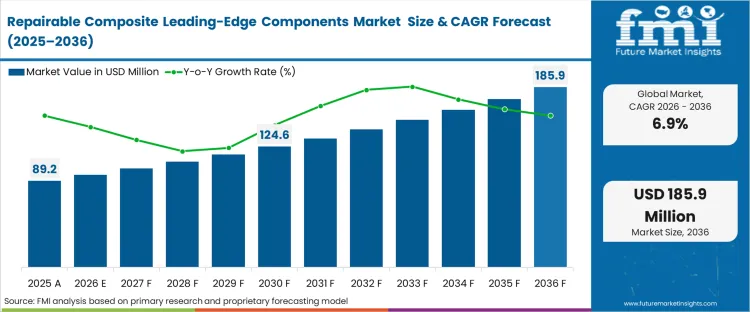
The primary inflection point for accelerated adoption rests on the performance parity of out-of-autoclave (OOA) resins. Once field-applied bonding systems reliably match the fatigue life of factory-cured laminates, the market will cross the structural gate from depot-level maintenance to line-level interventions. This transition is triggered by the maturation of portable heating blankets and vacuum-bagging systems that allow for high-integrity repairs without stripping the component from the airframe.
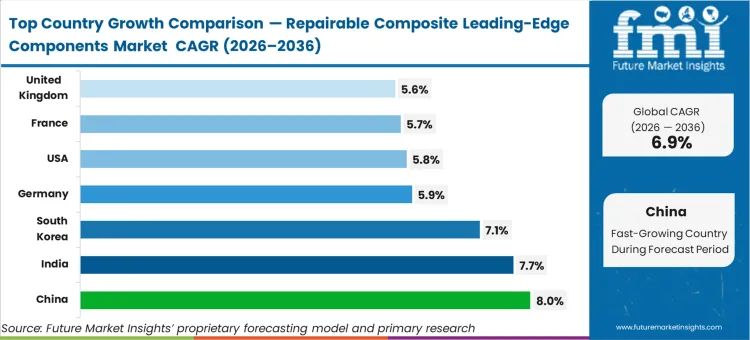
Demand for repairable leading edges in China is set to grow at 8.0%, while India tracks closely at 7.7% as domestic MRO hubs expand their composite capabilities. The South Korean sector is poised to expand at 7.1%, followed by Germany at 5.9%. United States sales are projected to rise at 5.8%, with France and the United Kingdom registering CAGRs of 5.7% and 5.6% respectively. This structural divergence reflects the concentration of next-generation commercial fleets in Asian hubs versus the established, legacy-heavy maintenance cycles prevalent in Western markets.
Repairable Composite Leading-Edge Components Market Key Takeaways
| Metric | Details |
|---|---|
| Industry Size (2026) | USD 101.6 million |
| Industry Value (2036) | USD 198.0 million |
| CAGR (2026-2036) | 6.90% |
Source: Future Market Insights (FMI) analysis, based on proprietary forecasting model and primary research
Repairable Composite Leading-Edge Components Market Definition
The repairable composite leading-edge components market comprises the design, manufacturing, and restoration services for aerodynamic surfaces situated at the foremost part of wings, nacelles, and stabilizers. These components are specifically engineered to permit localized structural repair, such as scarf bonding or resin injection, rather than requiring full component replacement following impact or environmental degradation. The market is defined by the intersection of high-performance materials and the certification-heavy maintenance frameworks that govern their airworthiness.
Repairable Composite Leading-Edge Components Market Inclusions
This market includes the supply of primary structural laminates, specialized pre-impregnated fabrics, and the associated aerospace maintenance chemical systems used in restorative procedures. It covers both factory-integrated repairable features and the aftermarket services provided by specialized MRO facilities. Scope extends to fixed-wing slat panels, rotorcraft blade skins, and engine inlet cowlings that utilize carbon or glass fiber reinforcements designed for fatigue-resistant bonding.
Repairable Composite Leading-Edge Components Market Exclusions
Explicitly excluded from this market are non-structural aerodynamic fairings that are typically discarded upon damage rather than repaired. Leading-edge de-icing systems, such as pneumatic boots or thermal mats, are excluded unless they are co-cured as an integral part of the repairable composite airframes laminate. Metallic leading edges, such as those made from aluminum or titanium alloys, are outside the scope, as are structural repairs for internal wing spars or ribs that do not form the aerodynamic leading surface.
Repairable Composite Leading-Edge Components Market Research Methodology
- Primary Research: FMI conducted interviews with MRO Facility Managers, Aerostructure Design Engineers, and Fleet Technical Directors at major commercial airlines to validate repair frequency and material preference.
- Desk Research: Analysis involved the aggregation of FAA/EASA airworthiness directives, aerospace standards registries, and procurement specification archives from tier-1 aerostructure manufacturers.
- Market-Sizing and Forecasting: The baseline is anchored to the active global fleet of composite-intensive aircraft (A350, B787, C919), using documented mean-time-between-repairs (MTBR) as the primary data foundation.
- Data Validation and Update Cycle: Forecasts were cross-validated against independent data streams from global composite material shipments and regional aerospace manufacturing output indices.
Segmental Analysis
Repairable Composite Leading-Edge Components Market Analysis by Material System
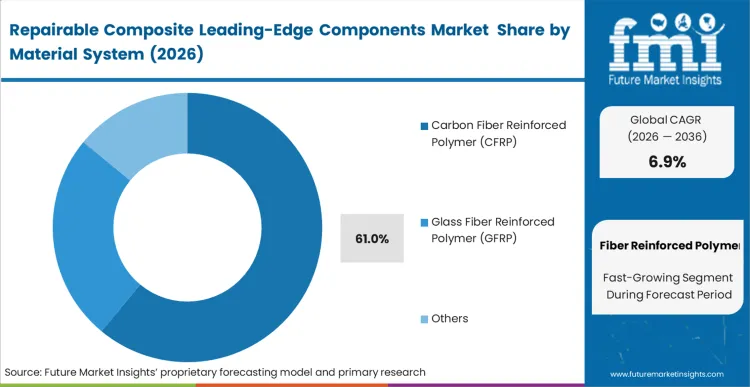
Incumbent metallic systems are increasingly failing to deliver the aerodynamic precision and weight savings required by next-generation fuel-efficiency mandates. The reason carbon fiber reinforced polymer (CFRP) holds 61.0% of this market comes down to a single structural reality: these advanced composites offer the only commercially scalable material parity to the complex curvature of high-lift leading-edge devices. This material is not chosen merely for its strength, but because it allows for high-precision scarf repairs that maintain the laminar flow characteristics essential for long-haul performance. According to FMI's estimates, the operational advantage of localized CFRP restoration allows operators to bypass the six-figure cost of whole-unit replacement during mid-life maintenance. Designers who delay the transition to repairable CFRP systems face a widening gap in their total-cost-of-ownership (TCO) models as carbon-intensive fleets become the global standard.
- Embedded Lifecycle: Initial resin selection determines the viability of future thermal bonding cycles, requiring procurement teams to validate the compatibility of secondary repair resins during the initial design phase.
- Hidden Qualification: While unit weight remains the primary procurement metric, the hidden cost of specialized ultrasonic inspection tools for CFRP structures emerges as a critical operational hurdle for regional MROs.
- Bonding Parity: Total lifecycle cost comparisons reveal that repairable CFRP systems outperform GFRP variants in high-impact zones because they resist micro-cracking during repeated thermal cycling on trans-continental routes.
Repairable Composite Leading-Edge Components Market Analysis by Component Type
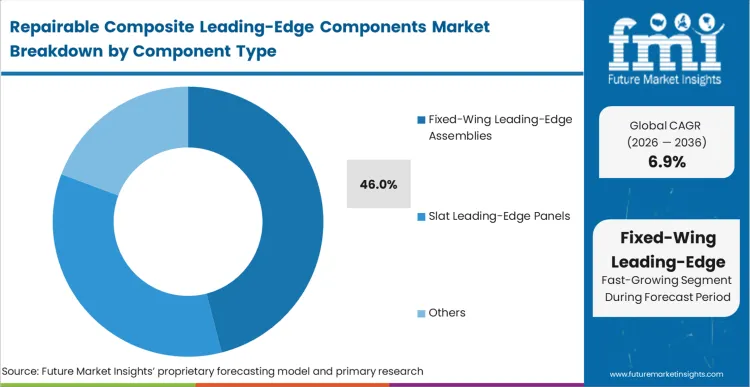
The reason fixed-wing leading-edge assemblies hold 46.0% of the market is rooted in the sheer surface area and vulnerability of slat and flap structures on commercial jets. This aerostructure dominance is not just a function of volume, but of the high-impact environment these components inhabit during takeoff and landing cycles. Buyer behavior in this segment is triggered by the need for rapid turnaround on erosion damage, which is more frequent than the deep structural failure of internal wing components. In FMI's view, the decision to invest in repairable leading edges is validated during heavy maintenance checks when localized bonded repairs allow the component to remain on the airframe. Operators that do not prioritize repairable slat panels find themselves dependent on expensive, long-lead-time spare part pools that can grounded an aircraft during peak travel seasons.
- Primary Acquisition: Procurement directors initiate the purchase of repairable leading-edge assemblies based on documented bird-strike incident data for specific regional hubs and flight paths.
- Validation Threshold: Technical teams validate the choice of repairable components during phase-in inspections, where the ease of localized resin injection determines the future maintenance workload.
- Fleet Renewal: Expansion of repairable component use is driven by the successful integration of these structures into narrow-body fleet refresh programs, where high cycle frequency mandates rapid line-repair capabilities.
Repairable Composite Leading-Edge Components Market Analysis by Repair Method
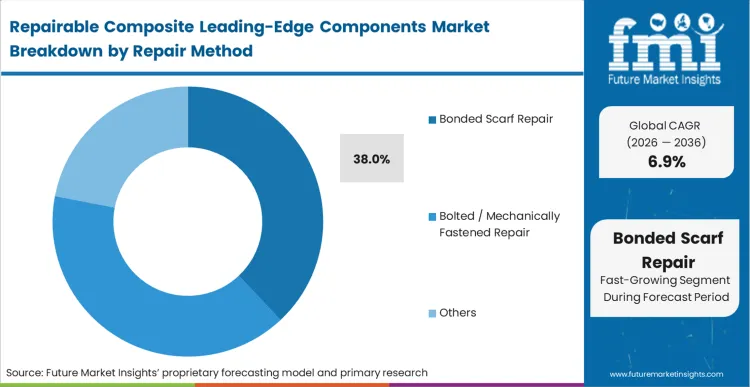
The structural tension in this segment arises from the contradiction between the speed of mechanically fastened repairs and the aerodynamic perfection of bonded scarfing. Bonded scarf repair holds 38.0% share because it is the only method that restores the aerodynamic profile of the leading edge without the drag penalties of external doublers. Based on FMI's assessment, aerospace adhesives and sealants have matured to the point where they can deliver primary-structure strength in field conditions. This method prevents the functional failure of the leading edge by ensuring smooth airflow, though it requires a technician to operate under strict climate-controlled conditions to capture the full structural benefit. A buyer who chooses the wrong repair method, such as applying a bolted patch to a laminar flow surface, faces immediate fuel-burn penalties that can offset the repair savings within a single month of operation.
- Delamination Prevention: Scarfing prevents the edge-peeling failures common in patch repairs by creating a gradual load transition between the original laminate and the new composite material.
- Residual Moisture: Even with high-quality scarfing, the residual risk of moisture trapped in honeycomb cores remains, requiring technicians to perform extensive bake-out cycles before bonding.
- Operational Precision: Capturing the full benefit of resin injection requires operators to implement real-time flow monitoring to ensure complete saturation of the damaged fiber matrix.
Repairable Composite Leading-Edge Components Market Analysis by End User
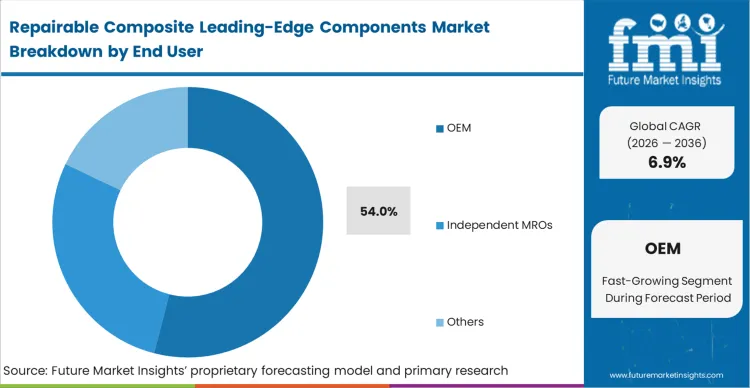
The decision to concentrate 54.0% of the market within OEM and Tier-1 networks is forced by the intellectual property (IP) and specialized tooling requirements of modern composite structures. OEM dominance is maintained because they control the specific aerospace radome and leading-edge repair manuals that dictate the legal limits of a restoration. According to FMI's projection, this supply landscape will remain concentrated toward 2036 as the cost of qualifying independent MROs for high-end thermoplastic repairs remains prohibitive. Large buyers are being asked to decide whether they will remain tethered to manufacturer-authorized service centers or invest in the massive capital expenditure required to bring composite repair in-house. A failure to secure long-term service agreements with Tier-1 suppliers can leave an airline with unserviceable composite components that no independent shop has the data or tools to legally repair.
- Sustained Production: Tier-1 suppliers sustain their lead by co-developing repair protocols alongside the initial component design, ensuring they remain the only qualified source for complex restorations.
- Planning Constraints: Buyers must plan around the limited geographic availability of OEM-certified composite repair centers, which can increase the logistics cost of shipping oversized leading-edge panels.
- Future Landscape: Toward 2036, the supply landscape will shift toward decentralized "smart" repair centers as OEMs begin to license their digital repair twins to independent MRO partners.
Repairable Composite Leading-Edge Components Market Drivers, Restraints, and Opportunities
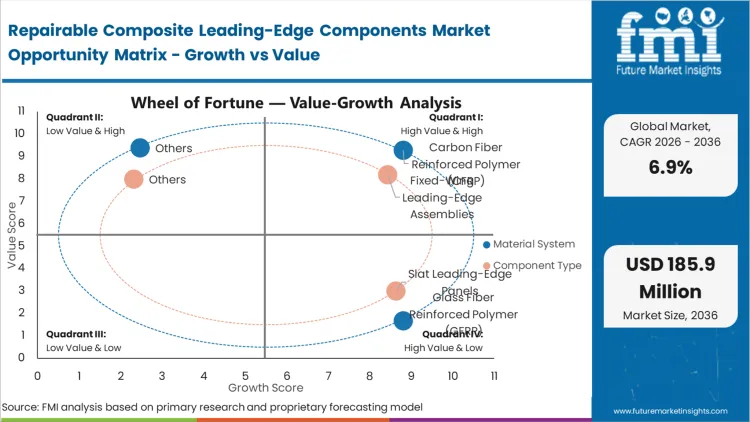
The structural forcing condition driving this market is the transition of global aviation toward high-utilization narrow-body fleets that cannot tolerate the long lead times of legacy aerostructure replacement. Airline maintenance directors face a decision: maintain massive inventories of spare leading edges or invest in the technician training and hardware required for localized restoration. The commercial stakes of delay are high, as the lack of a certified composite repair capability can ground a USD 100 million asset over a minor surface puncture. This pressure is compounded by the aircraft refurbishing cycle, where the ability to restore rather than replace components is becoming a primary driver of residual asset value.
The primary structural restraint is the qualification bottleneck associated with composite-certified technicians and facilities. This friction is not a temporary labor shortage, but an organizational obstacle rooted in the multi-year timeline required to achieve FAA or EASA Part-145 certification for complex composite primary structures. Unlike metallic repairs, which are widely understood, composite restoration requires specialized climate control and ultrasonic testing equipment that represents a significant capital barrier. A partial solution is emerging through the use of "standardized repair kits," but these are currently limited by the lack of cross-platform IP sharing between competing aircraft manufacturers.
Opportunities in the Repairable Composite Leading-Edge Components Market
- Thermoplastic Restoration: The emergence of weldable thermoplastic resins allows for rapid, induction-heated repairs that bypass the long cure times of thermoset materials. Regional MROs can capture this by investing in localized heating tools to serve the growing fleet of thermoplastic-intensive aircraft.
- Field-Ready Scarfing: Development of automated, handheld scarfing machines enables consistent repair geometry outside of a factory environment. Field-service teams can capture this opportunity by reducing the human-error risk that currently slows down line-level composite restoration.
- Structural Health Monitoring: Integration of fiber-optic sensors into leading edges provides real-time damage data, allowing for predictive maintenance. OEM suppliers can capture this by offering "repair-by-hour" service contracts that use this data to preemptively schedule restorations before failures occur.
Regional Analysis
Based on the regional analysis, the Repairable Composite Leading-Edge Components market is segmented into North America, Europe, Asia Pacific, and Rest of the World across 40 plus countries.
.webp "Top Country Growth Comparison Repairable Composite Leading Edge Components Market Cagr (2026 2036)")
| Country | CAGR (2026 to 2036) |
|---|---|
| China | 8.0% |
| India | 7.7% |
| South Korea | 7.1% |
| United States | 5.8% |
| Germany | 5.9% |
| France | 5.7% |
| United Kingdom | 5.6% |
Source: Future Market Insights (FMI) analysis, based on proprietary forecasting model and primary research
Asia Pacific Repairable Composite Leading-Edge Components Market Analysis
Asia Pacific's adoption pattern is policy-led, driven by national mandates in China and India to build domestic "aerospace clusters" that localize the entire lifecycle of commercial aircraft. Unlike the established MRO networks in the West, this region is building from the ground up, integrating next-generation aircraft seals and composite repair infrastructure directly into new airport hubs. FMI analysts opine that this regional dynamic is shaped by the rapid phase-in of the COMAC C919 and large fleets of A320neo and B737 MAX, which require modern composite maintenance centers from day one. This proactive infrastructure investment allows Asia Pacific to bypass the legacy "replacement" culture that still persists in older maintenance depots.
- China: China's investment in centralized aerostructure manufacturing hubs forces a structural trajectory toward a fully autonomous composite maintenance ecosystem. This country signals that the future of the market lies in the vertical integration of production and repair data within state-backed aerospace centers.
- India: India's rapid expansion of private-sector MRO licenses creates a commercial opportunity for international MROs to partner with local firms to serve the world's fastest-growing narrow-body fleet. Indian operators are using this transition to negotiate lower lifecycle costs through localized service agreements.
- South Korea: South Korea's concentration of advanced aerospace manufacturing creates a competitive positioning where its domestic facilities are becoming the preferred repair hub for regional military and commercial fleets. This trajectory is sustained by the country's early adoption of automated composite inspection technologies.
North America Repairable Composite Leading-Edge Components Market Analysis
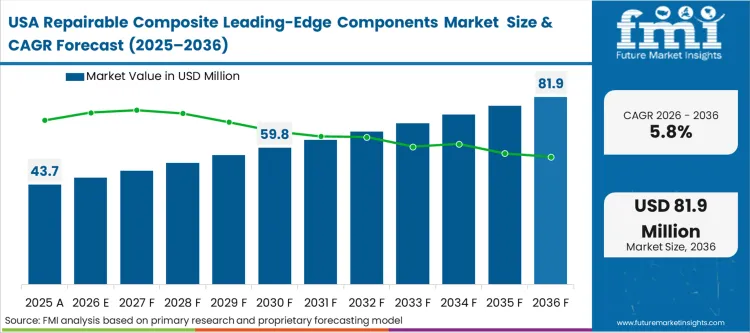
The North American market is economics-led, where the decision to repair is strictly measured against the secondary market value of aging airframes and the high cost of skilled technician labor. Procurement practices here are defined by a high concentration of large-scale, independent MRO providers who compete on turnaround time and insurance-approved repair standards. Based on FMI's assessment, the structural condition here is the maturity of the "power-by-the-hour" model, where the risk of component failure is transferred to the vendor, incentivizing the development of the most efficient possible repair techniques.
- United States: The high cost of domestic labor in the United States requires an operational outcome where automated composite repair tools are used to offset the man-hours required for traditional hand-scarfing. American MROs are increasingly prioritizing "smart" repair benches that guide technicians through complex bonding sequences to ensure first-time airworthiness.
Europe Repairable Composite Leading-Edge Components Market Analysis
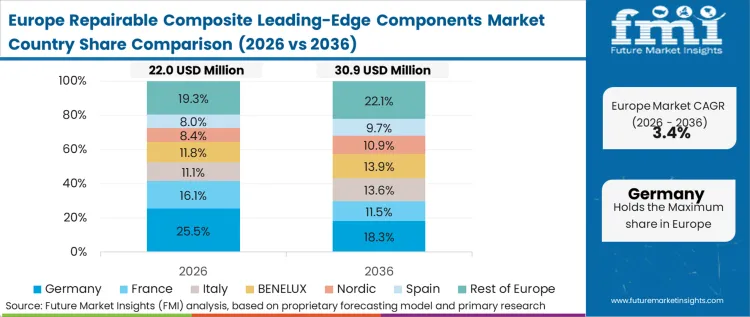
Europe's market dynamic is infrastructure-led, governed by the long-standing collaboration between Airbus and its pan-European supply chain. The structural lens here is the integration of repair standards directly into the EASA regulatory framework, which mandates a high level of transparency and data sharing between the OEM and the operator. FMI analysts note that the presence of high-density aerospace corridors in France and Germany ensures that a repair facility is never more than a few hours away, reducing the need for airlines to maintain their own internal composite shops.
- Germany: Germany's updated aerospace standards create a structural trajectory where the use of recyclable composite materials is beginning to influence the design of repairable leading edges. German engineers are pioneering the use of reversible bonding agents that allow for cleaner restorations and better end-of-life material recovery.
- France: The deep integration of French Tier-1 suppliers into the global aerostructures market creates an operational outcome where French repair standards are often adopted as the de facto global baseline for narrow-body maintenance. French facilities lead the region in the deployment of portable autoclaves for high-pressure field repairs.
- United Kingdom: UK facilities are absorbing a practitioner reality where the focus has shifted from high-volume commercial work to high-complexity military and business jet restorations. The UK's specialized composite clusters are focusing on the niche demand for hybrid laminate repairs that require multi-material bonding expertise.
FMI's report includes a comprehensive assessment of Rest of the World markets including the Middle East, Latin America, and Africa. One sentence identifies a structural pattern where the expansion of long-haul transit hubs in the Middle East is driving a specialized demand for leading-edge erosion repairs caused by high-altitude sand and dust ingestion.
Competitive Aligners for Market Players
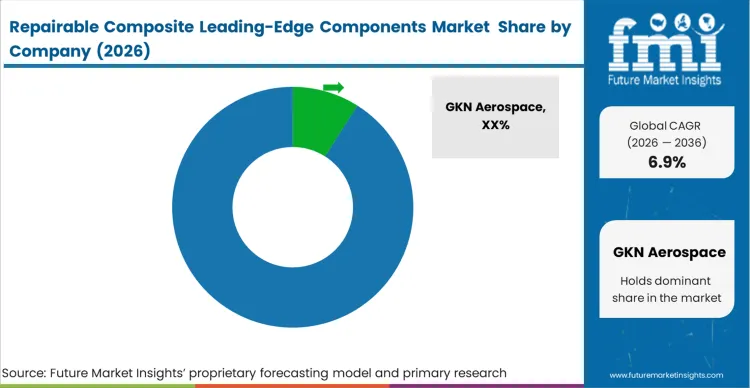
Market concentration is driven by the structural requirement for OEM data and specialized autoclave tooling, which creates a significant barrier for independent challengers. The primary variable buyers use to distinguish qualified vendors is not the cost of the repair, but the length of the "return-to-service" guarantee and the vendor's ability to provide a legally defensible airworthiness certificate for primary composite structures. Leading companies like GKN Aerospace and Spirit AeroSystems maintain their dominance because they hold the original design data required to qualify a repair under Part-25 certification standards.
Incumbents possess a structural advantage in their established "repair-by-the-hour" service networks, which tie airlines into long-term contracts that are difficult for new entrants to penetrate. To replicate this, a challenger must build a category of capability focused on digital twin integration, allowing them to simulate the structural impact of a repair before it is physically applied. This composite airframe expertise is becoming the new baseline for qualification, as buyers shift toward vendors who can prove the fatigue life of a restored component through non-destructive digital analysis.
Large airline buyers resist vendor lock-in by diversifying their approved vendor lists (AVL) to include both OEM-authorized and high-end independent MROs. However, the structural tension remains between the buyer's need for lower costs and the dominant vendor's incentive to control the IP that makes those repairs possible. Through 2036, the market is expected to remain moderately concentrated as the complexity of thermoplastic and hybrid material systems increases the specialization required to perform a certified leading-edge restoration.
Key Players in Repairable Composite Leading-Edge Components Market
- GKN Aerospace
- Spirit AeroSystems
- FACC AG
- Aernnova Aerospace
- TRIUMPH Group
- Safran Nacelles
- Lufthansa Technik
- Collins Aerospace
- Hexcel Corporation
- Toray Industries
- Solvay
- Boeing Aerostructures
- Airbus Atlantic
- Premium AEROTEC
- Leonardo S.p.A.
Scope of the Report
| Metric | Value |
|---|---|
| Quantitative Units | 2026 to 2036, at a CAGR of 6.90% |
| Market Definition | The ecosystem of structural components and MRO services designed to enable localized restoration of aircraft leading edges through certified composite bonding and injection techniques. |
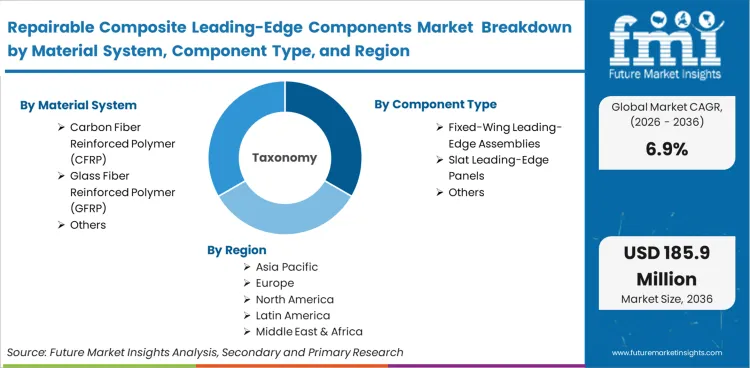
| Material System Segmentation | Carbon Fiber Reinforced Polymer (CFRP), Glass Fiber Reinforced Polymer (GFRP), Hybrid Composite Laminates, Thermoplastic Composites |
| Component Type Segmentation | Fixed-Wing Leading-Edge Assemblies, Slat Leading-Edge Panels, Nacelle / Inlet Leading-Edge Structures, Rotorcraft Leading-Edge Skins |
| Aircraft Platform Segmentation | Commercial Aircraft, Business Jets, Military Aircraft, Rotorcraft |
| Repair Method Segmentation | Bonded Scarf Repair, Bolted / Mechanically Fastened Repair, Resin Injection / Fill Repair, Patch / Doubler Repair |
| Regions Covered | North America, Europe, Asia Pacific, Rest of the World |
| Countries Covered | China, India, South Korea, United States, United Kingdom, Germany, France, and 40 plus countries |
| Key Companies Profiled | GKN Aerospace, Spirit AeroSystems, FACC AG, Aernnova Aerospace, TRIUMPH Group, Safran Nacelles, Lufthansa Technik |
| Forecast Period | 2026 to 2036 |
| Approach | FMI engaged with aerostructure engineers and MRO facility directors to map the transition from component replacement to structural repair. The baseline is anchored to the flight hours of composite-intensive aircraft, with forecasts validated against composite material shipments and regional MRO certification growth. |
Source: Future Market Insights (FMI) analysis, based on proprietary forecasting model and primary research
Repairable Composite Leading-Edge Components Market Analysis by Segments
Material System:
- Carbon Fiber Reinforced Polymer (CFRP)
- Glass Fiber Reinforced Polymer (GFRP)
- Hybrid Composite Laminates
- Thermoplastic Composites
Component Type:
- Fixed-Wing Leading-Edge Assemblies
- Slat Leading-Edge Panels
- Nacelle / Inlet Leading-Edge Structures
- Rotorcraft Leading-Edge Skins
Aircraft Platform:
- Commercial Aircraft
- Business Jets
- Military Aircraft
- Rotorcraft
Repair Method:
- Bonded Scarf Repair
- Bolted / Mechanically Fastened Repair
- Resin Injection / Fill Repair
- Patch / Doubler Repair
End User:
- OEM / Tier-1 Aerostructure Suppliers
- Independent MROs
- Airline / Operator In-House Maintenance
- Defense Depot Maintenance
Region:
- Asia Pacific
- China
- India
- South Korea
- Japan
- ASEAN
- Australia
- North America
- United States
- Canada
- Europe
- Germany
- France
- United Kingdom
- Italy
- Spain
- Rest of the World
- Middle East
- Brazil
- Africa
Bibliography
- European Union Aviation Safety Agency. (2024, July). EASA publishes Easy Access Rules for Continuing Airworthiness, Revision from July 2024. EASA Technical Publications.
- SAE International. (2024, December). A Year in Review: SAE International Aerospace Standards. SAE Standards News.
- Zhang, C., et al. (2025, March). Technology roadmap for composite joining and repair. Composites Part B: Engineering. Journal of Composite Materials.
- Ghafafian, C., et al. (2025). A Multi-Industry Perspective to Composite Repairs. Applied Composite Materials. Springer Publications.
- National Aeronautics and Space Administration. (2024, May). Advances in Thermoplastic Composites Over Three Decades. NASA Technical Reports Server.
- Airbus. (2024, June). A320 AIRCRAFT CHARACTERISTICS AIRPORT AND MAINTENANCE PLANNING AC. Airbus Technical Documentation.
This bibliography is provided for reader reference. The full FMI report contains the complete reference list with primary source documentation.
This Report Addresses
- Market intelligence to support strategic decision making across fixed-wing slat panels, rotorcraft skins, and nacelle inlet structures
- Market size estimation and 10-year revenue forecasts from 2026 to 2036, supported by mean-time-between-repairs (MTBR) benchmarking for composite-intensive aircraft
- Growth opportunity mapping across localized resin injection and bonded scarfing with emphasis on the maturation of out-of-autoclave (OOA) bonding systems
- Segment and regional revenue forecasts covering CFRP and thermoplastic material systems across the rapid MRO infrastructure expansion in China and India
- Competition strategy assessment including digital twin integration, return-to-service guarantees, and OEM intellectual property (IP) lock-in dynamics
- Capability development tracking including induction-heated thermoplastic welding, automated scarfing machines, and ultrasonic moisture mapping standards
- Market access analysis covering FAA/EASA Part-145 certifications, airworthiness directive compliance, and regional aerostructure cluster development
- Market report delivery in PDF, Excel, PPT, and interactive dashboard formats for executive strategy, fleet maintenance planning, and operational benchmarking use
Frequently Asked Questions
How large is the Repairable Composite Leading-Edge Components Market in 2026?
The market is projected to reach USD 101.6 million in 2026. This value signals a market that is transitioning from a niche R&D focus toward a mainstream maintenance reality as the global fleet of carbon-intensive aircraft matures.
What will it be valued at by 2036?
By 2036, the market is forecast to reach USD 198.0 million. This valuation reflects the cumulative buildup of composite-intensive airframes hitting their second and third heavy maintenance cycles, where localized repair becomes a mandatory economic strategy.
What CAGR is projected for the Repairable Composite Leading-Edge Components Market?
A CAGR of 6.90% is expected during the forecast period. This rate is constrained by the multi-year cycle of maintenance facility certification, which prevents a more rapid spike in line-level adoption.
Which Material System segment leads the market?
Carbon Fiber Reinforced Polymer (CFRP) leads with a 61.0% share because it is the only material that delivers the necessary fatigue resistance and strength for high-precision leading-edge restorations. GFRP is relegated to lower-stress zones due to its susceptibility to micro-cracking during thermal cycling.
Which Component Type leads the market?
Fixed-Wing Leading-Edge Assemblies hold 46.0% of the market because the sheer surface area of slat and flap devices makes them the most frequent site of erosion and impact damage on commercial jets.
Which End User segment leads the market?
OEM and Tier-1 Aerostructure Suppliers lead with a 54.0% share because they control the proprietary repair manuals and specialized tooling required to legally certify a restoration on a primary flight surface.
What drives rapid growth in this market?
Growth is driven by the urgent need for airlines to lower total-cost-of-ownership (TCO) by restoring expensive composite structures rather than purchasing whole-unit replacements. This is a structural insight: the market is not growing because composites are failing, but because operators are finally finding certified ways to fix them.
What is the primary restraint on market expansion?
The primary restraint is the qualification bottleneck for composite-certified technicians and the capital cost of specialized clean-room environments. This structural friction means that even when a repair is technically possible, the facility to perform it may not be available within the operator's regional hub.
Which country grows the fastest in the Repairable Composite Leading-Edge Components Market?
China grows the fastest at 8.0%, compared to 5.8% in the United States. This structural difference is explained by China's "greenfield" MRO expansion, which allows for the immediate integration of composite-specific workshops into new airport hubs, whereas USA facilities must often retrofit legacy metallic maintenance depots.
How does the maturation of thermoplastic resins affect the repair landscape?
Thermoplastics allow for rapid, induction-heated fusion welding which can reduce repair times from 24 hours to less than 2 hours. This mechanism will shift the market toward line-level repairs, allowing for restorations that can be performed during an overnight layover.
What is the significance of "digital twins" in composite leading-edge repair?
A digital twin allows a technician to simulate the structural impact of a scarf repair on a specific component's flight envelope before the first layer of fiber is laid down. This reduces the risk of expensive repair disqualification and speeds up the EASA/FAA certification process for non-standard damage.
Why is moisture ingress testing so critical for leading-edge restoration?
Composite leading edges often feature honeycomb cores that can trap water during high-altitude flight cycles. If moisture is not detected and "baked out" before a repair is bonded, the water will expand into steam during the cure cycle, causing catastrophic internal delamination that destroys the component.
Are independent MROs gaining share from OEMs in this market?
Independent MROs are slowly gaining share by investing in specialized composite certifications, but they remain limited by the OEMs' control of structural data. The market is trending toward a hybrid model where OEMs license their digital repair data to third-party shops to serve a wider geographic area.
How does the COMAC C919 influence the Asian market for repairable leading edges?
The C919 uses a high volume of domestically produced composite components, forcing the creation of a massive, local maintenance ecosystem in China. This is a structural trajectory that ensures Asia Pacific will remain the epicenter of new composite MRO investment through 2036.
What is the impact of bird-strike frequency on the repair method segment?
High bird-strike frequency in emerging markets drives a structural requirement for bonded scarf repairs that can restore the impact-resistance of the leading edge without adding the stress concentrations of a bolted patch.
What role does "out-of-autoclave" (OOA) curing play in field repairs?
OOA curing allows for high-integrity bonds using portable heat blankets rather than requiring the entire component to be placed in a factory pressure vessel. This is the structural gate that allows repairs to move from the manufacturer's facility to the airline's own hangar.
Are there exclusions for military leading-edge structures in this report?
No, military aircraft are included, but they often utilize classified "stealth" coatings that require specialized repair protocols not used in commercial aviation, which keeps military depot maintenance as a distinct end-user segment.
How does the A320neo fleet cycle affect the market for slat panels?
As the A320neo fleet reaches its first decade of service, the volume of slat leading-edge erosion repairs is spiking. This cycle tracks the brand sourcing review calendar, where airlines are now selecting MRO partners based on their specific A320 composite credentials.
What is the practitioners' reality regarding "repairable" design?
Practitioners know that while a component is labeled "repairable," the number of allowable scarf repairs is often limited to three or four per surface. This structural limit means that even "repairable" components have a finite terminal life, driving the demand for precise, high-first-pass-yield restoration.
How does India's MRO policy influence local market growth?
India's reduction of tax burdens on MRO services is attracting international composite experts to establish local ventures. This commercial opportunity is pulling regional maintenance work away from established hubs like Singapore and into the Indian domestic market.
What is the difference between resin injection and bonded scarf repair?
Resin injection is used for minor internal delamination where the fiber matrix is intact, whereas bonded scarfing is a structural reconstruction used when fibers have been severed by an impact. Scarfing is more complex but accounts for the majority of high-value restorations.
Will AI-driven structural health monitoring (SHM) be standard by 2036?
By 2036, FMI expects SHM to be the structural baseline for leading-edge devices. This will allow for "predictive repairs," where sensors detect micro-cracks before they become visible, allowing for simpler, cheaper resin injection before the structure requires a full scarf reconstruction.
Preview the report firsthand - request a free sample
Get SampleGet the brochure for pricing and purchase details.
Get PDFTable of Content
- Executive Summary
- Global Market Outlook
- Demand-side Trends
- Supply-side Trends
- Technology Roadmap Analysis
- Analysis and Recommendations
- Market Overview
- Market Coverage / Taxonomy
- Market Definition / Scope / Limitations
- Research Methodology
- Chapter Orientation
- Analytical Lens and Working Hypotheses
- Market Structure, Signals, and Trend Drivers
- Benchmarking and Cross-market Comparability
- Market Sizing, Forecasting, and Opportunity Mapping
- Research Design and Evidence Framework
- Desk Research Programme (Secondary Evidence)
- Company Annual and Sustainability Reports
- Peer-reviewed Journals and Academic Literature
- Corporate Websites, Product Literature, and Technical Notes
- Earnings Decks and Investor Briefings
- Statutory Filings and Regulatory Disclosures
- Technical White Papers and Standards Notes
- Trade Journals, Industry Magazines, and Analyst Briefs
- Conference Proceedings, Webinars, and Seminar Materials
- Government Statistics Portals and Public Data Releases
- Press Releases and Reputable Media Coverage
- Specialist Newsletters and Curated Briefings
- Sector Databases and Reference Repositories
- FMI Internal Proprietary Databases and Historical Market Datasets
- Subscription Datasets and Paid Sources
- Social Channels, Communities, and Digital Listening Inputs
- Additional Desk Sources
- Expert Input and Fieldwork (Primary Evidence)
- Primary Modes
- Qualitative Interviews and Expert Elicitation
- Quantitative Surveys and Structured Data Capture
- Blended Approach
- Why Primary Evidence is Used
- Field Techniques
- Interviews
- Surveys
- Focus Groups
- Observational and In-context Research
- Social and Community Interactions
- Stakeholder Universe Engaged
- C-suite Leaders
- Board Members
- Presidents and Vice Presidents
- R&D and Innovation Heads
- Technical Specialists
- Domain Subject-matter Experts
- Scientists
- Physicians and Other Healthcare Professionals
- Governance, Ethics, and Data Stewardship
- Research Ethics
- Data Integrity and Handling
- Primary Modes
- Tooling, Models, and Reference Databases
- Desk Research Programme (Secondary Evidence)
- Data Engineering and Model Build
- Data Acquisition and Ingestion
- Cleaning, Normalisation, and Verification
- Synthesis, Triangulation, and Analysis
- Quality Assurance and Audit Trail
- Market Background
- Market Dynamics
- Drivers
- Restraints
- Opportunity
- Trends
- Scenario Forecast
- Demand in Optimistic Scenario
- Demand in Likely Scenario
- Demand in Conservative Scenario
- Opportunity Map Analysis
- Product Life Cycle Analysis
- Supply Chain Analysis
- Investment Feasibility Matrix
- Value Chain Analysis
- PESTLE and Porter’s Analysis
- Regulatory Landscape
- Regional Parent Market Outlook
- Production and Consumption Statistics
- Import and Export Statistics
- Market Dynamics
- Global Market Analysis 2021 to 2025 and Forecast, 2026 to 2036
- Historical Market Size Value (USD Million) Analysis, 2021 to 2025
- Current and Future Market Size Value (USD Million) Projections, 2026 to 2036
- Y-o-Y Growth Trend Analysis
- Absolute $ Opportunity Analysis
- Global Market Pricing Analysis 2021 to 2025 and Forecast 2026 to 2036
- Global Market Analysis 2021 to 2025 and Forecast 2026 to 2036, By Material System
- Introduction / Key Findings
- Historical Market Size Value (USD Million) Analysis By Material System , 2021 to 2025
- Current and Future Market Size Value (USD Million) Analysis and Forecast By Material System , 2026 to 2036
- Carbon Fiber Reinforced Polymer (CFRP)
- Glass Fiber Reinforced Polymer (GFRP)
- Others
- Carbon Fiber Reinforced Polymer (CFRP)
- Y-o-Y Growth Trend Analysis By Material System , 2021 to 2025
- Absolute $ Opportunity Analysis By Material System , 2026 to 2036
- Global Market Analysis 2021 to 2025 and Forecast 2026 to 2036, By Component Type
- Introduction / Key Findings
- Historical Market Size Value (USD Million) Analysis By Component Type, 2021 to 2025
- Current and Future Market Size Value (USD Million) Analysis and Forecast By Component Type, 2026 to 2036
- Fixed-Wing Leading-Edge Assemblies
- Slat Leading-Edge Panels
- Others
- Fixed-Wing Leading-Edge Assemblies
- Y-o-Y Growth Trend Analysis By Component Type, 2021 to 2025
- Absolute $ Opportunity Analysis By Component Type, 2026 to 2036
- Global Market Analysis 2021 to 2025 and Forecast 2026 to 2036, By Repair Method
- Introduction / Key Findings
- Historical Market Size Value (USD Million) Analysis By Repair Method, 2021 to 2025
- Current and Future Market Size Value (USD Million) Analysis and Forecast By Repair Method, 2026 to 2036
- Bonded Scarf Repair
- Bolted / Mechanically Fastened Repair
- Others
- Bonded Scarf Repair
- Y-o-Y Growth Trend Analysis By Repair Method, 2021 to 2025
- Absolute $ Opportunity Analysis By Repair Method, 2026 to 2036
- Global Market Analysis 2021 to 2025 and Forecast 2026 to 2036, By End User
- Introduction / Key Findings
- Historical Market Size Value (USD Million) Analysis By End User, 2021 to 2025
- Current and Future Market Size Value (USD Million) Analysis and Forecast By End User, 2026 to 2036
- OEM
- Independent MROs
- Others
- OEM
- Y-o-Y Growth Trend Analysis By End User, 2021 to 2025
- Absolute $ Opportunity Analysis By End User, 2026 to 2036
- Global Market Analysis 2021 to 2025 and Forecast 2026 to 2036, By Region
- Introduction
- Historical Market Size Value (USD Million) Analysis By Region, 2021 to 2025
- Current Market Size Value (USD Million) Analysis and Forecast By Region, 2026 to 2036
- North America
- Latin America
- Western Europe
- Eastern Europe
- East Asia
- South Asia and Pacific
- Middle East & Africa
- Market Attractiveness Analysis By Region
- North America Market Analysis 2021 to 2025 and Forecast 2026 to 2036, By Country
- Historical Market Size Value (USD Million) Trend Analysis By Market Taxonomy, 2021 to 2025
- Market Size Value (USD Million) Forecast By Market Taxonomy, 2026 to 2036
- By Country
- USA
- Canada
- Mexico
- By Material System
- By Component Type
- By Repair Method
- By End User
- By Country
- Market Attractiveness Analysis
- By Country
- By Material System
- By Component Type
- By Repair Method
- By End User
- Key Takeaways
- Latin America Market Analysis 2021 to 2025 and Forecast 2026 to 2036, By Country
- Historical Market Size Value (USD Million) Trend Analysis By Market Taxonomy, 2021 to 2025
- Market Size Value (USD Million) Forecast By Market Taxonomy, 2026 to 2036
- By Country
- Brazil
- Chile
- Rest of Latin America
- By Material System
- By Component Type
- By Repair Method
- By End User
- By Country
- Market Attractiveness Analysis
- By Country
- By Material System
- By Component Type
- By Repair Method
- By End User
- Key Takeaways
- Western Europe Market Analysis 2021 to 2025 and Forecast 2026 to 2036, By Country
- Historical Market Size Value (USD Million) Trend Analysis By Market Taxonomy, 2021 to 2025
- Market Size Value (USD Million) Forecast By Market Taxonomy, 2026 to 2036
- By Country
- Germany
- UK
- Italy
- Spain
- France
- Nordic
- BENELUX
- Rest of Western Europe
- By Material System
- By Component Type
- By Repair Method
- By End User
- By Country
- Market Attractiveness Analysis
- By Country
- By Material System
- By Component Type
- By Repair Method
- By End User
- Key Takeaways
- Eastern Europe Market Analysis 2021 to 2025 and Forecast 2026 to 2036, By Country
- Historical Market Size Value (USD Million) Trend Analysis By Market Taxonomy, 2021 to 2025
- Market Size Value (USD Million) Forecast By Market Taxonomy, 2026 to 2036
- By Country
- Russia
- Poland
- Hungary
- Balkan & Baltic
- Rest of Eastern Europe
- By Material System
- By Component Type
- By Repair Method
- By End User
- By Country
- Market Attractiveness Analysis
- By Country
- By Material System
- By Component Type
- By Repair Method
- By End User
- Key Takeaways
- East Asia Market Analysis 2021 to 2025 and Forecast 2026 to 2036, By Country
- Historical Market Size Value (USD Million) Trend Analysis By Market Taxonomy, 2021 to 2025
- Market Size Value (USD Million) Forecast By Market Taxonomy, 2026 to 2036
- By Country
- China
- Japan
- South Korea
- By Material System
- By Component Type
- By Repair Method
- By End User
- By Country
- Market Attractiveness Analysis
- By Country
- By Material System
- By Component Type
- By Repair Method
- By End User
- Key Takeaways
- South Asia and Pacific Market Analysis 2021 to 2025 and Forecast 2026 to 2036, By Country
- Historical Market Size Value (USD Million) Trend Analysis By Market Taxonomy, 2021 to 2025
- Market Size Value (USD Million) Forecast By Market Taxonomy, 2026 to 2036
- By Country
- India
- ASEAN
- Australia & New Zealand
- Rest of South Asia and Pacific
- By Material System
- By Component Type
- By Repair Method
- By End User
- By Country
- Market Attractiveness Analysis
- By Country
- By Material System
- By Component Type
- By Repair Method
- By End User
- Key Takeaways
- Middle East & Africa Market Analysis 2021 to 2025 and Forecast 2026 to 2036, By Country
- Historical Market Size Value (USD Million) Trend Analysis By Market Taxonomy, 2021 to 2025
- Market Size Value (USD Million) Forecast By Market Taxonomy, 2026 to 2036
- By Country
- Kingdom of Saudi Arabia
- Other GCC Countries
- Turkiye
- South Africa
- Other African Union
- Rest of Middle East & Africa
- By Material System
- By Component Type
- By Repair Method
- By End User
- By Country
- Market Attractiveness Analysis
- By Country
- By Material System
- By Component Type
- By Repair Method
- By End User
- Key Takeaways
- Key Countries Market Analysis
- USA
- Pricing Analysis
- Market Share Analysis, 2025
- By Material System
- By Component Type
- By Repair Method
- By End User
- Canada
- Pricing Analysis
- Market Share Analysis, 2025
- By Material System
- By Component Type
- By Repair Method
- By End User
- Mexico
- Pricing Analysis
- Market Share Analysis, 2025
- By Material System
- By Component Type
- By Repair Method
- By End User
- Brazil
- Pricing Analysis
- Market Share Analysis, 2025
- By Material System
- By Component Type
- By Repair Method
- By End User
- Chile
- Pricing Analysis
- Market Share Analysis, 2025
- By Material System
- By Component Type
- By Repair Method
- By End User
- Germany
- Pricing Analysis
- Market Share Analysis, 2025
- By Material System
- By Component Type
- By Repair Method
- By End User
- UK
- Pricing Analysis
- Market Share Analysis, 2025
- By Material System
- By Component Type
- By Repair Method
- By End User
- Italy
- Pricing Analysis
- Market Share Analysis, 2025
- By Material System
- By Component Type
- By Repair Method
- By End User
- Spain
- Pricing Analysis
- Market Share Analysis, 2025
- By Material System
- By Component Type
- By Repair Method
- By End User
- France
- Pricing Analysis
- Market Share Analysis, 2025
- By Material System
- By Component Type
- By Repair Method
- By End User
- India
- Pricing Analysis
- Market Share Analysis, 2025
- By Material System
- By Component Type
- By Repair Method
- By End User
- ASEAN
- Pricing Analysis
- Market Share Analysis, 2025
- By Material System
- By Component Type
- By Repair Method
- By End User
- Australia & New Zealand
- Pricing Analysis
- Market Share Analysis, 2025
- By Material System
- By Component Type
- By Repair Method
- By End User
- China
- Pricing Analysis
- Market Share Analysis, 2025
- By Material System
- By Component Type
- By Repair Method
- By End User
- Japan
- Pricing Analysis
- Market Share Analysis, 2025
- By Material System
- By Component Type
- By Repair Method
- By End User
- South Korea
- Pricing Analysis
- Market Share Analysis, 2025
- By Material System
- By Component Type
- By Repair Method
- By End User
- Russia
- Pricing Analysis
- Market Share Analysis, 2025
- By Material System
- By Component Type
- By Repair Method
- By End User
- Poland
- Pricing Analysis
- Market Share Analysis, 2025
- By Material System
- By Component Type
- By Repair Method
- By End User
- Hungary
- Pricing Analysis
- Market Share Analysis, 2025
- By Material System
- By Component Type
- By Repair Method
- By End User
- Kingdom of Saudi Arabia
- Pricing Analysis
- Market Share Analysis, 2025
- By Material System
- By Component Type
- By Repair Method
- By End User
- Turkiye
- Pricing Analysis
- Market Share Analysis, 2025
- By Material System
- By Component Type
- By Repair Method
- By End User
- South Africa
- Pricing Analysis
- Market Share Analysis, 2025
- By Material System
- By Component Type
- By Repair Method
- By End User
- USA
- Market Structure Analysis
- Competition Dashboard
- Competition Benchmarking
- Market Share Analysis of Top Players
- By Regional
- By Material System
- By Component Type
- By Repair Method
- By End User
- Competition Analysis
- Competition Deep Dive
- GKN Aerospace
- Overview
- Product Portfolio
- Profitability by Market Segments (Product/Age /Sales Channel/Region)
- Sales Footprint
- Strategy Overview
- Marketing Strategy
- Product Strategy
- Channel Strategy
- Spirit AeroSystems
- FACC AG
- Aernnova Aerospace
- TRIUMPH Group
- Safran Nacelles
- GKN Aerospace
- Competition Deep Dive
- Assumptions & Acronyms Used


