

- Industry Size (2026)
- USD 305.0 Mn
- Forecast (2036)
- USD 735.0 Mn
- CAGR (2026 to 2036)
- 9.9%
Brewer’s Yeast Protein Market Size, Market Forecast and Outlook By FMI
In 2025, the Brewer’s Yeast Protein market was valued at USD 285.0 million. Based on Future Market Insights’ analysis, demand is estimated to grow to USD 305.0 million in 2026 and USD 735.0 million by 2036. FMI projects a CAGR of 9.9% during the forecast period.
Elevated regulatory thresholds and persistent nutrition shortfalls are reshaping minimum formulation criteria, driving faster adoption of enhanced ingredient solutions. With 2,325.5 million people experiencing moderate to severe food insecurity in 2023, public authorities are advancing affordable fortification programs at scale [1]. This shift is steering procurement toward high-volume brewer’s yeast extracts, positioning manufacturers with robust fermentation infrastructure to capture a greater share of institutional supply contracts.
Summary of Brewer’s Yeast Protein
- Brewer’s Yeast Protein Market Definition
- Protein upcycling transforms spent brewery biomass into standardized, nutrient-dense ingredients for food and pharmaceutical applications.
- Demand Drivers in the Market
- Global food insecurity compels manufacturers to procure low-cost, high-density amino acid profiles.
- Rising adult obesity rates necessitate functional food reformulations with superior satiation properties.
- Capital deployment into alternative fermentation infrastructure accelerates commercial availability.
- Key Segments Analyzed in the FMI Report
- Product Form: Dominant powder formats (60%) versus liquid extracts constrained by shorter shelf life and higher logistics sensitivity.
- Application: Food & Beverages lead adoption (38% of total demand), followed by Pharmaceuticals & Nutraceuticals and Animal Feed integration.
- Geography: High-growth Asia-Pacific corridors (India 11.5%, China 10.9%) versus premiumization-driven and compliance-intensive mature Western markets.
- Analyst Opinion at FMI
- Nandini Roy Choudhury, Principal Consultant for Food & Beverage at Future Market Insights, opines, "In our expanded analysis of the Brewer’s Yeast Protein Market, my team and I have identified precision fermentation as a structural growth lever. Unlike conventional plant isolates that require extensive processing, brewer’s yeast protein aligns naturally with clean-label expectations and traceable sourcing. As food manufacturers reduce reliance on chemically modified proteins, fermentation-derived ingredients offer a transparent and scalable alternative with consistent batch quality."
- Strategic Implications/Executive Takeaways
- Standardize powder specifications to penetrate stringent pharmaceutical supply chains.
- Execute local procurement agreements with brewery networks to guarantee biomass continuity.
- Shift messaging from waste-reduction to clinical-grade protein density.
- Methodology
- Validated through first-hand corporate production and capacity data.
- Zero reliance on speculative third-party market research reports.
- Based on verifiable industrial benchmarks and verified sources.
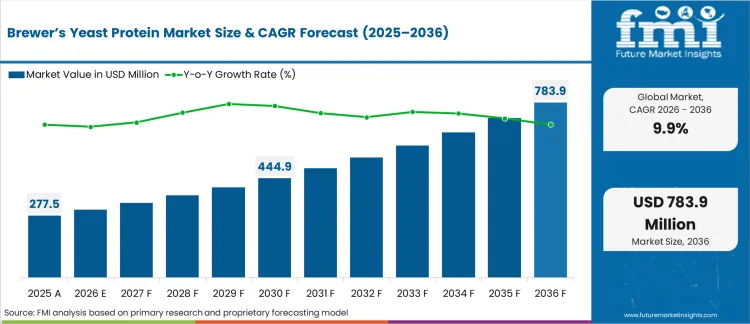
Brewer’s Yeast Protein Market Key Takeaways
| Metric | Details |
|---|---|
| Industry Size (2026) | USD 305.0 million |
| Industry Value (2036) | USD 735.0 million |
| CAGR (2026-2036) | 9.9% |
Ralph Perroud, CEO of Cremo, expressed enthusiasm about the partnership. "We are pleased to collaborate with Yeastup, whose innovative process not only brings new life to our facility but also demonstrates how existing dairy infrastructure can be successfully utilized for the alternative protein sector. [2]
Country dispersion mirrors food security exposure and domestic fermentation capacity. India, China, the United States, the United Kingdom, Germany, and Brazil post higher conversion where localized upcycling aligns with mass-market fortification programs. Procurement clusters around verified safety parameters and stable amino acid profiles.
Source: Future Market Insights (FMI) analysis, based on proprietary forecasting model and primary research
Brewer’s Yeast Protein Market Definition
Spent yeast upcycling converts brewery waste into high-quality protein through specialized fermentation processes for industrial applications. Operations decouple amino acid production from traditional agriculture, creating a standardized nutritional asset. Output stabilizes food fortification pipelines against climate and geopolitical disruptions.
Brewer’s Yeast Protein Market Inclusions
Coverage accounts for powder and liquid extracts deployed across industrial food processing and sports nutrition formulations. Analysis incorporates revenue from yeast extract sales utilized for savory flavor profiles alongside yeast autolysates designed for nutraceuticals. Capital investments targeting precision fermentation ingredients and industrial upcycling facility expansions fall within this valuation framework.
Brewer’s Yeast Protein Market Exclusions
Valuation omits primary baker's yeast production intended strictly for leavening purposes without high-protein extraction. Downstream consumer merchandise, including finished baked goods or retail beer bottles, remains outside the market definition. Plant-based proteins derived from soy or peas are excluded unless utilized directly within a hybrid yeast-protein formulation.
Brewer’s Yeast Protein Market Research Methodology
- Primary Research: Interviews verified plant-level capacity metrics with facility managers and food scientists at leading ingredient firms.
- Desk Research: Production data from national brewing associations provided a baseline for upcycling feedstock availability.
- Market-Sizing and Forecasting: Models reconstructed demand from functional food output and validated figures against fermentation capital expenditure.
- Data Validation and Update Cycle: Outputs underwent peer review and anomaly screening against global food security statistics.
Segmental Analysis
Brewer’s Yeast Protein Market Analysis by Product Form
Powder variants account for the majority of total demand in 2026, while liquid yeast formats continue to face limitations due to shorter shelf life and elevated transportation costs that restrict cross-border trade. FMI analysis found that ongoing logistics challenges are encouraging buyers to prefer shelf-stable options that remove reliance on cold-chain infrastructure. Producers are therefore emphasizing dry formats to support consistent performance across varied snack and beverage processing applications. Powder grades are projected to hold a 60% share in 2026.
- Logistics arbitrage shapes procurement decisions as United States beer production and imports dropped 1% during 2024 [3]. Facilities decouple extraction from immediate consumption to hedge against regional feedstock volatility.
- Formulation flexibility requires high solubility and neutral taste, prompting Yeastup to secure CHF 8.9 million for an industrial-scale upcycling site in December 2024 [4]. Capital allocation targets infrastructure capable of neutralizing bitterness.
- Capacity scaling dictates inventory management strategies. Dry formats reduce warehousing overhead and extend distribution reach across international borders.
Brewer’s Yeast Protein Market Analysis by Application
Processors are steadily replacing volatile animal proteins with upcycled alternatives to protect margins in mass-market food applications. Food and beverages represent 38% of total share in 2026, underscoring the segment’s dominance in overall demand. According to FMI’s projections, formulation flexibility increasingly shapes procurement decisions, particularly across dairy alternatives and meat analog categories. High-density amino acid profiles further support adoption by enabling stronger nutritional positioning without triggering allergen-related labeling constraints.
- Nutritional fortification mandates respond directly to 864.1 million individuals facing severe global food insecurity during 2023 [5]. Procurement teams utilize upcycled yeast to elevate the protein content of accessible staple foods.
- Product premiumization occurs through high-protein snack partnerships, highlighted by Angel Yeast launching a specialized protein nougat bar in June 2024 [6]. Brands capture health-conscious demographics seeking functional indulgence.
- Supply chain integration helps manufacturers dominate savory flavor profiles. Consolidating extraction technology ensures consistent output for demanding retail buyers.
Brewer’s Yeast Protein Market Analysis by Distribution Channel
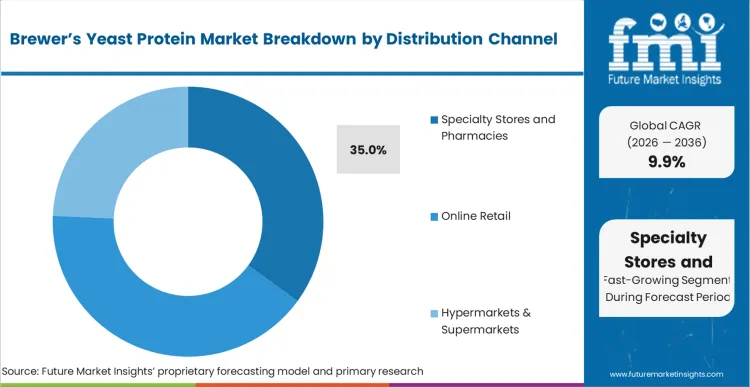
Specialty Stores and Pharmacies account for 35% of total value in 2026. Consumers seeking targeted nutritional outcomes demand clinical credibility and transparent sourcing. FMI analysts opine that clinical credibility determines retail success for sophisticated vitamin yeast formulations. Retailers require strict batch consistency to satisfy regulatory scrutiny and patient safety parameters.
- Pediatric nutrition demands strict safety protocols, especially given that 35 million children under 5 were overweight in 2024 [7]. Pharmacies provide the necessary educational environment to support better-for-you dietary transitions.
- Weight management initiatives target the 890 million adults living with obesity globally as of 2022 [8]. Pharmacists recommend high-protein dietary supplements to support metabolic health and sustained satiation.
- Revenue stability emerges from long-term vendor agreements. Ingredient suppliers bypass volatile hypermarket pricing by embedding products into recurring pharmacy subscriptions.
Brewer’s Yeast Protein Market Drivers, Restraints, and Opportunities
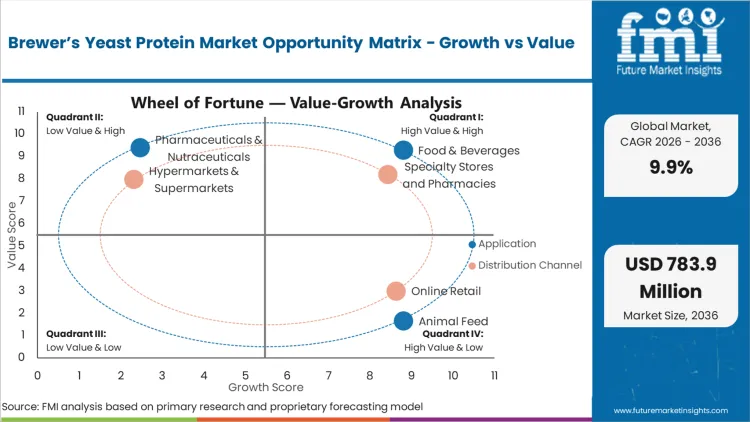
External capital validates upcycling technology and scales production beyond pilot facilities. According to FMI's estimates, external funding accelerates manufacturing maturity across the fermented protein landscape. Financial influx allows engineering teams to refine purification processes, eliminating the bitter off-notes that previously restricted yeast proteins to animal feed applications.
Feedstock availability from traditional brewing operations dictates absolute capacity limits and introduces supply chain vulnerability. United States craft brewer volume sales declined by 4% in 2024, directly reducing the available biomass for protein extraction [9]. Processors must negotiate exclusive, multi-year off-take agreements with macro-breweries to insulate operations from localized production dips.
- Technological partnerships compress research timelines and yield neutral-flavor ingredients. ProteinDistillery executed a long-term cooperation with NETZSCH in March 2024 to advance purification and scaling [10]. Engineering collaboration reduces commissioning delays for new extraction plants.
- Regional capacity building supports food security mandates across volatile import markets. State-level investments construct localized precision fermentation hubs that reduce reliance on foreign protein sources.
- Circular economy branding secures premium retail placements for yeast beta glucan products. Environmental messaging resonates with demographics prioritizing waste reduction alongside personal health metrics.
Regional Analysis
Based on the regional analysis, the Brewer’s Yeast Protein market is segmented into North America, Latin America, Europe, East Asia, South Asia, Oceania and Middle East & Africa across 40+ countries. The full report also offers market attractiveness analysis based on regional trends.
.webp "Top Country Growth Comparison Brewers Yeast Protein Market Cagr (2026 2036)")
| Country | CAGR (2026 to 2036) |
|---|---|
| India | 11.5% |
| China | 10.9% |
| United States | 10.0% |
| United Kingdom | 9.6% |
| Germany | 9.2% |
| Brazil | 9.0% |
Source: Future Market Insights (FMI) analysis, based on proprietary forecasting model and primary research
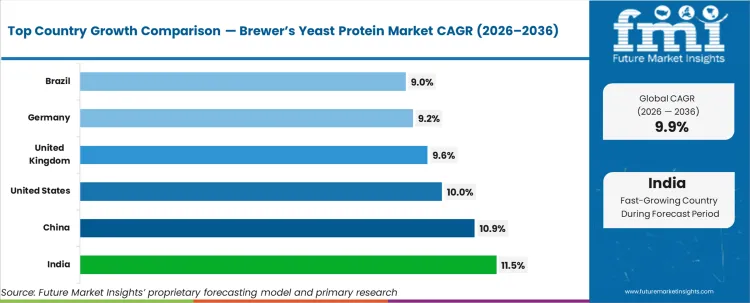
Asia Pacific Brewer’s Yeast Protein Analysis
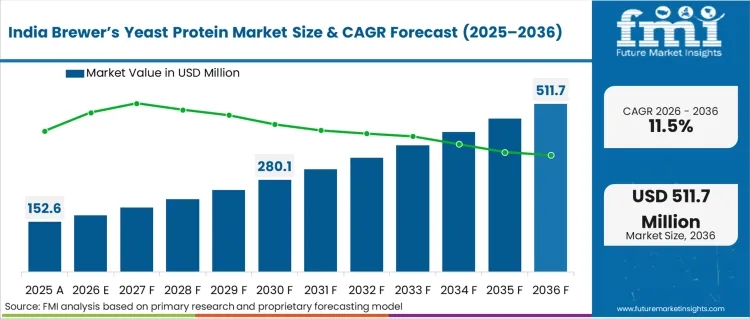
Urban density and mass-market food production dictate regional upcycling investments. As per FMI's projection, urban density forces adoption of alternative protein ingredients to satisfy vast consumer bases. Facilities leverage extensive domestic brewing networks to secure continuous biomass input. Localized extraction limits exposure to international freight volatility and tariff fluctuations.
- India: Demand for Brewer’s Yeast Protein in India is set to grow at 11.5% CAGR through 2036, supported by protein fortification in mass foods before procurement and budgeting cycles translate into higher deployment volumes. Action directly targets the 833.4 million people facing moderate or severe food insecurity across Southern Asia [11].
- China: As domestic fermentation capacity continues to scale, China is strengthening its position in the alternative protein landscape, with Brewer’s Yeast Protein sales projected to expand at a 10.9% CAGR through 2036. The expanding industrial base is increasing the addressable pipeline for suppliers equipped with locally integrated production and distribution capabilities. ProteinDistillery’s move to begin construction of a large-scale manufacturing facility in November 2024 further underscores the commitment to industrial output and long-term supply security within the country [12].
FMI’s report includes an assessment of mature and emerging economies across the Asia Pacific region. Japan and South Korea present distinct opportunities for high-purity nutritional yeast applications catering to aging demographics. Quality assurance protocols dictate vendor selection in these advanced retail landscapes.
North America Brewer’s Yeast Protein Analysis
Premiumization and clean-label reformulation shape North American procurement standards. FMI analysts opine that premiumization reshapes vendor shortlists favoring suppliers with verified sustainability metrics. Manufacturers integrate upcycled proteins into high-value sports nutrition and functional beverages. Strict regulatory oversight governs allowable claims regarding protein bioavailability and sourcing transparency.
- USA: United States is expected to record 10.0% CAGR in Brewer’s Yeast Protein demand over 2026 to 2036 as government grants accelerate infrastructure buildout, tightening the link between policy mandates and adoption-led investment. Public support channeled nearly USD 125 million toward fermentation initiatives during 2024, signaling strong federal backing for alternative ingredients [13].
FMI’s report includes a comprehensive country-wise assessment spanning the United States and Canada. Demand for brewer yeast powder accelerates as food processors eliminate synthetic additives from retail formulations. Cross-border supply chains require standardized sanitary certifications.
Europe Brewer’s Yeast Protein Analysis
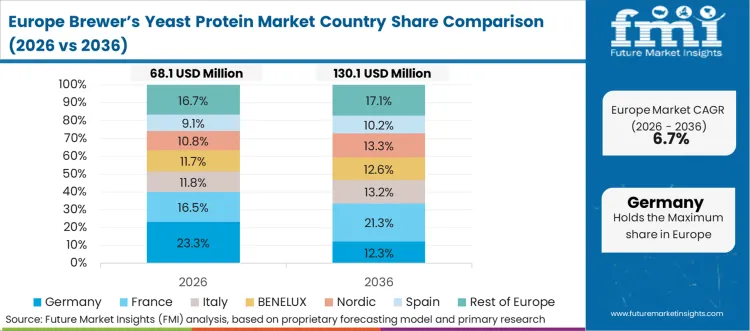
Circular economy mandates and advanced food-tech integration define the European arena. According to FMI's estimates, regulatory baselines eliminate low-tier suppliers incapable of meeting strict environmental impact thresholds. Buyers demand full traceability from brewery waste origin through final protein extraction. Investment concentrates on specialized processing lines capable of extracting maximum value from limited biomass.
- UK: Plant-based product innovation across the United Kingdom is encouraging procurement teams to fast-track ingredient upgrades, particularly in protein fortification and savory applications. Strategic consolidation is also reshaping the competitive landscape, as Lesaffre completed the acquisition of dsm-firmenich’s yeast extract business in October 2024 to strengthen technical capabilities and better serve domestic flavor-driven segments [14]. Supported by these structural and innovation-led shifts, Brewer’s Yeast Protein sales in the United Kingdom are projected to expand at a 9.6% CAGR through 2036.
- Germany: Growth in Brewer’s Yeast Protein across Germany is estimated at 9.2% CAGR through 2036, driven by a strong ingredient manufacturing base that increases the value of reliability and compliance in buyer criteria. Yeastup announced a collaboration with Cremo in December 2024 to repurpose a former dairy site for alternative protein production [15].
FMI’s report includes a detailed analysis for France, Italy, Spain, and the Nordics. High acceptance of organic yeast derivatives shapes formulation strategies across regional bakeries and dairy alternative producers. Price parity against established plant proteins remains a primary competitive variable.
Latin America Brewer’s Yeast Protein Analysis
Agricultural scale and expanding fermentation clusters position Latin America as a critical ingredient supplier. Processors leverage abundant local brewery operations to manufacture cost-competitive protein powders. Integration into global supply chains requires strict adherence to international food safety certifications.
- Brazil is expected to see Brewer’s Yeast Protein adoption rise at 9.0% CAGR from 2026 to 2036 as affordable protein demand expands, which increases demand for compliant, scalable vendor offerings. Global child stunting fell to 23.2% in 2024, reflecting successful integration of high-density nutritional interventions across emerging markets [16].
FMI’s report includes pricing analysis and regional trends for Mexico, Argentina, and Chile. Opportunities exist for suppliers capable of providing stable mineral yeast extracts to local pharmaceutical distributors. Affordability dictates penetration rates across mass-market retail channels.
Competitive Aligners for Market Players
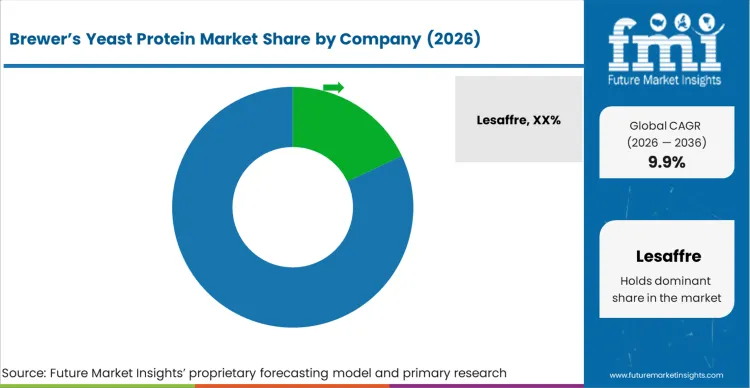
Market structure remains specialized, with practical competition concentrated among entities possessing proprietary purification technology. Large-scale brewing groups increasingly partner with biotechnology firms to monetize spent yeast rather than discarding it as agricultural fertilizer. Securing these exclusive off-take agreements isolates competitors from essential raw materials and guarantees production continuity.
Regulatory compliance and sensory profiling dictate commercial viability. Eradicating the inherent bitterness of brewer's yeast requires sophisticated enzymatic treatments and continuous process control. Facilities lacking capital for advanced filtration systems remain restricted to lower-margin animal feed segments, incapable of penetrating premium human nutrition categories.
Cost survivability at mid-cycle pricing hinges on extraction efficiency and energy management. Energy-intensive drying processes required to produce stable powders expose manufacturers to utility rate volatility. Leading entities invest in heat recovery systems and solid-state fermentation techniques to protect margins against operational inflation.
Recent Developments
The report includes full coverage of key trends from competitive benchmarking. Some of the recent developments covered in the reports:
- In October 2025, Lallemand Bio-Ingredients introduced Engevita HiPRO Beyond to redefine protein profiles within dairy alternative formulations [17].
- In July 2025, Lallemand Bio-Ingredients acquired enzyme specialist Solyve to expand solid-state fermentation capabilities [18].
Key Players in Brewer’s Yeast Protein Market
- Lesaffre
- dsm-firmenich
- Lallemand Bio-Ingredients
- Angel Yeast
- Yeastup
- ProteinDistillery
- BASF SE
- Hexion Inc.
Scope of the Report
| Metric | Value |
|---|---|
| Quantitative Units | USD 305.0 million (2026) to USD 735.0 million (2036), at a CAGR of 9.9% |
| Market Definition | The industry comprises the extraction, purification, and commercialization of upcycled protein derived from spent brewer's yeast. |
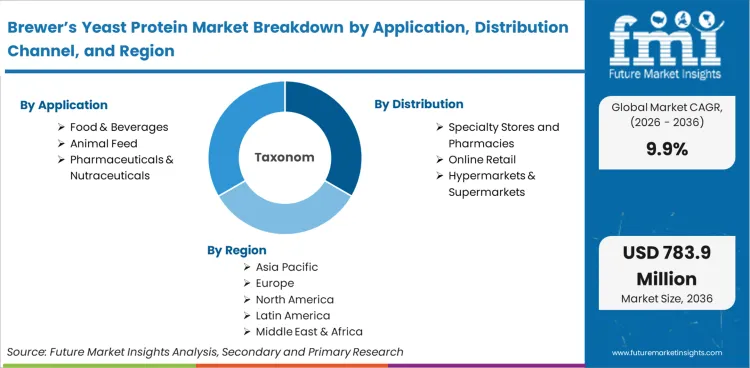
| Product Form Segmentation | Powder, Liquid |
| Application Segmentation | Food & Beverages, Animal Feed, Pharmaceuticals & Nutraceuticals, Others |
| Distribution Channel Segmentation | Specialty Stores & Pharmacies, Online Retail, Hypermarkets & Supermarkets, Others |
| Regions Covered | North America, Latin America, Europe, East Asia, South Asia, Oceania, Middle East and Africa |
| Countries Covered | India, China, United States, United Kingdom, Germany, Brazil and 40 plus countries |
| Key Companies Profiled | Lesaffre, dsm-firmenich, Lallemand Bio-Ingredients, Angel Yeast, Yeastup, ProteinDistillery, BASF SE, Hexion Inc. |
| Forecast Period | 2026 to 2036 |
| Approach | Hybrid top-down and bottom-up modeling validated through primary capacity disclosures and trade benchmarking. |
Brewer’s Yeast Protein Market Analysis by Segments
Product Form:
- Powder
- Liquid
Application:
- Food & Beverages
- Animal Feed
- Pharmaceuticals & Nutraceuticals
- Others
Distribution Channel:
- Specialty Stores & Pharmacies
- Online Retail
- Hypermarkets & Supermarkets
- Others
Region:
- Asia Pacific
- India
- China
- Japan
- South Korea
- Indonesia
- Australia & New Zealand
- ASEAN
- Rest of Asia Pacific
- Europe
- Germany
- Italy
- France
- United Kingdom
- Spain
- Benelux
- Nordics
- Central & Eastern Europe
- Rest of Europe
- North America
- United States
- Canada
- Mexico
- Latin America
- Brazil
- Argentina
- Chile
- Rest of Latin America
- Middle East & Africa
- Kingdom of Saudi Arabia
- United Arab Emirates
- South Africa
- Turkey
- Rest of Middle East & Africa
Bibliography
- [1] UNICEF DATA. (2024). The State of Food Security and Nutrition in the World 2024.
- [2] Protein Production Technology. (2024). Yeastup secures CHF 8.9 million in Series A funding to launch industrial-scale production site.
- [3] Brewers Association. (2024). National Beer Stats: US beer production and imports.
- [4] Protein Production Technology. (2024). Yeastup secures CHF 8.9 million in Series A funding.
- [5] UNICEF DATA. (2024). The State of Food Security and Nutrition in the World 2024. Severe food insecurity statistics.
- [6] Angel Yeast. (2024). Angel Yeast launch nougat protein bar and protein nougat snack.
- [7] World Health Organization. (2024). Fact Sheet: Obesity and overweight statistics.
- [8] World Health Organization. (2025). Fact Sheet: Adult obesity statistics updated for 2022.
- [9] Brewers Association. (2024). National Beer Stats: Craft brewer volume sales.
- [10] ProteinDistillery. (2024). Partnership with NETZSCH to advance purification and scaling.
- [11] UNICEF DATA. (2024). The State of Food Security and Nutrition in the World 2024. Southern Asia statistics.
- [12] Green Queen. (2024). ProteinDistillery begins construction of large-scale plant.
- [13] The Good Food Institute. (2024). State of the Industry: US public support toward fermentation.
- [14] Lesaffre. (2024). Press Release: Lesaffre has completed the acquisition of dsm-firmenich's yeast extract business.
- [15] Protein Production Technology. (2024). Yeastup collaborates with Cremo for industrial-scale production site.
- [16] UNICEF. (2024). Global hunger declines, rises in Africa and Western Asia UN report.
- [17] Protein Production Technology. (2025). Lallemand Bio-Ingredients introduces Engevita HiPRO Beyond.
- [18] Lallemand Bio-Ingredients. (2025). Lallemand Bio-Ingredients acquires enzyme specialist Solyve.
This bibliography is provided for reader reference and is not exhaustive. The full report contains the complete reference list and detailed citations.
This Report Addresses
- Market intelligence to enable structured strategic decision making across global fermentation and upcycling economies.
- Market size estimation and 10-year revenue forecasts from 2026 to 2036, supported by validated capacity benchmarks.
- Growth opportunity mapping across powder and liquid forms with emphasis on shelf stability and logistics efficiency.
- Segment and regional revenue forecasts covering mass-market food, sports nutrition, and pharmaceutical applications.
- Competition strategy assessment including supply chain integration models and cost survivability positioning.
- Product reformulation tracking including sensory masking capabilities and high-density amino acid profiles.
- Regulatory impact analysis covering global food safety mandates, labeling transparency, and nutritional fortification standards.
- Evaluation of capital availability and investment trends shaping industrial-scale precision fermentation infrastructure.
Frequently Asked Questions
How large is the demand for Brewer’s Yeast Protein in the global market in 2026?
Demand for Brewer’s Yeast Protein in the global market is estimated to be valued at USD 305.0 million in 2026.
What will be the market size of Brewer’s Yeast Protein in the global market by 2036?
Market size for Brewer’s Yeast Protein is projected to reach USD 735.0 million by 2036.
What is the expected demand growth for Brewer’s Yeast Protein in the global market between 2026 and 2036?
Demand for Brewer’s Yeast Protein in the global market is expected to grow at a CAGR of 9.9% between 2026 and 2036.
Which Product Form is poised to lead global sales by 2026?
Powder is expected to be the dominant form, capturing 60% of global market share in 2026 due to logistics efficiency.
How significant is the role of Food & Beverages in driving Brewer’s Yeast Protein adoption in 2026?
Food & Beverages represents a critical segment, projected to hold a substantial 38% share in 2026 as manufacturers prioritize affordable fortification.
What is driving demand in India?
Growth is driven by protein fortification in mass foods and the requirement for affordable amino acid profiles.
What compliance standards or regulations are referenced for the United States?
Strict regulatory oversight governing allowable claims regarding protein bioavailability and sourcing transparency serves as the primary benchmark.
What is the India growth outlook in this report?
India is projected to expand at a CAGR of 11.5% during 2026 to 2036.
Why is Europe described as a priority region in this report?
Growth is driven by circular economy mandates and heavy investment in advanced food-tech integration.
What type of demand dominates in Europe?
Replacement-driven demand for premium grade, highly traceable proteins dominates regional consumption.
What is the Germany growth outlook in this report?
Germany is projected to grow at a CAGR of 9.2% during 2026 to 2036.
Does the report cover Brazil in its regional analysis?
Yes, Brazil is included within Latin America and is projected to grow at a 9.0% CAGR.
What are the sources referred to for analyzing China?
Official statistics from national nutrition bodies and tracking of precision fermentation plant constructions supported the volume analysis.
What is the main demand theme linked to China in its region coverage?
China's demand is linked to better-for-you snacks and massive domestic fermentation scale.
Does the report cover the United Kingdom in its regional analysis?
Yes, the United Kingdom is included within Europe under the regional coverage framework.
What is the main United Kingdom related demand theme in its region coverage?
Growth is tied to plant-based innovation and the need for allergen-free proteins in meat analogs.
Which product formats are strategically important for Asia Pacific supply chains?
Powder resins are prioritized due to lower storage risk and reduced logistics constraints across regional export channels.
What is Brewer’s Yeast Protein and what is it mainly used for?
It is a functional protein extracted from spent brewery waste, primarily used in food fortification and sports nutrition.
What does Brewer’s Yeast Protein mean in this report?
It refers to the global production, trade, and industrial consumption of upcycled yeast proteins in powder and liquid forms.
What is included in the scope of this Brewer’s Yeast Protein report?
The scope covers proteins by form, key applications like dairy alternatives, and distribution channels including specialty pharmacies.
What is excluded from the scope of this report?
Primary baker's yeast, finished consumer goods, and plant-based soy/pea proteins are excluded.
What does market forecast mean on this page?
Market forecast represents a model-based projection built on defined assumptions for strategic planning purposes.
How does FMI build and validate the Brewer’s Yeast Protein forecast?
Forecasts are built using hybrid top-down and bottom-up modeling validated through primary interviews and capacity benchmarking.
What does zero reliance on speculative third party market research mean here?
It means primary interviews and verifiable public datasets are used instead of unverified syndicated estimates.
Preview the report firsthand - request a free sample
Get SampleGet the brochure for pricing and purchase details.
Get PDFTable of Content
- Executive Summary
- Global Market Outlook
- Demand-side Trends
- Supply-side Trends
- Technology Roadmap Analysis
- Analysis and Recommendations
- Market Overview
- Market Coverage / Taxonomy
- Market Definition / Scope / Limitations
- Research Methodology
- Chapter Orientation
- Analytical Lens and Working Hypotheses
- Market Structure, Signals, and Trend Drivers
- Benchmarking and Cross-market Comparability
- Market Sizing, Forecasting, and Opportunity Mapping
- Research Design and Evidence Framework
- Desk Research Programme (Secondary Evidence)
- Company Annual and Sustainability Reports
- Peer-reviewed Journals and Academic Literature
- Corporate Websites, Product Literature, and Technical Notes
- Earnings Decks and Investor Briefings
- Statutory Filings and Regulatory Disclosures
- Technical White Papers and Standards Notes
- Trade Journals, Industry Magazines, and Analyst Briefs
- Conference Proceedings, Webinars, and Seminar Materials
- Government Statistics Portals and Public Data Releases
- Press Releases and Reputable Media Coverage
- Specialist Newsletters and Curated Briefings
- Sector Databases and Reference Repositories
- FMI Internal Proprietary Databases and Historical Market Datasets
- Subscription Datasets and Paid Sources
- Social Channels, Communities, and Digital Listening Inputs
- Additional Desk Sources
- Expert Input and Fieldwork (Primary Evidence)
- Primary Modes
- Qualitative Interviews and Expert Elicitation
- Quantitative Surveys and Structured Data Capture
- Blended Approach
- Why Primary Evidence is Used
- Field Techniques
- Interviews
- Surveys
- Focus Groups
- Observational and In-context Research
- Social and Community Interactions
- Stakeholder Universe Engaged
- C-suite Leaders
- Board Members
- Presidents and Vice Presidents
- R&D and Innovation Heads
- Technical Specialists
- Domain Subject-matter Experts
- Scientists
- Physicians and Other Healthcare Professionals
- Governance, Ethics, and Data Stewardship
- Research Ethics
- Data Integrity and Handling
- Primary Modes
- Tooling, Models, and Reference Databases
- Desk Research Programme (Secondary Evidence)
- Data Engineering and Model Build
- Data Acquisition and Ingestion
- Cleaning, Normalisation, and Verification
- Synthesis, Triangulation, and Analysis
- Quality Assurance and Audit Trail
- Market Background
- Market Dynamics
- Drivers
- Restraints
- Opportunity
- Trends
- Scenario Forecast
- Demand in Optimistic Scenario
- Demand in Likely Scenario
- Demand in Conservative Scenario
- Opportunity Map Analysis
- Product Life Cycle Analysis
- Supply Chain Analysis
- Investment Feasibility Matrix
- Value Chain Analysis
- PESTLE and Porter’s Analysis
- Regulatory Landscape
- Regional Parent Market Outlook
- Production and Consumption Statistics
- Import and Export Statistics
- Market Dynamics
- Global Market Analysis 2021 to 2025 and Forecast, 2026 to 2036
- Historical Market Size Value (USD Million) Analysis, 2021 to 2025
- Current and Future Market Size Value (USD Million) Projections, 2026 to 2036
- Y-o-Y Growth Trend Analysis
- Absolute $ Opportunity Analysis
- Global Market Pricing Analysis 2021 to 2025 and Forecast 2026 to 2036
- Global Market Analysis 2021 to 2025 and Forecast 2026 to 2036, By Application
- Introduction / Key Findings
- Historical Market Size Value (USD Million) Analysis By Application , 2021 to 2025
- Current and Future Market Size Value (USD Million) Analysis and Forecast By Application , 2026 to 2036
- Food & Beverages
- Animal Feed
- Pharmaceuticals & Nutraceuticals
- Food & Beverages
- Y-o-Y Growth Trend Analysis By Application , 2021 to 2025
- Absolute $ Opportunity Analysis By Application , 2026 to 2036
- Global Market Analysis 2021 to 2025 and Forecast 2026 to 2036, By Distribution Channel
- Introduction / Key Findings
- Historical Market Size Value (USD Million) Analysis By Distribution Channel, 2021 to 2025
- Current and Future Market Size Value (USD Million) Analysis and Forecast By Distribution Channel, 2026 to 2036
- Specialty Stores and Pharmacies
- Online Retail
- Hypermarkets & Supermarkets
- Specialty Stores and Pharmacies
- Y-o-Y Growth Trend Analysis By Distribution Channel, 2021 to 2025
- Absolute $ Opportunity Analysis By Distribution Channel, 2026 to 2036
- Global Market Analysis 2021 to 2025 and Forecast 2026 to 2036, By Region
- Introduction
- Historical Market Size Value (USD Million) Analysis By Region, 2021 to 2025
- Current Market Size Value (USD Million) Analysis and Forecast By Region, 2026 to 2036
- North America
- Latin America
- Western Europe
- Eastern Europe
- East Asia
- South Asia and Pacific
- Middle East & Africa
- Market Attractiveness Analysis By Region
- North America Market Analysis 2021 to 2025 and Forecast 2026 to 2036, By Country
- Historical Market Size Value (USD Million) Trend Analysis By Market Taxonomy, 2021 to 2025
- Market Size Value (USD Million) Forecast By Market Taxonomy, 2026 to 2036
- By Country
- USA
- Canada
- Mexico
- By Application
- By Distribution Channel
- By Country
- Market Attractiveness Analysis
- By Country
- By Application
- By Distribution Channel
- Key Takeaways
- Latin America Market Analysis 2021 to 2025 and Forecast 2026 to 2036, By Country
- Historical Market Size Value (USD Million) Trend Analysis By Market Taxonomy, 2021 to 2025
- Market Size Value (USD Million) Forecast By Market Taxonomy, 2026 to 2036
- By Country
- Brazil
- Chile
- Rest of Latin America
- By Application
- By Distribution Channel
- By Country
- Market Attractiveness Analysis
- By Country
- By Application
- By Distribution Channel
- Key Takeaways
- Western Europe Market Analysis 2021 to 2025 and Forecast 2026 to 2036, By Country
- Historical Market Size Value (USD Million) Trend Analysis By Market Taxonomy, 2021 to 2025
- Market Size Value (USD Million) Forecast By Market Taxonomy, 2026 to 2036
- By Country
- Germany
- UK
- Italy
- Spain
- France
- Nordic
- BENELUX
- Rest of Western Europe
- By Application
- By Distribution Channel
- By Country
- Market Attractiveness Analysis
- By Country
- By Application
- By Distribution Channel
- Key Takeaways
- Eastern Europe Market Analysis 2021 to 2025 and Forecast 2026 to 2036, By Country
- Historical Market Size Value (USD Million) Trend Analysis By Market Taxonomy, 2021 to 2025
- Market Size Value (USD Million) Forecast By Market Taxonomy, 2026 to 2036
- By Country
- Russia
- Poland
- Hungary
- Balkan & Baltic
- Rest of Eastern Europe
- By Application
- By Distribution Channel
- By Country
- Market Attractiveness Analysis
- By Country
- By Application
- By Distribution Channel
- Key Takeaways
- East Asia Market Analysis 2021 to 2025 and Forecast 2026 to 2036, By Country
- Historical Market Size Value (USD Million) Trend Analysis By Market Taxonomy, 2021 to 2025
- Market Size Value (USD Million) Forecast By Market Taxonomy, 2026 to 2036
- By Country
- China
- Japan
- South Korea
- By Application
- By Distribution Channel
- By Country
- Market Attractiveness Analysis
- By Country
- By Application
- By Distribution Channel
- Key Takeaways
- South Asia and Pacific Market Analysis 2021 to 2025 and Forecast 2026 to 2036, By Country
- Historical Market Size Value (USD Million) Trend Analysis By Market Taxonomy, 2021 to 2025
- Market Size Value (USD Million) Forecast By Market Taxonomy, 2026 to 2036
- By Country
- India
- ASEAN
- Australia & New Zealand
- Rest of South Asia and Pacific
- By Application
- By Distribution Channel
- By Country
- Market Attractiveness Analysis
- By Country
- By Application
- By Distribution Channel
- Key Takeaways
- Middle East & Africa Market Analysis 2021 to 2025 and Forecast 2026 to 2036, By Country
- Historical Market Size Value (USD Million) Trend Analysis By Market Taxonomy, 2021 to 2025
- Market Size Value (USD Million) Forecast By Market Taxonomy, 2026 to 2036
- By Country
- Kingdom of Saudi Arabia
- Other GCC Countries
- Turkiye
- South Africa
- Other African Union
- Rest of Middle East & Africa
- By Application
- By Distribution Channel
- By Country
- Market Attractiveness Analysis
- By Country
- By Application
- By Distribution Channel
- Key Takeaways
- Key Countries Market Analysis
- USA
- Pricing Analysis
- Market Share Analysis, 2025
- By Application
- By Distribution Channel
- Canada
- Pricing Analysis
- Market Share Analysis, 2025
- By Application
- By Distribution Channel
- Mexico
- Pricing Analysis
- Market Share Analysis, 2025
- By Application
- By Distribution Channel
- Brazil
- Pricing Analysis
- Market Share Analysis, 2025
- By Application
- By Distribution Channel
- Chile
- Pricing Analysis
- Market Share Analysis, 2025
- By Application
- By Distribution Channel
- Germany
- Pricing Analysis
- Market Share Analysis, 2025
- By Application
- By Distribution Channel
- UK
- Pricing Analysis
- Market Share Analysis, 2025
- By Application
- By Distribution Channel
- Italy
- Pricing Analysis
- Market Share Analysis, 2025
- By Application
- By Distribution Channel
- Spain
- Pricing Analysis
- Market Share Analysis, 2025
- By Application
- By Distribution Channel
- France
- Pricing Analysis
- Market Share Analysis, 2025
- By Application
- By Distribution Channel
- India
- Pricing Analysis
- Market Share Analysis, 2025
- By Application
- By Distribution Channel
- ASEAN
- Pricing Analysis
- Market Share Analysis, 2025
- By Application
- By Distribution Channel
- Australia & New Zealand
- Pricing Analysis
- Market Share Analysis, 2025
- By Application
- By Distribution Channel
- China
- Pricing Analysis
- Market Share Analysis, 2025
- By Application
- By Distribution Channel
- Japan
- Pricing Analysis
- Market Share Analysis, 2025
- By Application
- By Distribution Channel
- South Korea
- Pricing Analysis
- Market Share Analysis, 2025
- By Application
- By Distribution Channel
- Russia
- Pricing Analysis
- Market Share Analysis, 2025
- By Application
- By Distribution Channel
- Poland
- Pricing Analysis
- Market Share Analysis, 2025
- By Application
- By Distribution Channel
- Hungary
- Pricing Analysis
- Market Share Analysis, 2025
- By Application
- By Distribution Channel
- Kingdom of Saudi Arabia
- Pricing Analysis
- Market Share Analysis, 2025
- By Application
- By Distribution Channel
- Turkiye
- Pricing Analysis
- Market Share Analysis, 2025
- By Application
- By Distribution Channel
- South Africa
- Pricing Analysis
- Market Share Analysis, 2025
- By Application
- By Distribution Channel
- USA
- Market Structure Analysis
- Competition Dashboard
- Competition Benchmarking
- Market Share Analysis of Top Players
- By Regional
- By Application
- By Distribution Channel
- Competition Analysis
- Competition Deep Dive
- Lesaffre
- Overview
- Product Portfolio
- Profitability by Market Segments (Product/Age /Sales Channel/Region)
- Sales Footprint
- Strategy Overview
- Marketing Strategy
- Product Strategy
- Channel Strategy
- dsm-firmenich
- Lallemand Bio-Ingredients
- Angel Yeast
- Yeastup
- ProteinDistillery
- BASF SE
- Lesaffre
- Competition Deep Dive
- Assumptions & Acronyms Used


