

- Industry Size (2026)
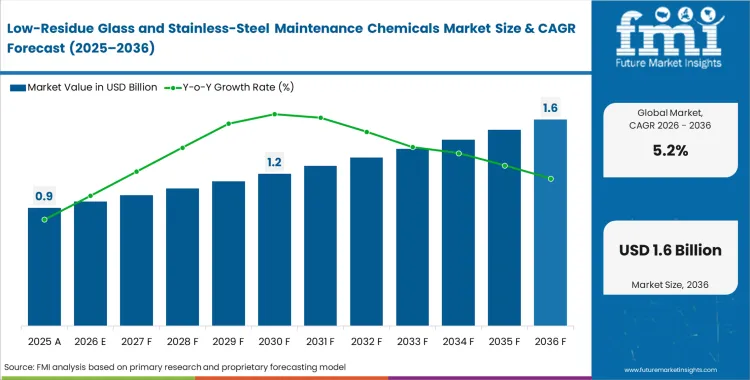
- USD 0.9 Bn
- Forecast (2036)
- USD 1.5 Bn
- CAGR (2026 to 2036)
- 5.20%
Low-Residue Glass and Stainless-Steel Maintenance Chemicals Market Size, Market Forecast, and Outlook By FMI
The low-residue glass and stainless-steel maintenance chemicals market was valued at USD 0.8 billion in 2025. Sector valuation is estimated to surpass USD 0.9 billion in 2026 at a CAGR of 5.20% during this forecast period. Revenue expansion propels total valuation to USD 1.5 billion through 2036 as commercial facilities transition away from multi-step rinsing protocols toward single-pass maintenance chemistries.
Summary of Low-Residue Glass and Stainless-Steel Maintenance Chemicals Market
- Market Snapshot
- The low-residue glass and stainless-steel maintenance chemicals market has the value of USD 0.8 billion in 2025 and is expected to reach USD 1.5 billion in 2036.
- The market will be rising at a 5.2% CAGR during 2026-2036 and will generate an incremental opportunity of USD 0.6 billion.
- This is a specialty cleaning niche that is specification-based and buyers focus on streak-free finish, low residue, surface compatibility and chemistry that is compliant rather than low initial price.
- The category lies within the larger hard-surface and institutional cleaning demand instead of a segment of mass commodity cleaner, making it smaller and more high-end.
- Demand and Growth Drivers
- Demand is increasing owing to the fact that commercial kitchens, hospitality facilities, health care facilities, and retail facilities need visible glass and stainless surfaces that are to be washed regularly and not streak or film.
- Adoption is being aided by safer chemistry procurement, with EPA Safer Choice expressly addressing glass cleaners and institutional purchasers moving to low-VOC, lower-residue formulations.
- Product innovation is shifting to water-based protective formulas and water-based that will lessen build-up, resist fingerprints, and decrease re-cleaning frequency on stainless surfaces.
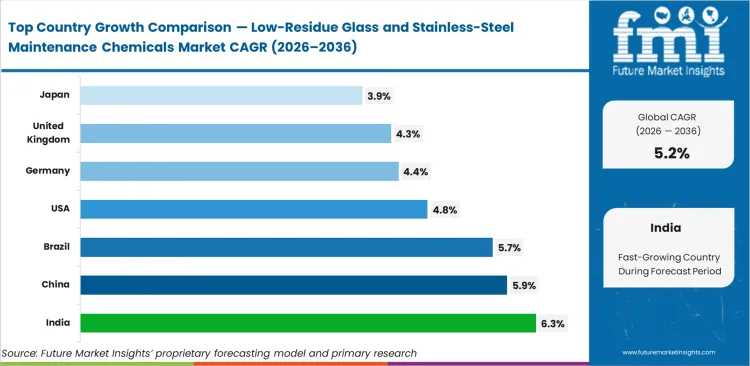
- India is expected to expand at a 6.3% CAGR by 2036, followed by China which is estimated to record 5.9% CAGR, Brazil is anticipated to capture 5.7% CAGR, the United States is poised to garner 4.8% CAGR, Germany is set to record 4.4% CAGR, the United Kingdom is expected to hold 4.3% CAGR, and Japan is estimated to hold 3.9% CAGR.
- Growth is moderated by category maturity in North America, Japan, and Western Europe, where replacement cycles and reformulation matter more than first-time adoption.
- Product and Segment View
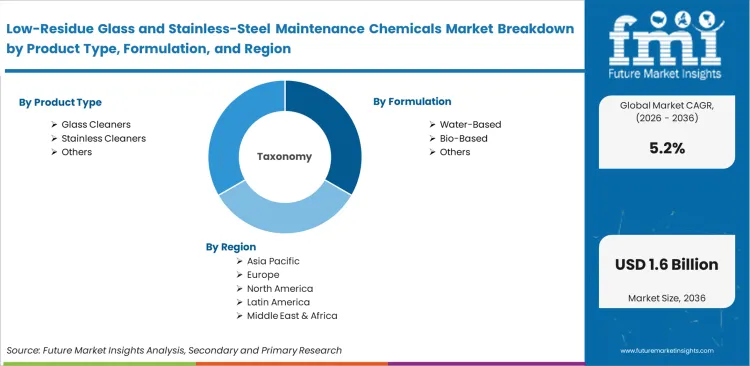
- The market covers glass cleaners, stainless cleaners, dual-surface cleaners, and protective polishes formulated mainly as water-based or solvent-based sprays, wipes, aerosols, and concentrates.
- These products are used across commercial buildings, foodservice kitchens, healthcare facilities, and residential premium appliances and fixtures.
- Glass cleaners lead the Product Type segment with is expected to hold 46.0% share, supported by their larger adjacent-category base and wider use across mirrors, windows, partitions, and display surfaces.
- Water-based products lead the Formulation segment with is estimated to hold 54.0% share, helped by low-VOC procurement trends and safer-chemistry certifications.
- Sprays lead the Format segment with is anticipated to capture 49.0% share, as they balance speed, precision, and visual finish on stainless appliances and glass surfaces.
- Commercial facilities lead the End Use segment with is poised to garner 38.0% share, reflecting daily use in offices, hospitality, retail, and institutional buildings.
- B2B direct leads the Distribution segment with is set to record 35.0% share, because institutional buyers often source through direct programs, jan-san partners, and compliance-oriented supply contracts.
- Scope includes cleaners and polish/protect formulations intended for routine maintenance of exposed glass and stainless surfaces, but excludes heavy industrial degreasers, floor care chemicals, and broad disinfectant-only products with no finish-maintenance role.
- Geography and Competitive Outlook
- India, China, and Brazil are the fastest-growing markets, while the United States remains the most stable high-value demand base for premium branded surface-care chemicals.
- Competition is shaped by specialty-surface branding, safer-formulation claims, jan-san channel access, and the ability to serve both institutional and premium household demand.
- Key participants include PurposeBuilt Brands (Weiman), SC Johnson Professional, Ecolab, 3M, Zep, Diversey, and CloroxPro.
- The market is fragmented, with the leading company estimated to have the majority of shares, because branded household specialists, institutional chemistry suppliers, and jan-san vendors all compete in overlapping channels.
Daily maintenance contracts face margin pressure when labor minutes rise and rework increases. Chemical selection therefore centers on faster drying, lower residue, and lower repeat-pass requirements across high-traffic facilities. Evaluating chemical portfolios based on labor-minute reductions to protect profitability. Front-of-house aesthetic degradation carries immediate financial penalties under modern service level agreements. Buyers prioritize rapid-evaporation profiles over legacy glass cleaner options. Delayed adoption forces contractors to absorb unbillable rework hours for streak removal. Procuring reliable streak-free cleaner volumes becomes an operational necessity for these high-traffic venues.
Stricter indoor air quality thresholds are accelerating the shift away from legacy solvent blends toward low-VOC maintenance chemistries. Formulators must preserve flash-drying performance while reducing volatile content to avoid residue formation and slower cleaning cycles. This mandate triggers mass conversion toward low voc cleaning chemicals. Formulation chemists must replace volatile components without sacrificing flash-drying speeds. Sub-optimal dry times leave sticky micro-films that attract airborne dust.
India is expected to hold 6.3% share through 2036, as modern retail expansion creates unprecedented square footage requiring daily aesthetic upkeep; China is estimated to hold 5.9% share, driven by rapid hospitality sector modernization; Brazil is anticipated to capture 5.7% share through increased institutional sanitation investments; US facilities is poised to rise at a 4.8% share, prioritizing certified formulations over raw performance; Germany is set to record 4.4% share on stringent occupational exposure limits; UK is expected to garner a 4.3% share; and Japan is estimated to hold 3.9% share during the forecast period, focusing entirely on precision reformulation, with geographic divergence hinging on labor availability versus regulatory stringency.
Segmental Analysis
Low-Residue Glass and Stainless-Steel Maintenance Chemicals Market Analysis by Product Type
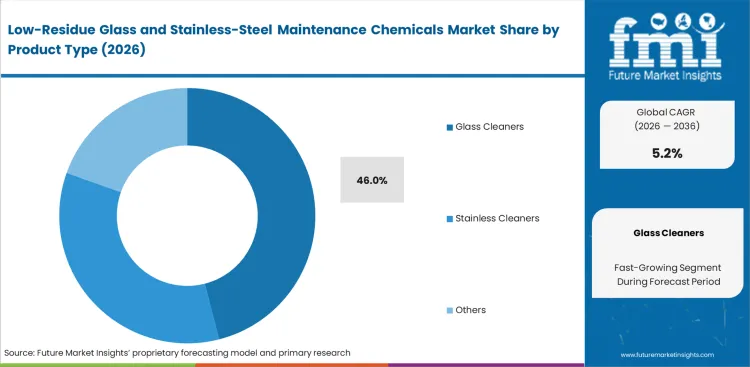
Facility contractors manage two fixed priorities when stocking janitorial carts: clear glass surfaces and protection of adjacent metal fixtures. Glass cleaners are estimated to account for 46.0% share of usage, reflecting the scale of modern glazing that requires daily, streak-free upkeep. Utilizing glass metal cleaner, small reductions in wiping time per pane accumulate across large surface areas and determine whether night crews finish assigned zones within shift limits. Inferior formulations create visible haze that only appears under daylight, leading to repeated cleaning across high-visibility areas. General-purpose degreasers leave residue on mirrors and glass, which forces contractors to retain both multi-surface disinfectant cleaners and dedicated streak-free glass cleaners. Attempts to remove glass-specific SKUs reduce finish quality and often result in client complaints and contract loss.
- Performance ceiling: High-traffic locations require solutions that remove fingerprints and oils immediately without streaking. Crews avoid products that demand added pressure or repeated passes.
- Edge failure: Standard formulations freeze on exterior glass in low temperatures before soil removal occurs. Contractors compensate by carrying cold-weather variants for outdoor surfaces.
- Qualification standard: Hospitality operators conduct inspections under strong LED lighting. Any remaining film is immediately visible and can trigger penalties or vendor replacement.
Low-Residue Glass and Stainless-Steel Maintenance Chemicals Market Analysis by Formulation
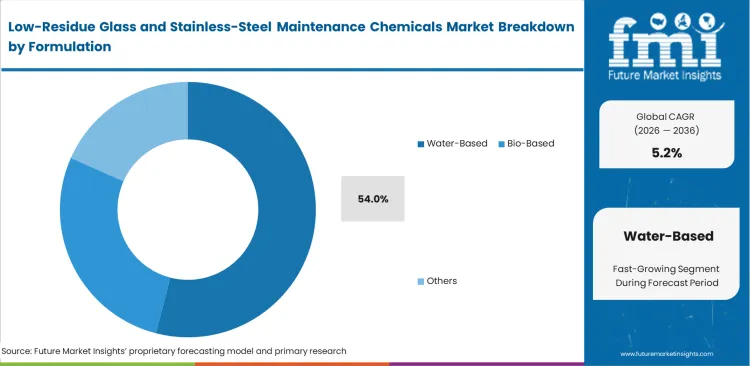
Legacy solvents no longer pass corporate sustainability audits. Environmental health teams restrict ammonia-heavy products in enclosed office settings. Removing volatile solvents while maintaining glass cleaner additives introduces formulation complexity. Water-based formulations are anticipated to hold a 54.0% share, reflecting alignment with stricter indoor air quality standards. R&D teams replace traditional evaporative agents with bio-based surfactants, but these low-VOC glass and metal cleaners require precise balancing to remain effective. Lower evaporation rates extend drying times, which directly affects cleaning cycles. Longer flash-off forces workers to carry additional dry cloths and adjust movement across zones. Facilities that delay shifting to compliant formulations face regulatory exposure. Using industrial cleaning solvents without proper safety documentation leads to immediate compliance breaches.
- Procurement savings: Water-based concentrates avoid hazardous material charges during transport, reducing freight costs.
- Operational penalty: Slower drying in humid conditions increases manual buffing and reduces crew productivity.
- Lifecycle calculation: Additional wiping increases repetitive strain exposure, raising long-term labor and compensation costs.Top of Form
Low-Residue Glass and Stainless-Steel Maintenance Chemicals Market Analysis by Format
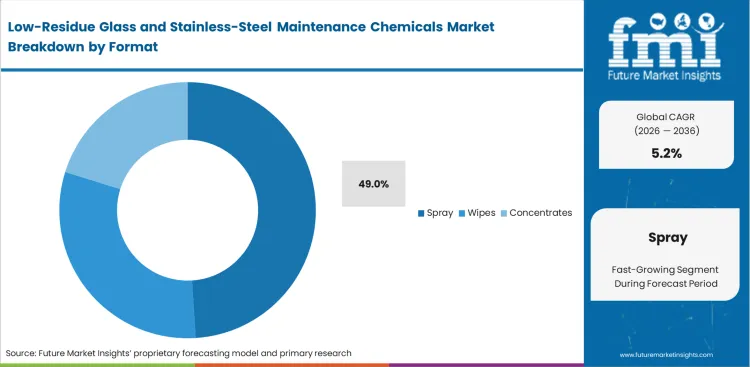
Cleaning staff ultimately determine actual product consumption, regardless of procurement strategy. Supervisors standardize trigger sprays across mobile carts for quick response to visible soil. These systems allow controlled application without spreading chemicals onto surrounding materials. Adopting professional cleaning products requires minimal training, making them suitable for large teams. Spray formats are expected to account for 49.0% share, supported by ease of use in continuous spot-cleaning. Procurement buying commercial low-residue glass cleaner spray formats in bulk supports rapid deployment across facilities. Aerosols continue to lose institutional preference due to disposal constraints. Repetitive trigger use introduces ergonomic strain, and poorly designed mechanisms often fail before full product utilization. Delayed upgrades to ergonomic dispensing systems increase worker fatigue and complaints.
- Initial trigger: Visible surface marks in public areas require immediate correction; spray systems enable quick action.
- Validation metric: Even spray distribution without dripping determines usability and supervisor approval.
- Expansion catalyst: Improved trigger ergonomics drive large-scale replacement cycles, locking buyers into specific vendors.
Low-Residue Glass and Stainless-Steel Maintenance Chemicals Market Analysis by End Use
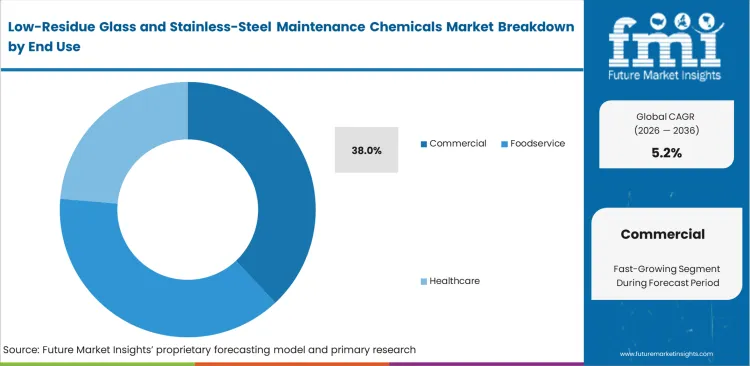
Aesthetic degradation carries immediate financial consequences for premium operators. Facility managers write absolute clarity standards into custodial service level agreements. Providing specialized industrial institutional cleaning chemicals represents non-negotiable operational overhead. Cleanliness perception directly impacts tenant retention rates in Class-A office buildings. Commercial facilities are predicted to record a 38.0% share in 2026, driven by the need for consistent presentation across lobbies, elevators, and restrooms. Foodservice environments require similar performance on stainless steel prep surfaces to meet inspection standards. Kitchen managers prioritize the best kitchen cleaners for commercial stainless steel to maintain compliance. Visual defects such as streaks or smudges generate immediate negative feedback, especially in high-end settings. A single poorly maintained surface can influence customer perception disproportionately. Cost-driven product substitution often leads to higher indirect losses through reduced patronage.
- Prevention focus: Regular polishing of stainless steel prevents permanent oxidative pitting. Maintenance teams treat premium chemicals as asset protection tools.
- Residual risk: Aggressive acidic cleaners can permanently damage architectural finishes. Incorrect usage leads to fixture deterioration.
- Full capture: Results depend on matching chemical formulation with the correct microfiber type; misalignment reduces effectiveness.
Low-Residue Glass and Stainless-Steel Maintenance Chemicals Market Analysis by Distribution
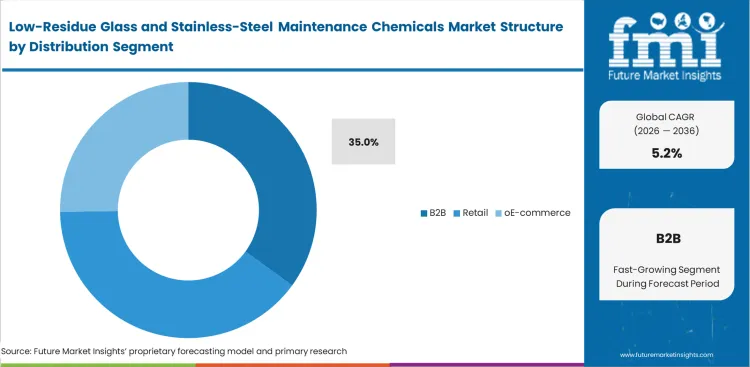
Logistics architecture determines how chemical suppliers access and retain accounts. B2B direct channels are expected to account for a 35.0% share, supported by localized route-based distribution models. Purchasing is increasingly consolidated to secure volume pricing and reduce replenishment complexity. Vendors install dilution control systems directly within janitorial storage areas, embedding their products into daily operations. Working with established jan san distributors for glass and stainless cleaners simplifies this installation process. This physical integration creates high switching barriers, as replacing a supplier requires removal and reinstallation of a new super concentrate cleaning chemical across multiple locations.
- Production capability: Regional blending facilities reduce transport weight and improve cost competitiveness in tenders.
- Supply constraint: Limited availability of specialized surfactants can disrupt production for suppliers without diversified sourcing.
- Future landscape: Automated telemetry will standardize replenishment, reducing the role of route sales and shifting focus toward logistics execution.
Low-Residue Glass and Stainless-Steel Maintenance Chemicals Market Drivers, Restraints, and Opportunities
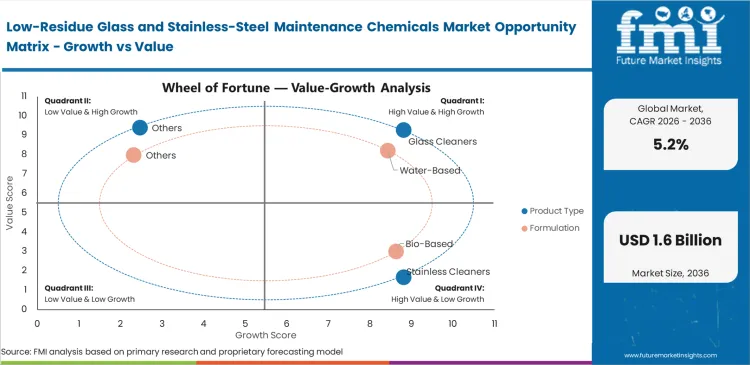
Severe labor shortages compel custodial contractors to optimize every physical movement. Operations managers abandon legacy multi-step rinsing procedures, shifting entirely to single-pass flash-drying formulations. Relying on slow-evaporating fluids forces staff to execute secondary buffing motions, doubling time spent per architectural fixture. Delayed adoption of eco label certified cleaning chemicals for professional users leaves contractors unable to bid on modern corporate contracts. Institutional buyers aggressively prioritize a Safer Choice glass cleaner for commercial use to satisfy these stringent ESG requirements.
Cold supply chains cause complex bio-based surfactant blends to separate during winter transport. Formulators struggle to maintain phase stability without using legacy volatile organic compounds. Adding heavy emulsifiers prevents separation but leaves unacceptable visual residue on high-gloss finishes. Current green cleaning chemicals for industrial maintenance require heated storage, creating massive logistical friction for distributors managing unconditioned warehouses.
Opportunities in the Low-Residue Glass and Stainless-Steel Maintenance Chemicals Market
- Microfiber compatibility engineering: Formulators who design fluids specifically optimized for advanced synthetic textiles capture premium institutional accounts.
- Telemetry-enabled dilution systems: Vendors deploying IoT-connected dispensing hardware lock in long-term green floor care chemicals contracts.
- Anti-smudge formulations: Engineering a true fingerprint-resistant stainless steel cleaner provides a massive competitive advantage for high-traffic commercial environments.
Regional Analysis
.webp "Top Country Growth Comparison Low Residue Glass And Stainless Steel Maintenance Chemicals Market Cagr (2026 2036)")
Based on regional analysis, Low-Residue Glass and Stainless-Steel Maintenance Chemicals are segmented into India, China, Brazil, the United States, Germany, the United Kingdom, and Japan across 40 plus countries.
| Country | CAGR (2026 to 2036) |
|---|---|
| India | 6.3% |
| China | 5.9% |
| Brazil | 5.7% |
| United States | 4.8% |
| Germany | 4.4% |
| United Kingdom | 4.3% |
| Japan | 3.9% |
Source: Future Market Insights (FMI) analysis, based on proprietary forecasting model and primary research
Asia Pacific Low-Residue Glass and Stainless-Steel Maintenance Chemicals Market Analysis
Commercial infrastructure deployment across the Asia Pacific theater forces international facilities management firms to rethink chemical procurement. Relying on imported European formulations destroys margins through prohibitive freight costs and extended lead times. Operations directors must secure supply from regional blenders capable of managing distinct local regulatory frameworks. Water quality fragmentation across this zone dictates that formulations must contain aggressive chelating agents to prevent hard-water spotting during flash-off. Custodial contractors managing high-rise portfolios are abandoning commodity detergents for engineered solutions that guarantee first-pass visual perfection without manual buffing.
- India: Modern retail infrastructure expansion across tier-one cities establishes a massive new baseline for architectural glass maintenance. Facility directors managing these shopping malls require immense volumes of specialized formulations to combat rapid exterior dust accumulation. Applying untreated water leaves mineral deposits that permanently etch expensive glazing. Sourcing cleaning chemicals for retail locally shields from severe import tariffs. Domestic suppliers who secure early contracts with these large retail conglomerates build insurmountable scale advantages over imported premium brands. Demand for low-residue maintenance chemicals across India is expected to rise at a CAGR of 6.3% through 2036. This volume guarantees that a domestic low residue stainless steel cleaner supplier can control the pricing floor for the entire decade.
- China: Hospitality expansion is raising cleanliness standards across newly built properties. Maintaining flawless stainless steel elevator banks and lobby mirrors requires highly specific flash-drying chemistry. General-purpose detergents fail these visual inspections instantly. China is projected to post a 5.9% CAGR in low-residue chemical adoption by 2036. High-end hotel chains routinely reject substandard local chemicals that leave cloudy residues on premium finishes, driving rapid adoption of premium hospitality glass maintenance chemicals. This rejection forces domestic chemical manufacturers to upgrade their formulation capabilities to match Western quality benchmarks, aligning with hygienic food processing equipment standards to supply foodservice cleaning chemicals for stainless steel across commercial kitchen environments.
- Japan: Japan’s mature institutional market places greater weight on low-impact chemistry and formulation transparency. Acceptable cleaning performance represents a mere baseline expectation. Innovation centers completely on supply chain transparency and surfactant biodegradability. The adoption of precision flash-drying formulations in Japan is poised to expand at a 3.9% CAGR through 2036. Restroom maintenance in high-traffic transit hubs demands odor-neutralizing fluids that leave zero visible trace on mirrors and steel fixtures. Buyers evaluate every no-residue stainless steel cleaner based on microscopic aesthetic improvements, allowing local engineering firms to command extreme price premiums for minimal-ingredient blends.
FMI's report includes extensive data on South Korea, Indonesia, and Vietnam. The Philippines, where rapid mall development and a booming BPO sector are driving demand for low‑residue, fast‑drying cleaners and ergonomically designed dispensers for large janitorial teams.
Europe Low-Residue Glass and Stainless-Steel Maintenance Chemicals Market Analysis
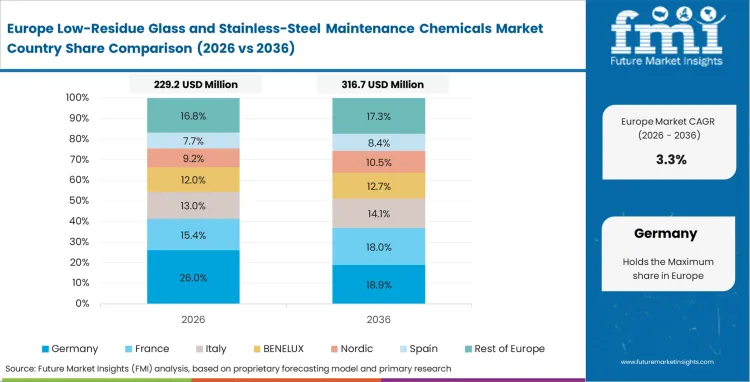
Stringent chemical exposure legislation dictates the baseline requirements for institutional sanitation across the European continent. Labor unions and occupational health bodies actively penalize facility managers who expose janitorial staff to aerosolized volatile organic compounds. Formulators cannot simply dilute legacy solvents to pass audits. They must engineer entirely new bio-based surfactant architectures that flash off at acceptable speeds without triggering respiratory alerts. Institutional procurement directors treat eco-label certification as a mandatory minimum bidding threshold rather than a premium feature, making a verified low-VOC glass and metal cleaner essential for contract compliance. Building administrators continually struggle to secure compliant cleaning fluids that match the labor efficiency of banned chemical profiles.
- Germany: Factory managers maintaining transparent machine guards require specific industrial cleaners that dissolve visual obstructions without degrading polycarbonate components. Labor unions without fear protect custodial workers from inhaling aerosolized solvents during routine spot-cleaning tasks. Chemical manufacturers must engineer products that clear the world's strictest inhalation safety thresholds. Demand for compliant maintenance chemicals in Germany is likely to advance at a CAGR of 4.4% during the assessment period. Traditional rapid-evaporation agents fail these respiratory tests immediately. Facilities actively seek a reliable fingerprint-resistant stainless steel cleaner that operates with categorically lower workforce health liabilities while maintaining legacy drying speeds.
- United Kingdom: UK low-residue glass and stainless-steel maintenance chemicals industry is forecast to register 4.3% CAGR through 2036. Severe staffing shortages compel contract cleaning firms to evaluate chemical portfolios strictly on time-and-motion data. Any product requiring a secondary buffing pass gets eliminated from field operations. Speed directly dictates contract profitability. Building managers overseeing historic and modern hybrid architecture need versatile fluids safe for both pristine glass and delicate metallic trims, driving bulk orders for dedicated commercial glass and stainless cleaner formulations. Vendors must physically demonstrate faster evaporation rates during procurement trials to win major accounts, proving that superior labor-minute metrics matter more than baseline fluid costs.
FMI's report includes extensive data on France, Italy, Spain, and the Nordics. Cross-border logistics managers encounter heavy friction managing divergent national packaging waste mandates. Poland is emerging as a regional growth node, where rapid e‑commerce fulfillment center expansion and EU funding for commercial retrofits are driving demand for low‑residue, fast‑drying cleaners and standardized dispenser systems.
The Americas Low-Residue Glass and Stainless-Steel Maintenance Chemicals Market Analysis
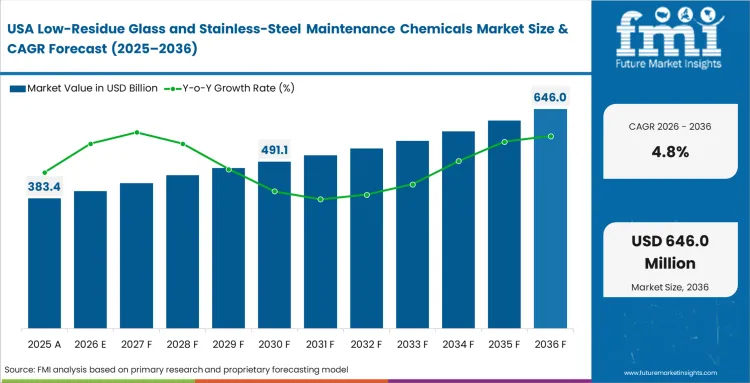
Corporate sustainability mandates collide directly with aggressive cost-reduction targets across Western hemisphere facility management networks. ESG compliance officers systematically eliminate cleaning products containing legacy solvents from approved vendor lists. Regional operations directors simultaneously refuse to authorize budget increases for premium bio-based replacements. This tension forces chemical manufacturers to absorb margin compression to maintain large-scale institutional volume contracts. A regional jan san distributor, glass and stainless cleaner catalog must immediately purge non-compliant SKUs to appease corporate mandates, leaving smaller custodial contractors scrambling to find affordable alternatives. Securing verified low-VOC inventory becomes a logistical bottleneck for operators attempting to bid on newly constructed LEED-certified commercial real estate.
- United States: United States is set to record 4.8% CAGR in specialized maintenance chemical demand during the forecast period. Corporate sustainability directives rewrite institutional purchasing criteria across the country. Chemical performance alone no longer guarantees contract renewal. Facilities require documented EPA certification before allowing products into buildings, forcing procurement officers to exclusively source a safer choice glass cleaner for commercial use. Operations directors managing high-end gymnasiums purchase premium cleaning chemicals for fitness environments to maintain constant mirrored-surface clarity without subjecting clients to harsh odors. This regulatory environment pushes the United States stainless steel cleaner formulation trajectory entirely toward bio-based components, leaving legacy solvent manufacturers isolated from future institutional contract bidding.
- Brazil: Hospital administrators enforce strict infection control protocols while simultaneously demanding pristine visual environments. Low-residue chemical adoption across Brazil is expected to increase at a CAGR of 5.7% through 2036. Standard disinfectants leave sticky residues on waiting-room glass, forcing secondary aesthetic cleaning passes. Labor budgets cannot support these dual-step processes. Formulators who integrate acceptable pathogen control with zero-residue optical clarity capture immediate institutional market share. Foodservice operators face similar pressures, driving the search for the best cleaner for commercial kitchen stainless steel to pass regional health inspections without utilizing abrasive pastes. Suppliers mastering this formulation balance position themselves perfectly for sweeping municipal government contracts alongside safe cleaning chemicals for schools.
FMI's report includes extensive data on Canada, Mexico, and Argentina. Multinational contract cleaners attempting to standardize their chemical carts across North and South American portfolios continually face supply chain disruptions. Colombia is emerging as a logistics and retail hub, where rapid growth in cold‑chain warehousing and modern supermarkets is increasing demand for low‑residue, fast‑drying cleaners and standardized dispenser systems.
Competitive Aligners for Market Players
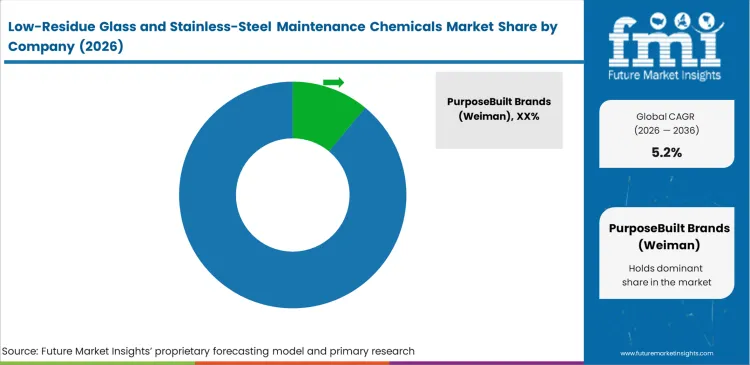
Regional volatile organic compound regulations prevent global chemical manufacturers from deploying identical fluid architectures across borders. Institutional buyers evaluate vendor viability based on their ability to supply compliant solutions without sudden stock-outs during regulatory shifts. Procuring reliable stainless steel maintenance chemicals requires verified compliance documentation. Procurement directors drop suppliers who fail regional safety audits, making localized formulation capacity the primary baseline for enterprise bidding.
Incumbents protect their institutional accounts through extensive proprietary libraries of pre-certified formulations. Securing environmental eco-labels requires lengthy, capital-intensive testing cycles that stall agile local startups attempting to compete on raw fluid pricing. Challengers attempting to introduce novel green solvents for industrial cleaning face an eighteen-month regulatory qualification barrier before securing a single purchase order. This certification moat ensures established formulators control contract renewals even when buyers actively compare water-based and solvent-based stainless steel cleaners to find cheaper alternatives.
Facilities management conglomerates actively resist vendor lock-in by standardizing hardware-agnostic dispensing protocols across their regional estates. Large contractors refuse proprietary dilution equipment that ties their janitorial utility rooms to one chemical supplier. Diversey and Zep respond to this pushback by offering open-architecture concentrate systems, forcing the competition back to raw fluid performance and logistics reliability rather than hardware dependency. Strategic power rests entirely with procurement officers who control millions of square feet of commercial real estate. These buyers push chemical manufacturers into intense bidding wars focused on guaranteed delivery metrics, ensuring that raw chemical advancements remain secondary to continuous supply chain stability.
Key Players in Low-Residue Glass and Stainless-Steel Maintenance Chemicals Market
- PurposeBuilt Brands (Weiman)
- SC Johnson Professional
- Ecolab
- 3M
- Zep
- Diversey
- CloroxPro
Scope of the Report
| Metric | Value |
|---|---|
| Quantitative Units | USD 0.93 billion to USD 1.55 billion, at a CAGR of 5.20% |
| Market Definition | Specialized maintenance formulations engineered for rapid evaporation on non-porous visual surfaces. These products remove localized soils without depositing particulate films, eliminating secondary rinsing requirements. |
| Segmentation | Product Type, Formulation, Format, End Use, Distribution, Region |
| Regions Covered | North America, Latin America, Western Europe, Eastern Europe, Asia Pacific (APAC), Middle East and Africa (MEA) |
| Countries Covered | United States, Canada, Brazil, Mexico, Germany, United Kingdom, France, Italy, Spain, Russia, China, Japan, India, South Korea, Australia, GCC Countries, South Africa |
| Key Companies Profiled | PurposeBuilt Brands (Weiman), SC Johnson Professional, Ecolab, 3M, Zep, Diversey, CloroxPro |
| Forecast Period | 2026 to 2036 |
| Approach | Baseline volume anchored to global commercial real estate delivery pipelines. |
Source: Future Market Insights (FMI) analysis, based on proprietary forecasting model and primary research
Low-Residue Glass and Stainless-Steel Maintenance Chemicals Market Analysis by Segments
Product Type
- Glass cleaners
- Stainless cleaners
- Dual-surface cleaners
- Protective polishes
Formulation
- Water-based
- Solvent-based
- Bio-based
- Disinfectant blends
Format
- Sprays
- Wipes
- Concentrates
- Aerosols
End Use
- Commercial facilities
- Foodservice
- Healthcare
- Residential
Distribution
- B2B direct
- Jan-san distributors
- Retail
- E-commerce
Region
- North America
- Latin America
- Western Europe
- Eastern Europe
- Asia Pacific
- Middle East and Africa
Bibliography
- American Chemical Society. (2024, January 25). Contributions of cleaning solution residues to indoor surface film formation. ACS Environmental Au / ACS ES&T Air.
- Avila-Sierra, A., et al. (2025). Cleaning performance of stainless steel surfaces fouled with model starch–protein deposits under standard chemical treatments. Journal of Food Engineering.
- Environmental Protection Agency. (2024, August). EPA’s Safer Choice and Design for the Environment (DfE) Standard. USA
- Environmental Protection Agency. (2025, February 25). USA EPA pesticide product label, Project Namor. USA EPA.
- Foodservice Equipment Distributors Association. (2026, March 16). Equipment sales rose at close of 2025, but MAFSI warns outside factors could cause slowdown. FEDA.
- Manufacturers’ Agents Association for the Foodservice Industry. (2025). Q3/2025 Foodservice Business Barometer report. MAFSI.
This bibliography is provided for reader reference. The full FMI report contains the complete reference list with primary source documentation.
This Report Addresses
- Chemical reformulation strategies adapting to strict indoor air quality mandates.
- Route-trade distribution shifts driven by smart dispenser telemetry integration.
- Labor-minute cost metrics dictating commercial facility procurement behavior.
- Regulatory exposure risks tied to legacy volatile organic compound usage.
- Bio-based surfactant stability challenges inside unconditioned supply chains.
- Hardware lock-in dynamics created by proprietary dilution control systems.
- Surface cross-contamination risks forcing multi-SKU janitorial cart stocking.
- Institutional bidding constraints tied to environmental eco-label certifications.
Frequently Asked Questions
Exactly what is a low-residue glass cleaner?
It is a specialized formulation engineered to flash-dry rapidly without leaving particulate films on non-porous visual surfaces. These fluids dissolve localized soils and evaporate completely, eliminating the need for secondary rinsing steps.
How to clean stainless steel without residue?
Contractors pair specialized flash-drying chemicals with highly absorbent synthetic microfiber textiles. The fluid suspends the localized soil temporarily while the microfiber lifts the particulate before the liquid evaporates.
What cleaner is safe on glass and stainless steel?
Dual-surface formulations utilizing volatile bio-based surfactants maintain optical clarity on glass while avoiding oxidative etching on metallic finishes. These products lack abrasive compounds that would permanently scratch pristine surfaces.
Can you explain the low-residue glass and stainless cleaner sector dynamics?
Labor shortages force cleaning contractors to optimize every physical motion. Fast-drying formulations eliminate secondary buffing passes, directly increasing total square footage maintained per worker hour and driving overall category consumption.
Who are the key companies in low-residue glass and stainless cleaners?
Major formulators dominating institutional supply channels include SC Johnson Professional, Ecolab, Diversey, Zep, CloroxPro, and PurposeBuilt Brands. These incumbents possess deep libraries of EPA-certified formulations protecting their market share.
How do you compare water-based and solvent-based stainless steel cleaners?
Solvent-based architectures provide faster flash-off speeds but fail modern indoor air quality compliance audits. Water-based options satisfy stringent ESG mandates but require precise surfactant engineering to match legacy evaporation rates.
Why do glass cleaners hold massive category share?
Modern architectural trends favor expansive interior and exterior glazing. Maintaining pristine visual presentation on these vast non-porous surfaces requires daily specialized chemical application to prevent permanent environmental etching.
How do regulations impact formulation architectures?
Environmental health and safety officers systematically eliminate toxic components from indoor environments. This mandate compels chemical engineers to replace cheap legacy solvents with advanced bio-based surfactants.
What prevents immediate transition to bio-based cleaning fluids?
Complex botanical surfactant blends frequently separate during winter transport through unconditioned supply chains. Fixing this phase instability often compromises rapid flash-off properties.
Why do facilities prefer centralized dilution systems?
Concentrated chemicals ship without massive water weight, drastically reducing logistics overhead. Fixed dispensing stations ensure custodial staff mix precise ratios, preventing costly fluid waste.
How does IoT telemetry change distributor relationships?
Smart dispensers track exact fluid consumption rates across large campuses. Distributors leveraging this data deploy predictive replenishment models, building immense switching friction against competing chemical vendors.
Why do foodservice operators demand specialized stainless cleaners?
Commercial kitchens utilize vast expanses of grade-304 metallic prep surfaces. Proper chemical polishing prevents permanent oxidative pitting from acidic food soils while maintaining mandatory health inspection aesthetics.
What differentiates India's expansion from Western markets?
Massive new retail infrastructure creates a fresh baseline of commercial square footage requiring daily upkeep. Local formulators capturing these initial massive contracts establish durable scale advantages.
Why do German buyers enforce unique procurement standards?
Powerful labor unions prioritize worker respiratory safety above raw chemical efficacy. Products must clear the world's strictest inhalation thresholds before reaching a janitorial cart.
What penalty do buyers face for utilizing incorrect formulations?
General-purpose degreasers leave oily residue on mirrored finishes. Correcting these errors requires complete re-cleaning, forcing contractors to absorb unbillable labor hours.
How do spray formats dominate localized cleaning routines?
Trigger-based bottles enable instantaneous spot-cleaning response without overspray onto adjacent porous materials. Ergonomic hardware integration minimizes repetitive strain injuries across massive housekeeping workforces.
Why are standard disinfectants unsuitable for architectural glass?
Products engineered solely for maximum pathogen kill rates lack specific optical-clarity engineering. Drying agents are omitted, leaving sticky micro-films that quickly attract airborne dust.
What structural change approaches this category by 2036?
Predictive delivery algorithms will fully automate institutional chemical replenishment. Route drivers will transition from active sales agents into pure logistics technicians maintaining connected hardware nodes.
How do harsh LED lighting upgrades affect chemical selection?
Modern high-efficiency illumination exposes microscopic surface streaks previously hidden by dim incandescent fixtures. Facility managers are forced to upgrade to premium flash-drying fluids to pass internal visual audits.
Why do hospital administrators scrutinize cleaning residues?
Beyond pure aesthetics, lingering chemical films can interact unpredictably with potent medical-grade disinfectants applied later. Neutralizing this cross-contamination risk requires perfectly clean baseline surfaces.
How does humidity impact water-based formulation performance?
High ambient moisture slows evaporation rates significantly. Custodial crews operating in tropical climates must alter physical wiping techniques, directly reducing overall daily productivity metrics compared to arid regions.
Preview the report firsthand - request a free sample
Get SampleGet the brochure for pricing and purchase details.
Get PDFTable of Content
- Executive Summary
- Global Market Outlook
- Demand-side Trends
- Supply-side Trends
- Technology Roadmap Analysis
- Analysis and Recommendations
- Market Overview
- Market Coverage / Taxonomy
- Market Definition / Scope / Limitations
- Research Methodology
- Chapter Orientation
- Analytical Lens and Working Hypotheses
- Market Structure, Signals, and Trend Drivers
- Benchmarking and Cross-market Comparability
- Market Sizing, Forecasting, and Opportunity Mapping
- Research Design and Evidence Framework
- Desk Research Programme (Secondary Evidence)
- Company Annual and Sustainability Reports
- Peer-reviewed Journals and Academic Literature
- Corporate Websites, Product Literature, and Technical Notes
- Earnings Decks and Investor Briefings
- Statutory Filings and Regulatory Disclosures
- Technical White Papers and Standards Notes
- Trade Journals, Industry Magazines, and Analyst Briefs
- Conference Proceedings, Webinars, and Seminar Materials
- Government Statistics Portals and Public Data Releases
- Press Releases and Reputable Media Coverage
- Specialist Newsletters and Curated Briefings
- Sector Databases and Reference Repositories
- FMI Internal Proprietary Databases and Historical Market Datasets
- Subscription Datasets and Paid Sources
- Social Channels, Communities, and Digital Listening Inputs
- Additional Desk Sources
- Expert Input and Fieldwork (Primary Evidence)
- Primary Modes
- Qualitative Interviews and Expert Elicitation
- Quantitative Surveys and Structured Data Capture
- Blended Approach
- Why Primary Evidence is Used
- Field Techniques
- Interviews
- Surveys
- Focus Groups
- Observational and In-context Research
- Social and Community Interactions
- Stakeholder Universe Engaged
- C-suite Leaders
- Board Members
- Presidents and Vice Presidents
- R&D and Innovation Heads
- Technical Specialists
- Domain Subject-matter Experts
- Scientists
- Physicians and Other Healthcare Professionals
- Governance, Ethics, and Data Stewardship
- Research Ethics
- Data Integrity and Handling
- Primary Modes
- Tooling, Models, and Reference Databases
- Desk Research Programme (Secondary Evidence)
- Data Engineering and Model Build
- Data Acquisition and Ingestion
- Cleaning, Normalisation, and Verification
- Synthesis, Triangulation, and Analysis
- Quality Assurance and Audit Trail
- Market Background
- Market Dynamics
- Drivers
- Restraints
- Opportunity
- Trends
- Scenario Forecast
- Demand in Optimistic Scenario
- Demand in Likely Scenario
- Demand in Conservative Scenario
- Opportunity Map Analysis
- Product Life Cycle Analysis
- Supply Chain Analysis
- Investment Feasibility Matrix
- Value Chain Analysis
- PESTLE and Porter’s Analysis
- Regulatory Landscape
- Regional Parent Market Outlook
- Production and Consumption Statistics
- Import and Export Statistics
- Market Dynamics
- Global Market Analysis 2021 to 2025 and Forecast, 2026 to 2036
- Historical Market Size Value (USD Million) Analysis, 2021 to 2025
- Current and Future Market Size Value (USD Million) Projections, 2026 to 2036
- Y-o-Y Growth Trend Analysis
- Absolute $ Opportunity Analysis
- Global Market Pricing Analysis 2021 to 2025 and Forecast 2026 to 2036
- Global Market Analysis 2021 to 2025 and Forecast 2026 to 2036, By Product Type
- Introduction / Key Findings
- Historical Market Size Value (USD Million) Analysis By Product Type , 2021 to 2025
- Current and Future Market Size Value (USD Million) Analysis and Forecast By Product Type , 2026 to 2036
- Glass Cleaners
- Stainless Cleaners
- Others
- Glass Cleaners
- Y-o-Y Growth Trend Analysis By Product Type , 2021 to 2025
- Absolute $ Opportunity Analysis By Product Type , 2026 to 2036
- Global Market Analysis 2021 to 2025 and Forecast 2026 to 2036, By Formulation
- Introduction / Key Findings
- Historical Market Size Value (USD Million) Analysis By Formulation, 2021 to 2025
- Current and Future Market Size Value (USD Million) Analysis and Forecast By Formulation, 2026 to 2036
- Water-Based
- Bio-Based
- Others
- Water-Based
- Y-o-Y Growth Trend Analysis By Formulation, 2021 to 2025
- Absolute $ Opportunity Analysis By Formulation, 2026 to 2036
- Global Market Analysis 2021 to 2025 and Forecast 2026 to 2036, By Format
- Introduction / Key Findings
- Historical Market Size Value (USD Million) Analysis By Format, 2021 to 2025
- Current and Future Market Size Value (USD Million) Analysis and Forecast By Format, 2026 to 2036
- Spray
- Wipes
- Concentrates
- Spray
- Y-o-Y Growth Trend Analysis By Format, 2021 to 2025
- Absolute $ Opportunity Analysis By Format, 2026 to 2036
- Global Market Analysis 2021 to 2025 and Forecast 2026 to 2036, By End Use
- Introduction / Key Findings
- Historical Market Size Value (USD Million) Analysis By End Use, 2021 to 2025
- Current and Future Market Size Value (USD Million) Analysis and Forecast By End Use, 2026 to 2036
- Commercial
- Foodservice
- Healthcare
- Commercial
- Y-o-Y Growth Trend Analysis By End Use, 2021 to 2025
- Absolute $ Opportunity Analysis By End Use, 2026 to 2036
- Global Market Analysis 2021 to 2025 and Forecast 2026 to 2036, By Distribution
- Introduction / Key Findings
- Historical Market Size Value (USD Million) Analysis By Distribution, 2021 to 2025
- Current and Future Market Size Value (USD Million) Analysis and Forecast By Distribution, 2026 to 2036
- B2B
- Retail
- oE-commerce
- B2B
- Y-o-Y Growth Trend Analysis By Distribution, 2021 to 2025
- Absolute $ Opportunity Analysis By Distribution, 2026 to 2036
- Global Market Analysis 2021 to 2025 and Forecast 2026 to 2036, By Region
- Introduction
- Historical Market Size Value (USD Million) Analysis By Region, 2021 to 2025
- Current Market Size Value (USD Million) Analysis and Forecast By Region, 2026 to 2036
- North America
- Latin America
- Western Europe
- Eastern Europe
- East Asia
- South Asia and Pacific
- Middle East & Africa
- Market Attractiveness Analysis By Region
- North America Market Analysis 2021 to 2025 and Forecast 2026 to 2036, By Country
- Historical Market Size Value (USD Million) Trend Analysis By Market Taxonomy, 2021 to 2025
- Market Size Value (USD Million) Forecast By Market Taxonomy, 2026 to 2036
- By Country
- USA
- Canada
- Mexico
- By Product Type
- By Formulation
- By Format
- By End Use
- By Distribution
- By Country
- Market Attractiveness Analysis
- By Country
- By Product Type
- By Formulation
- By Format
- By End Use
- By Distribution
- Key Takeaways
- Latin America Market Analysis 2021 to 2025 and Forecast 2026 to 2036, By Country
- Historical Market Size Value (USD Million) Trend Analysis By Market Taxonomy, 2021 to 2025
- Market Size Value (USD Million) Forecast By Market Taxonomy, 2026 to 2036
- By Country
- Brazil
- Chile
- Rest of Latin America
- By Product Type
- By Formulation
- By Format
- By End Use
- By Distribution
- By Country
- Market Attractiveness Analysis
- By Country
- By Product Type
- By Formulation
- By Format
- By End Use
- By Distribution
- Key Takeaways
- Western Europe Market Analysis 2021 to 2025 and Forecast 2026 to 2036, By Country
- Historical Market Size Value (USD Million) Trend Analysis By Market Taxonomy, 2021 to 2025
- Market Size Value (USD Million) Forecast By Market Taxonomy, 2026 to 2036
- By Country
- Germany
- UK
- Italy
- Spain
- France
- Nordic
- BENELUX
- Rest of Western Europe
- By Product Type
- By Formulation
- By Format
- By End Use
- By Distribution
- By Country
- Market Attractiveness Analysis
- By Country
- By Product Type
- By Formulation
- By Format
- By End Use
- By Distribution
- Key Takeaways
- Eastern Europe Market Analysis 2021 to 2025 and Forecast 2026 to 2036, By Country
- Historical Market Size Value (USD Million) Trend Analysis By Market Taxonomy, 2021 to 2025
- Market Size Value (USD Million) Forecast By Market Taxonomy, 2026 to 2036
- By Country
- Russia
- Poland
- Hungary
- Balkan & Baltic
- Rest of Eastern Europe
- By Product Type
- By Formulation
- By Format
- By End Use
- By Distribution
- By Country
- Market Attractiveness Analysis
- By Country
- By Product Type
- By Formulation
- By Format
- By End Use
- By Distribution
- Key Takeaways
- East Asia Market Analysis 2021 to 2025 and Forecast 2026 to 2036, By Country
- Historical Market Size Value (USD Million) Trend Analysis By Market Taxonomy, 2021 to 2025
- Market Size Value (USD Million) Forecast By Market Taxonomy, 2026 to 2036
- By Country
- China
- Japan
- South Korea
- By Product Type
- By Formulation
- By Format
- By End Use
- By Distribution
- By Country
- Market Attractiveness Analysis
- By Country
- By Product Type
- By Formulation
- By Format
- By End Use
- By Distribution
- Key Takeaways
- South Asia and Pacific Market Analysis 2021 to 2025 and Forecast 2026 to 2036, By Country
- Historical Market Size Value (USD Million) Trend Analysis By Market Taxonomy, 2021 to 2025
- Market Size Value (USD Million) Forecast By Market Taxonomy, 2026 to 2036
- By Country
- India
- ASEAN
- Australia & New Zealand
- Rest of South Asia and Pacific
- By Product Type
- By Formulation
- By Format
- By End Use
- By Distribution
- By Country
- Market Attractiveness Analysis
- By Country
- By Product Type
- By Formulation
- By Format
- By End Use
- By Distribution
- Key Takeaways
- Middle East & Africa Market Analysis 2021 to 2025 and Forecast 2026 to 2036, By Country
- Historical Market Size Value (USD Million) Trend Analysis By Market Taxonomy, 2021 to 2025
- Market Size Value (USD Million) Forecast By Market Taxonomy, 2026 to 2036
- By Country
- Kingdom of Saudi Arabia
- Other GCC Countries
- Turkiye
- South Africa
- Other African Union
- Rest of Middle East & Africa
- By Product Type
- By Formulation
- By Format
- By End Use
- By Distribution
- By Country
- Market Attractiveness Analysis
- By Country
- By Product Type
- By Formulation
- By Format
- By End Use
- By Distribution
- Key Takeaways
- Key Countries Market Analysis
- USA
- Pricing Analysis
- Market Share Analysis, 2025
- By Product Type
- By Formulation
- By Format
- By End Use
- By Distribution
- Canada
- Pricing Analysis
- Market Share Analysis, 2025
- By Product Type
- By Formulation
- By Format
- By End Use
- By Distribution
- Mexico
- Pricing Analysis
- Market Share Analysis, 2025
- By Product Type
- By Formulation
- By Format
- By End Use
- By Distribution
- Brazil
- Pricing Analysis
- Market Share Analysis, 2025
- By Product Type
- By Formulation
- By Format
- By End Use
- By Distribution
- Chile
- Pricing Analysis
- Market Share Analysis, 2025
- By Product Type
- By Formulation
- By Format
- By End Use
- By Distribution
- Germany
- Pricing Analysis
- Market Share Analysis, 2025
- By Product Type
- By Formulation
- By Format
- By End Use
- By Distribution
- UK
- Pricing Analysis
- Market Share Analysis, 2025
- By Product Type
- By Formulation
- By Format
- By End Use
- By Distribution
- Italy
- Pricing Analysis
- Market Share Analysis, 2025
- By Product Type
- By Formulation
- By Format
- By End Use
- By Distribution
- Spain
- Pricing Analysis
- Market Share Analysis, 2025
- By Product Type
- By Formulation
- By Format
- By End Use
- By Distribution
- France
- Pricing Analysis
- Market Share Analysis, 2025
- By Product Type
- By Formulation
- By Format
- By End Use
- By Distribution
- India
- Pricing Analysis
- Market Share Analysis, 2025
- By Product Type
- By Formulation
- By Format
- By End Use
- By Distribution
- ASEAN
- Pricing Analysis
- Market Share Analysis, 2025
- By Product Type
- By Formulation
- By Format
- By End Use
- By Distribution
- Australia & New Zealand
- Pricing Analysis
- Market Share Analysis, 2025
- By Product Type
- By Formulation
- By Format
- By End Use
- By Distribution
- China
- Pricing Analysis
- Market Share Analysis, 2025
- By Product Type
- By Formulation
- By Format
- By End Use
- By Distribution
- Japan
- Pricing Analysis
- Market Share Analysis, 2025
- By Product Type
- By Formulation
- By Format
- By End Use
- By Distribution
- South Korea
- Pricing Analysis
- Market Share Analysis, 2025
- By Product Type
- By Formulation
- By Format
- By End Use
- By Distribution
- Russia
- Pricing Analysis
- Market Share Analysis, 2025
- By Product Type
- By Formulation
- By Format
- By End Use
- By Distribution
- Poland
- Pricing Analysis
- Market Share Analysis, 2025
- By Product Type
- By Formulation
- By Format
- By End Use
- By Distribution
- Hungary
- Pricing Analysis
- Market Share Analysis, 2025
- By Product Type
- By Formulation
- By Format
- By End Use
- By Distribution
- Kingdom of Saudi Arabia
- Pricing Analysis
- Market Share Analysis, 2025
- By Product Type
- By Formulation
- By Format
- By End Use
- By Distribution
- Turkiye
- Pricing Analysis
- Market Share Analysis, 2025
- By Product Type
- By Formulation
- By Format
- By End Use
- By Distribution
- South Africa
- Pricing Analysis
- Market Share Analysis, 2025
- By Product Type
- By Formulation
- By Format
- By End Use
- By Distribution
- USA
- Market Structure Analysis
- Competition Dashboard
- Competition Benchmarking
- Market Share Analysis of Top Players
- By Region
- By Product Type
- By Formulation
- By Format
- By End Use
- By Distribution
- Competition Analysis
- Competition Deep Dive
- PurposeBuilt Brands (Weiman)
- Overview
- Product Portfolio
- Profitability by Market Segments (Product/Age /Sales Channel/Region)
- Sales Footprint
- Strategy Overview
- Marketing Strategy
- Product Strategy
- Channel Strategy
- SC Johnson Professional
- Ecolab
- 3M
- Zep
- Diversey
- PurposeBuilt Brands (Weiman)
- Competition Deep Dive
- Assumptions & Acronyms Used


