

- Industry Size (2026)
- USD 27.4 Mn
- Forecast (2036)
- USD 52.9 Mn
- CAGR (2026 to 2036)
- 6.8%
Rye Bran Beta-Glucan Market Size, Market Forecast and Outlook By FMI
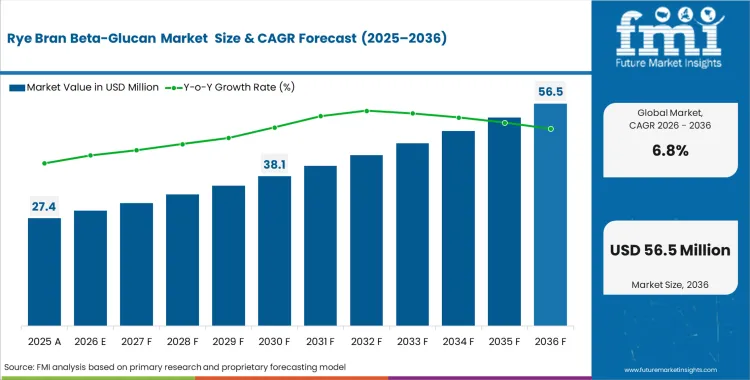
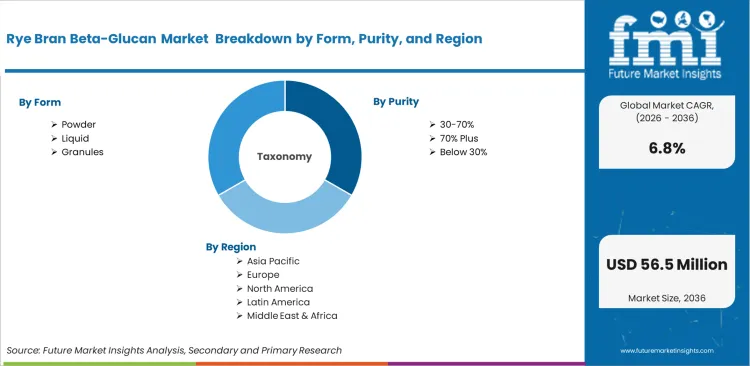
The rye bran beta-glucan market was valued at USD 25.7 million in 2025. Sales are expected to cross USD 27.4 million in 2026 at a CAGR of 6.8% during the forecast period. Formulators require ingredients that merge viscosity control with cereal-fiber enrichment, driving market size to USD 52.9 million through 2036.
Summary of Rye Bran Beta-Glucan Market
- The market is estimated at USD 27.4 million in 2026.
- The market is projected to reach USD 52.9 million by 2036.
- The market is expected to grow at a CAGR of 6.8% from 2026 to 2036.
- The forecast period represents an incremental opportunity of USD 25.5 million.
- Powder leads the form segment with a 48.2% share.
- 30-70% purity dominates the purity segment with a 44.1% share.
- Functional foods lead the application segment with a 43.7% share.
- Food makers dominate the end use segment with a 46.4% share.
- Direct B2B leads the channel segment with a 67.5% share.
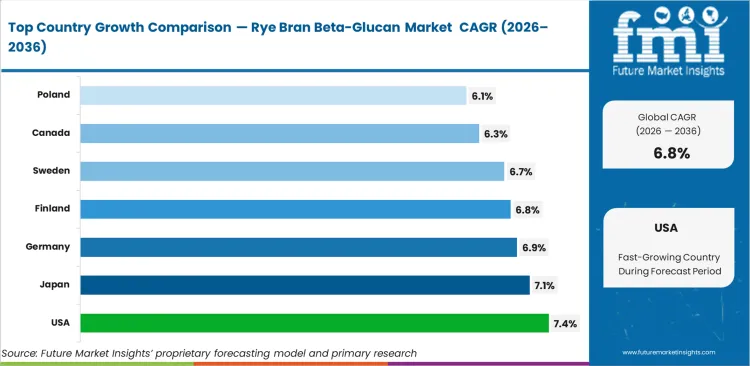
- The United States (7.4%), Japan (7.1%), and Germany (6.9%) are among the fastest-growing markets.
Rye Bran Beta-Glucan Market Key Takeaways
| Metric | Details |
|---|---|
| Industry Size (2026) | USD 27.4 million |
| Industry Value (2036) | USD 52.9 million |
| CAGR (2026-2036) | 6.8% |
Source: Future Market Insights (FMI) analysis, based on proprietary forecasting model and primary research
Companies face growing pressure to specify functional ingredients capable of supporting cardiometabolic positioning without depending entirely on premium oat-derived extracts. Access to a dependable rye-based beta-glucan source adds valuable supply resilience across ingredient procurement strategies, especially as food and nutraceutical manufacturers seek greater flexibility in fiber standardization, cost control, and long-term formulation planning. Delayed movement in this direction leaves operations more exposed to raw material price variation, while competing brands strengthen supply security through longer-duration sourcing agreements tied to alternative beta-glucan streams supported by broader cereal processing availability.
Processors no longer treat bran as a low-value feed by-product, but instead prioritize controlled extraction pathways aimed at producing functional ingredients aligned with human nutrition applications, satiety-focused formulations, cholesterol-management positioning, and digestive health product development. Once milling facilities install specialized fractionation lines designed to isolate beta-glucan-rich matrices without damaging molecular weight integrity, underlying production economics begin to change materially. Commercial interest also rises because rye bran beta-glucan can support label-friendly fiber enrichment across bakery, beverage, cereal, and supplement formats, expanding its relevance beyond a narrow specialty ingredient role. Rising attention to upcycled grain fractions further strengthens the business case for higher-value rye bran utilization.
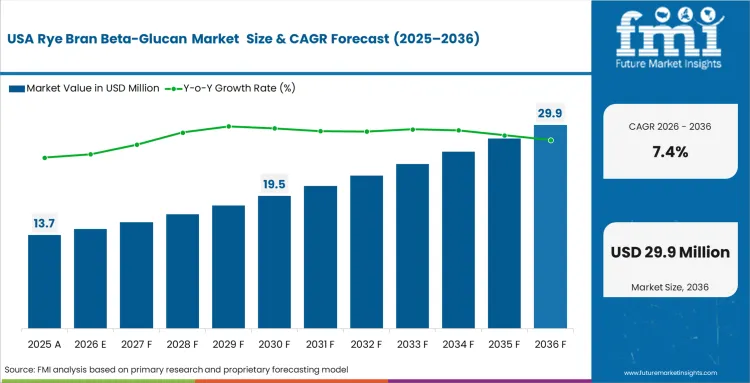
The United States is expected to register a 7.4% CAGR during the forecast period due to supplement brands vigorously driving adoption for specific cardiovascular claims. Japan is estimated to expand at a 7.1% CAGR as its aging populations demand targeted fiber fortification. Growth in Germany is poised to expand at a 6.9% CAGR, Finland at a 6.8% CAGR, Sweden at a 6.7% CAGR, and Canada and Poland at a 6.3% and 6.1% CAGR respectively. Regional divergence stems directly from local milling capacity versus advanced extraction investment.
Segmental Analysis
Rye Bran Beta-Glucan Market Analysis by Form
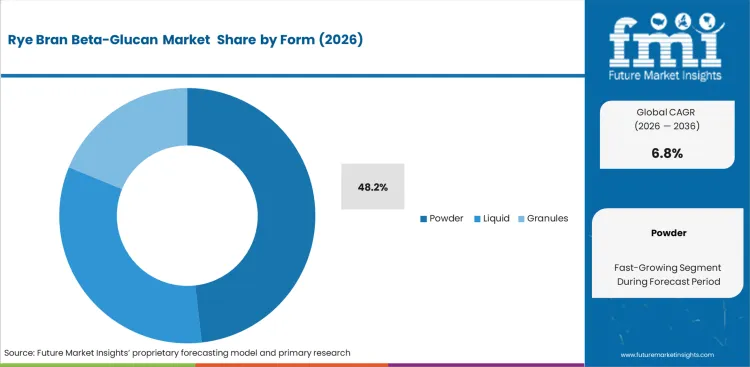
Powder formats dominate manufacturing floors because aqueous cereal fibers degrade rapidly during extended transit times. Formulators purchasing bulk ingredients require absolute moisture control for designing complex bio fermented fractions. The powder segment is expected to hold 48.2% revenue share in 2026. This dominant position is driven by absolute moisture control during complex dry blending operations, and extended shelf stability that prevents rapid degradation during global transit. Superior compatibility with existing industrial hydration tanks, and reliability that formulation chemists demand for engineering complex matrices are other factors driving revenue growth. Liquid concentrates offer immediate dispersion in specialized beverages, yet production lines avoid them due to microbial spoilage risks. Operations managers attempting to substitute wet dispersions face line blockages during unpredicted temperature shifts.
- Initial qualification parameters: Early supplier screening places strong emphasis on dry flow performance, since poor handling can disrupt blending consistency and storage reliability across functional ingredient programs. Any failure to meet strict moisture specifications removes prospective vendors immediately, regardless of extraction efficiency.
- Pilot scale validation: Quality assurance teams assess powder dissolution under high-shear mixing conditions, since hydration behavior remains central to process stability during scaled formulation work. Suppliers must demonstrate that the material resists persistent clumping after introduction into large industrial hydration tanks during pilot production.
- Long-term contract expansion: Larger volume commitments proceed only after powders demonstrate stable twelve-month shelf life across varied warehouse conditions. Any decline in functional viscosity during storage activates immediate contract termination provisions, requiring suppliers to preserve integrity across extended logistical lifecycles.
Rye Bran Beta-Glucan Market Analysis by Purity
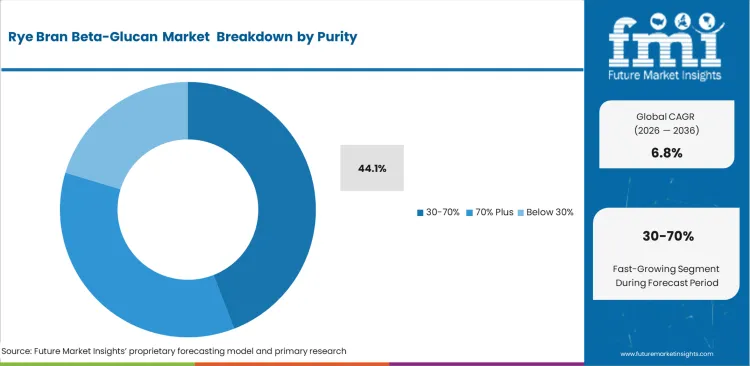
Extraction physics severely restricts economical production yields, driving commercial viability toward mid-tier concentration levels. Processing engineers must carefully balance product functional efficacy against immense energy expenses required for executing deep fractionation processes. The 30-70% segment is estimated to account for 44.1% revenue share in 2026. This is due to an optimal cost-to-benefit ratio for industrial procurement, and vital retention of natural synergistic texturizing properties. Significantly lower energy consumption during the extraction phase, and natural suppression of mechanical foaming during high-speed filling operations are key factors driving revenue growth.
Residual bran matrices retained within these mid-purity blends provide critical synergistic texturizing properties absent from highly purified beta glucan actives. Plant managers insisting on absolute purity grades often expend excess capital adding artificial hydrocolloids back into recipes for recovering lost mouthfeel. Current industrial purity limits reflect deliberate engineering choices rather than underlying technological extraction shortcomings.
- Raw material procurement economics: Supply chain personnel consistently target mid-purity grades to hit highly dynamic cost-in-use metrics. Specifying ultra-pure isolates strains formulation budgets before manufacturing begins, shifting the financial burden onto retail pricing models that consumers frequently reject in standard grocery channels.
- Hidden operational penalties: Production supervisors face severe, line-stopping foaming issues running highly purified fractions through high-speed liquid filling equipment. Retaining natural lipid components native to lower purity grades suppresses this mechanical foaming organically, preserving essential operational throughput speeds.
- Lifecycle cost comparison: Chief financial officers calculating total ingredient lifecycle costs discover mid-purity extracts deliver superior return on investment. When considering total batch stabilization requirements and the avoided cost of synthetic thickeners, mid-tier purities provide unparalleled economic advantages.
Rye Bran Beta-Glucan Market Analysis by Application
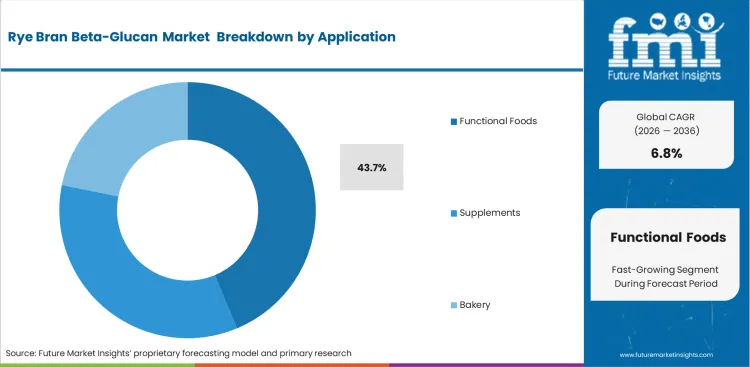
Brand managers continually evaluate whether new product lines necessitate dedicated cardiometabolic claims or broader general wellness positioning. Utilizing rye derivatives in bakery demands strict thermal protection protocols compared to beverage formulations incorporating food dietary fibers. The functional foods segment is expected to hold a 43.7% revenue share in 2026. This is due to extensive flavor masking techniques utilized by massive consumer packaged goods brands, and rising consumer preference for fortified everyday grocery items.
Seamless integration into established commercial bakery operations, and avoidance of strict clinical-grade viscosity validation requirements are key factors driving revenue growth. Clinical nutrition establishes rigorous specification standards pushing other consumer categories to eventually adopt similar stringent parameters. Product developers prioritizing cost over clinical-grade viscosity validation routinely observe flagship beverage launches failing sensory panels within mere weeks.
- Viscosity failure prevention: Formulation chemists specify exact molecular weight parameters to completely prevent beverage phase separation. Ignoring these precise metrics causes functional drinks to form unappealing gel layers during retail storage, instantly destroying brand equity and triggering massive product returns.
- Thermal degradation risks: Bakery process engineers must meticulously account for extreme heat exposure during commercial oven cycles. Beta-glucan chains break down under high temperatures, completely eliminating the intended health benefits if the polysaccharides are not protected properly within the food matrix.
- Full dosage delivery: Quality control managers intensively test finished products ensuring intended active fiber levels survive harsh processing conditions. Failing this vital post-production verification invites devastating regulatory audits, immediate product recalls, and severe financial penalties from major retail distributors.
Rye Bran Beta-Glucan Market Analysis by End Use
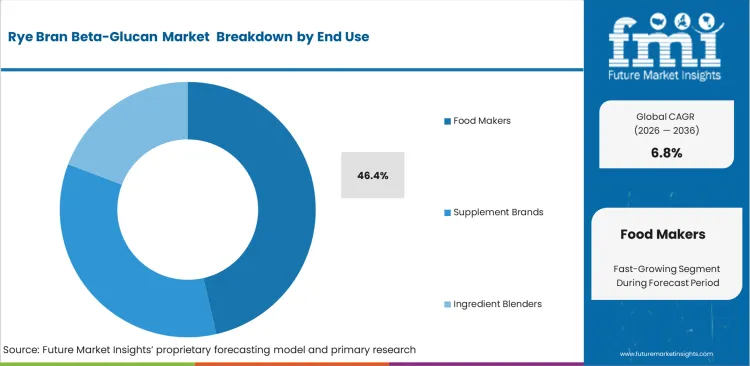
Selecting unverified extraction partners continually forces internal quality departments to rebuild ingredient profiles from scratch, ultimately wasting valuable developmental timelines. The food makers segment is expected to hold a 46.4% revenue share in 2026, owing to heavy responsibility conglomerates bear for final product performance integrating functional flour, and massive purchasing power dictating global safety specifications.
Established distribution networks moving high volumes of fortified products, and reliance on expert ingredient blenders to achieve flawless sensory profiles are key factors driving revenue growth. Large conglomerates dictate safety specifications strictly while smaller brands completely depend upon following established operational guidelines. Expert ingredient blenders control functional outcomes by masking raw rye astringency before material reaches final manufacturing lines. Operations managers bypassing expert blenders to save margin risk entire production runs featuring completely unacceptable flavor profiles.
- Primary extraction base: Dedicated milling corporations firmly control initial bran fractionation. These massive entities possess the specialized capital equipment necessary for separating functional polysaccharides from tough exterior grain layers economically, creating an insurmountable barrier to entry for smaller milling operators.
- Raw material constraints: Sourcing personnel navigate highly volatile agricultural yields depending entirely on seasonal weather patterns. Poor harvest conditions restrict available high-quality bran, intensely squeezing downstream ingredient availability and forcing food makers into proactive bidding wars for premium raw materials.
- Future supply landscape: Strategic investment committees currently fund next-generation targeted extraction facilities. By the next decade, specialized fiber operations are expected to separate further from traditional commodity flour milling infrastructure, creating dedicated, high-margin ingredient extraction pipelines exclusively serving premium food makers.
Rye Bran Beta-Glucan Market Analysis by Channel
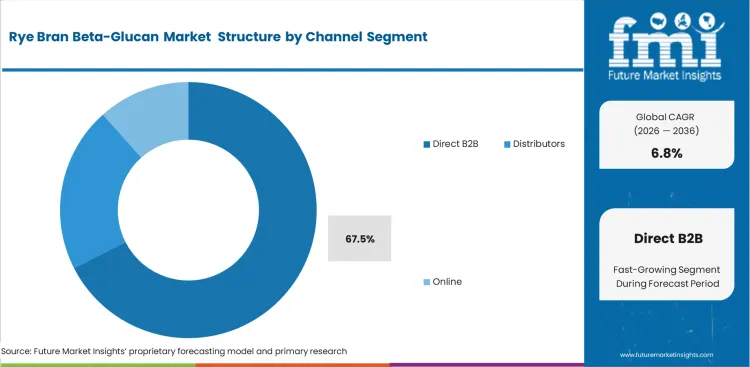
Distribution networks actively prioritize tightly controlled specification pipelines over open commodity trading for guaranteeing material performance. Procurement officers tracking pricing realize direct factory communication successfully prevents margin erosion and ensures quality control. The direct B2B segment is expected to hold a 67.5% revenue share in 2026, propelled by the necessity of mapping exact hydration curves with factory engineers, and strict avoidance of degraded material from spot-market distributors. The ability to negotiate specific milling tolerances directly with production floors, and execution of mandatory quality assurance protocols assessing bran share analysis are key factors driving revenue growth. Distributors handling general ingredients profoundly struggle guaranteeing molecular weight preservation across multiple warehouse transfers, pushing sensitive formulations toward direct supplier relationships. Procurement officers relying on spot-market distributors constantly risk receiving degraded material completely incapable of forming necessary gel structures.
- Optimal hydration performance: Food scientists map exact hydration curves for specific, highly sensitive ingredient batches. Direct supplier communication ensures incoming material matches precise functional expectations under specific industrial shear environments, preventing costly manufacturing delays.
- Edge condition vulnerability: Process engineers continually discover severe performance gaps when subjecting standard extracts to extreme acidic conditions. Standard commercial grades fail completely when introduced to low-pH fruit juice formulations, requiring direct B2B collaboration to engineer specialized, acid-resistant polysaccharide matrices.
- Strict acceptance thresholds: Quality assurance personnel routinely reject entire shipments failing narrow, pre-defined viscosity specifications. Suppliers must maintain rigorous internal testing protocols before dispatching material, avoiding massive freight penalty costs and ensuring their B2B clients experience zero downtime on the production floor.
Rye Bran Beta-Glucan Market Drivers, Restraints, and Opportunities
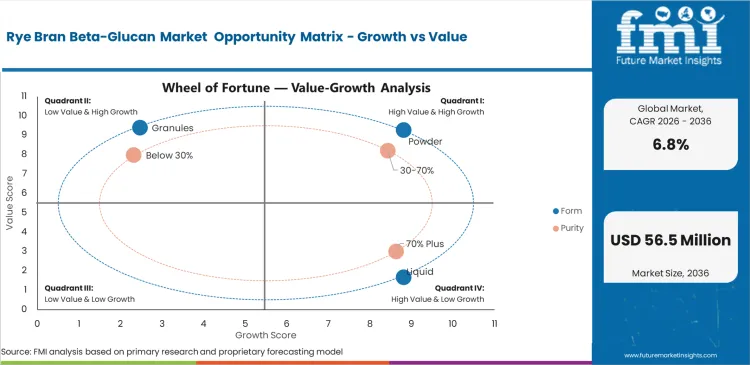
Commercial pressure pushes supplement formulation scientists to secure dietary fibers beyond oat-based ingredient systems. Comparative assessment of rye and oat alternatives highlights valuable supply chain redundancy for nutrition brands exposed to agricultural disruption across cereal sourcing networks. Access to alternative functional polysaccharides derived from barley inputs or rye extracts adds essential formulation resilience across product development portfolios. Brands moving early secure dedicated milling capacity and gain pricing leverage over competitors entering after category saturation intensifies. Rising consumer interest in cardiometabolic support adds urgency, pushing research teams to validate new cereal matrices at a faster pace. Faster action supports early positioning in specialized functional segments and protects margins against volatile commodity pricing shocks.
Lower extractability profiles introduce meaningful operational friction, slowing broader adoption even under active buyer interest in transition pathways. Dense cellular architecture across rye kernel outer layers demands substantial energy input during extraction and fraction recovery stages. Processors operate fractionation cycles at materially slower rates than standard instant cereal processing, reducing throughput efficiency across commercial production lines. Mechanical separation methods face difficulty isolating active components without elevated energy use, raising wholesale pricing across ingredient supply chains. Emerging enzymatic treatments show promise in softening barriers, yet current cost levels remain too high for mass commercialization. Production expenses stay elevated until engineering teams develop specialized extraction centrifuges capable of processing tough cereal matrices more efficiently.
Opportunities in Rye Bran Beta-Glucan Market
- Enzymatic pretreatment scaling: Specialized chemical engineers developing low-cost enzymatic softening protocols unlock massive throughput improvements. Extraction facilities capturing this intellectual property dominate future margin profiles analyzing dietary fibers.
- Symbiotic blend creation: Formulation scientists combining rye extracts with insoluble matrices develop superior gastrointestinal health products. Brands launching these dual-action solutions capture highly lucrative premium retail shelf space across major global pharmacies.
- Clinical endpoint validation: Regulatory affairs personnel aggressively funding specific cardiometabolic human trials build insurmountable intellectual property moats. Securing exclusive health claims prevents generic competitors from entering high-value medical nutrition channels, ensuring long-term profitability.
Regional Analysis
.webp "Top Country Growth Comparison Rye Bran Beta Glucan Market Cagr (2026 2036)")
Based on regional analysis, the rye bran beta-glucan market is segmented into North America, Europe, Asia Pacific, Latin America, and Middle East & Africa, across 40 plus countries.
| Country | CAGR (2026 to 2036) |
|---|---|
| United States | 7.4% |
| Japan | 7.1% |
| Germany | 6.9% |
| Finland | 6.8% |
| Sweden | 6.7% |
| Canada | 6.3% |
| Poland | 6.1% |
Source: Future Market Insights (FMI) analysis, based on proprietary forecasting model and primary research
North America Rye Bran Beta-Glucan Market Analysis
Rapid clinical nutrition commercialization completely defines purchasing behavior across North America supply chains. Procurement personnel abandon generic texturants, actively hunting verifiable cardiometabolic ingredients that fully satisfy stringent retail buyer demands. Local milling infrastructure heavily prioritizes high-margin fractionation over standard flour production, directly supporting downstream innovation that integrates high fiber foods. Highly evolved regulatory frameworks forcefully push brands toward heavily documented functional inputs rather than vague, unsupported botanical claims.
- United States: Demand for rye bran beta-glucan in the United States is projected to expand at a CAGR of 7.4% during the forecast period. This robust expansion is supported by aggressive clinical nutrition commercialization across major medical channels, shifting regulatory frameworks favoring highly documented functional inputs, intense retail demand for novel cardiovascular claims to differentiate crowded portfolios, and strong local milling infrastructure prioritizing high-margin fractionation. Product developers actively lock in exclusive retail distribution contracts, propelling market value as metabolic health positioning dominates new product launches across the country.
- Canada: Robust northern grain yields supporting steady raw material availability, and local millers strategically pivoting toward functional extraction capabilities supporting market growth. Sales of rye bran beta-glucan in Canada are estimated to increase at a CAGR of 6.3% during the forecast period. This steady growth is driven by secondary processing facilities rapidly expanding capabilities to capture value-added export opportunities, supply chain managers successfully building cross-border ingredient pipelines, Canada-based processors establishing dominant processing shares to serve the massive clinical nutrition sector seamlessly.
FMI's report includes Mexico. Cross-border integration accelerates dramatically as specialized fractionation equipment installations increase across southern processing hubs, linking North America grain yields with high-efficiency processing centers.
Asia Pacific Rye Bran Beta-Glucan Market Analysis
Rapid demographic aging forces functional food manufacturers across East Asia to completely redesign entire product portfolios around advanced metabolic support. Formulation teams prioritize soluble fibers offering combined satiety and cardiovascular benefits while strictly avoiding standard insoluble dietary fiber. Import dependencies drive intense, highly rigorous vendor qualification processes, ensuring only premium-grade extracts enter local manufacturing streams. Strict quality thresholds immediately filter out low-tier commodity suppliers incapable of meeting regional pharmaceutical-grade expectations.
- Japan: Rapid demographic aging forces functional food manufacturers to completely redesign flagship portfolios, while intense vendor qualification processes ensure only premium-grade extracts enter the country. Industry in Japan is projected to advance at a CAGR of 7.1% during the forecast period. Rising consumer demand for combined satiety and cardiovascular benefits fundamentally shifts procurement priorities across the region. Massive institutional health contracts consistently replace traditional ingredient marketing approaches, allowing research leaders executing these transitions to capture highly lucrative, long-term state healthcare agreements.
FMI's report includes South Korea and China. Rising regional health consciousness prompts massive capital investment into domestic, advanced ingredient fractionation facilities to reduce heavy reliance on European botanical imports.
Europe Rye Bran Beta-Glucan Market Analysis
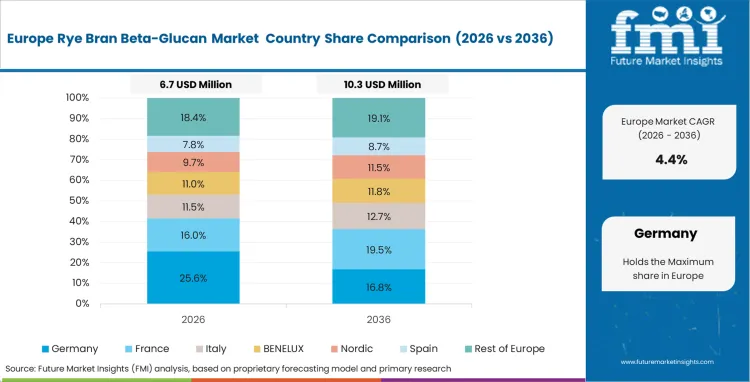
Deep historical familiarity with traditional grain profiles significantly accelerates the widespread acceptance of concentrated functional derivatives across Europe. Bakery innovation teams intelligently leverage existing consumer trust, swapping synthetic additives for recognizable botanical texturants. Established agricultural supply chains provide highly stable raw material pricing, allowing processors to meticulously forecast long-term extraction economics while analyzing low fermentability fibers. Stringent clean-label mandates forcefully eliminate artificial hydrocolloids from premium retail spaces completely.
- Germany: Strict clean-label reformulation mandates eliminating artificial hydrocolloids and bakery product developers replacing synthetic additives with recognizable grain-derived texturants completely reshape procurement strategies. Driven by relentless formulation upgrades across the premium grocery sector, the market in Germany is projected to expand at a CAGR of 6.9% during the forecast period. Quality assurance officers proactively avoid looming regulatory warning labels, making natural ingredient decks absolutely mandatory prerequisites for entering high-value domestic supermarket chains.
- Finland: Utilizing deeply established traditional milling infrastructure alongside local processors scaling advanced extraction operations without heavy capital expenditure provides distinct operational advantages. Successful integration of high-efficiency centrifuges significantly reduces unit production costs, and focused operational optimization allows domestic facilities to serve as premier export hubs across the broader regional block. Supported by these efficiencies, sector in Finland is projected to grow at a CAGR of 6.8% during the forecast period.
- Sweden: Advanced research laboratories spearheading continuous improvement in non-destructive extraction protocols and scientists successfully perfecting molecular weight preservation during harsh processing cycles anchor regional innovation. Supported by these technical breakthroughs, demand in Sweden is projected to rise at a CAGR of 6.7% during the forecast period. The establishment of global intellectual property dominance regarding cereal fibers pairs with relentless technical innovation, ultimately attracting major multinational pharmaceutical partnerships into the regional ecosystem.
- Poland: Poland is projected to advance at a CAGR of 6.1% during the forecast period. This volume expansion is driven by abundant raw material availability supporting secondary processing sector investments, sourcing managers successfully securing long-term regional harvest contracts, and uninterrupted supply chains guaranteeing downstream buyers steady material flow. Highly competitive processing labor costs effectively support regional operations, cementing Poland as the critical manufacturing backbone supporting Western European functional food brands.
FMI's report includes the United Kingdom and France. Developers actively seek targeted ingredient isolation technologies, dramatically enhancing localized manufacturing capabilities and utilizing specialty carbohydrates to meet evolving consumer dietary trends.
Competitive Aligners for Market Players
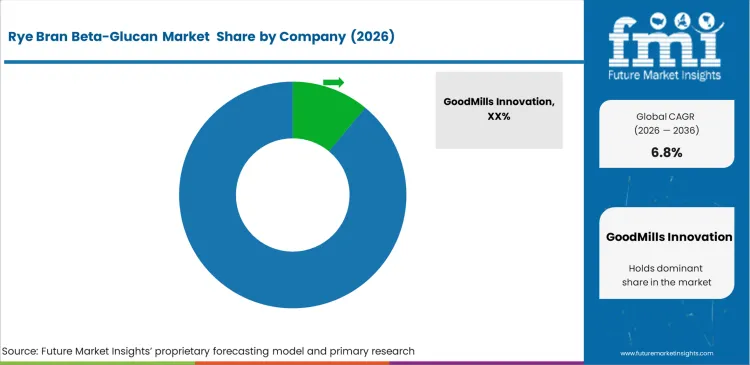
Buyers evaluating which companies sell rye-source beta-glucan ingredients discover competition relies entirely on specialized extraction techniques rather than massive industrial scale. Players like GoodMills Innovation and GreenField Natural Ingredients compete by perfecting viscosity standardization utilizing gluten free flours. Procurement teams specify ingredients based strictly on how predictably material hydrates in massive commercial mixing tanks. Traditional commodity millers heavily struggle to compete against agile firms capable of preserving fragile molecular structures during harsh, heat-intensive fractionation cycles. Winning highly lucrative contracts requires conclusively proving consistent rheological performance across widely varied batch conditions.
Incumbent suppliers defend their territory utilizing vast, pre-validated clinical dossiers and deeply established quality-control pipelines supplying united states foods. Challengers attempting market entry face immense, capital-intensive hurdles matching these documented performance metrics against established rice bran derivatives. Ceresal GmbH and Greenrize Co., Ltd. maintain a distinct advantage through deep proprietary knowledge regarding specialized enzymatic treatments absolutely required for softening tough cellular matrices efficiently. Entering this specific space demands massive capital investment into specialized decanter centrifuges and clinical validation laboratories. Accessing high-quality raw bran alone provides zero competitive edge without matching extraction expertise.
Key Players in Rye Bran Beta-Glucan Market
- GoodMills Innovation
- GreenField Natural Ingredients
- Ceresal GmbH
- Greenrize Co., Ltd.
- Tate & Lyle
- BENEO
- Grain Millers
Scope of the Report
| Metric | Value |
|---|---|
| Quantitative Units | USD 27.4 million to USD 52.9 million, at a CAGR of 6.8% |
| Market Definition | Concentrated polysaccharides isolated from outer rye kernel layers, engineered to deliver specific viscosity and functional fiber benefits. |
| Segmentation | By Form, By Purity, By Application, By End Use, By Channel, By Region |
| Regions Covered | North America, Latin America, Europe, Asia Pacific, Middle East & Africa |
| Countries Covered | United States, Canada, Germany, United Kingdom, France, Italy, Spain, Russia, Poland, China, Japan, South Korea, India, ASEAN, GCC Countries, South Africa |
| Key Companies Profiled | GoodMills Innovation, GreenField Natural Ingredients, Ceresal GmbH, Greenrize Co., Ltd., Tate & Lyle, BENEO, Grain Millers |
| Forecast Period | 2026 to 2036 |
| Approach | Baseline sizing anchors on verifiable milling output capacities rather than theoretical crop yields. |
Source: Future Market Insights (FMI) analysis, based on proprietary forecasting model and primary research
Rye Bran Beta-Glucan Market Analysis by Segments
By Form
- Powder
- Liquid
- Granules
By Purity
- 30-70%
- 70% Plus
- Below 30%
By Application
- Functional Foods
- Supplements
- Bakery
- Premixes
- Clinical
By End Use
- Food Makers
- Supplement Brands
- Ingredient Blenders
- Research Labs
By Channel
- Direct B2B
- Distributors
- Online
Region
- North America
- United States
- Canada
- Europe
- Germany
- United Kingdom
- France
- Italy
- Spain
- Asia Pacific
- China
- Japan
- South Korea
- Taiwan
- Singapore
- Latin America
- Brazil
- Mexico
- Argentina
- Middle East & Africa
- GCC Countries
- South Africa
- Israel
- Rest of Middle East & Africa
Bibliography
- Jurkaninová, L., Dvořáček, V., Gregusová, V., & Havrlentová, M. (2024, February). Cereal β-d-glucans in food processing applications and nanotechnology research. Foods, 13(3), 500.
- Singla, A., Gupta, O. P., Sagwal, V., Kumar, A., Patwa, N., Mohan, N., Ankush, Kumar, D., Vir, O., Singh, J., Kumar, L., Lal, C., & Singh, G. (2024, March). Beta-glucan as a soluble dietary fiber source: Origins, biosynthesis, extraction, purification, structural characteristics, bioavailability, biofunctional attributes, industrial utilization, and global trade. Nutrients, 16(6), 900.
- Pihelgas, S., Ehala-Aleksejev, K., Adamberg, S., Kazantseva, J., & Adamberg, K. (2024, September). The gut microbiota of healthy individuals remains resilient in response to the consumption of various dietary fibers. Scientific Reports, 14, 22208.
- Li, X., Wu, Y., Duan, R., Yu, H., Liu, S., & Bao, Y. (2024, December). Research progress in the extraction, structural characteristics, bioactivity, and commercial applications of oat β-glucan: A review. Foods, 13(24), 4160.
- Ghazvini, M., Ghanbari-Gohari, F., & Akhlaghi, M. (2025, March). Effect of rye consumption on markers of glycemic control: Evidence on the “rye factor”: A systematic review and meta-analysis of randomized controlled trials. Nutrition & Metabolism, 22, Article 28.
- Åberg, S., Johansson-Persson, A., Nilsson, A. C., & Landberg, R. (2024, November). Postprandial effects of four test meals containing whole grain rye, whole grain wheat, white wheat and oat β-glucan during a 13.5 h period in people with obesity. European Journal of Nutrition.
This bibliography is provided for reader reference. The full FMI report contains the complete reference list with primary source documentation.
This Report Addresses
- Viscosity standardization metrics required for clinical-grade beverage formulation using specific grain fractions.
- Moisture control thresholds dictating commercial viability for dry powder ingredient procurement protocols.
- Operational consequences facing plant managers utilizing ultra-pure isolates versus mid-tier bran concentrates.
- Structural extraction barriers limiting high-efficiency fractionation across European milling facilities.
- Texturizing synergies discovered within 50% purity extracts that highly refined variants lack entirely.
- Flavor masking requirements controlling commercialization success inside functional food categories.
- Quality assurance protocols necessary for preventing gel formation during retail storage cycles.
- Capital equipment investments separating specialized functional ingredient suppliers from standard flour millers.
Frequently Asked Questions
What is rye bran beta-glucan?
Rye-derived concentrates function as polysaccharides extracted from outer kernel layers. The category represents precision-milled active compounds engineered to deliver specific viscosity and cardiometabolic functional benefits rather than generic whole grain flour.
Does rye bran contain beta-glucan natively?
Raw kernels possess native polysaccharides, but unrefined animal-feed bran remains outside analytical boundaries. Buyers seeking functional efficacy require purposefully extracted and concentrated formats rather than raw unprocessed husks failing extraction criteria.
How is beta-glucan extracted from rye bran commercially?
Dedicated milling corporations control bran fractionation utilizing specialized decanter centrifuges and emerging enzymatic treatments. This equipment separates functional polysaccharides from tough exterior grain layers economically without excessive energy expenditure.
Is rye beta-glucan better than oat beta-glucan?
Procurement personnel evaluating these botanical streams note rye fractions offer distinct rheological properties requiring complete recipe adjustments. While oat dominates regulatory claims, rye provides critical supply chain redundancy advantages for nutrition brands exposed to agricultural ruptures.
What are rye bran beta-glucan applications?
Formulators deploy these concentrated polysaccharides across functional foods, supplements, bakery, premixes, and clinical nutrition. Widespread adoption depends on flavor masking techniques and exact molecular weight parameters preventing beverage phase separation.
What is the beta-glucan content in rye bran?
Extraction physics limit economical yields, pushing commercial viability toward mid-tier 30-70% concentrations rather than absolute isolation. Processing engineers balance functional efficacy against the high energy costs required for isolating highly purified fractions.
How big is the rye bran beta-glucan sector in 2026?
Revenue reaches USD 27.4 million in 2026. This baseline indicates extreme commercial immaturity compared against massive oat-derived ingredient volumes, signaling untapped capacity awaiting extraction technology upgrades.
What is the forecast for rye bran beta-glucan through 2036?
Projections indicate sales crossing USD 52.9 million by 2036. This trajectory relies on chemical engineers perfecting enzymatic softening techniques that lower the processing costs currently restricting supply lines.
Which companies sell rye-source beta-glucan ingredients?
Buyers evaluating this specialized sector encounter participants including GoodMills Innovation, GreenField Natural Ingredients, Ceresal GmbH, Greenrize Co., Ltd., Tate & Lyle, BENEO, and Grain Millers. Competition relies on specialized extraction techniques rather than industrial scale.
Is rye bran beta-glucan mainly used in foods or supplements?
Functional foods currently control the highest volume share as brand managers prioritize general wellness positioning across bakery and beverage portfolios. Supplement usage advances rapidly as brands demand novel cardiovascular claims differentiating retail product portfolios.
How does rye beta-glucan compare with oat and barley beta-glucan?
Comparing these cereal fibers demonstrates why formulation teams require distinct thermal protection protocols. While barley and oats feature higher natural extractability, rye isolates require advanced molecular weight preservation during harsh processing cycles.
Which countries are expected to drive rye bran beta-glucan demand growth?
The United States leads expansion driven by supplement brands seeking novel cardiovascular claims. Japan tracks closely as aging populations demand sophisticated fiber fortification, while Germany expands steadily on strong traditional grain familiarity and clean-label reformulation mandates.
What factors influence the rye beta-glucan price per kg?
Sourcing personnel navigate agricultural yields depending on seasonal weather patterns. Poor harvest conditions restrict high-quality bran availability, squeezing downstream ingredient availability regardless of installed extraction capacity.
How do formulation teams use rye beta-glucan in supplements?
Nutrition scientists secure these non-oat dietary fibers to establish critical formulation redundancy. Successful integration requires exact hydration curves mapped for specific ingredient batches, matching functional expectations under specific shear environments.
Why is alkali extracted rye beta-glucan significant?
Advanced non-destructive extraction protocols preserve fragile polysaccharides during fractionation cycles. Scientists perfecting molecular weight preservation avoid producing degraded material incapable of maintaining intended product texture.
What differentiates rye bran fiber vs rye beta-glucan?
Generic fiber assays measure total polysaccharide content while ignoring molecular weight preservation. Procurement personnel prioritizing percentage yield over extraction gentleness purchase degraded bulk material rather than precision-milled active compounds delivering verifiable clinical endpoints.
How does rye beta-glucan perform in breakfast cereals?
Bakery process engineers must account for heat exposure during oven cycles. Beta-glucan chains break down under high temperatures, eliminating intended health benefits if processors fail to protect these fragile polysaccharides during commercial manufacturing.
Why do buyers seek OEM rye beta-glucan ingredient partners?
Selecting unverified extraction partners forces internal quality departments to rebuild ingredient profiles from scratch. Top manufacturers dictate global purchasing standards across major conglomerates, ensuring incoming material matches precise functional hydration curves.
What drives clean label rye fiber ingredient adoption?
European quality assurance officers eliminating artificial hydrocolloids seek recognizable grain-derived texturants to avoid regulatory warning labels. Established agricultural supply chains provide stable raw material pricing allowing processors accurate long-term extraction forecasting.
How do processors optimize soluble fiber from rye bran?
Plant managers integrating high-efficiency centrifuges reduce unit production costs. Utilizing established traditional milling infrastructure allows local processors to scale extraction operations without heavy capital expenditure.
Why is cereal beta-glucan adoption accelerating?
Commercial stakes compel supplement formulation scientists to secure alternative functional polysaccharides providing formulation redundancy. Brands acting now lock in dedicated milling capacity, gaining pricing advantages over competitors waiting for sector saturation.
What defines the rye fiber ingredient category?
Analytical boundaries separate these precision-milled ingredients from generic whole grain flour. Material valuation relies on extractability metrics, molecular weight retention, and active dietary fiber concentration rather than total agricultural mass.
Preview the report firsthand - request a free sample
Get SampleGet the brochure for pricing and purchase details.
Get PDFTable of Content
- Executive Summary
- Global Market Outlook
- Demand-side Trends
- Supply-side Trends
- Technology Roadmap Analysis
- Analysis and Recommendations
- Market Overview
- Market Coverage / Taxonomy
- Market Definition / Scope / Limitations
- Research Methodology
- Chapter Orientation
- Analytical Lens and Working Hypotheses
- Market Structure, Signals, and Trend Drivers
- Benchmarking and Cross-market Comparability
- Market Sizing, Forecasting, and Opportunity Mapping
- Research Design and Evidence Framework
- Desk Research Programme (Secondary Evidence)
- Company Annual and Sustainability Reports
- Peer-reviewed Journals and Academic Literature
- Corporate Websites, Product Literature, and Technical Notes
- Earnings Decks and Investor Briefings
- Statutory Filings and Regulatory Disclosures
- Technical White Papers and Standards Notes
- Trade Journals, Industry Magazines, and Analyst Briefs
- Conference Proceedings, Webinars, and Seminar Materials
- Government Statistics Portals and Public Data Releases
- Press Releases and Reputable Media Coverage
- Specialist Newsletters and Curated Briefings
- Sector Databases and Reference Repositories
- FMI Internal Proprietary Databases and Historical Market Datasets
- Subscription Datasets and Paid Sources
- Social Channels, Communities, and Digital Listening Inputs
- Additional Desk Sources
- Expert Input and Fieldwork (Primary Evidence)
- Primary Modes
- Qualitative Interviews and Expert Elicitation
- Quantitative Surveys and Structured Data Capture
- Blended Approach
- Why Primary Evidence is Used
- Field Techniques
- Interviews
- Surveys
- Focus Groups
- Observational and In-context Research
- Social and Community Interactions
- Stakeholder Universe Engaged
- C-suite Leaders
- Board Members
- Presidents and Vice Presidents
- R&D and Innovation Heads
- Technical Specialists
- Domain Subject-matter Experts
- Scientists
- Physicians and Other Healthcare Professionals
- Governance, Ethics, and Data Stewardship
- Research Ethics
- Data Integrity and Handling
- Primary Modes
- Tooling, Models, and Reference Databases
- Desk Research Programme (Secondary Evidence)
- Data Engineering and Model Build
- Data Acquisition and Ingestion
- Cleaning, Normalisation, and Verification
- Synthesis, Triangulation, and Analysis
- Quality Assurance and Audit Trail
- Market Background
- Market Dynamics
- Drivers
- Restraints
- Opportunity
- Trends
- Scenario Forecast
- Demand in Optimistic Scenario
- Demand in Likely Scenario
- Demand in Conservative Scenario
- Opportunity Map Analysis
- Product Life Cycle Analysis
- Supply Chain Analysis
- Investment Feasibility Matrix
- Value Chain Analysis
- PESTLE and Porter’s Analysis
- Regulatory Landscape
- Regional Parent Market Outlook
- Production and Consumption Statistics
- Import and Export Statistics
- Market Dynamics
- Global Market Analysis 2021 to 2025 and Forecast, 2026 to 2036
- Historical Market Size Value (USD Million) Analysis, 2021 to 2025
- Current and Future Market Size Value (USD Million) Projections, 2026 to 2036
- Y-o-Y Growth Trend Analysis
- Absolute $ Opportunity Analysis
- Global Market Pricing Analysis 2021 to 2025 and Forecast 2026 to 2036
- Global Market Analysis 2021 to 2025 and Forecast 2026 to 2036, By Form
- Introduction / Key Findings
- Historical Market Size Value (USD Million) Analysis By Form , 2021 to 2025
- Current and Future Market Size Value (USD Million) Analysis and Forecast By Form , 2026 to 2036
- Powder
- Liquid
- Granules
- Powder
- Y-o-Y Growth Trend Analysis By Form , 2021 to 2025
- Absolute $ Opportunity Analysis By Form , 2026 to 2036
- Global Market Analysis 2021 to 2025 and Forecast 2026 to 2036, By Purity
- Introduction / Key Findings
- Historical Market Size Value (USD Million) Analysis By Purity, 2021 to 2025
- Current and Future Market Size Value (USD Million) Analysis and Forecast By Purity, 2026 to 2036
- 30-70%
- 70% Plus
- Below 30%
- 30-70%
- Y-o-Y Growth Trend Analysis By Purity, 2021 to 2025
- Absolute $ Opportunity Analysis By Purity, 2026 to 2036
- Global Market Analysis 2021 to 2025 and Forecast 2026 to 2036, By Application
- Introduction / Key Findings
- Historical Market Size Value (USD Million) Analysis By Application, 2021 to 2025
- Current and Future Market Size Value (USD Million) Analysis and Forecast By Application, 2026 to 2036
- Functional Foods
- Supplements
- Bakery
- Functional Foods
- Y-o-Y Growth Trend Analysis By Application, 2021 to 2025
- Absolute $ Opportunity Analysis By Application, 2026 to 2036
- Global Market Analysis 2021 to 2025 and Forecast 2026 to 2036, By End Use
- Introduction / Key Findings
- Historical Market Size Value (USD Million) Analysis By End Use, 2021 to 2025
- Current and Future Market Size Value (USD Million) Analysis and Forecast By End Use, 2026 to 2036
- Food Makers
- Supplement Brands
- Ingredient Blenders
- Food Makers
- Y-o-Y Growth Trend Analysis By End Use, 2021 to 2025
- Absolute $ Opportunity Analysis By End Use, 2026 to 2036
- Global Market Analysis 2021 to 2025 and Forecast 2026 to 2036, By Channel
- Introduction / Key Findings
- Historical Market Size Value (USD Million) Analysis By Channel, 2021 to 2025
- Current and Future Market Size Value (USD Million) Analysis and Forecast By Channel, 2026 to 2036
- Direct B2B
- Distributors
- Online
- Direct B2B
- Y-o-Y Growth Trend Analysis By Channel, 2021 to 2025
- Absolute $ Opportunity Analysis By Channel, 2026 to 2036
- Global Market Analysis 2021 to 2025 and Forecast 2026 to 2036, By Region
- Introduction
- Historical Market Size Value (USD Million) Analysis By Region, 2021 to 2025
- Current Market Size Value (USD Million) Analysis and Forecast By Region, 2026 to 2036
- North America
- Latin America
- Western Europe
- Eastern Europe
- East Asia
- South Asia and Pacific
- Middle East & Africa
- Market Attractiveness Analysis By Region
- North America Market Analysis 2021 to 2025 and Forecast 2026 to 2036, By Country
- Historical Market Size Value (USD Million) Trend Analysis By Market Taxonomy, 2021 to 2025
- Market Size Value (USD Million) Forecast By Market Taxonomy, 2026 to 2036
- By Country
- USA
- Canada
- Mexico
- By Form
- By Purity
- By Application
- By End Use
- By Channel
- By Country
- Market Attractiveness Analysis
- By Country
- By Form
- By Purity
- By Application
- By End Use
- By Channel
- Key Takeaways
- Latin America Market Analysis 2021 to 2025 and Forecast 2026 to 2036, By Country
- Historical Market Size Value (USD Million) Trend Analysis By Market Taxonomy, 2021 to 2025
- Market Size Value (USD Million) Forecast By Market Taxonomy, 2026 to 2036
- By Country
- Brazil
- Chile
- Rest of Latin America
- By Form
- By Purity
- By Application
- By End Use
- By Channel
- By Country
- Market Attractiveness Analysis
- By Country
- By Form
- By Purity
- By Application
- By End Use
- By Channel
- Key Takeaways
- Western Europe Market Analysis 2021 to 2025 and Forecast 2026 to 2036, By Country
- Historical Market Size Value (USD Million) Trend Analysis By Market Taxonomy, 2021 to 2025
- Market Size Value (USD Million) Forecast By Market Taxonomy, 2026 to 2036
- By Country
- Germany
- UK
- Italy
- Spain
- France
- Nordic
- BENELUX
- Rest of Western Europe
- By Form
- By Purity
- By Application
- By End Use
- By Channel
- By Country
- Market Attractiveness Analysis
- By Country
- By Form
- By Purity
- By Application
- By End Use
- By Channel
- Key Takeaways
- Eastern Europe Market Analysis 2021 to 2025 and Forecast 2026 to 2036, By Country
- Historical Market Size Value (USD Million) Trend Analysis By Market Taxonomy, 2021 to 2025
- Market Size Value (USD Million) Forecast By Market Taxonomy, 2026 to 2036
- By Country
- Russia
- Poland
- Hungary
- Balkan & Baltic
- Rest of Eastern Europe
- By Form
- By Purity
- By Application
- By End Use
- By Channel
- By Country
- Market Attractiveness Analysis
- By Country
- By Form
- By Purity
- By Application
- By End Use
- By Channel
- Key Takeaways
- East Asia Market Analysis 2021 to 2025 and Forecast 2026 to 2036, By Country
- Historical Market Size Value (USD Million) Trend Analysis By Market Taxonomy, 2021 to 2025
- Market Size Value (USD Million) Forecast By Market Taxonomy, 2026 to 2036
- By Country
- China
- Japan
- South Korea
- By Form
- By Purity
- By Application
- By End Use
- By Channel
- By Country
- Market Attractiveness Analysis
- By Country
- By Form
- By Purity
- By Application
- By End Use
- By Channel
- Key Takeaways
- South Asia and Pacific Market Analysis 2021 to 2025 and Forecast 2026 to 2036, By Country
- Historical Market Size Value (USD Million) Trend Analysis By Market Taxonomy, 2021 to 2025
- Market Size Value (USD Million) Forecast By Market Taxonomy, 2026 to 2036
- By Country
- India
- ASEAN
- Australia & New Zealand
- Rest of South Asia and Pacific
- By Form
- By Purity
- By Application
- By End Use
- By Channel
- By Country
- Market Attractiveness Analysis
- By Country
- By Form
- By Purity
- By Application
- By End Use
- By Channel
- Key Takeaways
- Middle East & Africa Market Analysis 2021 to 2025 and Forecast 2026 to 2036, By Country
- Historical Market Size Value (USD Million) Trend Analysis By Market Taxonomy, 2021 to 2025
- Market Size Value (USD Million) Forecast By Market Taxonomy, 2026 to 2036
- By Country
- Kingdom of Saudi Arabia
- Other GCC Countries
- Turkiye
- South Africa
- Other African Union
- Rest of Middle East & Africa
- By Form
- By Purity
- By Application
- By End Use
- By Channel
- By Country
- Market Attractiveness Analysis
- By Country
- By Form
- By Purity
- By Application
- By End Use
- By Channel
- Key Takeaways
- Key Countries Market Analysis
- USA
- Pricing Analysis
- Market Share Analysis, 2025
- By Form
- By Purity
- By Application
- By End Use
- By Channel
- Canada
- Pricing Analysis
- Market Share Analysis, 2025
- By Form
- By Purity
- By Application
- By End Use
- By Channel
- Mexico
- Pricing Analysis
- Market Share Analysis, 2025
- By Form
- By Purity
- By Application
- By End Use
- By Channel
- Brazil
- Pricing Analysis
- Market Share Analysis, 2025
- By Form
- By Purity
- By Application
- By End Use
- By Channel
- Chile
- Pricing Analysis
- Market Share Analysis, 2025
- By Form
- By Purity
- By Application
- By End Use
- By Channel
- Germany
- Pricing Analysis
- Market Share Analysis, 2025
- By Form
- By Purity
- By Application
- By End Use
- By Channel
- UK
- Pricing Analysis
- Market Share Analysis, 2025
- By Form
- By Purity
- By Application
- By End Use
- By Channel
- Italy
- Pricing Analysis
- Market Share Analysis, 2025
- By Form
- By Purity
- By Application
- By End Use
- By Channel
- Spain
- Pricing Analysis
- Market Share Analysis, 2025
- By Form
- By Purity
- By Application
- By End Use
- By Channel
- France
- Pricing Analysis
- Market Share Analysis, 2025
- By Form
- By Purity
- By Application
- By End Use
- By Channel
- India
- Pricing Analysis
- Market Share Analysis, 2025
- By Form
- By Purity
- By Application
- By End Use
- By Channel
- ASEAN
- Pricing Analysis
- Market Share Analysis, 2025
- By Form
- By Purity
- By Application
- By End Use
- By Channel
- Australia & New Zealand
- Pricing Analysis
- Market Share Analysis, 2025
- By Form
- By Purity
- By Application
- By End Use
- By Channel
- China
- Pricing Analysis
- Market Share Analysis, 2025
- By Form
- By Purity
- By Application
- By End Use
- By Channel
- Japan
- Pricing Analysis
- Market Share Analysis, 2025
- By Form
- By Purity
- By Application
- By End Use
- By Channel
- South Korea
- Pricing Analysis
- Market Share Analysis, 2025
- By Form
- By Purity
- By Application
- By End Use
- By Channel
- Russia
- Pricing Analysis
- Market Share Analysis, 2025
- By Form
- By Purity
- By Application
- By End Use
- By Channel
- Poland
- Pricing Analysis
- Market Share Analysis, 2025
- By Form
- By Purity
- By Application
- By End Use
- By Channel
- Hungary
- Pricing Analysis
- Market Share Analysis, 2025
- By Form
- By Purity
- By Application
- By End Use
- By Channel
- Kingdom of Saudi Arabia
- Pricing Analysis
- Market Share Analysis, 2025
- By Form
- By Purity
- By Application
- By End Use
- By Channel
- Turkiye
- Pricing Analysis
- Market Share Analysis, 2025
- By Form
- By Purity
- By Application
- By End Use
- By Channel
- South Africa
- Pricing Analysis
- Market Share Analysis, 2025
- By Form
- By Purity
- By Application
- By End Use
- By Channel
- USA
- Market Structure Analysis
- Competition Dashboard
- Competition Benchmarking
- Market Share Analysis of Top Players
- By Regional
- By Form
- By Purity
- By Application
- By End Use
- By Channel
- Competition Analysis
- Competition Deep Dive
- GoodMills Innovation
- Overview
- Product Portfolio
- Profitability by Market Segments (Product/Age /Sales Channel/Region)
- Sales Footprint
- Strategy Overview
- Marketing Strategy
- Product Strategy
- Channel Strategy
- GreenField Natural Ingredients
- Ceresal GmbH
- Greenrize Co., Ltd.
- Tate & Lyle
- GoodMills Innovation
- Competition Deep Dive
- Assumptions & Acronyms Used


