

- Industry Size (2026)
- USD 2.5 Bn
- Forecast (2036)
- USD 6.1 Bn
- CAGR (2026 to 2036)
- 5.4%
Transmission Shift Actuator Market Size, Market Forecast and Outlook By FMI
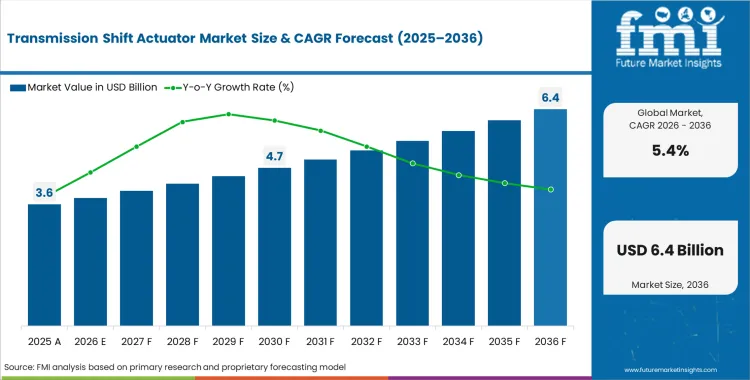
The transmission shift actuator market was valued at USD 3.4 billion in 2025. The industry is expected to reach USD 3.6 billion in 2026 at a CAGR of 5.4% during the forecast period. Demand outlook carries the market valuation to USD 6.1 billion by 2036 as automakers transition from mechanical linkages to electronically controlled actuation systems to meet evolving emission standards.
Powertrain engineering directors face a closing window to strip weight from existing vehicle architectures before next-generation emission penalties take effect. Delaying the transition to shift-by-wire configurations forces manufacturers to rely on heavy mechanical cables, directly impacting fuel efficiency metrics across their fleet averages. What many industry observers miss analyzing the automotive transmission shift actuator industry is that this transition requires a complete redesign of the center console and underlying sensor network, not just swapping a part. Adopting transmission shift actuator hardware allows interior design teams to reclaim cabin space while improving the functional safety of the vehicle.
Summary of Transmission Shift Actuator Market
- Market Snapshot
- The transmission shift actuator market surpassed a valuation of USD 3.4 billion in 2025 and is projected to reach USD 6.1 billion by 2036.
- The industry is expected to expand at a 5.4% CAGR from 2026 to 2036, creating an incremental opportunity of USD 2.5 billion.
- This remains a specification-led automotive component category where OEM fitment programs, shift precision, durability, and control-system compatibility determine supplier selection.
- Market structure is shaped by passenger vehicle volumes, rising use of electronically managed transmissions, and steady integration of actuators with transmission control software.
- Demand and Growth Drivers
- Demand continues to rise because automated shifting architectures need reliable actuator response across AMT, DCT, and automatic transmission layouts.
- Electric actuation is gaining wider use because it supports cleaner packaging, faster control response, and easier software coordination than legacy mechanical-heavy systems.
- Growth is also supported by rising vehicle production and installed transmission bases in Asia and North America, which sustain both OEM and replacement demand.
- Demand for leading countries forecasted as, India anticipated to project a 7.6% CAGR, followed by China at an expected 6.4%, Mexico at 5.7%, the U.S. at 5.3%, South Korea at 5.0%, Germany at 4.7%, and Japan at 4.1%.
- Growth remains moderated by long OEM validation cycles, platform-specific actuator calibration, and slower expansion in mature transmission markets.
- Product and Segment View
- The market covers transmission-mounted or control-linked shift actuators used to execute gear-selection and shift-fork movement in automated and electronically managed transmission systems.
- These actuators serve passenger cars, light commercial vehicles, and heavy commercial vehicles across factory-fit and replacement channels.
- First Fit (OEM) are predicted to lead the Sales Channel segment with 90% share, reflecting the platform-specific nature of actuator design and validation.
- AMT is expected to lead the Transmission segment with 42% share, helped by cost-sensitive automation demand across multiple vehicle classes.
- Supported by better integration with modern electronic vehicle architectures, Electric is projected to lead the Actuation Type segment with 71% share.
- Passenger cars are expected to lead the Vehicle Type segment with 76% share, as this class carries the largest transmission-equipped production base.
- Showcasing the market’s tilt toward tighter control logic and compact mechatronic packaging integrated with TCU is expected to lead the Integration segment with a 57% share.
- The scope includes dedicated shift actuators for transmission gear engagement and selection, but excludes full transmission assemblies, generic engine actuators, and unrelated by-wire chassis actuation systems.
- Geography and Competitive Outlook
- India, China, and Mexico are the faster-expanding national markets, while the U.S. remains a stable high-value base and Germany and Japan remain technically important mature markets.
- Competition is shaped by OEM nomination cycles, long validation windows, integrated mechatronics, and supplier capability in software-linked shift control, with Bosch, ZF, Schaeffler, Hitachi Astemo, and Denso among the main participants.
- The market is moderately concentrated, with Bosch leading the industry, while the rest of the structure remains split across major global Tier-1 suppliers.
- Competitive advantage rests less on standalone hardware and more on calibration depth, transmission-program fitment history, and electronics integration capability.
Automaker adoption of an automotive actuator accelerates rapidly once OEM transmission actuator supplier networks deliver modules pre-integrated with transmission control units. Consolidating these two components cuts assembly time on the factory floor and eliminates intermediate wiring harnesses. Suppliers who fail to offer this integrated TCU shift actuator package lose bids for high-volume passenger vehicle platforms immediately.
Divergence across the regions stems entirely from local consumer transmission preferences rather than differences in component availability. With India poised to expand at 7.6% as domestic vehicle manufacturers rapidly convert manual platforms to automated manuals to satisfy congested urban driving conditions. Followed by China, which is likely to scale at 6.4% based on aggressive electrification targets. Mexico anticipated to advance at 5.7% driven by North American nearshoring of automotive assembly lines. The U.S. projected to grow at 5.3% through heavy reliance on standard automatic transmissions in large trucks and SUVs. South Korea likely to register a 5.0% via steady export production. Germany expected to post a 4.7% as premium brands shift toward dual-clutch architectures. Japan forecasted to move at 4.1% leaning heavily on continuously variable setups.
Segmental Analysis
Transmission Shift Actuator Market Analysis by Sales Channel
Vehicle assembly requires actuators to be physically mounted inside or directly atop the automotive transmission housing before the drivetrain is mated to the chassis. Procurement directors at major automakers secure these components through multi-year contracts synchronized with specific vehicle platform lifecycles, and the First Fit (OEM) segment is estimated to account for 90% share in 2026. Choosing a specific actuator geometry dictates the surrounding packaging space for cooling lines and wiring harnesses. What aftermarket observers rarely grasp is that these units are explicitly designed to last the lifetime of the vehicle under normal operating conditions. Failure typically requires complete transmission removal, making replacement a specialized, low-volume activity. Independent repair shops struggle to program replacement units because tier-1 suppliers lock the required calibration software behind proprietary diagnostic firewalls.
- Platform Integration: Actuators mount directly to the gearbox during initial powertrain assembly. Powertrain engineering directors lock in supplier contracts years ahead of production to ensure chassis compatibility.
- Software Calibration: Post-installation functional testing requires proprietary software handshakes. Independent mechanics face significant hurdles replacing units without official diagnostic tools.
- Lifecycle Durability: Units are engineered to match the operational lifespan of the core vehicle. Aftermarket distributors must carry extremely targeted inventory to avoid holding obsolete electronic components.
Transmission Shift Actuator Market Analysis by Transmission
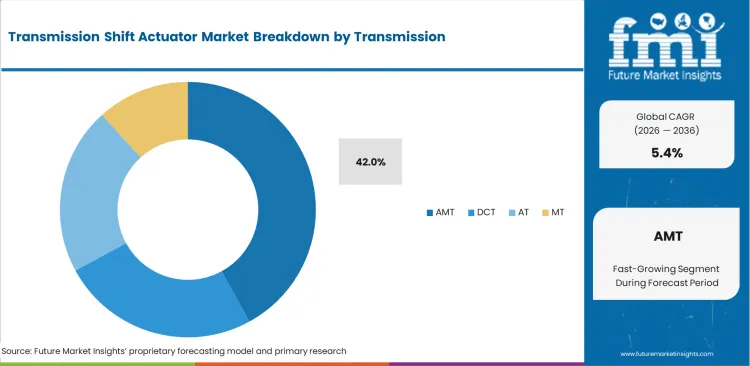
Cost dynamics dictate the specific technology choices made by fleet operators and commuter vehicle buyers. Automakers bolt specialized actuators onto standard manual gearboxes to automate the shift process without the heavy weight of a traditional automatic transmission, meaning the AMT category is expected to hold 42% share in 2026. Product planners at economy car brands utilize this architecture to offer automated driving convenience at a fraction of the cost of complex alternative setups. A critical irony in this segment is that while AMTs are marketed as a budget option, their external actuation modules experience harsher thermal cycling than internal components of premium gearboxes. Engineering teams that miscalculate these thermal loads face significant warranty claims when external plastic housings degrade over time.
- Cost-Effective Automation: External modules convert basic manual gearboxes into automated systems. Product planners avoid the massive capital expense of developing entirely new automatic architectures.
- Thermal Degradation: Externally mounted units face extreme engines bay heat without the benefit of cooling fluid. Reliability engineers must specify expensive composite materials to prevent housing failures.
- Calibration Refinement: Jerky shifting plagues poorly tuned automated manual systems. Software calibration teams must spend thousands of hours refining motor control algorithms to ensure smooth passenger experiences.
Transmission Shift Actuator Market Analysis by Actuation Type
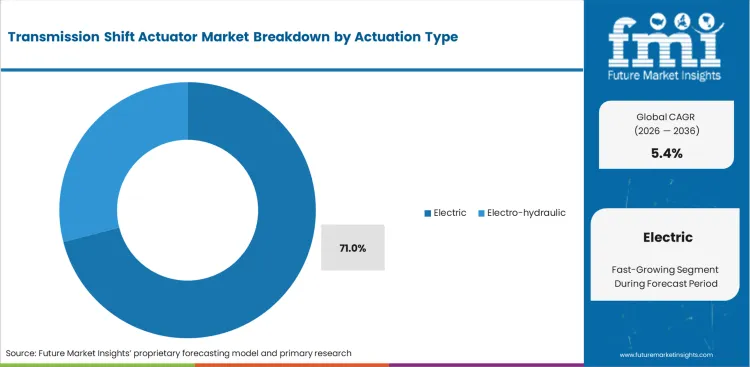
Replacing pressurized fluid with direct wire signals fundamentally changes how vehicles manage parasitic power loss, and in 2026, electric is expected to contribute 71% of total market share. Removing heavy hydraulic pumps and valve bodies allows chassis engineers to drop significant weight from the front axle. Battery drain replaces fluid pressure as the primary engineering constraint. What many drivetrain generalists fail to notice is that a pure automotive electric actuator draws massive amperage spikes for fractions of a second during a gear change. Electrical systems architects at major automakers must design localized capacitor banks or oversized wiring harnesses just to handle this millisecond-level power draw. Suppliers failing to optimize the electrical efficiency of their motors quickly find their modules rejected by automakers struggling to balance overall vehicle power budgets.
- Hydraulic Elimination: Pure electric motors replace complex fluid valve bodies. Chassis engineers immediately reclaim packaging space and remove heavy fluid reservoirs from the vehicle design.
- Amperage Spiking: Instantaneous gear changes require massive short-term electrical current. Systems architects must heavily reinforce localized wiring harnesses to prevent voltage drops across other vehicle systems.
- Maintenance Reduction: Solid-state electric motors eliminate the need for regular fluid changes and leak inspections. Fleet maintenance managers drastically reduce their scheduled service intervals for transmission upkeep.
Transmission Shift Actuator Market Analysis by Vehicle Type
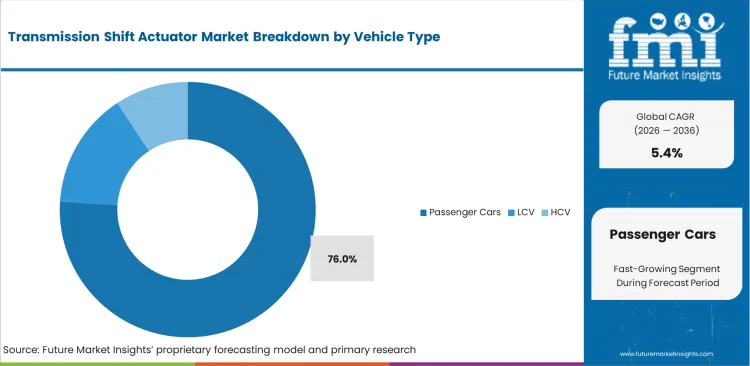
The passenger car category is projected to secure 76% share in 2026, as scale requirements shape the supplier base dedicated to consumer transport. The sheer volume of consumer vehicles produced annually dictates that tier-1 suppliers focus their primary research and development on this specific segment. Commuter vehicles demand exceptionally smooth gear transitions to satisfy everyday drivers. Interestingly, the shift toward dual clutch transmission architectures in passenger cars requires a complex DCT mechatronic control unit working in tandem rather than a single unit. Drivetrain engineers navigating this complexity must perfectly balance the actuation speed of both modules to prevent driveline shock. Misaligning these dual modules results in immediate consumer complaints regarding harsh driving dynamics.
- Consumer Volume: Absolute production numbers drive supplier prioritization. Procurement directors leverage this massive scale to drive down per-unit costs during initial contract negotiations.
- Dual Actuation: Advanced commuter gearboxes require two perfectly synchronized actuator modules. Drivetrain engineers spend extensive time programming the crossover point between these twin systems.
- NVH Constraints: Noise, vibration, and harshness standards are extremely strict for consumer cabins. Acoustic engineers must dampen the mechanical whine of electric actuator motors to prevent passenger annoyance.
Transmission Shift Actuator Market Analysis by Integration
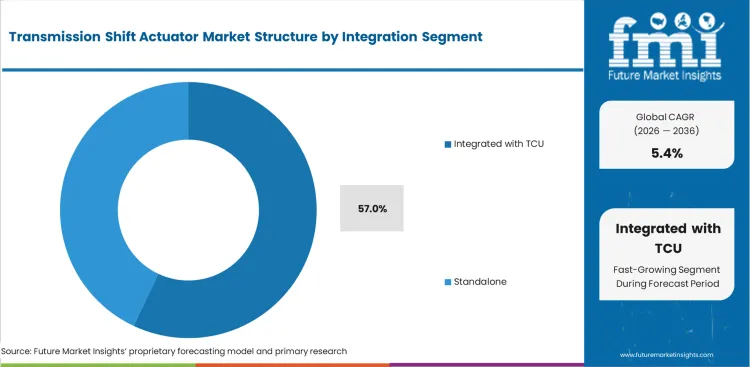
Consolidation of discrete components solves significant assembly line headaches for major vehicle manufacturers. Packaging the electronic brain directly alongside the physical motor eliminates the need for external wiring harnesses connecting the two devices, which is why the Integrated with TCU segment is forecast to command 57% share in 2026. Assembly line managers highly favor this approach because it reduces the number of physical connection points required on the factory floor. The hidden drawback to this integration is absolute component vulnerability. When a minor physical component breaks inside the commercial vehicle AMT transmission actuator module, repair technicians cannot swap just the motor, they must replace the entire expensive TCU assembly. Dealership service directors face angry customers when a simple mechanical failure results in a massive electronic replacement bill.
- Harness Reduction: Combining the controller and motor removes external wiring. Assembly line managers eliminate multiple manual connection steps during the vehicle build process.
- Signal Latency: Proximity between the brain and the motor reduces electronic communication delays. Software engineers achieve much faster overall shift times due to this physical closeness.
- Replacement Burden: Unified modules prevent isolated component repairs. Dealership service directors are forced to bill customers for complete module replacements even for minor mechanical wear.
Transmission Shift Actuator Market Drivers, Restraints, and Opportunities
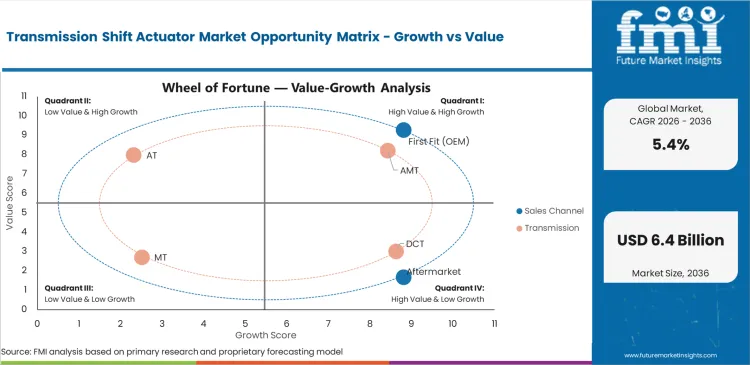
Strict fuel economy rules are forcing powertrain engineers to strip away every bit of wasted energy from vehicle designs. Switching from heavy hydraulic pumps to pure automotive electric actuator systems helps a car use less gas immediately. Any delay in adopting these electronic parts means a car company has to keep using heavy mechanical parts that hurt their overall emission scores. Using a modern heavy duty truck amt transmission setup helps big trucks stay in the right gear to save fuel, which is now a legal requirement in most countries.
Supply chain issues with computer chips are the main problem slowing down the move to these advanced parts. A car company cannot finish a vehicle if the electronic brain for the gearbox is missing its specific processor. This makes a simple mechanical part vulnerable to global tech shortages. While suppliers try to keep extra chips in stock, these parts are so specialized that they cannot be replaced with common electronics used in phones or laptops.
- Electric Vehicle Gear Changes: Engineers need small, light actuation parts for new two-speed EV powertrain designs. Companies that build these specialized parts early will likely lead the high-performance electric car market.
- Early Warning Software: Smart sensors in automatic gearbox valves can now tell when a part is starting to wear out. Fleet owners are willing to pay more for software that warns them before a truck breaks down on the road.
- Automating Big Rigs: Trucking companies want automated gearboxes so that every driver, regardless of their skill level, gets the same good fuel mileage. Building the tough parts needed for commercial vehicle AMT transmission setups leads to long-term, high-value contracts.
Regional Analysis
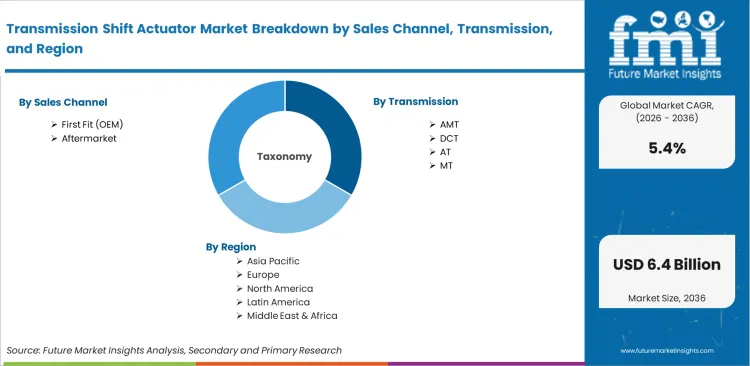
transmission-shift-actuator-market-breakdown-by-sales-channel,-transmission,-and-region
Based on regional analysis, transmission shift actuator market is segmented into North America, Europe, Asia-Pacific, and other key regions across 40 plus countries.
| Country | CAGR (2026 to 2036) |
|---|---|
| India | 7.6% |
| China | 6.4% |
| Mexico | 5.7% |
| USA | 5.3% |
| South Korea | 5.0% |
| Germany | 4.7% |
| Japan | 4.1% |
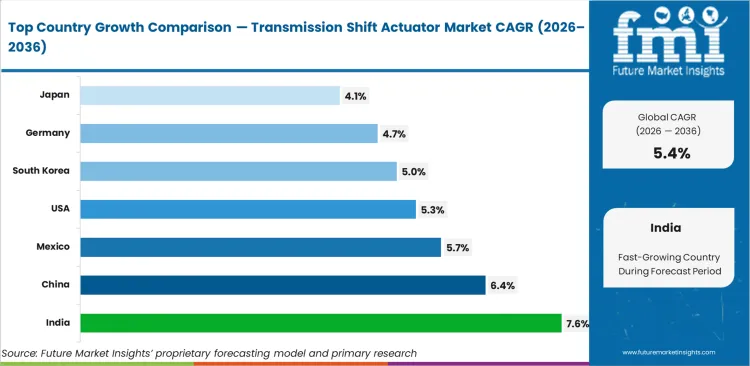
Asia-Pacific Transmission Shift Actuator Market Analysis
Strict government emission targets and heavy traffic congestion across Asia-Pacific are pushing car brands to update their older gearboxes. Governments are penalizing inefficient designs, forcing manufacturers to adopt intelligent electronic controls. Car makers then build more parts locally to avoid paying expensive import taxes. Price sensitivity used to keep advanced transmission parts out of South Asian cars, but heavy city traffic makes manual driving exhausting. Automakers fix this by bolting affordable actuation modules directly onto an existing manual transmission.
- India: Congested urban centers drive intense consumer demand for affordable clutchless driving experiences. With the market for transmission shift actuators in India expected to grow at a CAGR of 7.6% during the study period, component suppliers who deliver these durable, low-cost units win massive contracts from local budget-car builders.
- China: Local car brands are moving aggressively toward electrification and highly automated gas-powered platforms. Securing domestic supply lines for essential transmission components helps these companies maintain fast production speeds without relying on expensive foreign imports, a strategy that helps China witness the transmission shift actuator market grow at a CAGR of 6.4% over the forecast period.
- South Korea: Export-focused production strategies require car manufacturers here to meet many different global emission standards all at once. For the transmission shift actuator industry, South Korea is likely to post a CAGR of 5.0% by 2036 as engineering teams simplify their factory floors by putting the same shift-by-wire modules into all their export vehicles.
- Japan: The country is poised to experience an incline at a CAGR of 4.1% over the forecast period, as it relies heavily on a long-established driver preference for belt-driven continuously variable transmission designs. Suppliers who specifically tune their electric motors to match these unique gearboxes keep very tight relationships with domestic automakers.
Building these parts locally remains the clearest path to success in the Asia-Pacific region. Foreign suppliers usually have to partner with local tech firms to handle the strict rules around vehicle software and data security.
North America Transmission Shift Actuator Market Analysis
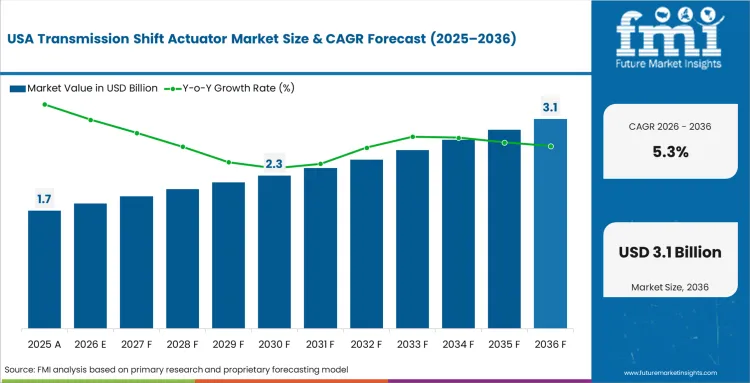
Buyers in North America strongly prefer large SUVs and commercial pickup trucks. These heavy vehicles need incredibly strong automotive gear shifter modules that can handle extreme towing weights without breaking down. Engineers here care much more about heat management and part durability than making the components small.
- Mexico: Car companies are moving many of their major assembly plants just south of the USA border to lower costs. Parts builders who set up factories here easily beat overseas competitors on shipping times and logistics costs, driving Mexico anticipated to record a CAGR of 5.7% from 2026 to 2036.
- USA: High-torque truck platforms demand heavily reinforced electro-hydraulic or pure automotive electric actuator modules to survive daily abuse. Due to these extreme demands, the USA sector is expected to register a CAGR of 5.3% through 2036. Dealership service centers depend on these durable parts to cut down on expensive warranty claims for heavy-duty transmissions.
North American vehicle assembly will keep relying on regional partnerships to keep logistics simple. Companies that understand the specific demands of heavy towing will continue to dominate the local supply chain.
Europe Transmission Shift Actuator Market Analysis
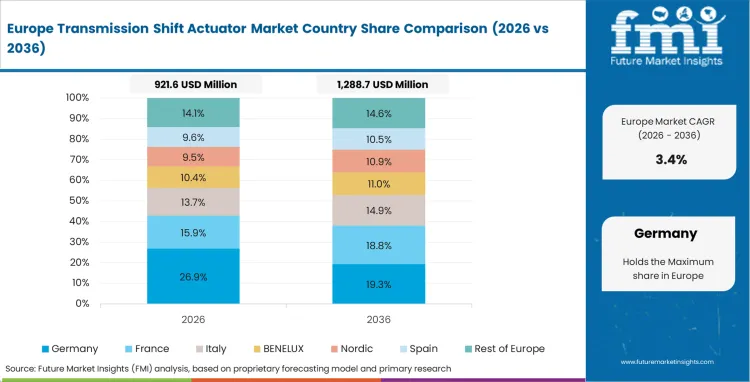
Tough environmental laws across Europe are forcing car companies to quickly drop traditional combustion engines and move toward electrified platforms. This shift drastically changes what kind of gear controls car makers want to buy for an emerging EV powertrain. The focus is entirely on efficiency, smooth shifting, and integrating directly with electric motors.
- Germany: With the transmission shift actuator market in Germany poised to expand at a CAGR of 4.7% from 2026 to 2036, premium car brands remain heavily invested in advanced dual clutch transmission architectures that require highly precise gear timing. Local engineering teams demand parts that meet extremely strict noise and vibration standards so that drivers feel no harshness in the cabin.
The European market will quickly punish suppliers who cannot keep up with strict environmental guidelines. Success here requires a constant focus on building lighter, more efficient electric motor modules that perfectly match new regulatory standards.
Competitive Aligners for Market Players
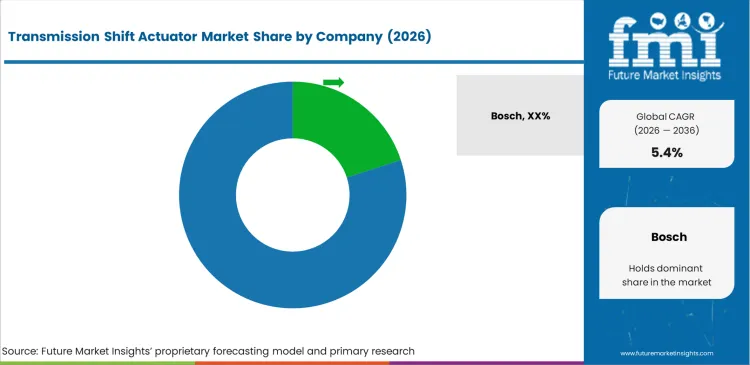
Physical hardware is rarely the main deciding factor for procurement directors choosing between major suppliers like Bosch. Basic electric motors perform almost identically during testing. Competition now centers on the software. Vehicle brands want suppliers who write reliable control algorithms that connect easily to the main computer. Timing a gear change perfectly in fractions of a second takes years of software experience. New companies struggle to match this level of programming, even if they can build a cheaper advanced gear shifter system.
Long-standing suppliers defend their territory using strict patents that cover exactly how a motor connects to the gearbox. Any new company trying to sell an alternative unit faces immediate legal blocks regarding physical design and sensor locations. Experienced firms like ZF use their decades of building transmission components to design parts that naturally fit the internal layout. Companies that only build standalone motors lack this deep mechanical background. Their separate modules often clash with the physical limits of the transmission instead of working alongside it.
Car manufacturers refuse to rely entirely on one supplier for their electronic setups. Engineering teams require standard communication connections so they can switch parts mid-production if a supply issue arises. Purchasing departments will quickly find a backup vendor if a primary supplier tries to lock them into a restrictive control system. Giving car makers the ability to adjust the shifting feel themselves is becoming a major selling point. Component builders who allow this kind of internal software adjustment will win more contracts for future electric powertrain systems than suppliers offering strict, unchangeable packages.
Key Players in Transmission Shift Actuator Market
- Bosch
- ZF
- Schaeffler
- Hitachi Astemo
- Denso
Scope of the Report
| Metric | Value |
|---|---|
| Quantitative Units | USD 3.6 billion to USD 6.1 billion, at a CAGR of 5.4% |
| Market Definition | Transmission shift actuators function as electromechanical or electro-hydraulic devices that physically move internal gears based on electronic signals from the vehicle control unit. These mechanisms eliminate direct physical connection between the driver's cabin shifter and the gearbox. They execute precise gear changes rapidly to optimize engine load. |
| Segmentation | By Sales Channel, By Transmission, By Actuation Type, By Vehicle Type, By Integration |
| Regions Covered | North America, Latin America, Western Europe, Eastern Europe, East Asia, South Asia & Pacific, Middle East & Africa |
| Countries Covered | USA, China, India, Germany, Japan, South Korea, Mexico |
| Key Companies Profiled | Bosch, ZF, Schaeffler, Hitachi Astemo, Denso |
| Forecast Period | 2026 to 2036 |
| Approach | Annual global vehicle production volumes by transmission type anchored the baseline unit consumption modeling. |
Source: Future Market Insights (FMI) analysis, based on proprietary forecasting model and primary research
Transmission Shift Actuator Market by Segment
By Sales Channel
- First Fit (OEM)
- Aftermarket
By Transmission
- AMT
- DCT
- AT
- MT
By Actuation Type
- Electric
- Electro-hydraulic
By Vehicle Type
- Passenger Cars
- LCV
- HCV
By Integration
- Integrated with TCU
- Standalone
Regions:
- Asia Pacific
- India
- China
- Japan
- South Korea
- Indonesia
- Australia & New Zealand
- ASEAN
- Rest of Asia Pacific
- Europe
- Germany
- Italy
- France
- United Kingdom
- Spain
- Benelux
- Nordics
- Central & Eastern Europe
- Rest of Europe
- North America
- United States
- Canada
- Mexico
- Latin America
- Brazil
- Argentina
- Chile
- Rest of Latin America
- Middle East & Africa
- Kingdom of Saudi Arabia
- United Arab Emirates
- South Africa
- Turkey
- Rest of Middle East & Africa
Bibliography
- United Nations Economic Commission for Europe. (2024). Proposal for a new UN Regulation on uniform provisions concerning the approval of vehicles with regard to the prevention of incorrect movement with driver control assistance systems enabled (ECE/TRANS/WP.29/2024/154).
- National Highway Traffic Safety Administration. (2024). Part 573 safety recall report 24V-839. USA Department of Transportation.
- Lin, S., Li, B., Tang, M., & Wang, L. (2024). Precise and coordinated gearshift control for AMT gearshift system equipped with two linear actuators. Mechanics & Industry, 25, 8.
- Yin, C., Wang, S., Gao, J., Xu, G., & Wu, J. (2024). An improved adaptive position tracking strategy for automatic shift actuator with uncertain parameters. Scientific Reports, 14, 9454.
- Gongye, X., Du, C., Li, L., Huang, C., Wang, J., & Dai, Z. (2024). Research on precise tracking control of gear-shifting actuator for non-synchronizer automatic mechanical transmission based on sleeve trajectory planning. Energies, 17(5), 1092.
This bibliography is provided for reader reference. The full FMI report contains the complete reference list with primary source documentation.
This Report Addresses
- Baseline unit consumption modeling based on annual global vehicle production by transmission configuration.
- Integration rates of standalone actuation hardware versus unified transmission control modules.
- Software calibration requirements demanded by powertrain engineers across major assembly hubs.
- Thermal degradation limits for externally mounted components on automated manual gearboxes.
- Amperage spiking challenges faced by electrical systems architects during rapid gear changes.
- Dual actuation synchronization needs specific to modern passenger car dual-clutch architectures.
- Component nearshoring impacts on North American supply chain logistics and assembly costs.
- Localized data security regulations forcing joint ventures between foreign suppliers and Chinese tech firms.
Frequently Asked Questions
What is a transmission shift actuator?
It is an electromechanical or electro-hydraulic device that physically moves internal gears based on electronic signals, eliminating direct physical connection between the driver's cabin shifter and the gearbox.
How does a transmission shift actuator work?
These mechanisms rely on electric motors or pressurized fluid to execute precise gear changes rapidly, optimizing engine load without requiring manual human input on the clutch or linkage.
How big is the transmission shift actuator sector by 2036?
The industry valuation is expected to reach USD 6.1 billion by 2036 as automakers globally phase out mechanical linkages in favor of electronic control modules.
Who are the key companies in transmission shift actuators?
Leading suppliers include Bosch, ZF, Schaeffler, Hitachi Astemo, and Denso, all competing heavily on software integration and motor durability.
What is the transmission control unit and shift actuator difference?
The TCU is the electronic brain that calculates when to shift based on vehicle speed and engine load, while the actuator is the physical motor or hydraulic valve that executes that command.
Why are electric shift actuators preferred?
Removing heavy hydraulic pumps allows chassis engineers to drop significant weight from the front axle, reclaim packaging space, and reduce scheduled maintenance.
Which vehicles use transmission shift actuators?
They are utilized heavily across passenger cars, light commercial vehicles, and heavy-duty trucks, particularly those equipped with automated manual, dual-clutch, and automatic gearboxes.
What drives integrated vs standalone transmission actuator selection?
Consolidating the two components cuts assembly time on the factory floor by eliminating intermediate wiring harnesses, though it increases replacement costs if a single part fails.
Which transmission type creates the largest demand for shift actuators?
The AMT category drives massive volume, as automakers bolt specialized actuators onto standard manual gearboxes to automate the clutch and shift process affordably.
Why is India growing faster than China in this specific component space?
Domestic vehicle manufacturers in India are rapidly converting manual platforms to automated manuals at a massive scale to satisfy congested urban driving conditions affordably.
What mechanism do automakers use to prevent vendor lock-in?
Drivetrain engineers demand standardized communication protocols like CAN bus to qualify secondary suppliers if necessary.
Why do hydraulic systems continue to lose share?
Solid-state electric motors eliminate regular fluid changes and leak inspections, drastically reducing scheduled maintenance for fleet operators.
What commercial opportunity exists in the commercial vehicle sector?
Logistics fleet managers desperately need automated manual transmissions to standardize fuel economy across varied driver skill levels.
How do local data security rules impact foreign suppliers in East Asia?
Strict software control regulations force overseas hardware manufacturers to establish joint ventures with regional technology firms.
Why does North American nearshoring specifically benefit Mexico?
Component manufacturers establishing localized production facilities easily undercut overseas competitors on critical shipping logistics to U.S. assembly plants.
What new engineering challenge emerges with two-speed electric vehicle axles?
EV drivetrain engineers urgently need ultra-compact actuation modules specifically designed for emerging multi-speed electric architectures.
Preview the report firsthand - request a free sample
Get SampleGet the brochure for pricing and purchase details.
Get PDFTable of Content
- Executive Summary
- Global Market Outlook
- Demand-side Trends
- Supply-side Trends
- Technology Roadmap Analysis
- Analysis and Recommendations
- Market Overview
- Market Coverage / Taxonomy
- Market Definition / Scope / Limitations
- Research Methodology
- Chapter Orientation
- Analytical Lens and Working Hypotheses
- Market Structure, Signals, and Trend Drivers
- Benchmarking and Cross-market Comparability
- Market Sizing, Forecasting, and Opportunity Mapping
- Research Design and Evidence Framework
- Desk Research Programme (Secondary Evidence)
- Company Annual and Sustainability Reports
- Peer-reviewed Journals and Academic Literature
- Corporate Websites, Product Literature, and Technical Notes
- Earnings Decks and Investor Briefings
- Statutory Filings and Regulatory Disclosures
- Technical White Papers and Standards Notes
- Trade Journals, Industry Magazines, and Analyst Briefs
- Conference Proceedings, Webinars, and Seminar Materials
- Government Statistics Portals and Public Data Releases
- Press Releases and Reputable Media Coverage
- Specialist Newsletters and Curated Briefings
- Sector Databases and Reference Repositories
- FMI Internal Proprietary Databases and Historical Market Datasets
- Subscription Datasets and Paid Sources
- Social Channels, Communities, and Digital Listening Inputs
- Additional Desk Sources
- Expert Input and Fieldwork (Primary Evidence)
- Primary Modes
- Qualitative Interviews and Expert Elicitation
- Quantitative Surveys and Structured Data Capture
- Blended Approach
- Why Primary Evidence is Used
- Field Techniques
- Interviews
- Surveys
- Focus Groups
- Observational and In-context Research
- Social and Community Interactions
- Stakeholder Universe Engaged
- C-suite Leaders
- Board Members
- Presidents and Vice Presidents
- R&D and Innovation Heads
- Technical Specialists
- Domain Subject-matter Experts
- Scientists
- Physicians and Other Healthcare Professionals
- Governance, Ethics, and Data Stewardship
- Research Ethics
- Data Integrity and Handling
- Primary Modes
- Tooling, Models, and Reference Databases
- Desk Research Programme (Secondary Evidence)
- Data Engineering and Model Build
- Data Acquisition and Ingestion
- Cleaning, Normalisation, and Verification
- Synthesis, Triangulation, and Analysis
- Quality Assurance and Audit Trail
- Market Background
- Market Dynamics
- Drivers
- Restraints
- Opportunity
- Trends
- Scenario Forecast
- Demand in Optimistic Scenario
- Demand in Likely Scenario
- Demand in Conservative Scenario
- Opportunity Map Analysis
- Product Life Cycle Analysis
- Supply Chain Analysis
- Investment Feasibility Matrix
- Value Chain Analysis
- PESTLE and Porter’s Analysis
- Regulatory Landscape
- Regional Parent Market Outlook
- Production and Consumption Statistics
- Import and Export Statistics
- Market Dynamics
- Global Market Analysis 2021 to 2025 and Forecast, 2026 to 2036
- Historical Market Size Value (USD Million) Analysis, 2021 to 2025
- Current and Future Market Size Value (USD Million) Projections, 2026 to 2036
- Y-o-Y Growth Trend Analysis
- Absolute $ Opportunity Analysis
- Global Market Pricing Analysis 2021 to 2025 and Forecast 2026 to 2036
- Global Market Analysis 2021 to 2025 and Forecast 2026 to 2036, By Sales Channel
- Introduction / Key Findings
- Historical Market Size Value (USD Million) Analysis By Sales Channel , 2021 to 2025
- Current and Future Market Size Value (USD Million) Analysis and Forecast By Sales Channel , 2026 to 2036
- First Fit (OEM)
- Aftermarket
- First Fit (OEM)
- Y-o-Y Growth Trend Analysis By Sales Channel , 2021 to 2025
- Absolute $ Opportunity Analysis By Sales Channel , 2026 to 2036
- Global Market Analysis 2021 to 2025 and Forecast 2026 to 2036, By Transmission
- Introduction / Key Findings
- Historical Market Size Value (USD Million) Analysis By Transmission, 2021 to 2025
- Current and Future Market Size Value (USD Million) Analysis and Forecast By Transmission, 2026 to 2036
- AMT
- DCT
- AT
- MT
- AMT
- Y-o-Y Growth Trend Analysis By Transmission, 2021 to 2025
- Absolute $ Opportunity Analysis By Transmission, 2026 to 2036
- Global Market Analysis 2021 to 2025 and Forecast 2026 to 2036, By Actuation Type
- Introduction / Key Findings
- Historical Market Size Value (USD Million) Analysis By Actuation Type, 2021 to 2025
- Current and Future Market Size Value (USD Million) Analysis and Forecast By Actuation Type, 2026 to 2036
- Electric
- Electro-hydraulic
- Electric
- Y-o-Y Growth Trend Analysis By Actuation Type, 2021 to 2025
- Absolute $ Opportunity Analysis By Actuation Type, 2026 to 2036
- Global Market Analysis 2021 to 2025 and Forecast 2026 to 2036, By Vehicle Type
- Introduction / Key Findings
- Historical Market Size Value (USD Million) Analysis By Vehicle Type, 2021 to 2025
- Current and Future Market Size Value (USD Million) Analysis and Forecast By Vehicle Type, 2026 to 2036
- Passenger Cars
- LCV
- HCV
- Passenger Cars
- Y-o-Y Growth Trend Analysis By Vehicle Type, 2021 to 2025
- Absolute $ Opportunity Analysis By Vehicle Type, 2026 to 2036
- Global Market Analysis 2021 to 2025 and Forecast 2026 to 2036, By Integration
- Introduction / Key Findings
- Historical Market Size Value (USD Million) Analysis By Integration, 2021 to 2025
- Current and Future Market Size Value (USD Million) Analysis and Forecast By Integration, 2026 to 2036
- Integrated with TCU
- Standalone
- Integrated with TCU
- Y-o-Y Growth Trend Analysis By Integration, 2021 to 2025
- Absolute $ Opportunity Analysis By Integration, 2026 to 2036
- Global Market Analysis 2021 to 2025 and Forecast 2026 to 2036, By Region
- Introduction
- Historical Market Size Value (USD Million) Analysis By Region, 2021 to 2025
- Current Market Size Value (USD Million) Analysis and Forecast By Region, 2026 to 2036
- North America
- Latin America
- Western Europe
- Eastern Europe
- East Asia
- South Asia and Pacific
- Middle East & Africa
- Market Attractiveness Analysis By Region
- North America Market Analysis 2021 to 2025 and Forecast 2026 to 2036, By Country
- Historical Market Size Value (USD Million) Trend Analysis By Market Taxonomy, 2021 to 2025
- Market Size Value (USD Million) Forecast By Market Taxonomy, 2026 to 2036
- By Country
- USA
- Canada
- Mexico
- By Sales Channel
- By Transmission
- By Actuation Type
- By Vehicle Type
- By Integration
- By Country
- Market Attractiveness Analysis
- By Country
- By Sales Channel
- By Transmission
- By Actuation Type
- By Vehicle Type
- By Integration
- Key Takeaways
- Latin America Market Analysis 2021 to 2025 and Forecast 2026 to 2036, By Country
- Historical Market Size Value (USD Million) Trend Analysis By Market Taxonomy, 2021 to 2025
- Market Size Value (USD Million) Forecast By Market Taxonomy, 2026 to 2036
- By Country
- Brazil
- Chile
- Rest of Latin America
- By Sales Channel
- By Transmission
- By Actuation Type
- By Vehicle Type
- By Integration
- By Country
- Market Attractiveness Analysis
- By Country
- By Sales Channel
- By Transmission
- By Actuation Type
- By Vehicle Type
- By Integration
- Key Takeaways
- Western Europe Market Analysis 2021 to 2025 and Forecast 2026 to 2036, By Country
- Historical Market Size Value (USD Million) Trend Analysis By Market Taxonomy, 2021 to 2025
- Market Size Value (USD Million) Forecast By Market Taxonomy, 2026 to 2036
- By Country
- Germany
- UK
- Italy
- Spain
- France
- Nordic
- BENELUX
- Rest of Western Europe
- By Sales Channel
- By Transmission
- By Actuation Type
- By Vehicle Type
- By Integration
- By Country
- Market Attractiveness Analysis
- By Country
- By Sales Channel
- By Transmission
- By Actuation Type
- By Vehicle Type
- By Integration
- Key Takeaways
- Eastern Europe Market Analysis 2021 to 2025 and Forecast 2026 to 2036, By Country
- Historical Market Size Value (USD Million) Trend Analysis By Market Taxonomy, 2021 to 2025
- Market Size Value (USD Million) Forecast By Market Taxonomy, 2026 to 2036
- By Country
- Russia
- Poland
- Hungary
- Balkan & Baltic
- Rest of Eastern Europe
- By Sales Channel
- By Transmission
- By Actuation Type
- By Vehicle Type
- By Integration
- By Country
- Market Attractiveness Analysis
- By Country
- By Sales Channel
- By Transmission
- By Actuation Type
- By Vehicle Type
- By Integration
- Key Takeaways
- East Asia Market Analysis 2021 to 2025 and Forecast 2026 to 2036, By Country
- Historical Market Size Value (USD Million) Trend Analysis By Market Taxonomy, 2021 to 2025
- Market Size Value (USD Million) Forecast By Market Taxonomy, 2026 to 2036
- By Country
- China
- Japan
- South Korea
- By Sales Channel
- By Transmission
- By Actuation Type
- By Vehicle Type
- By Integration
- By Country
- Market Attractiveness Analysis
- By Country
- By Sales Channel
- By Transmission
- By Actuation Type
- By Vehicle Type
- By Integration
- Key Takeaways
- South Asia and Pacific Market Analysis 2021 to 2025 and Forecast 2026 to 2036, By Country
- Historical Market Size Value (USD Million) Trend Analysis By Market Taxonomy, 2021 to 2025
- Market Size Value (USD Million) Forecast By Market Taxonomy, 2026 to 2036
- By Country
- India
- ASEAN
- Australia & New Zealand
- Rest of South Asia and Pacific
- By Sales Channel
- By Transmission
- By Actuation Type
- By Vehicle Type
- By Integration
- By Country
- Market Attractiveness Analysis
- By Country
- By Sales Channel
- By Transmission
- By Actuation Type
- By Vehicle Type
- By Integration
- Key Takeaways
- Middle East & Africa Market Analysis 2021 to 2025 and Forecast 2026 to 2036, By Country
- Historical Market Size Value (USD Million) Trend Analysis By Market Taxonomy, 2021 to 2025
- Market Size Value (USD Million) Forecast By Market Taxonomy, 2026 to 2036
- By Country
- Kingdom of Saudi Arabia
- Other GCC Countries
- Turkiye
- South Africa
- Other African Union
- Rest of Middle East & Africa
- By Sales Channel
- By Transmission
- By Actuation Type
- By Vehicle Type
- By Integration
- By Country
- Market Attractiveness Analysis
- By Country
- By Sales Channel
- By Transmission
- By Actuation Type
- By Vehicle Type
- By Integration
- Key Takeaways
- Key Countries Market Analysis
- USA
- Pricing Analysis
- Market Share Analysis, 2025
- By Sales Channel
- By Transmission
- By Actuation Type
- By Vehicle Type
- By Integration
- Canada
- Pricing Analysis
- Market Share Analysis, 2025
- By Sales Channel
- By Transmission
- By Actuation Type
- By Vehicle Type
- By Integration
- Mexico
- Pricing Analysis
- Market Share Analysis, 2025
- By Sales Channel
- By Transmission
- By Actuation Type
- By Vehicle Type
- By Integration
- Brazil
- Pricing Analysis
- Market Share Analysis, 2025
- By Sales Channel
- By Transmission
- By Actuation Type
- By Vehicle Type
- By Integration
- Chile
- Pricing Analysis
- Market Share Analysis, 2025
- By Sales Channel
- By Transmission
- By Actuation Type
- By Vehicle Type
- By Integration
- Germany
- Pricing Analysis
- Market Share Analysis, 2025
- By Sales Channel
- By Transmission
- By Actuation Type
- By Vehicle Type
- By Integration
- UK
- Pricing Analysis
- Market Share Analysis, 2025
- By Sales Channel
- By Transmission
- By Actuation Type
- By Vehicle Type
- By Integration
- Italy
- Pricing Analysis
- Market Share Analysis, 2025
- By Sales Channel
- By Transmission
- By Actuation Type
- By Vehicle Type
- By Integration
- Spain
- Pricing Analysis
- Market Share Analysis, 2025
- By Sales Channel
- By Transmission
- By Actuation Type
- By Vehicle Type
- By Integration
- France
- Pricing Analysis
- Market Share Analysis, 2025
- By Sales Channel
- By Transmission
- By Actuation Type
- By Vehicle Type
- By Integration
- India
- Pricing Analysis
- Market Share Analysis, 2025
- By Sales Channel
- By Transmission
- By Actuation Type
- By Vehicle Type
- By Integration
- ASEAN
- Pricing Analysis
- Market Share Analysis, 2025
- By Sales Channel
- By Transmission
- By Actuation Type
- By Vehicle Type
- By Integration
- Australia & New Zealand
- Pricing Analysis
- Market Share Analysis, 2025
- By Sales Channel
- By Transmission
- By Actuation Type
- By Vehicle Type
- By Integration
- China
- Pricing Analysis
- Market Share Analysis, 2025
- By Sales Channel
- By Transmission
- By Actuation Type
- By Vehicle Type
- By Integration
- Japan
- Pricing Analysis
- Market Share Analysis, 2025
- By Sales Channel
- By Transmission
- By Actuation Type
- By Vehicle Type
- By Integration
- South Korea
- Pricing Analysis
- Market Share Analysis, 2025
- By Sales Channel
- By Transmission
- By Actuation Type
- By Vehicle Type
- By Integration
- Russia
- Pricing Analysis
- Market Share Analysis, 2025
- By Sales Channel
- By Transmission
- By Actuation Type
- By Vehicle Type
- By Integration
- Poland
- Pricing Analysis
- Market Share Analysis, 2025
- By Sales Channel
- By Transmission
- By Actuation Type
- By Vehicle Type
- By Integration
- Hungary
- Pricing Analysis
- Market Share Analysis, 2025
- By Sales Channel
- By Transmission
- By Actuation Type
- By Vehicle Type
- By Integration
- Kingdom of Saudi Arabia
- Pricing Analysis
- Market Share Analysis, 2025
- By Sales Channel
- By Transmission
- By Actuation Type
- By Vehicle Type
- By Integration
- Turkiye
- Pricing Analysis
- Market Share Analysis, 2025
- By Sales Channel
- By Transmission
- By Actuation Type
- By Vehicle Type
- By Integration
- South Africa
- Pricing Analysis
- Market Share Analysis, 2025
- By Sales Channel
- By Transmission
- By Actuation Type
- By Vehicle Type
- By Integration
- USA
- Market Structure Analysis
- Competition Dashboard
- Competition Benchmarking
- Market Share Analysis of Top Players
- By Regional
- By Sales Channel
- By Transmission
- By Actuation Type
- By Vehicle Type
- By Integration
- Competition Analysis
- Competition Deep Dive
- Bosch
- Overview
- Product Portfolio
- Profitability by Market Segments (Product/Age /Sales Channel/Region)
- Sales Footprint
- Strategy Overview
- Marketing Strategy
- Product Strategy
- Channel Strategy
- ZF
- Schaeffler
- Hitachi Astemo
- Denso
- Bosch
- Competition Deep Dive
- Assumptions & Acronyms Used


