

- Industry Size (2026)
- USD 0.4 Bn
- Forecast (2036)
- USD 1.0 Bn
- CAGR (2026 to 2036)
- 9.8%
Macerated Paper Padded Mailers Market Size, Market Forecast and Outlook By FMI
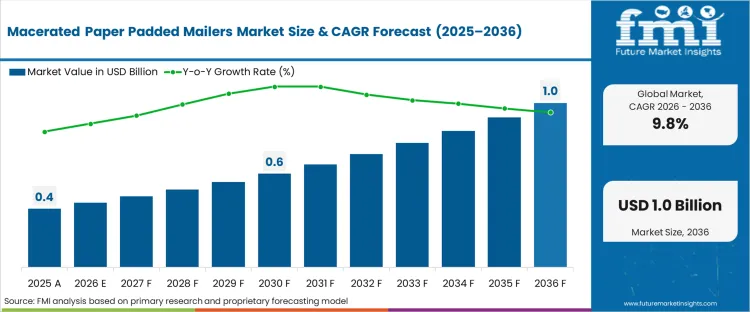
The macerated paper padded mailers market projected a growth at USD 0.3 billion in 2025. Robust market sales are further driving the momentum to scale the valuation to USD 0.4 billion in 2026 at a CAGR of 9.8% during the decade while predicted to lead the industry revenue expansion to USD 1.0 billion through 2036 as fulfillment centers replace mixed-material bubble envelopes with monomaterial pulped solutions to bypass municipal recycling facility sorting rejections.
Summary of Macerated Paper Padded Mailers Market
- Macerated Paper Padded Mailers Market Definition
- Macerated paper padded mailers serve as shock-absorbing transit envelopes utilizing pulverized cellulosic material. They guarantee curbside recyclability while protecting fragile digital retail shipments.
- Demand Drivers in the Market
- Extended producer responsibility legislation forces enterprise retail shippers to audit outbound material streams.
- Curbside recycling mandates compel packaging engineers to eliminate mixed-material shipping formats entirely.
- Dimensional weight pricing models push logistics managers to avoid bulky corrugated boxes.
- Key Segments Analyzed in the FMI Report
- Virgin Kraft: 58.0% share in 2026, driven by bursting strength requirements across automated sortation hubs.
- Macerated Paper: 34.0% share in 2026, providing maximum shock absorption density per cubic inch.
- Peel-And-Seal: 61.0% share in 2026, eliminating secondary taping steps on high-speed fulfillment lines.
- E-Commerce Retail: 68.0% share in 2026, reflecting massive outbound parcel volumes.
- Direct B2B: 72.0% share in 2026, ensuring uninterrupted seasonal capacity during holiday surges.
- India: A CAGR of 11.3%, fueled by rapid formalization across domestic digital delivery networks.
- Analyst Opinion at FMI
- Ismail Sutaria, Principal Analyst, Packaging, at FMI, points out, "Logistics managers assume transitioning toward sustainable padded mailers automatically increases transit damage rates. Measuring return merchandise authorizations tells a different story entirely. High-volume apparel shippers actually see damage claims remain flat when switching to macerated batting. What metrics miss is labor efficiency gained at packing stations. Packers seal fiber-padded envelopes up to fifteen percent faster because rigid structures prevent flap-curl during automated taping. Brands complaining about higher unit costs for recyclable paper mailers often ignore how secondary fulfillment labor savings completely offset initial purchase premiums."
- Procurement directors must secure long-term raw material contracts to avoid seasonal pulp pricing volatility.
- Packaging engineers face immediate mandates to qualify repulpable adhesives ensuring full single-stream compliance.
- Fulfillment managers gain massive operational speed improvements by standardizing self-sealing closure mechanisms.
- Methodology
- Primary Research: Sourcing directors and packaging engineers at high-volume digital fulfillment centers.
- Desk Research: Municipal recycling facility acceptance guidelines and extended producer responsibility fee schedules.
- Market-Sizing and Forecasting: Annual parcel volume shipped in non-rigid fiber formats.
- Data Validation and Update Cycle: Independent cross-validation against regional postal service dimensional weight databases.
Procurement directors at major apparel retailers face immediate pressure from extended producer responsibility fees penalizing multi-layer plastics. Avoiding compliance costs requires transitioning outbound logistics to single-stream formats before upcoming regulatory deadlines take effect. Evaluating alternatives reveals that pure corrugated options often add unacceptable dimensional weight surcharges during transit. Transitioning toward mailer packaging formats utilizing macerated cores resolves this penalty while satisfying recovery requirements. Logistics managers tracking paper padded mailers size realize delaying this transition risks accumulating massive taxation burdens on every shipped parcel.
Passing qualification testing for drop resistance without interior poly-liners triggers immediate network-wide adoption. Fulfillment managers authorize complete paper bubble mailers phase-outs once pulped interior batting demonstrates equivalent shock absorption during automated sortation. Eliminating plastic components removes fundamental friction points across high-volume outbound shipping lines, driving paper padded mailers forecast 2036 trajectories upward.
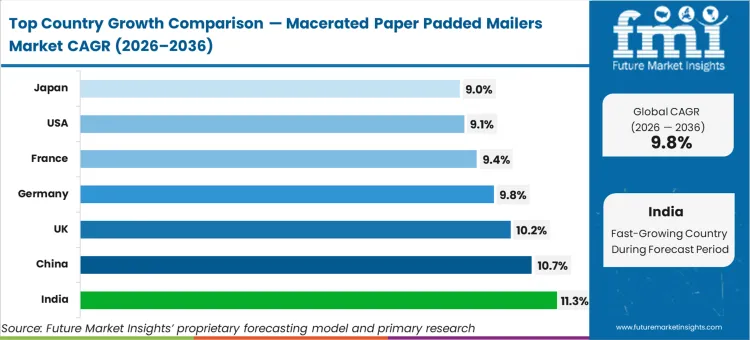
India leads regional growth at 11.3% on rapidly formalizing digital delivery networks replacing informal plastic wrapping. China tracks at 10.7% as coastal hubs standardize export formats. European nations like Britain at 10.2%, Germany at 9.8%, and France at 9.4% advance through strict plastic taxation frameworks. United States operators follow at 9.1% and Japan at 9.0%. Diverging extended producer responsibility architectures create distinct splits between compliance-driven Western adoption and operational-efficiency-driven Asian expansion.
Macerated Paper Padded Mailers Market Definition
Answering what are macerated paper padded mailers requires analyzing transit shipping envelopes containing pulverized recycled newsprint or kraft dust sandwiched between heavy-duty exterior cellulosic layers. This specific construction provides shock absorption for fragile goods without relying on plastic bubble lining. Substitution capability defines this boundary entirely. Procurement teams specify all-paper padded envelopes to achieve structural rigidity during transit.
Macerated Paper Padded Mailers Market Inclusions
Scope captures all single-use shipping envelopes utilizing loose or compressed pulped fiber batting as internal cushioning. Analysis covers configurations featuring standard fold-over flaps, self-sealing adhesive strips, and tear-tab opening mechanisms designed for direct-to-consumer parcel delivery. Solutions built entirely from cellulosic materials ensuring curbside recyclability fall firmly within padded mailers parameters. Printing inks and adhesives must pass specific repulpability standards.
Macerated Paper Padded Mailers Market Exclusions
Plastic-lined bubble envelopes sit strictly outside this assessment because they require specialized store-drop-off recovery channels. Rigid corrugated shipping boxes fall into separate tracking methodologies due to different manufacturing processes and dimensional weight calculations. Envelopes containing foam inserts or mixed-material cushioning face exclusion because they fail single-stream recycling compliance metrics.
Macerated Paper Padded Mailers Market Research Methodology
- Primary Research: Sourcing directors and packaging engineers at high-volume digital fulfillment centers.
- Desk Research: Municipal recycling facility acceptance guidelines and extended producer responsibility fee schedules.
- Market-Sizing and Forecasting: Annual parcel volume shipped in non-rigid fiber formats.
- Data Validation and Update Cycle: Independent cross-validation against regional postal service dimensional weight databases.
Segmental Analysis
Macerated Paper Padded Mailers Market Analysis By Material Type
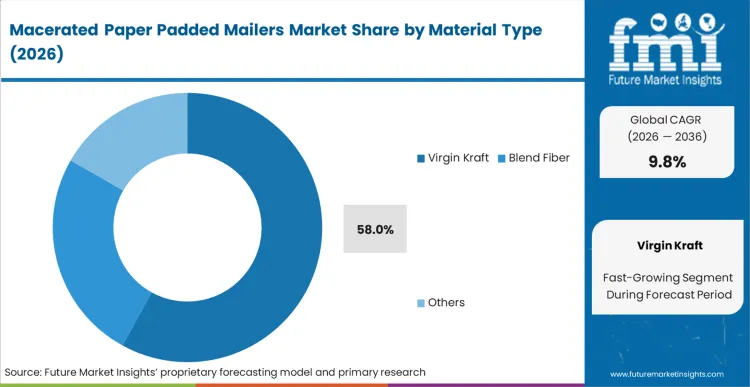
Bursting strength requirements force procurement teams to prioritize long-fiber substrates over recycled alternatives for heavy parcel shipments. Virgin kraft commands 58.0% share in 2026, and FMI's analysis indicates this dominance stems directly from tear-resistance metrics. Packaging engineers specifying materials for international transit routing cannot risk envelope rupture during automated cross-belt sortation. Selecting virgin outer layers guarantees specific tensile strength thresholds that secondary fiber cannot consistently match. What sustainability reports rarely highlight is how brands offset virgin material usage by sourcing entirely post-consumer content for internal cushioning. Failing to specify high-tensile outer layers results in unacceptable product loss during final delivery miles. Transitioning paperboard mailer formats to pure virgin exterior skins ensures survival through mechanized hubs. Brands testing recycled fiber padded mailers often discover that shorter fibers compromise tear resistance on high-speed conveyors.
- Structural Integrity Limit: Long-fiber paperboards resist punctures from sharp internal product corners during transit drops. Packaging engineers eliminate double-bagging requirements, reducing total material consumption significantly.
- Printability Threshold: Smooth virgin surfaces absorb flexographic inks without bleeding or feathering edges. Marketing directors capture unboxing value previously reserved for premium rigid corrugated boxes.
- Moisture Resistance Baseline: Tightly woven virgin fibers naturally repel light precipitation during residential porch deliveries. Quality assurance managers maintain brand reputation by preventing waterlogged customer arrivals.
Macerated Paper Padded Mailers Market Analysis By Cushion Structure
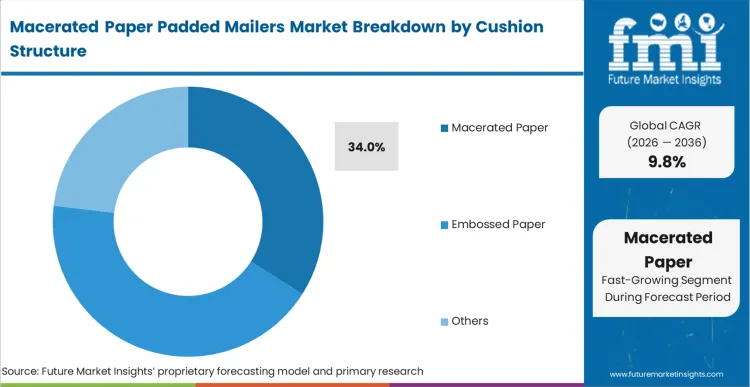
Sourcing pulverized newsprint delivers maximum protective batting density available in non-rigid formats. Fulfillment center operations managers rely on this density to prevent cosmetic damage to rigid consumer goods during transit. Packing dense cellulosic dust between kraft sheets creates a rigid yet yielding barrier. Warehouse supervisors evaluating cushioned mailer alternatives know macerated fills resist puncture better than purely air-filled designs like embossed paper mailers. Brands attempting to save weight by switching to honeycomb paper mailers or open-flute paper mailers often face immediate spikes in crushed-corner defect rates. Macerated paper accounts for 34.0% share, representing an undisputed baseline standard for shock absorption. Based on FMI's assessment, shippers prioritizing weight reduction over impact resistance frequently alienate customers receiving damaged merchandise.
- Impact Distribution Mechanism: Dense fiber dust absorbs and disperses kinetic energy across broad surface areas during drops. Quality control managers keep return merchandise authorization rates below required metric thresholds.
- Shape Conformity Action: Pulverized internal batting wraps tightly around irregularly shaped retail items without tearing exterior layers. Packers execute order fulfillment faster without forcing rigid products into inflexible geometries.
- Thermal Buffering Trait: Thick cellulosic layers provide incidental temperature insulation against extreme weather fluctuations. Logistics coordinators protect sensitive cosmetic shipments during standard non-refrigerated transit durations.
Macerated Paper Padded Mailers Market Analysis By Closure Type
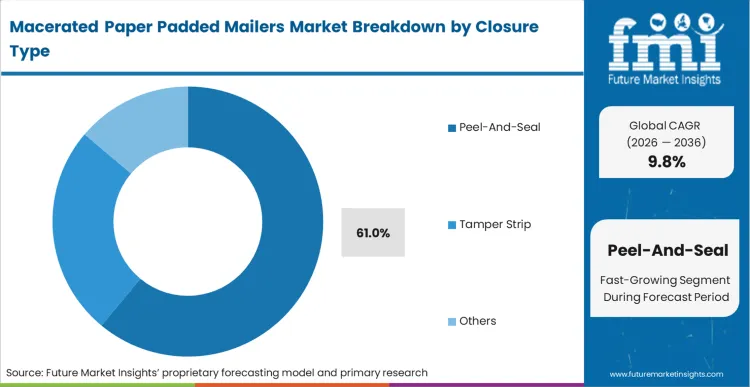
Eliminating secondary taping steps dominates labor efficiency calculations on high-speed packing lines. Integrating release liners directly onto shipping mailers allows packers to achieve maximum hourly throughput. Time-motion studies reveal manual taping causes unpredictable bottlenecks when workers fatigue. Peel-and-seal mechanisms secure 61.0% share by removing tape guns from fulfillment stations entirely. Floor supervisors authorize this premium closure style because it shaves seconds off every individual parcel preparation cycle. FMI observes that delaying transition to self-sealing formats traps operations in permanent labor cost disadvantages compared to automated peers. Operations relying on manual taping lose critical competitive ground during peak holiday rushes. Procurement officers sourcing custom paper padded mailers wholesale always specify peel-and-seal features to maintain ecommerce fulfillment mailers speeds.
- Workflow Acceleration Trigger: Removing release liners takes a fraction of time required to dispense packing tape. Fulfillment operators increase hourly parcel output without adding extra personnel to shipping lines.
- Adhesive Failure Prevention: Industrial hot-melt strips create permanent destructive bonds against kraft paper surfaces. Security directors eliminate undetected pilferage occurring when weak conventional tape lifts during transit.
- Automation Readiness Factor: Standardized flap dimensions allow integration with mechanized auto-bagging equipment. Industrial engineers scale facility capacity exponentially by removing manual human interaction entirely.
Macerated Paper Padded Mailers Market Analysis By End Use
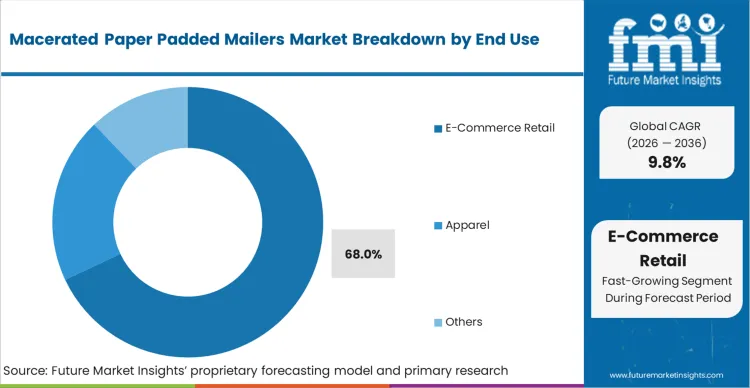
Outbound parcel volume completely dictates structural packaging requirements across digital retail networks. E-commerce retail consumes 68.0% share of total production output. Logistics directors at major online marketplaces mandate fiber-based protection to align with consumer disposal expectations at curbside. Integrating paper packaging directly addresses shopper frustration with unrecyclable mixed-material envelopes. The irony of this dominance is that many smaller brands still over-package soft goods in padded envelopes when unpadded poly mailers would suffice. In FMI's view, retailers resisting fiber adoption face increasing backlash from environmentally conscious shopper demographics demanding plastic-free unboxing experiences. Failing to align packaging materials with consumer values actively suppresses repeat purchase conversion rates. Operations managers frequently deploy paper padded mailers for apparel and paper padded mailers for books, while specialized paper padded mailers for cosmetics and paper padded mailers for consumer electronics accessories protect higher-value items.
- Curbside Compliance Metric: Shoppers demand shipping materials they can drop directly into residential recycling bins without separating components. Marketing managers leverage this convenience to build brand loyalty and drive repeat sales.
- Dimensional Weight Avoidance: Switching from corrugated boxes to slim fiber envelopes reduces cubic volume drastically. Logistics directors slash carrier billing charges on thousands of daily lightweight shipments.
- Brand Perception Alignment: Shipping sustainable goods inside single-use plastics creates immediate cognitive dissonance for buyers. Sustainability officers eliminate reputational risks by mandating fully repulpable transit materials.
Macerated Paper Padded Mailers Market Analysis By Sales Channel
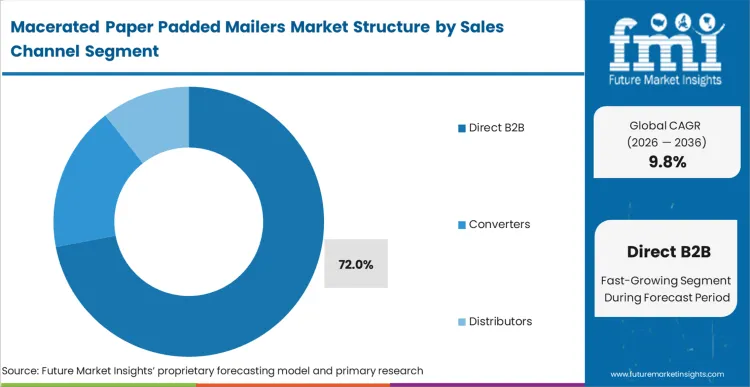
Procurement officers negotiate directly with manufacturers to guarantee uninterrupted seasonal capacity during peak holiday shipping windows. Bypassing intermediaries ensures custom-branded paper and paperboard packaging arrives just-in-time to regional fulfillment hubs. A structural reality hidden by this massive direct share is how smaller merchants struggle to access premium macerated formats due to high minimum order quantities. Volume purchasing agreements require custom printing and precise dimensional matching that distributors cannot facilitate effectively. Direct B2B routing captures 72.0% share as enterprise shippers demand integrated supply relationships. FMI analysts note that relying on spot-market distributors leaves mid-tier brands vulnerable to stockouts during critical fourth-quarter surges. Enterprise shippers lock up available machine time, leaving smaller competitors scrambling for substitute materials. Securing bulk recyclable padded mailers from reliable paper padded mailer suppliers separates successful holiday campaigns from logistical failures.
- Capacity Reservation Tactic: Direct contracts guarantee machine hours well ahead of anticipated holiday volume spikes. Procurement directors avoid paying exorbitant spot-market premiums when regional packaging inventory tightens.
- Custom Specification Access: Direct relationships allow brands to dictate exact sizing and proprietary flexographic printing requirements. Packaging engineers eliminate wasteful void space by designing envelopes perfectly matched to product dimensions.
- Quality Consistency Mandate: Working directly with mill-integrated converters ensures uniform bursting strength across all batches. Quality assurance managers reject shipments immediately if moisture content varies from negotiated technical specifications.
Macerated Paper Padded Mailers Market Drivers, Restraints, and Opportunities
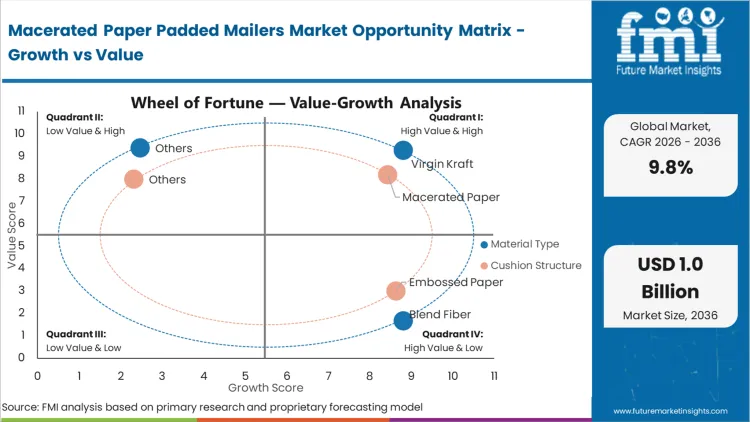
Regulatory penalties targeting single-use plastics compel logistics directors to audit entire outbound packaging portfolios immediately. Delaying this material transition exposes enterprise shippers to compounding extended producer responsibility fees across multiple jurisdictions simultaneously. Transitioning toward fiber-based protective packaging eliminates unpredictable taxation burdens while satisfying corporate sustainability pledges. Procurement managers scramble to secure reliable cellulosic supply lines before mandatory compliance dates trigger massive financial penalties. Regional postal services also apply pressure by offering favorable processing rates for standardized flexible packages. Evaluating paper padded mailers vs bubble mailers confirms that plastic-free protective mailers offer superior long-term cost stability.
Heavy moisture exposure during last-mile delivery degrades cellulosic integrity completely. Weatherproofing non-polymer shipping formats remains a fundamental chemical challenge for material scientists across packaging sectors. Until affordable hydrophobic coatings achieve commercial scale, shippers of high-value electronics must retain flexible protective packaging featuring plastic barrier layers to prevent water damage on residential porches. E-commerce merchants face unacceptable liability replacing ruined consumer electronics because fiber envelopes absorbed standing water. This vulnerability complicates adopting a pure paper bubble wrap alternative mailer.
Opportunities in the Macerated Paper Padded Mailers Market
- Custom Dimensioning: Integrating on-demand e commerce packaging equipment allows warehouse managers to minimize void space.
- Print Capability: High-resolution flexographic printing transforms blank envelopes into brand assets for marketing directors avoiding rigid mailer box costs.
- Cold Chain Adaptation: Modifying cellulosic batting density creates thermal resistance. Quality assurance managers secure temperature-sensitive shipments using specialized kraft packaging.
Regional Analysis
Based on regional analysis, Macerated Paper Padded Mailers is segmented into North America, Latin America, Europe, Asia Pacific, and Middle East and Africa across 40 plus countries. Global transition speeds vary significantly based on whether regional logistics directors face strict legislative penalties or operational automation pressures. Western territories prioritize compliance, whereas Eastern hubs focus on standardizing high-speed fulfillment environments.
.webp "Top Country Growth Comparison Macerated Paper Padded Mailers Market Cagr (2026 2036)")
| Country | CAGR (2026 to 2036) |
|---|---|
| India | 11.3% |
| China | 10.7% |
| United Kingdom | 10.2% |
| Germany | 9.8% |
| France | 9.4% |
| United States | 9.1% |
| Japan | 9.0% |
Source: Future Market Insights (FMI) analysis, based on proprietary forecasting model and primary research
Asia Pacific Macerated Paper Padded Mailers Market Analysis
Standardizing high-speed fulfillment environments requires millions of daily parcels to adopt cellulosic protection capable of surviving mechanized sorting hubs. Multinational brands pushing into these territories accelerate local phase-outs of unrecyclable bubble liners by strictly enforcing global sustainability standards. Domestic manufacturers respond by scaling specialized kraft papers machinery to match exploding outbound parcel volumes originating from tier-one cities. According to FMI's estimates, regional converters remain insulated against global commodity pricing volatility because massive internal pulp production capacities absorb sudden demand shocks. Formalization across digital retail networks ultimately forces domestic logistics providers to abandon informal plastic wrapping methods entirely.
- India: A robust CAGR of 11.3% defines the India paper padded mailers footprint as major fulfillment centers fully automate outbound sorting processes. Transitioning toward uniform fiber-based cushioning eliminates irregular parcel shapes causing mechanical faults across high-speed cross-belt sorters. Rapidly formalizing digital retail networks force local logistics directors to abandon informal plastic wrapping for standardized cellulosic formats. Domestic pulp producers capture volume shifts from flexible polymers by rapidly scaling macerated batting capacity. Enterprise shippers stabilize packaging costs against currency fluctuations by securing these localized supply contracts.
- China: Coastal fulfillment hubs overhauling outbound materials push the China paper padded mailers category toward a 10.7% CAGR as export formats standardize. International cross-border merchants replace millions of bubble-lined envelopes with repulpable alternatives to maintain frictionless customs clearance abroad. Massive converting facilities inject pulverized newsprint instead of extruding polymer bubbles after completely retooling production lines. Fast-fashion conglomerates dominating global direct-to-consumer sales channels guarantee uninterrupted market access by transitioning early to comply with incoming European Union plastic taxation requirements.
- Japan: Intense consumer pressure regarding over-packaging forces fulfillment operations managers to align unboxing experiences with deeply ingrained cultural recycling habits. Quality control directors specify ultra-high-density cellulosic batting to protect intricate electronics during transit without adding dimensional bulk. Domestic machinery manufacturers engineer compact envelope converting equipment perfectly suited for space-constrained urban manufacturing sites. The Japan paper padded mailers sector records a 9.0% CAGR, being pushed by strict municipal separation laws compelling the domestic retailers to utilize single-stream compatible formats exclusively.
FMI's report includes South Korea, Australia, and ASEAN nations. Rising middle-class consumption across Southeast Asia triggers massive investments in mechanized parcel sortation requiring rigid fiber envelopes.
Europe Macerated Paper Padded Mailers Market Analysis
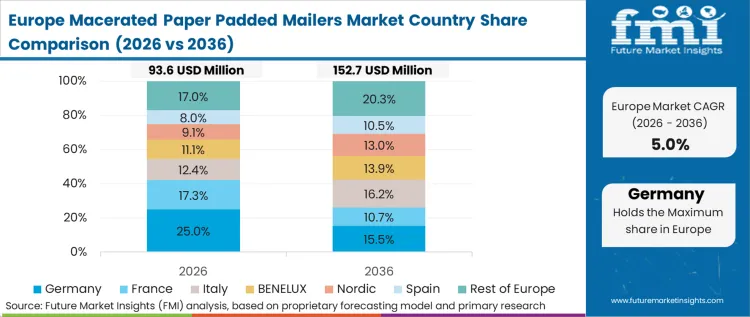
Regulatory bodies systematically destroy economic arguments for retaining traditional bubble envelopes by increasing financial penalties on multi-layer plastics. Examining the PPWR impact on paper mailers highlights severe compliance penalties threatening laggards with immediate margin compression and severe consumer backlash. Massive enterprise shippers combat this threat by mandating fully repulpable packing paper alternatives to shield operating margins from compounding taxation. Based on FMI's assessment, sourcing directors scramble to secure machine capacity exclusively from mill-integrated converters possessing verifiable sustainable forestry certifications. Aggressive extended producer responsibility legislation acts as a permanent structural forcing condition overhauling continental supply chains.
- United Kingdom: Registering a 10.2% CAGR, the United Kingdom paper padded mailers segment expands as procurement directors actively phase out non-compliant shipping materials. Aggressive plastic packaging taxes permanently alter cost equations for high-volume digital retailers across the nation. Logistics managers deploy macerated formats specifically to shield operating margins from compounding regulatory fees. Packaging engineers qualify new repulpable adhesives to ensure envelopes pass strict municipal sorting facility guidelines. Achieving full compliance eliminates unpredictable taxation burdens previously eroding seasonal profitability entirely.
- Germany: Deeply ingrained consumer recycling habits force merchants to adopt formats compatible with existing municipal recovery streams, pushing the Germany paper padded mailers tier to post 9.8% CAGR. Sustainability officers mandate single-material cellulosic shipping solutions to satisfy these strict national environmental standards. Local converters dominate supply by offering specialized waterproof coatings applied to heavy-duty kraft outer layers. Operations directors rely on these ruggedized cellulosic constructions to survive rough handling across extensive domestic transit networks. Sourcing managers guarantee stable raw material pricing during peak periods by partnering directly with regional paper mills.
- France: Aggressive governmental anti-waste laws compel fashion retailers to redesign entire outbound logistics strategies around fully circular packaging models. Fulfillment centers maintain high hourly throughput rates by restructuring packing stations strictly around self-sealing cellulosic formats. Marketing directors leverage fiber-based envelopes to communicate authentic environmental commitments to skeptical consumer demographics. The France paper padded mailers ecosystem demonstrate a 9.4% CAGR, driven by capturing environmentally conscious demographics requires visible elimination of all virgin plastic shipping components.
FMI's report includes Italy, Spain, and Nordic countries. Nordic regional operators leverage vast domestic forestry resources to pioneer ultra-lightweight macerated formulations.
North America Macerated Paper Padded Mailers Market Analysis
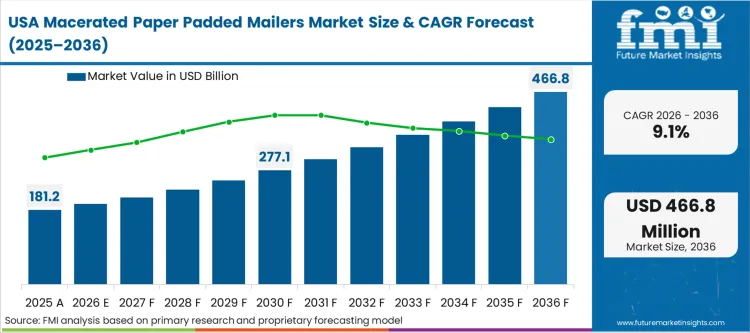
Consumers actively complaining about mixed-material bubble envelopes clogging residential refuse bins force massive retail conglomerates to overhaul delivery experiences. Extensive investments in advanced recycled paper packaging infrastructure solve supply constraints by providing regional converters with abundant raw material streams. Procurement managers focus negotiations strictly on securing guaranteed machine time ahead of explosive fourth-quarter volume surges. FMI analysts note that logistics directors combat consumer friction by mandating purely cellulosic envelopes compatible with standard curbside collection. Mounting pushback against unrecyclable e-commerce waste permanently eliminates plastic-lined mailers from acceptable fulfillment workflows.
- United States: Exhibiting a 9.1% CAGR, the United States paper padded mailers category accelerates as logistics directors standardize curbside-compatible fiber protection. Intense consumer frustration regarding unrecyclable mixed-material envelopes forces massive retail conglomerates to pivot strategies entirely. Packaging engineers specify heavy-duty macerated fills to ensure cosmetic items survive extensive cross-country ground transit routing. Independent merchants struggle to secure premium cellulosic formats because retail giants consume the overwhelming majority of regional production output. Procurement teams lock up available machine capacity with tier-one United States and Canada converters specifically to prevent holiday stockouts.
FMI's report includes Canada and Mexico. Canadian provincial governments rapidly implement extended producer responsibility frameworks mirroring European legislative urgency.
Competitive Aligners for Market Players
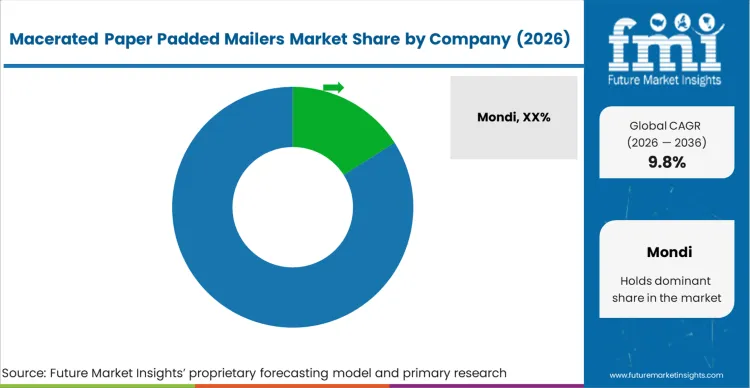
Material access determines pricing power across high-volume commodity categories like cellulosic transit envelopes. Incumbent suppliers control vast internal mill networks, creating an effective buffer against sudden pulp price fluctuations. Procurement managers at major apparel brands award contracts based primarily on supply security rather than minor unit cost differentials. Establishing dominant paper recycling streams guarantees raw material availability during seasonal volume spikes. Independent converters lacking integrated fiber sourcing struggle to maintain margin stability when open-market kraft prices surge. Securing long-term tonnage agreements remains an absolute necessity for challengers attempting to steal enterprise share. Packaging engineers routinely audit supplier facility capacities to ensure vendor claims match actual production capabilities. Failing to demonstrate redundant manufacturing lines disqualifies emerging players from securing tier-one fulfillment center contracts, reinforcing the dominance of established paper padded mailer manufacturers.
Incumbents possess established high-speed converting machinery capable of producing millions of units weekly. Challengers attempting to enter this sector face massive capital expenditure requirements to match existing line speeds. Integrating post consumer resin alternatives or recycled fiber into padding without slowing production requires proprietary equipment modifications. Operations directors at major packaging firms actively acquire smaller regional players specifically to secure specialized converting technology. Engineering teams constantly refine adhesive application systems to improve repulpability scores without sacrificing closure strength. Securing intellectual property rights around tear-strip mechanisms provides incumbent manufacturers with critical differentiation during enterprise bidding wars. New entrants must develop entirely novel internal batting architectures to bypass existing patent fortifications protecting macerated geometries. Assessing which companies lead the paper padded mailers ecosystem reveals massive capital barriers.
Massive retail buyers actively split contracts across multiple suppliers to avoid regional stockouts during holiday surges. Packaging engineers qualify secondary vendors specifically to maintain negotiation leverage against primary partners. Exploring North America mailer manufacturing capacity near major fulfillment nodes reduces transit costs for bulky empty envelopes. Procurement directors aggressively penalize vendors failing to meet strict just-in-time delivery schedules. Manufacturers responding to this pressure are decentralizing production, building smaller converting facilities directly adjacent to massive retailer distribution centers. Shrinking physical distance between converter and packer represents an ultimate competitive advantage in high-volume e-commerce logistics, dictating strategy for key players in paper padded mailers.
Key Players in Macerated Paper Padded Mailers Market
- Mondi
- Ranpak
- Sealed Air
- Pregis
- Smurfit Westrock
- Stora Enso
- International Paper
Scope of the Report
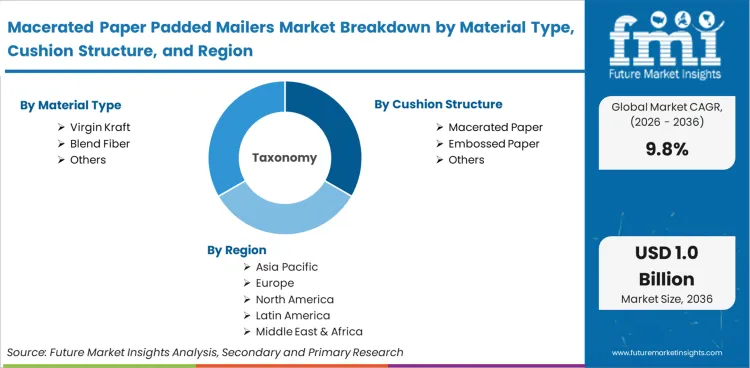
| Metric | Value |
|---|---|
| Quantitative Units | USD 0.4 billion to USD 1.0 billion, at a CAGR of 9.8% |
| Market Definition | Macerated paper padded mailers function as transit shipping envelopes containing pulverized recycled newsprint or kraft dust sandwiched between heavy-duty exterior cellulosic layers. This specific construction provides shock absorption for fragile goods without relying on plastic bubble lining. Procurement teams specify these formats to achieve structural rigidity during transit. |
| Segmentation | Material type, Cushion structure, Closure type, End use, Sales channel, and Region |
| Regions Covered | North America, Latin America, Europe, Asia Pacific, Middle East and Africa |
| Countries Covered | United States, United Kingdom, Germany, France, China, Japan, India |
| Key Companies Profiled | Mondi, Ranpak, Sealed Air, Pregis, Smurfit Westrock, Stora Enso, International Paper |
| Forecast Period | 2026 to 2036 |
| Approach | Annual parcel volume shipped in non-rigid fiber formats |
Source: Future Market Insights (FMI) analysis, based on proprietary forecasting model and primary research
Segments
Material Type:
- Virgin kraft
- Recycled kraft
- Blend fiber
Cushion Structure:
- Macerated paper
- Embossed paper
- Honeycomb paper
- Open-flute paper
Closure Type:
- Peel-and-seal
- Tamper strip
- Return strip
End Use:
- E-commerce retail
- Apparel
- Books media
- Health beauty
- Consumer electronics
Sales Channel:
- Direct B2B
- Converters
- Distributors
- Online wholesale
Regions:
- North America & Latin America
- United States
- Canada
- Mexico
- Brazil
- Argentina
- Chile
- Europe
- Germany
- United Kingdom
- France
- Italy
- Spain
- Asia-Pacific
- China
- Japan
- South Korea
- India
- ASEAN
- ANZ
- Middle East & Africa
- UAE
- Saudi Arabia
- South Africa
Bibliography
- Ali, S. A. S., Farooq, S., Riaz, M., & colleagues. (2024, January). Packaging plastic waste from e-commerce sector. Journal of Cleaner Production.
- Duarte, P., Costa e Silva, S., & Ferreira, M. B. (2024, March). Enhancing consumer purchase intentions for sustainable packaging: A comprehensive literature review. Sustainable Futures.
- European Commission. (2025, January). Packaging and packaging waste regulation. European Commission.
- Ecommerce Europe. (2025, February). Packaging and Packaging Waste Regulation entered into force. Ecommerce Europe.
- Ecommerce Europe & Amsterdam University of Applied Sciences. (2024, October). European e-commerce report 2024. Ecommerce Europe.
- How2Recycle. (2024, February). Guidelines for use. How2Recycle.
- Romero, I. G., Edo, M., & Vargas, C. (2024, April). Can reusable packaging revolutionise e-commerce? A comparative carbon footprint assessment. Journal of Cleaner Production.
- USA Census Bureau. (2025, February). Quarterly retail e-commerce sales: 4th quarter 2024. U.S. Census Bureau.
- Wiley-VCH. (2024, May). Recyclability of paper-based composites for packaging applications. Wiley Online Library.
- World Packaging Organisation. (2024, June). 2024 Official Winners Guide. World Packaging Organisation.
This bibliography is provided for reader reference. The full FMI report contains the complete reference list with primary source documentation.
This Report Addresses
- Dimensional weight pricing models forcing logistics managers away from corrugated boxes.
- Extended producer responsibility legislation penalizing multi-layer plastic bubble formats.
- Bursting strength metrics driving virgin kraft adoption across mechanized sorting hubs.
- Repulpability testing standards governing adhesives applied to sustainable transit envelopes.
- High-speed auto-bagging integration requiring standardized flap geometries on packing lines.
- Hydrophobic coating development necessary for protecting consumer electronics during porch delivery.
- Mill-integrated converters leveraging vast capacity to dominate enterprise retail supply contracts.
- Fulfillment operators capturing labor efficiency by transitioning exclusively to peel-and-seal closures.
Frequently Asked Questions
What are macerated paper padded mailers?
Macerated paper padded mailers serve as shock-absorbing transit envelopes utilizing pulverized cellulosic material to provide protection for fragile goods without relying on plastic bubble lining.
What was the paper padded mailers market size in 2025?
The market achieved a valuation of USD 0.3 billion in 2025 as major apparel retailers aggressively replaced unrecyclable plastic formats.
What is the paper padded mailers market forecast 2036?
Demand is expected to reach USD 1.0 billion by 2036 as fulfillment centers replace mixed-material bubble envelopes entirely with monomaterial pulped solutions.
What is the anticipated CAGR for this sector?
Sales are projected to grow at a CAGR of 9.8% from 2026 to 2036 due to compounding legislative taxation on single-use plastics driving enterprise shippers toward fiber protection.
How do paper padded mailers compare with bubble mailers?
Evaluating paper padded mailers vs bubble mailers confirms fiber formats guarantee curbside recyclability while matching shock absorption metrics, helping brands avoid compounding regulatory taxation.
Are paper padded mailers recyclable?
Properly designed curbside recyclable padded mailers bypass municipal facility sorting rejections entirely when procurement teams specify fully repulpable adhesives and inks.
Which companies lead the paper padded mailers market?
Major paper padded mailer manufacturers including Mondi, Ranpak, Sealed Air, and Smurfit Westrock dominate enterprise supply by leveraging vast internal pulp capacities.
Why are ecommerce brands shifting to paper padded mailers?
Brands face immediate pressure from extended producer responsibility fees penalizing multi-layer plastics, making sustainable padded mailers a critical compliance requirement.
Which industries use paper padded mailers?
Procurement directors across apparel, books, cosmetics, and consumer electronics deploy fiber envelopes specifically to avoid dimensional weight surcharges associated with corrugated boxes.
What regulations support recyclable paper mailers in Europe?
The PPWR impact on paper mailers accelerates adoption as regulatory bodies systematically increase financial penalties on multi-layer plastics across continental supply chains.
Compare macerated paper and embossed paper mailers.
While embossed paper mailers rely on air-filled structural ridges to save weight, macerated paper formats utilize pulverized newsprint to deliver maximum protective batting density against transit punctures.
Can paper padded mailers be custom printed?
Marketing directors deploy custom-printed kraft padded envelopes because smooth virgin exterior surfaces absorb high-resolution flexographic inks without bleeding.
Are padded paper mailers good for ecommerce shipping?
These ecommerce fulfillment mailers excel in digital fulfillment environments by preventing cosmetic damage to rigid consumer goods while shaving seconds off every parcel preparation cycle.
Which Material type leads adoption?
Virgin kraft is anticipated to hold 58.0% share in 2026 because packaging engineers require exceptional bursting strength to guarantee envelopes survive high-speed automated cross-belt sortation.
How do Peel-and-seal closures impact operations?
Peel-and-seal closures capture 61.0% share by removing manual tape guns from fulfillment stations, allowing operators to significantly accelerate high-volume outbound shipping lines.
Why does E-commerce retail hold maximum end use share?
Commanding 68.0% share due to massive outbound parcel volumes, logistics directors mandate plastic-free protective mailers specifically to align with consumer curbside disposal expectations.
What secures Direct B2B routing dominance?
Direct B2B routing accounts for 72.0% share as procurement officers negotiate directly with paper padded mailer suppliers to guarantee uninterrupted seasonal capacity during holiday shipping windows.
How does the India paper padded mailers market outpace China?
India leads at 11.3% compound growth because rapidly formalizing digital retail networks force local logistics providers to aggressively abandon informal plastic wrapping methods.
What friction slows immediate adoption?
Heavy moisture exposure during last-mile delivery degrades cellulosic integrity, remaining a fundamental chemical challenge that requires advanced repulpable hydrophobic coatings.
What drives custom dimensioning opportunities?
Integrating on-demand converting equipment allows warehouse managers to minimize interior void space, slashing carrier billing charges across millions of lightweight digital shipments annually.
What prevents smaller merchants from accessing premium formats?
Smaller merchants relying on spot-market distributors remain vulnerable to stockouts when enterprise shippers lock up available bulk recyclable padded mailers capacity during peak seasons.
Why do shippers split contracts across suppliers?
Massive retail buyers actively qualify multiple vendors to avoid regional stockouts during holiday surges, providing procurement directors critical negotiation leverage against primary incumbent partners.
Preview the report firsthand - request a free sample
Get SampleGet the brochure for pricing and purchase details.
Get PDFTable of Content
- Executive Summary
- Global Market Outlook
- Demand-side Trends
- Supply-side Trends
- Technology Roadmap Analysis
- Analysis and Recommendations
- Market Overview
- Market Coverage / Taxonomy
- Market Definition / Scope / Limitations
- Research Methodology
- Chapter Orientation
- Analytical Lens and Working Hypotheses
- Market Structure, Signals, and Trend Drivers
- Benchmarking and Cross-market Comparability
- Market Sizing, Forecasting, and Opportunity Mapping
- Research Design and Evidence Framework
- Desk Research Programme (Secondary Evidence)
- Company Annual and Sustainability Reports
- Peer-reviewed Journals and Academic Literature
- Corporate Websites, Product Literature, and Technical Notes
- Earnings Decks and Investor Briefings
- Statutory Filings and Regulatory Disclosures
- Technical White Papers and Standards Notes
- Trade Journals, Industry Magazines, and Analyst Briefs
- Conference Proceedings, Webinars, and Seminar Materials
- Government Statistics Portals and Public Data Releases
- Press Releases and Reputable Media Coverage
- Specialist Newsletters and Curated Briefings
- Sector Databases and Reference Repositories
- FMI Internal Proprietary Databases and Historical Market Datasets
- Subscription Datasets and Paid Sources
- Social Channels, Communities, and Digital Listening Inputs
- Additional Desk Sources
- Expert Input and Fieldwork (Primary Evidence)
- Primary Modes
- Qualitative Interviews and Expert Elicitation
- Quantitative Surveys and Structured Data Capture
- Blended Approach
- Why Primary Evidence is Used
- Field Techniques
- Interviews
- Surveys
- Focus Groups
- Observational and In-context Research
- Social and Community Interactions
- Stakeholder Universe Engaged
- C-suite Leaders
- Board Members
- Presidents and Vice Presidents
- R&D and Innovation Heads
- Technical Specialists
- Domain Subject-matter Experts
- Scientists
- Physicians and Other Healthcare Professionals
- Governance, Ethics, and Data Stewardship
- Research Ethics
- Data Integrity and Handling
- Primary Modes
- Tooling, Models, and Reference Databases
- Desk Research Programme (Secondary Evidence)
- Data Engineering and Model Build
- Data Acquisition and Ingestion
- Cleaning, Normalisation, and Verification
- Synthesis, Triangulation, and Analysis
- Quality Assurance and Audit Trail
- Market Background
- Market Dynamics
- Drivers
- Restraints
- Opportunity
- Trends
- Scenario Forecast
- Demand in Optimistic Scenario
- Demand in Likely Scenario
- Demand in Conservative Scenario
- Opportunity Map Analysis
- Product Life Cycle Analysis
- Supply Chain Analysis
- Investment Feasibility Matrix
- Value Chain Analysis
- PESTLE and Porter’s Analysis
- Regulatory Landscape
- Regional Parent Market Outlook
- Production and Consumption Statistics
- Import and Export Statistics
- Market Dynamics
- Global Market Analysis 2021 to 2025 and Forecast, 2026 to 2036
- Historical Market Size Value (USD Million) Analysis, 2021 to 2025
- Current and Future Market Size Value (USD Million) Projections, 2026 to 2036
- Y-o-Y Growth Trend Analysis
- Absolute $ Opportunity Analysis
- Global Market Pricing Analysis 2021 to 2025 and Forecast 2026 to 2036
- Global Market Analysis 2021 to 2025 and Forecast 2026 to 2036, By Material Type
- Introduction / Key Findings
- Historical Market Size Value (USD Million) Analysis By Material Type , 2021 to 2025
- Current and Future Market Size Value (USD Million) Analysis and Forecast By Material Type , 2026 to 2036
- Virgin Kraft
- Blend Fiber
- Others
- Virgin Kraft
- Y-o-Y Growth Trend Analysis By Material Type , 2021 to 2025
- Absolute $ Opportunity Analysis By Material Type , 2026 to 2036
- Global Market Analysis 2021 to 2025 and Forecast 2026 to 2036, By Cushion Structure
- Introduction / Key Findings
- Historical Market Size Value (USD Million) Analysis By Cushion Structure, 2021 to 2025
- Current and Future Market Size Value (USD Million) Analysis and Forecast By Cushion Structure, 2026 to 2036
- Macerated Paper
- Embossed Paper
- Others
- Macerated Paper
- Y-o-Y Growth Trend Analysis By Cushion Structure, 2021 to 2025
- Absolute $ Opportunity Analysis By Cushion Structure, 2026 to 2036
- Global Market Analysis 2021 to 2025 and Forecast 2026 to 2036, By Closure Type
- Introduction / Key Findings
- Historical Market Size Value (USD Million) Analysis By Closure Type, 2021 to 2025
- Current and Future Market Size Value (USD Million) Analysis and Forecast By Closure Type, 2026 to 2036
- Peel-And-Seal
- Tamper Strip
- Others
- Peel-And-Seal
- Y-o-Y Growth Trend Analysis By Closure Type, 2021 to 2025
- Absolute $ Opportunity Analysis By Closure Type, 2026 to 2036
- Global Market Analysis 2021 to 2025 and Forecast 2026 to 2036, By End Use
- Introduction / Key Findings
- Historical Market Size Value (USD Million) Analysis By End Use, 2021 to 2025
- Current and Future Market Size Value (USD Million) Analysis and Forecast By End Use, 2026 to 2036
- E-Commerce Retail
- Apparel
- Others
- E-Commerce Retail
- Y-o-Y Growth Trend Analysis By End Use, 2021 to 2025
- Absolute $ Opportunity Analysis By End Use, 2026 to 2036
- Global Market Analysis 2021 to 2025 and Forecast 2026 to 2036, By Sales Channel
- Introduction / Key Findings
- Historical Market Size Value (USD Million) Analysis By Sales Channel, 2021 to 2025
- Current and Future Market Size Value (USD Million) Analysis and Forecast By Sales Channel, 2026 to 2036
- Direct B2B
- Converters
- Distributors
- Direct B2B
- Y-o-Y Growth Trend Analysis By Sales Channel, 2021 to 2025
- Absolute $ Opportunity Analysis By Sales Channel, 2026 to 2036
- Global Market Analysis 2021 to 2025 and Forecast 2026 to 2036, By Region
- Introduction
- Historical Market Size Value (USD Million) Analysis By Region, 2021 to 2025
- Current Market Size Value (USD Million) Analysis and Forecast By Region, 2026 to 2036
- North America
- Latin America
- Western Europe
- Eastern Europe
- East Asia
- South Asia and Pacific
- Middle East & Africa
- Market Attractiveness Analysis By Region
- North America Market Analysis 2021 to 2025 and Forecast 2026 to 2036, By Country
- Historical Market Size Value (USD Million) Trend Analysis By Market Taxonomy, 2021 to 2025
- Market Size Value (USD Million) Forecast By Market Taxonomy, 2026 to 2036
- By Country
- USA
- Canada
- Mexico
- By Material Type
- By Cushion Structure
- By Closure Type
- By End Use
- By Sales Channel
- By Country
- Market Attractiveness Analysis
- By Country
- By Material Type
- By Cushion Structure
- By Closure Type
- By End Use
- By Sales Channel
- Key Takeaways
- Latin America Market Analysis 2021 to 2025 and Forecast 2026 to 2036, By Country
- Historical Market Size Value (USD Million) Trend Analysis By Market Taxonomy, 2021 to 2025
- Market Size Value (USD Million) Forecast By Market Taxonomy, 2026 to 2036
- By Country
- Brazil
- Chile
- Rest of Latin America
- By Material Type
- By Cushion Structure
- By Closure Type
- By End Use
- By Sales Channel
- By Country
- Market Attractiveness Analysis
- By Country
- By Material Type
- By Cushion Structure
- By Closure Type
- By End Use
- By Sales Channel
- Key Takeaways
- Western Europe Market Analysis 2021 to 2025 and Forecast 2026 to 2036, By Country
- Historical Market Size Value (USD Million) Trend Analysis By Market Taxonomy, 2021 to 2025
- Market Size Value (USD Million) Forecast By Market Taxonomy, 2026 to 2036
- By Country
- Germany
- UK
- Italy
- Spain
- France
- Nordic
- BENELUX
- Rest of Western Europe
- By Material Type
- By Cushion Structure
- By Closure Type
- By End Use
- By Sales Channel
- By Country
- Market Attractiveness Analysis
- By Country
- By Material Type
- By Cushion Structure
- By Closure Type
- By End Use
- By Sales Channel
- Key Takeaways
- Eastern Europe Market Analysis 2021 to 2025 and Forecast 2026 to 2036, By Country
- Historical Market Size Value (USD Million) Trend Analysis By Market Taxonomy, 2021 to 2025
- Market Size Value (USD Million) Forecast By Market Taxonomy, 2026 to 2036
- By Country
- Russia
- Poland
- Hungary
- Balkan & Baltic
- Rest of Eastern Europe
- By Material Type
- By Cushion Structure
- By Closure Type
- By End Use
- By Sales Channel
- By Country
- Market Attractiveness Analysis
- By Country
- By Material Type
- By Cushion Structure
- By Closure Type
- By End Use
- By Sales Channel
- Key Takeaways
- East Asia Market Analysis 2021 to 2025 and Forecast 2026 to 2036, By Country
- Historical Market Size Value (USD Million) Trend Analysis By Market Taxonomy, 2021 to 2025
- Market Size Value (USD Million) Forecast By Market Taxonomy, 2026 to 2036
- By Country
- China
- Japan
- South Korea
- By Material Type
- By Cushion Structure
- By Closure Type
- By End Use
- By Sales Channel
- By Country
- Market Attractiveness Analysis
- By Country
- By Material Type
- By Cushion Structure
- By Closure Type
- By End Use
- By Sales Channel
- Key Takeaways
- South Asia and Pacific Market Analysis 2021 to 2025 and Forecast 2026 to 2036, By Country
- Historical Market Size Value (USD Million) Trend Analysis By Market Taxonomy, 2021 to 2025
- Market Size Value (USD Million) Forecast By Market Taxonomy, 2026 to 2036
- By Country
- India
- ASEAN
- Australia & New Zealand
- Rest of South Asia and Pacific
- By Material Type
- By Cushion Structure
- By Closure Type
- By End Use
- By Sales Channel
- By Country
- Market Attractiveness Analysis
- By Country
- By Material Type
- By Cushion Structure
- By Closure Type
- By End Use
- By Sales Channel
- Key Takeaways
- Middle East & Africa Market Analysis 2021 to 2025 and Forecast 2026 to 2036, By Country
- Historical Market Size Value (USD Million) Trend Analysis By Market Taxonomy, 2021 to 2025
- Market Size Value (USD Million) Forecast By Market Taxonomy, 2026 to 2036
- By Country
- Kingdom of Saudi Arabia
- Other GCC Countries
- Turkiye
- South Africa
- Other African Union
- Rest of Middle East & Africa
- By Material Type
- By Cushion Structure
- By Closure Type
- By End Use
- By Sales Channel
- By Country
- Market Attractiveness Analysis
- By Country
- By Material Type
- By Cushion Structure
- By Closure Type
- By End Use
- By Sales Channel
- Key Takeaways
- Key Countries Market Analysis
- USA
- Pricing Analysis
- Market Share Analysis, 2025
- By Material Type
- By Cushion Structure
- By Closure Type
- By End Use
- By Sales Channel
- Canada
- Pricing Analysis
- Market Share Analysis, 2025
- By Material Type
- By Cushion Structure
- By Closure Type
- By End Use
- By Sales Channel
- Mexico
- Pricing Analysis
- Market Share Analysis, 2025
- By Material Type
- By Cushion Structure
- By Closure Type
- By End Use
- By Sales Channel
- Brazil
- Pricing Analysis
- Market Share Analysis, 2025
- By Material Type
- By Cushion Structure
- By Closure Type
- By End Use
- By Sales Channel
- Chile
- Pricing Analysis
- Market Share Analysis, 2025
- By Material Type
- By Cushion Structure
- By Closure Type
- By End Use
- By Sales Channel
- Germany
- Pricing Analysis
- Market Share Analysis, 2025
- By Material Type
- By Cushion Structure
- By Closure Type
- By End Use
- By Sales Channel
- UK
- Pricing Analysis
- Market Share Analysis, 2025
- By Material Type
- By Cushion Structure
- By Closure Type
- By End Use
- By Sales Channel
- Italy
- Pricing Analysis
- Market Share Analysis, 2025
- By Material Type
- By Cushion Structure
- By Closure Type
- By End Use
- By Sales Channel
- Spain
- Pricing Analysis
- Market Share Analysis, 2025
- By Material Type
- By Cushion Structure
- By Closure Type
- By End Use
- By Sales Channel
- France
- Pricing Analysis
- Market Share Analysis, 2025
- By Material Type
- By Cushion Structure
- By Closure Type
- By End Use
- By Sales Channel
- India
- Pricing Analysis
- Market Share Analysis, 2025
- By Material Type
- By Cushion Structure
- By Closure Type
- By End Use
- By Sales Channel
- ASEAN
- Pricing Analysis
- Market Share Analysis, 2025
- By Material Type
- By Cushion Structure
- By Closure Type
- By End Use
- By Sales Channel
- Australia & New Zealand
- Pricing Analysis
- Market Share Analysis, 2025
- By Material Type
- By Cushion Structure
- By Closure Type
- By End Use
- By Sales Channel
- China
- Pricing Analysis
- Market Share Analysis, 2025
- By Material Type
- By Cushion Structure
- By Closure Type
- By End Use
- By Sales Channel
- Japan
- Pricing Analysis
- Market Share Analysis, 2025
- By Material Type
- By Cushion Structure
- By Closure Type
- By End Use
- By Sales Channel
- South Korea
- Pricing Analysis
- Market Share Analysis, 2025
- By Material Type
- By Cushion Structure
- By Closure Type
- By End Use
- By Sales Channel
- Russia
- Pricing Analysis
- Market Share Analysis, 2025
- By Material Type
- By Cushion Structure
- By Closure Type
- By End Use
- By Sales Channel
- Poland
- Pricing Analysis
- Market Share Analysis, 2025
- By Material Type
- By Cushion Structure
- By Closure Type
- By End Use
- By Sales Channel
- Hungary
- Pricing Analysis
- Market Share Analysis, 2025
- By Material Type
- By Cushion Structure
- By Closure Type
- By End Use
- By Sales Channel
- Kingdom of Saudi Arabia
- Pricing Analysis
- Market Share Analysis, 2025
- By Material Type
- By Cushion Structure
- By Closure Type
- By End Use
- By Sales Channel
- Turkiye
- Pricing Analysis
- Market Share Analysis, 2025
- By Material Type
- By Cushion Structure
- By Closure Type
- By End Use
- By Sales Channel
- South Africa
- Pricing Analysis
- Market Share Analysis, 2025
- By Material Type
- By Cushion Structure
- By Closure Type
- By End Use
- By Sales Channel
- USA
- Market Structure Analysis
- Competition Dashboard
- Competition Benchmarking
- Market Share Analysis of Top Players
- By Regional
- By Material Type
- By Cushion Structure
- By Closure Type
- By End Use
- By Sales Channel
- Competition Analysis
- Competition Deep Dive
- Mondi
- Overview
- Product Portfolio
- Profitability by Market Segments (Product/Age /Sales Channel/Region)
- Sales Footprint
- Strategy Overview
- Marketing Strategy
- Product Strategy
- Channel Strategy
- Ranpak
- Sealed Air
- Pregis
- Smurfit Westrock
- Stora Enso
- Mondi
- Competition Deep Dive
- Assumptions & Acronyms Used


