

- Industry Size (2026)
- USD 932.9 Mn
- Forecast (2036)
- at USD 168.0 Mn
- CAGR (2026 to 2036)
- 18.70%
Microfluidic Organ-on-Chip Drug Testing Market Size, Market Forecast and Outlook By FMI
The microfluidic organ-on-chip drug testing market was valued at USD 141.5 million in 2025. Sales are set to reach USD 168.0 million in 2026 at a CAGR of 18.70% during the forecast period. Ongoing investment supports the growth in valuation to USD 932.9 million through 2036 as pharmaceutical organ-on-chip market participants replace high-attrition static cellular assays with dynamic, human-relevant predictive models to salvage late-stage clinical pipelines.
The transition facing biopharmaceutical development teams centers on the deprecation of mandatory animal IND data in favor of qualified in vitro human models. Buyers actively evaluating preclinical toxicology alternatives to animal testing are no longer asking if microfluidic flow improves cell viability; they are deciding which assays can be fully migrated to chip formats to satisfy updated regulatory submission pathways. Delaying this qualification cycle forces developers to rely on animal data that regulators are increasingly scrutinizing for human translational relevance, directly threatening timeline predictability. The broader microphysiological systems sector provides a clear alternative, establishing NAMs in drug development as a baseline requirement for novel biologics.
Before adoption scales from niche investigative toxicology to routine screening, platforms must achieve compatibility with high-throughput organ-on-chip screening infrastructure. The way is the integration of these dynamic flow models into standard 96-well or 384-well automated handling environments. Once hardware form-factors match existing robotic liquid handlers, assay directors can trigger volume transitions without retrofitting entire laboratory ecosystems, accelerating the replacement cycle of conventional lab on chips.
Summary of Microfluidic Organ-on-Chip Drug Testing Market
- Microfluidic Organ-on-Chip Drug Testing Market Definition
- This market represents the commercial ecosystem of dynamic, microfluidic cell-culture systems engineered to mimic human organ physiology for the explicit purpose of screening drug efficacy, toxicity, and pharmacokinetics, displacing less predictive static and animal-based models.
- Demand Drivers in the Market
- High late-stage clinical attrition rates force translational science directors to qualify more predictive human-relevant models earlier in the pipeline.
- Evolving regulatory frameworks enabling non-animal data submissions compel toxicology leads to validate microfluidic alternatives for novel modalities where animal models fail.
- The movement toward complex biologics drives preclinical researchers to utilize dynamic flow environments that accurately simulate human immune and endothelial interactions.
- Key Segments Analyzed in the FMI Report
- Liver-on-chip: Liver-on-chip is estimated to hold 31.0% share in 2026, as hepatic toxicity remains the primary driver of late-stage drug withdrawal, necessitating robust early screening.
- Preclinical toxicology and safety screening: Preclinical toxicology and safety screening is expected to garner 36.0% share in 2026, driven by the immediate economic need to eliminate toxic compounds before clinical expenditure.
- Pharmaceutical and biotechnology companies: Pharmaceutical and biotechnology companies are anticipated to account for 48.0% share in 2026, representing the primary capital base funding platform validation.
- Single-organ microfluidic chips: Single-organ microfluidic chips are set to hold 54.0% share in 2026, maintaining dominance due to their established biological validation and simpler operational integration.
- Instrument and consumables sales: Instrument and consumables sales are likely to record 58.0% share in 2026, reflecting the transition from outsourced testing to internalized screening infrastructure.
- China: 20.7% compound growth, driven by accelerated domestic biotech scaling, unconstrained by legacy animal-testing infrastructure.
- Analyst Opinion at FMI
- Sabyasachi Ghosh, Principal Analyst, Healthcare, at FMI, suggests, "It is widely assumed that the primary barrier to the organ-on-chip drug screening market is regulatory hesitance. friction sits entirely within pharma's own historical data architectures. Toxicologists cannot easily bridge 3D microfluidic flow endpoints to forty years of static in vivo baseline data, meaning the platform is often purchased not for its biology, but for its software's ability to translate those new endpoints into familiar risk calculations."
- Strategic Implications / Executive Takeaways
- Assay directors must standardize microfluidic biological endpoints against historical clinical outcomes to accelerate internal qualification timelines.
- Platform developers should prioritize 96-well compatible hardware interfaces to avoid triggering prohibitive laboratory retrofitting costs for their clients.
- Contract testing laboratories face an imperative to build multi-organ assay protocols to capture the overflow from internal pharma capacity limits.
Microfluidic Organ-on-Chip Drug Testing Market Key Takeaways
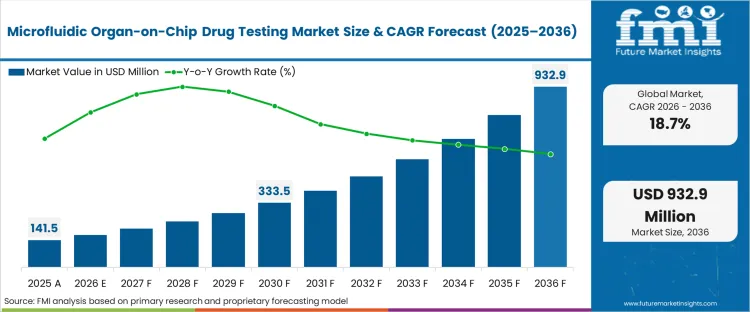
| Metric | Details |
|---|---|
| Industry Size (2026) | USD 168.0 million |
| Industry Value (2036) | USD 932.9 million |
| CAGR (2026-2036) | 18.70% |
China organ-on-chip drug testing market leads global expansion, tracking at 20.7% compound, as domestic programs bypass legacy animal testing infrastructure directly for advanced human-model capacity. The United States follows at 19.8%, driven by dedicated regulatory qualification initiatives. The South Korean market is projected to advance at 19.1%, while the Germany organ-on-chip drug testing market expands at 18.9% and the UK registers 18.4%. The Netherlands is likely to grow at 18.2%, and the Japan posts a measured 17.6% trajectory. This geographic divergence highlights a separation between regions building new preclinical capacity from the ground up versus markets managing careful transitional qualification against decades of historical in vivo data.
Microfluidic Organ-on-Chip Drug Testing Market Definition
The market encompasses bioengineered microfluidic devices that culture living human cells within continuously perfused micrometer-sized chambers to replicate the physiological and mechanical functions of intact human organs. Functionally, this defines the boundary between static 3D cellular clusters and dynamic, flow-based physiological models utilized specifically for predicting human responses to pharmacological compounds prior to clinical trials.
Microfluidic Organ-on-Chip Drug Testing Market Inclusions
Scope includes polymer or glass-based microfluidic chips containing single or multiple organ emulations, the associated pneumatic or mechanical pumping hardware required to maintain flow, and the proprietary software utilized to translate on-chip sensor data into pharmacological endpoints. The market also accounts for specialized consumable kits, validated primary cell lines designed specifically for dynamic perfusion, and contract testing services executed on these platforms. Hardware elements like the high precision microfluidic pump directly tethered to the chip operation are included within system sales.
Microfluidic Organ-on-Chip Drug Testing Market Exclusions
The market explicitly excludes traditional static 2D cell culture plates, non-perfused transwell inserts, and standalone static organoids that lack a continuous microfluidic flow component. These static methodologies are excluded because they do not simulate the biomechanical forces, such as shear stress or cyclic strain, that define the predictive value of dynamic organ-chip platforms. General-purpose laboratory equipment not engineered specifically for organ-chip operation is also excluded.
Microfluidic Organ-on-Chip Drug Testing Market Research Methodology
- Primary Research: Preclinical assay directors, investigative toxicologists, and translational science leads at top-tier pharmaceutical organizations.
- Desk Research: Regulatory guidance publications on new approach methodologies, public-private validation consortium data, and platform qualification registries.
- Market-Sizing and Forecasting: Baseline sizing anchors to hardware installation bases and annualized consumable run-rates across major pharmaceutical research hubs.
- Data Validation and Update Cycle: Vendor revenue disclosures cross-validated against specific contract research capacity metrics in independent testing laboratories.
Segmental Analysis
Microfluidic Organ-on-Chip Drug Testing Market Analysis by Organ Model
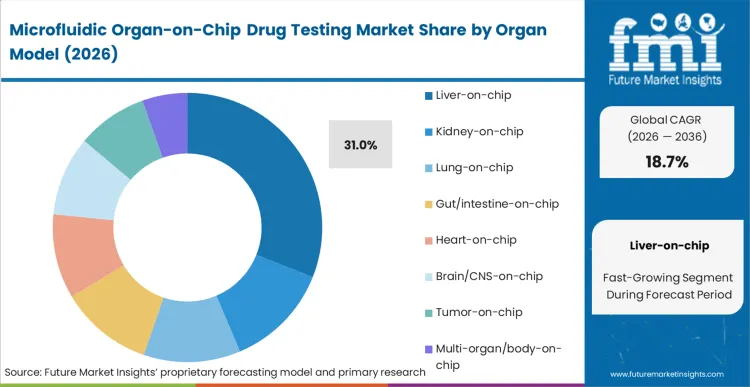
Liver-on-chip holds 31.0% of the market, centred entirely on the financial geometry of drug development within the liver-on-chip drug toxicity testing market: hepatotoxicity is the single most common cause of post-market withdrawal and late-stage clinical failure. According to FMI's estimates, pharmaceutical organisations deploy microfluidics predominantly for liver models because conventional animal and static human models consistently fail to predict human drug-induced liver injury accurately. Tracking drug-induced liver injury organ-on-chip signatures is critical; the dynamic perfusion inside these chips maintains primary hepatocyte functionality and metabolic competence over extended periods, directly resolving the rapid dedifferentiation seen in 2D plates. Kidney-on-chip nephrotoxicity screening market and the lung-on-chip drug testing market also benefit from this continuous flow methodology to isolate organ-specific failure points early. Failure to integrate this specific predictive capability leaves clinical pipelines exposed to catastrophic late-stage failure costs that offset any savings from cheaper legacy screening methods.
- Metabolic competency: Continuous flow maintains stable cytochrome P450 expression over weeks rather than days. Toxicologists execute long-term repeat-dose studies previously impossible in vitro.
- Clearance disparity: Sub-optimal static models fail to replicate biliary efflux mechanics. Assay directors who rely on them face severe blind spots regarding drug metabolite accumulation.
- Validation imperative: Organizations must benchmark chip outputs against known clinical hepatotoxins. Development teams failing to validate internal endpoints cannot justify overriding positive animal safety signals.
Microfluidic Organ-on-Chip Drug Testing Market Analysis by Application
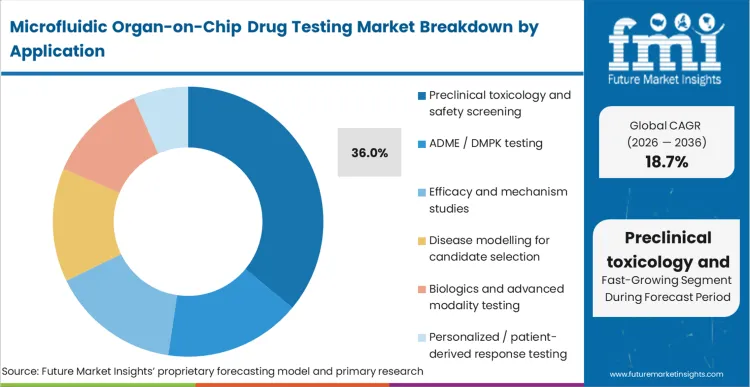
Preclinical toxicology and safety screening, which captures 36.0% share, is garnering the demand for higher throughput and the biological complexity required for true human prediction. Buyers operating within the organ-on-chip toxicology testing market must balance the upfront capital expenditure of establishing toxicology drug screening platforms against the downstream cost of advancing a flawed compound. Additionally, creating a reliable ADME organ-on-chip platform requires rigorous endpoint verification. As per FMI's projection, the immediate cost savings originate not from replacing animal models one-for-one, but from disqualifying toxic hits before they consume extensive in vivo resources. Once integrated, hidden costs emerge in data management and operator training, requiring dedicated personnel who specialize in gut-on-chip drug absorption testing and complex barrier models. However, the total lifecycle comparison heavily favors organ-chips, as identifying a single toxicity failure pre-clinically offsets years of system hardware and consumable investments.
- Capital allocation: Initial hardware acquisition commands significant budget prioritization. Procurement directors offset this by moving funds from expanding traditional animal vivarium capacity.
- Operational overhead: Maintaining sterile, flow-controlled environments demands specialized technician expertise. Laboratory managers discover that operator training becomes a hidden bottleneck if not planned sequentially.
- Lifecycle offset: Capturing early human-specific toxicity signatures prevents clinical trial halts. Financial controllers recognize the return on investment entirely in the avoidance of late-stage failure costs.
Microfluidic Organ-on-Chip Drug Testing Market Analysis by End User
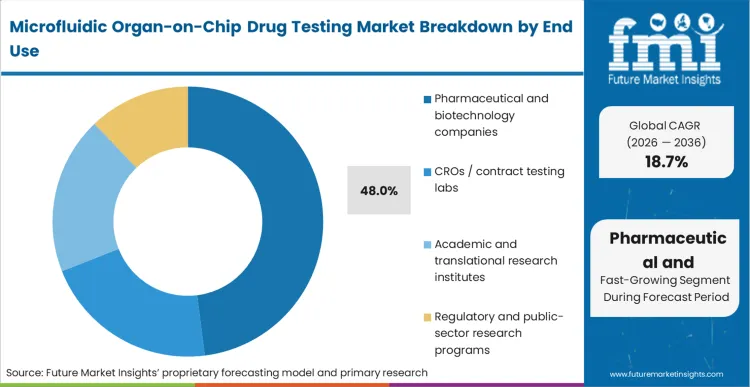
Pharmaceutical and biotechnology companies, represents 48.0% of the market. The key consideration has shifted from evaluating microfluidic models to determining whether to internalize the infrastructure or outsource testing. Tier-1 companies act as the first-movers in the organ-on-chip preclinical testing market, absorbing the heavy internal qualification burden to build proprietary, predictive drug discovery informatics libraries. FMI predicts that these organizations adopt biotech organ-chip testing platforms to gain a decisive speed advantage in candidate selection. Mid-cap biotech firms follow, often utilizing the validated protocols established by the tier-1 leaders. Translational medicine organ-chip platforms at academic institutes, while critical for initial biological validation, adopt commercial systems later in the cycle to standardize outputs for licensing discussions. Consequently, toxicology labs organ-on-chip adoption and CRO adoption of organ-on-chip workflows remain robust, accelerating the transition from bespoke lab-built chips to commercial platforms.
- Internalization trigger: Top-tier pharmaceutical developers purchase systems to build proprietary compound libraries. Strategic leads capture value by owning the predictive algorithms generated by the chip data.
- Validation adoption: Mid-sized biotech companies integrate systems to demonstrate candidate viability to larger licensing partners. Development directors change their submission strategies to highlight human-relevant data packages.
- Standardization pull: Academic research centers switch to commercial platforms to ensure their findings are reproducible in industry settings. Principal investigators must abandon custom lab designs to secure late-stage translational funding.
Microfluidic Organ-on-Chip Drug Testing Market Analysis by Platform Format
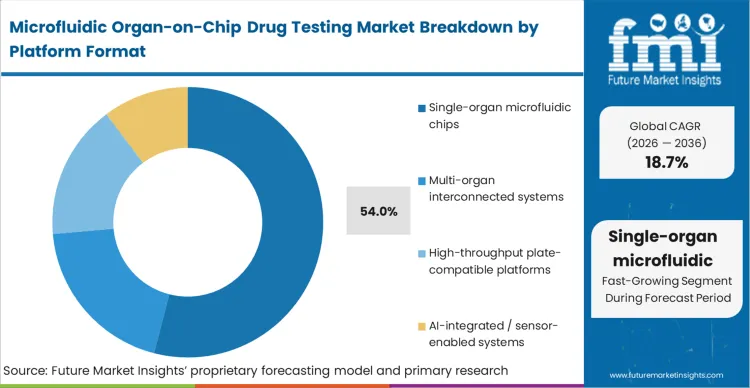
Single-organ microfluidic chips displace complex multi-organ concepts to hold 54.0% share, because multi-organ systems fail to meet the immediate throughput requirements of early-stage screening. Assay directors select single-organ formats because they map directly onto existing organ-specific toxicity protocols, requiring less complex high throughput screening validation. Based on FMI's assessment, the initial purchase decision is validated during internal qualification when the single-organ data successfully aligns with historical monotypic baselines. The simplicity of controlling single-tissue variables drives renewal and protocol expansion. Conversely, attempting to leapfrog directly into the multi-organ chip drug development market introduces unmanageable biological variables, delaying operational qualification and forcing researchers to revert to static models to meet strict pipeline deadlines.
- Protocol alignment: Single-tissue architectures integrate smoothly with established organ-specific safety endpoints. Assay directors approve purchases based on this immediate operational compatibility.
- Variable control: Qualification requires matching chip outputs to known compound effects. Toxicologists validate single-organ platforms rapidly because cross-tissue signaling noise is eliminated.
- Throughput scaling: Simpler designs allow for plate-based formatting and automated handling. Laboratory managers expand utilization because the platform does not disrupt existing robotic liquid-handling workflows.
Microfluidic Organ-on-Chip Drug Testing Market Analysis by Workflow Model
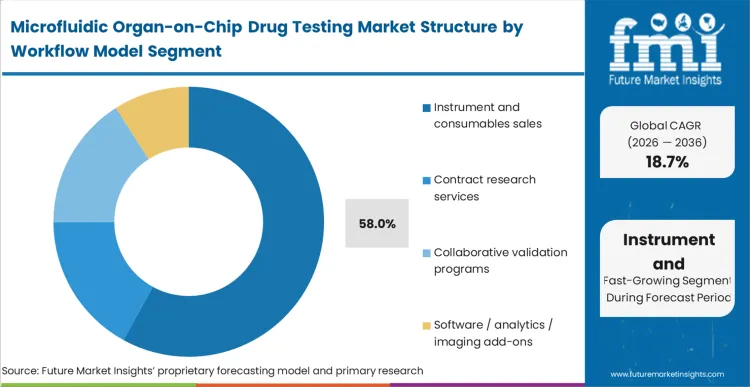
Instrument and consumables sales are heading toward a dominant 58.0% position as the market transitions from an outsourced service model to decentralised internal capacity. Initially, complex lab chip devices required the specialized expertise of the platform developers, limiting pharma engagement to organ-on-chip contract testing services. In FMI's view, the stabilization of polymer manufacturing and standardized consumable kits allows vendors to move their revenue model toward recurring hardware installations. Supply constraints center heavily on the sourcing of primary human cells qualified for dynamic flow, forcing teams who buy organ-on-chip system for drug screening to plan procurement cycles carefully. Moving toward 2036, the supply landscape will centralize around vendors who can bundle the hardware, the predictive software, and the validated biological consumables into a single closed ecosystem, pushing organ-on-chip CRO services to handle highly specialized overflow.
- Manufacturing stabilization: Scalable injection molding techniques replace bespoke PDMS casting for chip production. Hardware manufacturers maintain volume by lowering the per-unit consumable cost for high-throughput clients.
- Biological sourcing: Sourcing functionally competent primary cells remains a critical rate-limiting step. Procurement managers must secure long-term cell-supply agreements to prevent operational downtime.
- Ecosystem lock-in: Vendors bundle chips with proprietary pneumatic controllers and analytical software. Buyers navigating this landscape toward 2036 face high switching costs once an ecosystem is integrated.
Microfluidic Organ-on-Chip Drug Testing Market Drivers, Restraints, and Opportunities
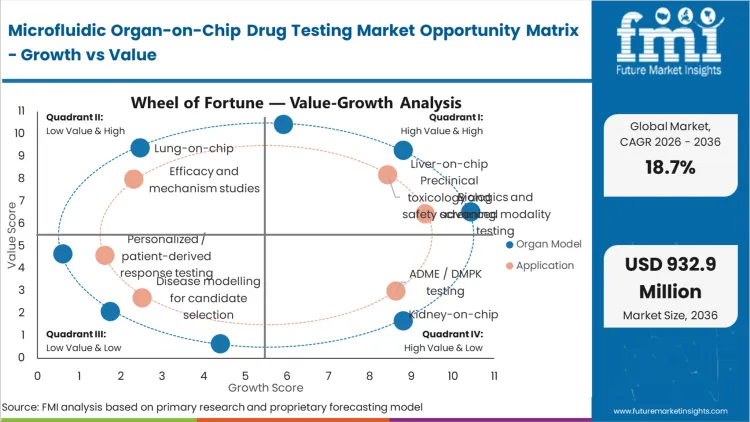
The regulatory use of organ-on-chip in drug development compelling pharmaceutical toxicology leads to qualify human-relevant microfluidic models serves as the primary driver. This forces organizations to rapidly validate alternative methodologies to maintain pipeline velocity, as relying solely on traditional in vivo models for complex modalities increasingly yields non-predictive clinical outcomes. Evaluating the organ-on-chip ROI compared with conventional assays reveals that identifying a failure early completely justifies the integration costs. Evaluating organ-on-chip vs animal testing, organizations find that failure to integrate these dynamic platforms leaves developers exposed to protracted regulatory scrutiny and competitive disadvantages in securing trial approvals.
The single biggest buyer friction is the high-throughput organ-chip platform price compounded by the rigorous requirement to standardize microfluidic biological endpoints against decades of legacy historical in vivo data. This qualification gap slows adoption because toxicologists cannot simply accept novel in vitro readouts without a direct translation to established risk-assessment algorithms utilizing traditional toxicology screening systems. While bioinformatics platforms are emerging to bridge these datasets, their utility remains limited by the proprietary nature of pharma data, meaning each organization must laboriously validate the system internally before trusting it for go/no-go pipeline decisions.
Opportunities in the Microfluidic Organ-on-Chip Drug Testing Market
- Contract expansion: Tier-1 pharmaceutical companies exceeding internal platform capacity require external validation support. Specialized CROs capture this by offering dedicated microfluidic drug discovery outsourcing services aligned with proprietary pharma protocols.
- Modality specialization: Advanced therapies like CAR-T require complex tumor-immune interaction modeling. Platform developers who engineer specific immunological flow chips for biologics safety testing organ-on-chip and oncology drug screening organ-on-chip capture high-margin biological testing contracts.
- Barrier integration: Evaluating drug penetrance requires sophisticated cellular architectures. Designing platforms for blood-brain barrier chip drug testing allows vendors to embed themselves directly into neurology candidate selection workflows.
Regional Analysis
.webp "Top Country Growth Comparison Microfluidic Organ On Chip Drug Testing Market Cagr (2026 2036)")
Regional segmentation places the Microfluidic Organ-on-Chip Drug Testing market across North America, Europe, and Asia Pacific, covering over 40 countries.
| Country | CAGR (2026 to 2036) |
|---|---|
| China | 20.70% |
| United States | 19.80% |
| South Korea | 19.10% |
| Germany | 18.90% |
| United Kingdom | 18.40% |
| Netherlands | 18.20% |
| Japan | 17.60% |
North America Microfluidic Organ-on-Chip Drug Testing Market Analysis
The regulatory environment in North America, explicitly driven by the FDA's Modernization Act 2.0 and NIH/NCATS funding, shapes buyer behaviour by providing clear qualification pathways for new approach methodologies. This policy-led framework reduces the perceived risk for pharmaceutical organizations looking to replace traditional preclinical medical device testing services and drug screening protocols with microfluidic alternatives. According to FMI's estimates, the focus is not merely on acquiring hardware, but on participating in public-private consortiums that establish accepted standards of evidence.
- United States: Over the forecast period, the market in the United States is set for a CAGR of 19.80%. The direct involvement of regulatory agencies in funding and guiding validation parameters removes the primary qualification hurdle for domestic biopharma running tissue chip drug screening programs. Assay directors actively align their internal platform integration strategies with published FDA biomarker contexts of use. The trajectory points toward a formalised regulatory submission template specifically designed for organ-chip data, transitioning the technology from exploratory use to a baseline requirement for specific IND filings.
FMI's report includes extensive analysis of the Canadian landscape. Organizations across North American hubs demonstrate a unified approach to data standard harmonization, actively pooling pre-competitive validation results to accelerate broad regulatory acceptance.
Europe Microfluidic Organ-on-Chip Drug Testing Market Analysis
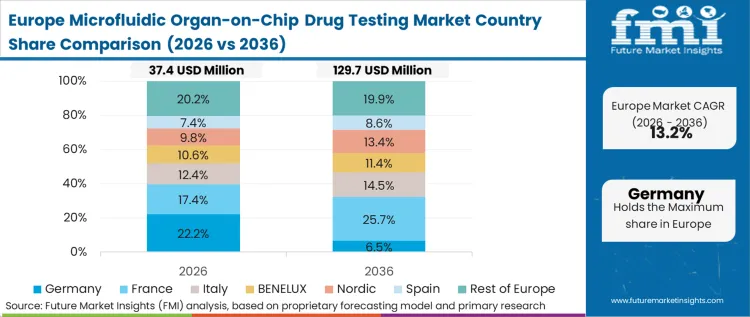
Cost structures and capital availability define the European approach, where rigorous scientific capacity is balanced against stringent, often slower, internal pharmaceutical validation cycles. Economics-led decisions force procurement directors to demand robust return-on-investment models before scaling 3d cell culture and microfluidic infrastructure. FMI predicts that European buyers heavily scrutinize the total cost of ownership, including the hidden costs of specialized operator training and complex bio-consumables sourcing, resulting in a more measured but deeply entrenched adoption curve.
- Germany: High domestic concentration of advanced manufacturing and precision engineering expertise allows German facilities to aggressively pilot complex, multi-organ setups. he market here is likely to post a CAGR of 18.90%. Operations heads leverage this local technical ecosystem to minimize hardware downtime and optimize continuous perfusion protocols. Achieving stable, long-term multi-organ cultures internally simplifies the management of complex biologics screening, freeing critical resources previously tied to managing external animal vivariums.
- United Kingdom: Extensive government backing for alternative methodologies pushes UK-based toxicologists to integrate organ-chips within tightly controlled translational medicine hubs. FMI estimates the microfluidic testing market in the UK to expand at an annual growth rate of 18.40%. The nuance here is that while national policy heavily favors adoption, the actual integration rate is governed by the cautious, data-heavy validation procedures required by the UK's established pharmaceutical giants.
- Netherlands: A highly collaborative ecosystem between academic bioengineering centers and commercial biotech positions the Netherlands as a premier testing ground for customized platform architectures. Development leads frequently co-develop bespoke microfluidic modulation spectroscopy workflows with local innovators. The Netherlands market is forecast to register a CAGR of 18.20%. Buyers who engage in these early-access partnerships capture customized intellectual property that grants a distinct competitive advantage in specialized disease modelling.
FMI's report includes coverage of France, Italy, and the broader EU consortiums. The pattern across these nations is the reliance on centralized, EU-funded standardization roadmaps to underwrite the financial risk of platform acquisition for mid-sized players.
Asia Pacific Microfluidic Organ-on-Chip Drug Testing Market Analysis
The physical and digital infrastructure scale-up across Asia Pacific allows the region to bypass the limitations of legacy screening environments. This infrastructure-led expansion means buyers are not retrofitting old laboratories; they are building advanced biochips and microfluidic capacities directly into new, massive-scale biotech parks. As per FMI's projection, this clean-slate approach enables a faster transition to high-throughput, plate-compatible platforms, skipping the early single-chip manual iteration phases that characterized Western adoption.
- China: Massive state and private investment in accelerating biotechnology independence allows Chinese pharmaceutical developers to deploy advanced human-model infrastructure without the friction of decommissioning entrenched animal facilities. China is expected to see its market sector grow at a compound annual rate of 20.70%. Procurement directors build automated microfluidic screening lines concurrently with entirely new research campuses. This aggressive scaling positions Chinese contract research organizations to aggressively undercut Western screening costs, altering the global flow of outsourced preclinical toxicology work.
- South Korea: South Korea's industry is projected to witness growth at a CAGR of 19.10%. A high density of domestic expertise in semiconductor manufacturing and precision fluidics directly translates into advanced domestic organ-chip development. Supply chain leads operate under a distinct advantage, sourcing highly precise microfluidic components locally with minimal lead times. This trajectory places Korean hardware developers in a strong position to export advanced, sensor-integrated platforms to adjacent Asian markets reliant on imported technology.
- Japan: Stringent quality control and a deeply conservative approach to replacing established scientific protocols focus Japanese adoption strictly within elite translational centers. Assay directors prioritize automated cell culture systems that offer flawless reproducibility over sheer high-throughput volume. The Japanese landscape is set to achieve a CAGR of 17.60%. The dynamic here moves toward the meticulous validation of highly complex disease models, establishing Japan as the benchmark for utilizing microfluidics in rare disease pathophysiology rather than broad commercial toxicology screening.
FMI's report includes analysis of India and Australia. These markets demonstrate a distinct pattern of adopting proven commercial single-organ platforms for targeted academic research before attempting to scale into full industrial pharmaceutical deployment.
Competitive Aligners for Market Players
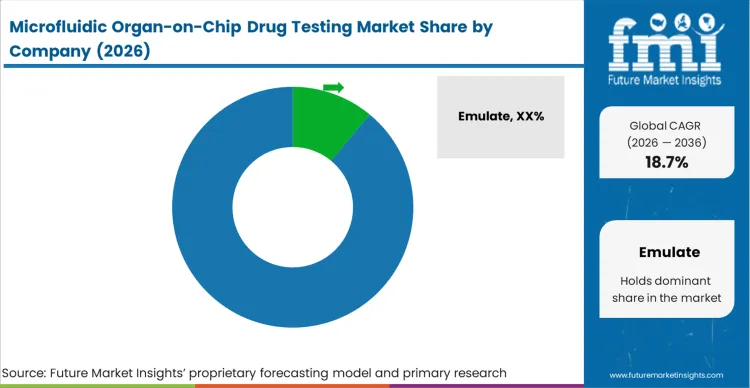
The competitive structure of this market is heavily consolidated around a few dominant platform ecosystems because the capital required to validate biological predictability creates an enormous barrier to entry. Evaluating which companies lead microfluidic organ-on-chip drug testing, Emulate, MIMETAS, and CN Bio lead because buyers utilize the volume of published peer-reviewed validation data as the primary variable to distinguish qualified organ-on-chip suppliers for pharma from experimental alternatives. Procurement directors searching for the best organ-on-chip platform for toxicology do not simply buy polymer chips; they purchase the established confidence that regulatory bodies have already accepted data generated by these specific platforms. Emulate maintains its 15.8% share leadership by marketing a dedicated ecosystem that bridges hardware, automated cell biology systems, and proprietary qualification software.
Incumbents possess deep libraries of historically qualified physiological endpoints that challengers and other organ-on-chip platform vendors must replicate. TissUse and AlveoliX maintain their advantage because their platforms are embedded deeply within multi-year pharmaceutical development programs, making the switching costs for assay directors prohibitively high. An evaluator attempting to compare Emulate vs MIMETAS vs CN Bio for organ-chip workflows immediately recognises that challengers must build a comprehensive library of human-translational validation data to compete, not merely a functionally superior pump. The integration of high-throughput compatibility, such as Emulate’s 96-emulation AVA workstation, demonstrates how incumbents secure their base against organ-chip platform alternatives by aligning their complex biology with the standardised robotic workflows pharma already utilises.
Large pharmaceutical buyers actively resist ecosystem lock-in by engaging multiple vendors for different organ models, preventing any single provider from dictating enterprise-wide preclinical architecture. The tension moving toward 2036 involves pharma’s preference for open, interoperable cell line development services and standard plate formats against the dominant vendors' incentive to maintain closed, proprietary hardware-software loops. As regulatory standards solidify, the market will likely consolidate further around platforms that seamlessly export standardized biological metadata, while fragmented component suppliers who cannot offer full predictive workflows will be relegated to the academic research tier.
Key Players in Microfluidic Organ-on-Chip Drug Testing Market
- Emulate
- MIMETAS
- CN Bio
- TissUse
- AlveoliX
- InSphero
- Quris-AI
Scope of the Report
| Metric | Value |
|---|---|
| Quantitative Units | USD 168.0 million to USD 932.9 million, at a CAGR of 18.70% |
| Market Definition | The market encompasses bioengineered microfluidic devices that culture living human cells within continuously perfused micrometer-sized chambers to replicate the physiological and mechanical functions of intact human organs. |
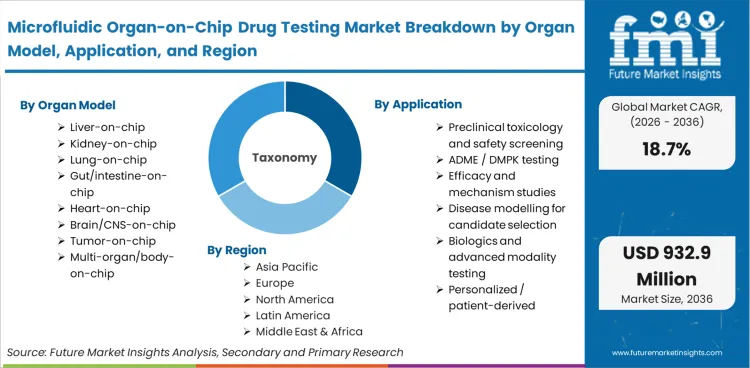
| Organ Model Segmentation | Liver-on-chip, Kidney-on-chip, Lung-on-chip, Gut/intestine-on-chip, Heart-on-chip, Brain/CNS-on-chip, Tumor-on-chip, Multi-organ/body-on-chip |
| Application Segmentation | Preclinical toxicology and safety screening, ADME / DMPK testing, Efficacy and mechanism studies, Disease modelling for candidate selection, Biologics and advanced modality testing, Personalized / patient-derived response testing |
| End User Segmentation | Pharmaceutical and biotechnology companies, CROs / contract testing labs, Academic and translational research institutes, Regulatory and public-sector research programs |
| Platform Format Segmentation | Single-organ microfluidic chips, Multi-organ interconnected systems, High-throughput plate-compatible platforms, AI-integrated / sensor-enabled systems |
| Regions Covered | North America, Europe, Asia Pacific |
| Countries Covered | United States, China, Germany, United Kingdom, Netherlands, Japan, South Korea, and 40 plus countries |
| Key Companies Profiled | Emulate, MIMETAS, CN Bio, TissUse, AlveoliX, InSphero, Quris-AI |
| Forecast Period | 2026 to 2036 |
| Approach | Primary research engaged preclinical assay directors, toxicologists, and translational science leads at top-tier pharmaceutical organizations. Desk research aggregated regulatory guidance on new approach methodologies and public-private validation consortium data. Forecasts were cross-validated against vendor revenue disclosures and specific contract research capacity metrics in independent testing laboratories. |
Microfluidic Organ-on-Chip Drug Testing Market Analysis by Segments
Organ Model:
- Liver-on-chip
- Kidney-on-chip
- Lung-on-chip
- Gut/intestine-on-chip
- Heart-on-chip
- Brain/CNS-on-chip
- Tumor-on-chip
- Multi-organ/body-on-chip
Application:
- Preclinical toxicology and safety screening
- ADME / DMPK testing
- Efficacy and mechanism studies
- Disease modelling for candidate selection
- Biologics and advanced modality testing
- Personalized / patient-derived response testing
End User:
- Pharmaceutical and biotechnology companies
- CROs / contract testing labs
- Academic and translational research institutes
- Regulatory and public-sector research programs
Platform Format:
- Single-organ microfluidic chips
- Multi-organ interconnected systems
- High-throughput plate-compatible platforms
- AI-integrated / sensor-enabled systems
Workflow Model:
- Instrument and consumables sales
- Contract research services
- Collaborative validation programs
- Software / analytics / imaging add-ons
Region:
- North America
- United States
- Canada
- Europe
- Germany
- United Kingdom
- Netherlands
- Italy
- France
- Asia Pacific
- China
- South Korea
- Japan
- Singapore
- India
- Latin America
- Brazil
- Mexico
- Argentina
- Middle East & Africa
- GCC Countries
- South Africa
Bibliography
- European Medicines Agency. (2025). New approach methodologies EU-IN horizon scanning report.
- Government Accountability Office. (2025, May). Human organ-on-a-chip: Technologies offer benefits over animal testing but challenges limit wider adoption (GAO-25-107335).
- Khurram, M. M., Nadeem, M., Alhamhoom, Y., Arif, M., Younis, M. R., Bibi, S., Khan, R. S., & Khan, M. I. (2024). Organ-on-a-chip platforms for drug development, cellular toxicity assessment, and disease modeling. APL Bioengineering, 8(4).
- National Center for Advancing Translational Sciences. (2026, January 16). Tissue chip projects & initiatives. National Institutes of Health.
- Song, S. H., Mastrangeli, M., van den Hurk, M., Vulto, P., & Trietsch, S. J. (2024). State-of-the-art in high throughput organ-on-chip for biotechnology and pharmaceuticals. Frontiers in Bioengineering and Biotechnology, 12.
- Yoon, S., Cho, M., Kim, H., & Jeon, N. L. (2024). Microfluidics in high-throughput drug screening: Organ-on-a-chip and C. elegans-based innovations. Biosensors, 14(1), 55.
This bibliography is provided for reader reference. The full FMI report contains the complete reference list with primary source documentation.
This Report Addresses
- Market intelligence to support strategic decision making across instrument and consumables sales, contract research services, and software analytics within the microfluidic testing environment
- Market size estimation and 10-year revenue forecasts from 2026 to 2036, supported by baseline sizing anchored to hardware installation bases and annualized consumable run-rates
- Growth opportunity mapping across Organ Model and Platform Format dimensions with emphasis on the integration of these dynamic flow models into standard 96-well handling environments
- Segment and regional revenue forecasts covering Liver-on-chip and single-organ microfluidic chips across the specific regulatory qualification initiatives in North American and European markets
- Competition strategy assessment including the volume of published validation data, ecosystem lock-in, and switching costs driven by historical physiological endpoints
- Capability development tracking including high-throughput plate-compatible platforms, proprietary predictive software, and multi-organ interconnected systems discussed in this article
- Market access analysis covering FDA Modernization Act 2.0 implications, NIH/NCATS validation parameters, and the replacement of high-attrition static cellular assays
- Market report delivery in PDF, Excel, PPT, and interactive dashboard formats for executive strategy, preclinical toxicology pipeline planning, and operational benchmarking use
Frequently Asked Questions
What is the forecast for organ-on-chip drug testing through 2036?
The valuation is projected to reach USD 932.9 million. This expansion signals the transformation from niche investigative pilot studies into mandatory, scaled deployment for high-risk biologics screening across all major pharmaceutical pipelines.
What is the organ chip drug testing market size in 2026?
The market is valued at USD 168.0 million. This figure reflects the baseline capital already committed by tier-1 pharmaceutical companies toward early hardware integration and initial biological validation protocols.
What CAGR is projected?
The market tracks at an 18.70% CAGR. This aggressive rate is maintained by the continuous replacement cycle of traditional static in vitro assays, accelerated by regulatory updates that actively accept non-animal predictive data.
Which Organ Model segment leads?
Liver-on-chip commands a 31.0% share. Assay directors prioritize hepatic models because drug-induced liver injury remains the primary financial driver of late-stage clinical trial failures, making early detection critical.
Which Application segment leads?
Preclinical toxicology and safety screening dominates with 36.0% share. Buyers utilize chips here first because eliminating a single toxic compound before it enters costly in vivo testing immediately justifies the platform's capital expenditure.
Which End User segment leads?
Pharmaceutical and biotechnology companies hold 48.0% of the market. These organizations possess the capital depth required to internalize the complex infrastructure and build proprietary, predictive data libraries for their own candidate selection.
How does organ-on-chip improve drug testing?
Continuous microfluidic perfusion simulates actual human biomechanical forces like shear stress and cyclic strain that static plates cannot replicate. This dynamic environment maintains cell viability and metabolic competence over weeks, allowing toxicologists to detect chronic, long-term human safety signals early in the pipeline.
What are the challenges of organ-on-chip adoption?
The rigorous requirement to standardize microfluidic biological endpoints against decades of legacy historical data poses the heaviest friction. Toxicologists cannot fully adopt the platform until they internally validate the new 3D microfluidic readouts against accepted in vivo baseline risk calculations.
Which country grows fastest?
China advances at a leading 20.70% compound rate. Unlike Western markets managing careful transitional qualification against legacy protocols, Chinese facilities are building advanced microfluidic capacities directly into new, massive-scale biotech infrastructure.
Is organ-on-chip replacing animal testing?
Yes, but progressively rather than instantly. Regulatory shifts like the FDA Modernization Act 2.0 remove the mandatory animal requirement for specific IND submissions, transitioning microfluidic models from supplementary tools to qualified primary data sources for novel biologics where animal models fail to predict human immune responses.
Why is organ-on-chip used in preclinical research?
High late-stage clinical attrition rates drive the transition. Pharmaceutical development teams use these platforms because relying solely on traditional in vivo data yields non-predictive outcomes for complex new modalities, costing organizations billions in late-stage failures.
Which organ-on-chip models are used for toxicology?
Liver-on-chip and Kidney-on-chip formats are prioritized because hepatic and renal toxicities are the primary drivers of late-stage clinical trial halts. Procurement directors allocate capital toward these specific models first to secure the highest immediate return on risk avoidance.
Organoids vs organ-on-chip drug testing: how do they compare?
While both utilize 3D cell structures, organoids are static models that lack functional vascularization and fluid dynamics. Adding the microfluidic flow of organ-chips provides the biomechanical stress necessary to sustain mature tissue functions, bridging the gap between a cluster of cells and a functional physiological system.
Organ-on-chip vs 3D cell culture: what is the difference?
Traditional 3D cell cultures sit in static wells, accumulating their own waste and exhausting nutrients rapidly. Organ-chips incorporate continuous microfluidic perfusion, mimicking blood flow to provide fresh nutrients and clear waste, enabling the long-term, repeat-dose toxicity studies impossible in static formats.
Organ-on-chip vs animal testing: what drives the transition?
Species-specific biological differences mean animals often process complex human biologics, such as bispecific antibodies, differently than patients do. Organ-chips utilizing primary human cells provide a human-relevant alternative that bypasses these species translation errors.
What is organ-on-chip drug testing and how does it define the market boundary?
It involves culturing living human cells within continuously perfused micrometer-sized chambers to replicate physiological functions. Functionally, this defines the commercial boundary between basic static cellular clusters and the dynamic physiological platforms explicitly validated for pharmacological screening.
Summarize organ-on-chip market drivers and barriers?
The primary driver is the regulatory acceptance of non-animal data coupled with pharma's urgent need to reduce late-stage clinical attrition. The dominant barrier remains the high integration cost and the labor-intensive requirement to standardize new microfluidic readouts against historical in vivo toxicity baselines.
Explain the commercial outlook for organ-on-chip drug testing?
The commercial trajectory turns from exploratory academic use toward mandatory, scaled deployment for high-risk screening. As high-throughput, plate-compatible hardware standardizes, laboratory managers are internalizing the infrastructure, moving vendor revenue heavily toward recurring consumable and software models.
Organ-on-chip CRO for toxicology studies: why outsource?
Tier-1 pharmaceutical companies rapidly exhaust their internal microfluidic screening capacity as they scale operations. They utilize specialized CROs to capture this overflow through dedicated validation protocols that perfectly align with the strict, proprietary standards set internally.
Organ-on-chip ROI compared with conventional assays: how is it measured?
Financial controllers recognize the return on investment entirely in the avoidance of late-stage failure costs. Disqualifying a single hepatotoxic compound pre-clinically offsets years of system hardware, specialized operator training, and expensive consumable investments.
How fast is organ-on-chip replacing animal models in pharma?
The pace is dictated by qualification timelines rather than simple purchasing capability. Integration tracks the regulatory calendar, accelerating significantly as public-private consortiums pool pre-competitive validation data, allowing pharma to confidently replace animal IND submissions within the next decade.
Microfluidic organ-on-chip market size: what validates the baseline?
The baseline valuation is anchored to verified hardware installation bases and annualized consumable run-rates across major global pharmaceutical research hubs, cross-validated against the specific contract research capacity metrics maintained by independent testing laboratories.
Preview the report firsthand - request a free sample
Get SampleGet the brochure for pricing and purchase details.
Get PDFTable of Content
- Executive Summary
- Global Market Outlook
- Demand-side Trends
- Supply-side Trends
- Technology Roadmap Analysis
- Analysis and Recommendations
- Market Overview
- Market Coverage / Taxonomy
- Market Definition / Scope / Limitations
- Research Methodology
- Chapter Orientation
- Analytical Lens and Working Hypotheses
- Market Structure, Signals, and Trend Drivers
- Benchmarking and Cross-market Comparability
- Market Sizing, Forecasting, and Opportunity Mapping
- Research Design and Evidence Framework
- Desk Research Programme (Secondary Evidence)
- Company Annual and Sustainability Reports
- Peer-reviewed Journals and Academic Literature
- Corporate Websites, Product Literature, and Technical Notes
- Earnings Decks and Investor Briefings
- Statutory Filings and Regulatory Disclosures
- Technical White Papers and Standards Notes
- Trade Journals, Industry Magazines, and Analyst Briefs
- Conference Proceedings, Webinars, and Seminar Materials
- Government Statistics Portals and Public Data Releases
- Press Releases and Reputable Media Coverage
- Specialist Newsletters and Curated Briefings
- Sector Databases and Reference Repositories
- FMI Internal Proprietary Databases and Historical Market Datasets
- Subscription Datasets and Paid Sources
- Social Channels, Communities, and Digital Listening Inputs
- Additional Desk Sources
- Expert Input and Fieldwork (Primary Evidence)
- Primary Modes
- Qualitative Interviews and Expert Elicitation
- Quantitative Surveys and Structured Data Capture
- Blended Approach
- Why Primary Evidence is Used
- Field Techniques
- Interviews
- Surveys
- Focus Groups
- Observational and In-context Research
- Social and Community Interactions
- Stakeholder Universe Engaged
- C-suite Leaders
- Board Members
- Presidents and Vice Presidents
- R&D and Innovation Heads
- Technical Specialists
- Domain Subject-matter Experts
- Scientists
- Physicians and Other Healthcare Professionals
- Governance, Ethics, and Data Stewardship
- Research Ethics
- Data Integrity and Handling
- Primary Modes
- Tooling, Models, and Reference Databases
- Desk Research Programme (Secondary Evidence)
- Data Engineering and Model Build
- Data Acquisition and Ingestion
- Cleaning, Normalisation, and Verification
- Synthesis, Triangulation, and Analysis
- Quality Assurance and Audit Trail
- Market Background
- Market Dynamics
- Drivers
- Restraints
- Opportunity
- Trends
- Scenario Forecast
- Demand in Optimistic Scenario
- Demand in Likely Scenario
- Demand in Conservative Scenario
- Opportunity Map Analysis
- Product Life Cycle Analysis
- Supply Chain Analysis
- Investment Feasibility Matrix
- Value Chain Analysis
- PESTLE and Porter’s Analysis
- Regulatory Landscape
- Regional Parent Market Outlook
- Production and Consumption Statistics
- Import and Export Statistics
- Market Dynamics
- Global Market Analysis 2021 to 2025 and Forecast, 2026 to 2036
- Historical Market Size Value (USD Million) Analysis, 2021 to 2025
- Current and Future Market Size Value (USD Million) Projections, 2026 to 2036
- Y-o-Y Growth Trend Analysis
- Absolute $ Opportunity Analysis
- Global Market Pricing Analysis 2021 to 2025 and Forecast 2026 to 2036
- Global Market Analysis 2021 to 2025 and Forecast 2026 to 2036, By Organ Model
- Introduction / Key Findings
- Historical Market Size Value (USD Million) Analysis By Organ Model , 2021 to 2025
- Current and Future Market Size Value (USD Million) Analysis and Forecast By Organ Model , 2026 to 2036
- Liver-on-chip
- Kidney-on-chip
- Lung-on-chip
- Gut/intestine-on-chip
- Heart-on-chip
- Brain/CNS-on-chip
- Tumor-on-chip
- Multi-organ/body-on-chip
- Liver-on-chip
- Y-o-Y Growth Trend Analysis By Organ Model , 2021 to 2025
- Absolute $ Opportunity Analysis By Organ Model , 2026 to 2036
- Global Market Analysis 2021 to 2025 and Forecast 2026 to 2036, By Application
- Introduction / Key Findings
- Historical Market Size Value (USD Million) Analysis By Application, 2021 to 2025
- Current and Future Market Size Value (USD Million) Analysis and Forecast By Application, 2026 to 2036
- Preclinical toxicology and safety screening
- ADME / DMPK testing
- Efficacy and mechanism studies
- Disease modelling for candidate selection
- Biologics and advanced modality testing
- Personalized / patient-derived response testing
- Preclinical toxicology and safety screening
- Y-o-Y Growth Trend Analysis By Application, 2021 to 2025
- Absolute $ Opportunity Analysis By Application, 2026 to 2036
- Global Market Analysis 2021 to 2025 and Forecast 2026 to 2036, By End Use
- Introduction / Key Findings
- Historical Market Size Value (USD Million) Analysis By End Use, 2021 to 2025
- Current and Future Market Size Value (USD Million) Analysis and Forecast By End Use, 2026 to 2036
- Pharmaceutical and biotechnology companies
- CROs / contract testing labs
- Academic and translational research institutes
- Regulatory and public-sector research programs
- Pharmaceutical and biotechnology companies
- Y-o-Y Growth Trend Analysis By End Use, 2021 to 2025
- Absolute $ Opportunity Analysis By End Use, 2026 to 2036
- Global Market Analysis 2021 to 2025 and Forecast 2026 to 2036, By Platform Format
- Introduction / Key Findings
- Historical Market Size Value (USD Million) Analysis By Platform Format, 2021 to 2025
- Current and Future Market Size Value (USD Million) Analysis and Forecast By Platform Format, 2026 to 2036
- Single-organ microfluidic chips
- Multi-organ interconnected systems
- High-throughput plate-compatible platforms
- AI-integrated / sensor-enabled systems
- Single-organ microfluidic chips
- Y-o-Y Growth Trend Analysis By Platform Format, 2021 to 2025
- Absolute $ Opportunity Analysis By Platform Format, 2026 to 2036
- Global Market Analysis 2021 to 2025 and Forecast 2026 to 2036, By Workflow Model
- Introduction / Key Findings
- Historical Market Size Value (USD Million) Analysis By Workflow Model, 2021 to 2025
- Current and Future Market Size Value (USD Million) Analysis and Forecast By Workflow Model, 2026 to 2036
- Instrument and consumables sales
- Contract research services
- Collaborative validation programs
- Software / analytics / imaging add-ons
- Instrument and consumables sales
- Y-o-Y Growth Trend Analysis By Workflow Model, 2021 to 2025
- Absolute $ Opportunity Analysis By Workflow Model, 2026 to 2036
- Global Market Analysis 2021 to 2025 and Forecast 2026 to 2036, By Region
- Introduction
- Historical Market Size Value (USD Million) Analysis By Region, 2021 to 2025
- Current Market Size Value (USD Million) Analysis and Forecast By Region, 2026 to 2036
- North America
- Latin America
- Western Europe
- Eastern Europe
- East Asia
- South Asia and Pacific
- Middle East & Africa
- Market Attractiveness Analysis By Region
- North America Market Analysis 2021 to 2025 and Forecast 2026 to 2036, By Country
- Historical Market Size Value (USD Million) Trend Analysis By Market Taxonomy, 2021 to 2025
- Market Size Value (USD Million) Forecast By Market Taxonomy, 2026 to 2036
- By Country
- USA
- Canada
- Mexico
- By Organ Model
- By Application
- By End Use
- By Platform Format
- By Workflow Model
- By Country
- Market Attractiveness Analysis
- By Country
- By Organ Model
- By Application
- By End Use
- By Platform Format
- By Workflow Model
- Key Takeaways
- Latin America Market Analysis 2021 to 2025 and Forecast 2026 to 2036, By Country
- Historical Market Size Value (USD Million) Trend Analysis By Market Taxonomy, 2021 to 2025
- Market Size Value (USD Million) Forecast By Market Taxonomy, 2026 to 2036
- By Country
- Brazil
- Chile
- Rest of Latin America
- By Organ Model
- By Application
- By End Use
- By Platform Format
- By Workflow Model
- By Country
- Market Attractiveness Analysis
- By Country
- By Organ Model
- By Application
- By End Use
- By Platform Format
- By Workflow Model
- Key Takeaways
- Western Europe Market Analysis 2021 to 2025 and Forecast 2026 to 2036, By Country
- Historical Market Size Value (USD Million) Trend Analysis By Market Taxonomy, 2021 to 2025
- Market Size Value (USD Million) Forecast By Market Taxonomy, 2026 to 2036
- By Country
- Germany
- UK
- Italy
- Spain
- France
- Nordic
- BENELUX
- Rest of Western Europe
- By Organ Model
- By Application
- By End Use
- By Platform Format
- By Workflow Model
- By Country
- Market Attractiveness Analysis
- By Country
- By Organ Model
- By Application
- By End Use
- By Platform Format
- By Workflow Model
- Key Takeaways
- Eastern Europe Market Analysis 2021 to 2025 and Forecast 2026 to 2036, By Country
- Historical Market Size Value (USD Million) Trend Analysis By Market Taxonomy, 2021 to 2025
- Market Size Value (USD Million) Forecast By Market Taxonomy, 2026 to 2036
- By Country
- Russia
- Poland
- Hungary
- Balkan & Baltic
- Rest of Eastern Europe
- By Organ Model
- By Application
- By End Use
- By Platform Format
- By Workflow Model
- By Country
- Market Attractiveness Analysis
- By Country
- By Organ Model
- By Application
- By End Use
- By Platform Format
- By Workflow Model
- Key Takeaways
- East Asia Market Analysis 2021 to 2025 and Forecast 2026 to 2036, By Country
- Historical Market Size Value (USD Million) Trend Analysis By Market Taxonomy, 2021 to 2025
- Market Size Value (USD Million) Forecast By Market Taxonomy, 2026 to 2036
- By Country
- China
- Japan
- South Korea
- By Organ Model
- By Application
- By End Use
- By Platform Format
- By Workflow Model
- By Country
- Market Attractiveness Analysis
- By Country
- By Organ Model
- By Application
- By End Use
- By Platform Format
- By Workflow Model
- Key Takeaways
- South Asia and Pacific Market Analysis 2021 to 2025 and Forecast 2026 to 2036, By Country
- Historical Market Size Value (USD Million) Trend Analysis By Market Taxonomy, 2021 to 2025
- Market Size Value (USD Million) Forecast By Market Taxonomy, 2026 to 2036
- By Country
- India
- ASEAN
- Australia & New Zealand
- Rest of South Asia and Pacific
- By Organ Model
- By Application
- By End Use
- By Platform Format
- By Workflow Model
- By Country
- Market Attractiveness Analysis
- By Country
- By Organ Model
- By Application
- By End Use
- By Platform Format
- By Workflow Model
- Key Takeaways
- Middle East & Africa Market Analysis 2021 to 2025 and Forecast 2026 to 2036, By Country
- Historical Market Size Value (USD Million) Trend Analysis By Market Taxonomy, 2021 to 2025
- Market Size Value (USD Million) Forecast By Market Taxonomy, 2026 to 2036
- By Country
- Kingdom of Saudi Arabia
- Other GCC Countries
- Turkiye
- South Africa
- Other African Union
- Rest of Middle East & Africa
- By Organ Model
- By Application
- By End Use
- By Platform Format
- By Workflow Model
- By Country
- Market Attractiveness Analysis
- By Country
- By Organ Model
- By Application
- By End Use
- By Platform Format
- By Workflow Model
- Key Takeaways
- Key Countries Market Analysis
- USA
- Pricing Analysis
- Market Share Analysis, 2025
- By Organ Model
- By Application
- By End Use
- By Platform Format
- By Workflow Model
- Canada
- Pricing Analysis
- Market Share Analysis, 2025
- By Organ Model
- By Application
- By End Use
- By Platform Format
- By Workflow Model
- Mexico
- Pricing Analysis
- Market Share Analysis, 2025
- By Organ Model
- By Application
- By End Use
- By Platform Format
- By Workflow Model
- Brazil
- Pricing Analysis
- Market Share Analysis, 2025
- By Organ Model
- By Application
- By End Use
- By Platform Format
- By Workflow Model
- Chile
- Pricing Analysis
- Market Share Analysis, 2025
- By Organ Model
- By Application
- By End Use
- By Platform Format
- By Workflow Model
- Germany
- Pricing Analysis
- Market Share Analysis, 2025
- By Organ Model
- By Application
- By End Use
- By Platform Format
- By Workflow Model
- UK
- Pricing Analysis
- Market Share Analysis, 2025
- By Organ Model
- By Application
- By End Use
- By Platform Format
- By Workflow Model
- Italy
- Pricing Analysis
- Market Share Analysis, 2025
- By Organ Model
- By Application
- By End Use
- By Platform Format
- By Workflow Model
- Spain
- Pricing Analysis
- Market Share Analysis, 2025
- By Organ Model
- By Application
- By End Use
- By Platform Format
- By Workflow Model
- France
- Pricing Analysis
- Market Share Analysis, 2025
- By Organ Model
- By Application
- By End Use
- By Platform Format
- By Workflow Model
- India
- Pricing Analysis
- Market Share Analysis, 2025
- By Organ Model
- By Application
- By End Use
- By Platform Format
- By Workflow Model
- ASEAN
- Pricing Analysis
- Market Share Analysis, 2025
- By Organ Model
- By Application
- By End Use
- By Platform Format
- By Workflow Model
- Australia & New Zealand
- Pricing Analysis
- Market Share Analysis, 2025
- By Organ Model
- By Application
- By End Use
- By Platform Format
- By Workflow Model
- China
- Pricing Analysis
- Market Share Analysis, 2025
- By Organ Model
- By Application
- By End Use
- By Platform Format
- By Workflow Model
- Japan
- Pricing Analysis
- Market Share Analysis, 2025
- By Organ Model
- By Application
- By End Use
- By Platform Format
- By Workflow Model
- South Korea
- Pricing Analysis
- Market Share Analysis, 2025
- By Organ Model
- By Application
- By End Use
- By Platform Format
- By Workflow Model
- Russia
- Pricing Analysis
- Market Share Analysis, 2025
- By Organ Model
- By Application
- By End Use
- By Platform Format
- By Workflow Model
- Poland
- Pricing Analysis
- Market Share Analysis, 2025
- By Organ Model
- By Application
- By End Use
- By Platform Format
- By Workflow Model
- Hungary
- Pricing Analysis
- Market Share Analysis, 2025
- By Organ Model
- By Application
- By End Use
- By Platform Format
- By Workflow Model
- Kingdom of Saudi Arabia
- Pricing Analysis
- Market Share Analysis, 2025
- By Organ Model
- By Application
- By End Use
- By Platform Format
- By Workflow Model
- Turkiye
- Pricing Analysis
- Market Share Analysis, 2025
- By Organ Model
- By Application
- By End Use
- By Platform Format
- By Workflow Model
- South Africa
- Pricing Analysis
- Market Share Analysis, 2025
- By Organ Model
- By Application
- By End Use
- By Platform Format
- By Workflow Model
- USA
- Market Structure Analysis
- Competition Dashboard
- Competition Benchmarking
- Market Share Analysis of Top Players
- By Regional
- By Organ Model
- By Application
- By End Use
- By Platform Format
- By Workflow Model
- Competition Analysis
- Competition Deep Dive
- Emulate
- Overview
- Product Portfolio
- Profitability by Market Segments (Product/Age /Sales Channel/Region)
- Sales Footprint
- Strategy Overview
- Marketing Strategy
- Product Strategy
- Channel Strategy
- MIMETAS
- CN Bio
- TissUse
- AlveoliX
- InSphero
- Quris-AI
- Emulate
- Competition Deep Dive
- Assumptions & Acronyms Used


